Feeds:
Posts
Comments

Archive for the ‘Adrian Zuidweg’ Category

My new friend (and Xth Mulder cousin) Elly sent me something she found in the Goes archives that I think is quite special.

Let me give a little context first. My grandfather, Adrian Zuidweg, was the son of Adriaan Zuijdweg who immigrated to the United States in 1893. Adriaan’s father and mother, Johannes and Jennie, also immigrated after their son–in 1901.

Johannes’ father was Adriaan Zuijdweg, 1805-1851. He only lived to be 46 years old.

I also want to “remind” you that both my maternal grandparents are descended from Carel Mulder, the jailer’s hand. So while Elly was researching the Mulders she came across information about not only a descendent of Carel in the form of Johanna, his daughter, but also her husband Adriaan Zuijdweg, my 3rd great-grandfather through my grandfather’s line.

Elly says:
I found a quote in the archives of Goes, that Adriaan Zuidweg (born in 1805 and married [to] Johanna Mulder, daughter of Carel Mulder) made a request at the town-councelors to make it possible ( to emigrate with his family –5 children) to the USA.
Apparently it was denied, because 6 years later he died in Goes.
 !!! He wanted to bring his branch of the family to the United States long before the family actually did come here!
Here is the text:
Landverhuizers
Als gevolg van de misoogst en armoede, maar ook vanwege de tegenwerking van de afgescheidenen van de Hervormde kerk, verlaten de zogenaamde ‘landverhuizers’ ons land en emigreren naar Amerika en Canada. Op de 26e juli 1845 verzoeken twee ingezetenen van de stad om in de gelegenheid gesteld te worden buiten hun kosten te vertrekken naar Noord Amerika omdat ze zich buiten staat bevinden hier in hun levensonderhoud te voorzien. Het betreft de ongehuwde 39-jarige Adriaan Johannes de Wolff, timmerman, metselaar en schilder, en de 40-jarige Adriaan Zuidweg, kleermaker, gehuwd en vijf kinderen.
Elly continues:
It was an article about emigration.
Translated it says:
Because of crop failure and poverty, but also because of the opposition against the members of the separated Reformed church , many people leave the Netherlands and emigrate to the US and Canada.
On 26 July 1845 two citizens of Goes made a request to be enabled to emigrate, with the costs of this emigration paid by the town, because they are not able to support their means of living in this town.
It concerns A.J.de Wolff ( 39 years old, not married), carpenter, bricklayer and painter, and Adriaan Zuidweg, tailor, married and 5 children.
Of course, my mind went off in many directions. I wondered if the family was very poor and if they were even hungry. I thought that Adriaan had absolutely no resources. That he had to essentially beg to leave. That he was denied that opportunity, which seems cruel, like imprisoning someone without food. That here was confirmation that Adriaan was a tailor as I had already learned.
Then it dawned on me that I didn’t know what “separated Reformed church” means. I had vaguely known that most of my Dutch ancestors were adherents to the Reformed religion (a branch of Calvinism), at least until they came to the United States. But what did this “separated” thing mean?
I tried to Google the information, but it got more and more confusing to me, so I asked Elly if she could help. She sent me some sources. A Google translation of a passage from http://encyclopedievanzeeland.nl/Emigratie_van_Afgescheidenen goes this way:

As the Pilgrim Fathers in 1620 as a community have migrated to America, so are also left the secessionists of South Beveland in the spring of 1847 and she settled in Michigan as a congregation.

Apparently for a short time in the mid-19th century, there were people seceding from the Reformed Church–and these people must have included my 3rd great-grandfather, Adriaan Zuijdweg. Apparently they were from Zeeland, and this was not a big “wave” all over the Netherlands.

According to Elly, this period lasted from approximately 1830-1850, and the people were not persecuted but did find a lot of opposition. The movement must have been very small and confined to the region because apparently it is not taught in history classes in the Netherlands.

According to Wikipedia:

During the early nineteenth century, large numbers of Dutch farmers, forced by high taxes and low wages, started immigrating to America. They mainly settled down in the Midwest, especially Michigan, Illinois and Iowa. In the 1840s, Calvinist immigrants desiring more religious freedom immigrated. West Michigan in particular has become associated with Dutch American culture, and the highly conservative influence Dutch Reformed Church, centering on the cities of Holland and (to a lesser extent)Grand Rapids.

Waves of Catholic Dutch emigrants, initially encouraged in the 1840s by Father Theodore J. Van den Broek, emigrated from southern Netherlands to form communities in Wisconsin, primarily to Little Chute, Hollandtown, and the outlying farming communities. Whole families and even neighborhoods left for America. Most of these early emigrants were from villages nearUden, including Zeeland, Boekel, Mill, Oploo and Gemert. By contrast, many Protestant agrarian emigrants to Michigan and Iowa were drawn from Groningen, Friesland, and Zeeland; areas known for their clay soils.[4]

The Dutch economy of the 1840s was stagnant and much of the motivation to emigrate was economic rather than political or religious. The emigrants were not poor, as the cost of passage, expenses and land purchase in America would have been substantial. They were not, however, affluent and many would have been risking most of their wealth on the chance of economic improvement. There were also political pressures at the time that favored mass emigrations of Catholics.[4][5][6] Yda Schreuder, Dutch Catholic Immigrant Settlement in Wisconsin, 1850-1905 (New York: Garland, 1989); and H. A. V. M. van Stekelenburg, Landverhuizing als regionaal verschijnsel: Van Noord-Brabant naar Noord-Amerika 1820-1880 (Tilburg: Stichting Zuidelijk Historisch Contact, 1991).

It’s true that many of my Dutch ancestors did come from Zeeland and perhaps one branch from Groningen, although one branch came from Zwolle. So was Adriaan really that poor or was he rather temporarily economically “flat” because of the worsening economy in his country? I’d say the latter.

I do feel bad that the family had this hardship and wonder how it affected the children, especially Johannes, Grandpa’s grandfather. Although his father Adriaan couldn’t get him to America, apparently his son Adriaan did so.

As an aside, when I was a kid I used to love the folk and fairy tales that featured tailors and shoemakers, so I find it charming when I hear that so many of my ancestors were tailors and shoemakers, as well as merchants.

Here’s another tangent. Why do the men have occupations like that so often, but the women are usually maids or servants? Is that because those were their jobs when they got married and then they generally quit work after getting married? Did the daughters of tailors and shoemakers become maids when they were old enough to work but still unmarried? Or did they remain maids throughout their lives? What did it mean to be a maid in Zeeland in the 1800s? And, most importantly, did they wear white pinafore aprons?

Elly and I both wonder what happened to Johanna after Adriaan’s death. I checked out my family tree to see what chronology I could see.

Johanna was 29 when she married Adriaan. Then she had four children in a row (Kornelis, Karel, Geertrui, Johannes). On 26 July, 1845, when Adriaan made his application for emigration, the children were 8, 7, 5, and 3. That’s quite a handful. Less than two years after the application, Johanna’s father, Carel Mulder, died. He is the one who got sick and his prison guard job was awarded to another son-in-law, NOT to Adriaan. Seven months after Carel’s death, Johanna gave birth to yet another child, Johanna. The sixth child, Willem, was born in 1849.

It’s no wonder that in 1869, when Johanna was 62 years old, she was working as a laborer in Goes. She must have had to go to work after Adriaan’s death, if not before. Did she work when she was pregnant? Who took care of her children? Her own father was undergoing his own problems before his death, so he couldn’t help her. First he was suspended from his job for insubordination, then he became ill and eventually passed away.

What of Adriaan’s parents? The other grandparents of the children . . . .   Adriaan’s father, a fish inspector, passed away in 1841, five years before the application to emigrate was made. His mother died in 1838 after seeing only one of her grandchildren by Adriaan born.

Where does some of this information about Adriaan and Johanna (Mulder) Zuijdweg come from? The Goes archives.  Elly says that this archives is linked to the archives in Zeeland.

Zeeuws Archief


Read Full Post »

While I am making connections and doing more behind the scenes (haha, sounds important) work on the genealogy, I thought I’d share an uncleaned-up photo from the Joseph DeKorn collection. The spots are just a little extra treat. I’d love to hear ideas about the best way to get rid of them!


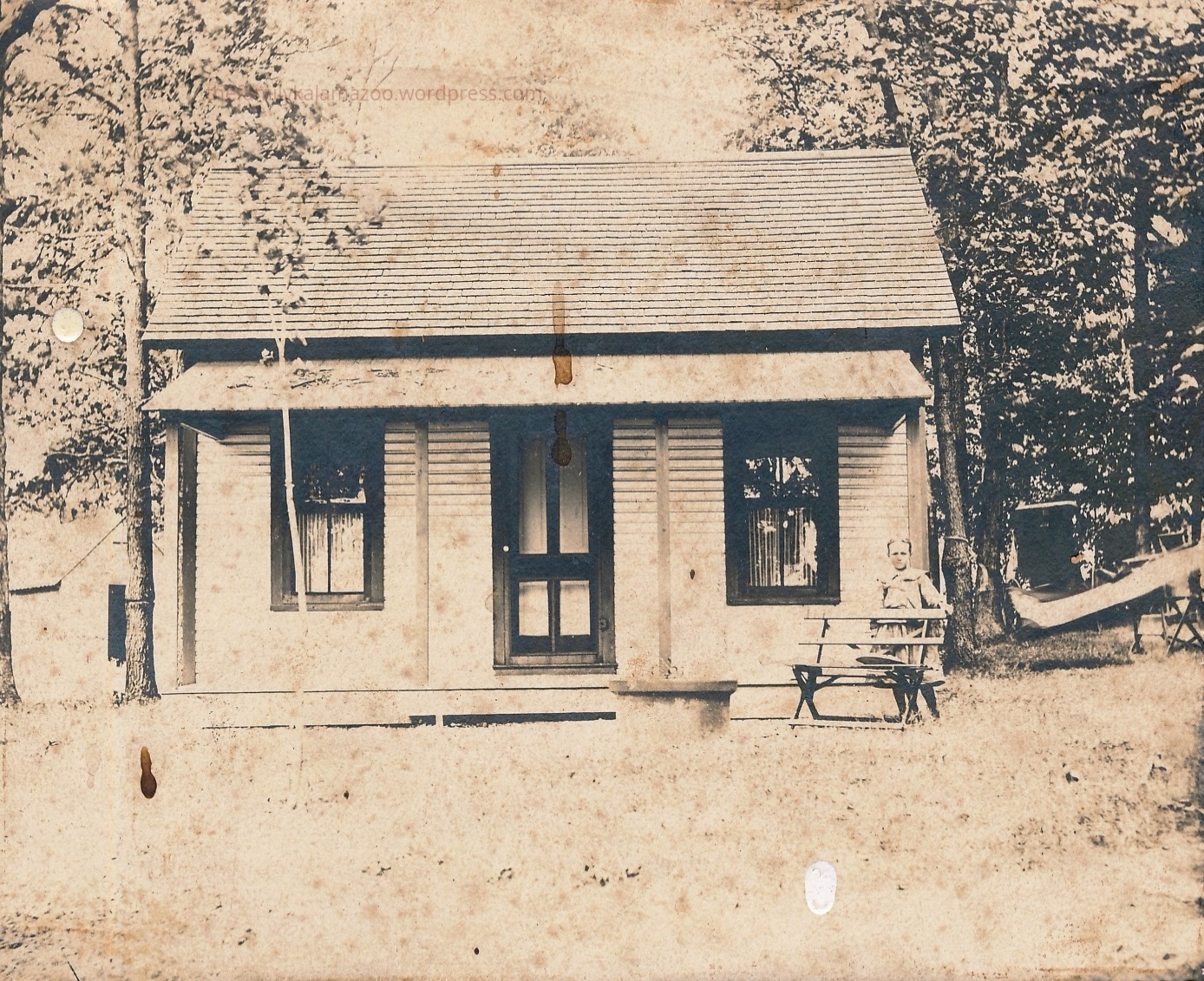
126 Balch Street, Kalamazoo, Michigan

The little girl behind the bench is Alice Leeuwenhoek, and the date is Thanksgiving 1907. I trust that this is Alice because Grandpa told me in the late 70s, and he knew Alice. Old writing on the back indicates the date. But is the address correct?

In the 1910 census Lambertus, Jennie, and Alice all lived at 110 Balch Street. The houses are numbered 110, 112, 120, 130, 210, 216. No number 126.

Is this the Leeuwenhoek house or not? I’m going to hazard a guess. The address written on the back of this photo is in my handwriting, which means that Grandpa gave me the address. I already suspect that the numbering was changed at some point on Burdick and Balch because the older numbers do not match to the current addresses. Maybe Grandpa gave me the address that was correct in the late 1970s, but not the address as it was in 1907.

Because of the way Alice is standing behind the bench, near the house, and alone, I think this is her own house.

The placement of this house would have been very near Richard DeKorn’s brick house at the corner of Burdick and Balch. I wrote about it in this post The Richard DeKorn House. Alice was Richard’s granddaughter as her mother Jennie was Richard’s daughter and my grandfather’s aunt. Grandpa and Alice were first cousins.

I looked on Google Maps to see what the area looks like today. 126 Balch is about the 4th house down from the DeKorn house on the corner. So, is it possible that in 1907 they lived in 126 and in 1910 they lived in 110? It’s possible because maybe Richard owned several houses on Balch Street. That would not be inconceivable. Or that he had owned the land and gave or sold parcels to family members.

Maybe all the families living on Balch street are not on the census with the Leeuwenhoeks because they weren’t home when the census taker came. That would further complicate things. All this makes me wish I had some time in Kalamazoo to get my hands on some of the property ownership records!

Still, I do feel confident that this is Alice standing in front of her house on Balch Street in 1907, and that she lived quite near her grandparents. Her grandmother, Alice Paak DeKorn, would die the following year–and Grandpa would be born.

Read Full Post »

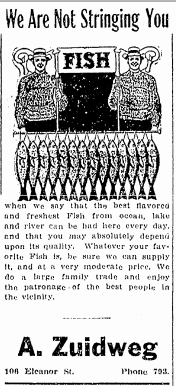
I’ve mentioned before that my great-grandfather, Adrian Zuidweg, Sr. (Adriaan Zuijdweg) owned a fish market when Grandpa was young.  In this photo he stands with an unidentified young employee.

Fish Market on Eleanor Street

Fish Market on Eleanor Street

I found some ads he ran in the Kalamazoo Gazette on Genealogy Bank. This one is from September 16, 1910.

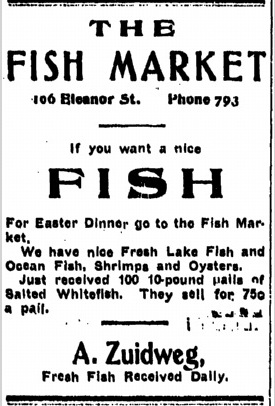
This is a pretty fancy ad for a little market like he had. Some of the time he did a more simple ad like this one at Easter time–April 6, 1904.

Most of his ads, like those of many small businesses at that time, were a mere sentence or two in the JOTTINGS. I underlined his little ad so you could find it easily amidst the other “jotted” notes. This one is from December 24, 1907. Note the date and the hours listed.

That means my great-grandfather not only worked Christmas Eve until 9PM, but Christmas Morning as well!

Read Full Post »

Looking through my computer files (such a mess!), I found an old Word document I thought I’d share with you.

When my daughter was 10 she wanted to be a paperdoll centerfold for American Girl magazine. One of the requirements was to interview female living relatives about their childhoods. Her oldest female relative that we knew of (my daughter was adopted) was her great-grandmother, Lucille Edna Mulder (Zuidweg), who was born April 17, 1912. She passed away in 2000, just two years after my daughter interviewed her.

Here are the interview results.

Edna Mulder never wanted to be called Lucille, especially by her older sister, Dorothy, or her younger sister, Alvena.  They were called Dot and Vena, so she wanted to be called Edna.   Edna also had two younger brothers, Peter and Charles.  Her parents owned a farm in Caledonia, Michigan.  Her father came from a Dutch-American family and her mother from a German-American family.


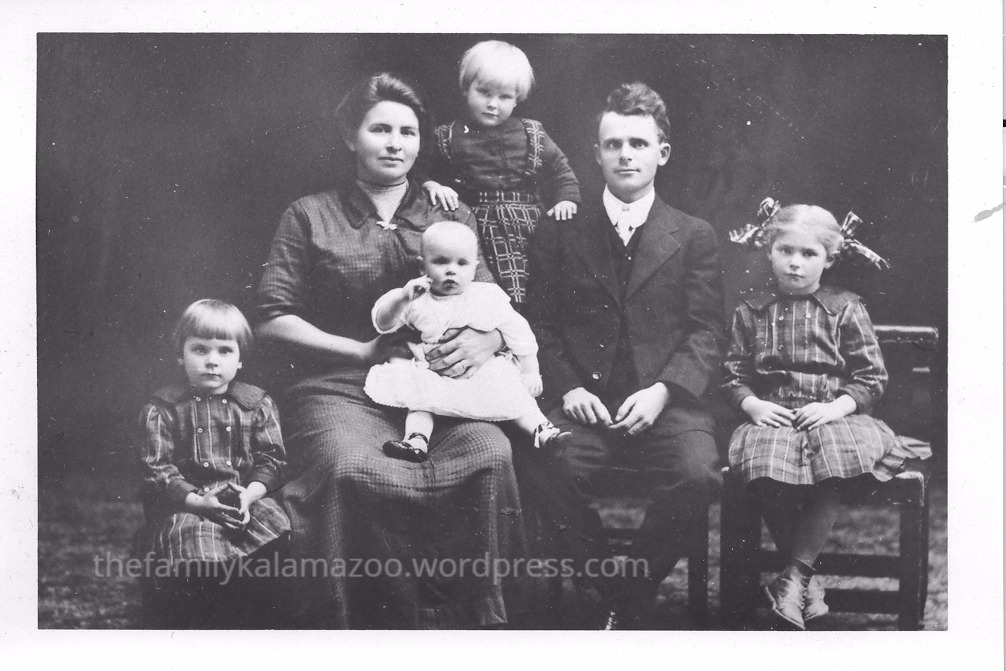
Edna, Clara (holding Pete), Vena, Charles, and Dot

The farmhouse had a big dining room in the middle of the first floor.  The kitchen was out in back and had a coal-burning stove/oven.  The front room was tiny, with barely enough room for the big wood-burning stove and her father’s rocking chair.  He sat and smoked his pipes and cigars in the evening.  He played cribbage with a friend with a small chair pulled up to the fire.  All the downstairs had linoleum laid on it after Edna grew up and moved away from home; while she was home, it was a wooden floor.  The upstairs was two rooms:  a bedroom for her parents and one big bedroom for the five children.  They slept five to one bed, with the boys sleeping across the width at the girls’ feet.  It was COLD up there in the Michigan winters–with no heat.  Edna’s father had built the house; most of the furniture was handmade, too, some of it quite old.

Edna’s farm had a big family of cats, but they weren’t house pets.  They were kept to kill the mice in the barn.  Edna’s job was to put food and water out on the back porch for them.  The farm had lots of corn fields, cows, pigs, and an apple orchard.  It even had a small stream for fishing, but you had to drive the wagon down there, it was so far away.

But Edna and her siblings were used to long walks.  The three girls walked three miles to school everyday and three miles back home.  They kept each other warm by cuddling together as they walked.  Once in a great while, during the worst weather, Edna’s mother drove all the children to school in a tiny black Amish buggy.

Sometimes the girls were naughty.  For instance, they knew their parents had a store charge at the grocery store in Caledonia.  A couple of times the girls couldn’t resist and charged a giant candy bar or a banana.  (Fruit was a big treat; Edna only saw oranges at Christmastime).  When their parents found out later, they would “get bawled out.”

Edna’s family didn’t have much money, except for owning the farm, but her father collected a few hundred books.  He had several series of books for children which offered moral and religious instruction, as well as some adventure books.  Edna had plenty to read while she was growing up.  But she didn’t have a lot of time to read because she always had a lot of chores.  Farms need a lot of care!  Edna learned to cook basic meat, potato, and vegetable dishes while she lived at home with her family.  She also became a good baker, making delicious cookies, pies, and cakes.  She wanted to be a teacher or a writer when she grew up, but she also wanted to have a home and a family and to take good care of them.

###

I’ve posted photos of the farm where Edna grew up before:

Final note: This turned out to be a great project for my daughter and for me because it was about our shared knowledge–some of what my grandmother taught my mother was taught to me and taught, in turn, to my daughter–and we both learned about history through the life of an ordinary girl. And, yes, my daughter did get to be an American Girl paperdoll. You can read the story and see the photos here: An American Girl’s Family Tree


Read Full Post »

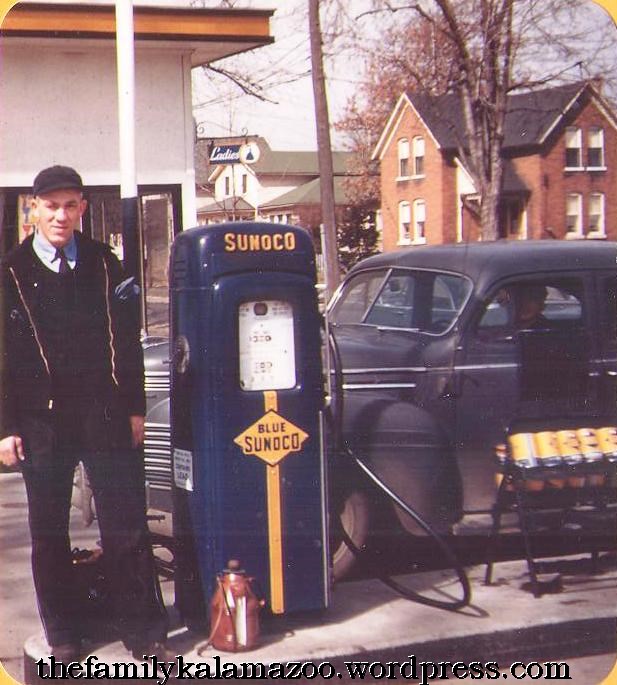
I like to talk about Grandpa Adrian Zuidweg’s Sunoco gas station because it seemed a little magical when I was a kid. Here is how it looked 20 years before my time–in 1939:

I don’t know who lived in the house on each side in 1939, but I did 20 years later. Maybe it was the same people. The man who lived in the house on the left of the photo (to the right of the station) was Willie Dunn. When I was newly married and he was moving, he let me have an antique oak library desk from the house. I’m looking at it right now. Simple Queen Anne legs and two drawers without pulls.

Here’s a photo I’ve posted before–the view is different, so here you can see a sampling of the houses across the street on Balch Street. Any ideas on the date of this photo? The pump looks different than the ones in the 1939 photo, and then there is the car to help. I bet Uncle Don would know!

Grandpa by the pump at his Sunoco station

Grandpa by the pump at his Sunoco station

The pumps in the first photo have globes on the top of them. Does anybody know if the globes lit up like lighted signs? I found a photo of a vintage pump that looks like that type:

There is something to be said for such a fancy model, but it was probably more expensive to build and to maintain. In case you’re wondering, yes, people collect old gas station memorabilia–anything with a brand name and a logo!

Here is what Grandpa’s gas station looks like today. Or shall I say the site of the station. You see that white house? You can see all the way to that house because Willie Dunn’s house is gone.

When you were a kid, did you enjoy visiting or playing at or working at a small business in your family?

Read Full Post »

I wrote about my great-grandfather, Charles Mulder, and his farm in Caledonia, Michigan here. That post also lists other links that pertain to Great Grandpa and the Mulders.

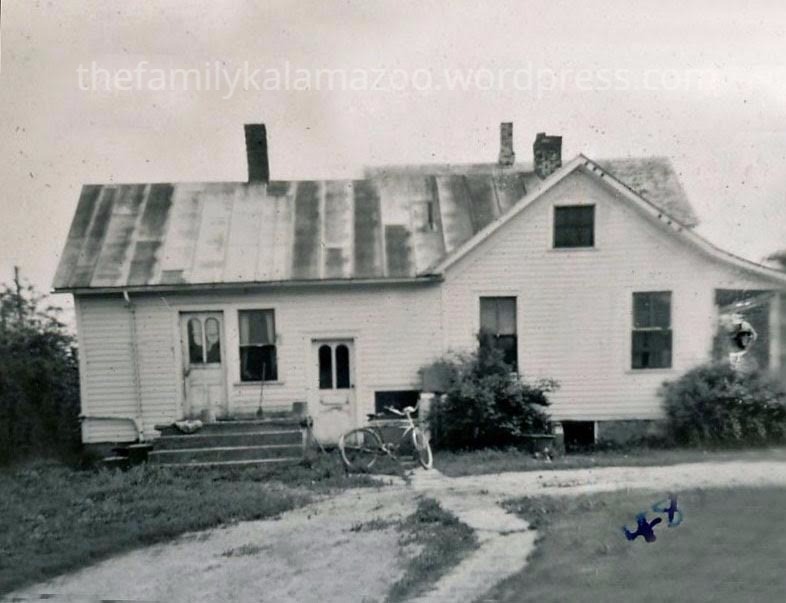
At the time I didn’t have a good photograph of the farm, but now I have discovered a good one of the farmhouse, just as I remember it. Facing this way, the apple tree the swing hung from was to the left. The fields were also to the left, the road to the right. Because of the porch, you can see that the front of the house is on the right side.

Look at that! Is it the same swing I swung on or a different one? This is Mom’s cousin Elaine playing at the farm.

Do you have any fond farm memories?

Read Full Post »

I lost my oldest cat, Mac. He passed away a week ago last Sunday. His actual name was Macavity, and he was named after T.S. Eliot’s “Mystery Cat” (in the poem and the Broadway musical). I’m a dedicated animal lover, so I always like to see evidence of animals in the lives of my ancestors. I wrote a post called Dogs in the Family that showcases some photos of pets from 100 years ago, as well as my own four cats.

I found a postcard from 105 years ago that features a type of tabby cat. My cat Mac was an orange and white tabby, so this caught my attention. It’s part of a collection of cards received by Alice Leeuwenhoek.

This card was mailed from Grand Rapids, Michigan, in 1910. Alice was my grandfather’s first cousin–their mothers were sisters–and she was born in Kalamazoo in 1897.

I wish I knew what the inside joke about eating well means! Alice was a very slender woman.

Notice that the postcard isn’t signed. So frustrating! Does it sound like a good friend or a relative?  Does the handwriting give a clue? Alice was 13 years old when she received this card.

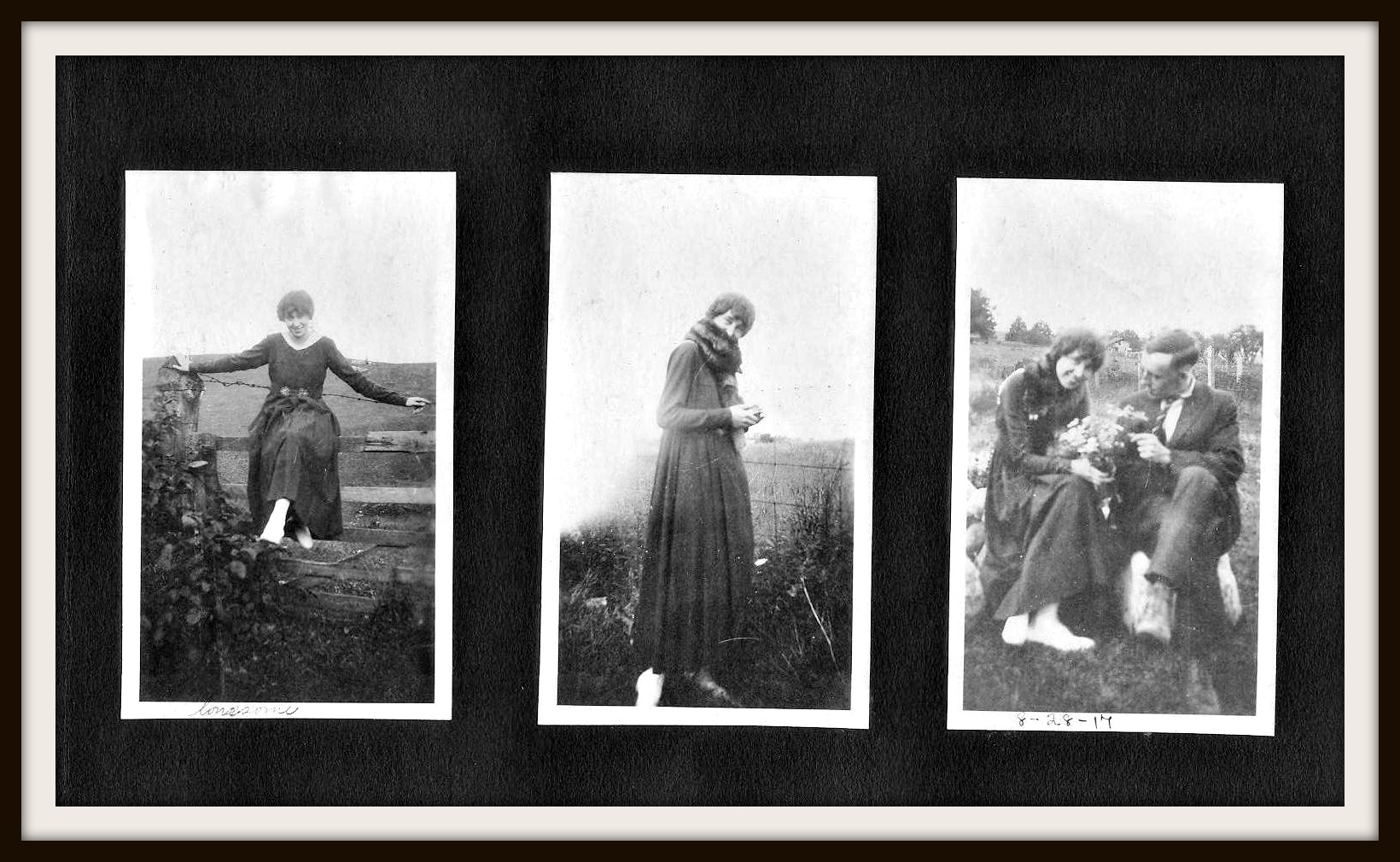
Here she is seven years later (age 20)–dressing fashionably, posing, and with a young man!

Alice wouldn’t marry until 1923, at age 26, and it wasn’t to the man in this photo.

If you go to Dogs in the Family, you will see a photo of Alice as a child with her aunt, my great-grandmother Cora DeKorn Zuidweg, and my grandfather, Adrian Zuidweg–with the family dogs.

I’ll leave you with photo of Alice and moi when I was 3 years old. Alice was 61. I knew Alice quite well when I was a child. She passed away when I was 8 years old, in 1963.

Read Full Post »

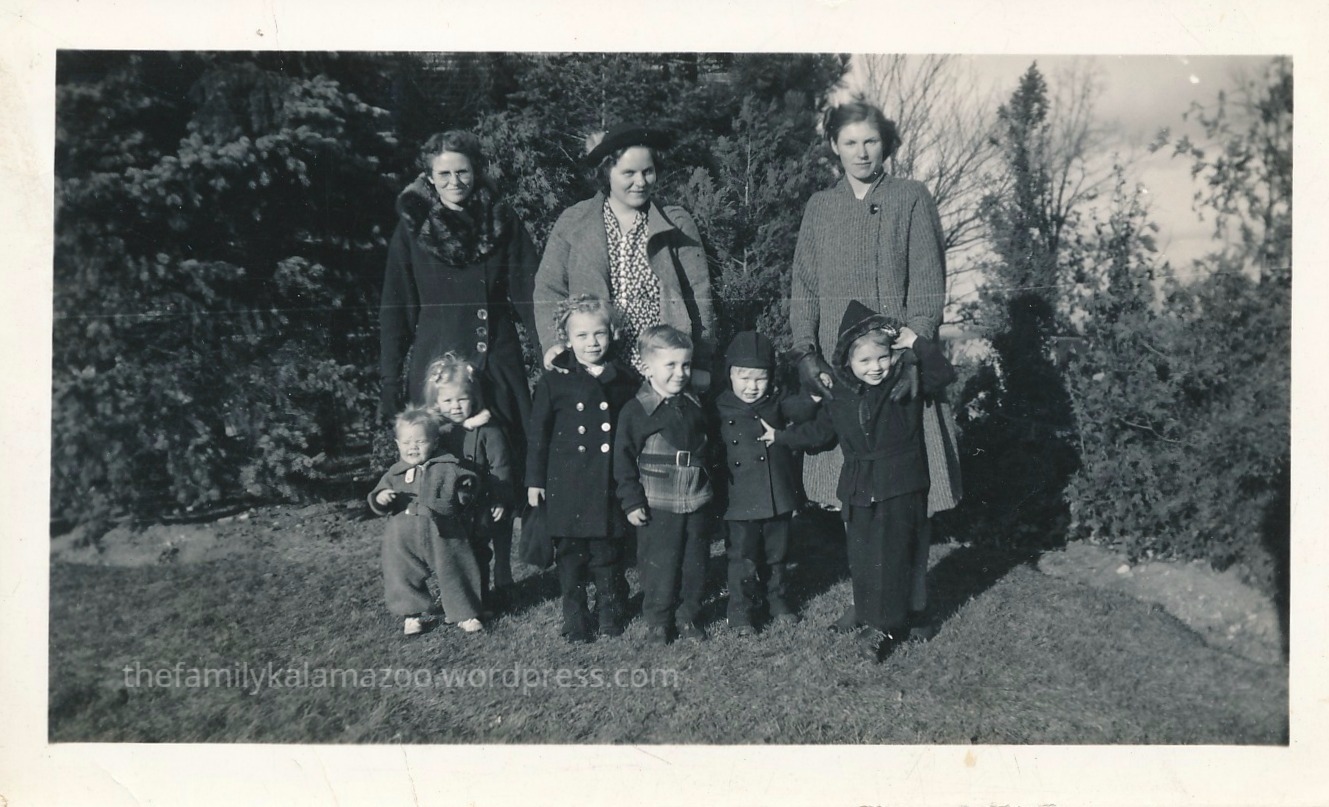
I am digitizing some photographs for my mother, and I found this picture that I just love. It’s my mother’s mother (in the middle) with her two sisters. They are standing with their children–the ones who were born at this point. By the age of the children here, I would say that the picture was taken around 1939-40. What is a little confusing is that nobody looks pregnant and two of them should have been pregnant around that time, unless there are tiny babies asleep just outside the boundaries of the pic!

The photo would have been taken somewhere in southwestern Michigan. CLICK ON THE PHOTO TO ENLARGE!

From left to right: Vena with her two oldest daughters, then grandma (Lucille Edna Mulder Zuidweg) with my mom (Janet) and Uncle Don, then Dorothy with her two oldest. Each of them had another child after the first two.

I’ve written posts about my grandmother. Dorothy showed up a bit, too, because the girls graduated high school together. You can read about their graduation here and here and here. In this post, Grandma, Dorothy, and Vena are shown as children with their parents and one brother (again, the youngest had not yet been born).  Grandma’s teaching contract from 1931 can be found here.

If you never read my posts about Grandma’s high school scrapbook, check out the links. It’s a gorgeous scrapbook from her graduation in 1929. She was Class Historian and her older sister Dorothy was salutatorian.

If anybody in the family wants me to post the names of the children here, I will add them to the post. Just let me know.

Isn’t my mom, the tallest one here, a cutie in her double-breasted coat?

Read Full Post »

How’s that for a weird title?! If you didn’t notice I’ve been on a break, please don’t tell me or I’ll feel bad ;). I am back, but only on a limited basis because of all these things like work and life that keep intruding on my genealogy research and blog reading! I wanted to stop in today to say:

HAPPY NEW YEAR!!!!

Let’s make 2015 the best yet!!

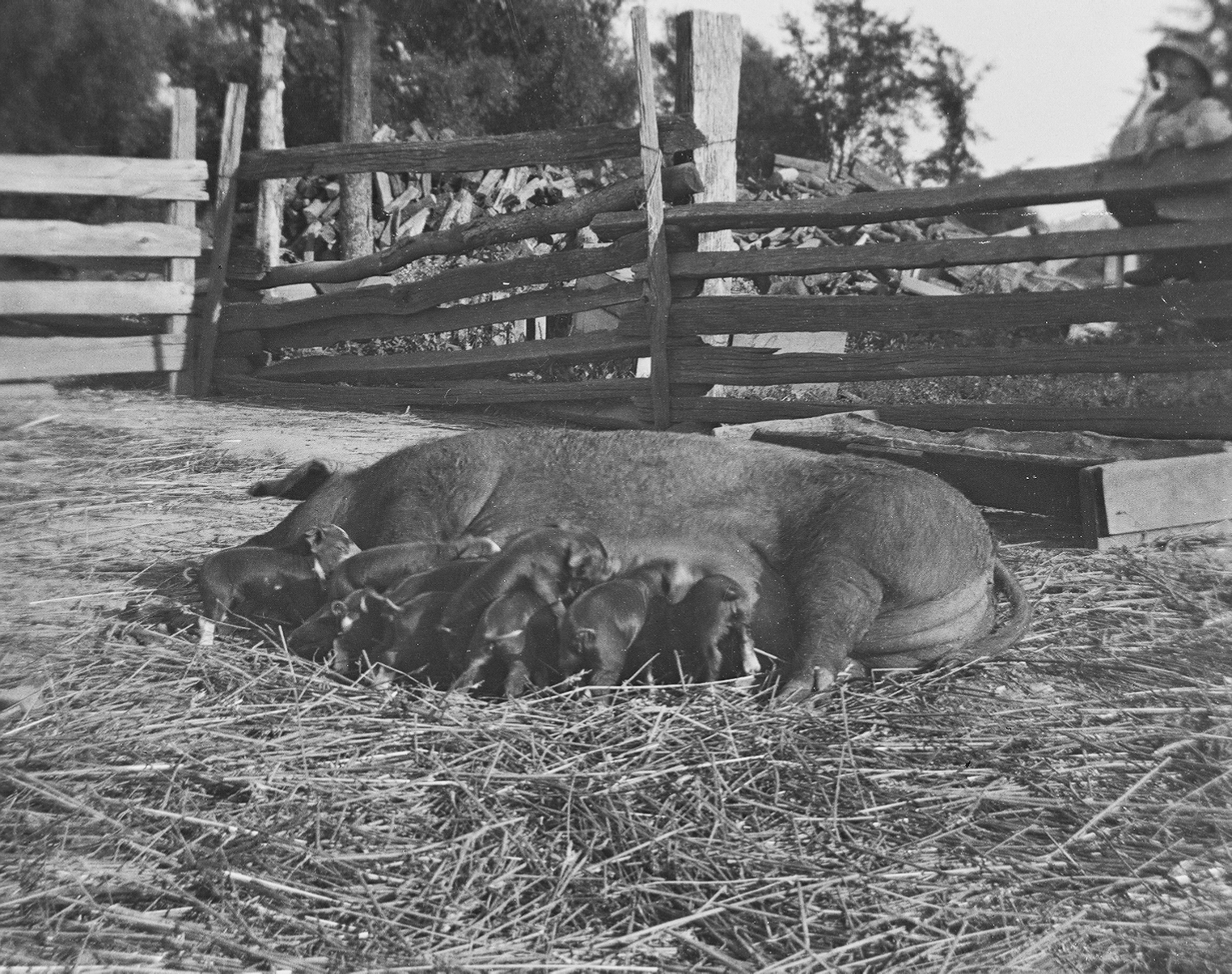
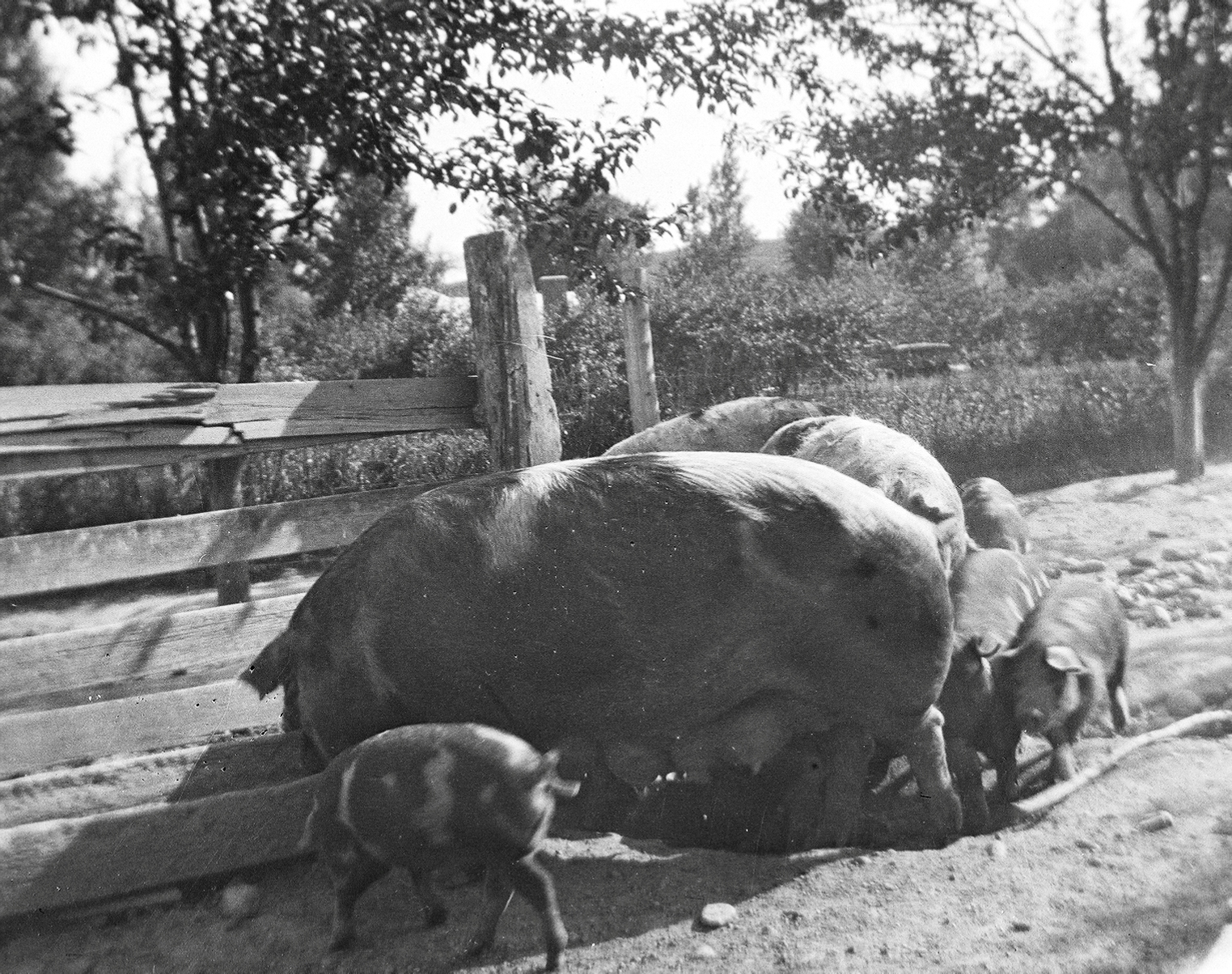
I have a set of old glass negatives that have been digitized. I’ve shared a few on this blog. Here is one I have not shared. At first I thought it was a photo of a pig (hog? what is the difference?) with her very cute babies. I am quite certain this was taken by Joseph DeKorn at Brook Lodge in southwestern Michigan (I’ve written about the place here).

But when I looked more carefully I saw Grandpa sitting in the upper right corner! I wonder what he was thinking and if he was tired. He seemed to be visiting the resort with his cousin and uncle.

Here are some more pig photos from Uncle Joe.

These photos are 100 years old. What remnants of our lives will there be in 100 years? Maybe too many!


Read Full Post »

I’ve traveled to California, Sedona, and Michigan in the past few weeks.  Needless to say, I am behind in my work even more than usual. I want to continue Theresa Pake’s story and to explore the Jennie DeKorn Culver photos more, but these projects take a good deal of time.

Instead, I decided to take a look at an old postcard postmarked 1911. The postcard is to Alice Leewenhoek, Richard DeKorn’s granddaughter through his daughter Jennie. Alice was an only child who lived with her mother Jennie and her father who Grandpa always called “Uncle Lou”–Lambertus Leewenhoek.

In the photo below, Alice is sitting with a friend, neighbor, or relative against the exterior wall of Richard DeKorn’s house. She holds a doll in her lap and is petting Tom or Carlo (if I had to guess, I would say it’s Tom).


Alice Leeuwenhoek with doll

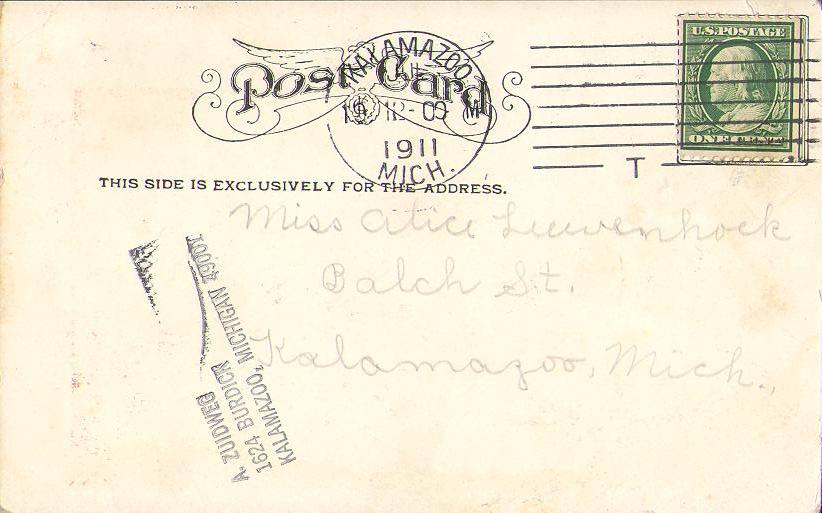
On this postcard, Nellie Bradt is thanking Alice for her “postal.” Nellie’s address is marked as 1130 S. Burdick Street.  The photograph is Bronson Park, which is the beautiful “town square” of Kalamazoo.

Bronson park front postcard


After seeing that the mailing address is listed as Balch St. and doesn’t include Alice’s street number (not uncommon for that time period in Kalamazoo), I went to my family tree on Ancestry and discovered that I had never found the Leewenhoek family on the 1910 census.  So I tried something different and looked for the 1910 census on Family Search. Bingo.  Instead of Lambertus Leewenhoek, I found Lamburtos Leenwenhock, at 110 Balch Street, Kalamazoo, Michigan. Uncle Lou was living with his wife Jennie and his daughter Alice who was 13 years old in that year–and therefore around 14 at the time of the postcard in 1911. New info: According to Uncle Don, they lived in the wooden house just behind the Richard DeKorn brick house.

Can you read anything more on the postmark besides the city, state, and year?  Is it December 9? Or does it say something else?

Bronson park back postcard


Grandpa and Alice were first cousins, their mothers were sisters.

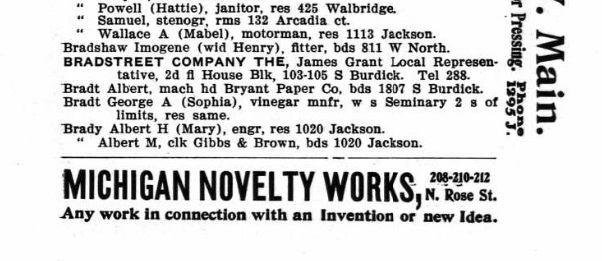
I haven’t been able to find Nellie Bradt in the 1910 census, but I did find her in an 1899 city directory. I then found her parents in a 1905 directory. I think I can find them more years, too. But I don’t understand how to read these entries. The 1899 entries are entirely different from the 1905, but neither one really gives me the address.

Here is the 1899 that lists Nellie with her parents, Mr. and Mrs. George A. Bradt. I understand they lived in the City of Kalamazoo. And I know “a” means acreage, but not how to interpret what any of this means or how it connects with an address.

Nellie Bradt 1899 city directory


Here is the 1905 directory entry. Nellie isn’t mentioned, but her parents are. What in the world does it mean?

Nellie Bradt's parents 1905 city directory

Is there a way to search for Nellie in the 1910 census using the 1130 S. Burdick Street address she gives? Can I search the census by address?

Note that many of my relatives lived in this Burdick/Balch neighborhood. When I look at the census records from late 19th and early 20th century, I see that almost everyone, if not everyone, who lived there was Dutch.

My grandfather’s gas station was at the corner of Burdick and Balch, across the street from the Richard DeKorn house. Grandpa lived in that house for part of his childhood, with his parents and grandfather, Richard. When he built his house down the block on Burdick, he was staying in the same general area his family had lived in for decades. He continued to work at his station and live in his house until he retired and moved to Portage.

I remember as a child meeting Mrs. Bradt Braat who lived next door to the gas station. The name is pronounced, by the way, like the sausages that go with beer. I wonder if she was related to the Nellie Bradt who wrote this postcard. Mom? Uncle Don? New info: no, she must not be as they were a Belgian family (see comments below).

Alice Leewenhoek was my grandfather’s cousin. Note that the postcard is stamped with the name and address of Grandpa’s father, A. Zuidweg. I wonder why?

One postcard. So many questions!

Read Full Post »

« Newer Posts - Older Posts »