Feeds:
Posts
Comments

A Kalamazoo Saloon?

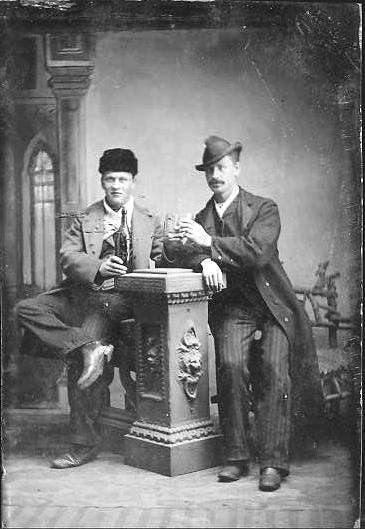
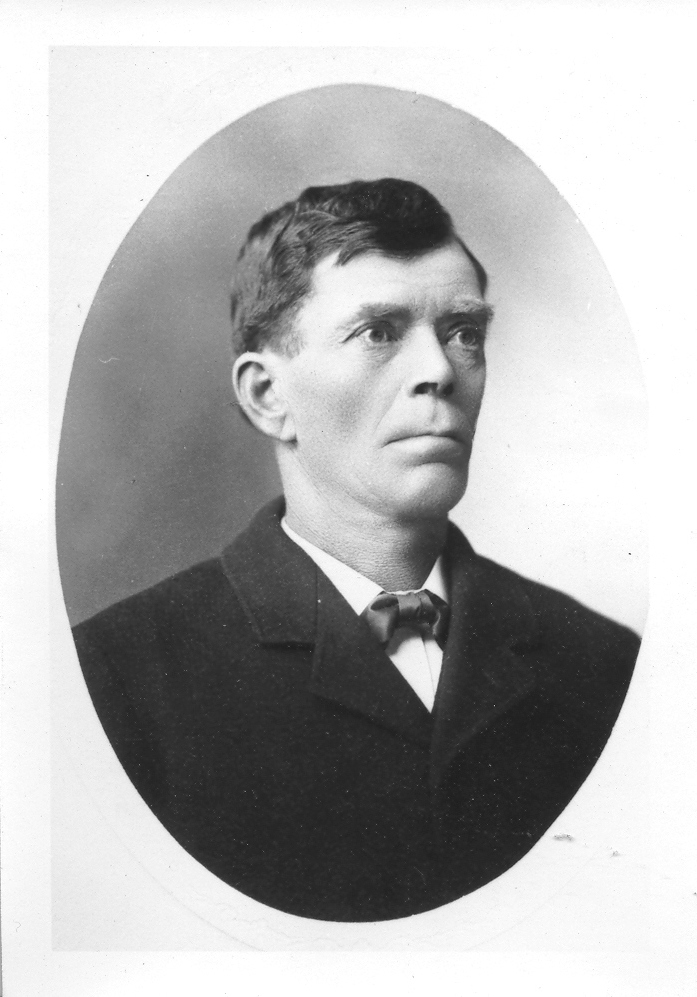
This photograph shows up in both the stack of old photos I was given by my grandparents and in the glass negatives which had belonged to the family photographer Uncle Joe DeKorn (1881-1962).  My grandfather couldn’t identify it.  I wonder if it’s related to the photo in our collection of Dutch Arnold, the famous Kalamazoo saloon keeper.

Are there clues in this photo which anyone can identify?  The only thing I can be pretty sure of is that it was taken in Michigan and, most likely, in Kalamazoo.

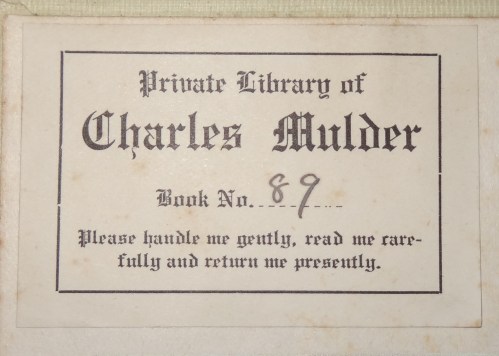
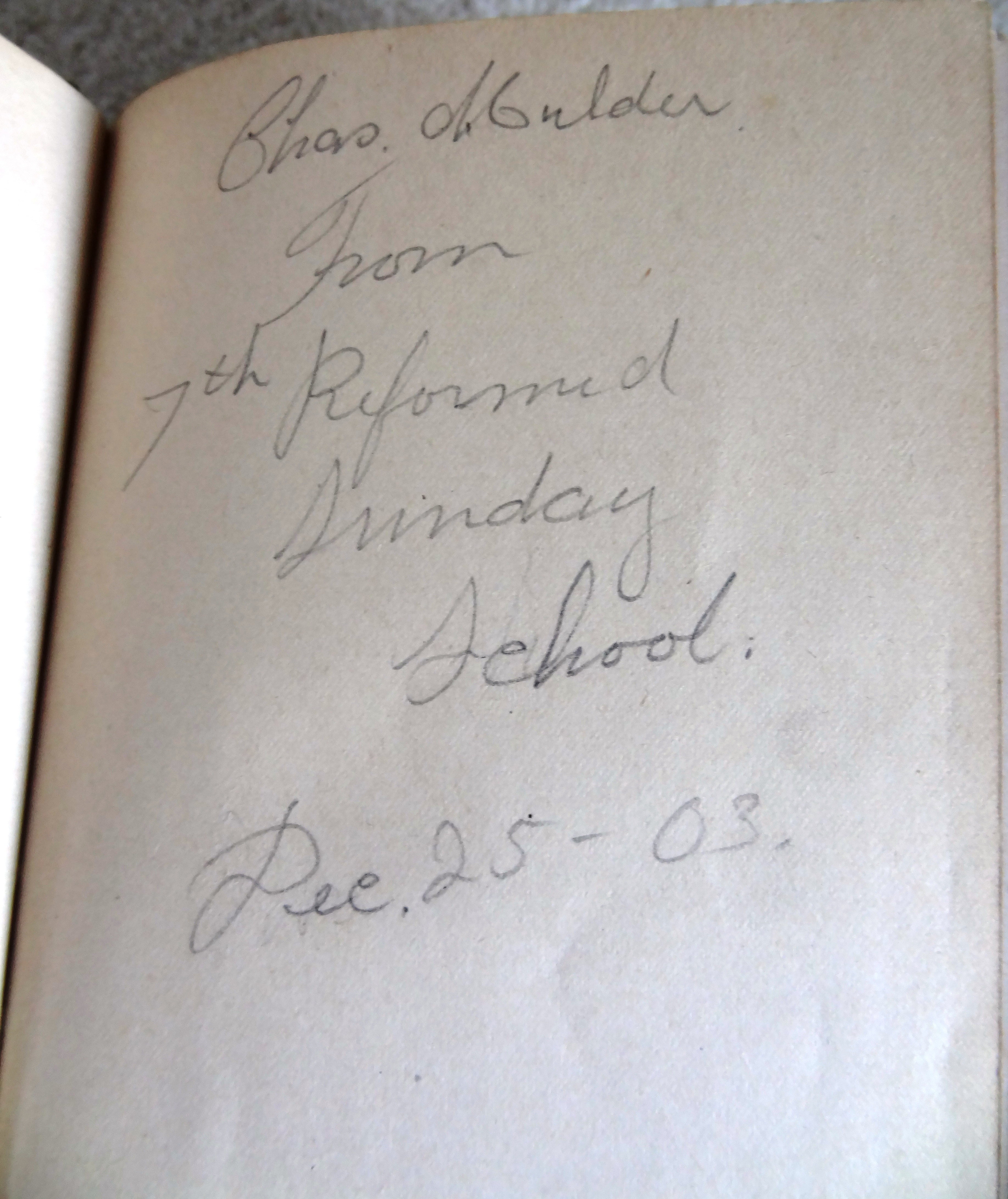
When I was a little girl and my great-grandfather Charles Mulder and his wife Margaret sold the farm and moved to a different house, I was given my great grandfather’s old books.  These were books which dated back to his childhood and youth.  One of the books was signed with the date December 25, 1903; I shared that on a recent post and will re-post a thumbnail here.  However, I think these books date to the late 19th century.  Great Grandpa was born in 1885.

The most beautiful set were little bone colored books with light blue and gilt, and I read every one of them.  My favorites were the one which were rags to riches stories with strong morals.  These were similar to Horatio Alger stories in that the riches were not truly great wealth, but the ability to have self-respect within our society and to do good for others.  My least favorites were the ones which sounded too much like prayers.

These were published by The American Tract Society, which is still in business.  According to Wikipedia:
The American Tract Society (ATS) is a nonprofit, nonsectarian but evangelical organization founded on May 11, 1825 in New York City for the purpose of publishing and disseminating Christian literature. ATS traces its lineage back through the New York Tract Society (1812) and the New England Tract Society (1814) to the Religious Tract Society of London, begun in 1799. Over the years, ATS has produced and distributed many millions of pieces of literature.

I wish the books were in better shape, but in the nearly 50 years I have owned them, they have really started to show their age.  They are spotting, and the bindings are getting loose.  Before too long, I will have owned them for half their lifetime.

Book #89I wonder how many there were!

Book #89
I wonder how many there were!

In case you would like to start reading one:

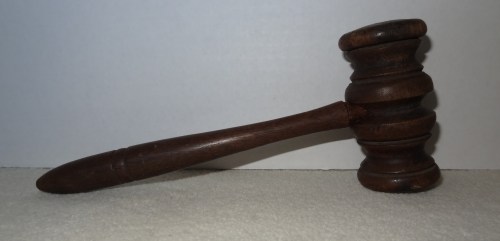
This gavel belonged to my great-grandfather Charles Mulder of Caledonia, Michigan.

He was my maternal grandmother‘s father and his name at birth, in 1885 in Goes, Zeeland, the Netherlands, was Karel Pieter Phillipus Mulder.  His great-great-grandfather was Carel Mulder, born March 8, 1780 in Goes, the Netherlands.  His occupation was a jailor’s hand.

This same Carel Mulder is also an ancestor of my maternal grandfather.  I wrote about the discovery of this coincidence in an earlier post.

Great Grandpa was a working farmer for many years.  I remember his farm with great affection because it had a rope swing from an apple tree, a barn, a chicken coop, outhouse, and fields where we once went on a hayride. Across the country road, a the thick woods nurtured a colorful assortment of wild flowers.

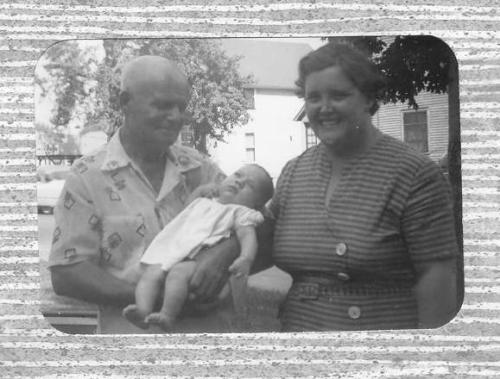
Great Grandpa, me (the first great grandchild), and Margaret

Great Grandpa, me (the first great-grandchild), and Margaret

In the above photo, Great Grandpa is with the only “great-grandmother” I knew, his second wife, Margaret, a very sweet lady.  My great-grandmother Clara passed away from uterine cancer two years before I was born.

Charles and Clara (Waldeck) Mulder

Charles and Clara (Waldeck) Mulder

My father told me that Great Grandpa held the position of Township Supervisor years ago and that is where he used this gavel.

On pages 252-256 of Ernest B. Fisher’s 1918 book, Grand Rapids and Kent County, Michigan: historical account of …, Volume 1I discovered more specific information about Great Grandpa and Caledonia.

Fisher explains that Caledonia was a “wilderness” with narrow trails by the local Native Americans (“red men,” according to Fisher) when Europeans first arrived there.  He states:

At the mouth of Coldwater river was a great Indian camping ground and burial place. The Indians did not leave there entirely until a comparatively recent date. One of them, old Soh-na-go, or “Squirrel,” was seen at quite a late day visiting the burial place and the hunting grounds of his fathers, but the “white man’s axe” had been there and it was no longer a home for him.

He goes on to say:

Caledonia, situated on Section 29, is a prosperous village of 600 people. It was settled in 1850, the first plat was made in 1870, and it reached the dignity of an incorporated municipality in 1888. It is situated on the Michigan Central railroad and hence has good shipping facilities which make it the center of trade for a wide extent of fertile country. It has one Methodist and two United Brethren churches, a bank, and a weekly newspaper, the News, and the requisite number of mercantile establishments and general industries.

The township of Caledonia is one of the best agricultural districts in Kent county, and the thrifty farmers are profitably engaged in all classes of diversified farming.

What interested me is that I saw that inside one of Great Grandpa’s books he went to a (Dutch) Reformed Church in 1903.  He was so ensconced in life in Caledonia by 1915 that he was Township Supervisor (and Grandma was born in 1912 in Caledonia).  The quote above says that there was one Methodist and two United Brethren churches, and I do know that my grandmother was a Methodist and that we used to have family reunions in the basement of the Methodist Church in Caledonia when I was a kid.  So where did he go to the Reformed Church?

According to records I found through ancestry.com, he immigrated to the United States with his family when he was two or three and grew up in Grand Rapids, not out in the country on a farm, after all.

Back to what Mr. Fisher had to tell me about my great-grandfather:

Below is given a list of the supervisors of the township from its organization down to the present time: 1840, John P. McNaughton; 1842, Norman Foster; 1844, Roswell F. Tyler and William Gibson; 1845, John A. Cornell; 1846, Justus G. Beach; 1848, Reuben H. Smith; 1849, William H. Brown; 1854, Lyman Gerould; 1857, Zabin Williams; 1858, William H. Brown; 1860, Warren S. Hale; 1861, William H. Brown; 1863, William J. Wood; 1865, Adam B. Sherk; 1868, William J. Wood; 1869, Marcus Buell; 1870, Adam B. Sherk; 1871, Robert S. Jackson; 1872, William J. Wood; 1873, Martin Whitney; 1877, Austin W. Hill; 1878, Marcus Buell; 1879, Sherman T. Colson; 1889, Alfred W. Stow; 1891, Sherman T. Colson; 1895, Eugene Ward; 1900, Joseph E. Kennedy; 1901, Alfred Newman; 1904, EugeneWard; 1906, Alfred Newman; 1907, Frederick W. Ruehs; 1912, Merrill M. Kriger; 1914, John J. Luneke; 1915, Charles R. Mulder, present incumbent.

Great Grandpa was the Supervisor of the Township of Caledonia.  He used this gavel to call the meetings to order.  Maybe this desire for order comes to him from his great-great-grandfather, the jailor’s hand.

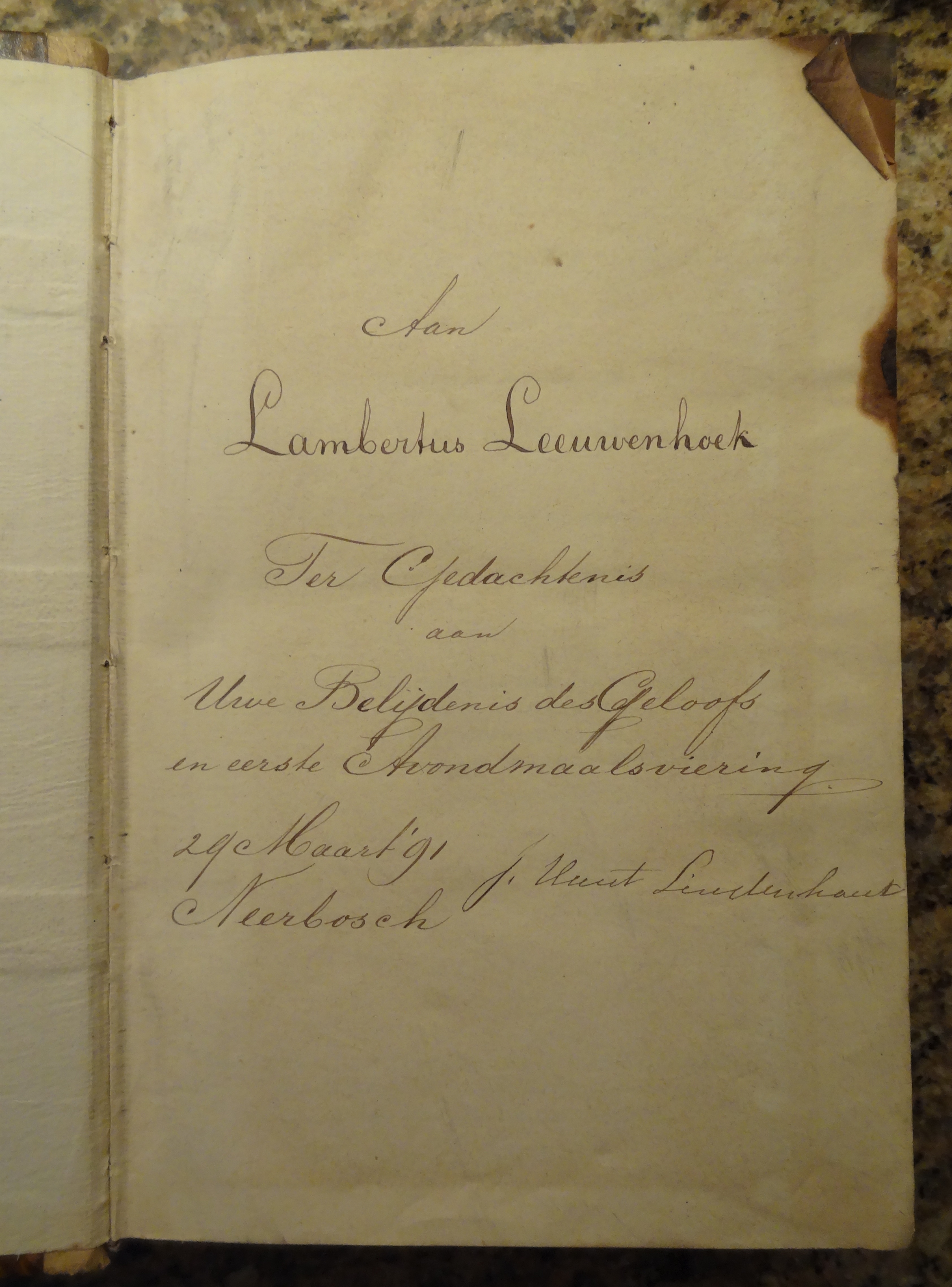
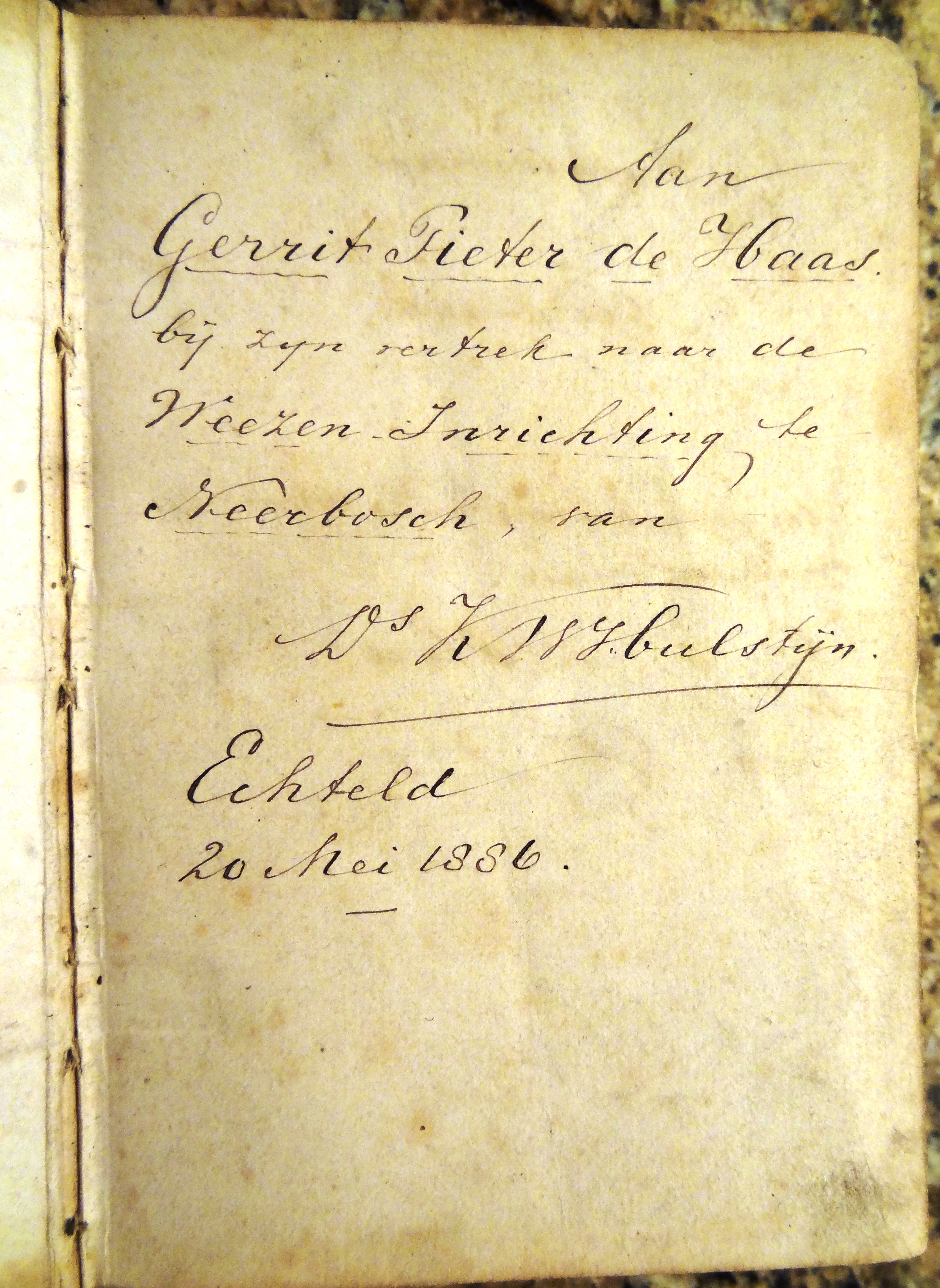
Ok, so maybe it’s not a full collection.  Uncle Lou (Lambertus Leeuwenhoek) left behind two Bibles, both printed in Dutch.  One is a full size Bible to read at home.  The other is smaller, perhaps the size he could tuck into his pocket and carry around.

Uncle Lou's Bijbels

Uncle Lou’s Bijbels

When my grandfather and grandmother gave me the family photographs and glass negatives, they showed me a family Bible or Bijbel, as it is called in Dutch. It wasn’t one of these, but one that had my direct family tree written inside the cover.  That was what my grandparents used to help guide their memories about the people associated with the photographs.  I don’t know what has happened to the Bible.  I hope someone in the family has it and is taking good care of it.  If you are reading this, Bible-keeper, please let me know it’s safe and, if you can, send me some pix!

The insides of Uncle Lou’s Bijbels

The writing inside the front of the larger Bible

The writing inside the front of the larger Bible

These words are printed inside the front of the smaller Bijbel

These words are printed inside the front of the smaller Bijbel

Inside the front of the smaller Bijbel, next page

Inside the front of the smaller Bijbel, next page

Lou wrote his name at the back of this Bijbel

Lou wrote his name at the back of this Bijbel

Where in the Heck is Kapelle?

Since I’ve been talking a lot about these DeKorn ancestors and so many of them were born in Kapelle, Zeeland, the Netherlands, I thought I’d scout around online and see what I could see of the town.  I’ve only been to Holland once, for a very brief time, and I didn’t know what towns to look for at the time–so I’ve never seen the area my ancestors came from.

As I showed in a previous post, Kapelle is located in the Dutch province of Zeeland, very close to Goes.  It’s not all that far from Middelburg, the capital of Zeeland.

Kapelle is located at the A flag and Goes is just to the left

Kapelle is located at the A flag and Goes is just to the left

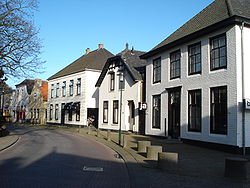
These are houses on the Kerkplein (church square):

Kapellefrom Wikipedia

Kapelle
from Wikipedia

Here is Kapelle in 1910:

Kapelle,Zeeland Zuid Beveland gezin C. van Willegen, 8 kinderen in Klederdracht , meubelhandel en winkel in Galanterieen, hondenkar rond 1910

English: Kapelle (Zeeland NL) train station, r...

Kapelle train station

Last post I showed you the photo of my great-great-great-grandfather, Boudewijn de Korne.  I just discovered new information about him written by his grandson Joseph DeKorn.  Boudewijn, his wife Johanna, and their two children travelled to the United States with Gerrit Remine (Gerrard Remijnse), who was Johanna’s brother.

They travelled on a sailing vessel and arrived at Kalamazoo, Michigan on June 22, 1856.  However, “they located in Zeeland, Michigan” for several years.  “The voyage across was bad and long.”  Joseph’s father Richard and Aunt Mary told him it took 90 days, but Joseph didn’t believe it was actually that long.

I mentioned that Boudewijn and his wife Johanna had two living children when they left the Netherlands.  The older is Richard DeKorn; I have introduced him several times before.  Note that Richard’s generation appears to have dropped the final E from their last name.

Richard:  Dirk de Korne, born 21 Aug 1851, Kapelle, Zeeland, the Netherlands; died 26 Jan 1930, Kalamazoo,
Kalamazoo, Michigan, United States.  Also known as Richard and, when younger, Derrick.

Richard DeKorn (Dirk de Korne)

Richard DeKorn (Dirk de Korne)

Mary:  Maria Catharina de Korne was born on 4 Jan 1855 in Kapelle, Zeeland, the Netherlands.  Mary married John DeSmit in Kalamazoo in 1873 and they had at eight children.  Her daughter Frances married a Flipse.  When I got married in 1975 my mother took me to Flipse Flower shop to order my bridal bouquet because they were “shirt tail relatives.”  It’s hard to imagine it from this photo, but Mary only died two years before I was born.

Mary DeKorn DeSmit

Mary DeKorn DeSmit

After the family moved to the United States, Boudewijn and Johanna had another daughter, Adriana, in 1959, who is one year old in the 1860 census.   Nothing after that.

However, a 10-year-old daughter Jennie shows up in the 1870 census, which Jose from Enhanced News Archive was kind enough to find for me.

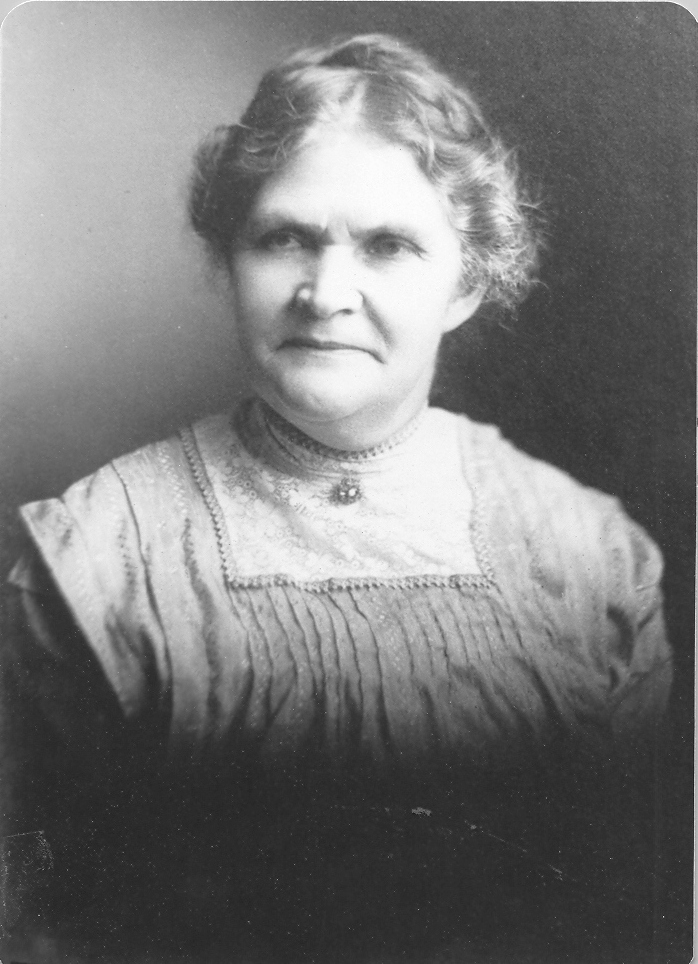
Joseph DeKorn’s documentation mentions Jennie, but not Adriana.  My grandfather identified the woman in this photograph as Jennie, Richard’s sister, who married a man named John Culver and eventually moved to Seattle, Washington.  She died in Pierce, Washington, on July 4, 1947.  According to her death record, she was born around 1861.  One difficulty in searching is that there is another Jennie Culver (married to Earl) who lived in Kalamazoo during Jennie DeKorn Culver’s lifetime.

So the question remains: was there an Adriana born in 1859 as well as Jennie born in 1860 or 1861?  Or are they the same person?  If Adriana had lived and kept her name, she would have been mentioned in Joseph’s statement.  So either she passed away as an infant or she became known as Jennie or, perhaps most likely, the census got her name wrong to begin with.

UPDATE: IT IS NOW 2018, FIVE YEARS LATER, AND I STILL DO NOT HAVE BIRTH OR BAPTISM INFORMATION ABOUT JENNIE OR ADRIANA. I AM GOING TO ASSUME FOR NOW THAT JENNIE IS ADRIANA–UNTIL I FIND OUT TO THE CONTRARY. THIS IS BECAUSE JENNIE IS A COMMON NICKNAME FOR ADRIANA.

Jennie DeKorn Culver

Jennie DeKorn Culver

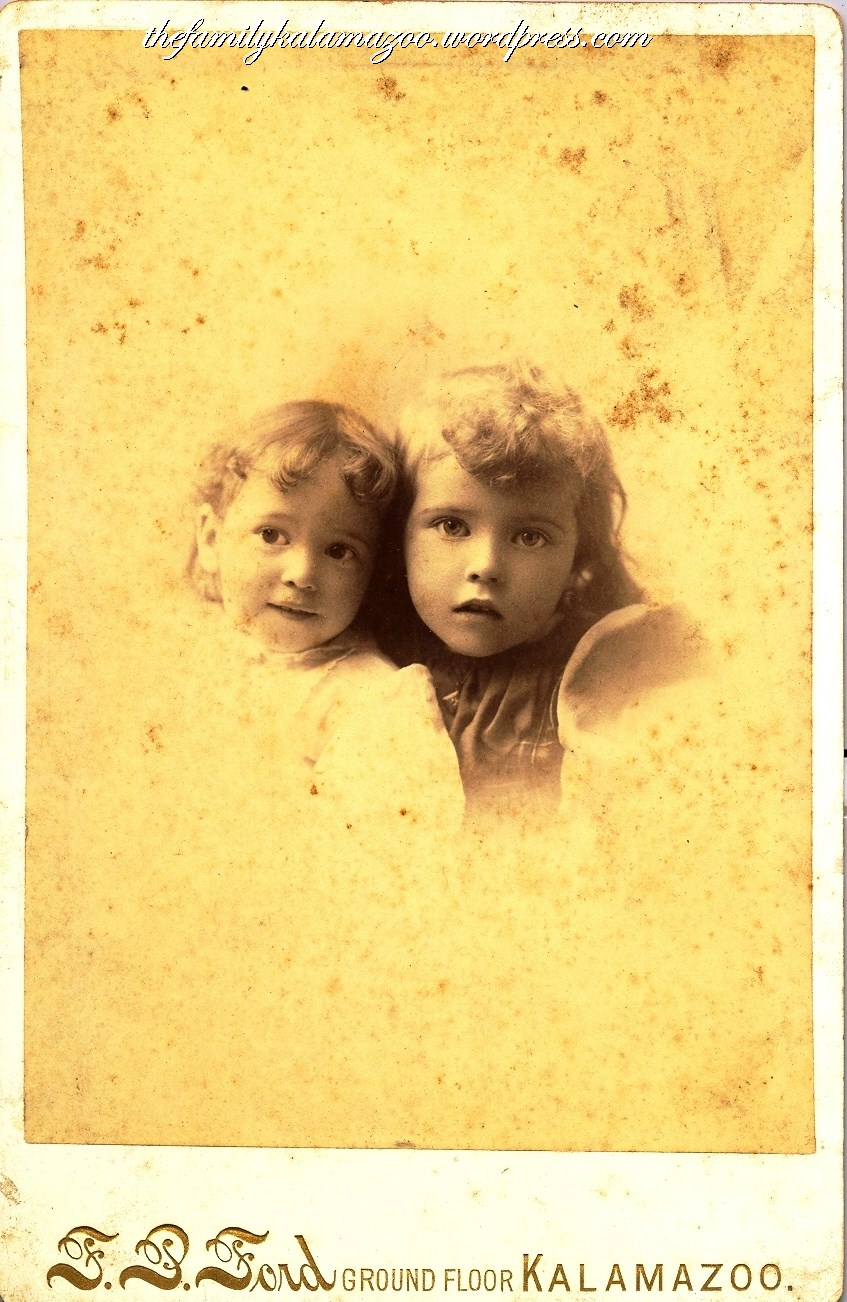
This is a photo of Jenny and John Culver’s children:

The Culver Children

The Culver Children

Dutch Arnold

Dutch Arnold

Dutch Arnold was the saloon keeper on S. Burdick Street, Kalamazoo, Michigan.

My grandfather had this photograph and explained to me that he was “Dutch Arnold, the saloon keeper,” but I don’t believe Dutch was a relative.

So I looked him up and found out that the man has a history.

From the Kalamazoo Gazette files

From the Kalamazoo Gazette files

Read more articlesabout Dutch.

Last post I told you about my great-great-grandmother Alice Paak (Peek) DeKorn. She had three younger sisters, who all grew up in Kalamazoo, as well.  There were two brothers, but I have not tracked them down yet.  To clarify about the last name: Grandpa first identified the name to me as Paak, but genealogical research in the Netherlands shows that the name is actually Peek.

As a reminder, this is Alice:

Alice Paak DeKorn

Alice Peek DeKorn

Here is her sister Annie, born Anna Catharina Peek on January 6, 1855 in Lexmond, Zuid-Holland, the Netherlands.

Here is her sister Mary, born Maaike Peek on July 29, 1859 in Lexmond, Zuid-Holland, the Netherlands.

Mary Paak Remine

Mary Peek Remine

Here is her sister Carrie, born Cornelia Peek on 8 May, 1862 in Lexmond, Zuid-Holland, the Netherlands.

Carrie Paak Waruf

Carrie Peek Waruf

While the Peek girls are all pretty, clearly my great great is the prettiest of all!

Alice Paak (Peek) DeKorn's shawl

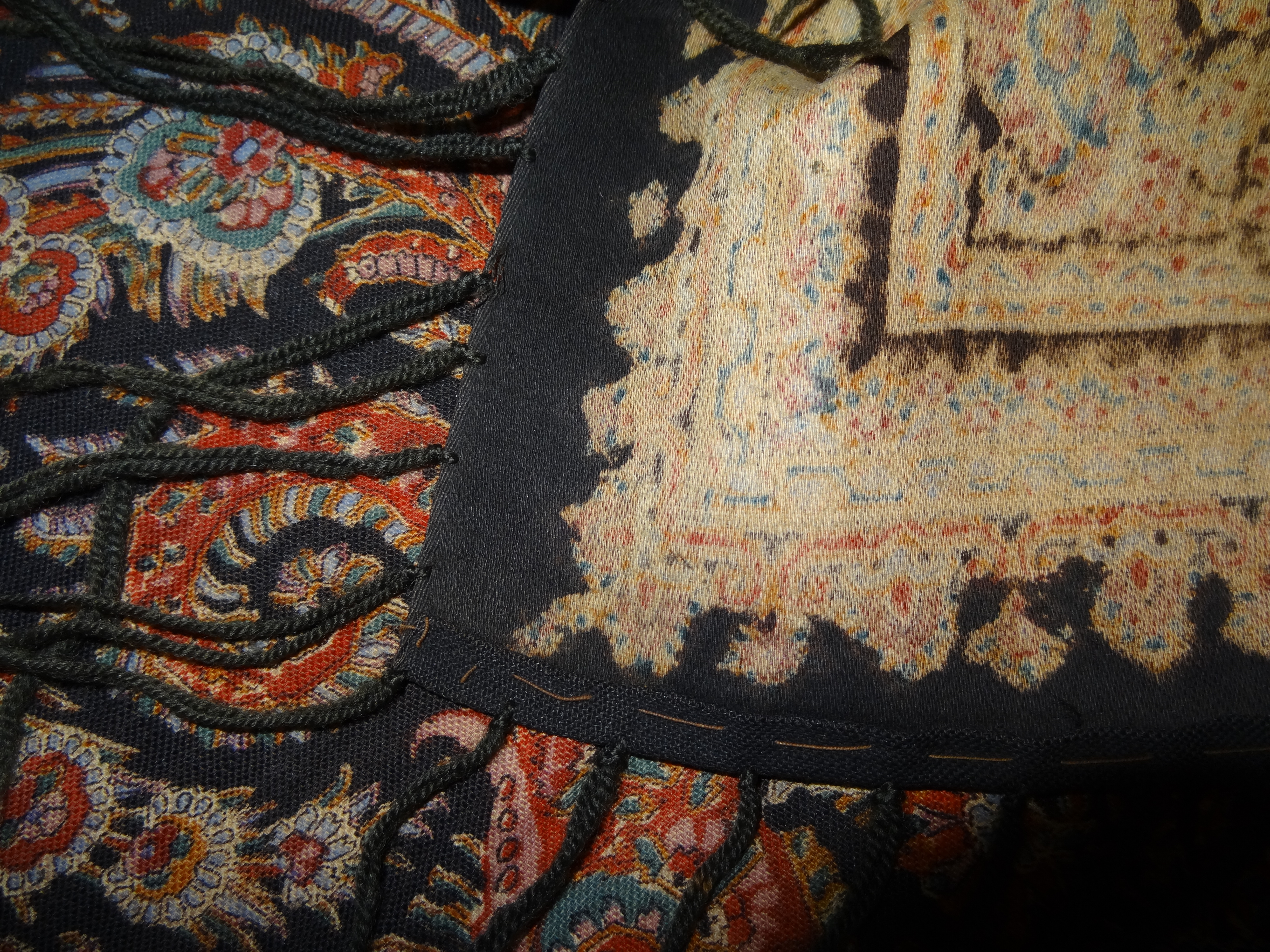
This fine woolen shawl was owned by Alice Paak (Peek) DeKorn.  The predominant color is a dark green.  My great great grandmother passed away in 1908, so this family artifact is over 100 years ago.  It is in perfectly pristine condition.

Close-up of Alice's shawl
Close-up of Alice’s shawl
Alice Paak DeKorn

Alice Paak DeKorn (Aaltje Peek)

This lady was my great great grandmother, Alice Paak DeKorn.

She died May 5, 1908.  My grandfather, her grandson, was born October 31, 1908, so she never even saw him.  I think she has a kind face, but I don’t know any stories about her.

Yvette Hoitink observed that Alice’s marriage certificate states that she was born in Leymond.

Yvette says that this is “presumably Lexmond in Zuid-Holland. The Lexmond birth records are indexed on Genlias.nl. A search for Peek children born between 1850 and 1855 showed one candidate for Aleye Peek: Aaltje Peek b. 9 September 1852, daughter of Teunis Peek and Jacoba Bassa. The birth month and year match perfectly with Alice’s listing in the 1900 census.”

I noticed that Alice lived for 55 years.  Her daughter Cora, my great grandmother, died at the age of 57, so I can’t help but wonder if they both died of the same cause.  Cora died of leukemia or “cancer of the brain.”  Alice’s other daughter, Jennie, who was in last week’s post died at the age of 95.  Alice’s own mother died at the age of 41.

If you are working on your own family history, you might have noticed that you are interested in the age at death of your ancestors–for reasons of self-interest.

Although she was known as Alice for most of her life in the U.S., her American marriage certificate shows Alice as Aleye, which would have been Aaltje in the Netherlands.  I’m going to guess that some of the people filling out the documents in Kalamazoo were not Dutch.

Growing up in Kalamazoo, I had no idea that one of the family lines of my ancestry was Paak/Peek.  I went to school with kids with names like Peek and Peake, and I wonder if there is a connection.

Yvette discovered that Alice’s father, Teunis Peek, was found in the lists of emigrants at the National Archives website and that he left Lexmond for the U.S. in 1868.  She shows Alice emigrating in 1869, but it’s possible that they came together.

Jacoba had passed away in 1865, before her family emigrated.  Alice was one of six children, and I am guessing that Teunis brought all his children to the U.S.–or at least most of them.  The eldest was Joost, and he was 19 when the family moved.  It’s possible he stayed behind.

I’ll pick up the story of the Peeks in a future post.