Feeds:
Posts
Comments

Archive for the ‘Michigan history’ Category

Because of Women’s History Month, I thought I would pull together information on how the women who came before me passed away. I wanted to put all my grandmothers together in one post and thought by sharing their deaths it would shed some light on their lives, at least at the end. I also have a ghoulish fascination with looking them over for the variety of ways I might die myself. After all, their deaths could be a form of inheritance.

But what I discovered made me pretty mad at myself. I have so neglected death certificates. I think it’s because a death certificate in Michigan tends to be a document that I have to pay for that I have relied on social security death info, as well as burial info and death registry dates. I haven’t been assertive about going after the certificates themselves. This is why I don’t call myself a genealogist, but a family historian. I’m more of a storyteller than a rock solid researcher.

Here are my grandmothers and great-grandmothers and how they died.

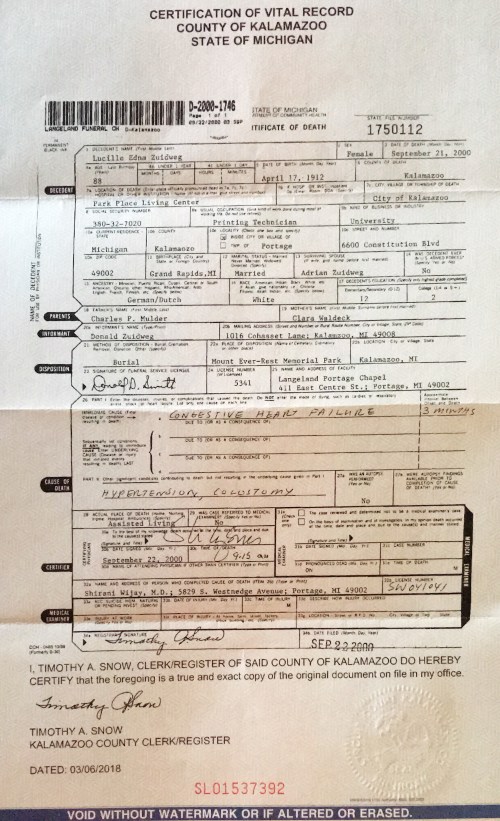
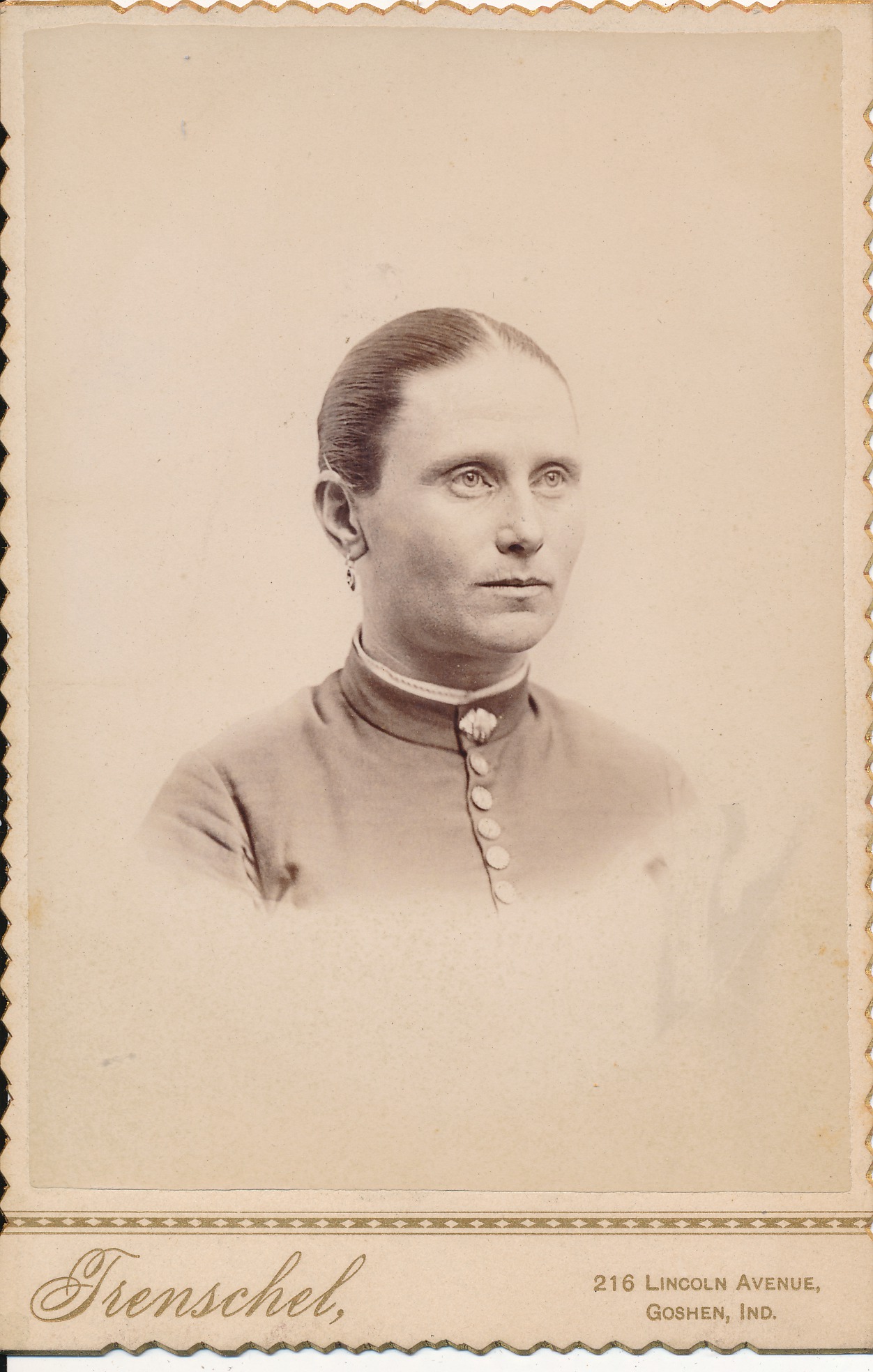
My maternal grandmother, Lucille Edna Mulder Zuidweg, passed away on 21 September 2000 in Kalamazoo, Michigan, at age 88. After the death of my grandfather three months earlier, she was ill and living at a nursing home for round the clock care. The real round the clock care came from my aunt who slept in a chair in Grandma’s room. She was with her most of the time. What my aunt did is wonderful because Grandma hated being in an institutional place. She was like me about that, and it must have been horrible for her there. Thank goodness, she had her daughter with her.

Grandma on our left

I didn’t have her death certificate, so I had to order it from Kalamazoo County. It arrived without a hitch. I see that the cause of death was congestive heart failure. The documentation gives no evidence of all she went through with the cancers that she had. The congestive heart failure might be explained by science in one way, but my explanation is that she died of a broken heart after losing my grandfather.

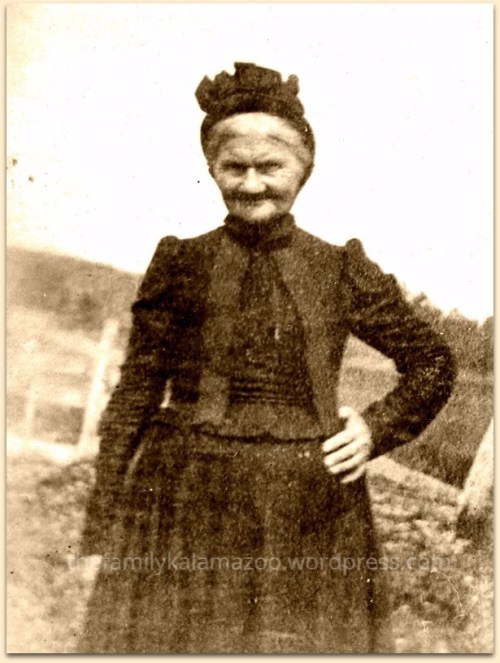
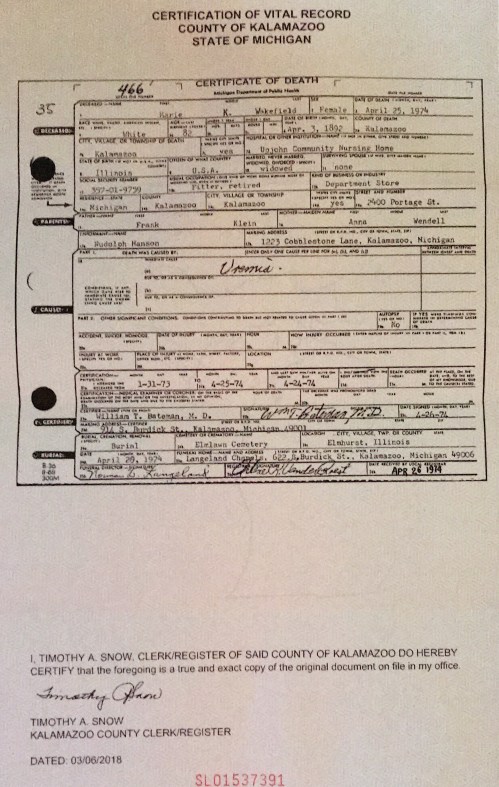
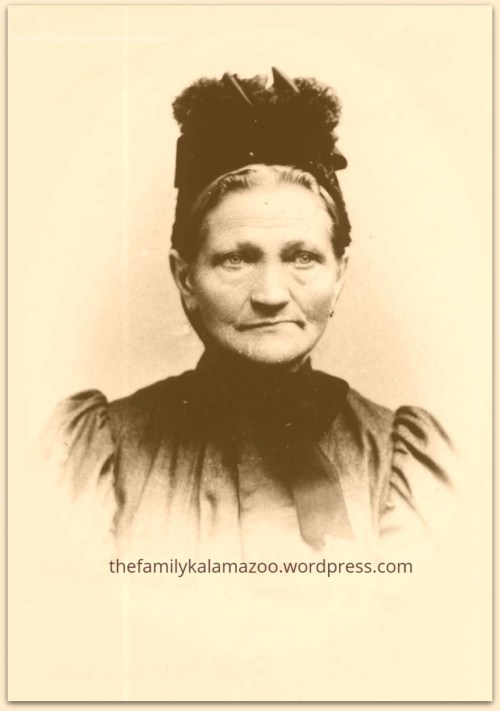
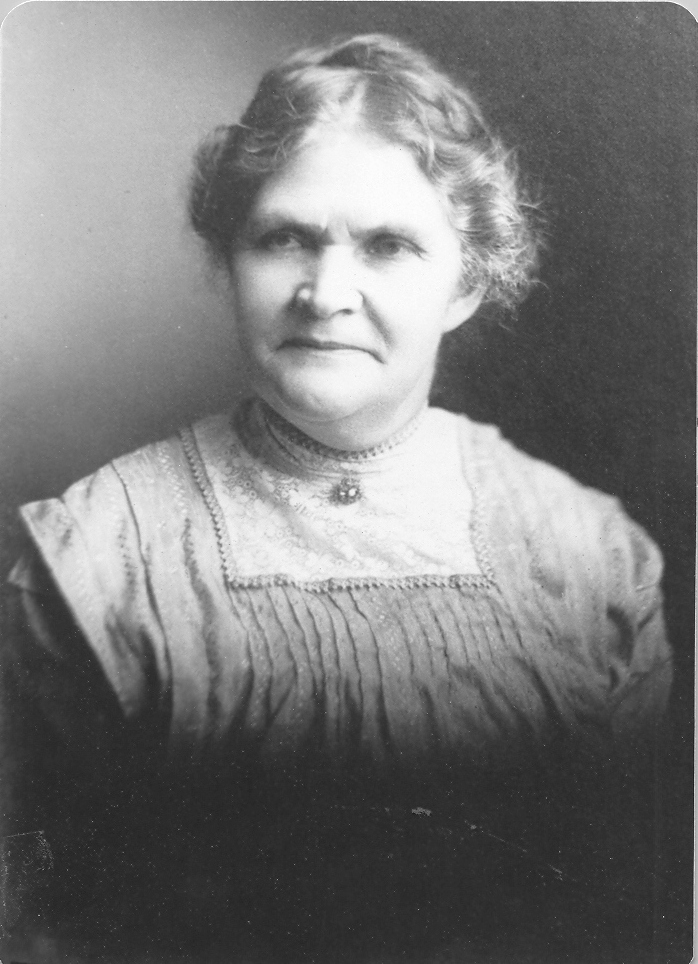
My paternal grandmother, Marie Klein (Kline) Wakefield, passed away on 25 April, 1974, in Kalamazoo, Michigan. She had been living in the Upjohn Nursing Home, which at the time was the premier nursing home in Kalamazoo. Her ex-neighbor and friend, Shirley Kulp, was the head nurse so there was always someone to watch over Grandma. Grandma was 82.

The above photo is my grandmother, Marie. In case you’re wondering about the difference in styles between the one of my grandmother, Edna, Marie was fully 20 years older than Edna.

I didn’t have Marie’s death certificate either, so I had to order it from Kalamazoo County.

Are you noticing the pattern here? [Knocking head against wall]

Luckily, it came in the mail with my other grandmother’s certificate.

Grandma passed away from uremia. I did remember that cause of death, although I had heard of it as a diagnosis while she was still alive, but dying in the hospital. This grandmother is who I inherited my congenital primary lymphedema from.

Then there are my four great-grandmothers.

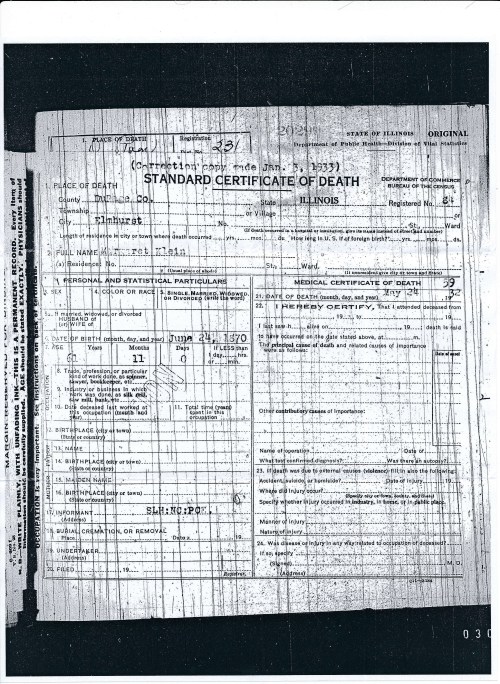
Margarethe Wendel Klein died 24 May 1932 in Elmhurst, Illinois. I have her death certificate (woohoo!). I also have a corrected certificate. The only thing corrected is her birth date, and guess what? Both documents are wrong! According to the Catholic church books in Budesheim, Margarethe was born on June 25, 1869, NOT May 30, 1869 as it says on the death certificate and NOT June 24, 1870 as it says on the corrected copy.

She died of a diabetic coma and also had nephritis and myocarditis. Her health had obviously been poor, although she was only 62–the age I am now. She had also already lost two of her five children, so she had been through a lot. When Margarethe died, her body lay in a casket in their house in Elmhurst. My father told me that there was a thunderstorm during the time it was there, and that the grandchildren were terrified at the combination of events and hid under the huge picnic table style dining room table. She was buried on May 27, but it looks like (from historical rainfall records) the storm most likely occurred the day after her death, on May 25.

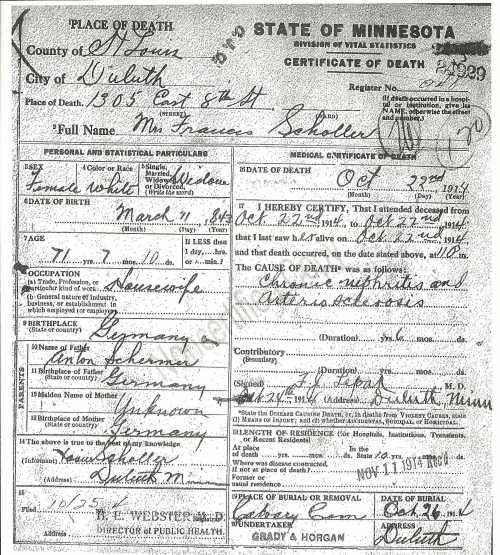
Francoise Schirmer (Schermer) Scholler died 22 October 1914 in Duluth, Minnesota.


Cause of death at age 71: chronic nephritis and arterioschlerosis.

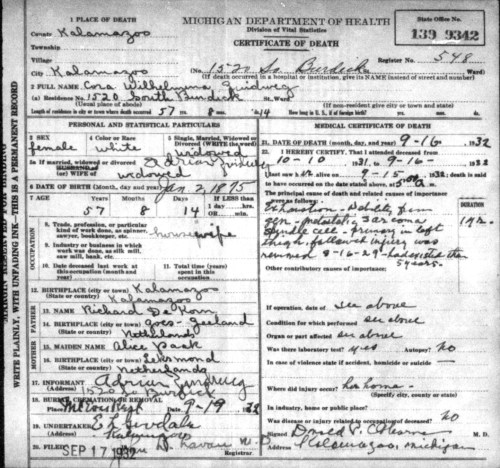
Cora DeKorn Zuidweg died at age 57 on 16 September 1932 in Kalamazoo, Michigan. I have posted about this one in the past.

Cause of death: Exhaustion – debility from gen – metastatic sarcoma spindle cell – primary in left thigh, followed injury was removed 9-16-29 – had existed there 5 years.

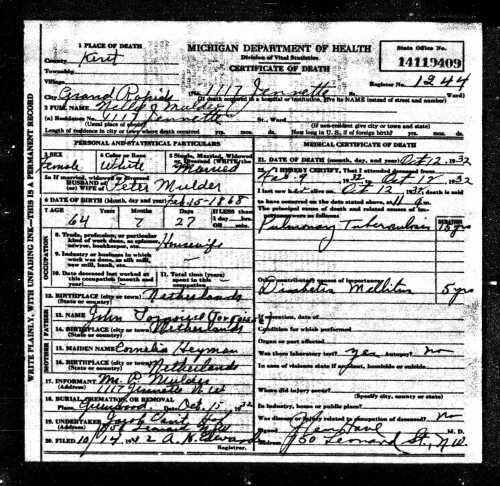
Clara Waldeck Mulder died on 6 September 1953 in Kent County, Michigan, at age 69. I did not have her death certificate and ordered it from Kent County.  I knew that she died of cancer, but I had eagerly awaited the actual cause of death on the certificate. When I received the document, I saw that cause of death was carcinoma of the uterus. That is what I had been told.

Don’t tell me it doesn’t unnerve you a little when you see that your ancestors died too young, even if they were older people. Since my grandmothers were 82 and 88, I figured that was a normal lifetime. But when I add in the great-grandmothers’ ages at death the average goes way down. The average of the age at death of all six ladies is 71.5. The average age for the 4 greats is 64.75. I feel blessed that they were all old enough when they died to see their children grow up. Every woman doesn’t have that opportunity, obviously. And look at the pattern. All four greats died much younger than my grandmothers, so things are improving, probably from better healthcare.

Of six grandmothers, I had three death certificates and was able to order the other three. Can I take it back another generation to the 2x greats? There will be eight women. How many certificates will I produce? A future post, peeps!


Read Full Post »

Today kicks off Women’s History Month, which is celebrated throughout the month of March. Nobody can work on their family history and genealogy and not be confronted with the imbalance between the history of men and the history of women. The mere fact that women are so difficult to find because of the historic practice of taking on their husband’s surnames is enough, but there are other factors, as well. For instance, I only have to examine the history of my own ancestors to see that European and American women, until fairly recently, worked at outside jobs but their occupations rarely resulted in careers.  Sometimes they worked outside the home for decades, but often, once women married, they quit their jobs and began to have children.

When I wrote the poems and short stories in my chapbook Kin Types I consciously tried to bring the lives of these “invisible” women to life. Here is a 53 second video my daughter made of the book last summer.


As you probably realize, the research and the writing itself was a labor of love. The book is available through Amazon, Barnes & Noble, and Finishing Line Press. If you click through the next image, it leads to the Amazon site.

There are other wonderful poems about women and history. Here is a favorite poem by the late great Adrienne Rich. I am only posting the beginning and then you have to follow the link for the rest because WordPress does not allow for the specific formatting that some poems need.

This poem investigates the life of Caroline Herschel, the younger sister of astronomer William Herschel. Although she had to do a lot of her brother’s bidding during her life, she eventually learned to love astronomy and became an esteemed astronomer after discovering several comets.  There are an unknown number of women like this throughout history because most of them were not rewarded during their lifetimes as Caroline Herschel was. For instance, how much did Vivian Eliot help her husband T. S. Eliot with his writing? Einstein’s first wife Mileva Maric was also a physicist and might have co-authored the Theory of Relativity with Einstein, but she got no credit.

Planetarium

BY ADRIENNE RICH

Thinking of Caroline Herschel (1750—1848)
astronomer, sister of William; and others.

A woman in the shape of a monster

a monster in the shape of a woman

the skies are full of them


a woman      ‘in the snow

among the Clocks and instruments

or measuring the ground with poles’


in her 98 years to discover

8 comets

Continue here: Planetarium

This woman is taking a much-needed break next week. See you the week after!

Read Full Post »

There is so much to see and research in every photograph, every document, and every story. It’s no wonder I always feel that I have not exhausted a topic. One of those topics is the hat that Jennie Zuidweg (wife of Johannes and mother of Lucas who died on the anchor) wore in her photos. She wore it when she was younger and, no doubt, living in the Netherlands–specifically Goes, Zeeland.

And she wore it when she was old and living in Kalamazoo, Michigan.

And then I saw another Dutch relative wearing the hat.

I put all this in the back of my mind, and then on a Dutch Facebook group somebody mentioned a type of hat, and it clicked in my head that I needed to research this hat.

What I found is that this type of hat seems to be called a Kapothoed. According to Google translation, this means hood hat or bonnet. So I did a Google search of Kapothoed. Although all that comes up are not the same, there are several that are.

Google Search for Kapothoed

and from Pinterest.

Kapothoed

What this shows me is that what I assumed to be an old-fashioned country bonnet was really an actual style that existed in the Netherlands. Some of the bonnets or kapothoed that I found by searching Dutch museum collections online are closer to the head, but there are some that are high like these.

Here is a high one from Europeana Collections, an online digital collection of artifacts.

Now that I have seen more kapothoed designs, I can see that the hats Jennie wore when she was younger and when she was elderly are two different hats, two different styles of bonnets.

These bonnets are very different from the traditional Dutch caps which look like the variations in these photos from Wikipedia.

Actually, the caps that women in Goes, Zeeland, wore were the most dramatic, along with the hair combed back at the forehead and the large jewelry worn at the temples.

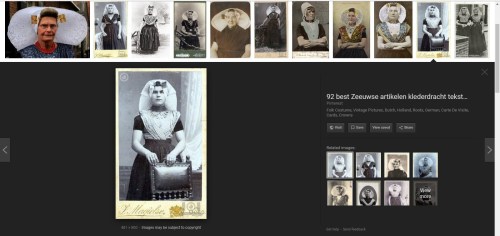
I spent a lot of time trying to find an image online that I am allowed to download and put into this post, but I couldn’t find the right image of the Goes costume. Instead, I did a Google search of the “traditional costume of Goes, Zeeland” and created a screen shot to show you.

These are oorijzers or ear irons. Various styles had different names. The block or cube style were boeken (books). A spiral metal style were called krullen (curls). This next photo is a woman from Spijkenisse in 1900. I am including it to show you the krullen style ear irons.

Krullen

Here is what Wikipedia has to say about oorijzer. I am quoting them because it’s the best information I found online:

The ear iron is part of the costume for women, especially in the northern provinces of the Netherlands and Zeeland . It originally formed part of the civic power, which was taken over in the regional councils.

Initially the ear iron was a metal bracket to keep the caps in place. It was worn over a cap and a luxurious top hat was put on it. In the course of time the ear iron grew into a showpiece. Decorative gold plates or curls stuck out at the front of the ear irons . . . .

Only in the 19th century did various forms of the ear-iron form a specific part of Dutch regional dress. In Images of dress, morals and customs from 1803-1807 there is no question of ear iron in women from Friesland. In the French era, when the so-called independent regions of the Republic of the United Netherlands come under a single administration, the need for maintaining their own identity arises in the regions. In the Netherlands, the ear iron force is cultivated and has its own development. The prosperity is great, as a result of which the ear iron is getting bigger and bigger. In the course of the century, the narrow band is becoming wider, the buds become larger and flatter and take the form of a flower pot.

Different Ear Irons in the Zuiderzee Museum

A slang term for them might be kissers. A tradition (not universally shared) has it that the kissers were meant to keep boys away from the girls. I’m amazed how the hair looks so plain and yet the cap and oorijzers are so extravagant looking. Coral bead necklaces are part of the traditional costume. You could tell if a woman was Protestant or Catholic by her cap.

If you would like to read more about the oorijzers, here is a blog post by a graduate student in fashion. The Oorijzer

As you know, I am no expert on traditional Dutch costumes. I found this information online. But I think knowing that my ancestors wore outfits like this is eye-opening.

One last thing I’d like to point out is that although I have a couple of traditional costume antique photographs, they are not from Goes, unfortunately. I wish I had a photo of my ancestor dressed this way. Instead, what I do have from late 19th century Netherlands is not traditional attire, but more “modern” European clothing.

P.S. The unidentified lady (called “Mother’s aunt” and written about here) was photographed in Groningen. For fun I thought I’d share a link about Albarta ten Oever (1772–1854), an artist from Groningen who happened to be a woman. Check it out.

by Albarta ten Oever

Koetsreizigers in Schipborg (1806)

landscape of “coach travelers” in Schipborg, a village in Drenthe

And then here’s another article of interest to this blog, Calvinism in the Netherlands. When I was a history grad student (never finished that particular degree) my specialty was religious history, particularly the history of the Reformation (where Protestantism, often in the form of Calvinism, replaced Catholicism for masses of Europeans). So the full history of what has happened with Calvinism in the Netherlands is of particular interest to me. My own family background from the Netherlands was Dutch Reformed (Calvinism), but before my mother was raised, the family had moved away from a strict form of Protestantism.

Read Full Post »

The more I peer into the past, the more I feel like Pandora. In addition to discovering wonderful information about my ancestors, sometimes I discover sad, tragic, or even disturbing events.

For instance, I have found out more about the sentencing of my great-great-grandfather Johannes Zuijdweg (Zuidweg).

Unfortunately, what I discovered is not positive.

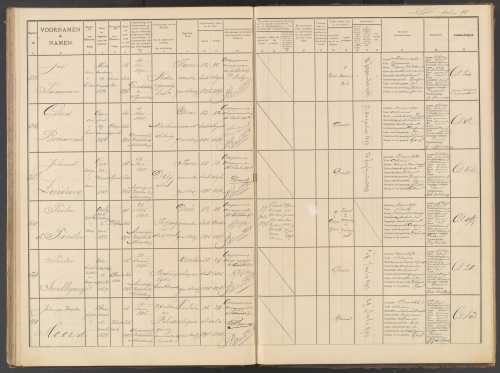
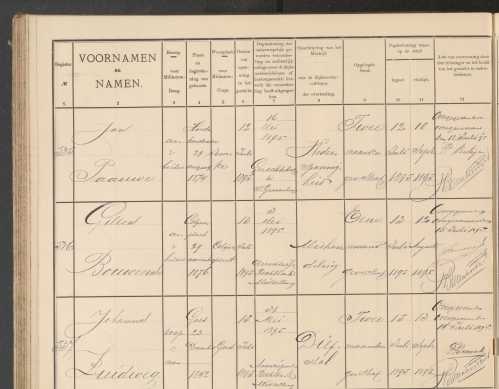
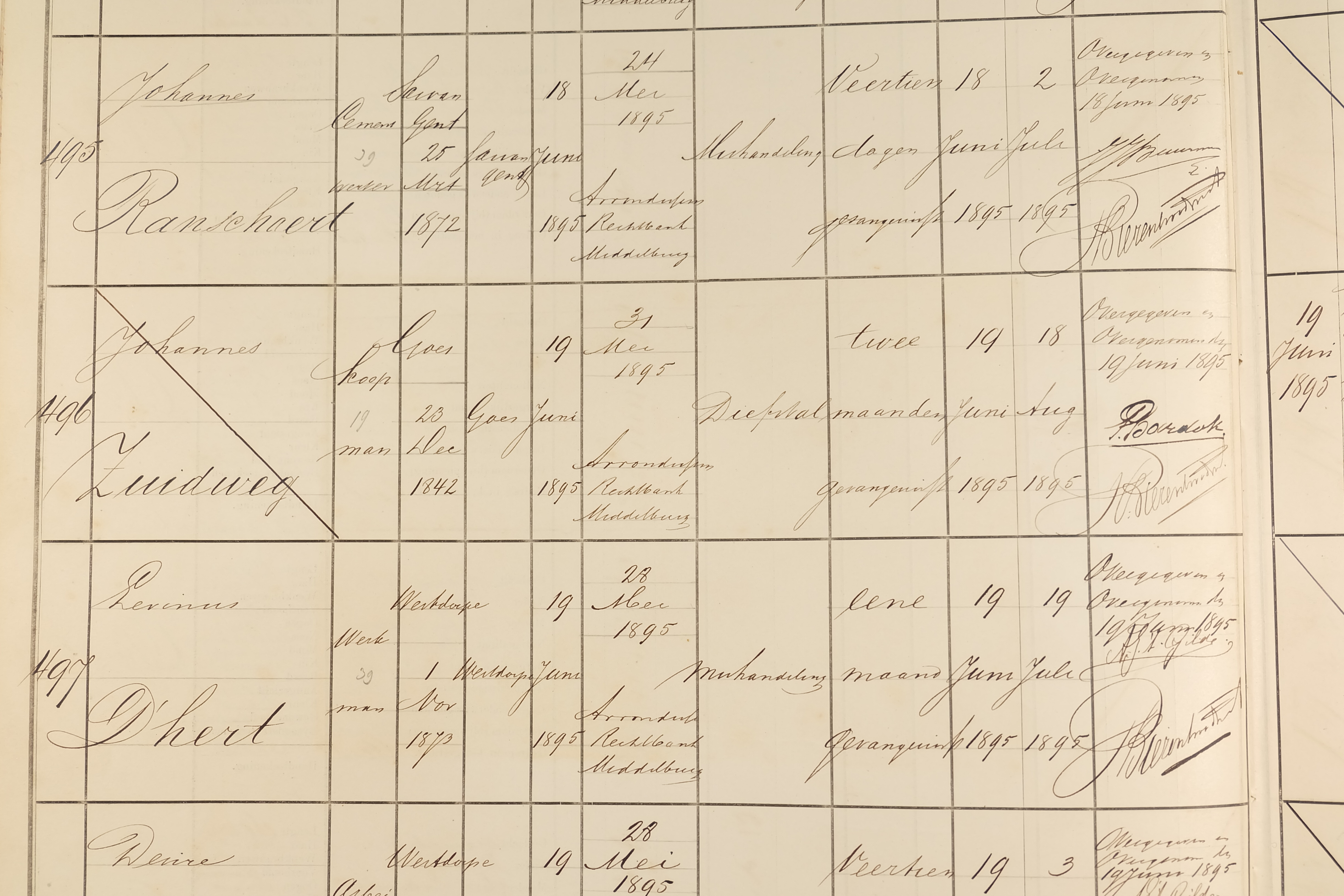
Here it is cropped a bit to make it easier (thanks for the idea, Amy!). His entry is the third down on both pages.


According to this document and the kind translators on Facebook, Johannes did serve two months in jail for theft, from July 15 to September 13, 1895. Imagine how Jennie felt. She had just lost her youngest child (of three) to a gruesome accident and now, a year later, her husband was serving time in jail. Everyone in their neighborhood and at their church must have known.

I don’t know if I will ever discover what was stolen or what the situation was, but I will always believe that the death of Lucas had something to do with it–given that death, the older age of Johannes, and his otherwise respectable history.

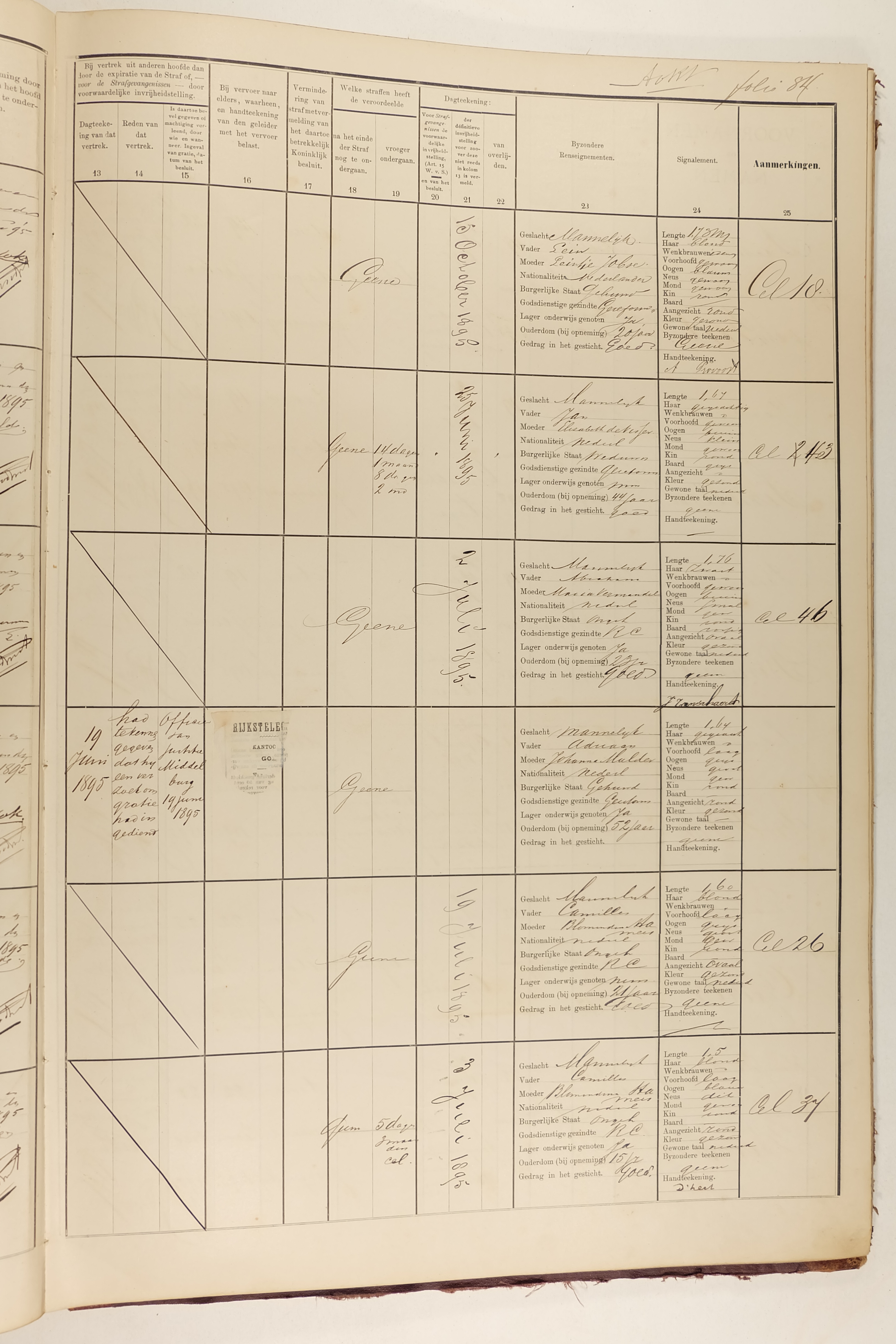
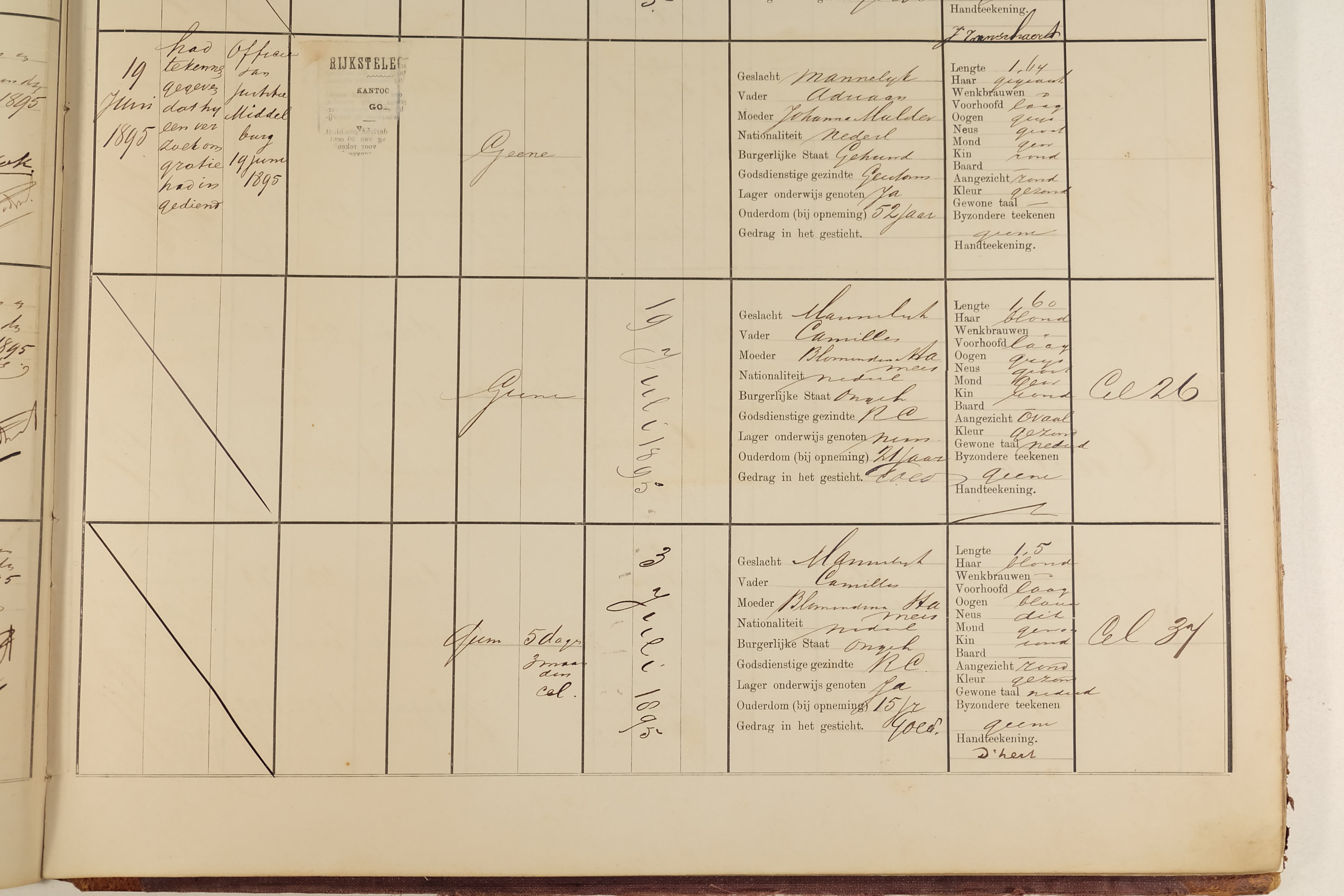
Remember for that last document when Johannes’ hair and eyebrows were translated as blond? The translation I received for this document for his looks is this way:

I can only read the enlarged part…. sex: male father: Adriaan mother: Johanna Maria Mulder nationality: Dutch civil status: married religion: reformed lower basic education: yes age (at inclusion) 52 behaviour (in institute (?) : good lenght: 1.64 m hair: greyish eyebrows: same (greyish) forehead : low eyes: grey nose: large mouth: ordinary chin: round beard: none face: oval complexion: healthy language spoken (literally: ordinary language) special features (?): none

“Greyish” hair and eyebrows!

I’ve sponsored Johannes’ memorial at Findagrave. You can find it here. I discovered that someone had posted an obituary for him on the site. Since the paper had apparently misspelled two names, I put a note explaining what the spelling should have been.

JOHANIUS ZUIDWEG. Following a long Illness, Johanius Zuidweg, aged 68, died at his home, 214 east Vine street, 9 o’clock last night. He came to this country from Holland nine years ago. He is survived by a widow, a daughter, Mrs. Marleilus Van Liere, and a son, Adrian Zuidweg, all of this city. The funeral will be held at the residence 1:30 o’clock Friday afternoon and from the Fourth Reformed church at 2 o’clock, the Rev. Mr. Frost officiating. The interment will be in Riverside cemetery. Kalamazoo Telegraph-Press May 17, 1911 (copied as written in paper)

Note:Johanius should be Johannes. Marleilus should be Marinus.

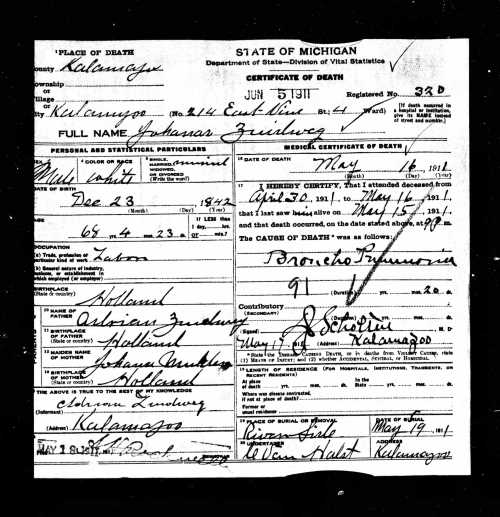
I was sorry to see that Johannes suffered a long illness before he passed away. 

However, when I look at the death certificate, his illness appears to have been 20 days. The cause of death was broncho pneumonia. I wonder if he had another illness that then turned into pneumonia.

Read Full Post »

My grandfather, Adrian Zuidweg, in a toy car in Kalamazoo, Michigan.

Do you think this toy car was purchased or built? I searched images of these pedal cars from the era of 1913-18, and I didn’t see anything quite this “bare bones.” Notice that there aren’t any fenders, little touches like that. So I’m not sure, although it does appear to be the Packard logo.

It doesn’t surprise me that my grandfather would have a nice toy like this. He was an only child, and his father owned a fish market.

Look at his sweet little hat. And the clothesline out back.

Read Full Post »

Up until now, I’ve written very little about my great-great-grandfather Johannes Zuijdweg (Zuidweg). He was married to Jennie Bomhoff Zuidweg. I wrote about her knitting skills for U.S. troops here. Johannes and Jennie were my grandfather’s paternal grandparents. He talked about Jennie to me, but he didn’t really know his grandfather who died when Grandpa was only three.

The birth of Johannes is an important moment in the history of our family because his parents tie together the Zuijdwegs/Zuidwegs and the Mulders. Grandpa was a Zuidweg, and Grandma was a Mulder. Both families were from Goes, Netherlands, and they both are descended from Karel Mulder, the jailer’s hand.

The record of the marriage of Johannes and Jennie I found at wiewaswie. Here is a transcription of the marriage document:

BS Huwelijk met Johannes Zuijdweg

Groom
Johannes Zuijdweg
Profession
kruideniersknecht
Birth place
Goes
Age
26
Bride
Jenneqien Bomhoff
Profession
dienstbode
Birth place
Zwolle
Age
31
Father of groom
Adriaan Zuijdweg
Mother of the groom
Johanna Mulder
Profession
Arbeidster
Father of bride
Lúcas Bomhoff
Mother of the bride
Johanna Danser
Event
Huwelijk
Event date
04-11-1869
Event place
Goes

To read (in Dutch) the pages of the record, read the page on the right of the first image and the page on the left of the second image. If you look at the signers on the document itself you will see that one of the signers was a Van Liere. That is another family that has shared a path with my family.

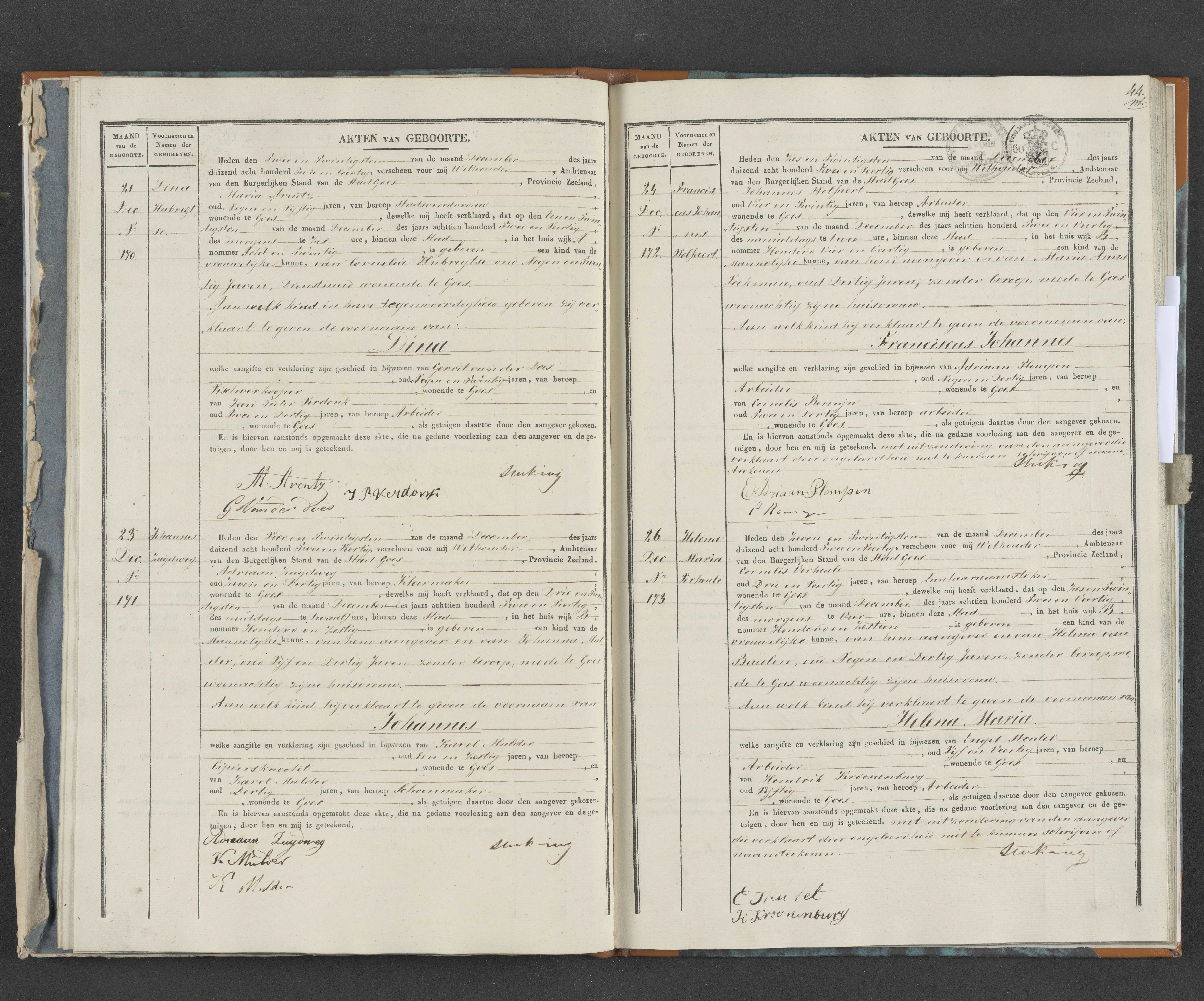
Johannes was born in Goes on 23 December 1842. Here is the transcription on wiewaswie:

BS Geboorte met Johannes Zuijdweg

Child
Johannes Zuijdweg
Birth date
23-12-1842
Birth place
Goes
Gender
Man
Event
Geboorte
Event date
23-12-1842
Event place
Goes
Document type
BS Geboorte
Institution name
Zeeuws Archief
Institution place
Middelburg
Collection region
Zeeland
Archive
25
Registration number
GOE-G-1842
Sourcenumber
171
Registration date
24-12-1842
Certificate place
Goes
Collection
Goes geboorteakten burgerlijke stand

birth record of Johannes Zuijdweg

In the Netherlands, Johannes worked as a grocer’s hand, a crier, and a merchant. Johannes and Jennie had three children. When Johannes was in his fifties, on 4 April 1894, the youngest child, Lucas (now a young man) was killed in an accident. According to Grandpa, he fell on a boat anchor.   Within a few months of the death of Lucas, there was an astonishing development in Johannes’ life. He was sentenced to prison!


On the Facebook group “Dutch Genealogy,” a kind person translated as much of the document as he could.

Column 1: (record number) 496 —
Column 2 (First Names and (last) names) Johannes Zuidweg
Column 3: Occupation koopman (merchant) —
Column 4: (Location and date of birth) Goes on 20 December 1842
Column 5: (Place of Residence) Goes
Column 6: (not sure, I guess date entered in the book?) 19 June 1895
Column 7: (again nit sure, I guess date of judgement) 31 May 1895, Jurisdiction Court Middelburg
Column 8: (description of offense) Diefstal (Theft) —
Column 9: (Opgelegde Straf,, Punishment) twee maanden gevangenstraf (two month imprisonment) — \
Column 10: (dagtekening straf ingaat , start of punishment) 19 June 1895
Column 11: (dagtekening straf eidigt, end of punishment) 18 August 1895
Column 12: (again, nut sure. Date of transfer?) 19 June 1895 (and signatures)
Column 13: ( ) 19 June 1895
Column 14: () had te kenning gegeven dat hij een verzoek om gratie had ingedient ( he noted that he had requested clemency)
Column 15 (): Officier van Justitie, Middelburg, 19 June 1895 —
Column xx: () Geene (none)
Column xx () Geslacht (gender) Mannelijk (Male)
Vader (Father) Adriaan
Moeder (Mother) Johanna Mulder
Nationality : Nederlandse
Burgerlijke Stand (civil status): Gehuwd (Married)
Godsdienstige gezindte (religious affiliation): Gereform. (I think, reformed)
Lager onderwijs genoten (elementary education): yes
Ouderdom (bij opneming) (Age at time of entering prison): 52 years
Gedrag in het gesticht (behavior in institute): (not filled in; he may have served)
Column yy (): Length 1m 60 cm; Color Hair: Blond; Eyebrows: Blond; Forehead: low; eyes: grijs (grey) neus (nose): groot (large); mond (mouth) )can’t read; kin (chin) round; baard (beard) none, aangezicht (face) round; kleur (facial tint): gezond (healthy); gewone taal (ordinary language): (—) Byzondere teekenen: geene (none). Handteekening (signature) (blank space)

The attached page is a telegram from the courthouse in Middelburg to the Prison in Goes, stating that “Nu Zuijdweg verklaart gratie the hebben gevraagd moet hij niet worden opgenomen, doch moet de beslissing op zijn verzoek afgewacht worden” (Now that Zuijdweg declares that he asked for clemency, he must not be taken in, but await the decision on his request), signed by the officer of the court, Van Hoek.

Johannes was 5’4 1/2 inches tall. While this seems short for a Dutch man by today’s standards (today the average height for a Dutch man is over 6′ tall), it probably was not that unusual in the 1800s.

According to the translation, Johannes was sentenced to two months in the penitentiary. The person who translated the document believes that Johannes was given clemency and did not serve the time. There might be other documents relating to this issue, and I will keep probing to try to find out more information.

I have been told by several Dutch people that times were very different then, and that it was very “easy” to end up in jail over minor infractions. I believe that this had something to do with the death of Johannes’ youngest son a few months before, but that is just a guess. I do wonder if this happening had something to do with the decision of Johannes and Jennie, both older people, deciding to emigrate.

In 1901, Johannes and Jennie followed their son Adriaan to Michigan. Three years later, their remaining child, Johanna Zuidweg Van Liere, immigrated with her husband, Marinus, and son to Michigan. Marinus owned a shoe store on Burdick Street.

In Kalamazoo, Michigan, Johannes and Jennie lived in at least two different homes, if not more. For a while they lived in one of the houses owned by Richard DeKorn. Sometimes Johannes’ name is spelled John. He passed away after living in the United States for ten years.

In one of the many changes in birthdates I’ve found in researching family history, Johannes’ birth record shows that he was born in 1842, but his headstone states that he was born in 1843. I believe the birth record, as the Dutch records are astonishingly well documented. I wish I knew more of what Johannes’ life was like in that last decade of his life. He was surrounded with male grandchildren as Grandpa was the only child of son Adrian and daughter Johanna and Marinus had eight boys!

Read Full Post »

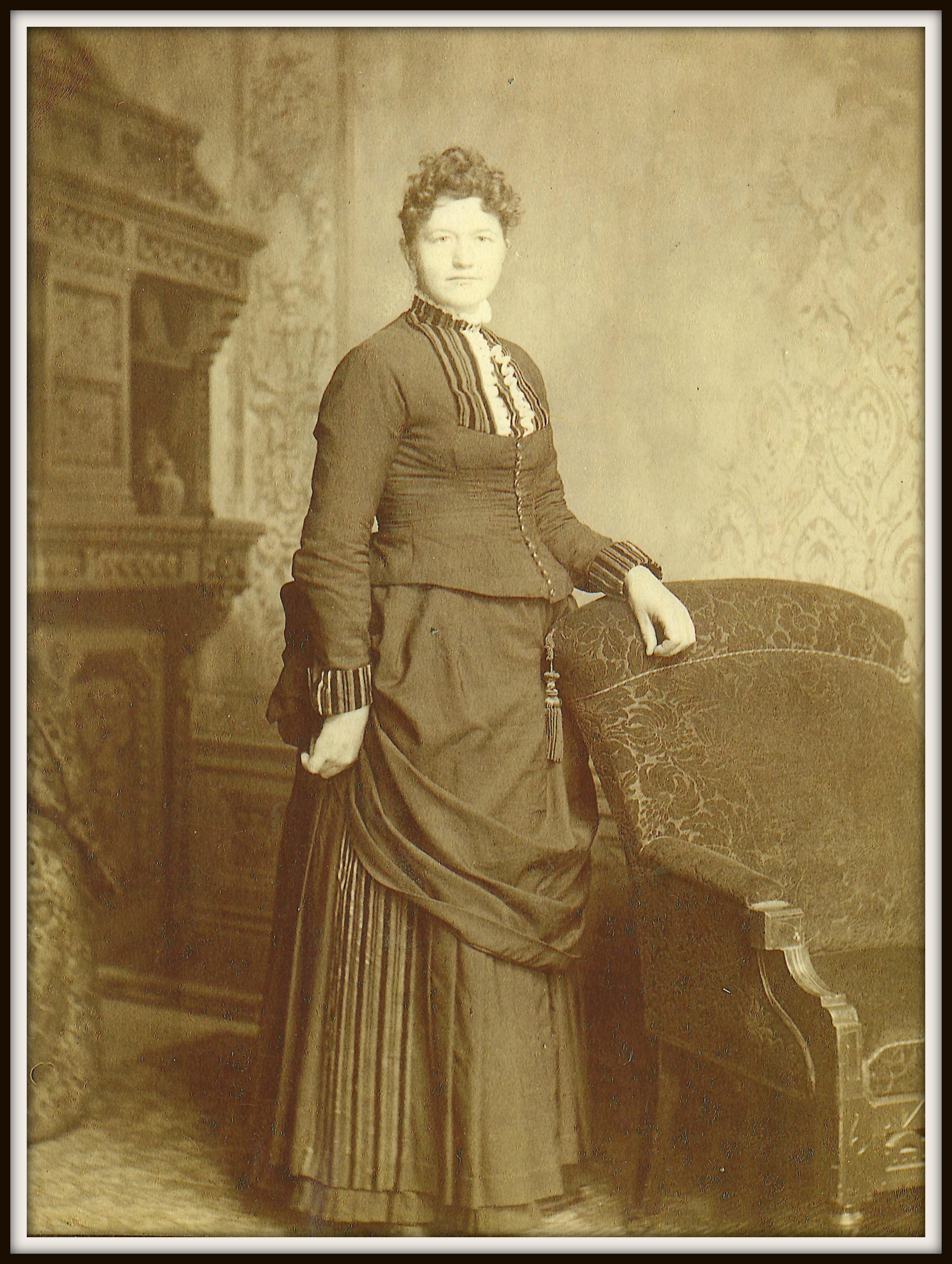
In scanning the beautiful antique album this fall, I came across this tintype that kind of haunts me. Maybe it’s because the tintypes are so rare in the family collection. Maybe it’s because of her eyes.

Just ignore the strange corners. I tried to clean it up a bit at the corners (just for this post), and it didn’t turn out as I expected!

So how do I go about narrowing in on who might be in the image?

Because all the photos so far in the antique album seem to be related to the 5 Paak siblings and their familys, I feel that it is likely that she is related to the Paaks somehow.

I have such a desire to find a photo of Janna Kakebeeke Remine, the mother of Dick, grandmother of Therese, Genevieve, and Harold, who immigrated to Kalamazoo and passed away in 1910. She was the mother-in-law of Mary, one of the Paak sisters. But Janna was born in 1827. I was thinking 1880s for this dress, and this woman is not 60. In fact, as usual, I have no idea how old she is, what year her dress was, or what year her hairstyle was. It can’t be Dick’s mother-in-law Jacoba Bassa Paak either. She died in 1865 in the Netherlands!

What I have to get used to is the fact that the photographs I own are never of those earlier individuals, so they are images of more “recent” generations. I posted this one on a Facebook group for dating photographs.  Very consistently, readers thought the tintype is around 1880. They based this on two main aspects: the fact that it is a tintype and not a photograph and the woman’s outfit. Tintypes were most frequent a bit earlier than the ’80s, but they can be found in the 1880s and even later.

I thought that the silhouette of her dress and the finishings looked like the 1880s. One thing I can file away in my brain for later is the dress appears to black, a mourning dress, so someone close to the woman had died within perhaps the previous year. Of course, that is very subjective–I mean, it seems as if they would have always been in mourning dress! I’m not very happy with books or websites about women’s clothing styles. They tend to focus on the clothing of the wealthy, the fashionista, and those in evening wear. My relatives were not fashionistas, they were not wealthy (although often not poor either), and sometimes they were governed by a religious conservatism. They didn’t get their photographs taken in evening wear, if they even had any.

For further consideration, I’ll use the date of 1880, knowing it could be 10 years difference either way.

The only way I can now find the woman in the tintype is by comparing her with photographs of known Paak women and women who have married into the family AND using the data on my family tree for birth and death dates.

Do you think this woman is about 25? or younger or older? Let’s say she’s 25, for the sake of trying to figure out who she is. If so, she was born around 1855. That would make her a contemporary of Alice Paak DeKorn (born 1852) and her siblings.
 

Aaltje (Alice) Paak DeKorn

Anna Catherina (Annie) was born 1855


Maaike (Mary) Paak Remine born 1859


Cornelia (Carrie) Paak Waruf born in 1862

So. There are four* Paak sisters, and I don’t see this woman as one of them, although she could be a contemporary–or a bit older.

* There actually were five Paak sisters, but Willempje, who was born in 1856, did not immigrate with the girls, their father, and their brother. Although I have not been able to find a death or marriage record, I suspect she died as a child. The brother, George, married Lucy Kliphouse, who is not the woman in the tintype.

Lucy Kliphouse Paake

Alice had two SILs–Jennie DeKorn Culver and Mary DeKorn DeSmit.

Jenny DeKorn Culver


Mary DeKorn DeSmit

Is she one of them? (I don’t think so).

Mary Paak Remine had two SILs that I know of.


Adrianna (Jennie) Remine Meijer was born in 1860

Jennie was the sister-in-law of Mary Paak Remine. Another sister-in-law of Mary was Johanna Remine Bosman, born in 1855.

None of these look right to me. And these last two are sisters, but don’t look like it.

Carrie Paak Waruf’s husband Henry (Hank) does not appear to have had any sisters. He immigrated as a child with his parents from the Netherlands to Kalamazoo, and I don’t see a record of any siblings in the census records I have been able to find.

That leaves Annie, the least known of any of the sisters. Annie was married to Jacob Salomon Verhulst (whose grandmother, by the way, was a Flipse–see Flipse posts, if you’re curious). The only photo I have that I know is Annie is the full-length photo I posted above. I never heard anybody talk about her, except when Grandpa identified the photograph.

I don’t know if Annie and Jacob had any children. I have found no record of any children. They married in 1890.

Jacob did have two sisters, that I can find. One was Cornelia who died as a child in Holland. The other was Pieternella, was born 1843 in Kortgene and died 18 days later.

So there you have it. Those are the Paak women and their sisters-in-law. My next guess would be a cousin of the Paaks–or like Annigje Haag, the fiancee or wife of a cousin.  So I will keep searching in that “outer layer” of family members.

That said, if you see any flaws in what I’ve determined so far, please let me know, and I will expand my search even more.

Now that it’s a new year, I want to keep my genealogy goals focused.

  1. Continue scanning of all photographs
  2. Organize the physical photos, documents, and heirlooms.
  3. Create a list of provenance for all heirlooms
  4. Bring my Ancestry tree up to date with all info I have
  5. Find and work on software for a tree that is just for my tree
  6. Continue trying to identify photographs
  7. Research gaps and brick walls

Pretty ambitious, I know. Some of my blog posts will just be updates on how I am doing on items 1-5, rather than the results of actual research. Be patient. You know how helpful you all are to me, and I appreciate it more than you will ever know. Thank you!!!


Read Full Post »

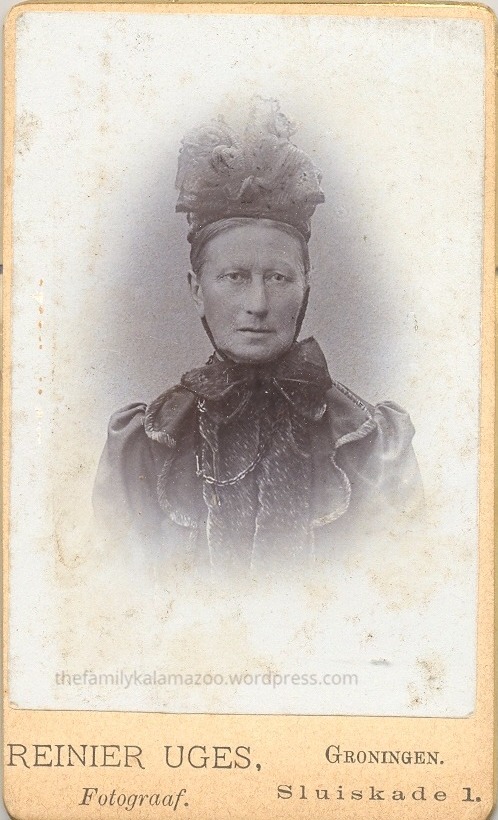
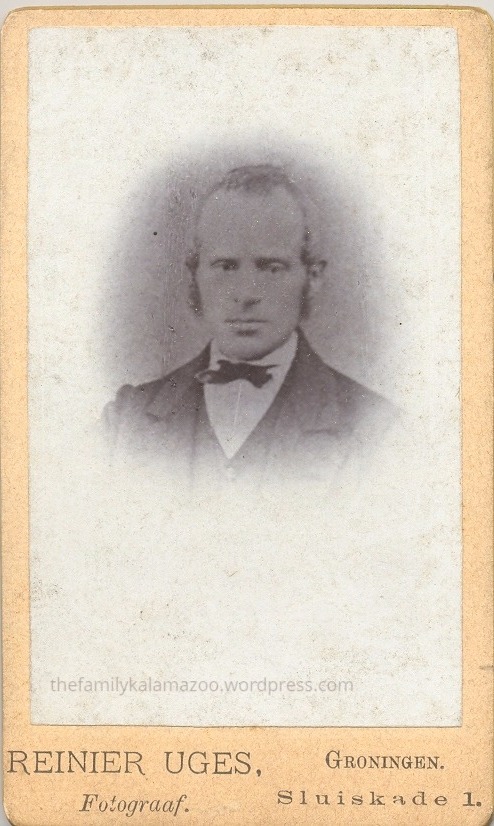
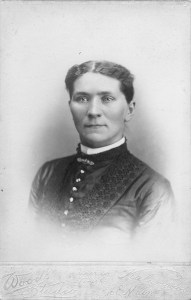
These photos have been a mystery to me since the 1970s. On the back of the woman’s photo it says “Mother’s aunt.”


Notice that the photo says the photographer was in the city of Groningen. This is the largest city in the north of Netherlands, and a very old city. But it’s not where my family came from. And here is another photo that was right next to the lady’s photo.


These are the only photos I have from Groningen, to my knowledge. The people don’t show any familial resemblance, but that–as we know–doesn’t necessarily mean anything.

What is more confusing is whose aunt she is. I have to assume that “Mother” means Cora DeKorn Zuidweg, Grandpa’s mother. It couldn’t be Grandma’s mother. Not only are most of our photos from Grandpa’s family, Grandma’s mother wasn’t Dutch, but Prussian.

So Cora. Or Cora’s mother? Or Grandpa’s father’s mother?

First, I looked at Cora’s aunts. Her aunts all came to the United States. They were the Paak sisters–none of whom look ANYTHING like the woman in this photo. And then on her father’s side, Mary DeKorn DeSmit and Jennie DeKorn Culver were her aunts. NOT these ladies.

Second, I went back a generation. Alice Paak’s aunts were the Bassas–no Groningen there–and the Paaks–no Groningen there either.

What about Richard DeKorn’s aunts? His mother had a lot of brothers, but only one sister–and she remained in Kapelle her entire life. His father had one half-sister (and a lot of half-brothers and one brother), Pieternella DeKorn. That family is still a bit of a mystery. She might have been born in Kruiningen, but I don’t know where she lived or when she died.

So how can the lady in the photo be “Mother’s aunt”??? The only other possibility that I can think of would be Jennie Zuidweg (Jennegien Bomhof), Grandpa’s grandmother. Let’s say his mother Cora wrote “Mother’s aunt” and meant her mother-in-law’s aunt. Is that possible? Jennie is from the only branch that was completely outside of Zeeland (until she came to Goes and married Johannes Zuidweg). She was born in Zwolle, Overjissel. That is 66 miles from Groningen, whereas Goes is 205 miles away.

BUT!!! Before we get too excited, what years did Reinier Uges have a photography studio? 1889-1914!!  How can that be the aunt of a lady (Jennie Zuidweg) who was born in 1838 (and died in the U.S. in 1924). This lady would have to be a generation younger than Jennie, wouldn’t she?

All in all, I’m pretty sure that “Mother’s aunt” meant Grandpa’s mother’s aunt, thus an aunt of Cora DeKorn Zuidweg.

But that is impossible.

You see how frustrating this is?!

Any ideas about the age of the woman and the age of the man would be helpful!!

Read Full Post »

For as long as I could remember my family always celebrated Christmas Eve the same way. After the Christmas Eve service at church, the family would head over to my grandmother’s house–or that of one of her siblings. There was a progressive meal so after awhile we would move on to another house. I remember three houses and three courses, but eventually, I think it became two houses. Nobody does it any longer as my grandmother’s generation is all gone now.

While there were always a lot of delicious Christmas desserts (Grandma, in particular, was a wonderful baker), the main course–the one that couldn’t be avoided missed–was the oyster stew. Year after year, I watched the women stirring the pot of oyster-studded milk, but do you think I ever thought to ask where this tradition came from? Well, maybe I did, but I never got an answer. Maybe nobody knew.

What I should have specifically asked Grandma is “did your mom make the oyster stew on Christmas Eve, too?” But I didn’t.

Suddenly this year I wondered where oyster stew came from. It seemed so out of the ordinary, and my family’s holiday eating habits were not out of the ordinary at all. Turkey or ham, casseroles, cole slaw, jello dishes, cookies–“All-American” food.

I thought about how Grandma’s whole family participated in this tradition. Nobody ever said, “Hey, let’s make clam chowder instead.” Or meatballs. Or tamales. Nobody said, “Let’s try this new recipe.” Nope. Oyster stew.

I wondered if the recipe and the tradition had been passed down in the family. If so, they would have gotten it from Grandma’s mother, Clara Waldeck Mulder. And if it went back still further, it would have come from her mother, Alwine Noffke Waldeck, who might have been born, as her brother August was, in the little Pomeranian town Schwetzkow. Schwetzkow is about 12-15 miles from the Baltic Sea. Alwine was an adult with children when she immigrated her, so she would have brought her traditions with her.

To try to get to the origins, I researched the subject through my friend Ms. Google. One of the most popular articles right now is this one: Oyster Stew on Christmas. This writer argues that the origin lies with the Pilgrims who were “oyster crazy.” She says that when the Irish Catholics came in the 19th century, they latched onto the oyster stew because it closely resembled the traditional Irish ling stew and ling (a type of fish) was not available in the United States. Hmm, my oyster-stew-slurping family are definitely not DAR and not Irish and not Catholic. I couldn’t imagine anybody choosing a tradition of oyster stew just for the heck of it.

At least one article said that Germans couldn’t get oysters because the water is too cold, but then why does Russia get oysters from the Baltic? All in all, the research was very sparse about the Baltic, other than the problems with invasion of foreign species and pollution. Another issue is that in the 19th century, oysters were inexpensive and could be eaten by people without means. Canned oysters have also been readily available in the winter.

I posed my question on both my personal Facebook page and on the Prussian Genealogy group on Facebook. Interesting to see the difference in responses. On my personal page, where I am friends with people who come from a wide variety of backgrounds, only two people (besides family) had heard of the tradition. They both ate oyster stew on Christmas Eve with their Swedish in-laws. This didn’t deter me because Sweden and Pomerania were on opposite sides of the Baltic, and part of Pomerania was even Swedish for some time!

I wrote to my friend, the Swedish writer Catharina Lind, and asked her. She said that there have “never been oysters either in the Baltic Sea or the Bottnian sea, the east coast of Sweden. The salinity level is too low for oysters and the water is too cold. There are oysters in the Nordic sea, but very few, so oysters have never really been part of any Swedish tradition. There are no oyster dishes in Scandinavian (Sweden, Norway, Finland) Christmas traditions. Though a lot of fish, mostly herring and whitefish, and in modern times also salmon. We traditionally eat plenty of pork.” Catharina went on to speculate that perhaps the Swedish Christmas soup made with porcini and oyster mushrooms could have evolved over time to mean fishy oysters instead of mushrooms.

So I thought it was all over.

But then, on the Prussian Facebook Group, where everyone has Prussian, if not only Pomeranian roots, people began to chime in–lots of people have said that their Midwestern Prussian relatives always served oyster stew on Christmas Eve.

Then somebody found the recipe for several German Christmas soups printed in German–and oyster stew is one of them!

OYSTER SOUP RECIPE

Recipe in English

Servings: 4

24 pcs oysters (including juice)

40 g of butter

3/4 cup whole milk (hot)

sweet paprika

salt

pepper

For oyster soup, cook the thrown oysters in the hot butter with oyster juice. When the oyster margins begin to ripen, add the milk, season with salt and pepper and heat. Serve the oyster soup in soup bowls sprinkled with sweet paprika (if desired).


None of this research leads to a definitive answer about the origin of my family’s tradition. Clearly, a lot of ethnicities in the United States have claimed oyster stew. If you’ve ever eaten it, you might wonder why anybody would want to claim it. The only time I liked it was when my husband joined the family and “sneaked” wine and spices into the dish. Now it’s been years since I’ve eaten oyster stew, and I don’t miss the taste, but I do miss everybody who was there at the time.

I wonder if anybody in my family still serves oyster stew!

Catharina’s Christmas books are available here. I also recommend her beautiful book, “Fly Wings, Fly High!” It’s a lyrical memoir about the magpie family she shares her yard with and her own struggles with heart disease.

Read Full Post »

After reading the tragic story of August and discovering that maybe, just maybe, he was born in Schwetzkow, Pommern (Pomerania), Prussia, I decided to do a little more digging.

I started with the family reunion notes. The Waldeck-Noffke family held regular family reunions, had officers, and kept notes. Imagine people doing that today!

The junction of the two families was the marriage between Gottfried Waldeck and Alwine Noffke, both of Prussia, my great-great-grandparents.

At the beginning of the notes is an attempt to sum up the “pioneers” of the family in the United States.

The first person who immigrated–or as I think of him, the canary in the coal mine–was August himself, the man who I wrote about last week, Alwine’s older brother. He was born in 1841 or 1842 and left Schwetzkow in 1869 at age 28.

INFO FROM PASSENGER LIST

August Noffke

Male

Age 28

Tischler (carpenter)

DOB abt 1841

Residence: Schwetzkov, Prussia (Germany)

Departure Date: 7 May 1869

Port of Departure: Hamburg

Port of Arrival: Hull (New York via Liverpool)

Ship: Roland

Captain: Paulsen

Shipping clerk: Louis Scharlach & Co.

Shipping line: H. J. Perlbach & Co.

Ship Type: Dampfschiff (steamboat)

Ship flag: Deutschland

Accomodation: ohne Angabe (without indication)

Volume: 373-71, VIII B 1 Band 015

Household members: August Noffke, age 28

Hull might be a port for “transmigrants” in England. I wish I knew what “Hull (New York via Liverpool)” really means.

The family notes say that his “parents and family” followed him “in about three years.”

The notes also say that August first went to Chicago, then resided in Caledonia township (Kent County, Michigan) with his parents, before returning to settle in Chicago. Also written is that the family doesn’t know when the pioneers (being August and his parents) died. So he was written off to Chicago.

There are records for an August Noffke in Chicago, but then there are quite a few August Noffkes. It apparently was not a rare name.

The Grand Rapids city directories show August living in Grand Rapids in 1872 (and throughout the 1880s), marrying Maria Mueller (Mary) of Big Rapids, Michigan, on 2 November 1875, and having children subsequently, all in Grand Rapids.

The passenger list shows that August was a tischler, which means carpenter. The article in the paper at the time of his death mentioned that he was a cabinet maker.

I do wonder why he left Prussia at age 28. Wouldn’t he have been married already? Why wait until that age?

More questions than answers, as usual!

Apparently, August was buried at Greenwood Cemetery in Grand Rapids. I’ve requested a photo of his headstone through Findagrave. Amberly at The Genealogy Girl suggested I look for the divorce filing since the newspaper article indicated that he had tried to file for divorce and then had stopped because of the children. I am awaiting news from the Western Michigan University archives on that matter.

Read Full Post »
« Newer Posts - Older Posts »