Feeds:
Posts
Comments

Archive for the ‘Adrian Zuidweg’ Category

You might remember reading a post about Grandpa’s girlfriend before Grandma in “Grandpa’s Girlfriend.” I noticed a later entry in the Memory Book where he was asked if his mother liked Grandma. He wrote that she never liked any girls he dated, but that she “accepted” Grandma. As well she should. By then, Cora, Grandpa’s mother, was dying (the spindle cell cancer that was in her death certificate that I posted the other day) and he was devoting his life to taking care of her. He didn’t have a job at the time. When he married Grandma, she not only helped him take care of his mother, but she worked full-time as a teacher, as well, that first year.

Another person that was important to Grandpa was the person he identified in the Memory Book as his best friend: Clarence Pettiford. He wrote, “Clarence Pettiford had good values and was nice to be around.” When I was a little girl and Grandpa was still living in the same neighborhood–and had his Sunoco Station there, too–Clarence also still lived in the neighborhood.

The way I knew Clarence was that Grandma and I would walk “uptown” to the downtown bank with the service station deposits–or take the bus if the weather was rainy or too hot. We would always stop and visit the man I thought was the most important banker in the elegant bank at the corner of Burdick and Michigan. He was known to me as “Mr. Pettiford,” and he was always so very nice to me. I thought he was such a fine gentleman in both the way he acted and his tall distinguished appearance. When I got older, it was a little surprising to me to learn that he was in charge of security, rather than the head banker.

Grandpa wasn’t able to attend high school because he was blind in one eye, and it caused him a lot of distress. But Clarence did attend Kalamazoo Central High School, and I was able to find a  photo of him in the yearbook. I apologize for the quality of the photos–they are from the Delphian and not the best quality.
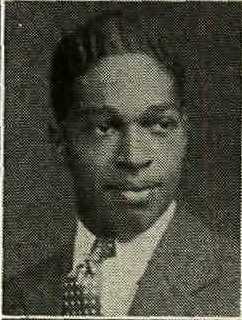
 

This photo comes from this page in the 1932 yearbook:
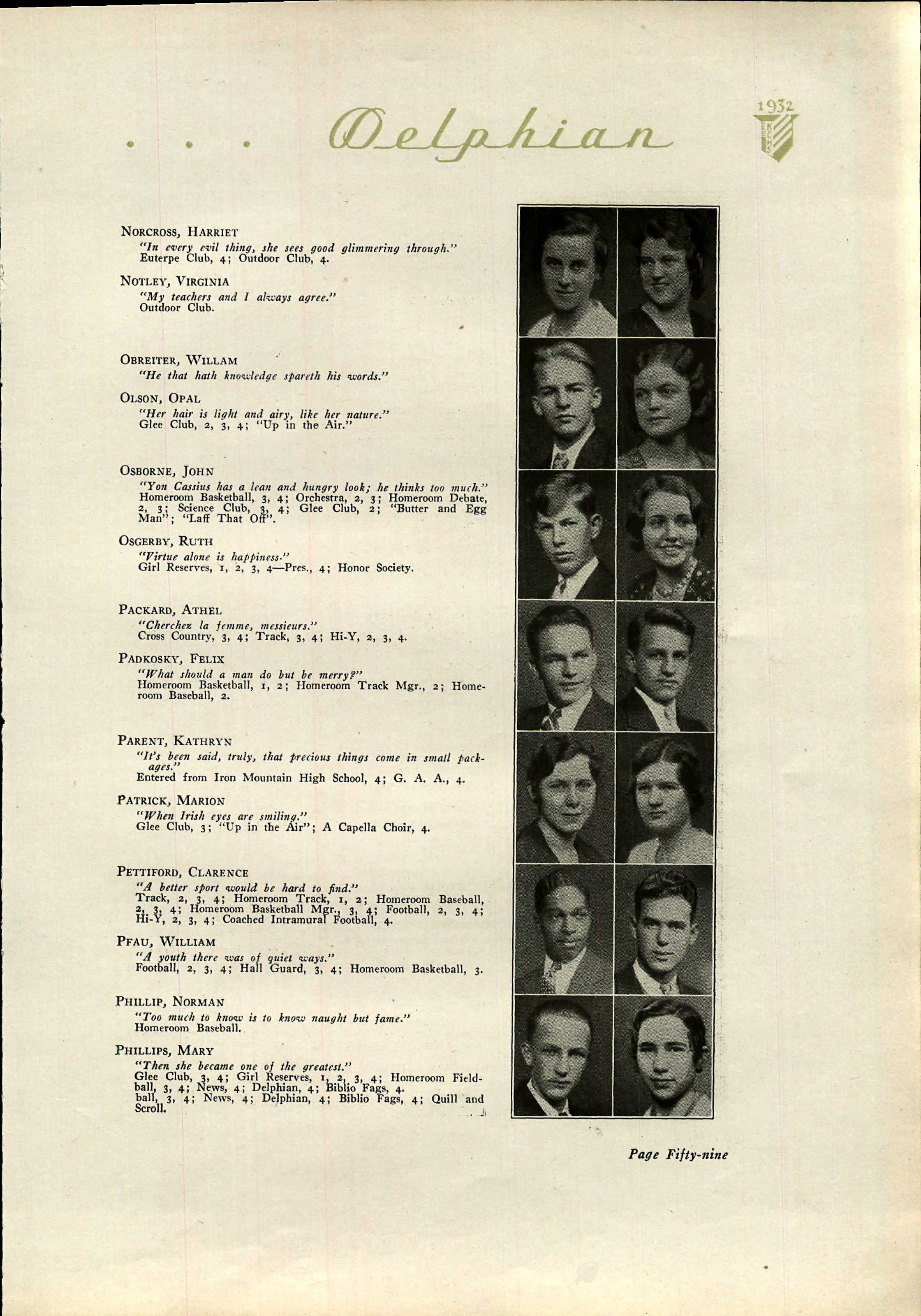
You can see that Clarence was quite the athlete. Grandpa also loved sports, but he would get sick from following the ball because of his bad eye. You can read what happened to his eye here. Clarence was about 3 years younger than Grandpa, but maybe the nearest boy who wasn’t a relative. Grandpa had about 7 boy cousins who lived nearby, but I imagine it was hard to be an only child and hang around with 7 boy cousins who were all brothers.

Back to Clarence: he lettered in football in 1930. He must have been 19 at the time. And in 1932, he must have been 21. The age is a little off, I know, but there might have been reasons that we don’t know. My other grandfather, for instance, immigrated from Europe when he was fourteen, and he was still playing football and declaiming in Glee Club for his high school when he was 21.

In this page, Clarence is the manager of the intramural team:

Oh my, did you read what it says about the Intramural Team? It’s for boys not talented enough for varsity or the reserve team. Yikes. Did they have to spell it out like that?

This blog post is a little tribute to the memory of Clarence Pettiford, a talented gentleman.

Read Full Post »

Almost two years ago, I posted photos of my grandfather as a very young man with an unidentified female. I hypothesized that she was his girlfriend before my grandmother.

Here they are together–looks like a couple to me.

I was going through some papers and found memory books my grandparents had prepared (one of his memories and one of hers) for the grandchildren. Inside Grandpa’s memory book, the question is asked: WHO IS THE GIRL YOU REMEMBER THE MOST?

This was his answer: (2) Vander Weele and Garthe: Don’t remember first names

So I did a little research on these names. I figured out who I believe at least one of the girls is, based on the census reports and other documents.

Garthe turned out to be Margaret Christine Garthe, born 11 days after my grandfather in 1908. She wasn’t from Kalamazoo, but from northern Michigan. She had come to Kalamazoo to attend Western. I found her in the 1928 Western State Teacher’s College yearbook.

Tell me if this isn’t the girl my grandfather is seen with above. Back row, 3rd from left.


From Ancestry it looks as if Margaret married Hans James Knutson. She passed away in 1997 in Muskegon, Michigan. Grandpa lived until 2000, happily married to the end to Grandma.

Read Full Post »

In “honor” of the weather some of the United States has been having this week, I am posting photographs from the Burdick and Balch neighborhood in Kalamazoo during the blizzard of 1978.The yellow house was my grandparents’ house at the corner of Burdick and Emerson.The white building was my grandfather’s Sunoco station.The other houses are from the neighborhood. As befitting a 1970s camera and film, the color is poor–yellowy and faded.

I’ve posted the house and gas station in the past. Here is the house from 1947:

Grandma and Grandpa’s house on Burdick Street

You can find the station at Down at the Station.

Meanwhile, Phoenix was about 90 degrees yesterday :).

Read Full Post »

I remember my grandfather wearing his Sunoco “uniform” and his Sunday sportcoat, but I never thought of him as at the height of fashion. At least not in his attire.

But take a look at him as a 22 year old in 1930!

At first I saw his sport coat, sweater, shirt, fancy belt, and plaid pants as a spiffy outfit, but didn’t stop to think: why is he wearing bloomers? haha

Well, he’s wearing knickers (no, I don’t mean those kind of knickers), which are short for knickerbockers. Copied from this website:

Knickerbockers, later shortened to knickers, were popular sports wear for wealthy gentleman. Knickers were baggy pants that fit low on the natural waist and tight below the knee, ballooning out around the thighs. For upper class gentlemen wearing white or light striped knickers in summer with a matching Norfolk jacket was the look of the teens and early 1920’s.
Grandpa is not wearing a Norfolk jacket, but one that does look a little preppy over that sweater and shirt collar.


Plaid Plus Fours

Variations of knickers included plus-fours, plus- sixes, plus-eights and plus-tens. The plus is how many inches below the knee they hung. Plus fours came in tweeds, linen, corduroy, and flannel. Many were solid colors but to be really trendy men wore stripes, checks, and plaid patterns.  They were already on trend when the prince of wales went on tour in American wearing plus fours. His approval meant any man NOT wearing plus fours was out of  fashion.

Notice that “to be really trendy men wore stripes, checks, and plaid patterns.” That’s Grandpa–“really trendy”!

Knickers were worn for more than just sports and casual entertainment. They were common among both fashion forward industries such as the movies, but also among working classes who found the sturdier material knickers quite useful on the farm, for making deliveries, and for some factory work. The short legs and light weight clothes made them cool to wear in summer.

Not sure what beach this photo was taken at, but his outfit is sporty for the time period, as befitting a walk on the beach. By today’s standards, he’s a little over-dressed!


Read Full Post »

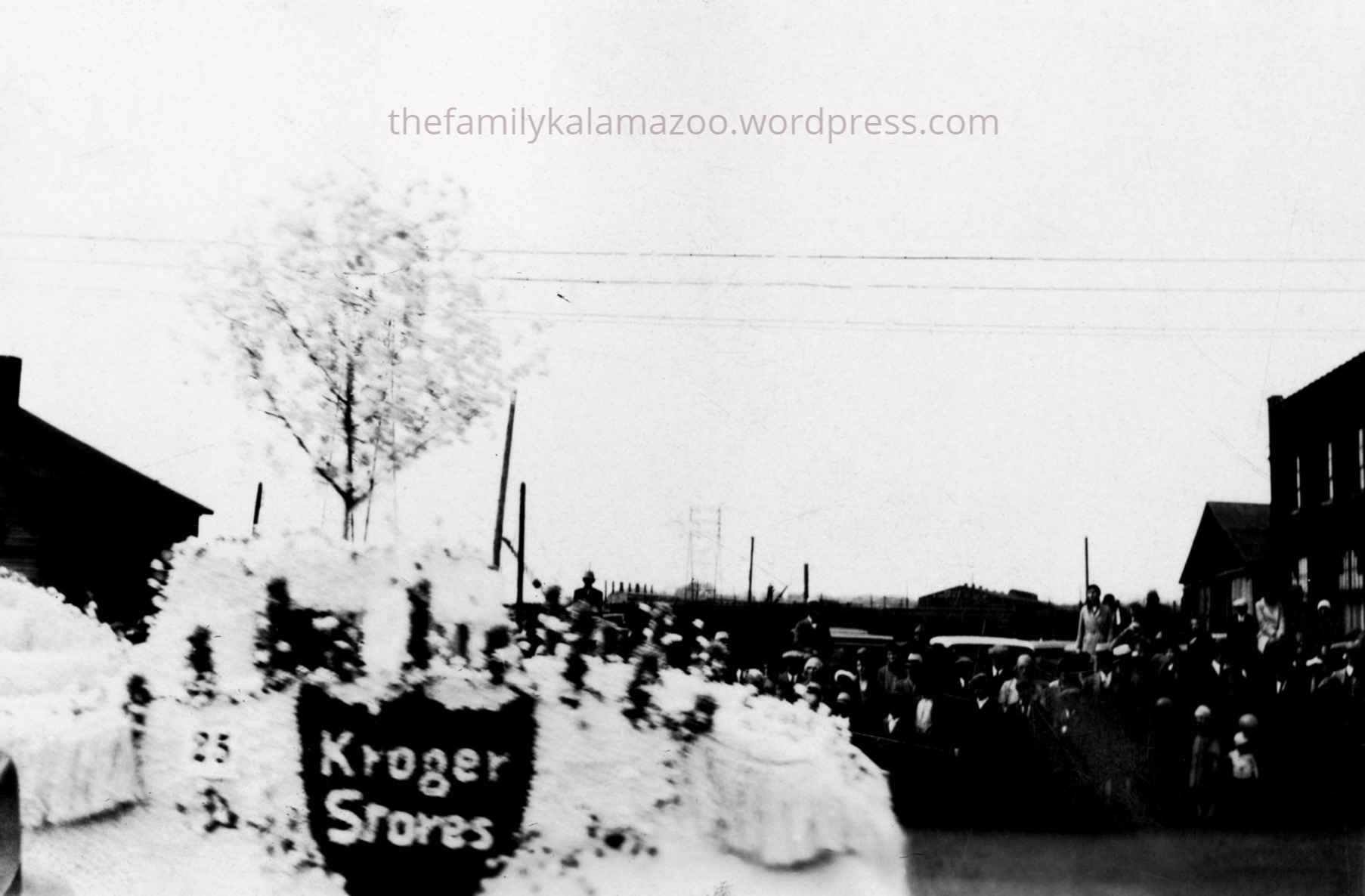
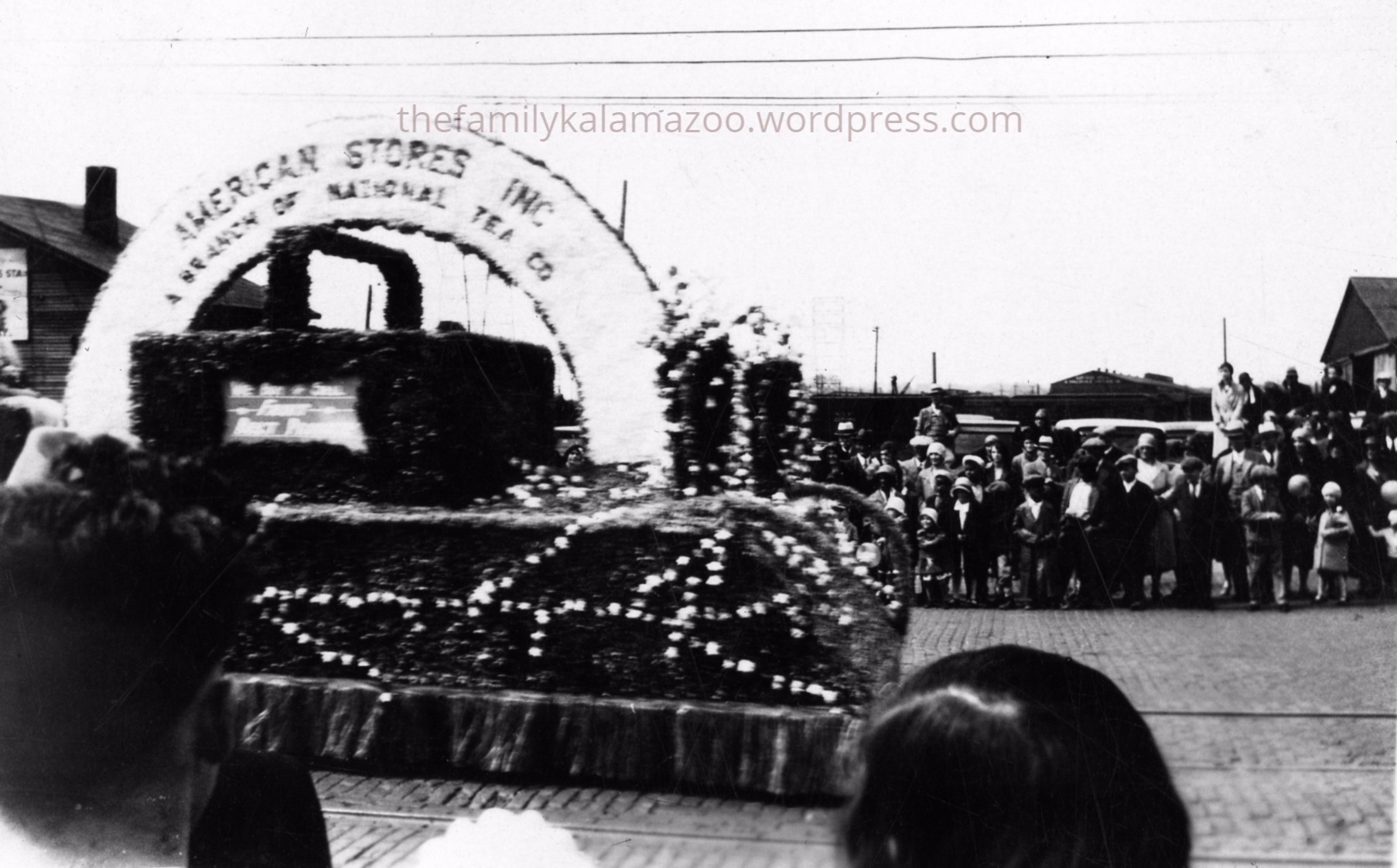
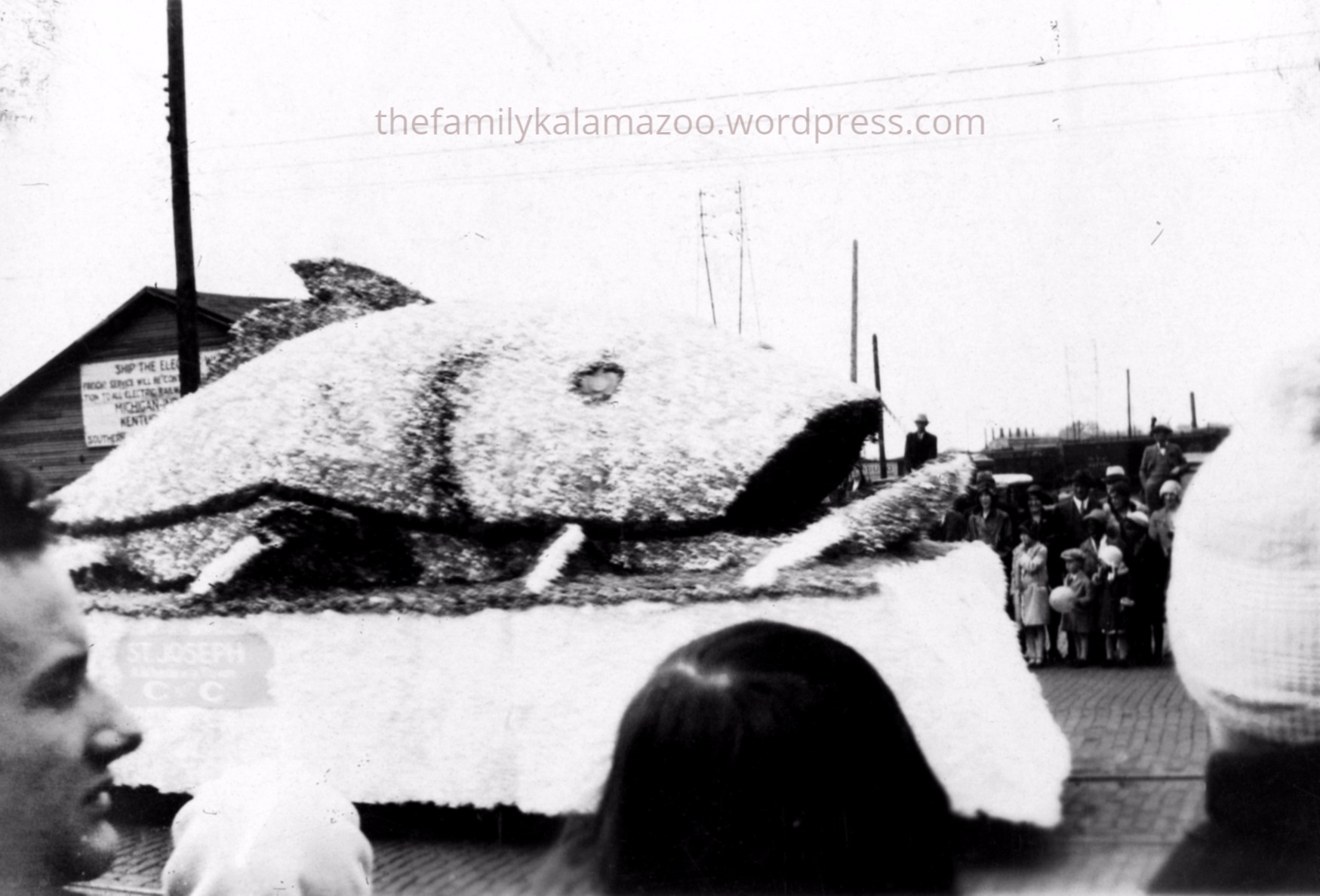
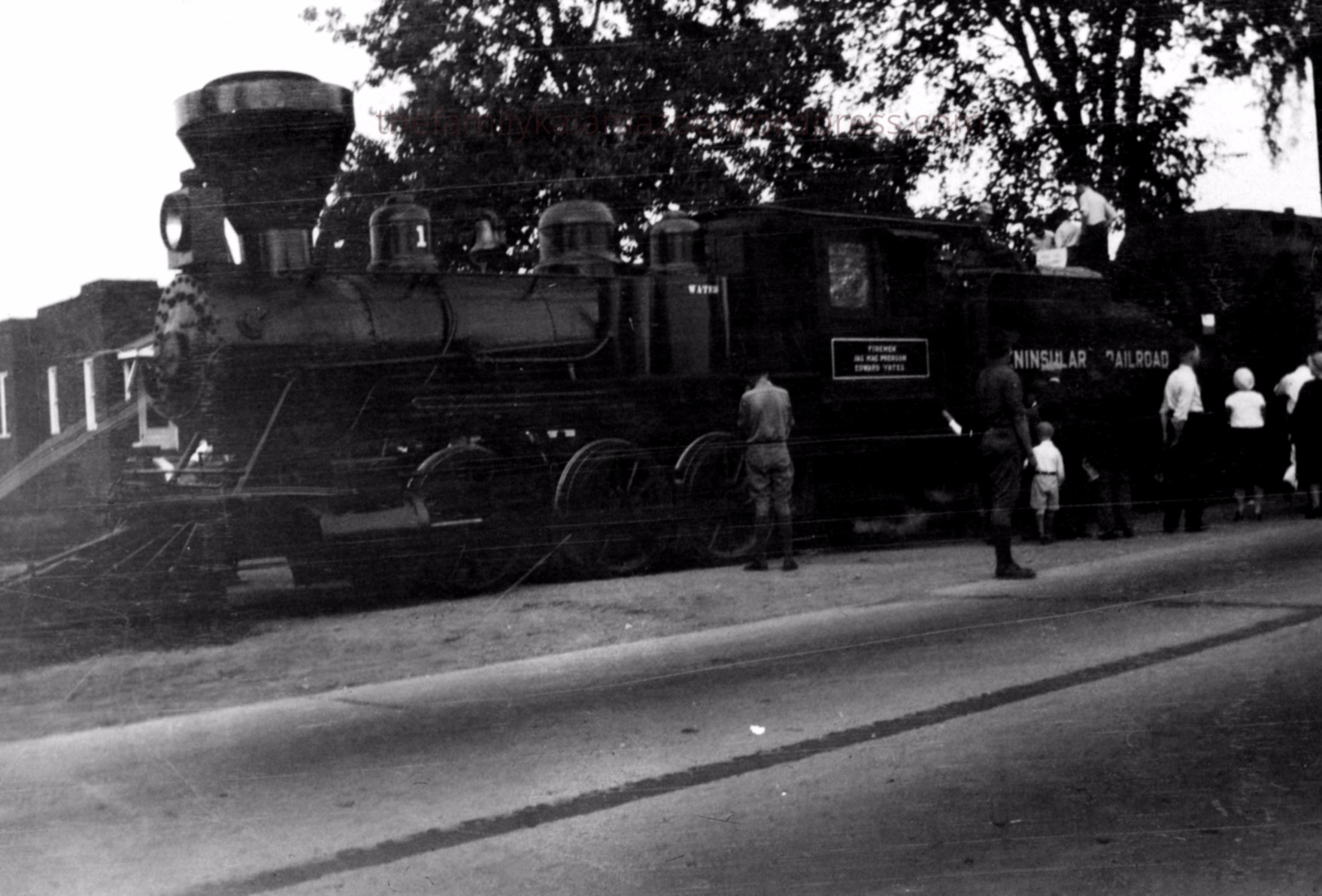
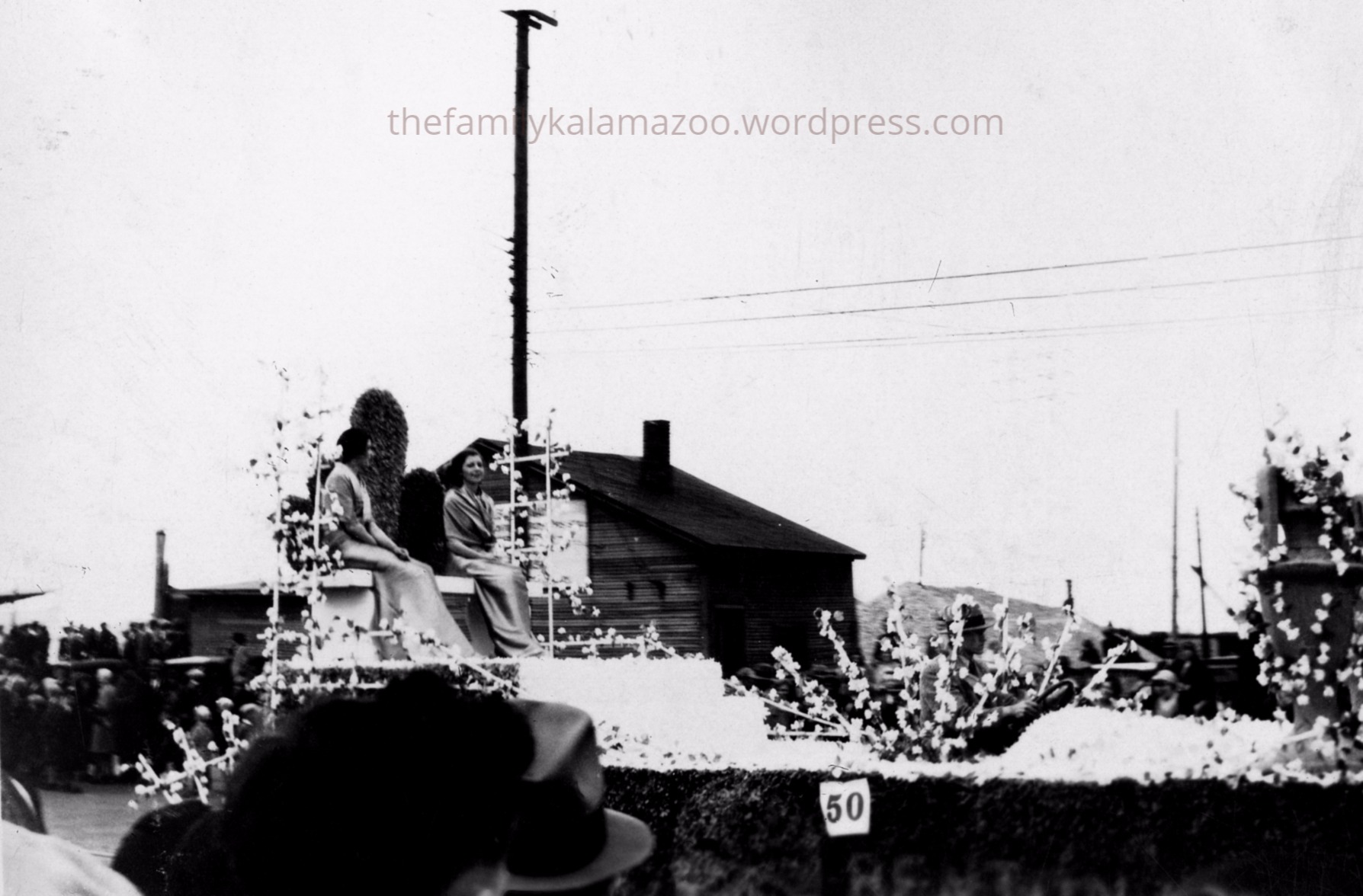
My grandfather, Adrian Zuidweg, had an album of photos which included those from a parade in 1931. It seems most likely that the parade took place in Kalamazoo, Michigan–probably down Burdick Street. But I need help identifying the buildings to know for sure. Many of the business names that are readable seem pretty “generic.” These names include Montgomery Ward, Ross Carrier, Kroger Stores, and Grand Hotel.

I know the date because of this float, but I don’t understand the significance of the “centennial” aspect of the design.

The Light float is the last photograph in the album. Here are the others in order of placement. If you can find any signs that this is Kalamazoo–or elsewhere–please let me know.


It seems odd that there aren’t any clues in these photos that indicate the “local” setting of the parade. There are quite a few ladies of the court. Kalamazoo is home to Western Michigan University and Kalamazoo College, but I don’t see any references to the schools, so maybe a check of 1930-31 and a 1931-32 yearbooks would rule out the colleges as participants in the parade.

A clue that I can’t interpret: Benton Harbor Exchange. This does seem to indicate that the parade was in Michigan, but was it in Benton Harbor or St. Joseph or Kalamazoo? And what exactly was the Benton Harbor Exchange?

Another possible clue: see that tall building in the background of the “downtown” photos? If that building can be identified it might help to lock in the city.

Just before the parade photos is one photo of Grandpa with Grandma when they were boyfriend and girlfriend–before they got married in 1932. Sorry about the watermark in the wrong place. I added watermarks en masse for these photos.

Read Full Post »

Two and a half years ago (how can it be that long ago?!) I posted a series of 12 “episodes” called “My Grandfather’s Story,” which was the results of an interview of Grandpa conducted by a social worker when my grandparents were living in a senior apartment complex. If you want to check the story out, just type My Grandfather’s Story into the search bar of this blog and you will be taken to links to all the posts.

But my own family interviewed Grandpa (and Grandma, too) about life in “the old days,” as well!

I thought I would share a very brief clip where Grandpa is being interviewed about where he was born, and a bit about the neighborhood he was family was living in. It relates to a post where I wondered about a house the Leeuwenhoeks may have lived in. This would have been Grandpa’s Aunt Jen and Uncle Lou and their daughter Alice. You can find it here: Did the Leeuwenhoeks Live Here? After getting information from a reader, I posted Library Research on That Little House in the Woods.

Now we hear in Grandpa’s own words what he has to say about the neighborhood. When my mother asks about “the brick house,” she means Richard DeKorn’s (Grandpa’s grandfather) house. See it and read about it here: The Richard DeKorn House. My aunt Alice is seated on our left, and she begins the questions. Uncle Don is in the middle, and that is Mom on his other side.

One of the interesting points Grandpa mentions is that his grandfather, Richard DeKorn, owned three houses in the first block of Balch. By first block, I believe he means from the corner of Balch and Burdick. One would be the “brick house” he built himself. One of the others might be the Leeuwenhoek house.

Grandpa liked to tell stories about the past, so I think he would have liked these blog posts.


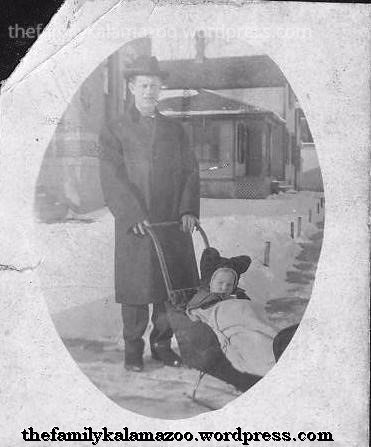
Grandpa and his father

Read Full Post »

One of the branches of my family from the Netherlands was the Reminse branch.

On 26 August 1810, my 4th great-grandfather, Dirk Reminse, a bread baker, married Adriana Kriger (Krijger) in Kapelle, Zeeland, the Netherlands. Dirk was born 22 November 1786 in Kruiningen, Zeeland, Netherlands. At some point before his marriage he must have relocated to Kapelle, but Adriana also came from a different town. She was born 11 June 1787 in Biggekerke, Zeeland, Netherlands.

Houses on the Kerkplein (church square), Kapelle, Netherlands

The couple had the following children:
Gillis Remijinse 1811–1868

Jan Remijinse 1813–1837

Hendrika Remijinse 1814–1893

Johanna Remijinse 1817–1864

Johannis Remijinse 1819–1846

Adriaan Remijinse 1821–1849

Pieter Remijinse 1822–1830

Frans Remijinse 1823–1860

Gerard Remynse 1825–1910

Marinus Remijinse 1826–1863

Note the difference in the spelling of the surname. It is seen both ways. In this country it became REMINE.

Their daughter Johanna was born 15 July 1817 in Kapelle. She married Boudewijn DeKorne 21 May 1847 in Kapelle. Boudewijn had been born in Kapelle on 11 June 1816.

The couple had one daughter who died as an infant, then a son Richard and daughter Maria were born. Richard, my great-great grandfather, would end up being a well-known brick mason and contractor in Kalamazoo, Michigan, but first the family had to immigrate to the United States.

Johanna’s parents had both died. Dirk died 9 September 1840 in Kapelle. On 14 April 1845, Adriana passed away.

Boudewijn and Johanna arrived in this country in 1856 and first settled in Zeeland, Michigan. The following year their 4th and last child, Jennie was born. Jennie eventually became Jennie Culver who divorced her husband and moved to Seattle with her two teen daughters. I have posted about the magnificent photo album that belonged to one of Jennie’s daughters that a blog reader mailed to me.
Johanna Remijinse DeKorne was my last direct ancestor in the Remine line, although my grandfather stayed close to the family that continued that surname in Michigan.

I found a photograph of this branch of the family in the Netherlands. The photograph is not marked with a photography studio or any other identifying information. Someone, possibly my grandmother, wrote on the back “Remine family in Holland.” In order to figure out who is in the photograph I would need to know the approximate date of the photo. Since Johanna immigrated in 1857, this must be from a line of the family that ran parallel to her line. Would it be the family of one of her siblings?

I went back and examined the other Remine cousins in the United States. They stem from Johanna’s brother Gerard.  He seems to have immigrated to the United States between 1855 and 1857. Maybe he and his family even came over with his sister and hers? NOTE TO SELF: CHECK INTO THIS.

Why did the families remain close? Johanna’s son Richard’s wife Alice’s sister Mary married Richard Remine, son of Johanna’s brother Gerard! What does that make them? First cousin’s by marriage?

So the photo can’t be of Gerard’s family. That leaves eight other siblings to check into. And the children of all these siblings . . . . NOTE TO SELF: MORE WORK NEEDED HERE

CAN YOU GUESS A TIME PERIOD FOR THIS PHOTO?


Read Full Post »

One of the wonderful benefits of blogging about family history and genealogy is learning from my fellow bloggers. Last week I read a post by Amberly, The Genealogy Girl, about a site called Genealogy Gophers. I’d never heard of it, but she made it sound easy (and free), so I hopped over to the site and entered (somewhat randomly) one of my family surnames in the search form.

“Zuidweg” brought up several entries because I hadn’t narrowed down to time or place. This isn’t surprising because my Dutch cousin Elly thinks that Zuidweg might be a fairly common name, especially in Zeeland.

Before I could search the entries  individually, one popped up, clamoring for attention. It was one of those rare finds that I probably could have never found without this source.

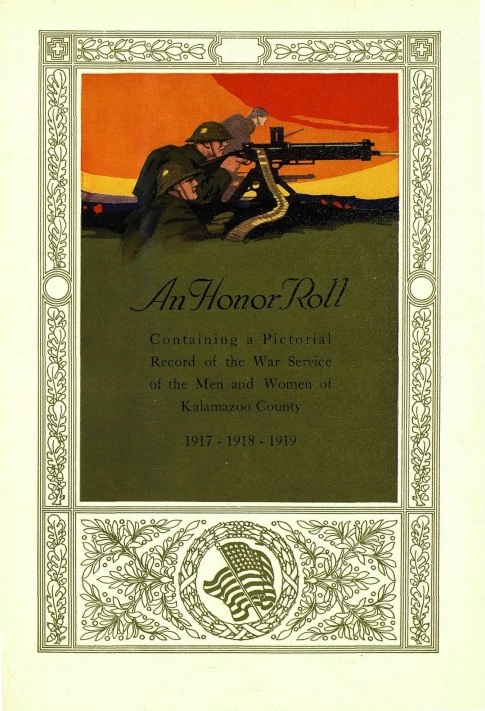
An Honor Roll

Containing a Pictorial

Record of the War Service

of the Men and Women of

Kalamazoo County

1917-1918-1919

The entry in this book mentions my great-great-grandmother Jennie Zuidweg. Born Jennegien Bomhoff on 5 March 1838 in Zwolle, Overjissel, Netherlands, Jennie married Johannes Zuidweg in 1869, at age 31. She was a maid at that time and both her parents had already passed away. They had 3 children, but Lucas passed away at age 21. In 1901, Jennie and Johannes immigrated to the United states. She was sixty-three years old. She was older than I am. I can’t imagine uprooting my life at that age and moving so far away that I would never be able to return to the country I’d lived in all those years.

Johannes died in 1911, when Jennie was 73. She lived on, a widow, until her death in Kalamazoo, Michigan, on 16 December 1924 at the age of 86. My grandfather was the only child of her remaining son, Adriaan. He was 16 when his grandmother died. She had many grandchildren through her daughter Johanna VanLiere.

Between the death of Johannes and her own death, WWI occurred. So what was Jennie doing with her time when she was 80 years old?

According to this honor roll she had some remarkable knitting skills.

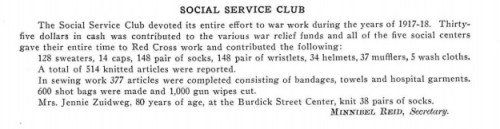
Jennie Zuidweg knit 38 pairs of socks 1917-1918

The Social Service Club had five centers in Kalamazoo. During 1917-1918 women who volunteered for these centers contributed a total of:

128 sweaters

14 caps

148 pair of socks

148 pair of wristlets

34 helmets

37 mufflers

5 wash cloths

Kalamazoo Country contributed a total of 514 knitted articles, 377 sewn articles, as well as 600 shot bags and 1,000 gun wipes.

The only volunteer singled out here is Mrs. Jennie Zuidweg, 80 years of age, at the Burdick Street Center, (who) knit 38 pairs of socks.

I used to knit when I was a kid, and socks sound like a lot of boring work to me. That is true dedication.

Read Full Post »

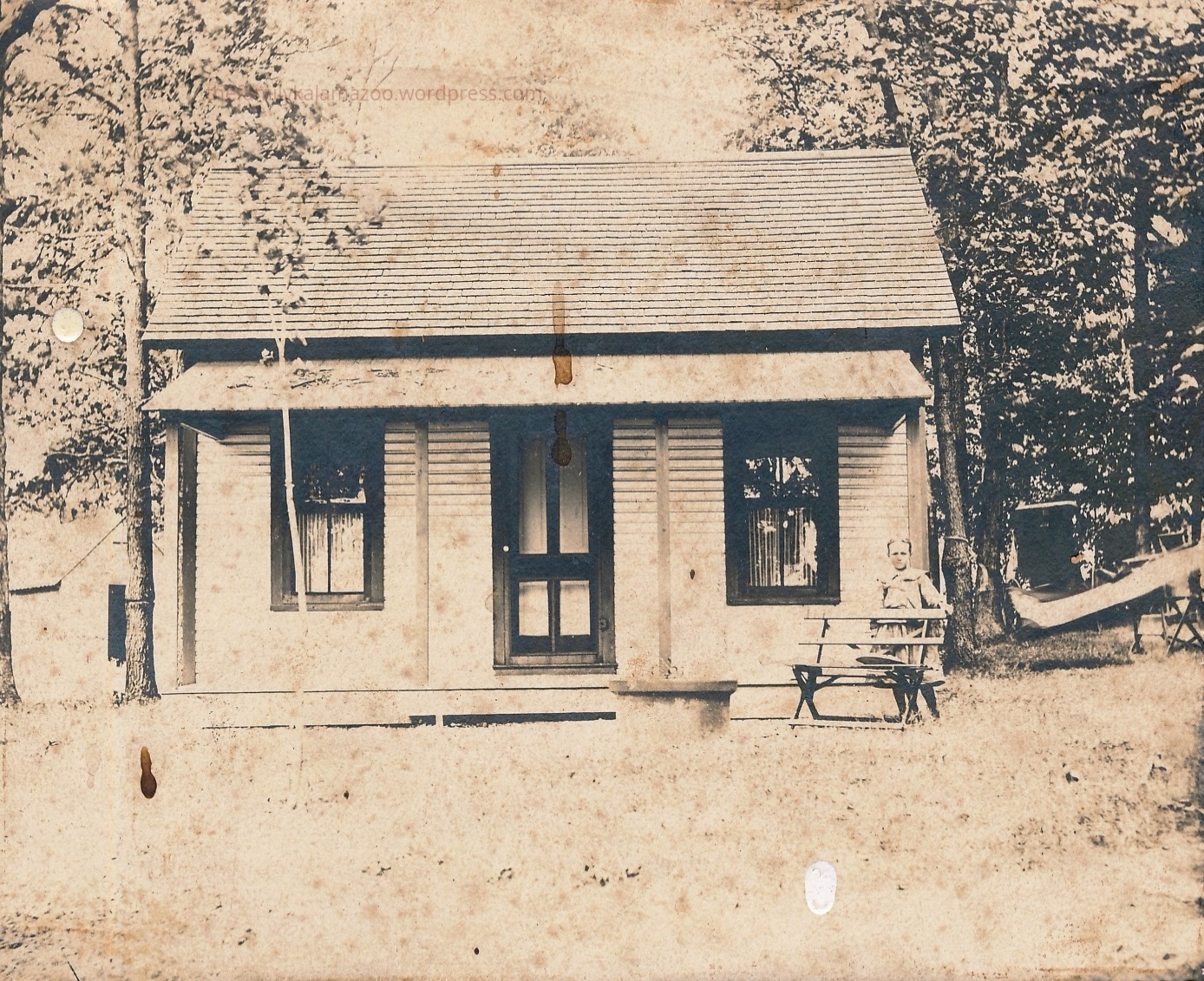
Actually the house was right in the middle of the city, not in the woods, but that sounds nice–very Ingalls-Wilder-ish.

A while back I posted a photo of a house with Alice Leeuwenhoek standing in front of it on Thanksgiving 1907. The address on the back was 126 Balch Street, which didn’t seem to conform to current addresses. I asked a lot of questions about it. Uncle Don explained that were some buildings behind the houses on the street.


126 Balch Street, Kalamazoo, Michigan

Then I heard from Jill-O, a librarian in Kalamazoo. (P.S. You will love her blog so go check it out!)

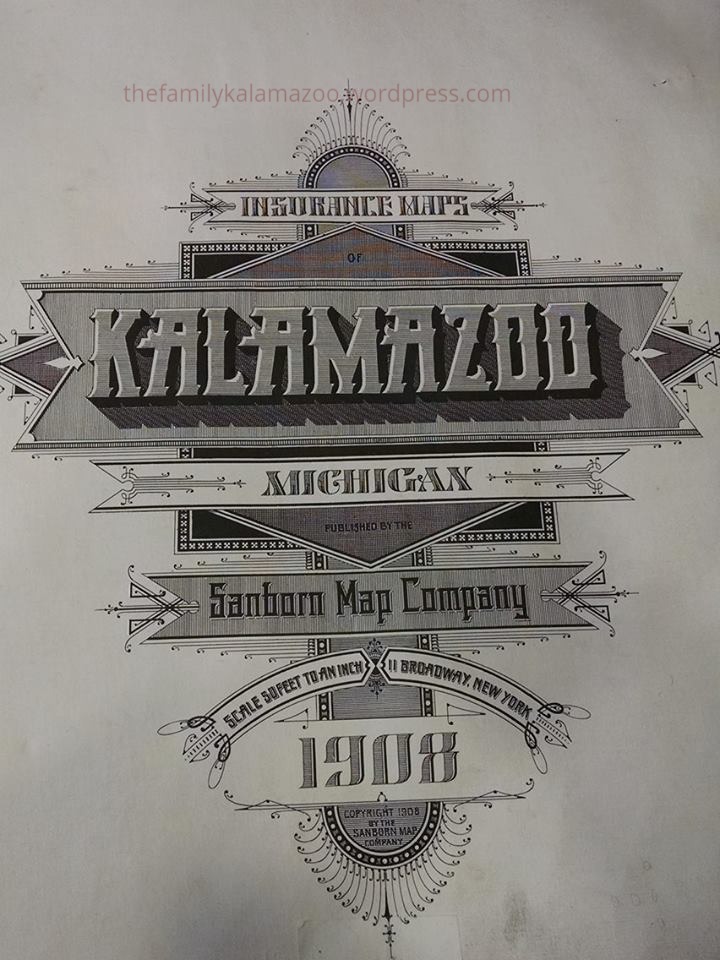
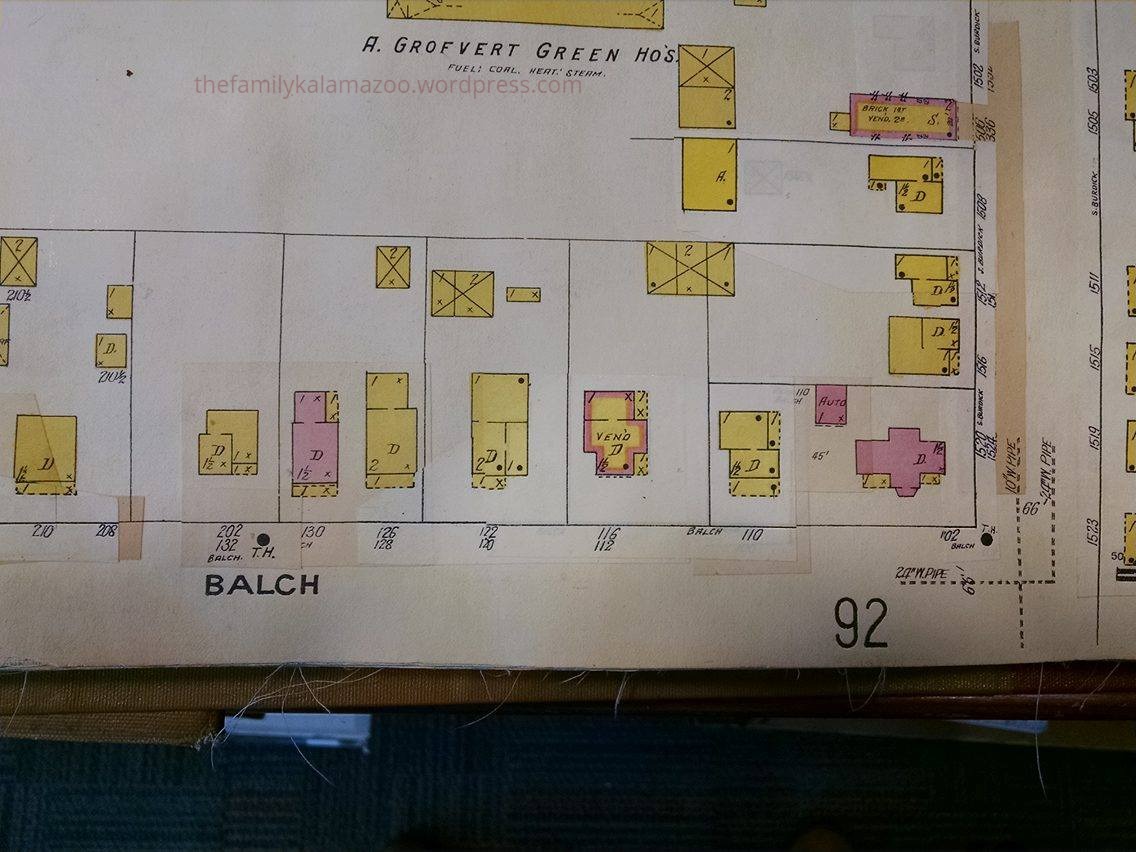
Here are the results of her research in a 1908 insurance street map of Kalamazoo:

Jill-O says:

It looks like the numbers are in the same location as today. There are a couple of outbuildings behind 126, so either the house was torn down and rebuilt, or the one of the outbuildings was used.

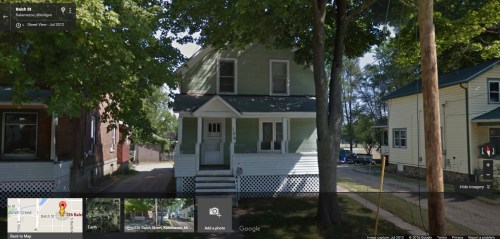
Here is the house that  is on the street, numbered 126, today.

Let’s look at the pic and think back to 1907. In the photo you can see an outbuilding behind the house, so it’s unlikely that it’s off the street, behind another building. But if it was 126, wouldn’t the outbuilding be poking out on the other side? And wouldn’t the house be larger? As to the second question, maybe not. The house shows one room and behind it another room, so maybe from the photo we can’t see the depth of the house. As to the first question, what if the photo is reversed? I don’t know too much about the process of taking photos or developing them in those days, and maybe the photo is reversed.

OR. What if this is an outbuilding and that building off to the left is a house on the street from another angle?

The more answers I find, the more questions I have. I think my husband is right: I ask way too many questions.

This map is invaluable to me because so many of my relatives lived in this neighborhood. I am going to use it to plug in the addresses on the census reports–yippee!!!

Thank you, Jill-O!

Read Full Post »

After my last post was published, Elly and I conferred again about our Mulder family. We discovered that of the six children of Adriaan and Johanna (Mulder) Zuijdweg, we had two differences. First of all, Elly didn’t have a record of the first child, Kornelis, born in 1837. And I did not have another child who died at a very young age. Although I had on my tree, Johanna, born 1847, I did not know that there was an earlier Johanna, born in 1845, who died on 5 March, 1847. She passed away two months before her Grandfather Mulder died, and less than two years after her father applied for emigration.

Now we know why the newspaper account said there were 5 children and not 6–or 4. At the time of the application for emigration there were five Zuijdweg children. But afterwards, one died and two more were born.

So it seems likely that there really were seven in total, with one dying as a baby.

But that ain’t all, folks. There are two other exciting discoveries made by Elly.

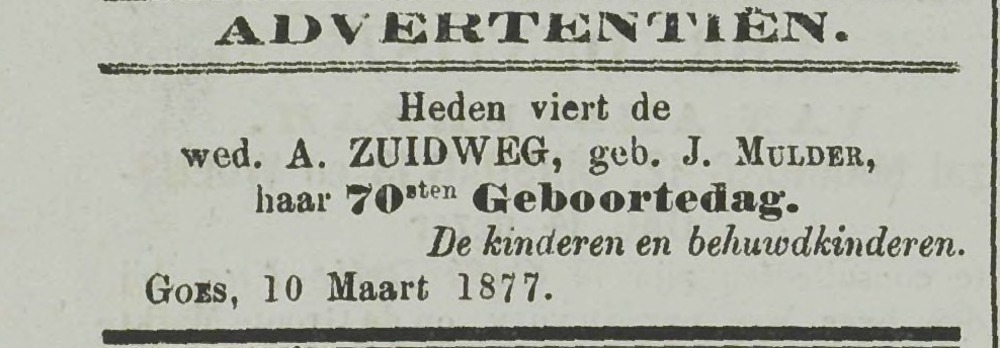
First, she found an advertisement for Johanna Mulder Zuijdweg’s 70th birthday! Johanna’s family must have been proud of her living to that age. Elly says it is customary in the Netherlands, even today for some people, to advertise 50th, 60th, 70th, etc. birthdays. It might mean that her family and friends had a small party for Johanna’s birthday.

Look at that ad. Very very interesting. It says ZUIDWEG. Not Zuijdweg. What is up with that? I thought the boundary between the two spellings was the Atlantic Ocean. But now I see this spelling used in the Netherlands! ***

Second, Elly noticed a “coincidence” when we saw the name Hogesteger in more than one place and she checked it out. I noticed it and just assumed (you know what they say about that word, right?) that it was a coincidence. But it’s no coincidence.

Adriaan Zuijdweg and his wife, Johanna Mulder Zuijdweg, wanted to emigrate to the United States in 1845. He might have been part of the group seceding from the Reformed Church. His wife’s brother, Johannes Mulder was married to Henderika Johanna Hogesteger. Johannes and Henderika emigrated to Holland, Michigan, in 1857 with their three children. But ten years before that, Henderika’s brother Johannes Hogesteger emigrated in 1847 for religious reasons. He actually was one of the leaders of the movement that seceded from the Reformed Church.

In fact, you can read here in Michigan History about how Johannes Hogesteger, a Mulder in-law, figured into the history of Michigan.

The city of Zeeland has a rich history of Christianity, beginning with the first settlers who emigrated from the Netherlands due to persecution from the State Church.

The First Reformed Church of Zeeland was formed before the city of Zeeland was founded; it was organized in the Netherlands before the 457 immigrants sailed to the United States. It is thought that this was the only other group of people besides the Pilgrims that immigrated to the U.S. as an organized church.

Reverend Cornelius Vander Meulen

Reverend Cornelius Vander Meulen

The first church service as a congregation was held three months after the arrival of the settlers, in the home of Jan Steketee. Many Sundays found the settlers worshipping outside, though in inclement weather they held services in one of the larger homes in the village. Rev. Vander Meulen was asked to be the pastor. Jannes Van de Luyster, who played an influential role in facilitating the immigration movement, was elected as elder, along with Johannes Hogesteger. Jan Steketee and Adrian Glerum were elected deacons.

In May 1848 the first church building was dedicated, but by the end of the year so many immigrants had arrived that it was necessary to build a new church. In 1849, the church recorded 175 families in the congregation.


What I get out of this is that my relatives were involved in the only other group besides the Pilgrims that moved an entire church to the United States. It seems that the Mulders (Johannes and Henderika) came ten years later than Henderika’s brother, but their 14-year-old son Karel arrived earlier. And Adriaan and Johanna never did make it to Michigan to join their fellow worshipers.

***

Info on Johanna from Zeeuw Archief

Birtday registers Zeewuws Archief


25.GOE-G-1845 Goes geboorteakten burgerlijke stand

Geboorteakte Johanna Maria Zuidweg, 10-05-1845
Soort akte:
Geboorteakte
Aktedatum:
10-05-1845
Aktenummer:
89
Geboortedatum:
10-05-1845
Geboorteplaats:
Goes
Kind:
Johanna Maria Zuidweg

Geslacht: Vrouwelijk
Vader:
Adriaan Zuidweg
Moeder:
Johanna Mulder
Gemeente:
Goes
Toegangsnummer:
25 Burgerlijke Stand Zeeland (1796) 1811-1980, (1796) 1811-1980
Inventarisnummer:
GOE-G-1845
Owner:
Zeeuws Archief


Death registers Zeeuws Archief


25.GOE-O-1847 Goes overlijdensakten burgerlijke stand
Overlijden Johanna Maria Zuidweg, 5-3-1847
Soort akte:
Overlijdensakte
Aktenummer:
74
Aktedatum:
1847
Gemeente:
Goes
Overlijdensdatum:
5-3-1847
Overlijdensplaats:
Goes
Overledene:
Johanna Maria Zuidweg

Geboorteplaats: Goes
Geslacht: Vrouwelijk
Leeftijd: 2 jaar
Vader:
Adriaan Zuidweg

Leeftijd: 42
Beroep: Kleermaker
Moeder:
Johanna Mulder

Leeftijd: 39
Beroep: Zonder
Toegangsnummer:
25 Burgerlijke Stand Zeeland (1796) 1811-1980, (1796) 1811-1980
Inventarisnummer:
GOE-O-1847
Owner:
Zeeuws Archief

Read Full Post »

« Newer Posts - Older Posts »