Feeds:
Posts
Comments

Posts Tagged ‘Peek family’

In a post called “Who Was Hank Waruf, Kalamazoo Gunsmith?” I wrote about the husband of my great-great-grandmother’s sister, Carrie (Paak) Waruf. The couple owned the resort Ramona Palace and Ramona Park, as well as many cottages and their own home, at Long Lake in Portage, Michigan.

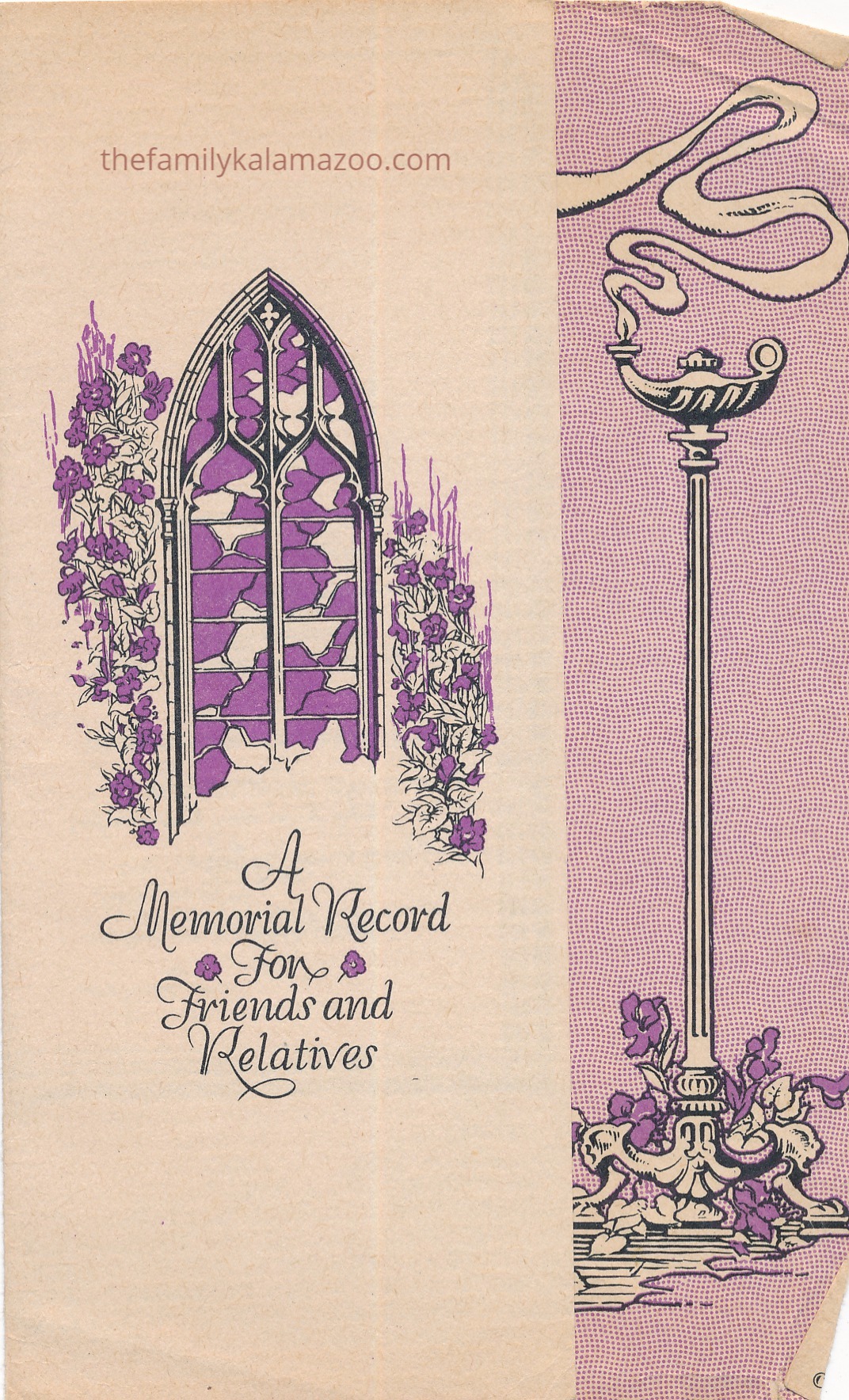
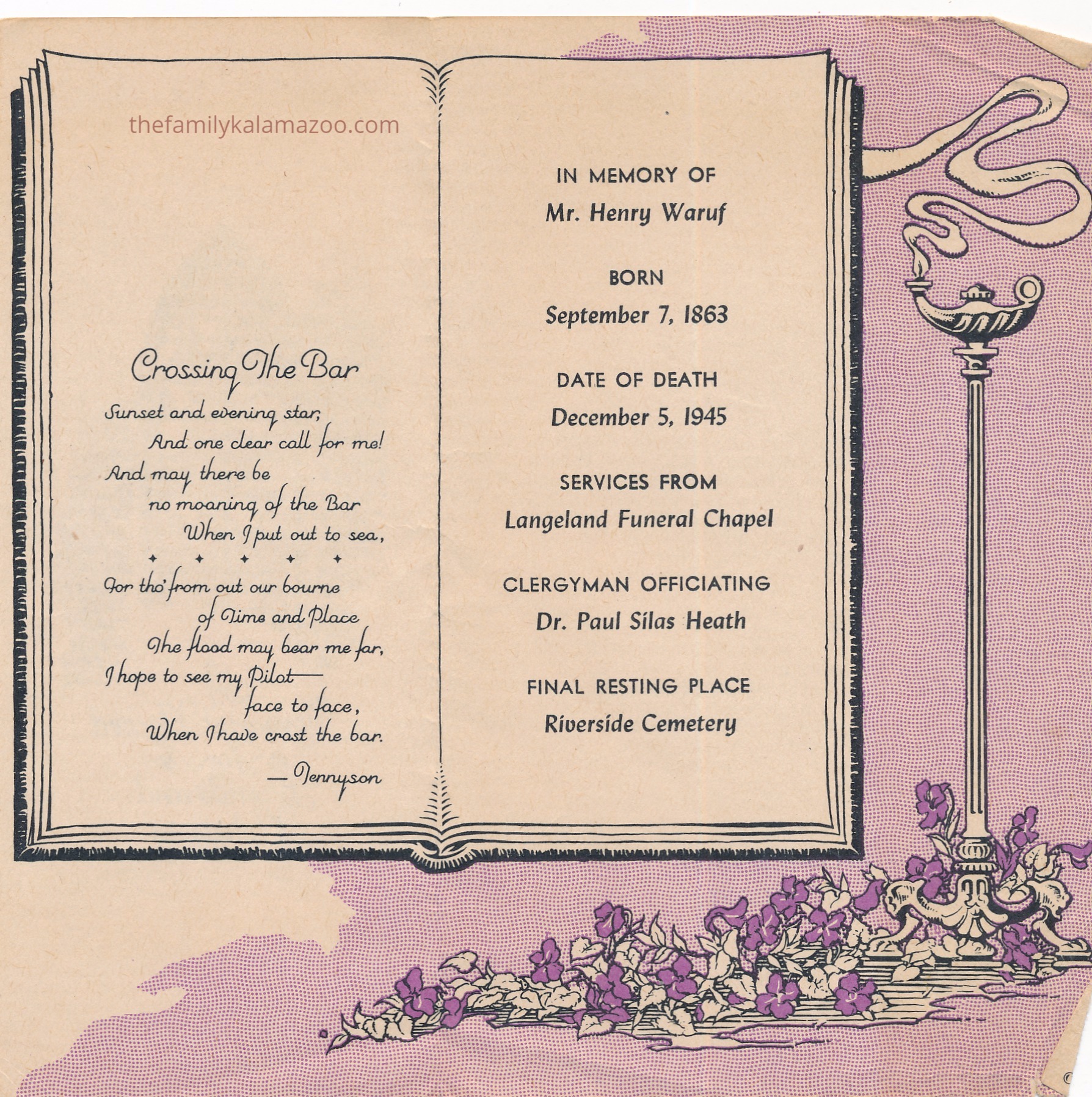
In my files I found the brochure for Henry Waruf’s (Walraven) funeral.


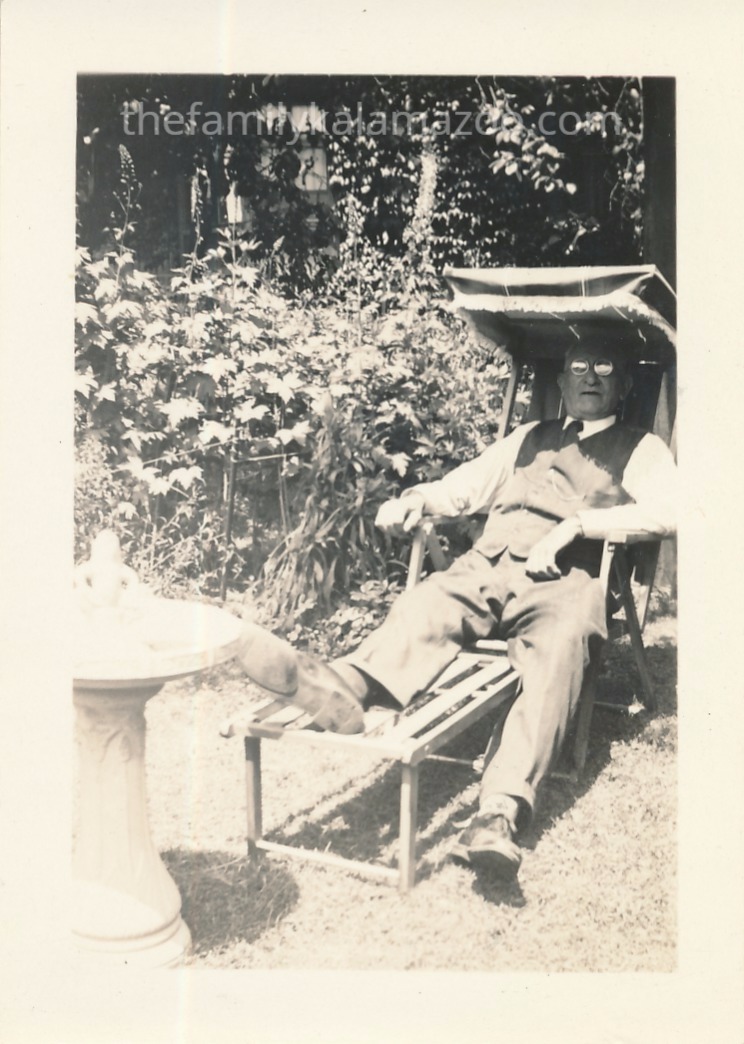
Henry Waruf’s wife Carrie and my GGGrandmother Alice Paak DeKorn had a sister named Mary. One of Mary’s daughters was Genevieve. She was married to Frank Tazalaar. Here are Henry and Frank together (with a little dog).


I get the impression from some of our photos that Hank Waruf was a man other men wanted to hang around .

Read Full Post »

Henry (Hank) Waruf and his wife Carrie (Paak) Waruf owned the resort Ramona Palace and Ramona Park, as well as many cottages and their own home, at Long Lake in Portage, Michigan.

Since Carrie is one of the Paak sisters, and her sister Alice Paak DeKorn was my great-great-grandmother, I’ve focused more on the Paaks. But Henry Waruf is a very interesting character in Kalamazoo’s early history.

Adri van Gessel was so kind to do some research on the Waruf family. Henry himself appeared to be a bit of a dead end because the name Waruf seemed to come out of nowhere. But Adri broke through that brick wall and discovered Henry’s origins.

Who Was Hank?

Henry was born Hendrik Walraven on September 7, 1863 at Kloetinge, the Netherlands. Apparently Koetinge is part of Goes. Big shock there since the majority of my mom’s ancestors seem to have come from Goes.

He was married on June 2, 1882 at Kalamazoo (MI) to Cornelia Peek (Carrie Paak), daughter of Teunis Peek and Jacoba Bassa.  Cornelia was born on May 8, 1862 at Lexmond and died in January 1957 at Kalamazoo (MI).  Henry died on November 29, 1945 at Orlando (FL).

I don’t know if Henry was on vacation in Florida, living there part of the year, or if the couple (who had no children) had moved there and Carrie went back to Kalamazoo after his death. I could try to research this through city directories, phone books, etc. The research I have done was mainly through newspapers, and I discovered that, although Henry (or Hank) usually spelled his last name “Waruf,” sometimes it shows up as “Warruf.” Still, it looks to me as if Joseph is the one who changed the family surname to Warruf/Waruf in the United States from the original Walraven.

Henry had one sister,  Maria Walraven, born March 3, 1866 at Goes, but she died before 1870 in the Netherlands.

Henry and Maria were born to Joseph Walraven (Joseph Warruf), son of Hendrikus Walraven and Elisabetha Resch, who was born on October 13, 1837 at Goes, died on December 11, 1910 at Kalamazoo (MI).

Joseph was married on May 21, 1863 at Goes to Melanie de Munck (Mary), daughter of Jan de Munck and Maria Joseph Bataille.  Melanie was born on October 16, 1840 at Goes and died on March 18, 1914 at Kalamazoo (MI). Joseph, Melanie, and Henry immigrated to the U.S. in 1868, when Henry was 5 years old.

A Bataille Connection

Notice the name Bataille. I’ve previously written about a Bataille ancestor in these posts:

An Update on the Bataille Family

A Familial Occupation

How Did Etaples, France, Show Up in My Family Tree?

Hank Went into Business

As I mentioned, “Hank” (Henry) and Carrie (Cornelia) were married in 1882, when he was 19 and she was 20. By 1885, he was advertising a business selling guns in the Kalamazoo Gazette, where it’s noted that he took over the gun shop of W. Blanchard.

Sept 17, 1885 Click the link and scroll to the bottom for the ad. By September 1886, Hank added “gunsmith” to his name on the ads.

I was astonished to discover, in an 1897 Polk Directory, that Henry Waruf owned the gun shop in partnership with Richard “Ro-mine” who I take to be Richard Remine. Richard “Dick” Remine was Hank’s brother-in-law. He was married to Carrie’s sister, Mary, another sister of my great-great-grandmother. Richard was born in 1857 and so was six years older than Hank. I’ve written before that the person who inherited the Long Lake resort was Therese Remine, Richard’s daughter. So there might have been another reason that she was the sole inheritor of that property–because her father had been in business with Waruf. How long were they partners? I am going to guess that Waruf was the true businessman of the two–and an ambitious man.


Richard Remine

Hank Was a Man of Many Talents

Hank shows up often in the Gazette, and I was able to see that he became a talented shooter, a prize-winning breeder of English Spaniels (no wonder my grandfather’s family always had this breed of dogs), and a collector of real estate. He reported regularly to the State Board of Fish Commissioners on the fish in Long Lake.

Here is an article where he literally won all the prizes at a shoot. Sept 7, 1899. There are many articles about the shoots he attended and referreed. He also represented Kalamazoo at a state shoot in Bay City.

The award-winning dogs owned by Henry show up in publications by the American Kennel Club, The Field Dog Stud Book, and The Fanciers’ Journal. I traced the beginnings of this sideline to a Gazette article that mentions that Hank was going into the business of raising hunting dogs and had brought in a fine pointer from Lowell with a pedigree going “way back.”  Click the link for the article–right side about 1/3 down.Feb 28, 1899.

In 1919, there is a newspaper article about the houses that Waruf was selling. These houses were all on the north side of Kalamazoo. I know that he also owned all the cottages near the resort at Long Lake, so he was used to being a landlord. I wonder if he had been renting out all these houses or if he was flipping them. I suspect he had been renting the houses. Here is the article. April 2, 1919

Finally, on August 30, 1904, Kalamazoo Gazette published a cute story. A Gazette reporter climbed the water tower at the asylum. This is the tower that my great-great-grandfather Richard DeKorn built (click here). From that vantage point he was able to see all the way to Gull Lake in one direction and Long Lake in another. He mentions a great many notable people and what he claims he saw them doing at the time. About Waruf, he wrote, “‘Hank’ Waruf shining up his guns at Long Lake for the duck season.” The details in the article conjure up a Breughel painting, so I find it a little impossible, but definitely amusing. Here is the article: Aug 30, 1904


***

Here are some images I have previously published on The Family Kalamazoo:

Carrie (Paak) and Henry Waruf

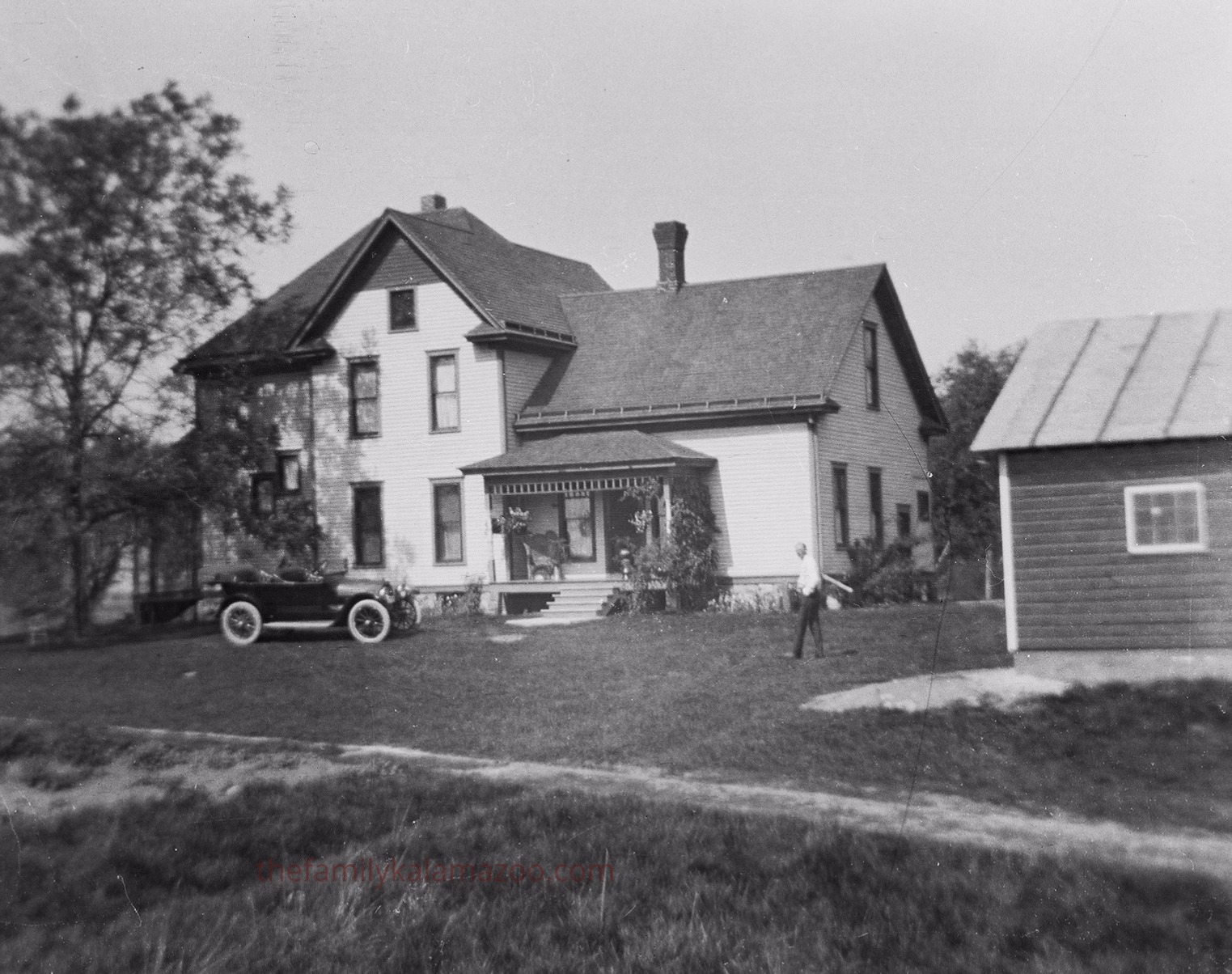
Home of Hank and Carrie Waruf, Sprinkle Road

Home of Hank and Carrie Waruf, Sprinkle Road

I’ve written about the place and the people here:

Read Full Post »

I wondered when I could ever get back to Theresa Pake. Since I couldn’t make time, I thought I would share something about her anyway!

On January 20, 1928, Theresa married Roy Lawrence. I’m posting this late on January 20, 2015, so that it’s the date of their anniversary.  Roy was born 5 November 1884, about 9 years before his bride.


Roy was a cigar smoker, but he quit when he married Theresa.

Is Theresa’s hair marcelled here? And what is the corsage she is wearing?


A Series of Disasters

The Children After the Fire, 1902

Paak-a-boo

Saved from the Fire

Who is George Paake, Sr.?

Curious about George

George Paake’s Legacy, Part I

George Paake’s Legacy, Part II: Theresa’s Pre-Professional Education

George Paake’s Legacy, Part III: Theresa’s Professional Education

George Paake‘s Legay, Part IV: A Letter to His Daughter


Read Full Post »

I’ve traveled to California, Sedona, and Michigan in the past few weeks.  Needless to say, I am behind in my work even more than usual. I want to continue Theresa Pake’s story and to explore the Jennie DeKorn Culver photos more, but these projects take a good deal of time.

Instead, I decided to take a look at an old postcard postmarked 1911. The postcard is to Alice Leewenhoek, Richard DeKorn’s granddaughter through his daughter Jennie. Alice was an only child who lived with her mother Jennie and her father who Grandpa always called “Uncle Lou”–Lambertus Leewenhoek.

In the photo below, Alice is sitting with a friend, neighbor, or relative against the exterior wall of Richard DeKorn’s house. She holds a doll in her lap and is petting Tom or Carlo (if I had to guess, I would say it’s Tom).
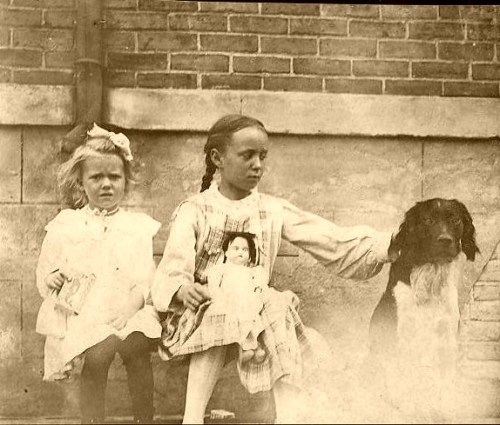
 

Alice Leeuwenhoek with doll

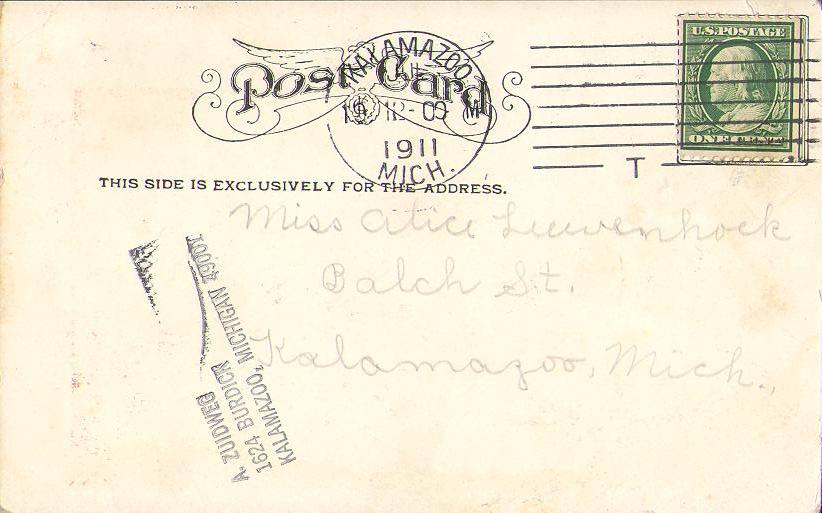
On this postcard, Nellie Bradt is thanking Alice for her “postal.” Nellie’s address is marked as 1130 S. Burdick Street.  The photograph is Bronson Park, which is the beautiful “town square” of Kalamazoo.

Bronson park front postcard


After seeing that the mailing address is listed as Balch St. and doesn’t include Alice’s street number (not uncommon for that time period in Kalamazoo), I went to my family tree on Ancestry and discovered that I had never found the Leewenhoek family on the 1910 census.  So I tried something different and looked for the 1910 census on Family Search. Bingo.  Instead of Lambertus Leewenhoek, I found Lamburtos Leenwenhock, at 110 Balch Street, Kalamazoo, Michigan. Uncle Lou was living with his wife Jennie and his daughter Alice who was 13 years old in that year–and therefore around 14 at the time of the postcard in 1911. New info: According to Uncle Don, they lived in the wooden house just behind the Richard DeKorn brick house.

Can you read anything more on the postmark besides the city, state, and year?  Is it December 9? Or does it say something else?

Bronson park back postcard


Grandpa and Alice were first cousins, their mothers were sisters.

I haven’t been able to find Nellie Bradt in the 1910 census, but I did find her in an 1899 city directory. I then found her parents in a 1905 directory. I think I can find them more years, too. But I don’t understand how to read these entries. The 1899 entries are entirely different from the 1905, but neither one really gives me the address.

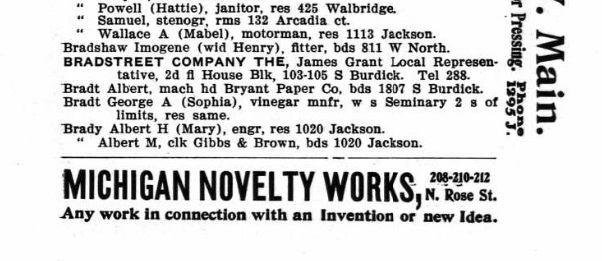
Here is the 1899 that lists Nellie with her parents, Mr. and Mrs. George A. Bradt. I understand they lived in the City of Kalamazoo. And I know “a” means acreage, but not how to interpret what any of this means or how it connects with an address.
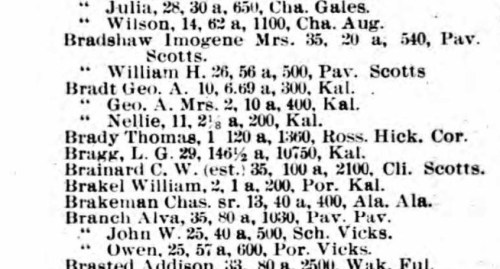
Nellie Bradt 1899 city directory


Here is the 1905 directory entry. Nellie isn’t mentioned, but her parents are. What in the world does it mean?

Nellie Bradt's parents 1905 city directory

Is there a way to search for Nellie in the 1910 census using the 1130 S. Burdick Street address she gives? Can I search the census by address?

Note that many of my relatives lived in this Burdick/Balch neighborhood. When I look at the census records from late 19th and early 20th century, I see that almost everyone, if not everyone, who lived there was Dutch.

My grandfather’s gas station was at the corner of Burdick and Balch, across the street from the Richard DeKorn house. Grandpa lived in that house for part of his childhood, with his parents and grandfather, Richard. When he built his house down the block on Burdick, he was staying in the same general area his family had lived in for decades. He continued to work at his station and live in his house until he retired and moved to Portage.

I remember as a child meeting Mrs. Bradt Braat who lived next door to the gas station. The name is pronounced, by the way, like the sausages that go with beer. I wonder if she was related to the Nellie Bradt who wrote this postcard. Mom? Uncle Don? New info: no, she must not be as they were a Belgian family (see comments below).

Alice Leewenhoek was my grandfather’s cousin. Note that the postcard is stamped with the name and address of Grandpa’s father, A. Zuidweg. I wonder why?

One postcard. So many questions!

Read Full Post »
I didn’t abandon Theresa or the Paake/Pake/Peek/Paak family. Here is George, Theresa’s father.

George Paake

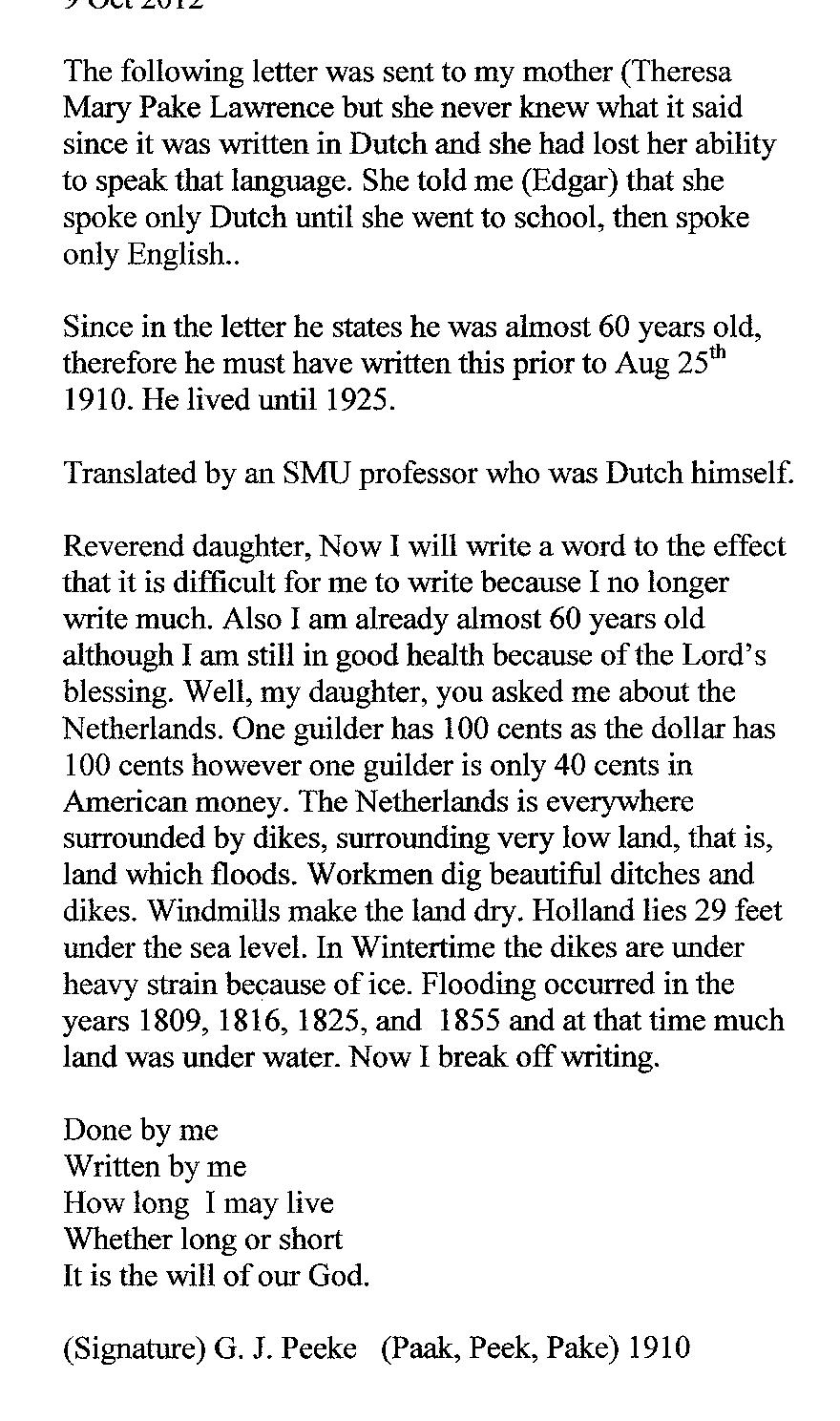
When Theresa was sixteen or seventeen, her father wrote her a letter. (Note that the spelling of the surname for George that I settled on is not one used further on in this post).

He wrote it in Dutch, but Theresa no longer could read or speak Dutch. Professor Lawrence introduces the translation he had prepared of the original letter:


The mention of the floods reminds me of a book I read when I was a child. The Little Ark, by Jan De Hartog, was the story of two children caught up in a horrific flood in Holland. I remember that the book seemed to be an adult book, although it was about children. It was very realistic, but like a good “adventure story,” it gave me confidence that if I were faced with a similar situation I could use my wits to survive.

Professor Van Zeitoff who translated for Professor Lawrence gave him the information to prepare this “glossary” for some of the first names, surnames, and geographical names associated with the family.


Most of my knowledge of The Netherlands comes from my early education and the books I read that romanticized Dutch culture. The book Hans Brinker, or The Silver Skates, by Mary Mapes Dodge, is one of those books. She was an American writer and at the time she wrote the book she had never even visited Holland. Part of the romance of the culture was the threat of flooding and the significance of the dikes.

What I want to know is why we never hear on the news about these Dutch floods? Is there technology today that prevents these floods from occurring?

A Series of Disasters

The Children After the Fire, 1902

Paak-a-boo

Saved from the Fire

Who is George Paake, Sr.?

Curious about George

George Paake’s Legacy, Part I

George Paake’s Legacy, Part II: Theresa’s Pre-Professional Education

George Paake’s Legacy, Part III: Theresa’s Professional Education


Read Full Post »
In Part II, I described Theresa Pake’s high school and college education, but although she was 25 years old and had had a great deal of education for a young woman of her time, she wasn’t satisfied.

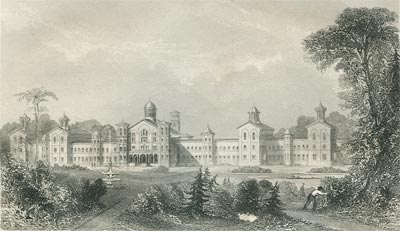
Her next step was to attend nursing school at the Kalamazoo State Hospital. I’ve written here about how my great-great-grandfather Richard DeKorn built the historic landmark water tower at the state hospital.


Here is an engraving of the hospital circa 1863:

Kalamazoo State Hospital

Kalamazoo State Hospital

The Michigan Asylum for the Insane was built in 1859, the water tower in 1895, and, in 1911, was renamed the Kalamazoo State Hospital. According to internet sources, nurse’s training was a pioneering program (perhaps started in 1906? I’m not certain), and Theresa would have been there during a vibrant period for the program. After Theresa left Asbury College, she began training as a nurse and graduated in 1925. On May 15, 1925, Theresa was registered by the state.

Notice the pin she wears in this graduation portrait. She actually received two pins. One says “Kalamazoo State Hospital” and the other has the initials KSTS for Kalamazoo State Nursing School.

Theresa Pake Graduate nursing school

Theresa Pake
Graduate nursing school

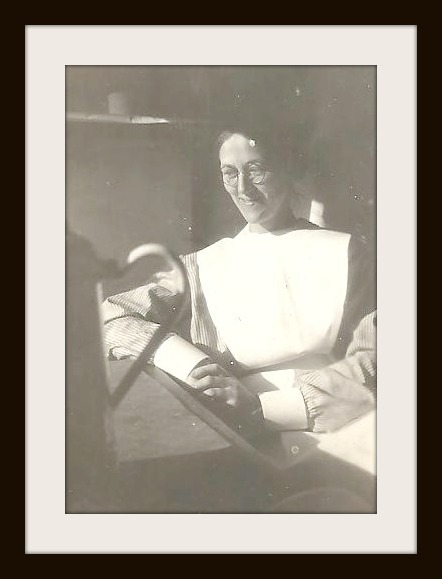
Here is Theresa with a classmate or coworker sitting outside the hospital. The caps they wear do not yet have the black stripe that is on Theresa’s graduation cap. Also, I wonder if the pinafore style uniform is an example of a student nurse costume.

And here Theresa sits alone:

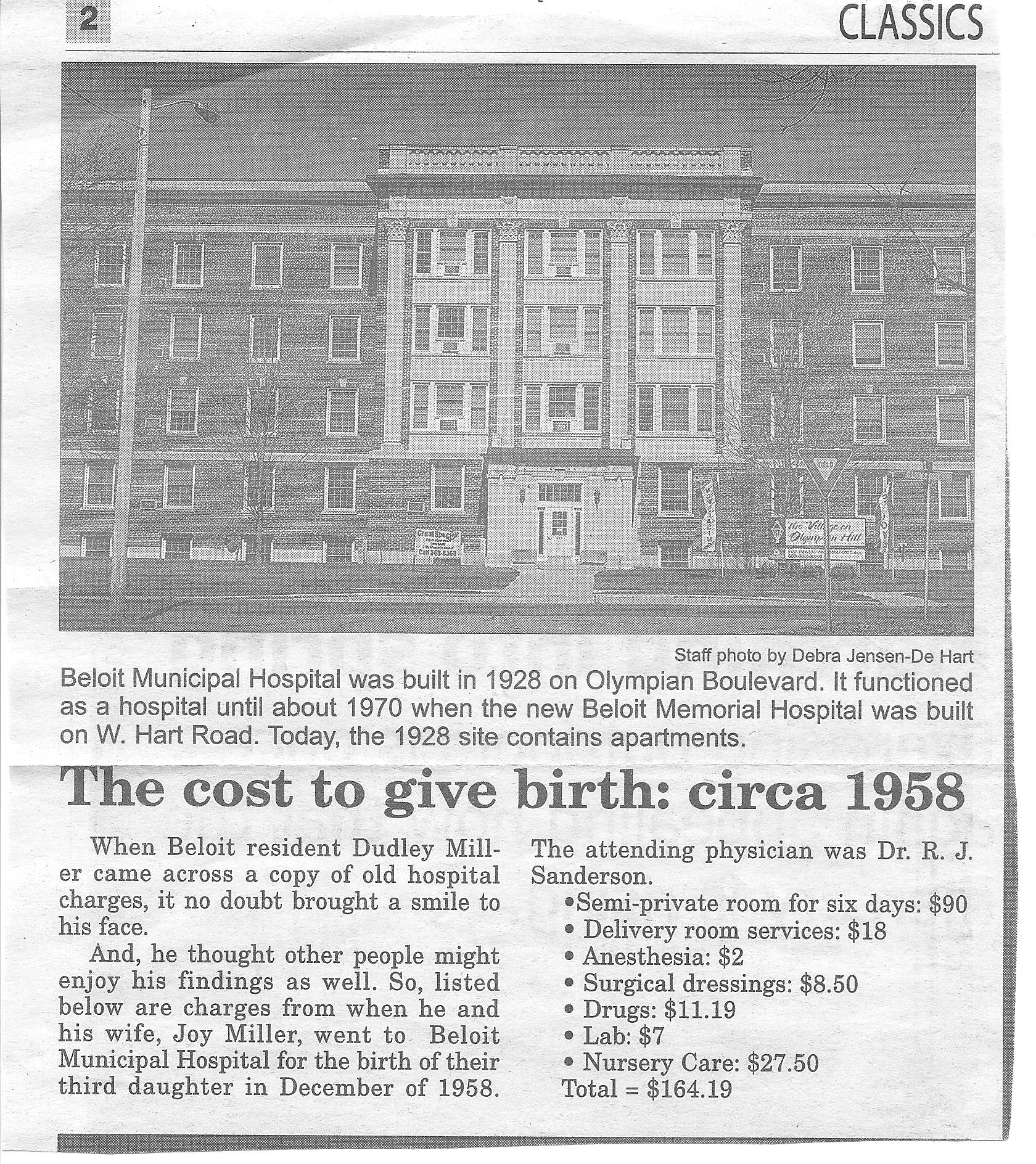
Theresa’s career as a nurse meant that she worked hard her whole life. She was employed as a private duty nurse for many years. She also worked at Beloit Memorial Hospital in Wisconsin:


After graduating with a nursing degree, Theresa was free to begin her life with a career, quite a feat for a young woman in 1925.

A Series of Disasters

The Children After the Fire, 1902

Paak-a-boo

Saved from the Fire

Who is George Paake, Sr.?

Curious about George

George Paake’s Legacy, Part I

George Paake’s Legacy, Part II: Theresa’s Pre-Professional Education


Read Full Post »
In Part I, I introduced George’s middle child, Theresa Pake, who was born in 1893.


Professor Lawrence has put much effort into piecing together his mother’s educational history.

At some point Theresa lived with foster parents, Una Orline and Oliver Oratio Pickard.  Prof. Lawrence thinks she maybe have gone to live with them as early as age six, which would mean she wasn’t under the care of her older sister. However, the newspaper article about the fire in 1902 would show that she was still living at home at the time of the fire (nearly 8 years old). Regardless, at some point, the Pickards became the caregivers of Theresa. None of the other children in the family seem to have gone to live with the Pickards.

The Pickards sent Theresa to Jennings Seminary, a private Methodist school in Aurora, Illinois, from 1911 – 1913.  Here  is a link to the history of Jennings Seminary, but to give you an idea, it was a school for young ladies and once considered one of the finest private high schools in the middle west.

Jennings Seminary

Jennings Seminary

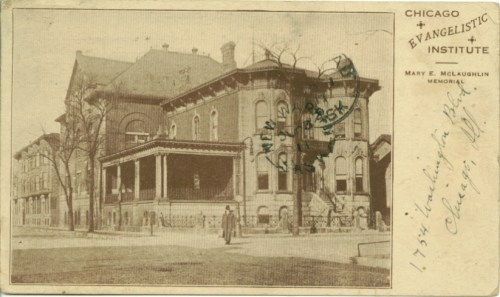
From there, Theresa went to Chicago Evangelistic Institute. After studying at CEI from 1913-1915, she graduated from the missionary course.

Theresa moved on to Western State Normal School’s High School Department.  She attended the program for at least the school year of 1916-17, participating in a play (where she played “mother-in-law”) and gave a speech advocating Republican Charles Evans Hughes (who was supported by Teddy Roosevelt) as the next President of the United States. She took classes such as anatomy, chemistry, French, and children’s literature.  Western was a teaching college, and the high school department was designed to not only give an excellent education to its students, but to provide a sort of student teaching experience for the college teaching students who planned to teach in high schools. Theresa graduated, at the age of 24, in June 1917 with 27 other graduates. At this time, it is possible that Theresa planned to become a teacher.

Here is a description in the yearbook about the high school program at the teaching college:

Here is Theresa’s yearbook photo. Note that in the above portrait, Theresa is not wearing glasses, but in the yearbook photograph she is wearing them. I think it’s likely she began to wear them in her early 20s.

In 1919, Theresa went to Wilmore, Kentucky, to attend Asbury College. At that time, Mrs. O. O. Pickard, at 1846 Oakland Drive, Kalamazoo, Michigan, was listed as her parent, so Theresa still was being educated under the guidance of the Pickards. Theresa had matriculated at age 25 with the intention of becoming a missionary. She attended Asbury for four semesters, from 1919-1921.

But Theresa’s education was far from over!

A Series of Disasters

The Children After the Fire, 1902

Paak-a-boo

Saved from the Fire

Who is George Paake, Sr.?

Curious about George

George Paake’s Legacy, Part I


Read Full Post »

In continuing the story of the Paake/Paak/Peek/Pake family, I will share with you what I’ve discovered about George’s family.

Today the subject is my first cousin 3x removed, daughter Theresa Pake, the mother of Professor Edgar Lawrence, the man who shared the photos and stories of this branch of my family.

Theresa was born Tracy Paak, on October 2, 1893, in Oshtemo, Michigan. Oshtemo is very close to Kalamazoo.


Although her birth certificate says her name was Tracy, and her siblings called her Tracy, Theresa always referred to herself as Theresa, so that is how I will refer to her.  Her parents were George and Lucy Paak (note that the birth certificate calls the mother Lizzie), who were both born in the Netherlands. Theresa’s mother died on May 28, 1900, when Theresa was only 6.5 years old. Theresa had two older sisters, one younger sister, and her brother George was the youngest of all the children.

According to the article about the fire that destroyed their residence in 1902, Cora, the oldest child, was taking care of the household and the children. That makes sense because she was fourteen, and the other children were far too young.  So at a very young age, Theresa had to go from living in a home nurtured by a mother to having a young teen sister “playing” mother to her and her siblings.

In this photo, Theresa is quite young. She is not yet wearing glasses. I took the liberty of altering the photo by using a sepia finish, as well as by adding a frame.

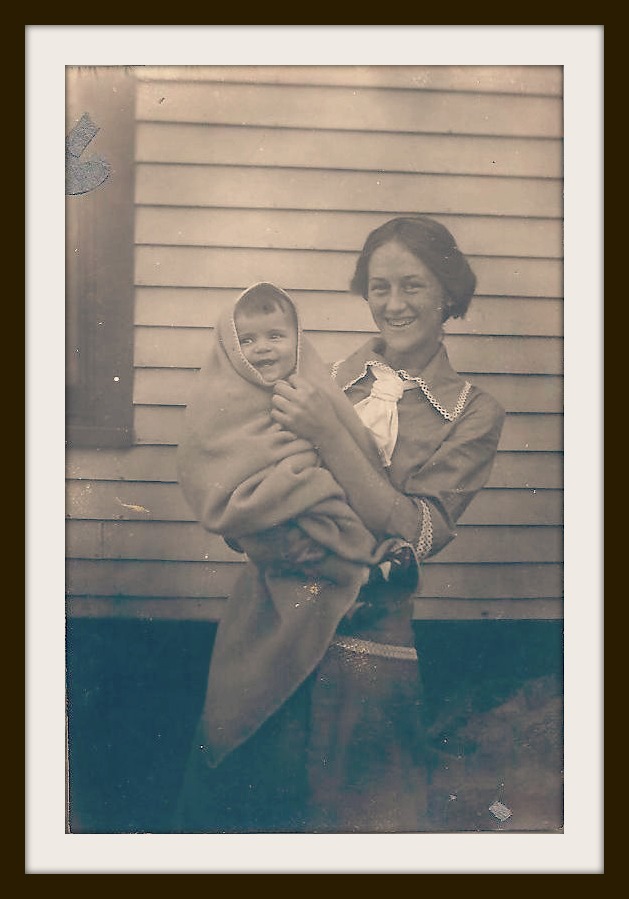
The following might be my favorite photograph of Theresa (also note that she is not wearing glasses). She looks so happy. She also looks like a girl who loves babies.  The photograph is from 1912.


For my next Paak post I plan to share photographs and information about Theresa’s education and career plans.

A Series of Disasters

The Children After the Fire, 1902

Paak-a-boo

Saved from the Fire

Who is George Paake, Sr.?

Curious about George


Read Full Post »

I started this blog in September 2012 with three private posts and then didn’t write again until November. The idea was that I would start to put the photos and stories I had accumulated “out there” for family members to access. Although the details aren’t that memorable to me, it seems that I switched to public but didn’t tag the posts at first, hoping that the posts wouldn’t get picked up by Google. That way, relatives could easily find the blog, but I was in hopes that nobody else would find it.

It didn’t take too long to see that some family members (Hi, Mom and Dad haha) and a few friends liked the blog and I thought it might be better just to tag the posts and connect with other WordPress bloggers. What I had seen of the bloggers working on family histories interested me a lot, so I wanted to feel more involved.

I had no idea what would happen. No, I don’t have an amazing number of blog followers, but those that do follow tend to be loyal and friendly. They are also kind and generous and have helped with looking at the details in photographs and giving me clues about where to search–as well as giving me some behind the scenes help.  You know who you are and you are fabulous.

Another aspect of blogging that I could not have predicted is how many wonderful non-bloggers have found the blog through internet searches and have shared information with me. I hesitate to name people because I don’t want to leave anybody out, so I will list just a few of the insights I’ve gained from these generous souls.

  • One of the biggest mysteries was the Paak family fire and that branch of the family–now I have info and photos to sort through and a new “cousin”
  • Information and photographs about my great-great grandfather Richard DeKorn’s second wife and her daughters.
  • Dates and names beyond count from a very kind and hardworking soul in the Netherlands
  • Through the previous individual, I found a first cousin once removed (I think that’s right) with a big heart–and photos and info–from my dad’s family
  • Photos and information of my ancestors in the Netherlands
  • Found the Noffke line
  • Found out more about the Jenny DeKorn Culver family–and received the gorgeous album of photographs and postcards
  • Information and photographs relating to Ramona Park, Long Lake, and the Waruf family
  • Learned more about the Bosman family
  • Learned more about the VanLiere family and corresponded with that branch and, yes, photos
  • Traced a branch from the Netherlands to the Holland area of Michigan
  • Identification of various photographs

I could continue as there are more goodies that have come my way since starting this blog. I am so grateful for the generosity of everyone involved. If I had kept this blog just to “us,” I wouldn’t have known how large my family truly is and how kind strangers can be.

That’s all I wanted to talk about today: how grateful I am and how thrilling it is to look back at all the information that has been shared here from such generous souls.

Enhanced by Zemanta

Read Full Post »
Let’s go back to George Paake/Paak/Peek/Pake today.

I mentioned that George was married at least three times–possibly as many as five times. It was pointed out to me that it would be very unlikely that George was married more than three times.

Take a look at the timeline:

George immigrated to the United States when he was ten or eighteen years old. I have conflicting sources on this. Either way, he married his first wife, Lucy Kliphouse, in Kalamazoo, on December 17, 1886, when he was 36 years old. The couple had five children, named after the grandparents. George was married to Lucy for fourteen years, when she passed away.

In 1902, at the time of the fire, George was a widower.

On April 15, 1906, George married Esther M. Cook. Adri van Gessel mentioned to me that by February 14, 1906,  the oldest daughter Cora (who, according to the newspaper article about the fire, was taking care of the household) was already married, so there was no one to take charge of the house. On Nov 21, 1907, Esther died of pneumonia.

On July 11, 1908 George was married to Addie Amelia Gifford (Wilder). Addie seems to have outlived George.

  • According to the 1910 Census, George (listed as Joseph G. Peake) was still married to Addie. He was listed with his wife Addie, his daughter Fanny, his son George, and Addie’s daughter Florence Wilder (from her previous marriage).
  • According to the 1920 Census, George (listed as George J. Pake) was still married to Addie. He was listed with his wife Addie, his son George, and Addie’s daughter Florance D. Wilder.

George died on December 9, 1925 after being married to Addie for seventeen years.

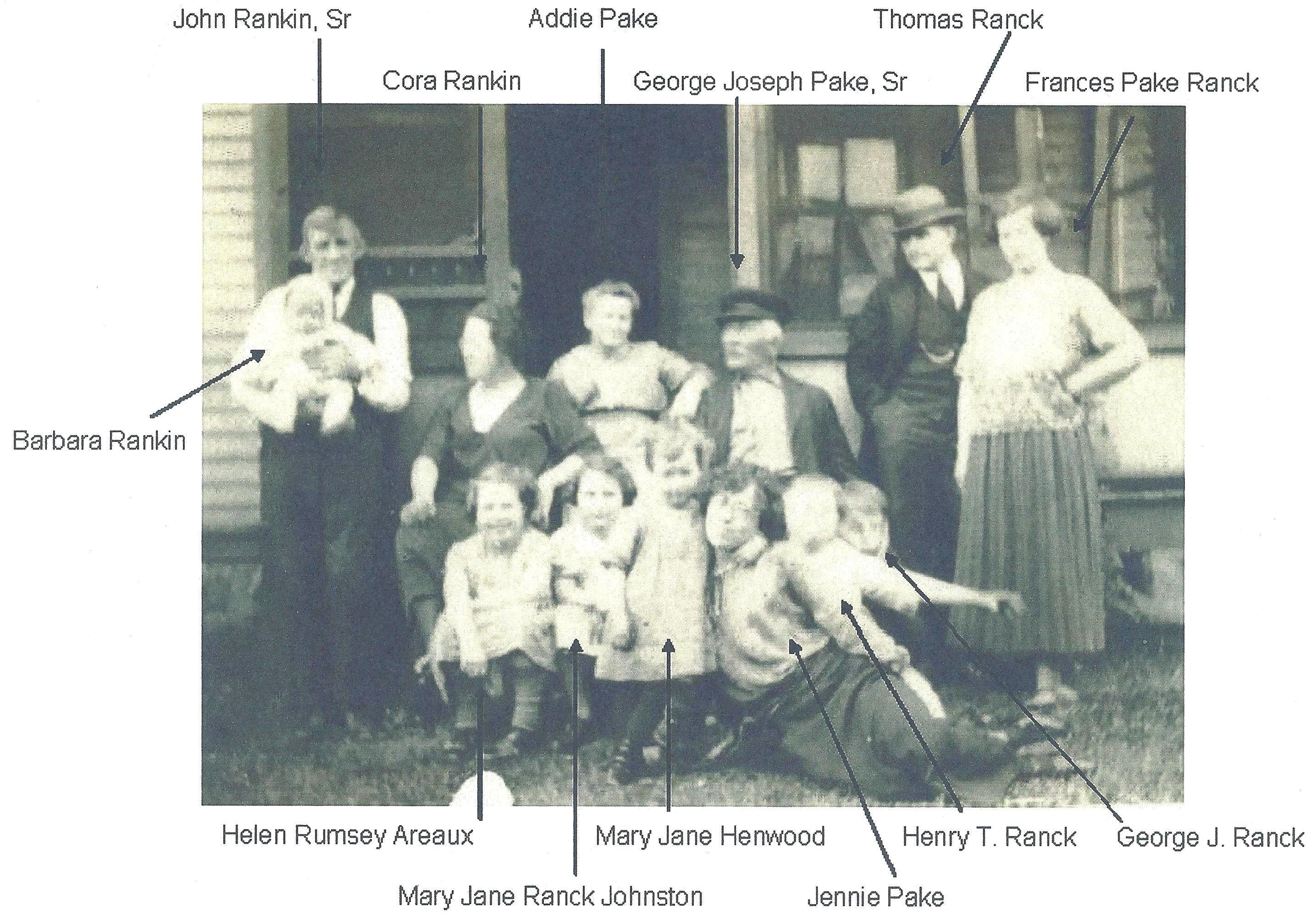
This photo of George (using the spelling Pake) and Addie and their family was taken not long before he passed away.


 ###

A Series of Disasters

The Children After the Fire, 1902

Paak-a-boo

Saved from the Fire


Read Full Post »

« Newer Posts - Older Posts »