Feeds:
Posts
Comments

Posts Tagged ‘early 1900s’

As a high school student at Caledonia High School in Michigan in the 1920s, my grandmother, Lucille Edna Mulder, was a good student. As I have written about before, she was Class Historian at graduation–and kept a beautiful graduation scrapbook.

She also kept a meticulous notebook for botany class. Here is a slideshow of the entire book. I will post a few still images below the slideshow.

Did you ever record precise information like this for a homework assignment? If so, do you think you learned from it?

This slideshow requires JavaScript.

These dried flowers look like nature prints! I wish I had been required or encouraged to keep a notebook like this.

Read Full Post »

I lost my oldest cat, Mac. He passed away a week ago last Sunday. His actual name was Macavity, and he was named after T.S. Eliot’s “Mystery Cat” (in the poem and the Broadway musical). I’m a dedicated animal lover, so I always like to see evidence of animals in the lives of my ancestors. I wrote a post called Dogs in the Family that showcases some photos of pets from 100 years ago, as well as my own four cats.

I found a postcard from 105 years ago that features a type of tabby cat. My cat Mac was an orange and white tabby, so this caught my attention. It’s part of a collection of cards received by Alice Leeuwenhoek.

This card was mailed from Grand Rapids, Michigan, in 1910. Alice was my grandfather’s first cousin–their mothers were sisters–and she was born in Kalamazoo in 1897.

I wish I knew what the inside joke about eating well means! Alice was a very slender woman.

Notice that the postcard isn’t signed. So frustrating! Does it sound like a good friend or a relative?  Does the handwriting give a clue? Alice was 13 years old when she received this card.

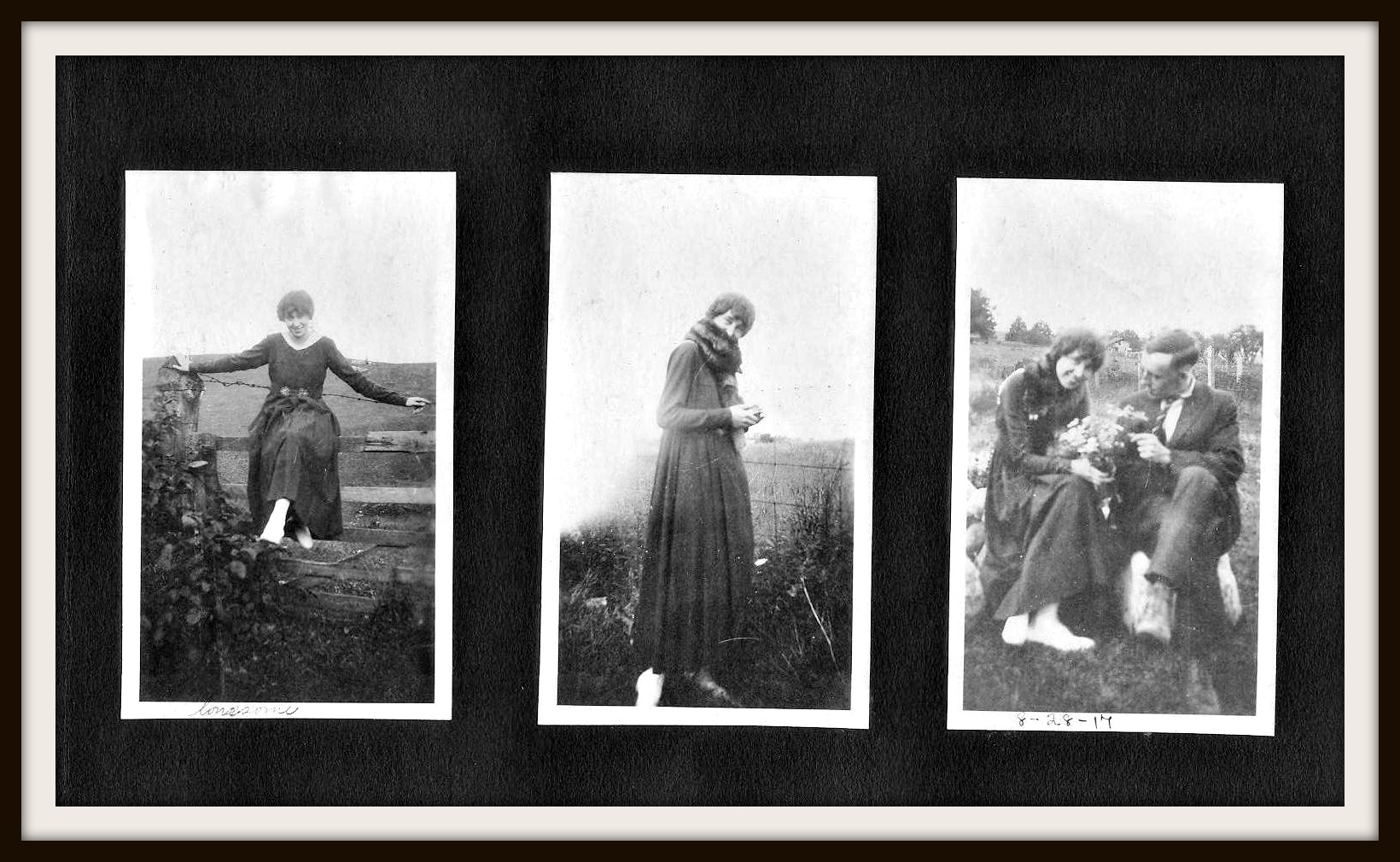
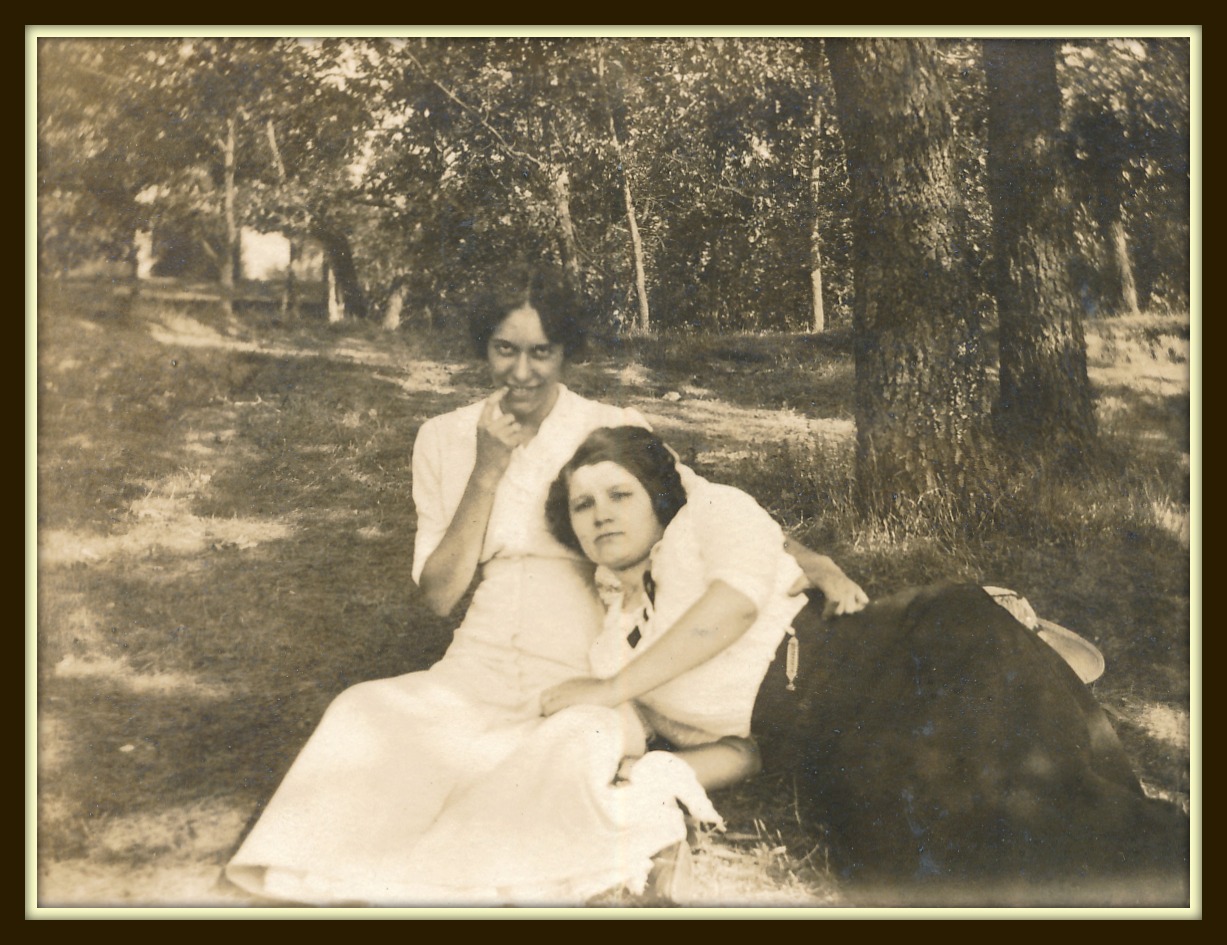
Here she is seven years later (age 20)–dressing fashionably, posing, and with a young man!

Alice wouldn’t marry until 1923, at age 26, and it wasn’t to the man in this photo.

If you go to Dogs in the Family, you will see a photo of Alice as a child with her aunt, my great-grandmother Cora DeKorn Zuidweg, and my grandfather, Adrian Zuidweg–with the family dogs.

I’ll leave you with photo of Alice and moi when I was 3 years old. Alice was 61. I knew Alice quite well when I was a child. She passed away when I was 8 years old, in 1963.

Read Full Post »

Remember the Culver family: my great-great grandfather’s sister, Jenny DeKorn Culver, and her daughters, Lela and Rhea, who moved from Kalamazoo to Seattle 100 years ago.

In the scrapbook which I received from a blog reader I found this photograph. Any ideas on the type of uniform? Since this would have been around the time of the end of WWI, does the uniform have to do with the war?

I don’t know who the man is. Most of the Culver photos are of women.

But the clues would leave me to believe the photo was taken in Seattle in or around 1918. But did Seattle have old elegant buildings like this at that time?


What about the building? My first inclination was a church, but I don’t see any crosses. Are those rosettes for ornamentation?


Related articles

Read Full Post »

Henry (Hank) Waruf and his wife Carrie (Paak) Waruf owned the resort Ramona Palace and Ramona Park, as well as many cottages and their own home, at Long Lake in Portage, Michigan.

Since Carrie is one of the Paak sisters, and her sister Alice Paak DeKorn was my great-great-grandmother, I’ve focused more on the Paaks. But Henry Waruf is a very interesting character in Kalamazoo’s early history.

Adri van Gessel was so kind to do some research on the Waruf family. Henry himself appeared to be a bit of a dead end because the name Waruf seemed to come out of nowhere. But Adri broke through that brick wall and discovered Henry’s origins.

Who Was Hank?

Henry was born Hendrik Walraven on September 7, 1863 at Kloetinge, the Netherlands. Apparently Koetinge is part of Goes. Big shock there since the majority of my mom’s ancestors seem to have come from Goes.

He was married on June 2, 1882 at Kalamazoo (MI) to Cornelia Peek (Carrie Paak), daughter of Teunis Peek and Jacoba Bassa.  Cornelia was born on May 8, 1862 at Lexmond and died in January 1957 at Kalamazoo (MI).  Henry died on November 29, 1945 at Orlando (FL).

I don’t know if Henry was on vacation in Florida, living there part of the year, or if the couple (who had no children) had moved there and Carrie went back to Kalamazoo after his death. I could try to research this through city directories, phone books, etc. The research I have done was mainly through newspapers, and I discovered that, although Henry (or Hank) usually spelled his last name “Waruf,” sometimes it shows up as “Warruf.” Still, it looks to me as if Joseph is the one who changed the family surname to Warruf/Waruf in the United States from the original Walraven.

Henry had one sister,  Maria Walraven, born March 3, 1866 at Goes, but she died before 1870 in the Netherlands.

Henry and Maria were born to Joseph Walraven (Joseph Warruf), son of Hendrikus Walraven and Elisabetha Resch, who was born on October 13, 1837 at Goes, died on December 11, 1910 at Kalamazoo (MI).

Joseph was married on May 21, 1863 at Goes to Melanie de Munck (Mary), daughter of Jan de Munck and Maria Joseph Bataille.  Melanie was born on October 16, 1840 at Goes and died on March 18, 1914 at Kalamazoo (MI). Joseph, Melanie, and Henry immigrated to the U.S. in 1868, when Henry was 5 years old.

A Bataille Connection

Notice the name Bataille. I’ve previously written about a Bataille ancestor in these posts:

An Update on the Bataille Family

A Familial Occupation

How Did Etaples, France, Show Up in My Family Tree?

Hank Went into Business

As I mentioned, “Hank” (Henry) and Carrie (Cornelia) were married in 1882, when he was 19 and she was 20. By 1885, he was advertising a business selling guns in the Kalamazoo Gazette, where it’s noted that he took over the gun shop of W. Blanchard.

Sept 17, 1885 Click the link and scroll to the bottom for the ad. By September 1886, Hank added “gunsmith” to his name on the ads.

I was astonished to discover, in an 1897 Polk Directory, that Henry Waruf owned the gun shop in partnership with Richard “Ro-mine” who I take to be Richard Remine. Richard “Dick” Remine was Hank’s brother-in-law. He was married to Carrie’s sister, Mary, another sister of my great-great-grandmother. Richard was born in 1857 and so was six years older than Hank. I’ve written before that the person who inherited the Long Lake resort was Therese Remine, Richard’s daughter. So there might have been another reason that she was the sole inheritor of that property–because her father had been in business with Waruf. How long were they partners? I am going to guess that Waruf was the true businessman of the two–and an ambitious man.


Richard Remine

Hank Was a Man of Many Talents

Hank shows up often in the Gazette, and I was able to see that he became a talented shooter, a prize-winning breeder of English Spaniels (no wonder my grandfather’s family always had this breed of dogs), and a collector of real estate. He reported regularly to the State Board of Fish Commissioners on the fish in Long Lake.

Here is an article where he literally won all the prizes at a shoot. Sept 7, 1899. There are many articles about the shoots he attended and referreed. He also represented Kalamazoo at a state shoot in Bay City.

The award-winning dogs owned by Henry show up in publications by the American Kennel Club, The Field Dog Stud Book, and The Fanciers’ Journal. I traced the beginnings of this sideline to a Gazette article that mentions that Hank was going into the business of raising hunting dogs and had brought in a fine pointer from Lowell with a pedigree going “way back.”  Click the link for the article–right side about 1/3 down.Feb 28, 1899.

In 1919, there is a newspaper article about the houses that Waruf was selling. These houses were all on the north side of Kalamazoo. I know that he also owned all the cottages near the resort at Long Lake, so he was used to being a landlord. I wonder if he had been renting out all these houses or if he was flipping them. I suspect he had been renting the houses. Here is the article. April 2, 1919

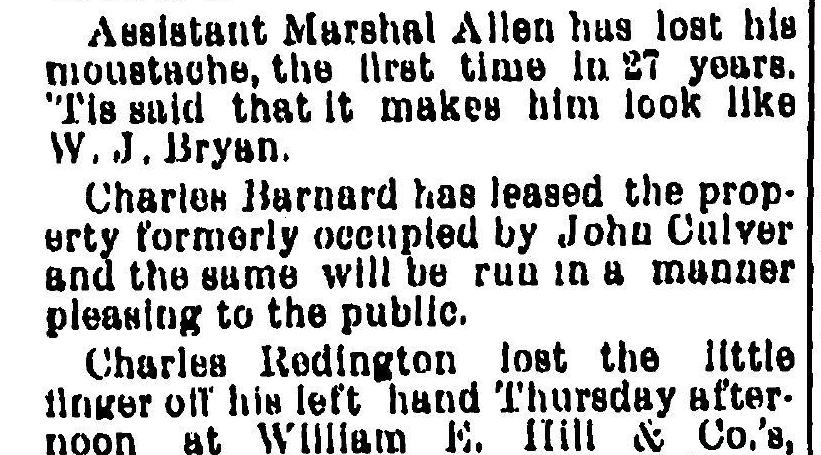
Finally, on August 30, 1904, Kalamazoo Gazette published a cute story. A Gazette reporter climbed the water tower at the asylum. This is the tower that my great-great-grandfather Richard DeKorn built (click here). From that vantage point he was able to see all the way to Gull Lake in one direction and Long Lake in another. He mentions a great many notable people and what he claims he saw them doing at the time. About Waruf, he wrote, “‘Hank’ Waruf shining up his guns at Long Lake for the duck season.” The details in the article conjure up a Breughel painting, so I find it a little impossible, but definitely amusing. Here is the article: Aug 30, 1904


***

Here are some images I have previously published on The Family Kalamazoo:

Carrie (Paak) and Henry Waruf

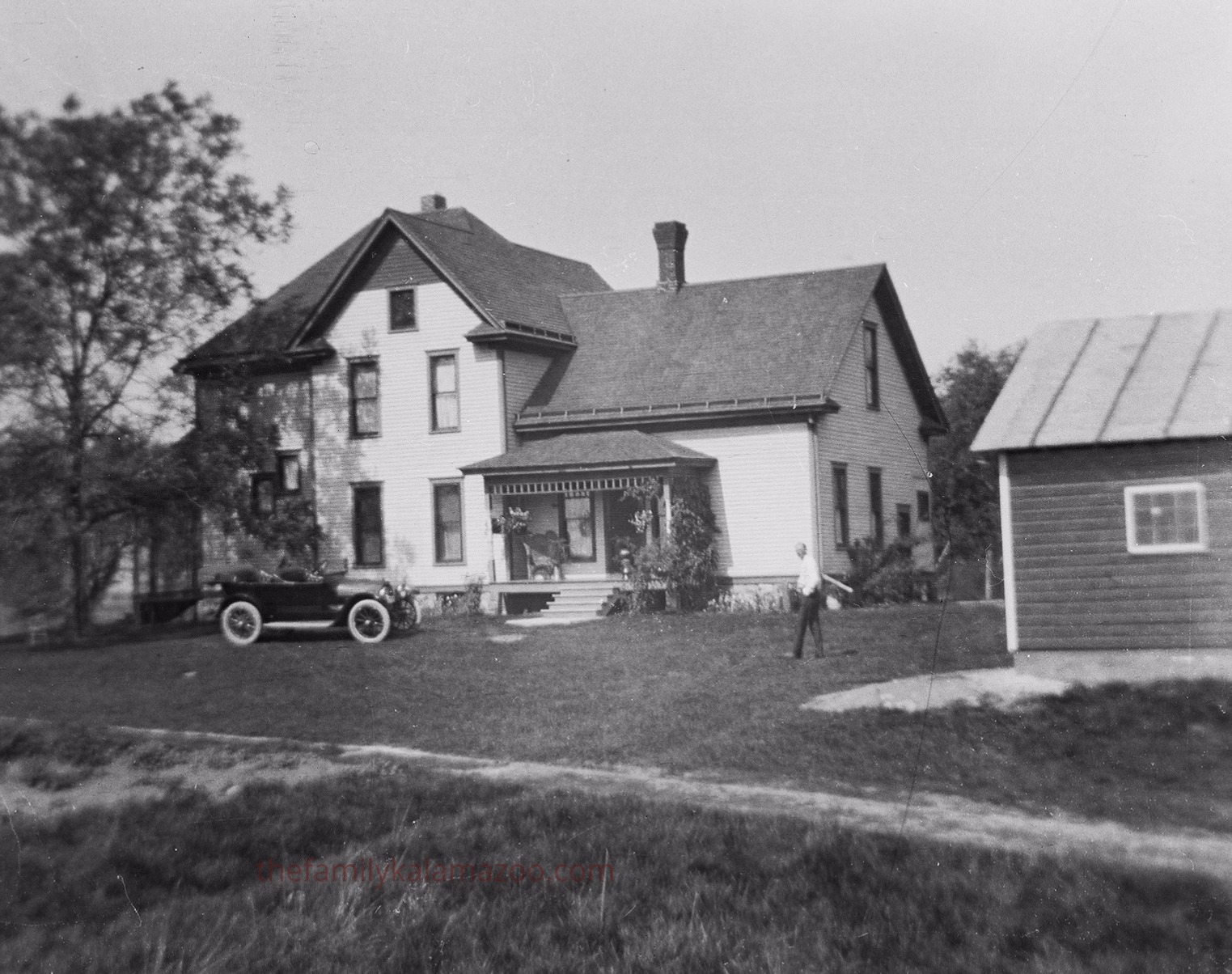
Home of Hank and Carrie Waruf, Sprinkle Road

Home of Hank and Carrie Waruf, Sprinkle Road

I’ve written about the place and the people here:

Read Full Post »

How’s that for a weird title?! If you didn’t notice I’ve been on a break, please don’t tell me or I’ll feel bad ;). I am back, but only on a limited basis because of all these things like work and life that keep intruding on my genealogy research and blog reading! I wanted to stop in today to say:

HAPPY NEW YEAR!!!!

Let’s make 2015 the best yet!!

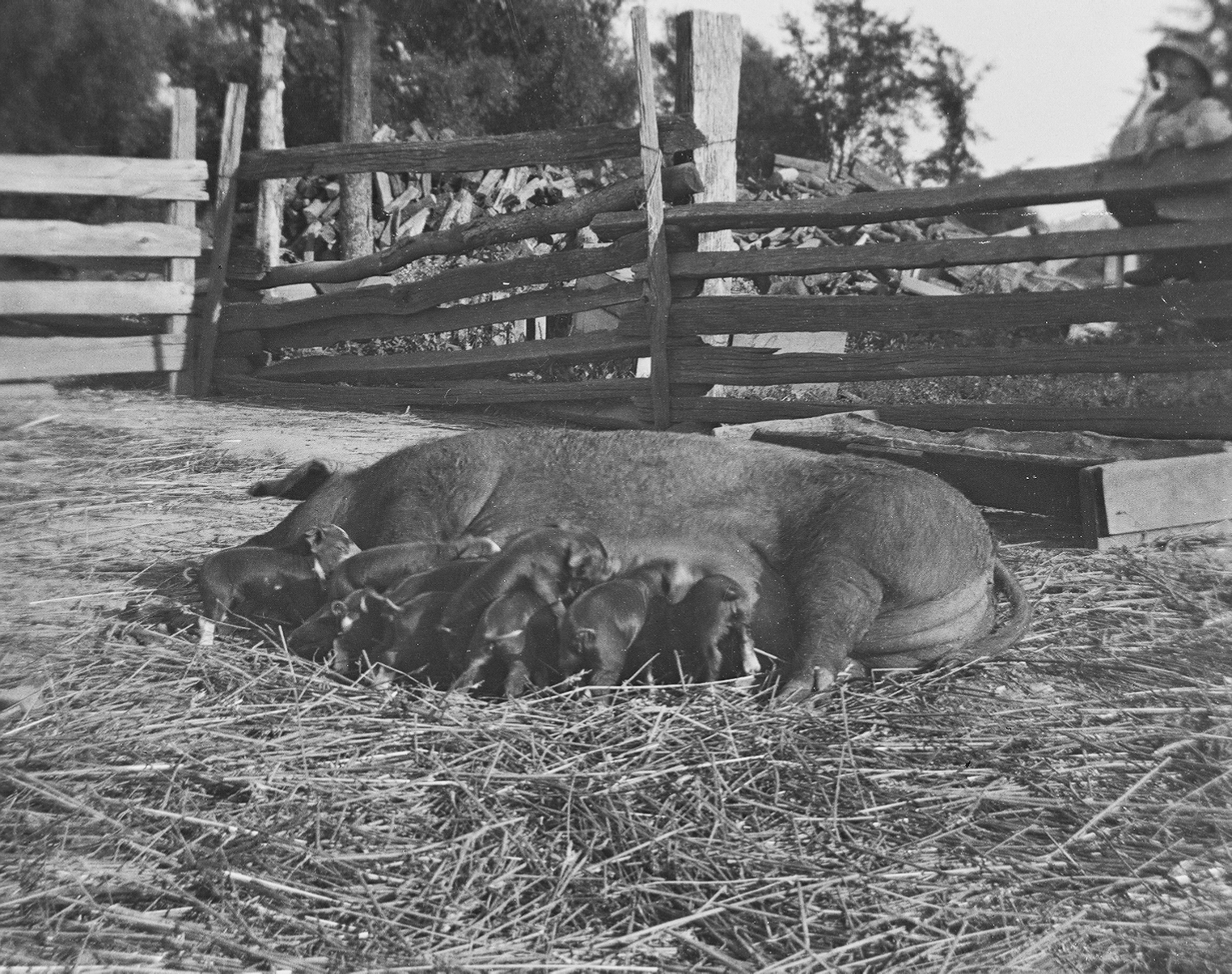
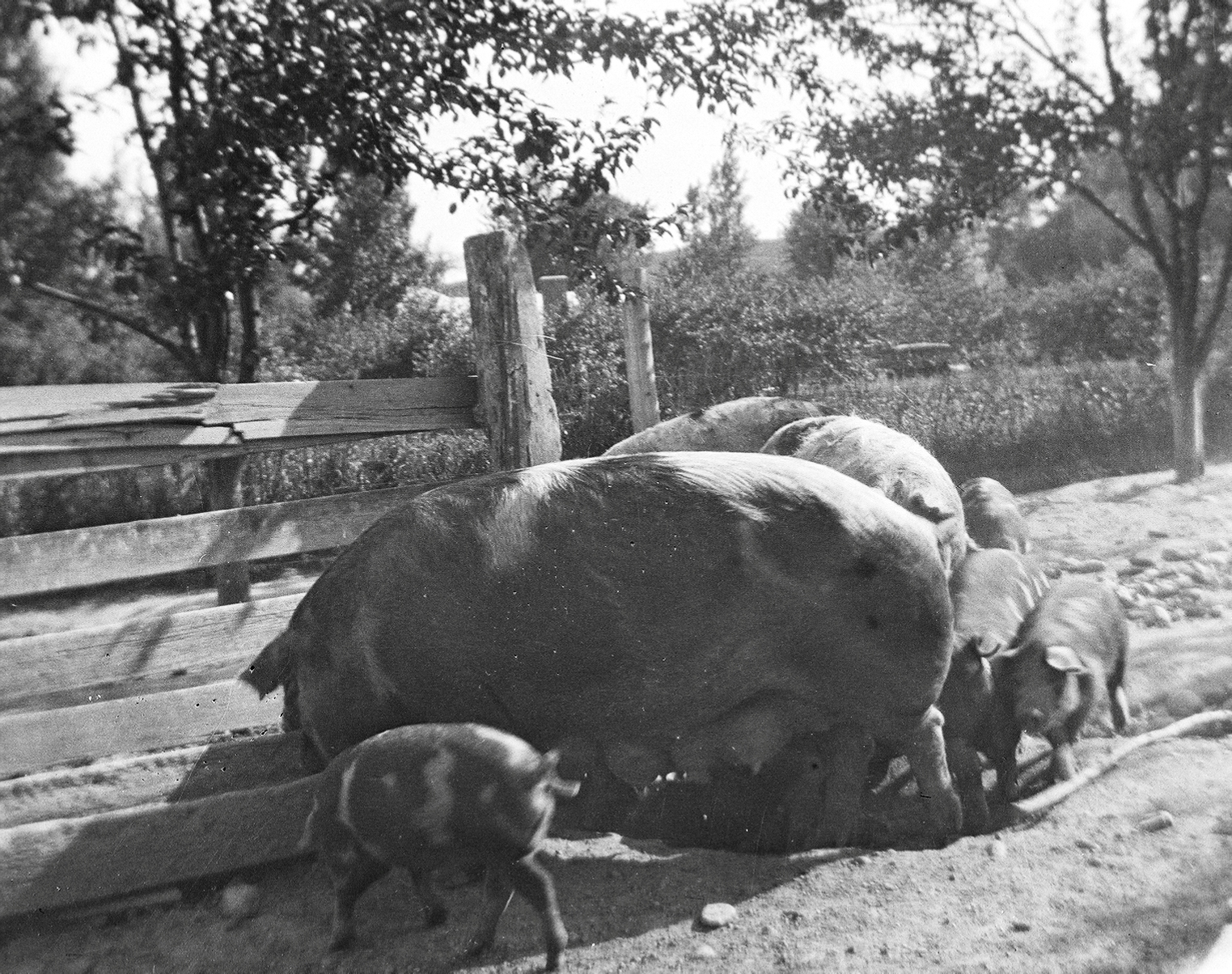
I have a set of old glass negatives that have been digitized. I’ve shared a few on this blog. Here is one I have not shared. At first I thought it was a photo of a pig (hog? what is the difference?) with her very cute babies. I am quite certain this was taken by Joseph DeKorn at Brook Lodge in southwestern Michigan (I’ve written about the place here).

But when I looked more carefully I saw Grandpa sitting in the upper right corner! I wonder what he was thinking and if he was tired. He seemed to be visiting the resort with his cousin and uncle.

Here are some more pig photos from Uncle Joe.

These photos are 100 years old. What remnants of our lives will there be in 100 years? Maybe too many!


Read Full Post »

I’ve traveled to California, Sedona, and Michigan in the past few weeks.  Needless to say, I am behind in my work even more than usual. I want to continue Theresa Pake’s story and to explore the Jennie DeKorn Culver photos more, but these projects take a good deal of time.

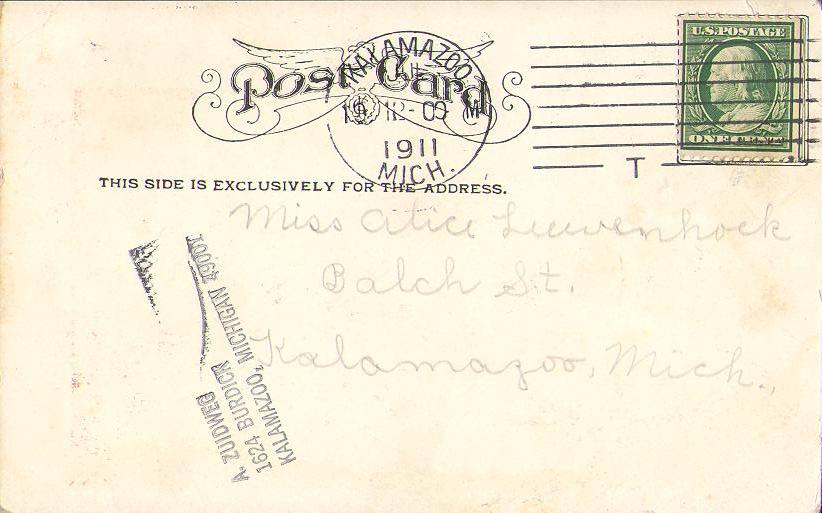
Instead, I decided to take a look at an old postcard postmarked 1911. The postcard is to Alice Leewenhoek, Richard DeKorn’s granddaughter through his daughter Jennie. Alice was an only child who lived with her mother Jennie and her father who Grandpa always called “Uncle Lou”–Lambertus Leewenhoek.

In the photo below, Alice is sitting with a friend, neighbor, or relative against the exterior wall of Richard DeKorn’s house. She holds a doll in her lap and is petting Tom or Carlo (if I had to guess, I would say it’s Tom).


Alice Leeuwenhoek with doll

On this postcard, Nellie Bradt is thanking Alice for her “postal.” Nellie’s address is marked as 1130 S. Burdick Street.  The photograph is Bronson Park, which is the beautiful “town square” of Kalamazoo.

Bronson park front postcard


After seeing that the mailing address is listed as Balch St. and doesn’t include Alice’s street number (not uncommon for that time period in Kalamazoo), I went to my family tree on Ancestry and discovered that I had never found the Leewenhoek family on the 1910 census.  So I tried something different and looked for the 1910 census on Family Search. Bingo.  Instead of Lambertus Leewenhoek, I found Lamburtos Leenwenhock, at 110 Balch Street, Kalamazoo, Michigan. Uncle Lou was living with his wife Jennie and his daughter Alice who was 13 years old in that year–and therefore around 14 at the time of the postcard in 1911. New info: According to Uncle Don, they lived in the wooden house just behind the Richard DeKorn brick house.

Can you read anything more on the postmark besides the city, state, and year?  Is it December 9? Or does it say something else?

Bronson park back postcard


Grandpa and Alice were first cousins, their mothers were sisters.

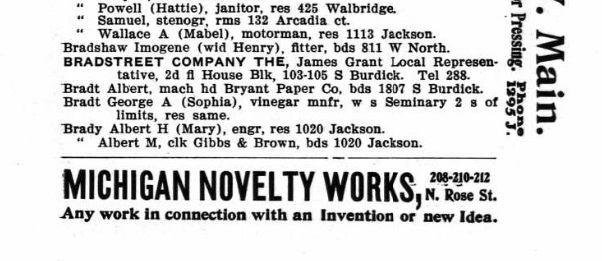
I haven’t been able to find Nellie Bradt in the 1910 census, but I did find her in an 1899 city directory. I then found her parents in a 1905 directory. I think I can find them more years, too. But I don’t understand how to read these entries. The 1899 entries are entirely different from the 1905, but neither one really gives me the address.

Here is the 1899 that lists Nellie with her parents, Mr. and Mrs. George A. Bradt. I understand they lived in the City of Kalamazoo. And I know “a” means acreage, but not how to interpret what any of this means or how it connects with an address.

Nellie Bradt 1899 city directory


Here is the 1905 directory entry. Nellie isn’t mentioned, but her parents are. What in the world does it mean?

Nellie Bradt's parents 1905 city directory

Is there a way to search for Nellie in the 1910 census using the 1130 S. Burdick Street address she gives? Can I search the census by address?

Note that many of my relatives lived in this Burdick/Balch neighborhood. When I look at the census records from late 19th and early 20th century, I see that almost everyone, if not everyone, who lived there was Dutch.

My grandfather’s gas station was at the corner of Burdick and Balch, across the street from the Richard DeKorn house. Grandpa lived in that house for part of his childhood, with his parents and grandfather, Richard. When he built his house down the block on Burdick, he was staying in the same general area his family had lived in for decades. He continued to work at his station and live in his house until he retired and moved to Portage.

I remember as a child meeting Mrs. Bradt Braat who lived next door to the gas station. The name is pronounced, by the way, like the sausages that go with beer. I wonder if she was related to the Nellie Bradt who wrote this postcard. Mom? Uncle Don? New info: no, she must not be as they were a Belgian family (see comments below).

Alice Leewenhoek was my grandfather’s cousin. Note that the postcard is stamped with the name and address of Grandpa’s father, A. Zuidweg. I wonder why?

One postcard. So many questions!

Read Full Post »

Reminder: Jennie DeKorn Culver, 1857-1947, moved to Seattle from Kalamazoo with her two adult daughters, Lela and Rhea, around 1915

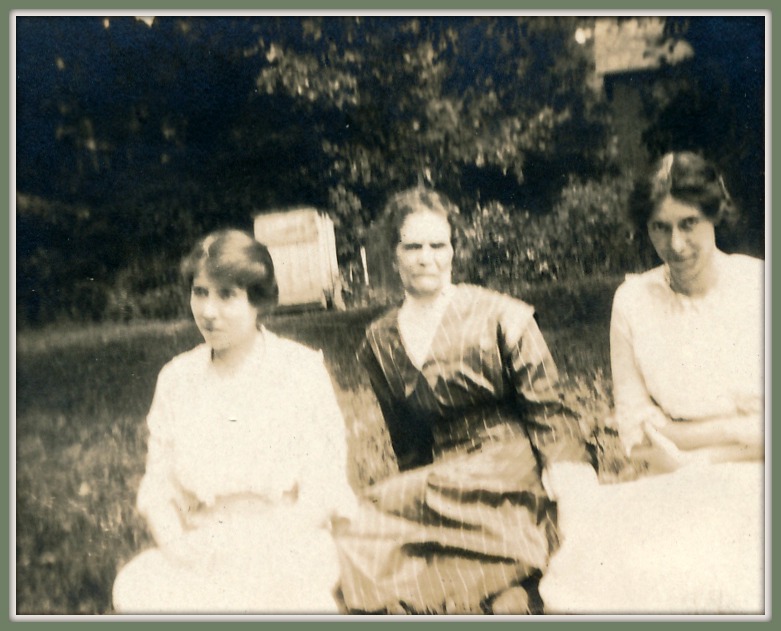
Since I did not have any photographs of Lela and Rhea Culver as adults until I received the scrapbook, I have had to make guesses on the identity of people in the scrapbook photos. I did have a good photograph of Jennie’s face as a young woman, so that does help.

I’m hoping you can help me decide which photos do have Jennie, Lela, and/or Rhea in them. After the new photos, I’ll repost a couple I’ve posted before for comparison.

Because the photos were all in the scrapbook together–and some of them were loose–it would help to know what year fashion the clothing is in each photograph (since the years may be all mixed up). Clothes, hair, background, compare faces: whatever ideas you have, lemme have ’em, please! I’ve numbered the new photos. Also, you can click on each photo to enlarge.


From Scrapbook (haven’t posted before)

Photo 1


Photo 2 (I feel fairly certain this is Jennie and her daughters)


Photo 3

Photo 4

Photo 5

Photo 6

Photo 7


From scrapbook (posted in earlier posts)

Photo 8

Lela and Rhea Culver Seattle, WA

Lela and Rhea Culver
Seattle, WA

Rhea and Lela Culver Kalamazoo, Michigan

Rhea and Lela Culver
Kalamazoo, Michigan

Jenny DeKorn Culver 1857-1947

Jenny DeKorn Culver
1857-1947

Related articles

Read Full Post »

I wrote that the Jennie DeKorn Culver’s daughters Lela and Rhea were at the Children’s Home in Kalamazoo during the divorce proceedings of their parents.

According to articles in The Kalamazoo Gazette, they were there from at least December 1896 to May 1897.

Here is an article about a Christmas program Lela performed in:

I find it curious that the backup singers or performers (Lela was one of them) are called “Nineteenth Century Children.” There were still three full years of the 19th century left at this point.

I’d love to know what gifts the children received–and if they were from the community. Would children like Lela and Rhea with living parents have also received gifts from their parents? Or would that have been against the rules?

1896 Christmas Tree

1896 Christmas Tree

Since I had proof through the Kalamazoo Gazette articles that the girls were at the Children’s Home in 1896 and 1897, I contacted Lakeside Academy, the current name of what was the Children’s Home during the Culver girls’ time. I had heard through another blogger that they still had records from the late 1800s. Don Nitz, the CEO of Lakeside for Children, was so kind to search for me. Unfortunately, there are gaps in the records, and he could not find any documentation of Lela and Rhea’s stay with them.

Read Full Post »

The story of Jennie DeKorn Culver begins in Michigan. It turns out that, even with the beautiful scrapbook, she is one of the biggest mysteries of my family tree.

Jennie’s birth name was Adriana. She was named after her grandmother, Adriana Krijger (the mother of Johanna Remijnse, Jennie’s mother). According to Adri van Gessel, in the dialect of the Goes region at that time, she would be called Joâne–a name that doesn’t sound like Joanne. There is no English equivalent, so she was called Jennie.

Jennie was born in Ottawa County, Michigan, in 1857 or 1858, one or two years after her parents moved to the United States, so she never lived in The Netherlands herself. Her mother passed away in 1864, so Jennie would have only been 6 or 7.

On December 25 (Christmas Day!), 1882, Jennie married John P. Culver in Kalamazoo. John was born in 1854,1855, or 1856 in Climax, Michigan, to Oliver C. and Almira Carney Culver. John had six siblings. He was about 12 years older than Jennie who was 25 or so.

The couple had two daughters:

  • Lela Almira Culver, born in Kalamazoo, on September 27, 1888
  • Rhea A. Culver, born in Kalamazoo, on November 13, 1890

The Culver girls before their parents divorced

At some point before 1898, the couple divorced. I know this because John remarried on July 7, 1898, at Muskegon, Michigan. His new bride was Florence V. Potter (Flora), daughter of William H. Potter and Florence King. Florence was born in 1876 and died after 1940, possibly as late as 1964.

Florence was married about 1900  to Norman Brant. The couple had two daughters. Florence went on to marry again, too.

John Culver himself probably had a 3rd marriage, possibly to Gladys E. Simmons.

Back to Jennie. I couldn’t find a divorce record online for her divorce from John, so I resorted to Genealogy Bank to look up the local newspaper, The Kalamazoo Gazette. That’s when I found articles that show that the couple certainly did divorce, and while the girls were so young. Jennie didn’t come from people who divorced, so for her to divorce her husband (and with young daughters at home, too), they must have had a drastic problem.

The following newspaper articles tell part of the story. Several of them are attached in .pdf form because they were too long for me to take screen shots of them. If you click the links you will find the newspaper articles. Be sure not to pass by the last one without clicking and reading.

Before the storm you could get lunch at Culver’s: Jan 5, 1895 lunch at Culver

It begins in the fall?

Kalamazoo Gazette 4 October 1895

Kalamazoo Gazette
4 October 1895

The Gazette had a list of Circuit Court cases in the paper on Dec 6, 1895.  Jennie Culver v. John P. Culver was listed as a divorce case.

More about the divorce on May 8, 1896 .

As if to counteract the bad publicity the day before, the Gazette lists something innocuous about John on May 9, 1896. It merely states that he has been given the refreshment concession at the Recreation Park.

On May 14, 1897, there were two articles. One was in Jottings and shows that John Culver has changed something small or large about his livelihood.
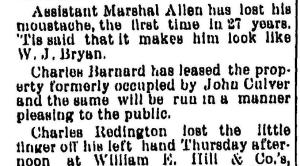
May 14, 1897 article about property in jottings

Apparently, one can no longer get lunch at John Culver’s on North Burdick.

There there is one that tells me that the divorce was finalized before May 14, 1897.  Heart-breaking. This one you need to click through to read.

The children were at the Children’s Home! Not with their mother! I tried to find something about the Children’s Home in Kalamazoo at that time. All I could find was a list of the children in the home in 1900.

CHILDREN’S HOME LIST 1900

Note that the girls are not on the list, so it’s likely that they were living with their mother by 1900.

Here are some articles about the Children’s Home:

1. General history

2. More general history

I’ve written to the blogger who wrote both these articles because it appears that her relatives lived at the home at the same time the Culver girls lived there.

When did Jennie move to Seattle with her daughters? And why?

Rhea and Lela Culver Seattle, WA

Rhea and Lela Culver
Seattle, WA

The 1910 census shows Jennie still in Kalamazoo, and the city directory shows her there in 1915.

Many of the Seattle photographs in the photo album seem to be from about 1915-1925.  Remember that Jennie would have been around 58 years old in 1915!

Jennie died in Seattle on July 4, 1947.

The answer to the title is: I don’t know! I guess I have to keep researching. Jennie doesn’t appear to have remarried, although it is possible.  The daughters remained single for a long time (not sure if one of them ever married), so it wasn’t to follow a daughter’s husband’s job or family.

Any guesses on why she would have moved to Seattle in or just after 1915?


Read Full Post »

We will get back to Theresa Pake, but I am working on so many branches of the family. I can’t let the other leads I have lie there untracked. I need to follow them, too ;).

Let’s start to explore the wonderful scrapbook of the DeKorn-Culver family again (while not forgetting about Theresa or Jennie DeKorn Culver’s sister Mary DeKorn DeSmit’s family either). For more information on this story, see the related posts below.

To remind you, I had wondered what happened to one of the sisters of Richard DeKorn (my great-great-grandfather). Her name was Jennie, or perhaps Jennie Adrianna, and at some point she moved with her two daughters, Lela and Rhea, from Kalamazoo, Michigan, to Seattle, Washington.  She may have been divorced in Kalamazoo. A lot needs must be explored at this juncture because why would a woman with two daughters move so far away from home–especially in those days?

A reader in the northwest United States who happened to have a scrapbook that belonged to Jennie’s family contacted me. What a surprise! She was so kind to send me the scrapbook. When I finish making both .tif and .jpg copies of the photos I will send her a CD of the photos. My daughter did the preliminary work on the copying, but I need to do more and to “cut apart” the copies that were taken of multi-photo scrapbook pages. In other words, my daughter copied pages so as not to damage the book, but I want to copy the copies and then crop the photos so that they appear separately on the screen.

I wrote to Bayview Manor in Seattle to try to find out if this scrapbook belonged to Lela or Rhea Culver. This is the facility where the scrapbook was found. Unfortunately, I have not heard back from them.

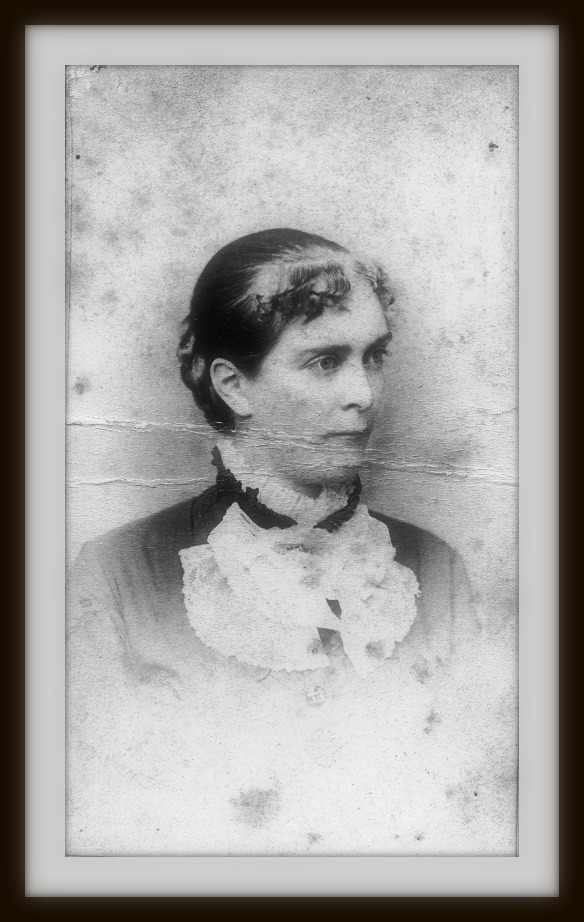
To begin to  identify these photos I need to start with what I know. I have a photo of Jenny when she was a young woman. And there is a photo in the scrapbook which I think looks strikingly like Jennie.  I want to see if you agree or if you think these are different women.

THIS IS JENNY DEKORN CULVER (1857-1947):

Jenny DeKorn Culver 1857-1947

Jenny DeKorn Culver
1857-1947


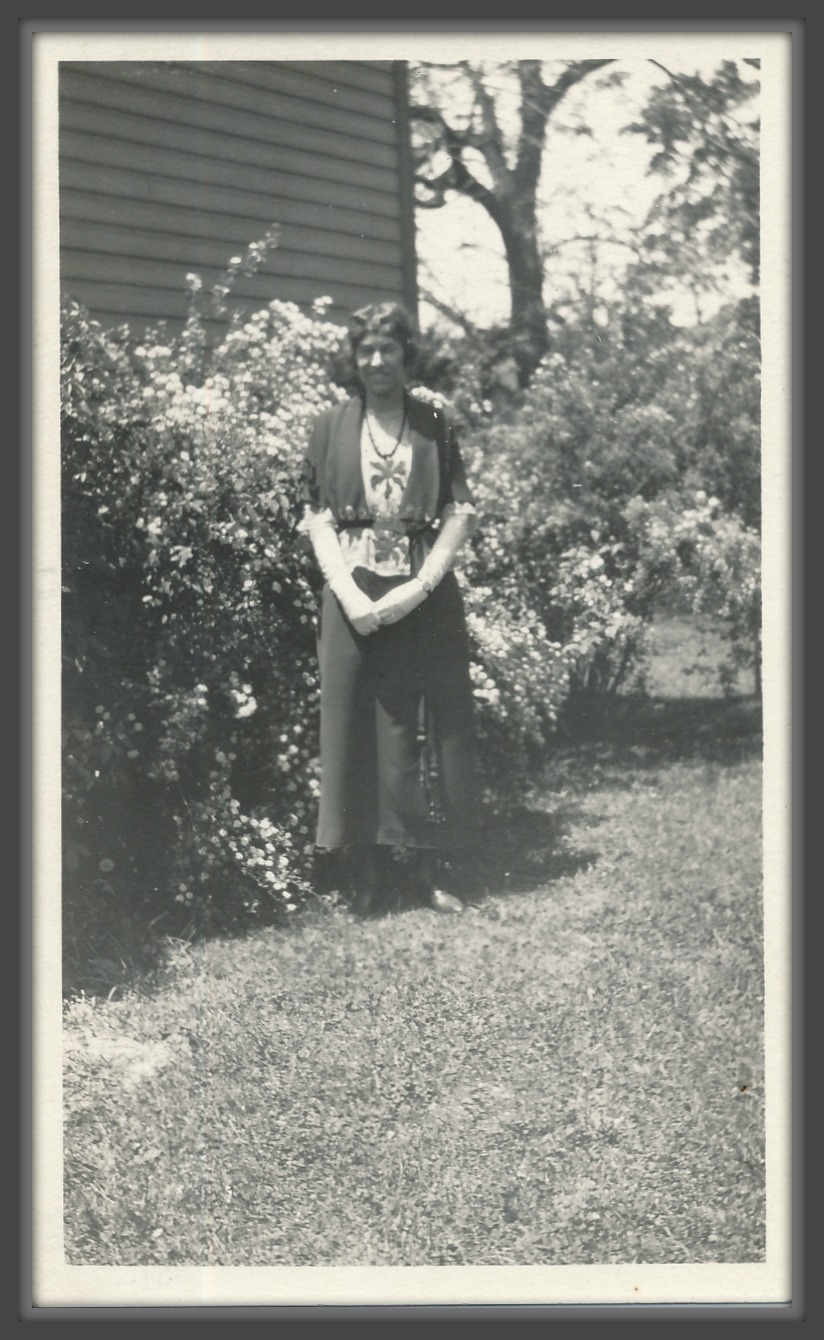
HERE IS THE WOMAN IN THE VELVET COAT. IS IT JENNY?


And is the coat velvet or fur? I am assuming it is velvet, although I did find a picture of a fur coat from around 1920 that had a similar look. However, the main reason I think it’s velvet is that it looks like velvet at the points where the fabric bends.

What do you make of the shadow at the bottom of the photo? Is the setting a garden or a lawn?

Read Full Post »

« Newer Posts - Older Posts »