September 9, 2015 by Luanne
While I’m working on the 30/30 Poetry Project through Tupelo Press this month, I am not doing any work on the genealogy project!
But I found something yesterday that I wanted to share.
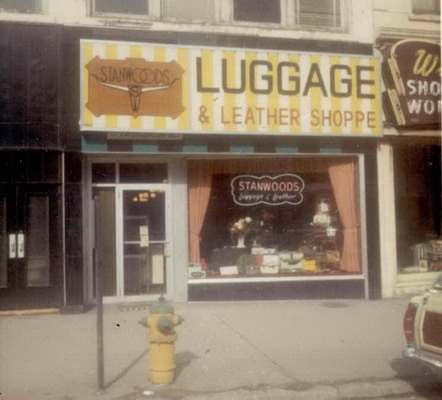
About 2 1/2 years ago, I mentioned that my father, and later my husband and I, owned Stanwoods Luggage and Leather in Kalamazoo.
These photos are from the 60s and 70s.
In that first post, I included this photo. There was a bell hanging from the front door so we could hear it open and close if we were in the back.

You see Why Shoe Works next door? Dad was the last owner of that business.
Every July the Downtown Kalamazoo Association would organize a sidewalk sale that most merchants would participate in. We always did, marking down items and putting them out in the heat for customers to pick over.
Here’s a photo of the sidewalk sale. I used to love working those for the excitement. Dad would stand out in front with a megaphone, addressing people across the wide main street. Our routine was broken, I was out of the confining store, and I could people watch as they rummaged through our merchandise.

Notice the round suitcases on the luggage display rack. Do you know what those are? Hatboxes!! We were still selling those in the 60s. Train cases, too. Those were boxlike suitcases where all your cosmetics and toiletries could stand upright. Today we use BAGGIES to carry our liquids. Yes, we’re definitely more civilized today.
Eventually we had T-shirts made with a new Stanwoods logo and wore the T-shirts on sidewalk days. That’s what I found yesterday! The last Stanwoods T-shirt.

Here’s a photo of the block of E. Michigan Avenue where Stanwoods existed.

Posted in Family History, Genealogy, Kalamazoo history, Kalamazoo mid 20th century, Klein | Tagged downtown Kalamazoo, family history, genealogy, history of retail, Kalamazoo history, Kalamazoo Michigan, Michigan history, mid-20th century retail, sidewalk sales, Stanwoods Luggage and Leather | 16 Comments »
September 2, 2015 by Luanne
I won’t be posting family history for the month of September. That’s because throughout September, I will be “running” a poetry “marathon” for the Tupelo Press 30/30 project. By donating in recognition of my efforts, you will be supporting a fabulous independent, nonprofit press.
I have promised to write a poem a day for 30 days. Since it took me decades to cough up not even twice that for my first poetry collection Doll God, you can see what a feat I am trying to accomplish. SOMETIMES the poems will be have family history as a theme. I don’t know which ones as they haven’t been written yet!
To help preserve poetry as an art, it’s important to support the independent presses and literary magazines. These are the places that publish nearly all published poetry today. It hasn’t been a positive era for them. I’ve seen many lit magazines close up—and when the presses go out of business, we often don’t even hear about it.
Every dollar you donate will go toward the operation of the press, enabling it to continue publishing beautiful books that would not get picked up by large commercial publishers. You can read the daily poems, including today’s and yesterday’s, as well as the bios of this month’s poets, and donate here.
As incentives to donate, I am offering the following:
- For a donation of $10, you tell me what subject or image you want to see in a poem, and I’ll write that poem.
- For a donation of $20, I will dedicate a poem to you or someone of your choice.
- For a donation of $40, I will send you or someone of your choice, a signed and personally addressed copy of my book, Doll God.
- For a donation of $55, I will send you or someone of your choice, a signed and personally addressed copy of my book, Doll God, and I will dedicate a poem to you or someone of your choice.
- For a donation of $100, you get two copies of Doll God and two dedications!
- Remember that if you donate $129 for a Tupelo Press subscription, you will receive the 10 free books of their current series.
For any of the above donations, including the subscription of 10 books, please remember to click or write my name in the honor field. Then email me at luannecastle@gmail.com and let me know what dedication or subject you are interested in. If you “earned” a copy or two of Doll God, please give me your mailing address and to whom you would like the book(s) addressed.
Again, you can read the daily poems, as well as the bios of this month’s poets, and donate here.
If you decide to help keep Tupelo Press publishing its amazing variety of books, THANK YOU THANK YOU THANK YOU!!!!

If you can’t donate, please do read our poems for the month. They are all first drafts, written one per day. I’m pretty nervous about being able to keep up with this schedule!
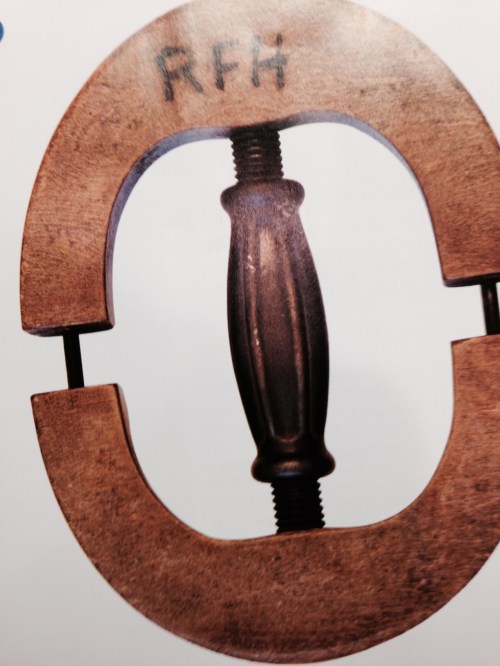
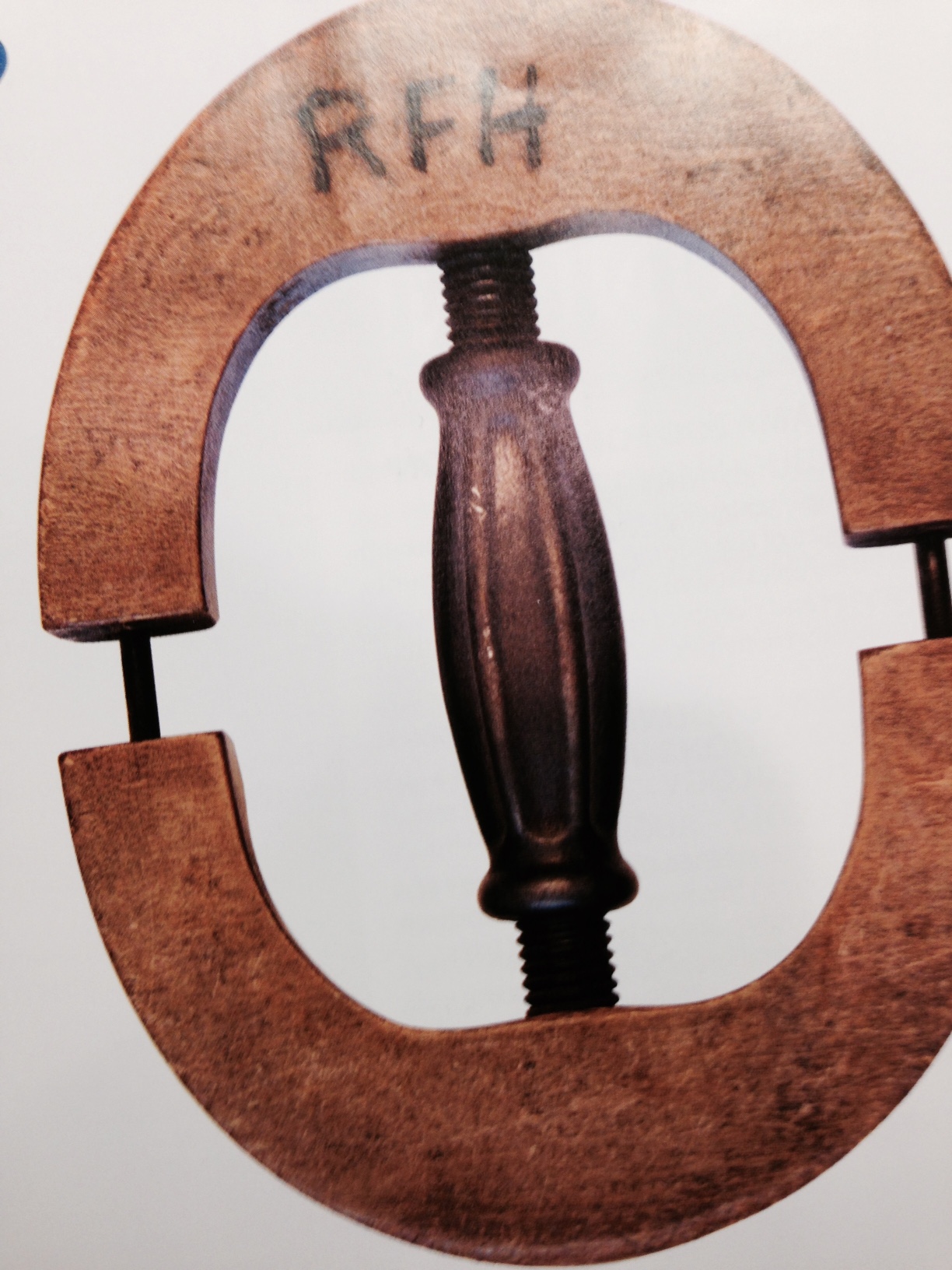
In keeping with the theme of this blog, here is a photo of an old hat stretcher that belonged to my father.
Posted in Genealogy | Tagged 30/30 Project, antique hat stretcher, family history, genealogy, poetry, Tupelo Press | 13 Comments »
August 26, 2015 by Luanne
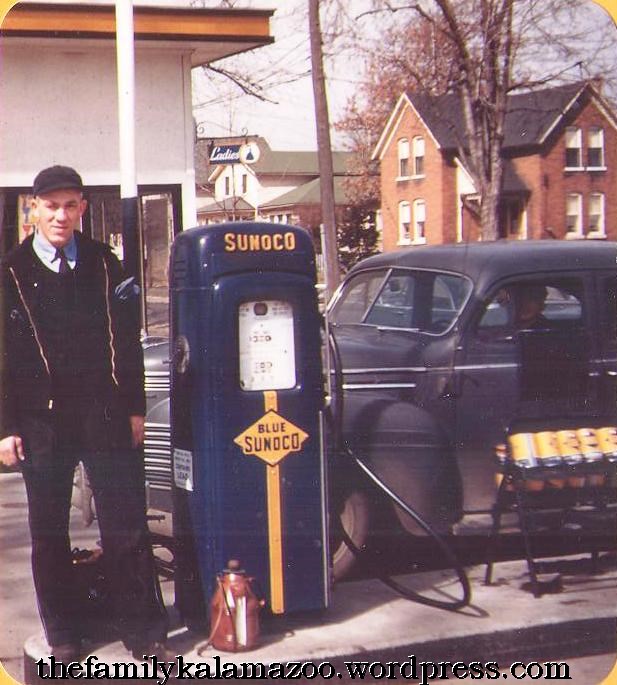
I like to talk about Grandpa Adrian Zuidweg’s Sunoco gas station because it seemed a little magical when I was a kid. Here is how it looked 20 years before my time–in 1939:

I don’t know who lived in the house on each side in 1939, but I did 20 years later. Maybe it was the same people. The man who lived in the house on the left of the photo (to the right of the station) was Willie Dunn. When I was newly married and he was moving, he let me have an antique oak library desk from the house. I’m looking at it right now. Simple Queen Anne legs and two drawers without pulls.
Here’s a photo I’ve posted before–the view is different, so here you can see a sampling of the houses across the street on Balch Street. Any ideas on the date of this photo? The pump looks different than the ones in the 1939 photo, and then there is the car to help. I bet Uncle Don would know!

Grandpa by the pump at his Sunoco station
The pumps in the first photo have globes on the top of them. Does anybody know if the globes lit up like lighted signs? I found a photo of a vintage pump that looks like that type:

There is something to be said for such a fancy model, but it was probably more expensive to build and to maintain. In case you’re wondering, yes, people collect old gas station memorabilia–anything with a brand name and a logo!
Here is what Grandpa’s gas station looks like today. Or shall I say the site of the station. You see that white house? You can see all the way to that house because Willie Dunn’s house is gone.
When you were a kid, did you enjoy visiting or playing at or working at a small business in your family?
Posted in Adrian Zuidweg, Family History, Genealogy, Kalamazoo history, Kalamazoo mid 20th century, Photography early 20th century, Zuidweg | Tagged Adrian Zuidweg, downtown Kalamazoo, Dutch Genealogy, family history, gas station history, genealogy, history of Kalamazoo, Kalamazoo, Kalamazoo history, Kalamazoo Michigan, Michigan history, service station history, Sunoco history, vintage gas pumps, Zuidweg surname | 26 Comments »
August 19, 2015 by Luanne
I wrote about my great-grandfather, Charles Mulder, and his farm in Caledonia, Michigan here. That post also lists other links that pertain to Great Grandpa and the Mulders.
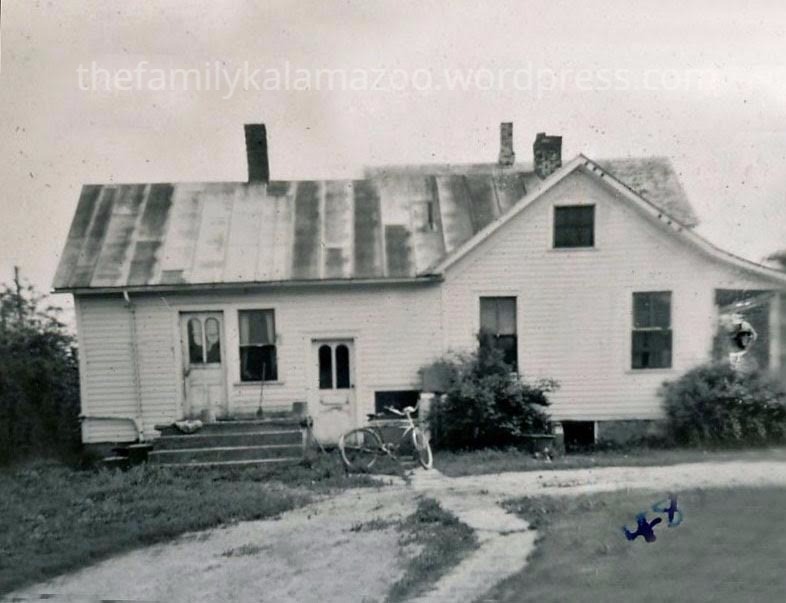
At the time I didn’t have a good photograph of the farm, but now I have discovered a good one of the farmhouse, just as I remember it. Facing this way, the apple tree the swing hung from was to the left. The fields were also to the left, the road to the right. Because of the porch, you can see that the front of the house is on the right side.

Look at that! Is it the same swing I swung on or a different one? This is Mom’s cousin Elaine playing at the farm.
Do you have any fond farm memories?
Posted in Adrian Zuidweg, Family History, Genealogy, Kalamazoo history, Lucille Edna Mulder Zuidweg, Michigan history, Mulder, Zuidweg | Tagged Caledonia High School, Caledonia history, Charles Mulder, Dutch Genealogy, family history, genealogy, history of Kalamazoo, Kalamazoo history, Karel Mulder, Michigan history, Mulder, vintage Michigan farm, Zuidweg surname | 9 Comments »
As a high school student at Caledonia High School in Michigan in the 1920s, my grandmother, Lucille Edna Mulder, was a good student. As I have written about before, she was Class Historian at graduation–and kept a beautiful graduation scrapbook.
She also kept a meticulous notebook for botany class. Here is a slideshow of the entire book. I will post a few still images below the slideshow.
Did you ever record precise information like this for a homework assignment? If so, do you think you learned from it?
This slideshow requires JavaScript.
These dried flowers look like nature prints! I wish I had been required or encouraged to keep a notebook like this.
Posted in Caledonia Michigan history, Family History, Genealogy, Lucille Edna Mulder Zuidweg, Michigan history, Mulder, Zuidweg | Tagged botany 1920s, Caledonia, Caledonia High School, early 1900s, family history, genealogy, high school 1920s, Lucille Edna Mulder Zuidweg, Michigan history, Mulder, school subjects 1920s | 28 Comments »
I lost my oldest cat, Mac. He passed away a week ago last Sunday. His actual name was Macavity, and he was named after T.S. Eliot’s “Mystery Cat” (in the poem and the Broadway musical). I’m a dedicated animal lover, so I always like to see evidence of animals in the lives of my ancestors. I wrote a post called Dogs in the Family that showcases some photos of pets from 100 years ago, as well as my own four cats.
I found a postcard from 105 years ago that features a type of tabby cat. My cat Mac was an orange and white tabby, so this caught my attention. It’s part of a collection of cards received by Alice Leeuwenhoek.
This card was mailed from Grand Rapids, Michigan, in 1910. Alice was my grandfather’s first cousin–their mothers were sisters–and she was born in Kalamazoo in 1897.
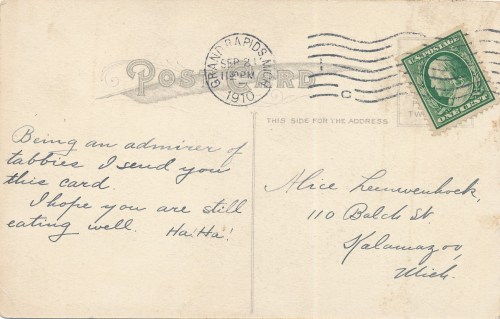

I wish I knew what the inside joke about eating well means! Alice was a very slender woman.
Notice that the postcard isn’t signed. So frustrating! Does it sound like a good friend or a relative? Does the handwriting give a clue? Alice was 13 years old when she received this card.
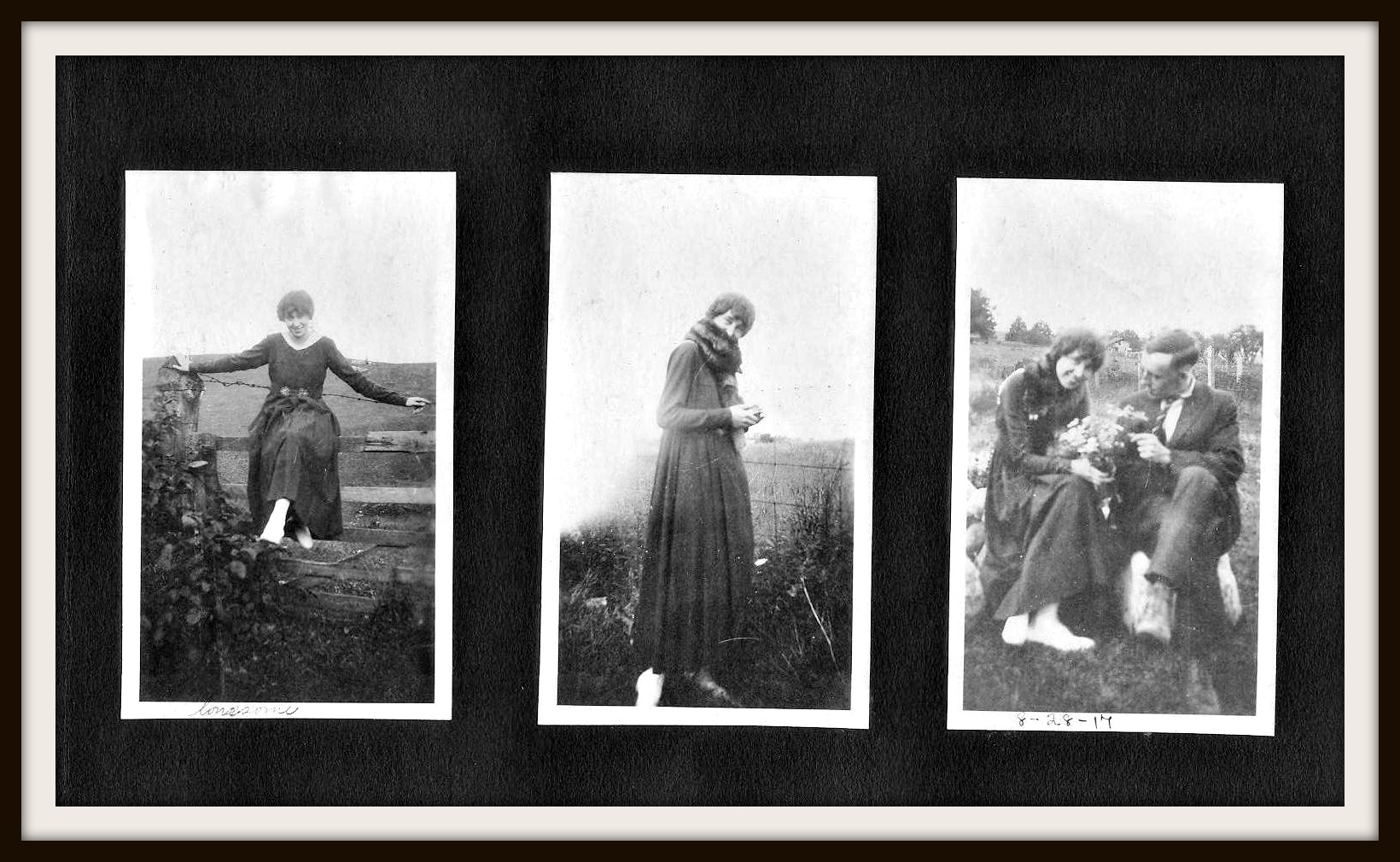
Here she is seven years later (age 20)–dressing fashionably, posing, and with a young man!

Alice wouldn’t marry until 1923, at age 26, and it wasn’t to the man in this photo.
If you go to Dogs in the Family, you will see a photo of Alice as a child with her aunt, my great-grandmother Cora DeKorn Zuidweg, and my grandfather, Adrian Zuidweg–with the family dogs.
I’ll leave you with photo of Alice and moi when I was 3 years old. Alice was 61. I knew Alice quite well when I was a child. She passed away when I was 8 years old, in 1963.

Posted in Adrian Zuidweg, Cora DeKorn Zuidweg, DeKorn, Family History, Genealogy, Jennie DeKorn Culver, Kalamazoo history, Kalamazoo late 1800s - early 1900s, Leeuwenhoek, Photography early 20th century | Tagged Adrian Zuidweg, Alice Leeuwenhoek, antique photos, antique postcard, cat postcard, DeKorn genealogy, Dutch Genealogy, early 1900s, family history, genealogy, history of Kalamazoo, identification of antique photograph, Kalamazoo history, Kalamazoo Michigan, Leeuwenhoek, Michigan history, Paak genealogy | 25 Comments »
I recently found this photograph in a group of photos. Because of a clue on one of the other pix, I narrowed the date to between 1928 and 1931.
I know who the man is because he has a very distinctive look. This is my great-grandfather, born Adriaan Zuijdweg and called Adrian Zuidweg in the United States. I’ve written about him many times, but the best posts would be My Great-Grandfather Reinvented Himself as a Business Owner in the U.S. and My Grandfather’s Story, Part V and Back to the Dutch-American Newspaper.
Adrian died in 1929, according to my grandfather–of kidney disease. But I have not been able to find a death certificate or a grave. Maybe it’s because his name was mangled, but keeping that in mind, I still haven’t found him yet. It is so frustrating. Also, the newspapers from that year are not on Genealogy Bank. Nevertheless, I would put this photo at 1928 or 1929. Because other photos show him more fit than in his photo, I think he might have been ill (or close to it) by the time this photograph was taken.
But who are the women in this photo?

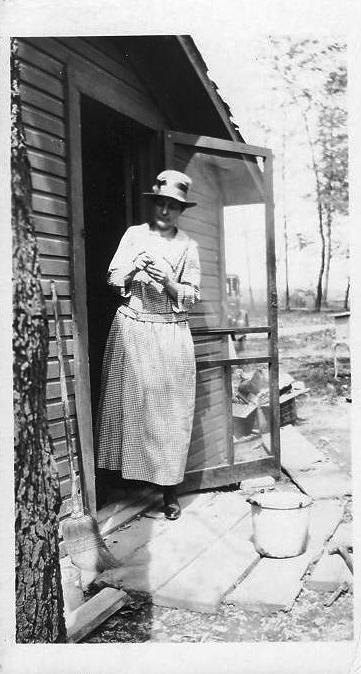
Could the woman on the left be my Great-Grandmother Cora DeKorn Zuidweg? She looks a lot taller than he does, but maybe she was taller. I will post a known photo of her so you can compare.

Cora DeKorn at her father Richard DeKorn’s cottage on Long Lake
Similar hats, for sure! If that is Cora in the first photo, then she would have been about 53 years old. She herself passed away in 1932 from cancer.
Do you think that is Cora in the photo with Adrian?
Who is the shorter woman? Is this another photo of her?
The only child of Adrian and Cora was my grandfather. Cora’s only sister was Jennie–and this is not Jennie. However, she had two younger step-sisters, Marion and Marge Sootsman. They would have been in their 30s at this time. This woman does not look like one of them. She actually looks more like one of the Culver sisters, but we figured out that they moved to Seattle before this period.
The only thing is . . . there are a lot of photos of this woman. Was she a girlfriend of my grandfather?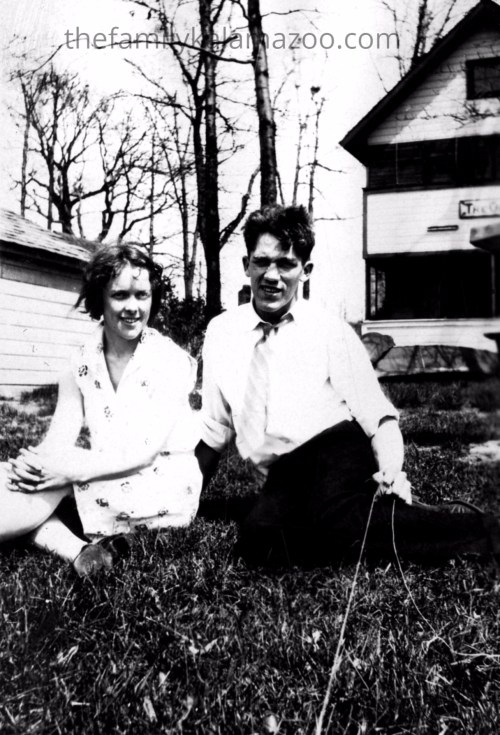
Kinda looks like it. After a series of these photos, there is a series of him with my grandmother.
Do any family members know the answer to this mystery?
Posted in Adriaan Zuijdweg/Adrian Zuidweg Sr., Cora DeKorn Zuidweg, DeKorn, Family History, Genealogy, Jennie DeKorn Culver, Kalamazoo history, Kalamazoo late 1800s - early 1900s, Michigan history, Photography early 20th century, Zuidweg | Tagged Adrian Zuidweg, antique photo, DeKorn family, DeKorn genealogy, Dutch Genealogy, family history, genealogy, history of Kalamazoo, Kalamazoo, Kalamazoo history, Michigan history, old photographs, vintage photo, Zuidweg surname | 12 Comments »
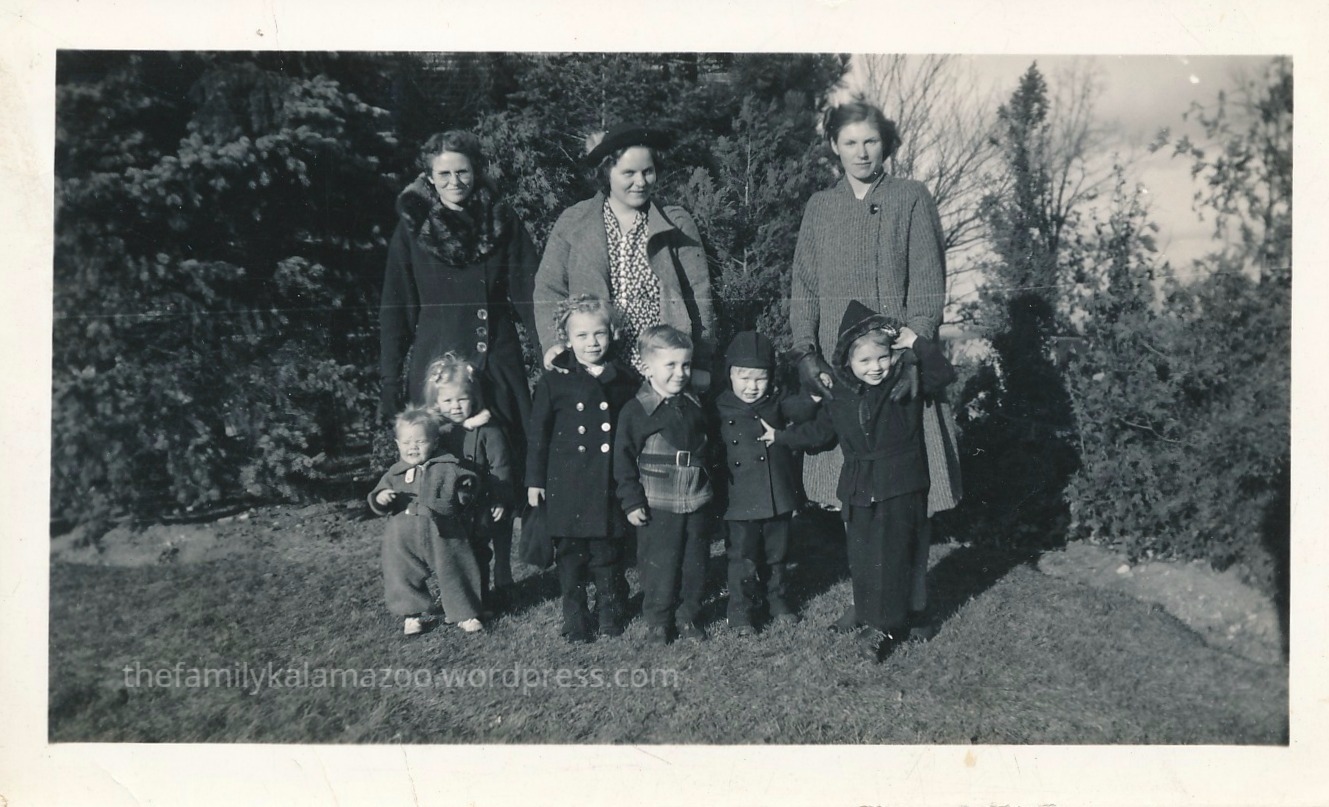
I am digitizing some photographs for my mother, and I found this picture that I just love. It’s my mother’s mother (in the middle) with her two sisters. They are standing with their children–the ones who were born at this point. By the age of the children here, I would say that the picture was taken around 1939-40. What is a little confusing is that nobody looks pregnant and two of them should have been pregnant around that time, unless there are tiny babies asleep just outside the boundaries of the pic!
The photo would have been taken somewhere in southwestern Michigan. CLICK ON THE PHOTO TO ENLARGE!
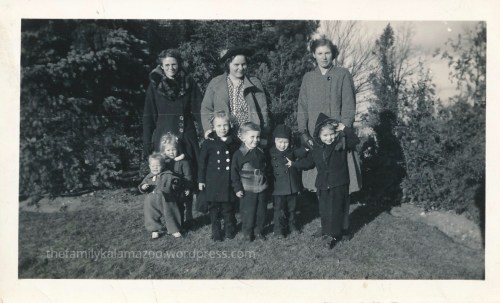
From left to right: Vena with her two oldest daughters, then grandma (Lucille Edna Mulder Zuidweg) with my mom (Janet) and Uncle Don, then Dorothy with her two oldest. Each of them had another child after the first two.
I’ve written posts about my grandmother. Dorothy showed up a bit, too, because the girls graduated high school together. You can read about their graduation here and here and here. In this post, Grandma, Dorothy, and Vena are shown as children with their parents and one brother (again, the youngest had not yet been born). Grandma’s teaching contract from 1931 can be found here.
If you never read my posts about Grandma’s high school scrapbook, check out the links. It’s a gorgeous scrapbook from her graduation in 1929. She was Class Historian and her older sister Dorothy was salutatorian.
If anybody in the family wants me to post the names of the children here, I will add them to the post. Just let me know.
Isn’t my mom, the tallest one here, a cutie in her double-breasted coat?
Posted in Adrian Zuidweg, Family History, Genealogy, Kalamazoo history, Lucille Edna Mulder Zuidweg, Michigan history, Mulder, Zuidweg | Tagged Adrian Zuidweg, Caledonia High School, Dutch Genealogy, family history, genealogy, history of Kalamazoo, Kalamazoo history, Michigan history, Mulder, Zuidweg surname | 14 Comments »
It’s been a month and a day since I’ve written on this blog.
One month ago today my father passed away. It seems both ages ago and as if it’s happening right now.
I am going to get back to work over here at The Family Kalamazoo, but I wanted you to know why I haven’t been writing any posts or reading your blogs.
My father has shown up several times on this blog, both as a subject and as one of my family detectives. You can imagine how much he will be missed.
He was buried at the Fort Custer National Cemetery after a ceremony with military honors. I wrote about his military experiences here:
Dad Writes about His Wartime Experiences
Korean War: Why Did It Take Dad So Long to Get to Korea?
Next Sunday will be Father’s Day here in the United States. It’s hard to believe he won’t be here for that day. I wrote blog posts for Dad for the past two Father’s Days here:
Happy Father’s Day to An American Veteran
Keeping Busy
The last post featured some of Dad’s yard art. For his funeral, we covered a large poster board with photos of some of the items he made through woodworking and metal scrap art.
Dad was always doing something, always involved, and always present in every moment.
Posted in Genealogy, Kalamazoo history, Klein, Michigan history, U.S. military | Tagged downtown Kalamazoo, family history, genealogy, history of Kalamazoo, Kalamazoo, Kalamazoo history, Kalamazoo Michigan, Michigan history | 52 Comments »
Remember the Culver family: my great-great grandfather’s sister, Jenny DeKorn Culver, and her daughters, Lela and Rhea, who moved from Kalamazoo to Seattle 100 years ago.
In the scrapbook which I received from a blog reader I found this photograph. Any ideas on the type of uniform? Since this would have been around the time of the end of WWI, does the uniform have to do with the war?
I don’t know who the man is. Most of the Culver photos are of women.
But the clues would leave me to believe the photo was taken in Seattle in or around 1918. But did Seattle have old elegant buildings like this at that time?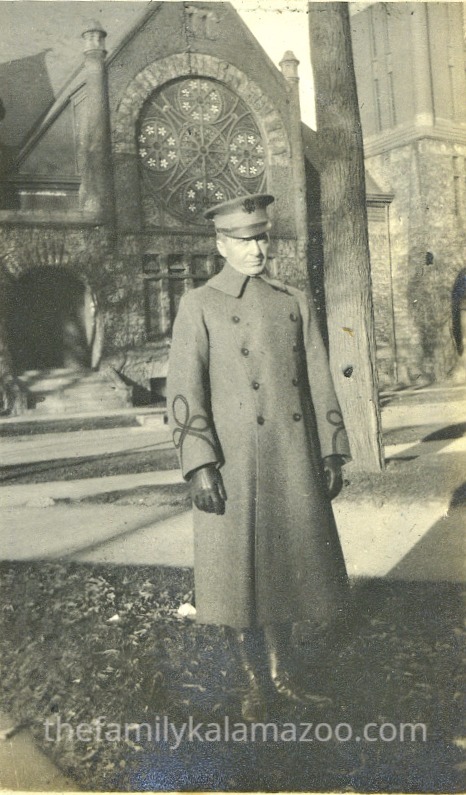
What about the building? My first inclination was a church, but I don’t see any crosses. Are those rosettes for ornamentation?
Related articles
Posted in DeKorn, Family History, Genealogy, Jennie DeKorn Culver, Kalamazoo history, Kalamazoo late 1800s - early 1900s, Photography early 20th century, Richard DeKorn | Tagged 1918 Seattle, 1918 uniform, antique building Seattle, antique photograph, DeKorn, DeKorn family, DeKorn genealogy, early 1900s, family history, genealogy, history of Kalamazoo, Jenny DeKorn Culver, Kalamazoo history, Lela Culver, Michigan history, Rhea Culver, Richard DeKorn, Seattle history, WWI Seattle | 35 Comments »
« Newer Posts - Older Posts »













 The Family Kalamazoo