Feeds:
Posts
Comments

Archive for the ‘Kalamazoo history’ Category

Since I’ve been talking a lot about these DeKorn ancestors and so many of them were born in Kapelle, Zeeland, the Netherlands, I thought I’d scout around online and see what I could see of the town.  I’ve only been to Holland once, for a very brief time, and I didn’t know what towns to look for at the time–so I’ve never seen the area my ancestors came from.

As I showed in a previous post, Kapelle is located in the Dutch province of Zeeland, very close to Goes.  It’s not all that far from Middelburg, the capital of Zeeland.

Kapelle is located at the A flag and Goes is just to the left

Kapelle is located at the A flag and Goes is just to the left

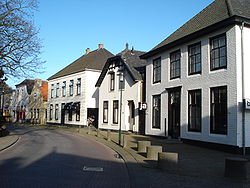
These are houses on the Kerkplein (church square):

Kapellefrom Wikipedia

Kapelle
from Wikipedia

Here is Kapelle in 1910:

Kapelle,Zeeland Zuid Beveland gezin C. van Willegen, 8 kinderen in Klederdracht , meubelhandel en winkel in Galanterieen, hondenkar rond 1910

English: Kapelle (Zeeland NL) train station, r...

Kapelle train station

Read Full Post »

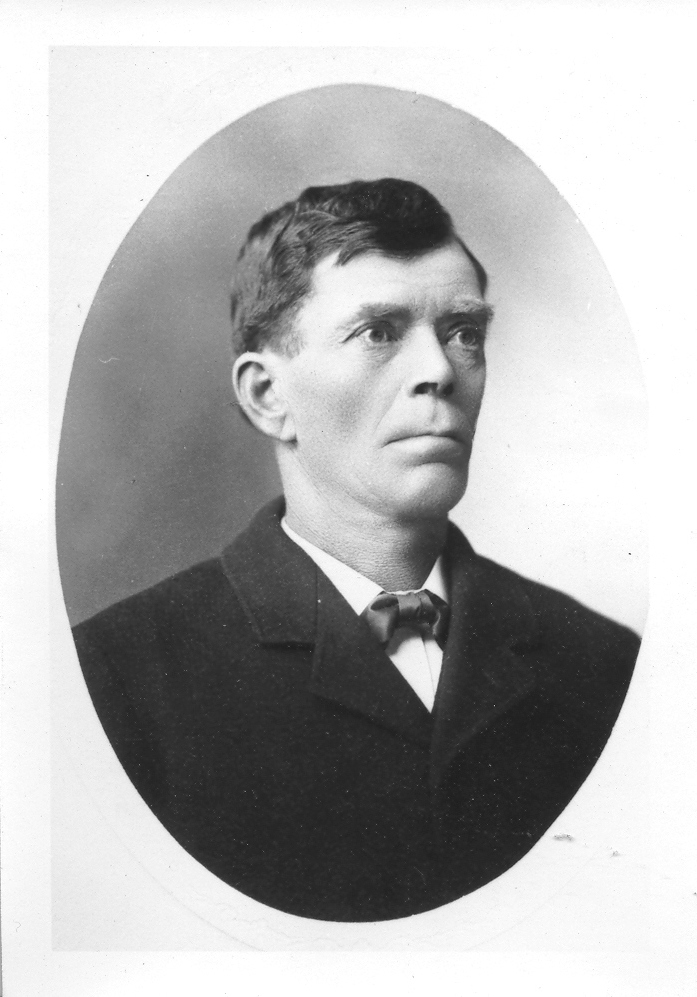
Last post I showed you the photo of my great-great-great-grandfather, Boudewijn de Korne.  I just discovered new information about him written by his grandson Joseph DeKorn.  Boudewijn, his wife Johanna, and their two children travelled to the United States with Gerrit Remine (Gerrard Remijnse), who was Johanna’s brother.

They travelled on a sailing vessel and arrived at Kalamazoo, Michigan on June 22, 1856.  However, “they located in Zeeland, Michigan” for several years.  “The voyage across was bad and long.”  Joseph’s father Richard and Aunt Mary told him it took 90 days, but Joseph didn’t believe it was actually that long.

I mentioned that Boudewijn and his wife Johanna had two living children when they left the Netherlands.  The older is Richard DeKorn; I have introduced him several times before.  Note that Richard’s generation appears to have dropped the final E from their last name.

Richard:  Dirk de Korne, born 21 Aug 1851, Kapelle, Zeeland, the Netherlands; died 26 Jan 1930, Kalamazoo,
Kalamazoo, Michigan, United States.  Also known as Richard and, when younger, Derrick.

Richard DeKorn (Dirk de Korne)

Richard DeKorn (Dirk de Korne)

Mary:  Maria Catharina de Korne was born on 4 Jan 1855 in Kapelle, Zeeland, the Netherlands.  Mary married John DeSmit in Kalamazoo in 1873 and they had at eight children.  Her daughter Frances married a Flipse.  When I got married in 1975 my mother took me to Flipse Flower shop to order my bridal bouquet because they were “shirt tail relatives.”  It’s hard to imagine it from this photo, but Mary only died two years before I was born.

Mary DeKorn DeSmit

Mary DeKorn DeSmit

After the family moved to the United States, Boudewijn and Johanna had another daughter, Adriana, in 1959, who is one year old in the 1860 census.   Nothing after that.

However, a 10-year-old daughter Jennie shows up in the 1870 census, which Jose from Enhanced News Archive was kind enough to find for me.

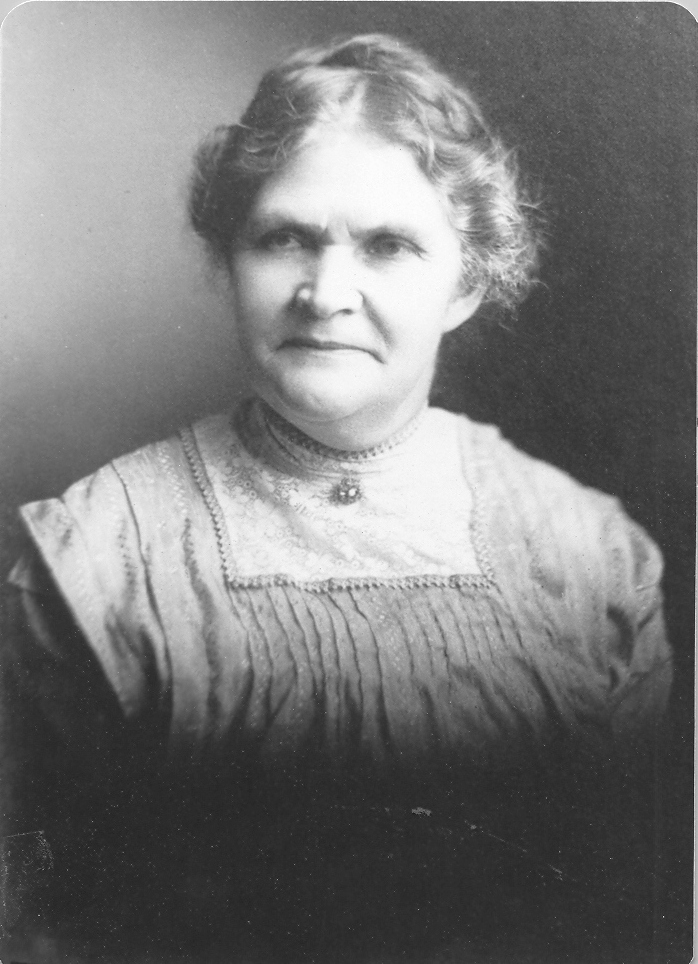
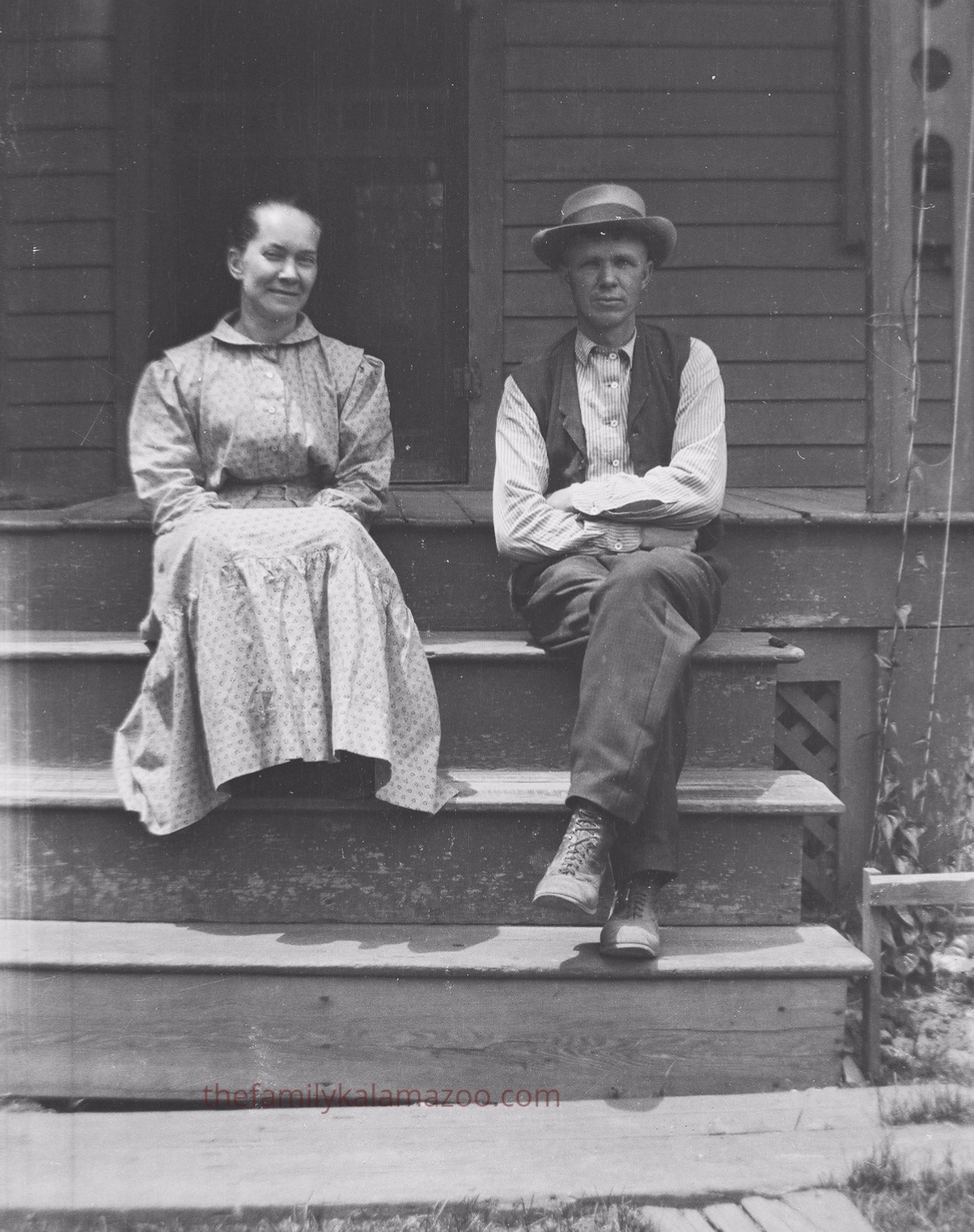
Joseph DeKorn’s documentation mentions Jennie, but not Adriana.  My grandfather identified the woman in this photograph as Jennie, Richard’s sister, who married a man named John Culver and eventually moved to Seattle, Washington.  She died in Pierce, Washington, on July 4, 1947.  According to her death record, she was born around 1861.  One difficulty in searching is that there is another Jennie Culver (married to Earl) who lived in Kalamazoo during Jennie DeKorn Culver’s lifetime.

So the question remains: was there an Adriana born in 1859 as well as Jennie born in 1860 or 1861?  Or are they the same person?  If Adriana had lived and kept her name, she would have been mentioned in Joseph’s statement.  So either she passed away as an infant or she became known as Jennie or, perhaps most likely, the census got her name wrong to begin with.

UPDATE: IT IS NOW 2018, FIVE YEARS LATER, AND I STILL DO NOT HAVE BIRTH OR BAPTISM INFORMATION ABOUT JENNIE OR ADRIANA. I AM GOING TO ASSUME FOR NOW THAT JENNIE IS ADRIANA–UNTIL I FIND OUT TO THE CONTRARY. THIS IS BECAUSE JENNIE IS A COMMON NICKNAME FOR ADRIANA.

Jennie DeKorn Culver

Jennie DeKorn Culver

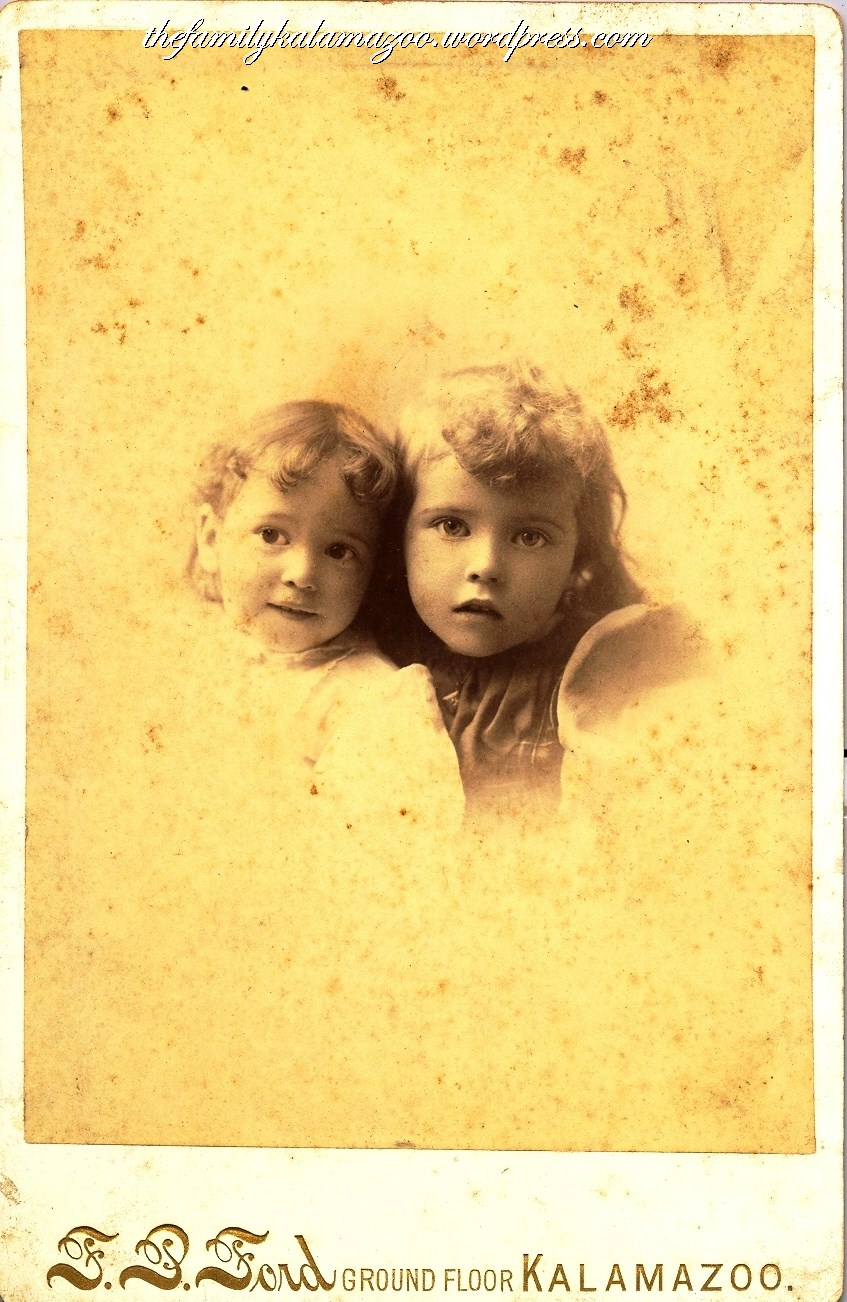
This is a photo of Jenny and John Culver’s children:

The Culver Children

The Culver Children

Read Full Post »

Dutch Arnold

Dutch Arnold

Dutch Arnold was the saloon keeper on S. Burdick Street, Kalamazoo, Michigan.

My grandfather had this photograph and explained to me that he was “Dutch Arnold, the saloon keeper,” but I don’t believe Dutch was a relative.

So I looked him up and found out that the man has a history.

From the Kalamazoo Gazette files

From the Kalamazoo Gazette files

Read more articlesabout Dutch.

Read Full Post »

Alice Paak (Peek) DeKorn's shawl

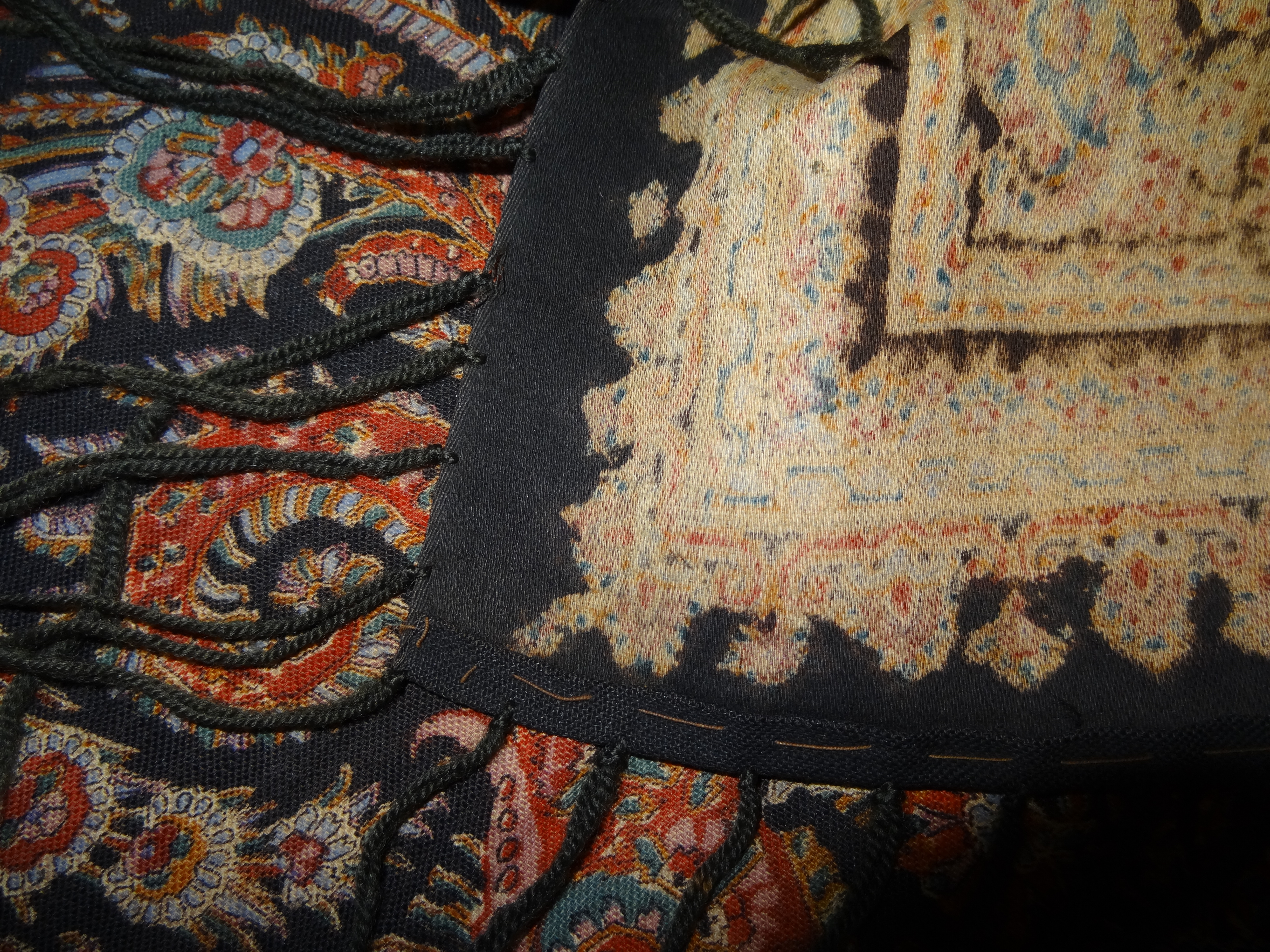
This fine woolen shawl was owned by Alice Paak (Peek) DeKorn.  The predominant color is a dark green.  My great great grandmother passed away in 1908, so this family artifact is over 100 years ago.  It is in perfectly pristine condition.

Close-up of Alice's shawl
Close-up of Alice’s shawl

Read Full Post »

My grandfather was left-handed.  And so am I.  I get it from him because my parents are both right-handed.

Grandpa holding me

Grandpa holding me, his first grandchild, 1955

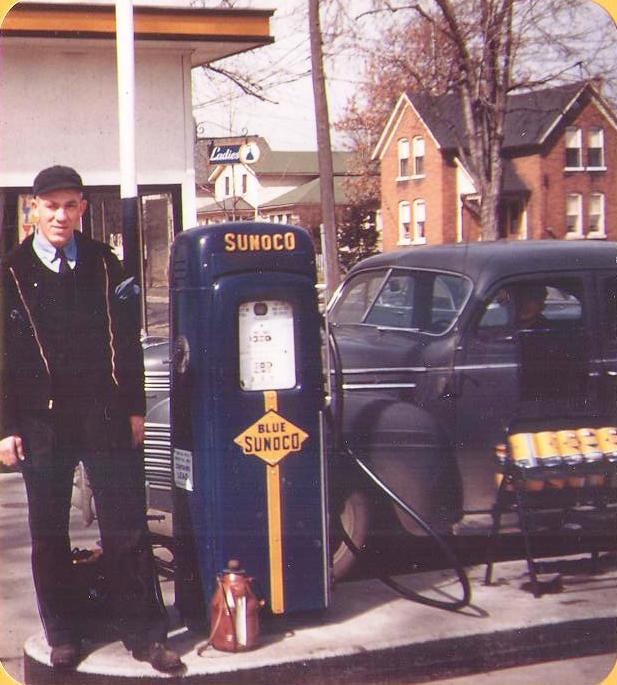
I’ve written about both Adriaan Zuijdweg/Adrian Zuidweg (the elder) and Cora DeKorn Zuidweg, my great grandparents.  They had one son, my grandfather, Adrian Zuidweg (1908-2000).  He owned a Sunoco “filling station” on the corner of Burdick and Balch in Kalamazoo where his father had previously owned the soda shop.  In the photos above and below, he’s wearing his Sunoco uniform.

When I was a kid, I loved the fold-out maps Grandpa carried inside the station. Out back, he planted a strip of petunias and vegetables.  He knew how to make use of a small space for gardening.  When I visited, he would climb out of the pit where he worked under a car.  The most memorable part of the station for me was the lettering on the front door:

Adrian Zuidweg, Proprietor

A – Z Lubrication

I loved how it played off his initials A.Z.

"Adie" "Zuidy" by the pump

“Adie” “Zuidy” by the pump

Read Full Post »

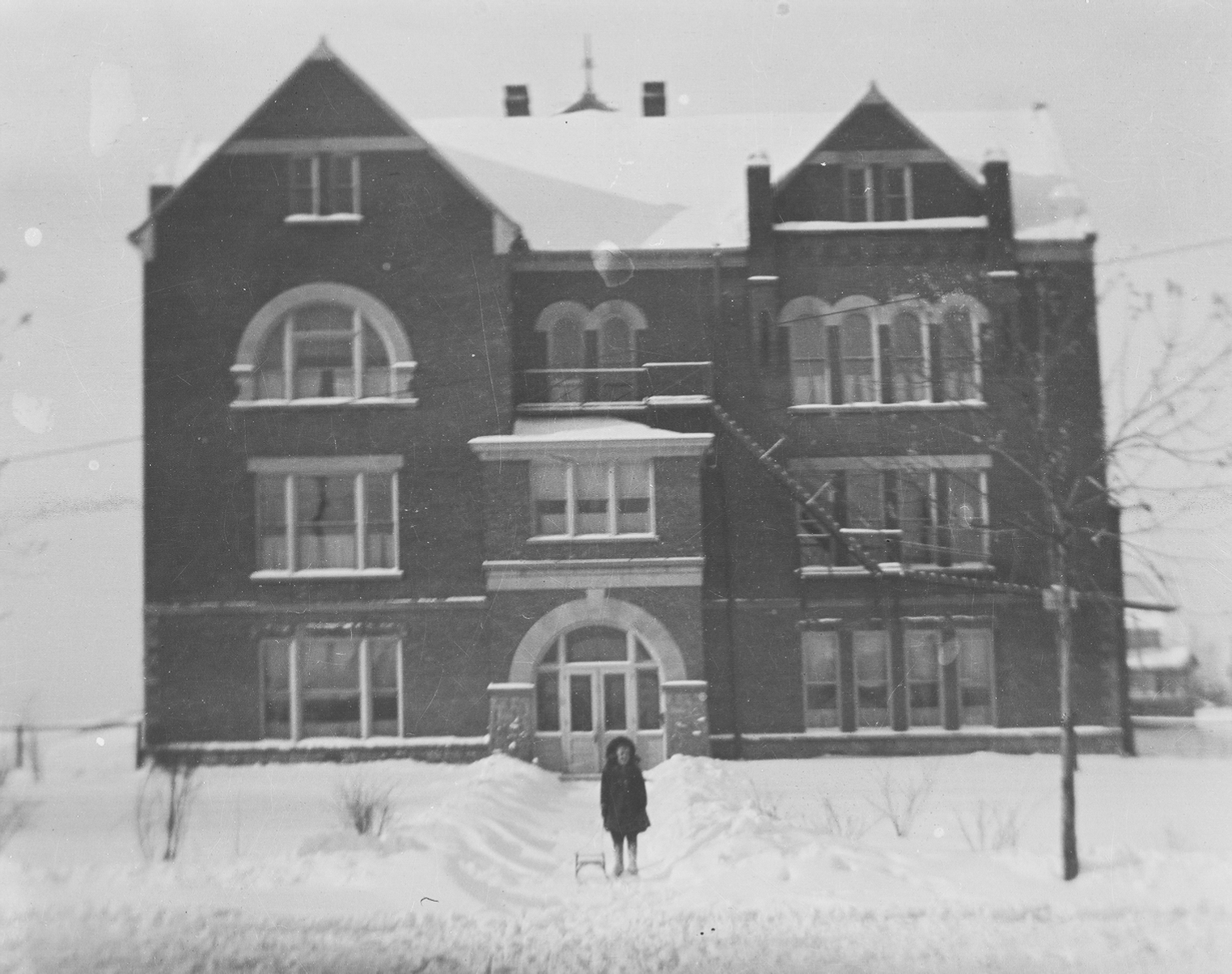
This photo was captured digitally from glass negatives taken by Joseph DeKorn about one hundred years ago.  Does anyone recognize this building from Kalamazoo?  I would like to know what it is.  Is it a school?

The mystery has been solved, thanks to Laura C. Lorenzana @ArchivalBiz.  Her fabulous blog is The Last Leaf on This Branch.

This is South Burdick Street School, which was located at the northwest corner of Burdick and Cork streets, and was torn down in 1957.  Grades were K-8.  I am doing more research.  Thanks, Laura!

Read Full Post »

When I was a kid, the oldest person in our family was “Aunt Jen.”  After the death of her only child, Aunt Jen went to live in a group home for elderly ladies run by the mother of one of the 4th grade teachers at Haverhill Elementary School (Portage, Michigan), Mr. Sweringer.  My fourth grade class was directly opposite that of Mr. S who made kids put a penny in a jar if they cussed.

My daughter’s middle name is Jennifer, and I gave her this name in honor of Aunt Jen.

Aunt Jen was born Jennie DeKorn in Kalamazoo, on March 8, 1873, to Richard and Alice (Paak) DeKorn.  She was the oldest of the three siblings, which included Cora (my great grandmother) and Joseph (the photographer).

At age 23, on May 20, 1896, Jennie married Lambertus Leeuwenhoek.

Lambertus, known to everyone in the family as Uncle Lou, was born in the Netherlands  on May 3, 1972.  He passed away April 20, 1949 in Kalamazoo.  Uncle Lou’s parents were Arie Leeuwenhoek and Mary Hoogedoom.  The story I was told by Grandpa is that Uncle Lou and his brother Gerard were orphans.   He told me that Uncle Lou was a very intelligent man.

Additional info added later:  I discovered a letter from Phil DeKorn, son of Joseph, to my parents, which says that Uncle Lou was a wizard at chess and checkers.

Gerard or Garret Leeuwenhoek

He also said that Uncle Lou was a direct descendent of Antony van Leeuwenhoek, the inventor of the microscope.

Uncle Lou and his brother-in-law, my great grandfather Adrian Zuidweg, spent a lot of time together.

Aunt Jen and Uncle Lou had one child, Alice Leeuwenhoek Moerdyke.  She was born in Kalamazoo on April 16, 1897.  I suspect she was quite spoiled because:

a.  I have so many photos of her!

b.  She had a lot of pretty clothes–much nicer than the rest of the family.

c.  My grandfather once told me so ;).

And look how cute she was:

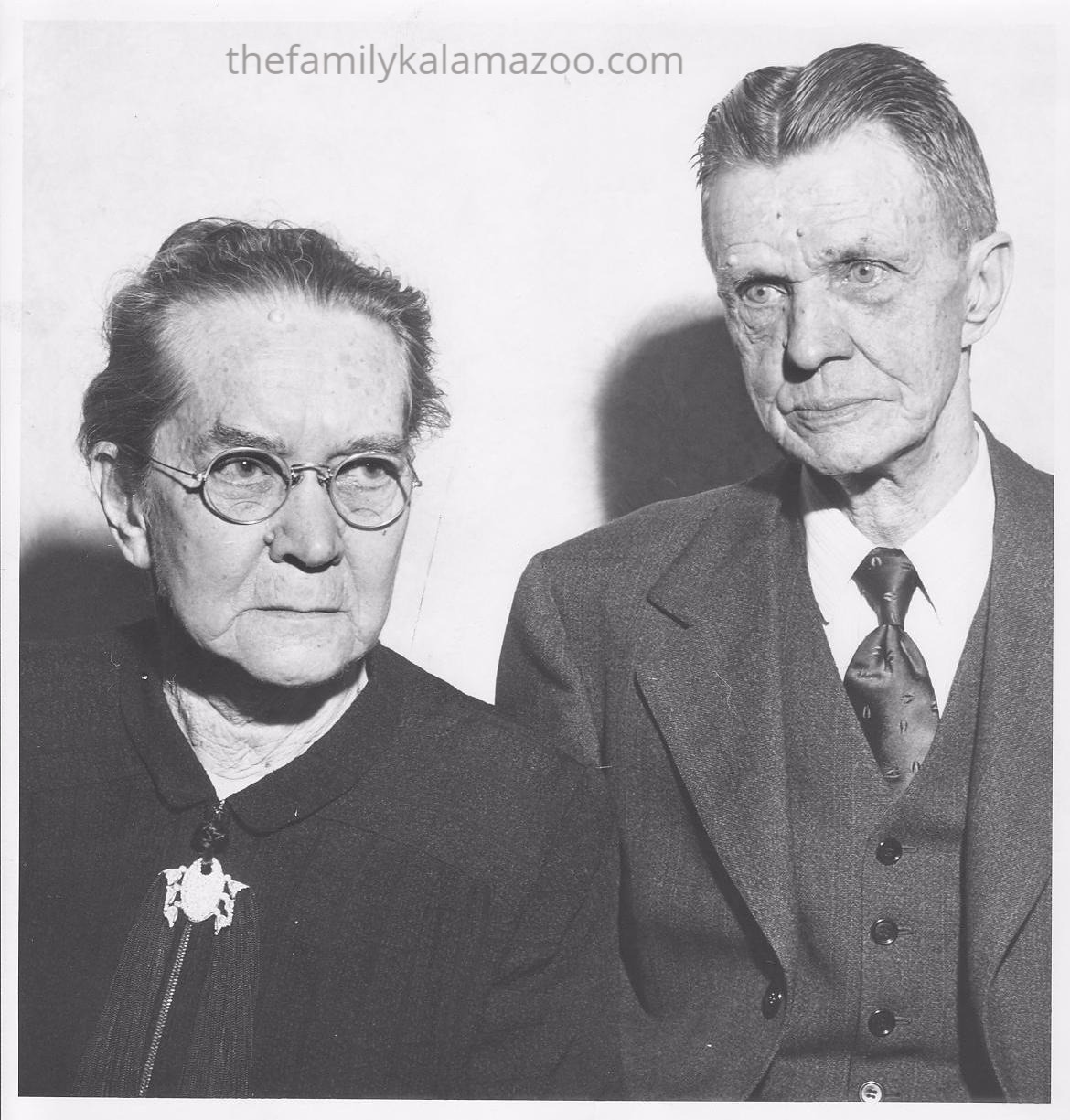
Aunt Jen and Uncle Lou lived the rest of their lives in Kalamazoo.  They celebrated their 50th anniversary in 1946 and the Kalamazoo Gazette ran their photo.

When I was little, she attended our family get-togethers, and she wasn’t a mother or aunt of anyone from my generation or my mother’s.  I couldn’t grasp that she was my grandfather’s aunt, as that seemed to me impossible.   My parents took me to visit her regularly, and I always respected them for their attention to her.

On March 15, 1968, at the age of 95, Aunt Jen passed away.

Read Full Post »

This is another post which I dedicate to Yvette Hoitink at Dutch Genealogy.

I described in other posts that  Yvette Hoitink, a Dutch genealogist, quickly and easily found a wealth of information about the Zuidweg family–my grandfather’s Dutch ancestors. 

Where in the heck is Kalamazoo

I grew up hearing that expression (or a more direct variation of it which reminds with “bell”).  When Kalamazooans travel outside Michigan, they tend to hear people ask some version of the phrase.  Even today, living out west, I find myself being asked the same thing.  I do what I have always done:  open my right palm and point to the fleshy lower outside section.  “Right there.  That’s where Kalamazoo is.”

With the help of Yvette’s genealogical research, I can now say that approximately 3/8 of my more recent ancestors come from Zeeland, a Dutch province–and most significantly from the town of Goes.  When I was young my grandmother taught me how to say it.  With an H sound, instead of a G, and a double O (rhymes with “goose”), as if you’re blowing out air from the diaphragm.  I have no idea if that is the correct Dutch pronunciation, but that has been our pronunciation.  I never knew where it was located.  I didn’t even bother to look or to ask “where in the heck is Goes?”

I’m not sure I trust pronunciations which are passed on through the family.  My grandparents were “Grandma and Grandpa Zuidweg,” pronounced like Zould (as in “should”) and weg (as in . . . “weg”).  At some point my uncle and his family started pronouncing their own name to rhyme with the name “Ludweg.”  That sounds wrong to me, but then it’s their name and not mine.

Once you start looking back into the generations, my ancestors are a little more spread out.  This is what Yvette wrote in her report:

All the Dutch immigrant ancestors of Adrian Zuidweg were found in Dutch records. Using birth, marriage and death records from the civil registration, four generations of his ancestors were traced. For three ancestors, the family was traced one generation further. In total, all 16 great-great-grandparents and 6 g-g-g-grandparents of Adrian Zuidweg were traced. His ancestors came from different provinces in the Netherlands: Zeeland, Zuid-Holland and Overijssel.

Don’t forget:  Adrian Zuidweg, my grandfather, is two generations before me, so this is actually going back pretty far.

English: Map of The Netherlands (including the...

You can see from the map that Zeeland and Zuid-Holland are the two southernmost provinces along the North Sea.  According to Lonely Planet, these provinces are the areas that give rise to our stereotypical ideas of “Holland.”

These two provinces are home to some of the strongest imagery – and biggest clichés –

associated with the Netherlands. You want dykes? Uh-huh. Windmills? Yeah. Tulips? OK.

Well, alright fellas, let’s gooooo…

The Keukenhof gardens are a place of pilgrimage for lovers of the lancelike leaves and

bell-shaped, varicoloured flower of the tulip, and the Zuid (South) Holland area is great for

biking and hiking, with trails and paths everywhere. Meanwhile, the built-up beaches of

Noordwijk aan Zee and south to Scheveningen are popular with locals.

Further south, Zeeland (Sea Land) is the dyke-protected province that people often associate

with the Netherlands when they’re not thinking of tulips, cheese and windmills.

Middelburg is the centre, with a serenity belying its proximity to the tragedies that spawned

the Delta Project.

Zuid Holland’s major cities are the biggest attractions: there’s Leiden, with its university

culture and old town (and proximity to the bulb fields); Den Haag, with its museums, stately

air and kitsch beach; charming, beautiful Delft, the home of Jan Vermeer; and mighty Rotterdam,

blessed with an edgy urban vibe, gritty cultural scene, and innovative architecture.

Several smaller places are also worth your time: Gouda is a perfect old canal town, while

Dordrecht has its own surprises – for humans and sheep alike. Just east and south of Dordrecht

is Biesbosch National Park, a sprawling natural area along the border with Noord Brabant.

What I want to know is if Spiced Leyden cheese comes from Leiden.  It’s my favorite cheese.  My husband’s is Gouda.  And what do you know, but I have family photos taken in Gouda, including this one of a beautiful baby:

Read Full Post »

It’s hard to believe, but there is another genealogy blog focused on Kalamazoo, Michigan, and the surrounding area.  The blog is written by Sonja Hunter, who grew up in Kalamazoo, but lives now in Tennessee.  She posts a variety of interesting stories about people who are very different from my Kalamazoo ancestors.

Map of Michigan highlighting Kalamazoo County.svg

http://kalamazoogenealogy.blogspot.com/2013/01/stumbling-from-scrap-to-story.html?utm_source=feedburner&utm_medium=email&utm_campaign=Feed%3A+BushwhackingGenealogyKalamazooAndBeyond+%28Bushwhacking+Genealogy%3A+Kalamazoo+and+Beyond%29

This is Sonja’s most recent post in its entirety:

Tuesday, January 8, 2013

Stumbling From Scrap To Story

Do you find yourself scurrying from one bit of information to the next without taking the time to sit down and really analyze what you’ve found? Yep, I’m guilty of this myself. When I’m busy discovering new information I feel like I am truly making progress. And I am, but at some point I need to stop gathering data and analyze my findings. But I often have a difficult time transitioning from one mode to the other.

This is not a newly recognized problem for me. No, this goes back at least twenty years. When working in research labs over the years I had to force myself at the end of each week to transcribe my working notes for my experiments (successful or not) into my permanent notebook. In the process of writing everything in my notebook I thought more deeply about the significance of my results and often came up with better troubleshooting methods than moments after completing the experiment. So, if penning my results and conclusions into my notebook was so useful, why did I loathe it? Well, one reason I hated the task was because I felt (wrongly) that I wasn’t “accomplishing” anything.

My other stumbling block is that I enjoy the thrill of the chase. One of the things I love about scientific research is that I can be the first person to see a new result and think “wow, so that’s how it works!” The same is true in genealogy. Finding a new clue to my family’s past is thrilling. Even if the “discovery” is something trivial to others, that excitement is what drives me to search for the next piece of the puzzle. However, in genealogy, as in science, at some point I need to put on the brakes and think about how that jigsaw piece fits into the larger picture. Beyond the big picture, there are other benefits to writing about my genealogy findings. First, it allows me to really see what holes I have. This can be dangerous because I then have to fight the urge to run off to fill the gap. But as I live several states away from Michigan and have a child to care for, I can’t just hop in the car and satisfy my curiosity. Second, writing permits me to see how much I have learned since I last wrote up my findings (this can be fun). While this is valuable, it simply isn’t as exciting as that momentary thrill of finding a new clue to the past.

Once I finally overcome the activation energy to writing I actually do enjoy it. This is, in part, why I began blogging. Although I didn’t intend to work through some of my findings in my blog, it has sometimes worked out that way. This has been good for me, but when I contemplate writing another life story for one of my people (not book length by any means) I kind of get a sinking sensation. Part of this is the old “not accomplishing anything” feeling I get when I’m not crossing something off a list. The other part is that it is time-consuming to re-examine every scrap of information I have to come up with a satisfying whole (time I could be spending hunting down more information). While writing, I do get a little thrill when I realize “maybe THAT’S why Emma did (fill in blank).” In the end, however, the best part for me is receiving feedback from family who read what I write. When they tell me “I feel like I know Emma” I know I really have accomplished something. Maybe this year I can do better at bridging the gap between gathering and recording..

If you need more reasons to spur you to write I recommend you read an article that started me thinking about the subject. Harold Henderson’s piece “How Not To Be Buffalo Hunters” is at Archives.com.

Read Full Post »

Western Michigan University was created in 1903 as the 4th teacher training school in Michigan.  It was known as Western State Normal School and offered a two-year training program.  In 1927, the school’s name was changed to Western State Teachers College.  During that period, my grandmother Lucille Edna Mulder (born 1912) moved from her parents’ farm in Caledonia to Kalamazoo to attend college.  She rented a room from the Schensul family. They owned the most memorable restaurant of my childhood: Schensul’s Cafeteria in downtown Kalamazoo, which served the best fried chicken and orange pop on the planet.

Grandma’s alma mater became Western Michigan College of Education in 1941. During that period, my parents both attended college there.  My father, Rudy Hanson, an army veteran, went to school on the GI bill and, there, he met my mother, Janet Zuidweg.

In 1957, Western became the 4th public university in the state.  In 1960, when I was five, I sat at my Aunt Alice’s knees and watched her color code drawings for science classes she took at Western. Then I attended Western as an undergraduate from 1973-1977, and so did my husband.  During the time I was a student, my mother whose college career had been interrupted by a case of mono and then a case of marriage, completed her education and graduated a year ahead of me.  A few years later, my brother graduated from Western. Then I went back and earned two graduate degrees.

OK, Mom, let me know if I got any facts wrong :).  If you have more info on other relatives who went to Western, I’ll add them here.

The postcard image above was given to my mother’s great aunt’s husband, Louis Leeuwenhoek, by Johnson Paper Supply as a credit slip.  See image below.


Read Full Post »
« Newer Posts - Older Posts »