Feeds:
Posts
Comments

Archive for the ‘Genealogy’ Category

I’ve heard that Uncle Lou (Lambertus Leeuwenhoek) loved to play games–and was very good at them. Where and when he passed away is fitting, in that context.


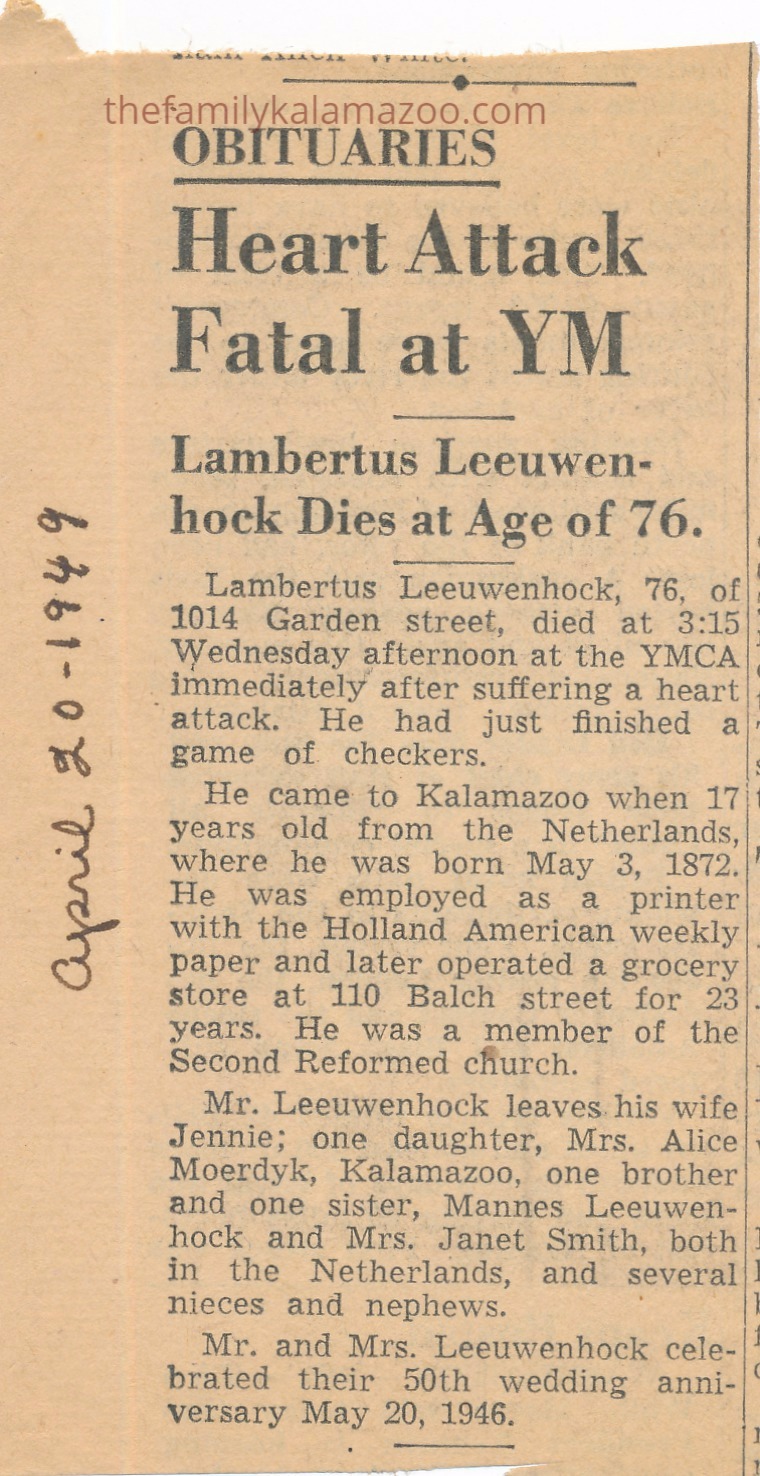
Uncle Lou “died at 3:15 Wednesday afternoon at the YMCA immediately after suffering a heart attack. He had just finished a game of checkers.” I bet he won the game.

I need to research where the Y was located.

He died on Wednesday, April 20, 1949. Coincidentally, my father-in-law passed away in 1984 on April 20. Notice that Uncle Lou and Aunt Jen were married on May 20. My birthday is July 20. My cousin was born January 20. I always notice the number 20.

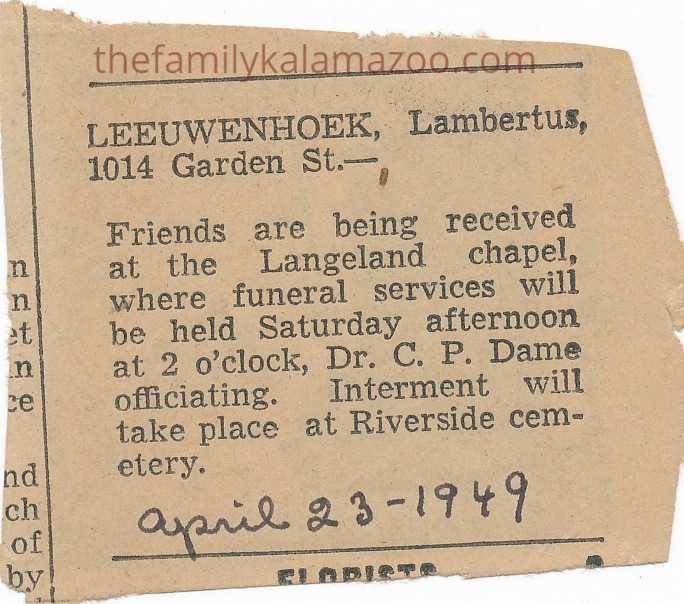
Here is the funeral announcement in the newspaper:

And here is a beautiful memorial book from Uncle Lou’s funeral. I wish I knew how to create a slideshow that allows a reader to enlarge each photo, but I don’t know if there is a way on WordPress.

This slideshow requires JavaScript.

What I find particularly useful from a genealogy standpoint are the names of the visitors on the last two pages. They are as interesting as the names in the obituary, if not more so.

Read Full Post »

I’ve written about the Leeuwenhoeks, and in particular, my great grandmother’s brother-in-law, Lambertus Leeuwenhoek. He was called Uncle Lou by my grandfather, so he’s still called Uncle Lou by me today, although I never met him. I did know his wife, Aunt Jen, who survived him by decades.

Uncle Lou and Aunt Jen owned a general store. They had a store in Kalamazoo for a time and one in Vicksburg for a time, as well. In the 1910 and 1920 censuses, he and Aunt Jen are living at 110 Balch Street in Kalamazoo. His Kalamazoo store sold Gold Medal flour.

may-19-1910-leeuwenhoek-ad


In the 1930 census, they live at 111 East Prairie Street in Vicksburg. In the 1940 census I find them with Lou’s first name mangled into Laonbatius. They are living with their daughter Alice and her husband, Clarence Moerdyk, at 1014 Gerdan Street in Kalamazoo. Could that be GARDEN Street? Because that would be a real house in Kalamazoo. One still existing, most likely.

I looked for city directory entries, and I found these–all date jumbled:

Leeuwenhock Lambertus (Jennie) household 110 Balch, 1926 City Directory: See Page
Leeuwenhoek Alice M, dressrnkr, boards 110 Balch, Kalamazoo City 1915: See Page
Leeuwenhoek Lambertus (Jennie) resides at 1014 Garden, City Directory 1935: See Page
Leeuwenhoek Lambertus (Jennie), grocer 110 Balch, residence same, Kalamazoo City 1915: See Page
Leeuwenhoek Lambertus (Jennie), grocer 110 Balch, residence same, Kalamazoo City, 1905: See Page
Leeuwenhoek Lambertus, compositor, 306 Wall., Kalamazoo City 1895: See Page

Compositor means that Lou was working on the Dutch newspaper. See here. But he had a grocery store in his house?

And if he lived in Vicksburg in 1930, but lived in Kalamazoo in 1926 and 1935, he couldn’t have lived in and owned a store in Vicksburg for very long. Unfortunately, I haven’t found a source for Vicksburg advertising yet.

I found this photo of Uncle Lou standing out in the front of the store, but I’m not sure which city this is:

Any ideas on the years, judging by the cars? Any idea if that looks like Kalamazoo or Vicksburg in the distance?

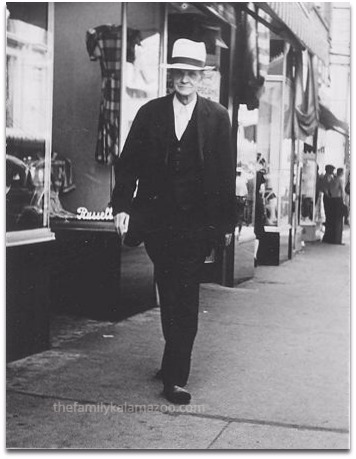
Likewise, I’m not sure which city Uncle Lou is in as he walks down the sidewalk? Does that window say “Russell” on it? In the city directories, there are many Russells, including ones owning businesses. There is one on Burdick Street, for instance, in my family’s neck o’ the woods, that is a variety store.

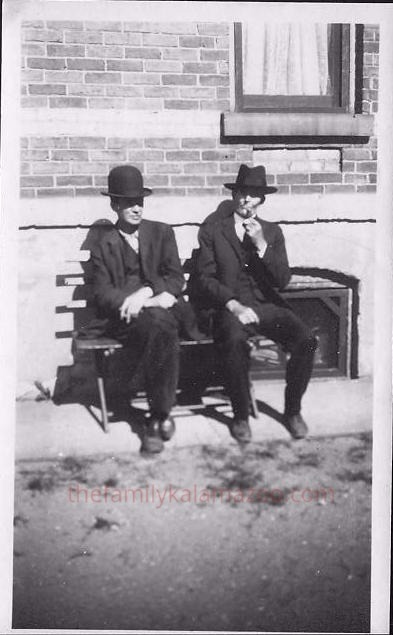
Here he is on a bench:

I wouldn’t be surprised to find this bench outside Richard DeKorn’s (his father-in-law) house on the corner of Burdick and Balch, judging by the design of the light colored stripe through the brick.

Here the photo is again–yes, it’s the same house. It’s hard to see Lou’s face up close. Below he is with his father-in-law, Richard DeKorn.
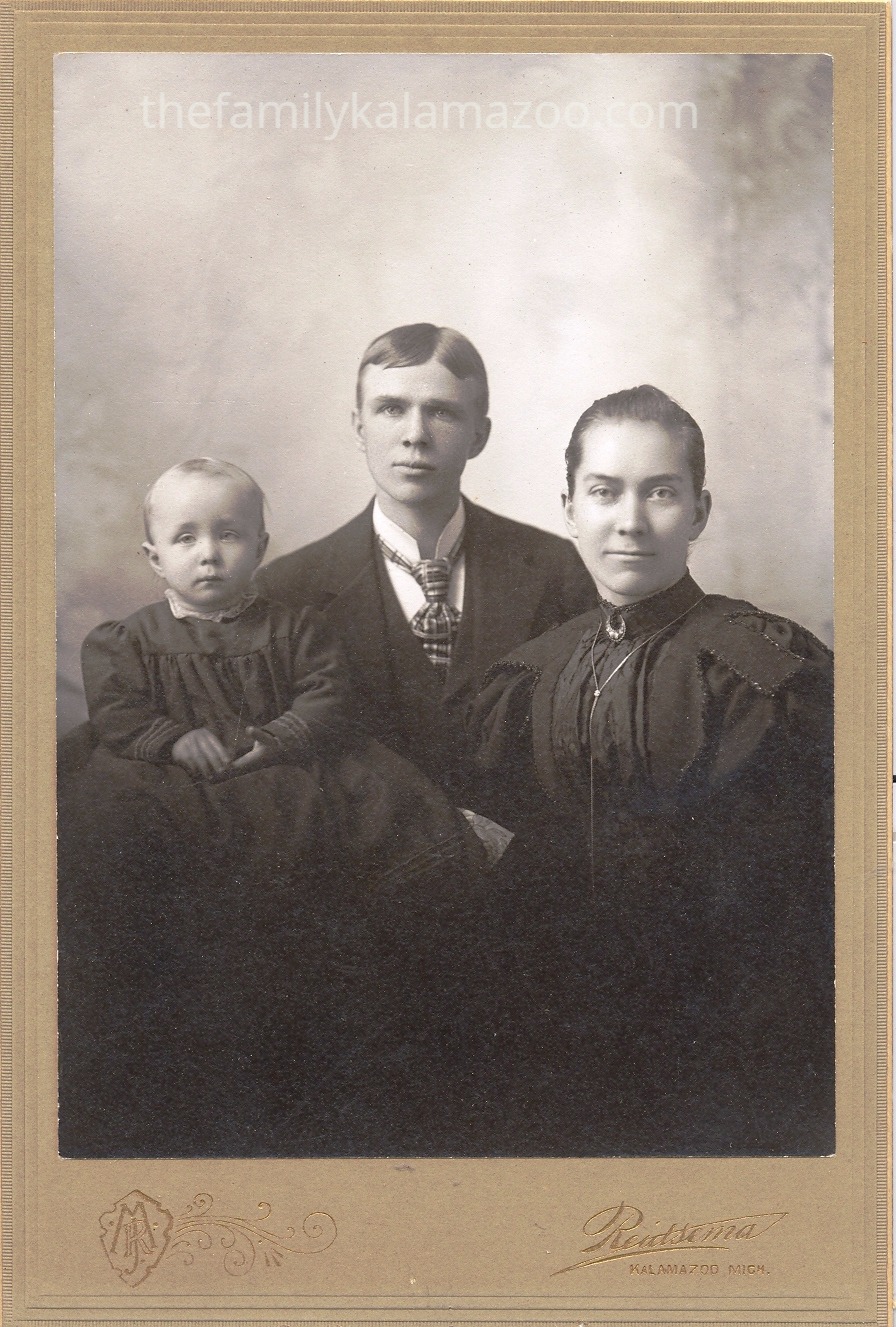
Uncle Lou with Aunt Jen and their only child, Alice:

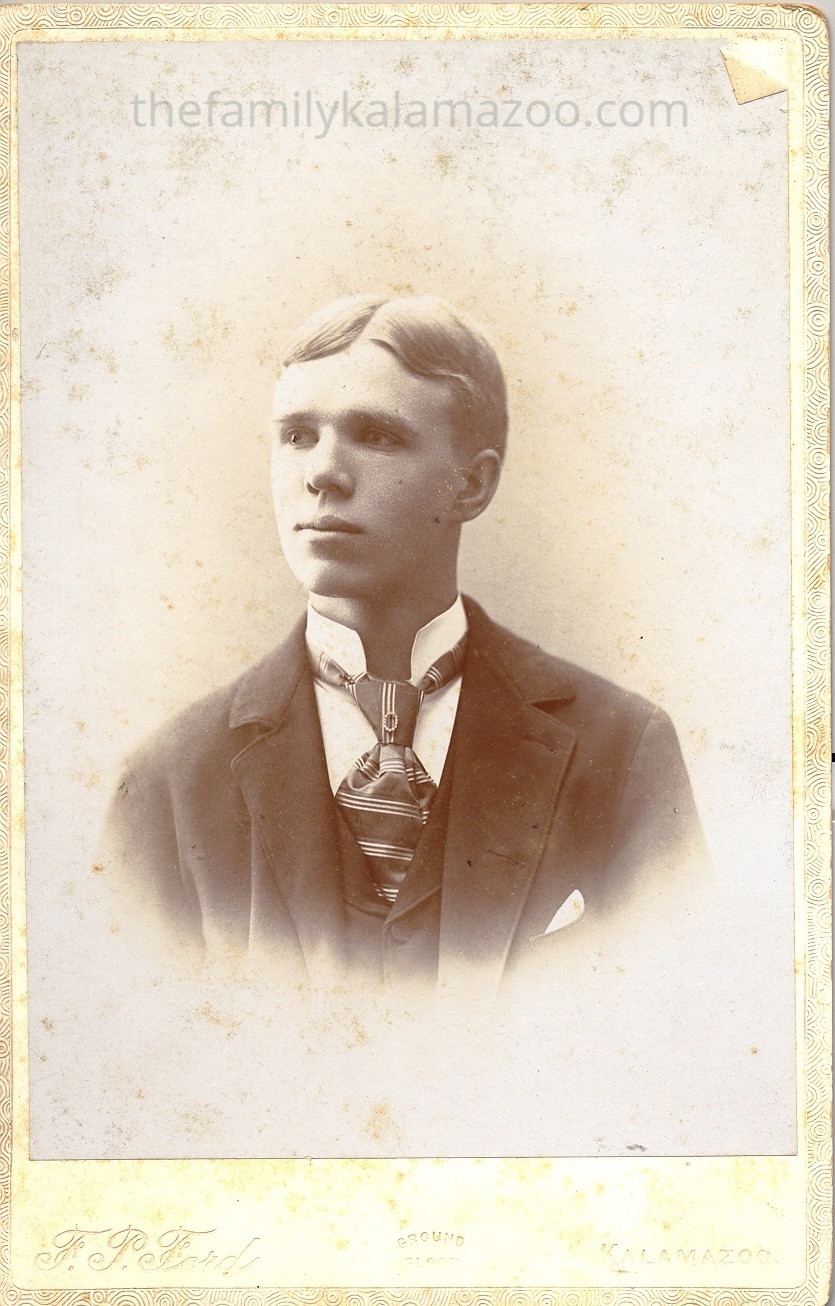
Here is a closeup of young Uncle Lou.

And now this is a curiosity. This photo is labelled Lou Leeuwenhoek by the same person who knew that the man walking down the street was Lou, that that was Lou standing out in front of his store, etc. But IS it Lou?

This is not his brother, for sure. While it’s not the same hairstyle as the photos above, the features seem to be the same–except for the eyes which, in the other photos, seem to be deep-set. Is the difference aging (the style of tie is the same) or lighting?  Or is the photo mislabeled?

***

You can check out the Bibles Uncle Lou brought with him from the Netherlands here.

Read Full Post »
Unfortunately, I owe emails to a few very kind people about genealogy issues, but I have had no time to work on my leads. Instead, today, I thought I’d share with you some photographs of people unknown to me that I found in an antique store in Long Beach, California. When I go into antique stores, the old photos capture my attention more than all the other old discarded belongings put together.

I haven’t had the time to do much research on these photos either, but I post them here in case they can one day be matched with family or friends of the subjects.

Perhaps the most unusual is one of a cast of a woman’s face, rather than of a living subject. I will assume the woman was dead and hence the cast was made, but I can’t know for sure.

The photographer was Jordan, and the photo was taken in Washington, D.C.

The back helps more than most do.

Her name appears to have been Mercy (room to think Mary, but it seems pretty clearly Mercy to me) Ferries or Ferriss. Perhaps Ferris. She had eleven children: Adeline, Mary Jane, Caroline, Eleanor, John, Franklin, Luther, and four others.

A.M. Noble might be the name of the man (assuming) who made the cast.

A brief search right after I obtained the photograph yielded census information about a Mercy Ferris in 1900, 60 years old, a widow, one son living at home, a New Yorker. Unfortunately, there is no 1890 census as the records were destroyed in a fire. What is also unique, maybe, is that the photo was in Washington DC. I’m not finding much with a name like this for that area.

I judge the photo to be from about 1880-1915.

My next photograph I love for its peaceful scene of family or friends socializing in a beautiful porch setting.

I love the details of the mismatched chairs (including wicker one), the tablecloth, the sweater with tie, and the netting hanging down the side of the porch.

Unfortunately, nothing was written on the back of this photograph. Any ideas on how to research this photo?

And here is one more.

Maybe we can find the family of this young lady. The photograph is from St. Louis.

Her name was Miss Lena Buckhold and here is her address! In a quick search, I did see a Lena Taylor who died in California in 1980. Her maiden name was Buckhold, and she was born in Missouri on January 15, 1891. Could that be this Lena? It seems like a promising lead.

Please pass on this post, and let’s see if we can find the families!

Read Full Post »

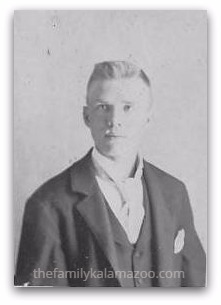
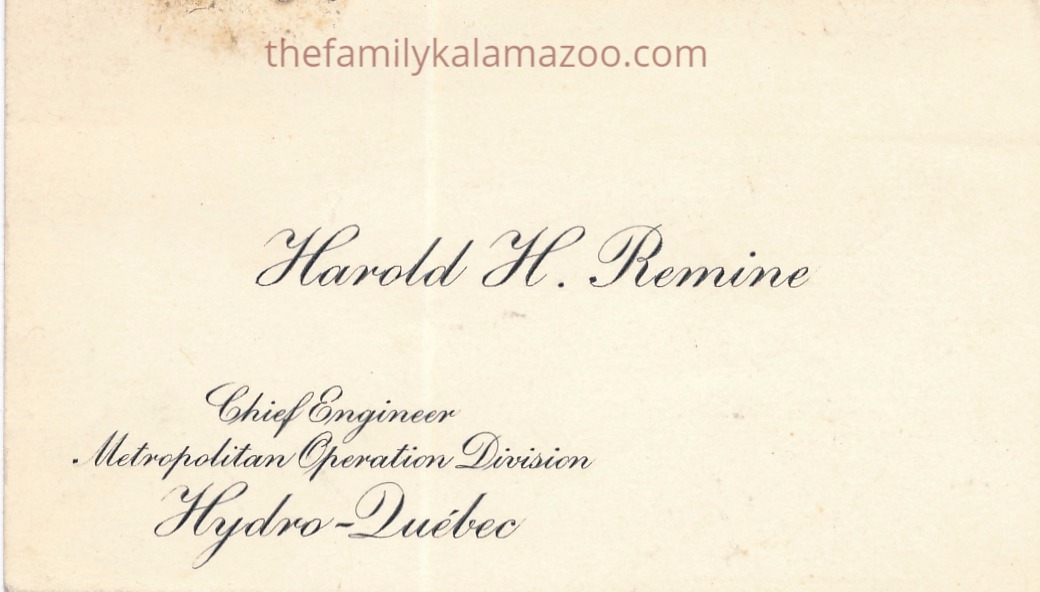
On August 17 I originally published this post and mentioned that I had only been able to verify that, by 1947, Harold Remine had attained at least the title of Assistant Chief Engineer of the Quebec Hydro Electrical Commission. I not been able to find information after that date about his career.  My family believed he was Chief Engineer, but without an international subscription to Ancestry.com, I felt stymied at finding more information.

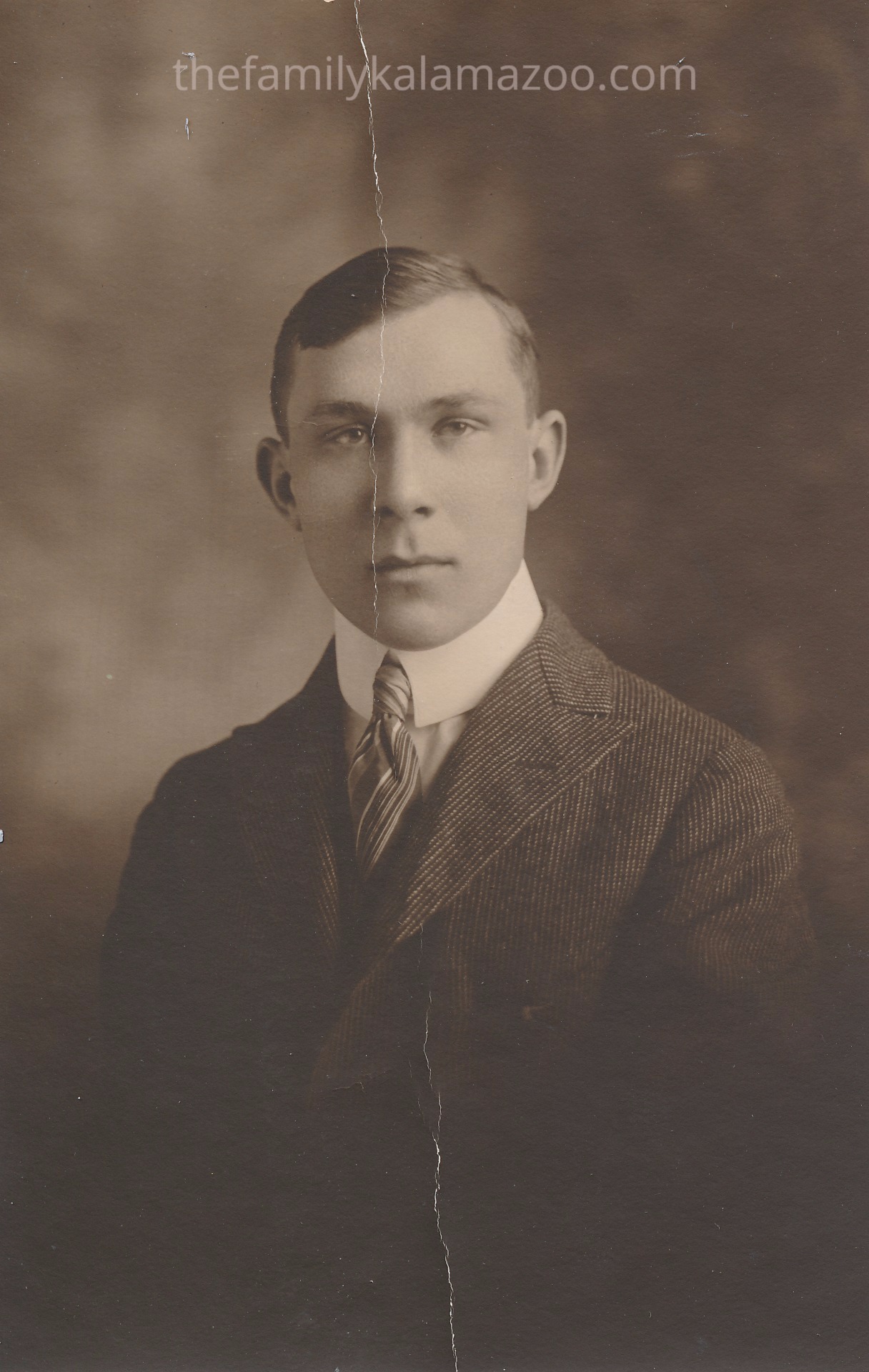
That is, I felt stymied until I applied some watermarks to some Remine family documents and discovered a little treasure of information. See below Harold’s photograph!

Harold Henry Remine
1897–1975

BIRTH 7 SEPTEMBER 1897 Kalamazoo City, Kalamazoo, Michigan

DEATH DECEMBER 1975 Montreal, Quebec, Canada

1st cousin 3x removed


Look at this little marvel of verification! Harold’s own business card.

What does that say? CHIEF ENGINEER METROPOLITAN OPERATION DIVISION HYDRO-QUEBEC. Never give up hope because sometimes this stuff just falls into your lap!

***


Now if I was willing to be extorted, I would expand my Ancestry account from U.S. to “international” and be able to do more Canadian searches. Alas, it has gotten so expensive!

Anybody else irritated about that price?


Read Full Post »

I have updated and am reposting this information about Therese Remine’s house in Detroit (new info in italics):

Harold Remine’s sister Therese lived a double life, you might say. For most of her life, and with homes in both cities, she switched off between Kalamazoo and Detroit. Therese worked as a teacher in Detroit. I found information in a 1930 city directory that Therese worked at Campbell School / Webster Hall (uncertain of this exact meaning, but there was a Campbell School and a Webster Hall). Then I was aided by my friend José who can found at his blog Enhanced News Archive. He discovered a 1957 city directory which gave important information about the house, but also mentioned that she worked as a teacher at Von Steuben School. I find it interesting that census reports give occupations and the industry the occupation is in, but not specifics of school names or company names. 

Although we usually visited her at her home in Kalamazoo (by the time I knew Therese, she was retired), I do remember traveling to Detroit, entering her home, and some of our time spent chatting with her. This is her house:

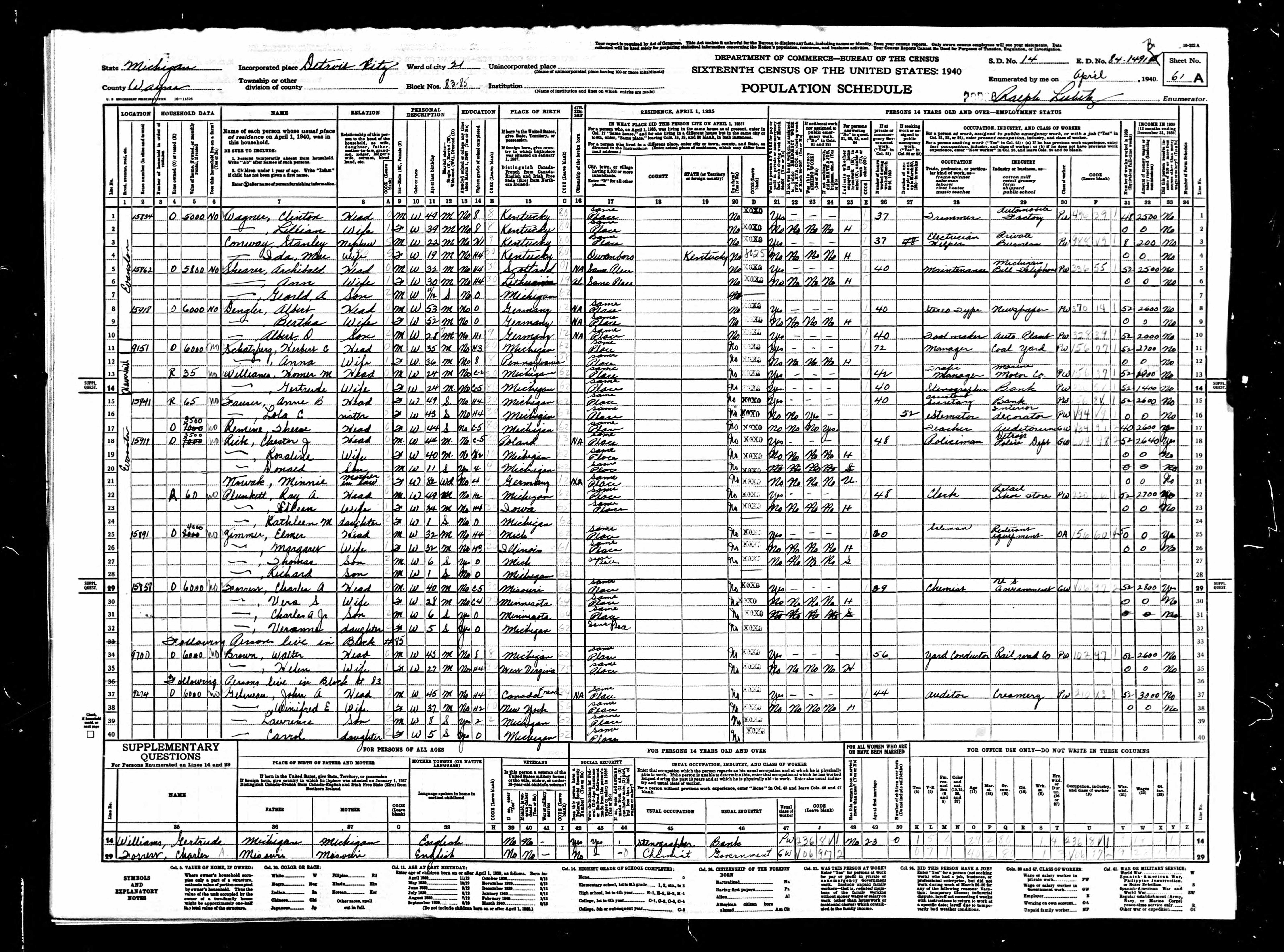
The house seems to be on Haverhill, although the cross street is not visible.  Doesn’t it look here as if the front door faces Haverhill? I checked out the 1940 census, and both Haverhill and Evanston residents are on the page with Therese. Her house number is not given, so I can’t be sure which street she was on. Any ideas on this census for Therese’s address? These questions are answered below!

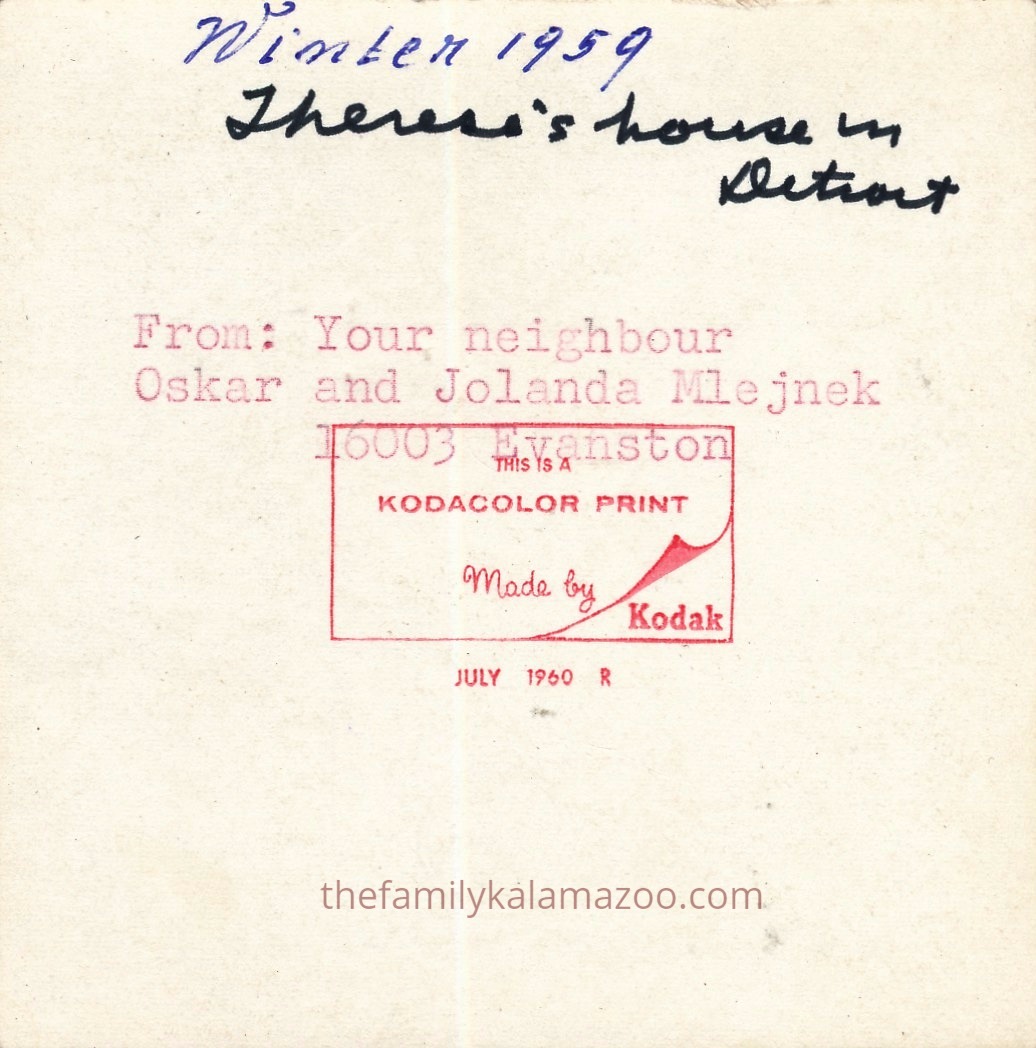
The back of the photo gives another clue to the location of Therese’s house.

The neighbor who took the photo kindly left his (and her) name and address. Oskar and Jolanda Mlejnek, 16003 Evanston. I love that the date was given, too: Winter 1959.

According to information I found about Oskar Mlejnek on Ancestry, he ended up moving to Grosse Pointe. These were beautiful houses on Evanston and Haverhill, straight out of 1930s and 40s movie “casting,” but the neighborhood changed over the years. According to what I see on Google maps many of the older houses are still there, but the vegetation is overgrown. It’s not even possible to see what 16003 Evanston looks like, although the upper level has been for sale, because the yard is so overgrown.

Where was Therese’s beautiful home?

I was able to pinpoint the location of Therese’s house, thanks to my outstanding blogger buddies: Karen MacArthur Grizzard, Amy, and José at Enhanced News Archive. Karen first noticed that on the 1940 census, the two women listed above Therese appeared to be lodgers who rented from Therese who clearly owned the house. This gave me the address for the house: 15941 Evanston. Amy confirmed that she also read it the same way Karen did. And José did more research where he found the 1957 city directory which did, in fact, verify that the house was located at that address.

From there, José located the correct address on the contemporary Google map. The house has been torn down, the yard is overgrown with vegetation, but as José point out to me, the other houses on the block are still there as he lined up the roof peaks from the old photo above with the new Google image.

Thanks to these smart and experienced researchers, I now know the address of Therese’s house and that it no longer exists, although the other houses do.

Read Full Post »

A hundred years ago it seems to have been commonplace to have postcards made from personal photos. I found this example of an “occasional postcard,” meaning it was made on the occasion of Harold Remine sitting on the moon.

The two men with Harold are his brother-in-law Frank Tazelaar on the left and his father Richard Remine on the right (the taller man).

Here is what it says on the back:

The postcard is addressed to Harold’s sister, Therese Remine or Genevieve Remine Tazelaar. He was the youngest of three children, the only boy, and Therese was the youngest girl–six years older than Harold. I think it might have been Therese. Apparently, at this young age, Harold didn’t believe in basic punctuation, such as periods and commas–or know how to spell “rode”–(and you thought only kids today are lazy), although he went on to graduate from the University of Michigan and become the Chief Engineer of the Quebec Hydro Electrical Commission.

Well sister how do you like the picture we got this taken on Burdick Street after leaving you at the train papas broke one plate so we had to pose twice before we could get a good one we told ma we had road out to Otsego and back on the moon isn’t that a _____ for you life ___ me. YHE Harold Remine

Can you read that last line? I can’t quite make it out. Also, what does YHE mean? I tried Googling it, but came up empty-handed. I assume the Y means Your or Yours. What do you think?

When he refers to Papa breaking a plate, he means a glass plate or negative of the image.

Do you think Harold is about 14 or 15 here? If so, that would make this photo from about 1911-1912. Genevieve and Frank Tazelaar were married in 1906, so the timing on that is correct, as well. Harold seems big, but he could even be a bit younger, I suppo

Harold Henry Remine

1897–1975

BIRTH 7 SEPTEMBER 1897 Kalamazoo City, Kalamazoo, Michigan

DEATH DECEMBER 1975 Montreal, Quebec, Canada

1st cousin 3x removed


Read Full Post »

My great-grandmother, Margarethe Wendel Klein, born in 1869 in Budesheim, Hessen, Germany. She died in 1932 in Elmhurst, Illinois.

Is there a name for this sort of hat? Would you call this a suit? I’m not sure about the year, but I guess it to be in the 1920s.

I am going to take a little blogging break to recharge the brain batteries.

Read Full Post »

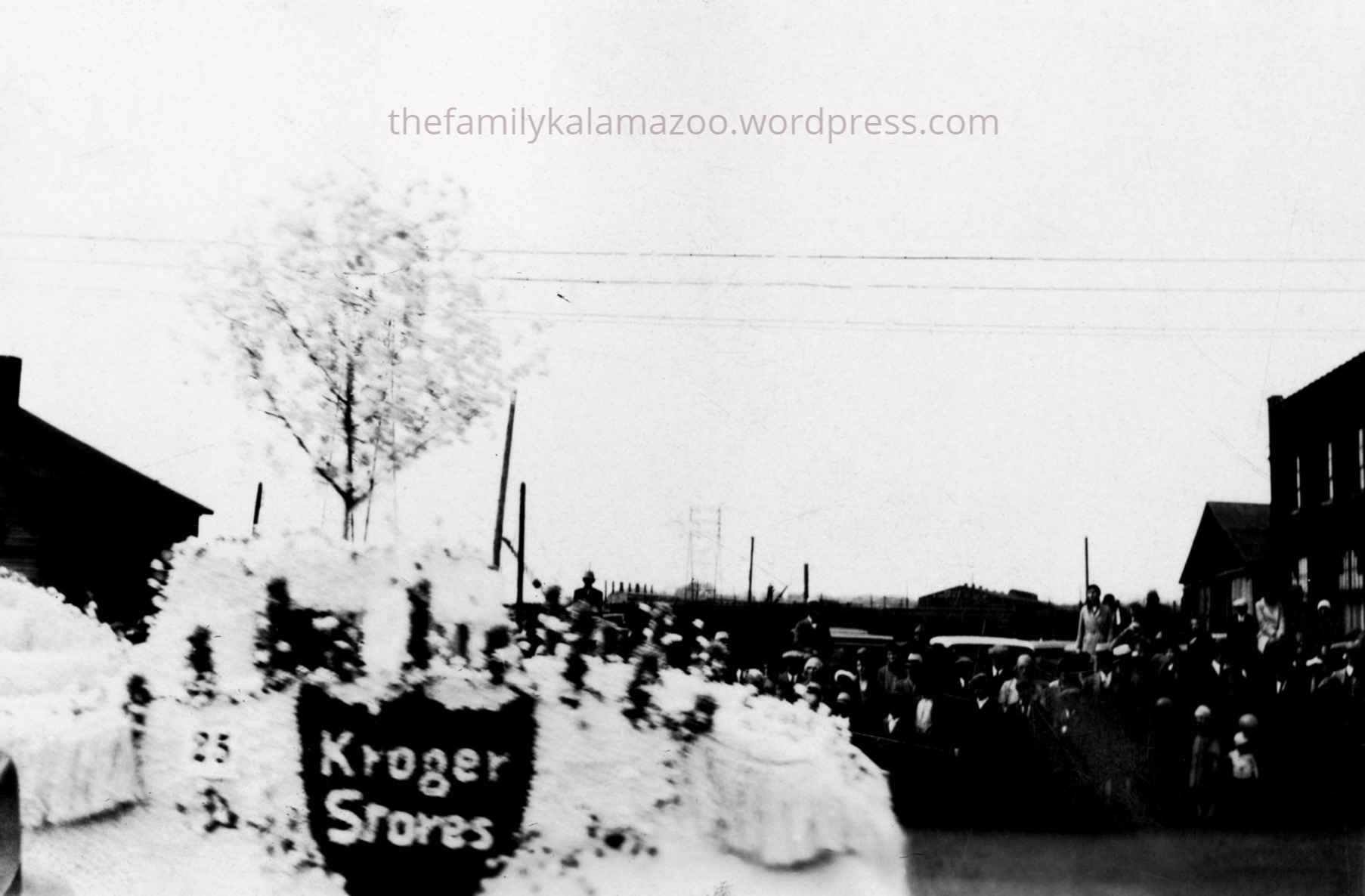
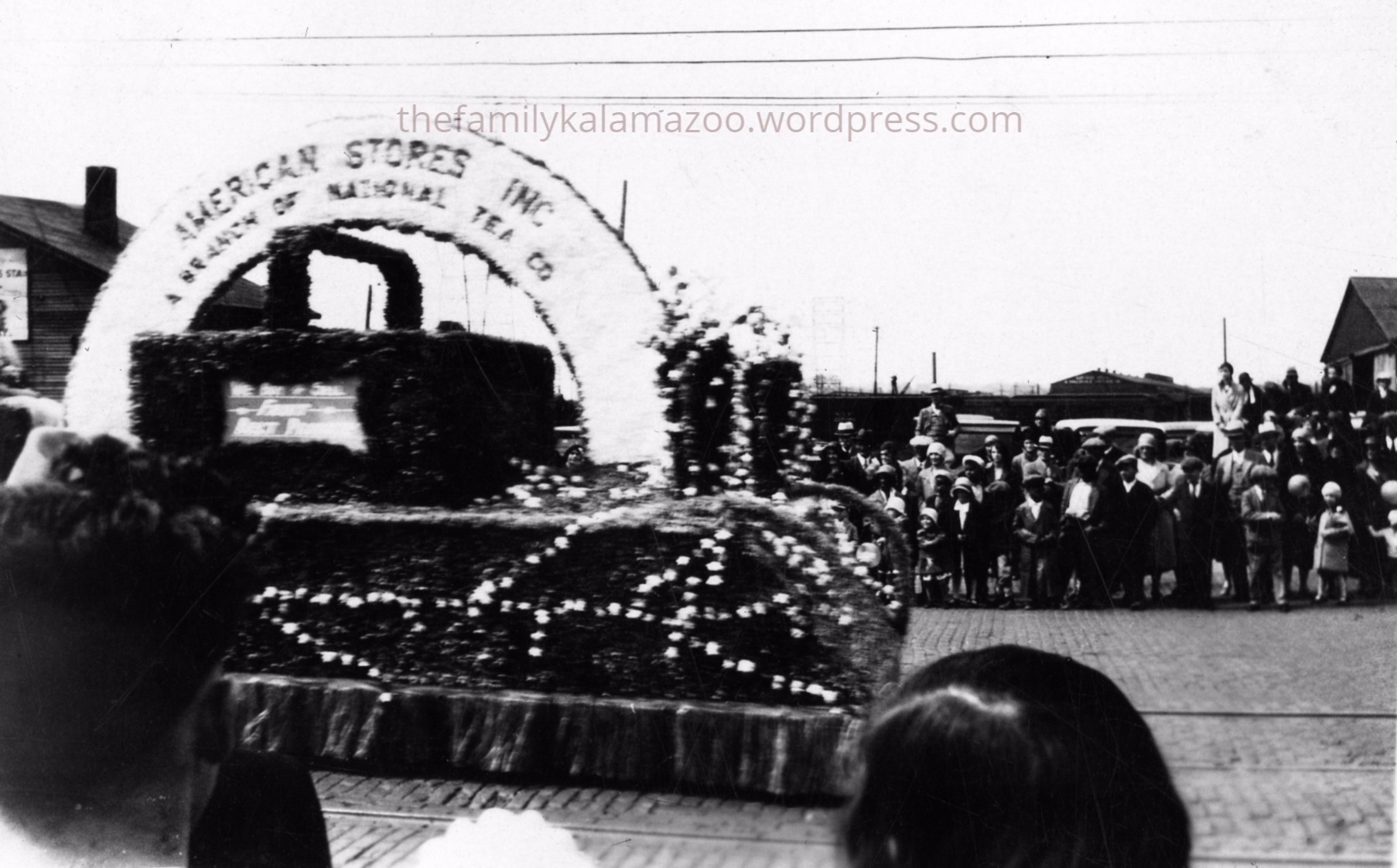
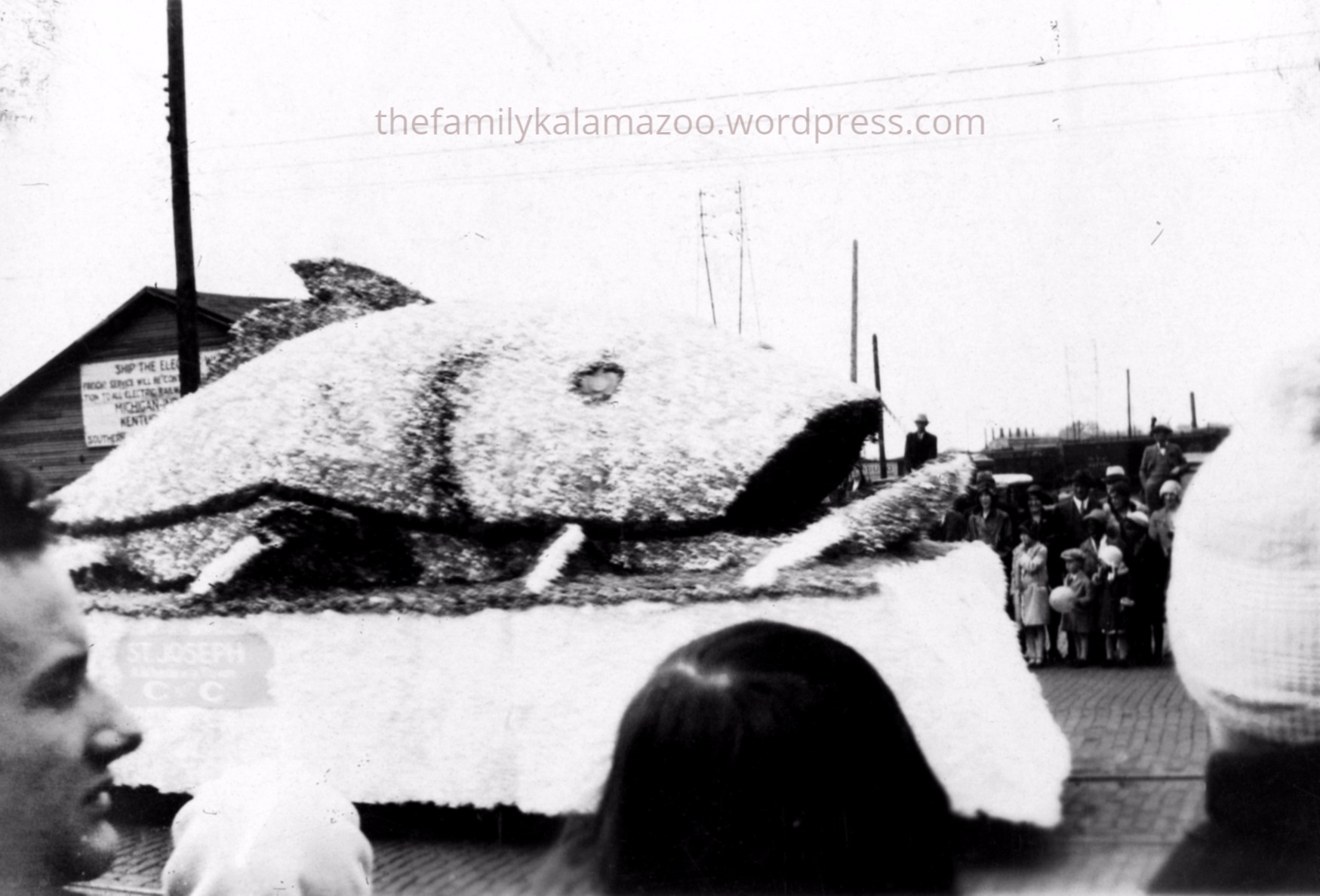
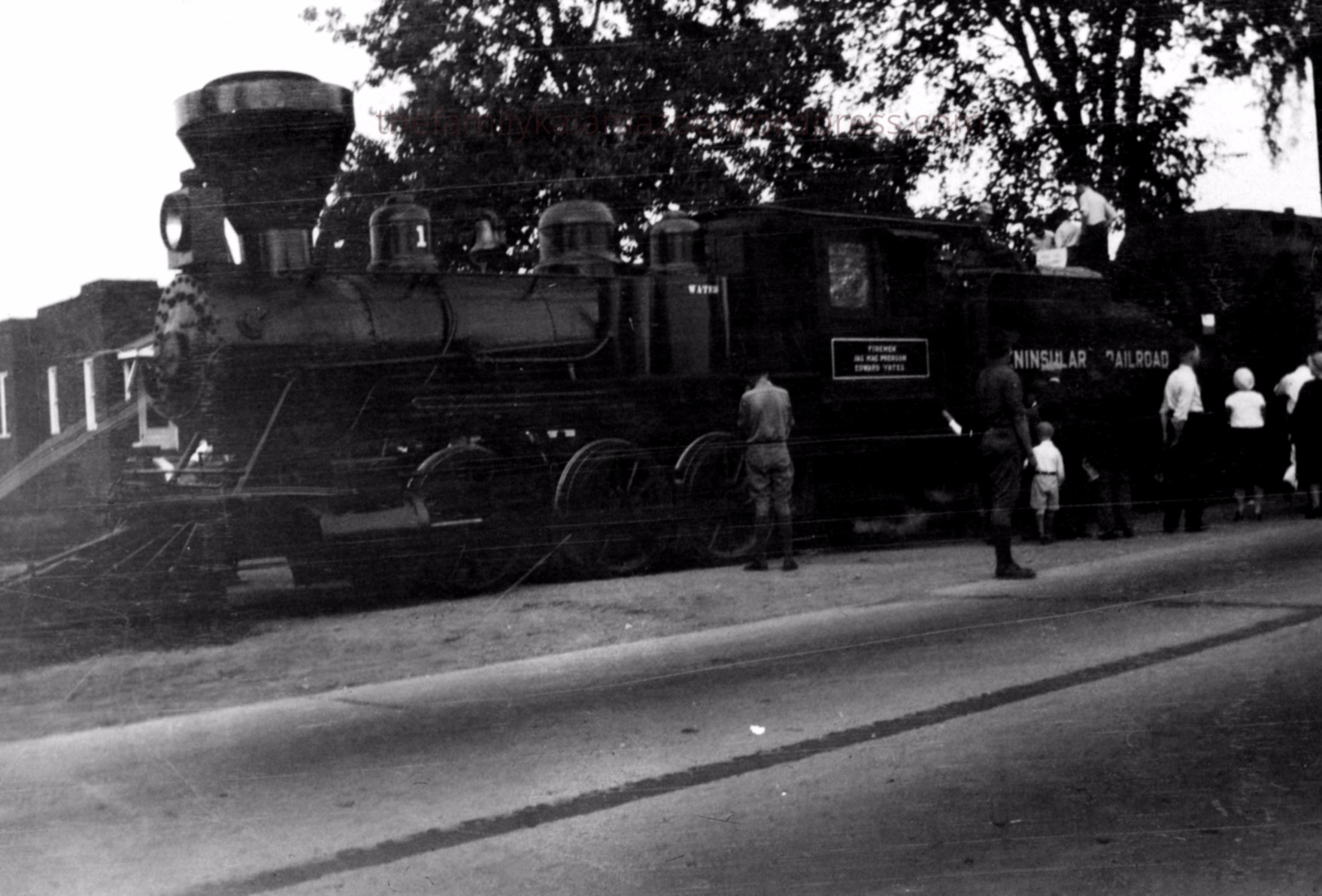
My grandfather, Adrian Zuidweg, had an album of photos which included those from a parade in 1931. It seems most likely that the parade took place in Kalamazoo, Michigan–probably down Burdick Street. But I need help identifying the buildings to know for sure. Many of the business names that are readable seem pretty “generic.” These names include Montgomery Ward, Ross Carrier, Kroger Stores, and Grand Hotel.

I know the date because of this float, but I don’t understand the significance of the “centennial” aspect of the design.

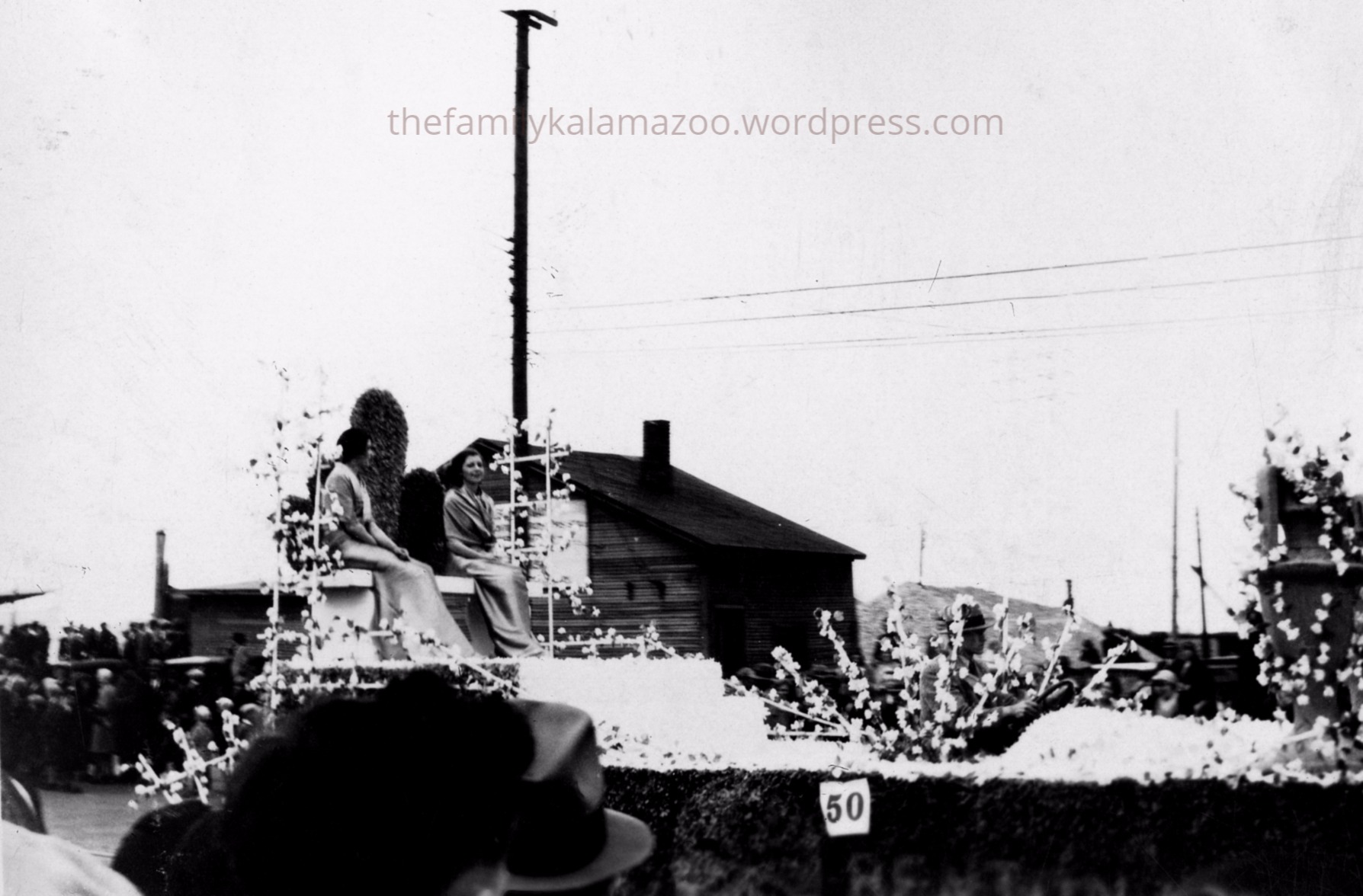
The Light float is the last photograph in the album. Here are the others in order of placement. If you can find any signs that this is Kalamazoo–or elsewhere–please let me know.


It seems odd that there aren’t any clues in these photos that indicate the “local” setting of the parade. There are quite a few ladies of the court. Kalamazoo is home to Western Michigan University and Kalamazoo College, but I don’t see any references to the schools, so maybe a check of 1930-31 and a 1931-32 yearbooks would rule out the colleges as participants in the parade.

A clue that I can’t interpret: Benton Harbor Exchange. This does seem to indicate that the parade was in Michigan, but was it in Benton Harbor or St. Joseph or Kalamazoo? And what exactly was the Benton Harbor Exchange?

Another possible clue: see that tall building in the background of the “downtown” photos? If that building can be identified it might help to lock in the city.

Just before the parade photos is one photo of Grandpa with Grandma when they were boyfriend and girlfriend–before they got married in 1932. Sorry about the watermark in the wrong place. I added watermarks en masse for these photos.

Read Full Post »

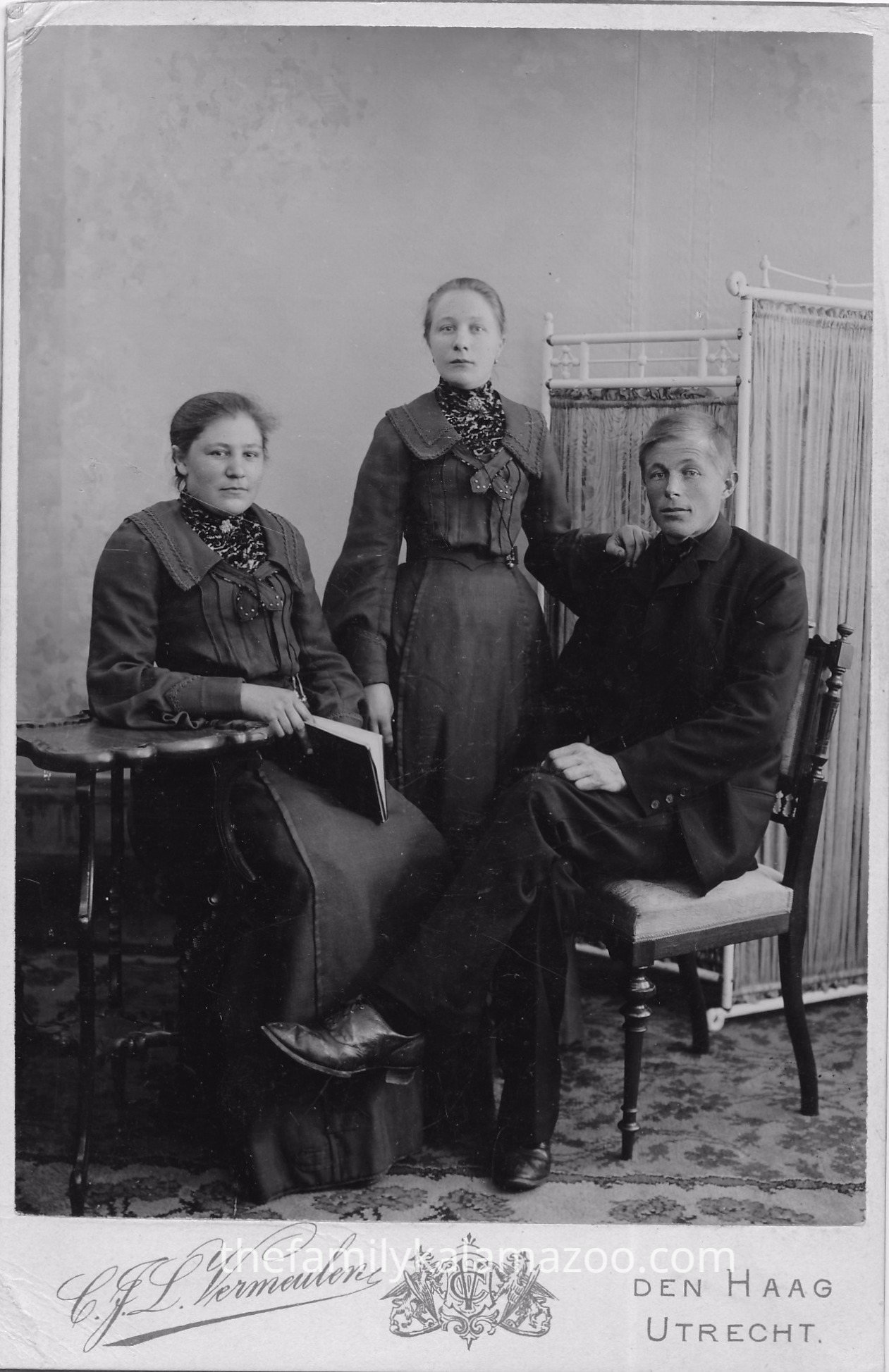
Last year I posted two unidentified photographs that I wished to identify. The photographer was based in the Dutch towns of Utrecht and Den Haag (The Hague).  Both photographs seemed to have the same props, so it was likely that they were taken around the same time at the same photography studio.

But they sure looked different. One looked as if the subject could have lived three hundred years ago. The other looked more turn-of-the-century.

Thanks to a Dutch reader, Hubert Theuns, I learned much information about the photos. In particular, he discovered that the older style outfit was the traditional costume of Cadzand, a small town in the Dutch province of Zeeland. In 2007 Cadzand had about 800 inhabitants. He told me that the photographer, Cornelis Johannes Lodewicus Vermeulen, was born in Utrecht 18.11.1861 and died in Hilversum 05.01.1936. Photographs from the period 1886-1915 can be found athttps://rkd.nl/nl/explore/portraits#query=cjl+vermeulen&start=0&filters%5Bcollectienaam%5D%5B%5D=RKD%20%28Collectie%20Iconografisch%20Bureau%29

Here are the two photos–first the more “modern” looking one and then the “traditional costume” photo.


Look at this amazing costume. It looks so Puritan to me.


Here are the backs of the photos:


Note that they both have the 3 digit telephone numbers. According to the research of Hubert Theuns:

The telephone was introduced at The Hague on July 1, 1883, and at Utrecht in February 1883. There used to be local telephone directories, but I have not (yet) found any on the internet. National telephone directories were published as from 1901. The collection of national telephone directories from 1901 till 1950 are being digitalised by the dutch national library, but unfortunately this process has found delays. Only the national directory of 1915 is available on the internet, and shows that the photographer in 1915 in Utrecht had the same three digit number as mentioned on the photograph, but that his number in The Hague already had four digits.

Hubert narrowed down the time period to pre WWI.

Now he has been able to get these photos published in a newsletter of the city of Goes, as well as its website! Check it out: IDENTIFY THESE PHOTOS.

Eventually these photos WILL be identified!  I am so grateful to Hubert. He is a reminder that genealogy is a collaboration of many people. It’s not a a selfish interest.

Thank you to everyone who has helped me with my research! I think of you all with fondness!

Read Full Post »

OK, we’re going to try this again. You might have seen my post last week about this–which I subsequently deleted when it became obvious I’d missed a clue.

My great-great-grandfather’s sister Jennie DeKorn Culver (divorced) and her two adult daughters moved from Kalamazoo to Seattle at some point. All three women died there. Only Lela seems to have married–at the age of 63.

Two weeks ago, I posted the photo that gives the exact date the Culvers moved to Seattle. Here it is again with the date of August 20, 1918 written on it. One of the Culver daughters is in this photo.


I also posted a photo of all three Culver women–Aunt Jennie DeKorn Culver and her daughter Rhea and Lela–with some identified travelers or perhaps people seeing them off on their travels.

After much searching I did find one newspaper “jotting” that mentions the move. It was posted in the Kalamazoo Gazette on August 13, 1918.


Of COURSE, the mystery deepens. Why does it mention only Rhea and not her mother or sister? I can’t believe they wouldn’t be mentioned if they did, in fact, move at the same time.Maybe Rhea went with the other people in the photo? If so, when did Jennie and Lela move?

I will say that Jennie does look as if she is dressed for travel (she is the 3rd from the left). Do you agree with me? The other daughter, the one in the striped silk could be dressed for travel–or not.

In 1918, Rhea (born 1890) was 28 years old. She was single and a grown woman. I wonder if she went with any of the Culver family or she went with a religious group. Lela was also single and 30 that year. Jennie was 61. I will be 61 this summer. I can’t imagine making that move with my two daughters if I didn’t know anybody else in Seattle.

Also, this new information sheds light on that photo of the young Culver woman with the older woman (above). Maybe that is Rhea and she IS going with that woman to Seattle.

This is where it gets even more confusing.

In the 1920 census, Rhea, stenographer, is living in Kalamazoo with a cousin and the cousin’s husband, Charles Pierce, and daughter! The cousin is Cora DeSmit Pierce, the daughter of Jennie’s sister Mary. WHAT? So Rhea left for Seattle on her own and came back to Kalamazoo? Homesick?

Cora DeSmit Pierce

But wait.

Also in the 1920 census, Jennie and Lela (teacher) were living in Seattle! So Rhea moved to Seattle, according to the paper. It doesn’t say she joined her family there. It sounds as if she is the first Culver to move to Seattle. But how did the others end up in Seattle and Rhea NOT by 1920?

Can this get any more confusing? I will have to study the photo album more to see if I can find any other clues in there. I would like to examine yearly city directories in both Seattle and Kalamazoo, but even if I could, it still might not divulge what happened.

What do you think? Did Rhea move first and the rest of her family come later? Any ideas on where to research next?

Related articles

Read Full Post »

« Newer Posts - Older Posts »