Feeds:
Posts
Comments

Archive for the ‘Adrian Zuidweg’ Category

I haven’t written much about my grandfather’s paternal grandparents. I wrote about his aunt’s family, the Van Lieres, but we know very little about the parents of Grandpa’s father and his aunt.

His paternal grandmother was Jennegien (Jennie) Bomhoff. She was born 5 March, 1838 in Zwolle, Overjissel, the Netherlands. She passed away on 16 December 1924 in Kalamazoo.

She married Grandpa’s grandfather, Johannes (John)  Zuidweg, in Goes, the Netherlands on 4 November 1869, when she was 31 years old and working as a maid.

Grandpa told me that she wore many layers of skirts and they all had pockets in them.  Can you tell below that she was wearing layers of clothing? What do you think she carried in those pockets? He did tell me that he saw her pull an apple out from an under skirt.

The following photos were identified to me as Jennie.  How old do you think she is in each one?


What style bonnet is she wearing? And how many decades did she wear that same bonnet?!


In the next photograph, she is the woman on the side, in the dark dress.

Here is some research Yvette Hoitink provided about this family:

In 1869, Jennegien married Johannes Zuijdweg in Goes, Zeeland, about 150 miles away. That is an uncommonly large distance for somebody to travel in the 19th century, especially for an unmarried woman from the working class. Further investigation showed that her brother Albert Bomhoff was married in Goes in 1867. It must be through this connection that Jennegien moved to Goes, where she worked as a maid prior to her marriage. A rich and easy to retrieve source of information for ancestors in the 19th century are the marriage supplements: the documents a bride and groom had to submit when they got married. Unfortunately, the Goes marriage supplements for the period 1811-1877 got lost in 1877. Since several marriages on the Zuidweg side took place in Goes, these records could not be obtained. Digital images of the marriage supplements of Lucas Bomhof and Jeuntien Dansser, the parents of Jennegien Bomhof, were retrieved from Familysearch.org. Lucas Bomhof was born as Nijentap, but his family took the name Bomhof around 1812. In the province of Overijssel, it was common to be named after the farm you lived on. It was only with the French occupation that people were obliged to take a hereditary surname. Nijentap may be the name of the farm that the family lived at.


Read Full Post »

In a previous post called What Went On at Ramona Palace, the photograph that was marked Ramona that actually was the Summer Home Place sparked the question if the Ramona pavilion had windows on the lake side. By the sixties, when I saw it, the lake windows either didn’t exist or had been blocked off behind the bandstand.

The other day my father found a postcard of the Ramona pavilion–a view from the lake. Clearly, the structure was built with windows facing the lake.


On the left side of this photograph are the windows at the end of the building that face the lake. The bandstand was just inside those windows. And see the steps leading down to the lake? They would lead you right into the . . . bottomless drop-off! That was such a scary part of the lake by the sixties! I imagined all kinds of underwater beasts living in that mysterious section of the lake.

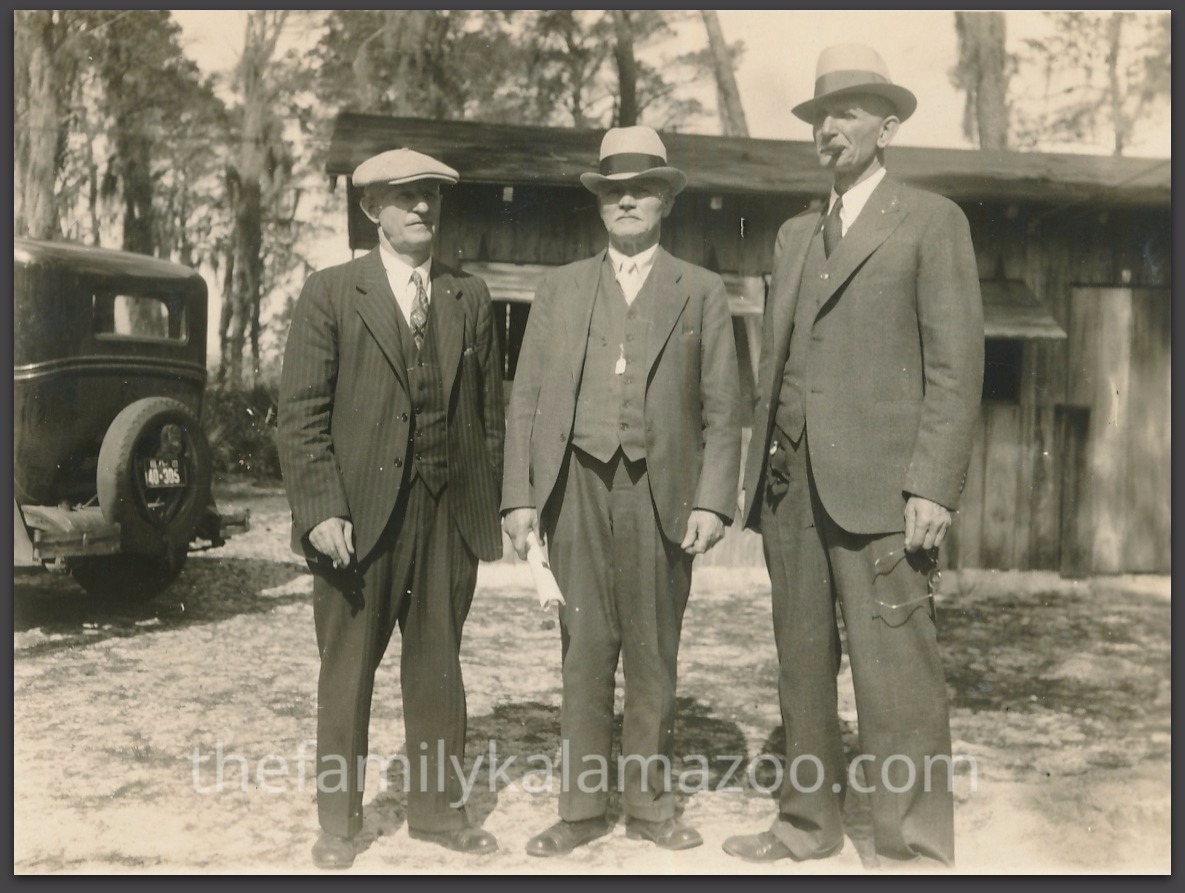
The property was originally owned by Henry and Carrie (Paak) Waruf. Carrie was my great-great-grandmother’s sister.  What do you think is the material of his hat in this photo?

This is a photograph marked “Hank Waruf (cigar in mouth). He’s definitely much older in this photo than the one above.

More posts about Ramona:

The Park with a Literary Name
A Re-telling of Ramona: The Park with a Literary Name
What Went On at Ramona Palace


Read Full Post »

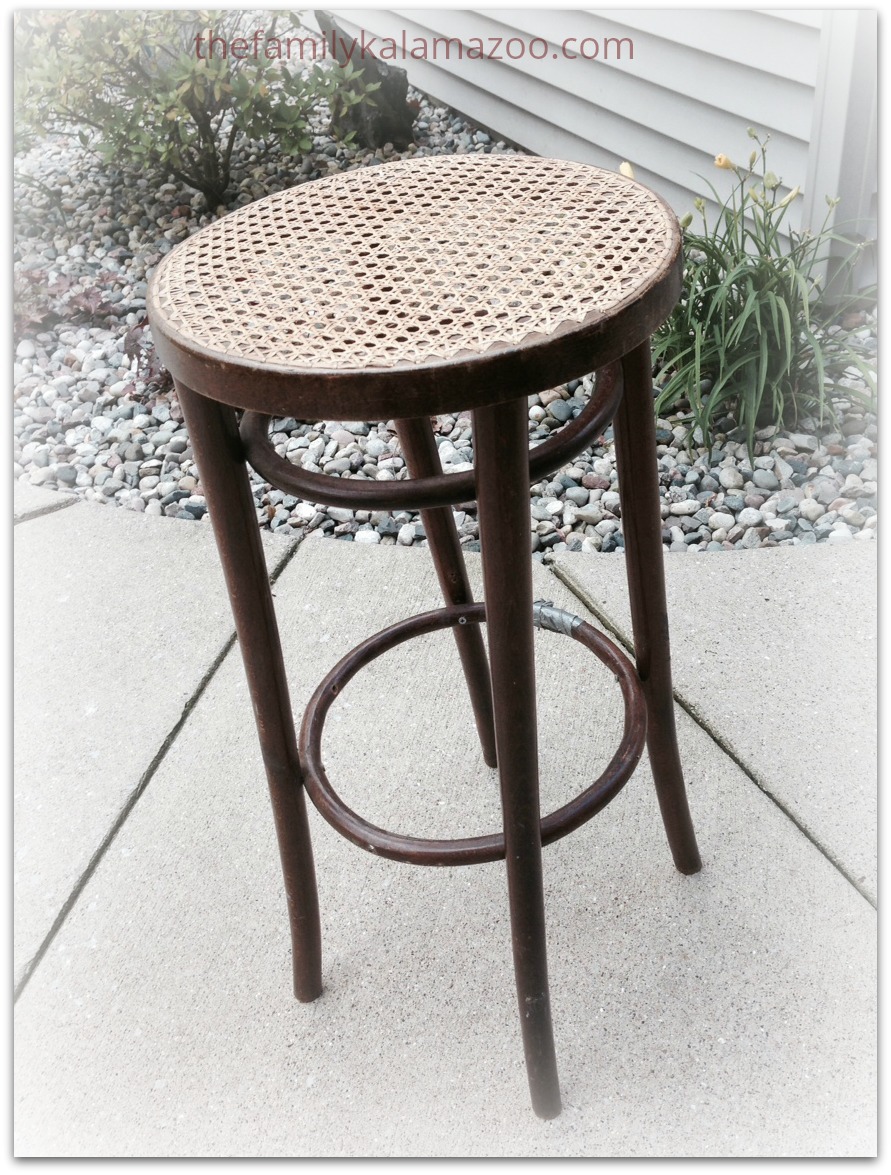
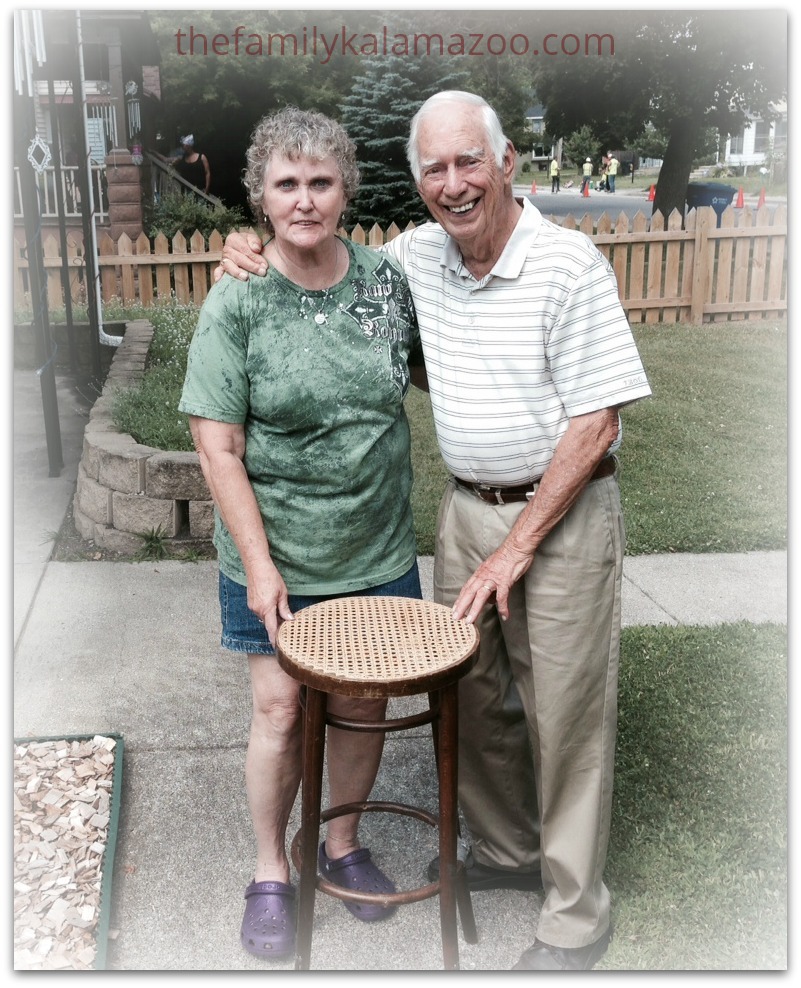
When my father ran Ramona Park, he used to sit on a ticket taker stool to admit dance patrons. He still had the stool until recently.


The other day, he gave it to Paula Taylor, who is writing a history of Ramona and Long Lake.


Update on why the Ramona/Long Lake photos say Vicksburg:

Maggie Snyder for Vicksburg Historical Society says this:

Vicksburg never included Ramona Park, which was at Long Lake. However, at that time Portage as a town was much smaller than Vicksburg, so it would have been the closest “big” town. Also, the Grand Rapids & Indiana Railroad had a flag stop at Ramona Park, and their closest depot was in Vicksburg.

On another note: here are a couple of online articles about Long Lake:

Long Lake: from sinking houses to sea serpents

Portage Couple Has Spent a Lifetime on Long Lake


More posts about Ramona:

The Park with a Literary Name
A Re-telling of Ramona: The Park with a Literary Name


Read Full Post »

When I was a kid my father used to bring me (and sometimes my friend, Jill, a reader of this blog) to Ramona Park. We explored and played while he worked–maintaining and refurbishing the pavilion, the grounds, and the shore of Long Lake that ran along the property.

I’ve written before about this park, located in Portage, Michigan here:

The Park with a Literary Name
A Re-telling of Ramona: The Park with a Literary Name

I remember trying to imagine what the pavilion, which was called Ramona Palace, was like back in its heyday, when people came to listen to live music and dance in the ballroom.

Notice that this old photograph locates the park in Vicksburg, but it is now Portage, Michigan. This is the ballroom as I remember it–big and empty.  The lake was just outside those windows.

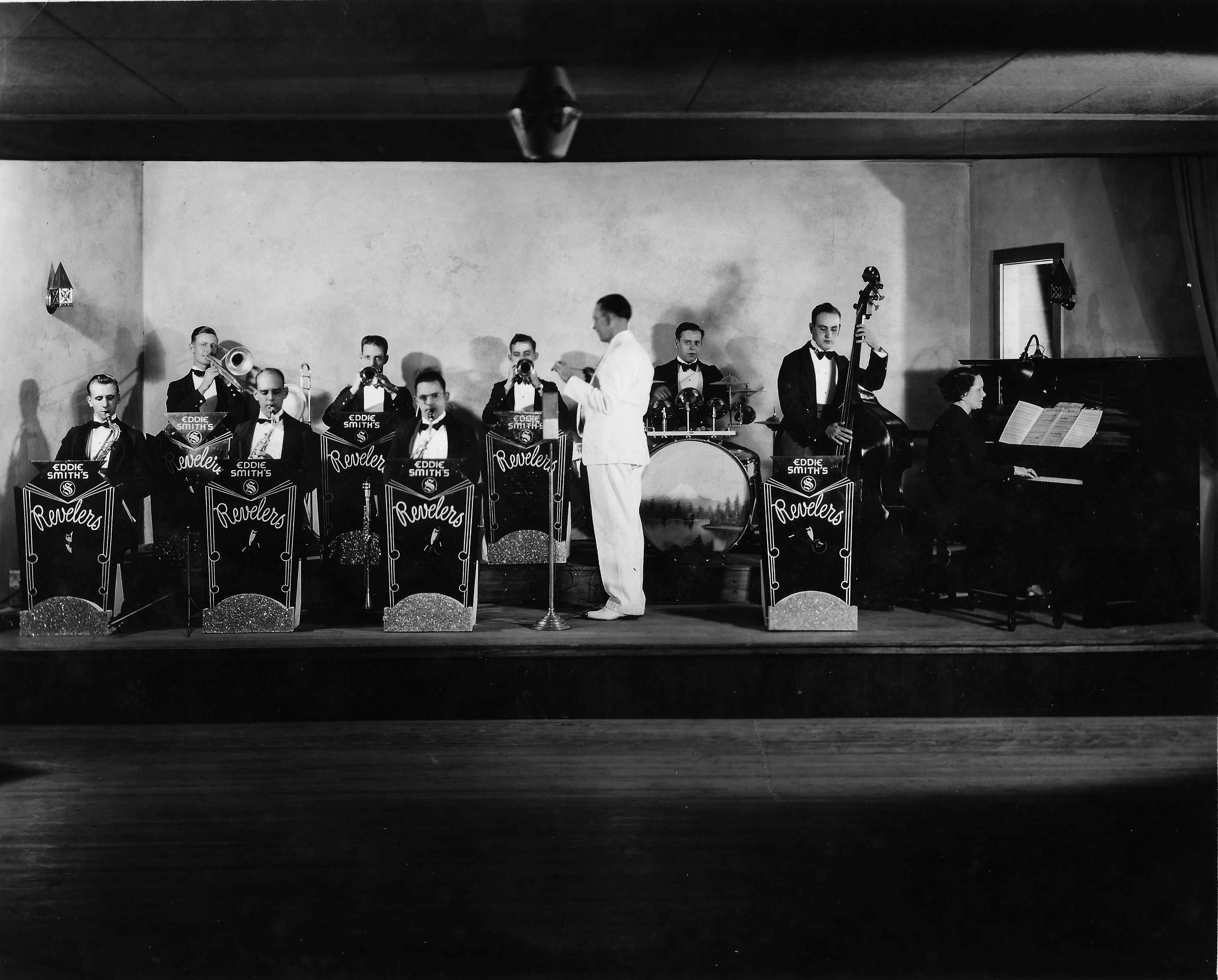
A while back I was contacted by Shawna (Smith) Raymond about those days. Her grandfather, Eddie Smith, and his Big Band used to play at Ramona Palace.

Eddie Smith and the Revelers courtesy of Shawna (Smith) Raymond

Eddie Smith and the Revelers
courtesy of Shawna (Smith) Raymond

Shawna passed on a story from her aunt about those days.

When Mom, whose name was Margene, would walk into the Ramona Palace ballroom where Dad was playing, he’d always stop whatever song they were playing and play ‘My Little Margie.’

Shawna’s aunt has a framed collage of the sheet music to “My Little Margie” and Shawna’s grandfather’s conducting baton. According to Wikipedia:

Margie“, also known as “My Little Margie“, is a 1920 popular song composed in collaboration by vaudeville performer and pianist Con Conrad and ragtime pianist J. Russel Robinson, a member of the Original Dixieland Jazz Band. Lyrics were written by Benny Davis, a vaudeville performer and songwriter. The song was introduced by the Original Dixieland Jazz Band in 1920 as Victor 78, 18717-A, in a medley paired with “Singin’ the Blues”. The B side was “Palesteena”.The Rega Dance Orchestra recorded the song in October, 1920 for Okeh Records, 4211. The ODJB recorded their instrumental version on December 1, 1920. The song was published in 1920 and was named after the five-year-old daughter of singer and songwriter Eddie Cantor. Cantor is credited with popularizing the song with his 1921 recording that stayed at the top of the pop charts for five weeks.

Here is a Benny Goodman version from 1938:


Read Full Post »

Cora Wilhelmina DeKorn Zuidweg and her son Adrian Zuidweg Kalamazoo, Michigan circa 1910

Cora Wilhelmina DeKorn Zuidweg and her son Adrian Zuidweg
Kalamazoo, Michigan
circa 1910

Read Full Post »

My grandmother, Lucille Edna Mulder (Zuidweg), was born April 17, 1912. If she hadn’t passed away in 2000, she would be 102 today. I miss her every day.

Grandma holding me

Grandma holding me 1955

Last year I posted about Grandma’s high school graduation scrapbook. Here is the link. There are a lot of photos in that book; in most of them Grandma is hanging out with her friends and classmates.

Below, Grandma is in all but the lower right photo. One of the girls is her best friend, Blanche Stauffer. Grandma and Blanche are in the upper right photo together–that’s Grandma in front. Blanche has the straight dark bangs. In the lower left Grandma is with another friend.


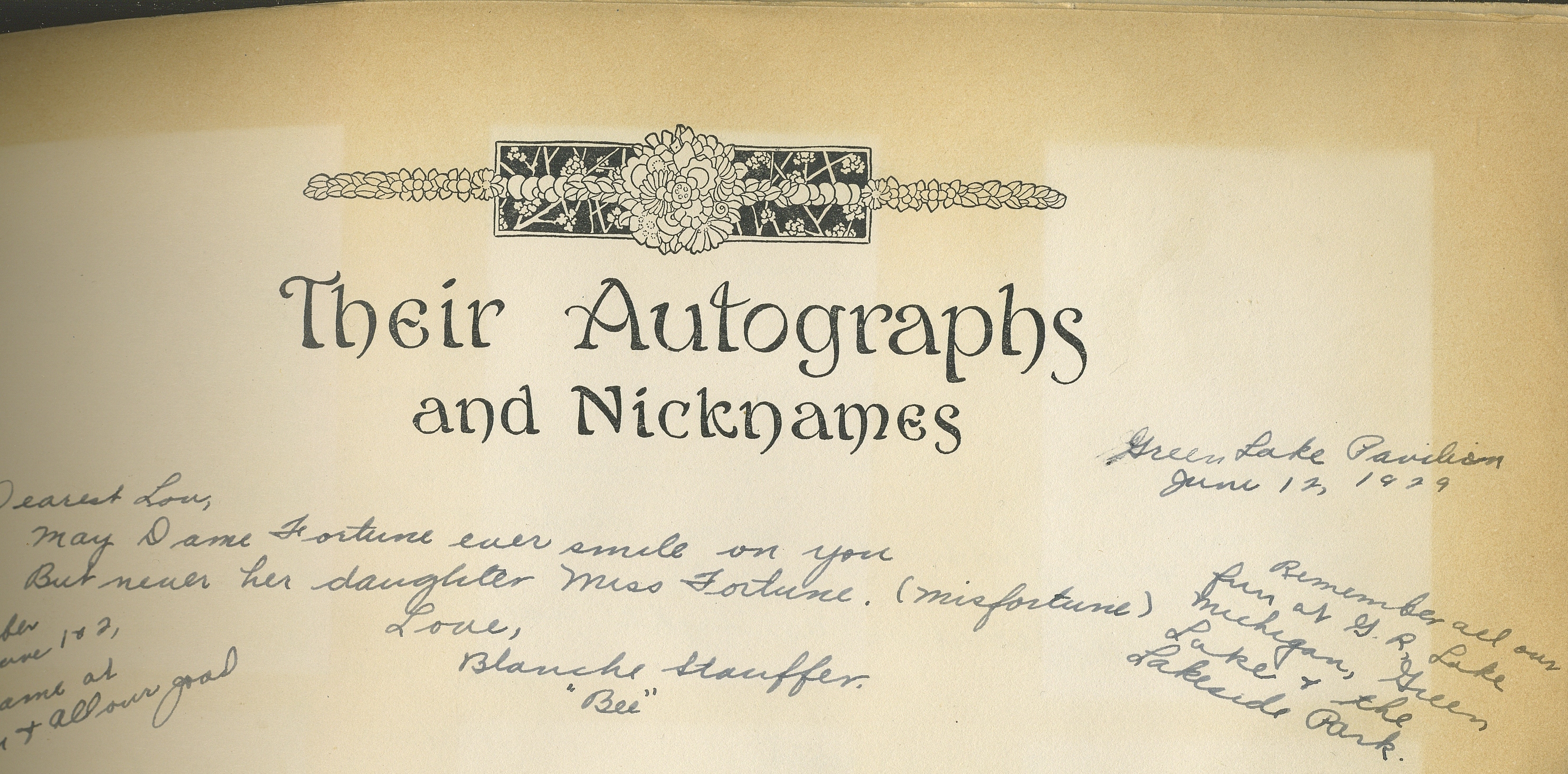
The scrapbook has an autograph page, and the words from Blanche are front and center:

Grandma and I have a lot in common. One thing is that a best friend was very important to us growing up. I looked up Blanche on Ancestry, and I was amazed to learn that she, like my grandmother, was the second child in the family. Blanche’s older sister was one year older. That was the same with Grandma: her older sister Dorothy was one year older.

Blanche was class valedictorian, Dorothy was salutatorian, and Grandma–with the 3rd highest GPA–was class historian. I read a list of Grandma’s classmates, and Blanche’s older sister was not in their class. At least Blanche didn’t have the sisterly competition that Grandma had to put up with ;).

Writing is another commonality between Grandma and me. When she was elderly and had just gotten sprung from a very negative experience with a rehabilitation nursing center, she made me promise I would never give up writing. I promised her, and I have kept my word. I remember Grandma submitting funny stories and occasionally getting them published when I was very young.

Recently, my mother told me an anecdote that made me realize that Grandma and I share another interest. When I was little and my mother worked full-time, Grandma babysat me. We sang Ethel Merman songs like “Anything You Can Do.”  I could always manage to sing louder and higher than Grandma.

Any note you can reach
I can go higher.
I can sing anything
Higher than you.
No, you can’t. (High)
Yes, I can. (Higher) No, you can’t. (Higher)
Yes, I CAN! (Highest)

What I didn’t realize is that when my mother and her siblings were little, my grandmother (who was always with my grandfather, to my memory) went to New York City with her sister Dorothy. They saw Ethel Merman in Annie Get Your Gun.  She actually saw this song performed live by Merman. My mother says it was one of the highlights of her life, and I believe it because I remember this music around Grandma often when it was “just us.”  I still love musicals and so does my daughter, who performs in professional productions.

Grandma and I shared other songs, too. She used to hold me on her lap while we sang “She’ll Be Coming Around the Mountain” and “This Old Man (Knick Knack Paddy Whack).” My memories of my grandmother are treasured heirlooms.

Happy birthday, Grandma.

Read Full Post »

Answer to my title question: the townfolk got their meat from a butcher!

Occasionally, in my collection, I find a photograph of someone who isn’t family. Quite some time ago, I posted a photograph my family saved of the local saloon keeper, the famous Dutch Arnold. I’m pretty sure there is a story there that didn’t get passed on–at least not to me.

I also have a photograph of the local butcher, Tom Richmond, and his family.

Tom Richmond and family Butcher and slaughterhouse Balch Street, Kalamazoo circa 1900

Tom Richmond and family
Butcher and slaughterhouse
Burdick and Balch area, Kalamazoo circa 1900

Apparently, he had a slaughterhouse and butcher shop close to where my relatives lived. Grandpa told me it was on Balch Street. But maybe it was just close to Balch Street.

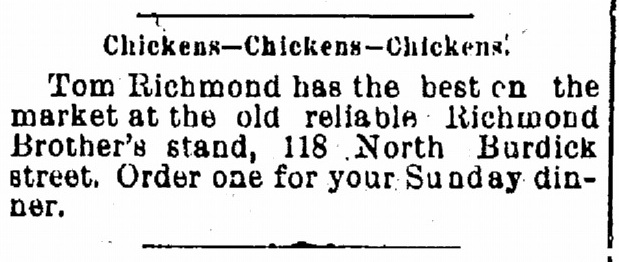
I did find one of Tom’s ads in the Kalamazoo Gazette. It appeared April 9, 1898.

Kalamazoo Gazette ad April 9, 1898

Kalamazoo Gazette ad
April 9, 1898

Notice that this ad gives a North Burdick address. My relatives’ homes and businesses were mainly congregated near the intersection of Burdick and Balch in Kalamazoo. Maybe as a small boy, Grandpa thought the shop was on Balch, but it was on Burdick. Or maybe he remembered incorrectly (unlikely–his memory was amazing). Or maybe the shop moved.

Someday when I have all the time in the world ;), I’ll try to put together a map of the area with my relatives’ homes and businesses, as well as the surrounding ones. Create a little village on paper, in a way. At that point, I’ll have to use the City Directories to figure out precisely where Tom Richmond’s butcher shop was. What makes it hard, though, is that the address numbers have been changed since that time.

This is what I don’t really understand: what kind of custom would be responsible for my family winding up with portraits of neighbors, friends, or merchants they frequented? I am entertaining the thought that maybe somebody’s somebody married into this family. I’ll have to keep searching.

If your family has old photographs, do they have portraits of non-family in the collection?

Read Full Post »

When I was a little girl, my aunt was in college and still lived at home. Her dog, the family dog, was an English Springer Spaniel named Sandy. That dog had bitten me near the eye when I was a baby so everybody was always warning me not to go near the dog and to be careful of the dog. In kindergarten, my grandmother babysat me and I had to negotiate my way through the house with Sandy. I tried to make peace with him by making him a meat pie (with Grandma’s help) for his birthday.

What I didn’t realize was that dogs had been part of the family for generations.

Grandpa shared these photos and told me which dog was which. They belonged to Richard DeKorn, and Grandpa and his parents lived for some time with Richard (Grandpa’s grandfather). It means that they lived well over 100 years ago. I’m sorry the quality of the following photos isn’t better.

TOM AND CARLO DEKORN

TOM AND CARLO DEKORN

BOBBY DEKORN

BOBBY DEKORN

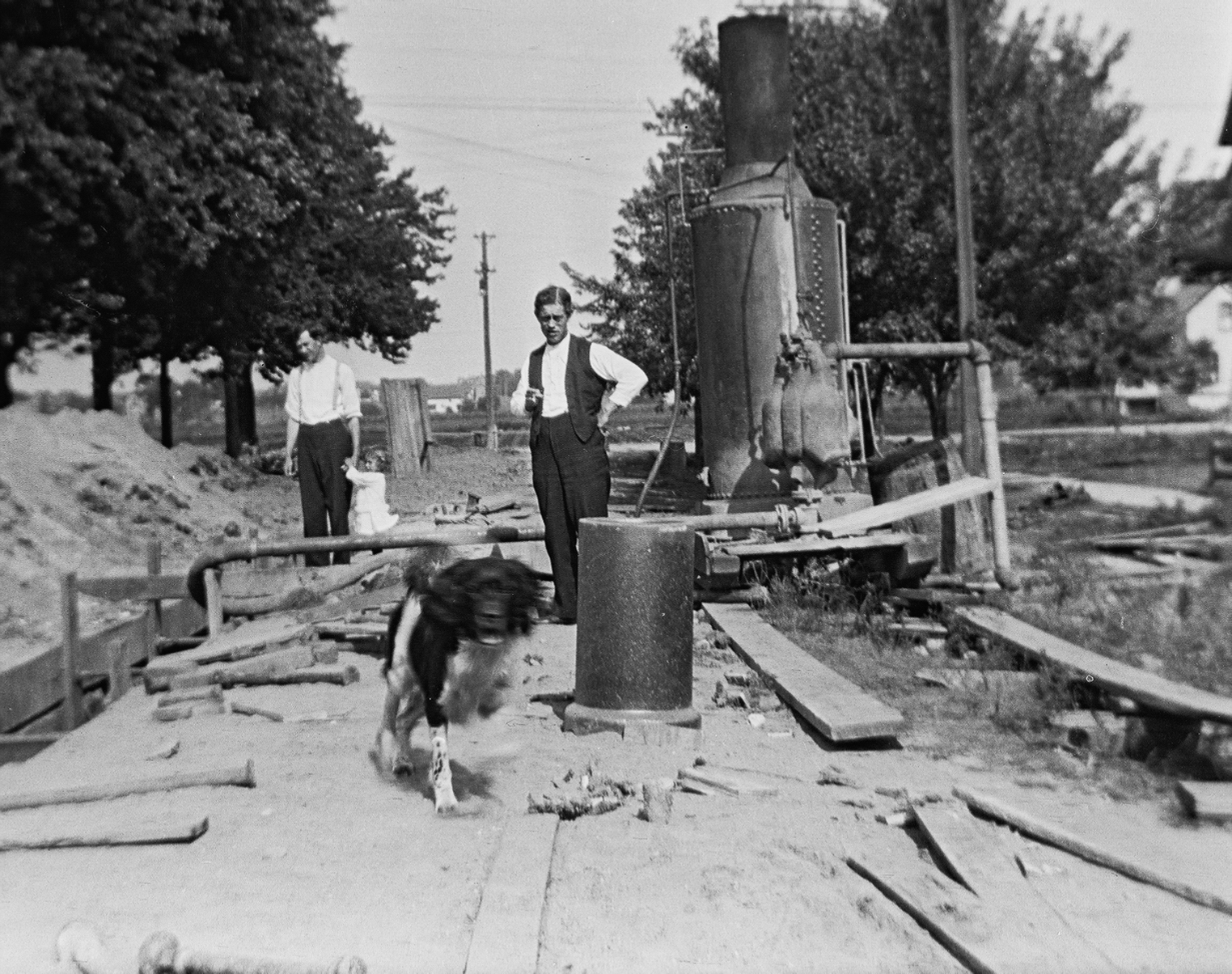
Is the dog running toward Richard DeKorn?

Is the dog running toward Richard DeKorn? Adriaan Zuijdweg in the background.

The dogs with Cora, Adrian, and Alice

The dogs with Cora, Adrian, and Alice

That’s Grandpa as a baby in his mother’s lap, so he grew up with the dogs.

Bobby in the yard

Bobby in the yard

For those of you who know about dog breeding or shows, can you tell me anything about the following?

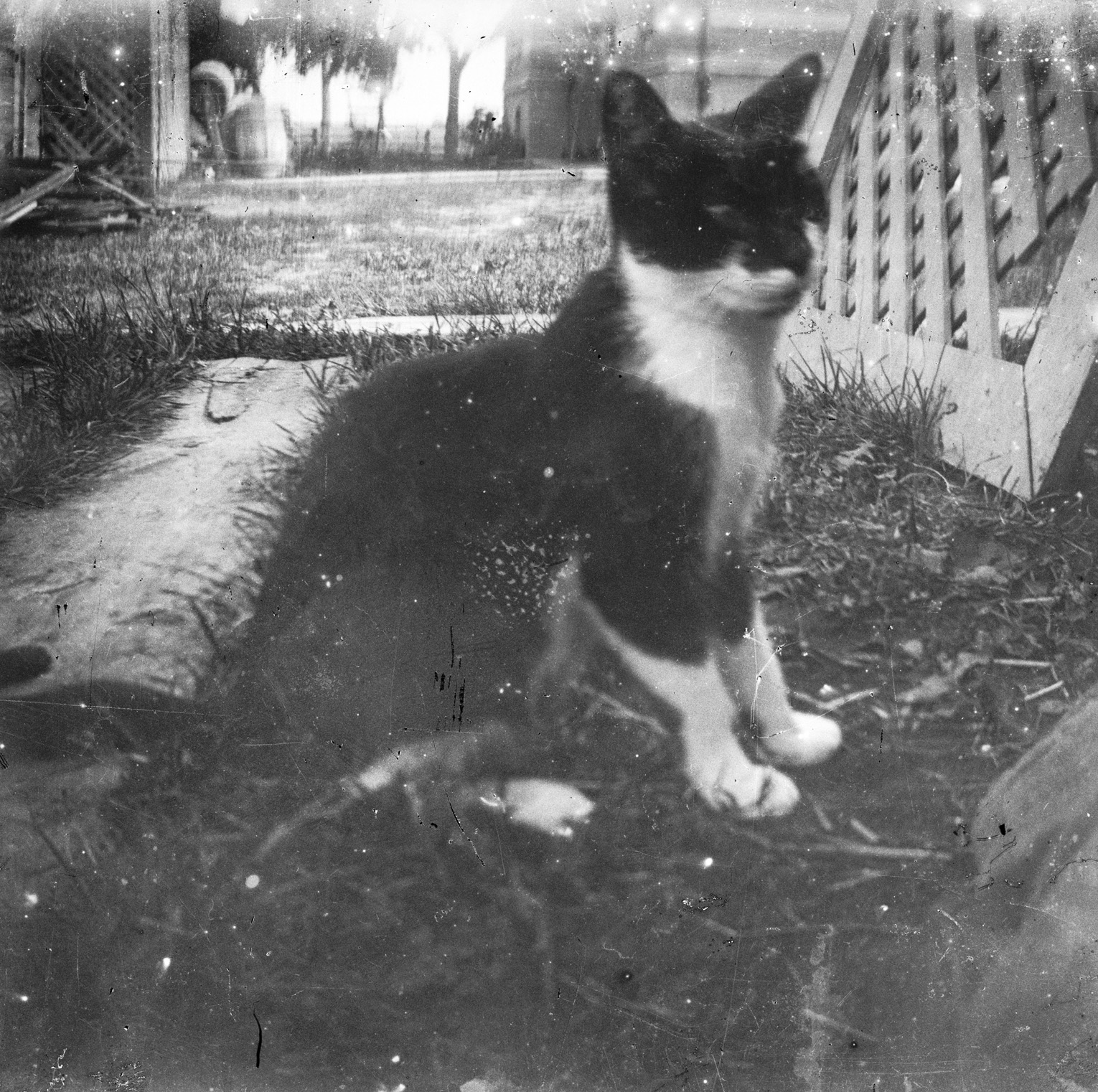
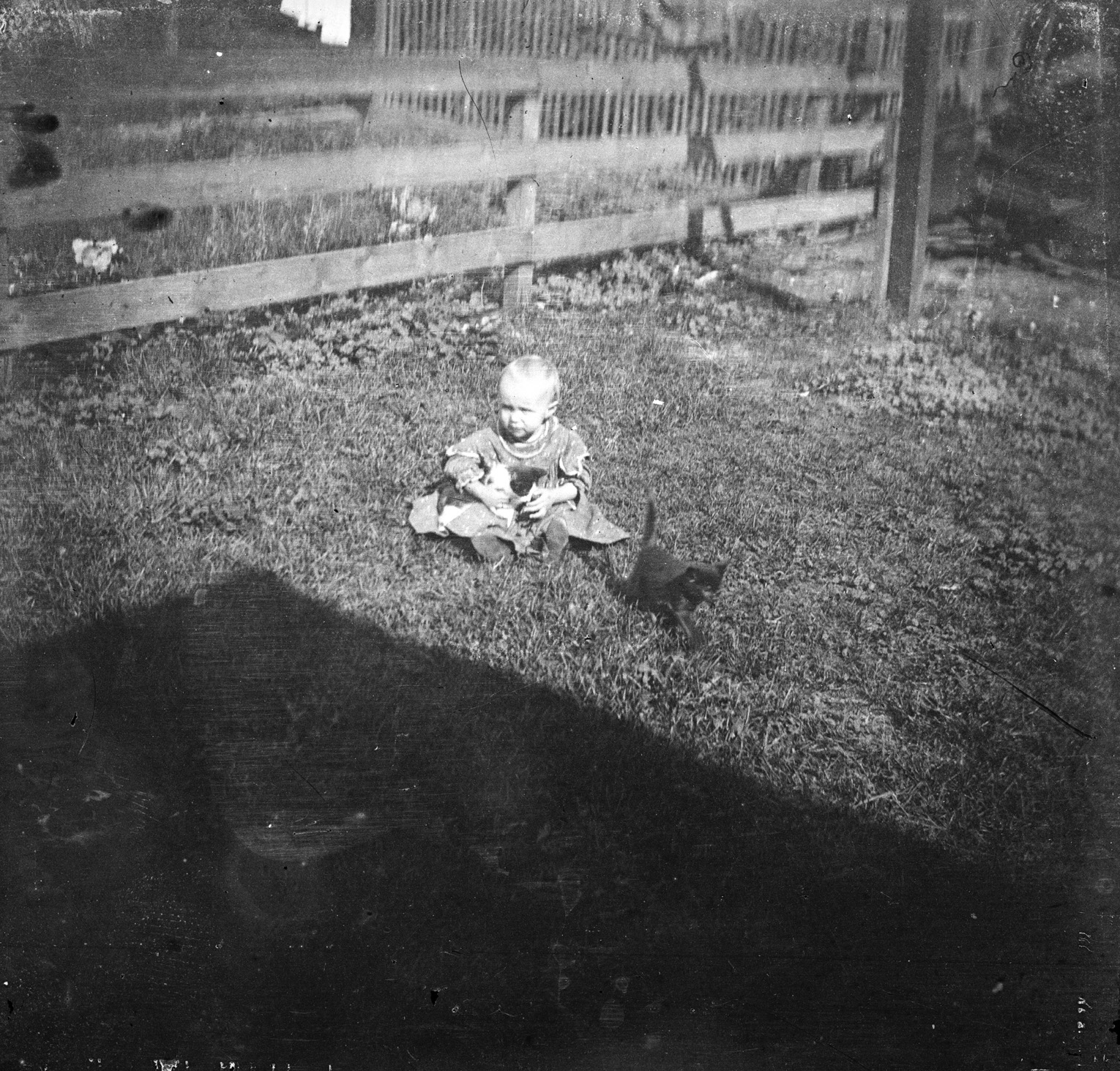
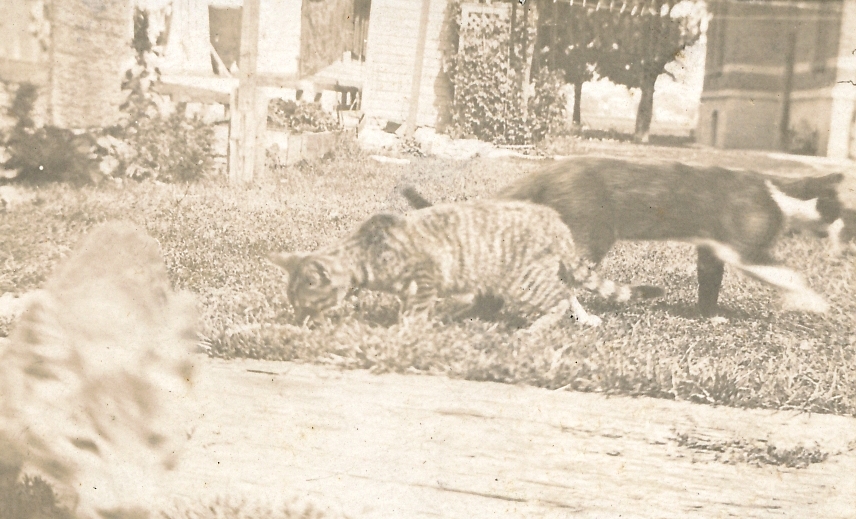
I’ve owned dogs, too, but now I have four cats. Did my family have cats 100 years ago?  Here’s the answer:

Baby Alice playing with the kittens

Is that baby Alice playing with the kittens?

I sense that you want to know about my cats ;), so here is a slide show of my beautiful cats, as well as my grand-cats.

This slideshow requires JavaScript.

Read Full Post »

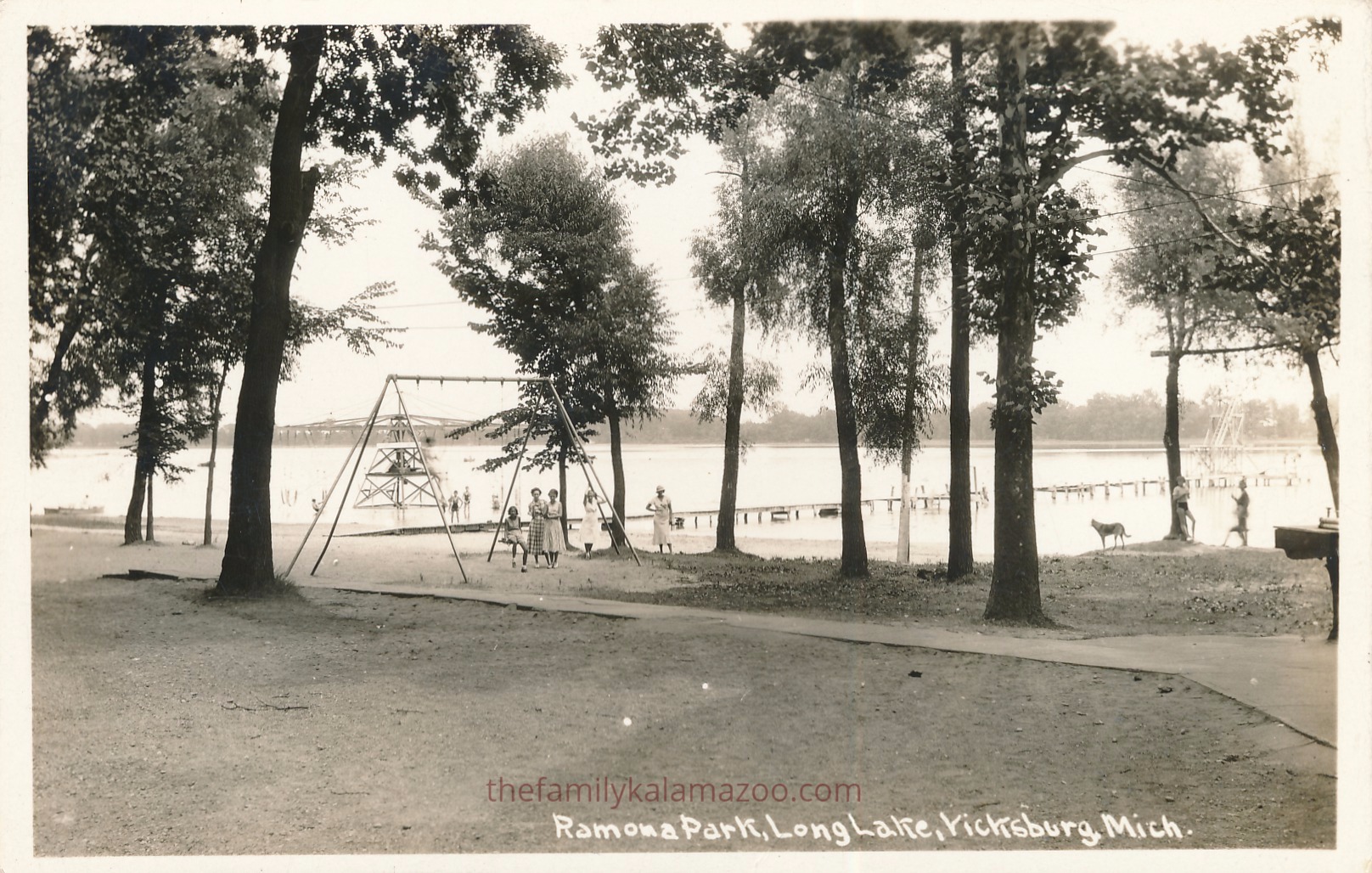
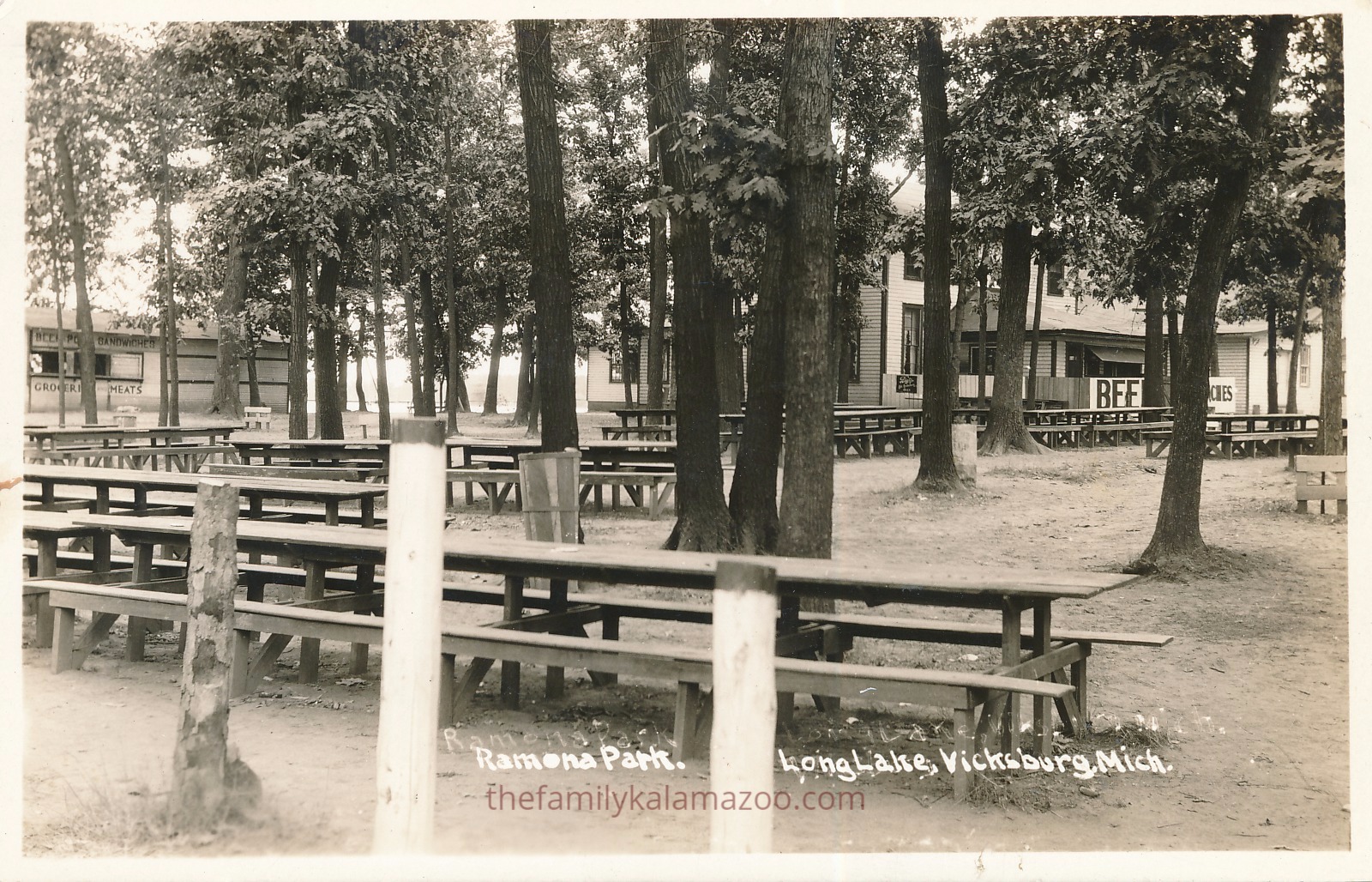
Last year, I published a post about a park that once belonged to family members and that had an inpact on me when I was growing up. Ramona Park, on Long Lake, outside of Kalamazoo, Michigan, featured a pavilion called Ramona Palace.  Ramona was named after the “Indian Princess” in Helen Hunt Jackson’s popular novel Ramona, which was published in 1884.

When I was growing up, the property was owned by a relative named Therese Remine.  Therese’s mother was Mary Paak (Peek), the sister of my great great grandmother, Alice Paak DeKorn.

Therese had inherited the property from Henry and Carrie Waruf, who had owned it for years.

Here are some photos of the pavilion and property that I inherited from the Waruf/Remine family:

Although these photos were taken before my time, not that much had changed by the time I hung out there–except that things had slowed down considerably. There were fewer picnic tables and fewer people.

You see that long dock in the 3rd photo? It’s so long it needs to be called a pier, I think! I don’t remember that either.

Read Full Post »

Enhanced by Zemanta

Read Full Post »

« Newer Posts - Older Posts »