Feeds:
Posts
Comments

Posts Tagged ‘family history’

My grandfather’s father, Adriaan Zuijdweg (later called Adrian Zuidweg), was born in Goes, the Netherlands, on 3 January 1871. He was the oldest of three children. On 17 September 1872, Lucas was born. Then, on 23 December, 1873, Johanna Geertruida Maria was born. The children were barely a year apart in age. I find it interesting that their mother Jennie had a child every year for three years and then no more children. I wonder if she had a health problem after delivering Johanna.

Adriaan immigrated to the United States in 1893, but Johanna did not immigrate until 1904. She came to Kalamazoo, no doubt following her brother there. Lucas did not emigrate from Goes. Instead, on 4 April 1894, at the age of 21, he passed away. At the time of his death he was listed as a “laborer” in Goes; however, my grandfather’s story about his Uncle Lucas was different. Note that Lucas died not long after his older brother left the Netherlands.

Grandpa said that he was a sailor and, in a tragic accident, fell on the anchor of his ship and was killed.

It seems to me that Grandpa’s information has the stamp of authenticity, especially since Lucas did die at such a young age. But why was he listed as a laborer at the time of his death? Is that a term used for sailors? Maybe if he was hired as a sailor, but not part of the Navy?

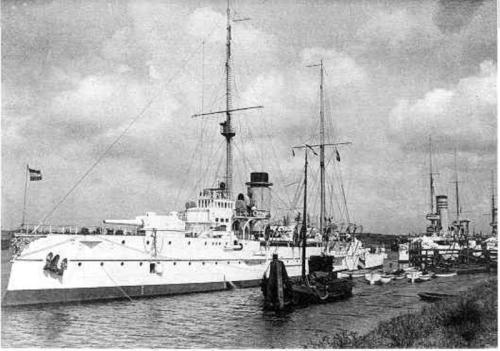
I found a website with a photograph of a Dutch “Coast Defence” ship. This photo might be a ship called Piet Hein in 1894, the year of Lucas’ death. Would a ship this big have an anchor that would have killed Lucas? Or would it have been a smaller boat? Click through to the website if you like.

Jacob van Heemskerck (1906)


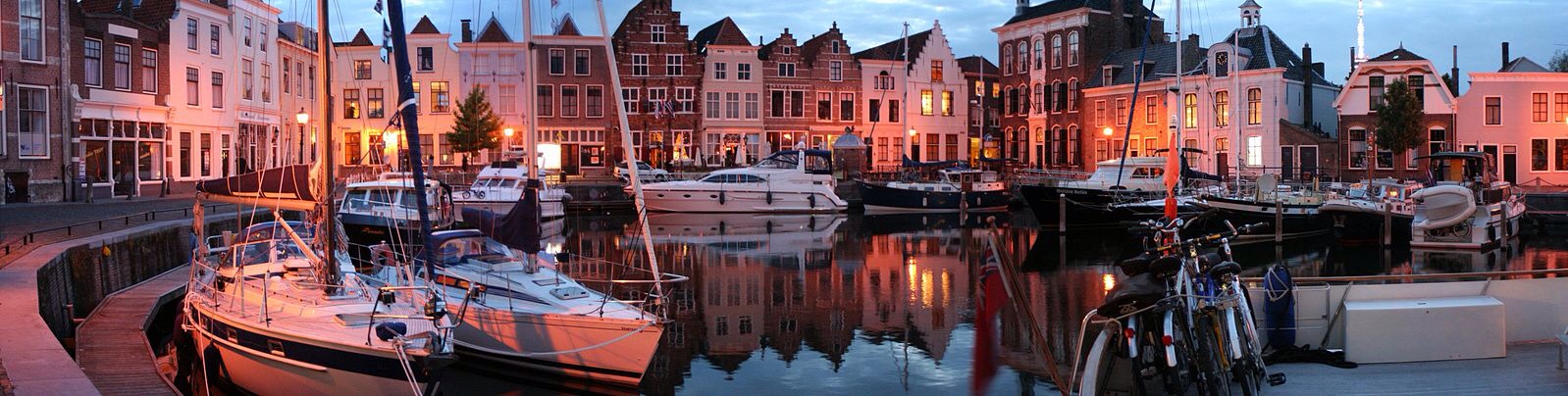
Hard to imagine a  ship this big in this harbor!! Photo of Goes harbor.

IMG_1390

Read Full Post »

I often wonder why more documents and photographs aren’t passed down in families. After I received that beautiful scrapbook that belonged to the Culver sisters (you can read about it here), I realized that sometimes it is because branches of families die out. There is nobody left who cares about the history of the family.

But what happens in so many other families? Sometimes someone moves and loses a box of photographs. Or they pass away and leave documents in the care of a descendant who hates “stuff” and throws it away.

Sometimes, though, it is in the hands of nature. A tornado, hurricane, fire, or flood carries away these valuable family treasures. I’ve tried to protect as much as possible against these possibilities. A fire safe and a supply of acid-free envelopes and boxes helps with that.

Nevertheless, I had a little taste of the damage that can occur from nature the other day. Well, maybe not nature–more like repairman error.

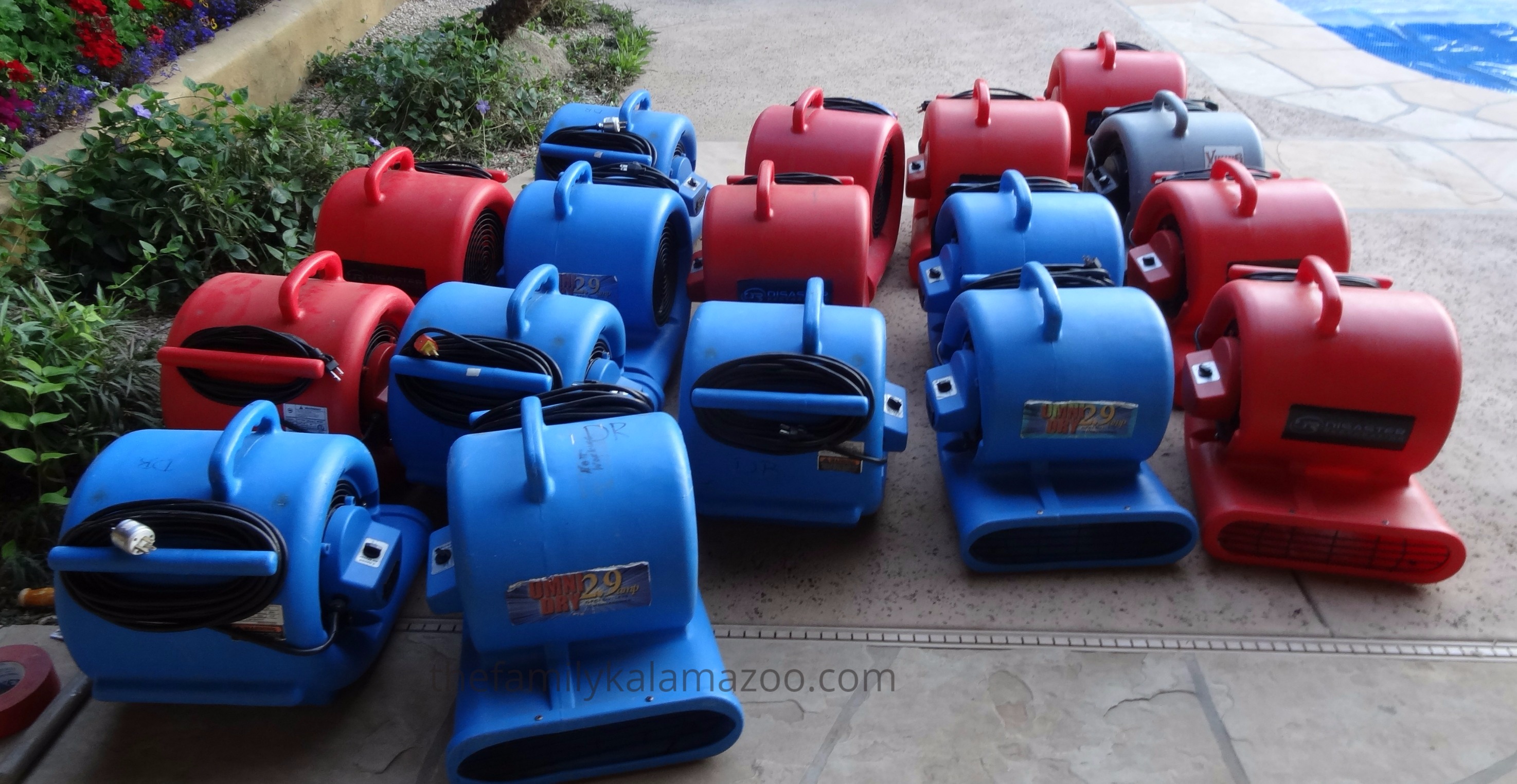
Last spring I walked around the corner of the house and heard a raging fountain. Water poured into the hall, on my beautiful alder wood floor.  Our hot water heater had burst. We discovered that the repairman had set it down, covering the drain, so the water had nowhere to go but out into my house. Ultimately the entire large-sized heater contents poured into my house, flooding the hall and downstairs bedrooms. The only reason it didn’t get into the living room is that the hallway and bedrooms are three steps lower than the living room.

Professional dryers lined up by my pool

We got help cleaning up the mess, and because we live in Arizona, where it is dry, everything seemed fine.

Until Tuesday that is.

I keep a plastic mat in the walk-in closet where I store my scrapbooks, books, and old writing. That’s because, to make more room, I have a library cart full of books and need to be able to move it from in front of the file cabinet. Because it’s so weighted down with books, it sinks into the carpet and needs a mat to roll on. I keep another plastic mat under my desk for my chair. Well, what I didn’t know was that although the carpet was dry, the slab (no basement in Arizona) had absorbed moisture from the flood. So when I put the plastic mats down, over these ten months, moisture collected underneath. The carpet developed rust spots. And at the edge of the closet mat, on the wall hidden behind the file cabinet, black mold developed. It didn’t grow on my wall or in the carpet, but on the baseboard and on the scrapbook I had leaning between the cabinet and the wall. You see, that scrapbook was not a treasured heirloom, but something that belonged to me.

It was from 1989 and 1990, when I graduated from grad school (Western Michigan University). Because I have an iPhone and a camera, I was able to take photographs of the “treasures” in the scrapbook and throw them away. But years ago, that would have been very unlikely. Film was expensive and everyone didn’t have a camera.


I added the “My Graduation” ribbon to this photograph to cover up something I had written in my bad handwriting on that page ;). But I still have the photograph of the original page.


In the following photo you can see the black mold a bit better. It is a flyer advertising subscriptions to a literary magazine. The flyer featured a poem by yours truly, as well as one by another poet.  Look at the mold! I was wearing latex gloves to handle it.


Years ago, my mother-in-law’s basement flooded. She had a wonderful collection of antiques and childhood keepsakes that belonged to her and some to my husband. All gone in a flash. Every once in a while my husband remembers something else that was in the basement and is lost forever.

Have you lost photographs, documents, or heirlooms?

Read Full Post »

I wondered when I could ever get back to Theresa Pake. Since I couldn’t make time, I thought I would share something about her anyway!

On January 20, 1928, Theresa married Roy Lawrence. I’m posting this late on January 20, 2015, so that it’s the date of their anniversary.  Roy was born 5 November 1884, about 9 years before his bride.


Roy was a cigar smoker, but he quit when he married Theresa.

Is Theresa’s hair marcelled here? And what is the corsage she is wearing?


A Series of Disasters

The Children After the Fire, 1902

Paak-a-boo

Saved from the Fire

Who is George Paake, Sr.?

Curious about George

George Paake’s Legacy, Part I

George Paake’s Legacy, Part II: Theresa’s Pre-Professional Education

George Paake’s Legacy, Part III: Theresa’s Professional Education

George Paake‘s Legay, Part IV: A Letter to His Daughter


Read Full Post »

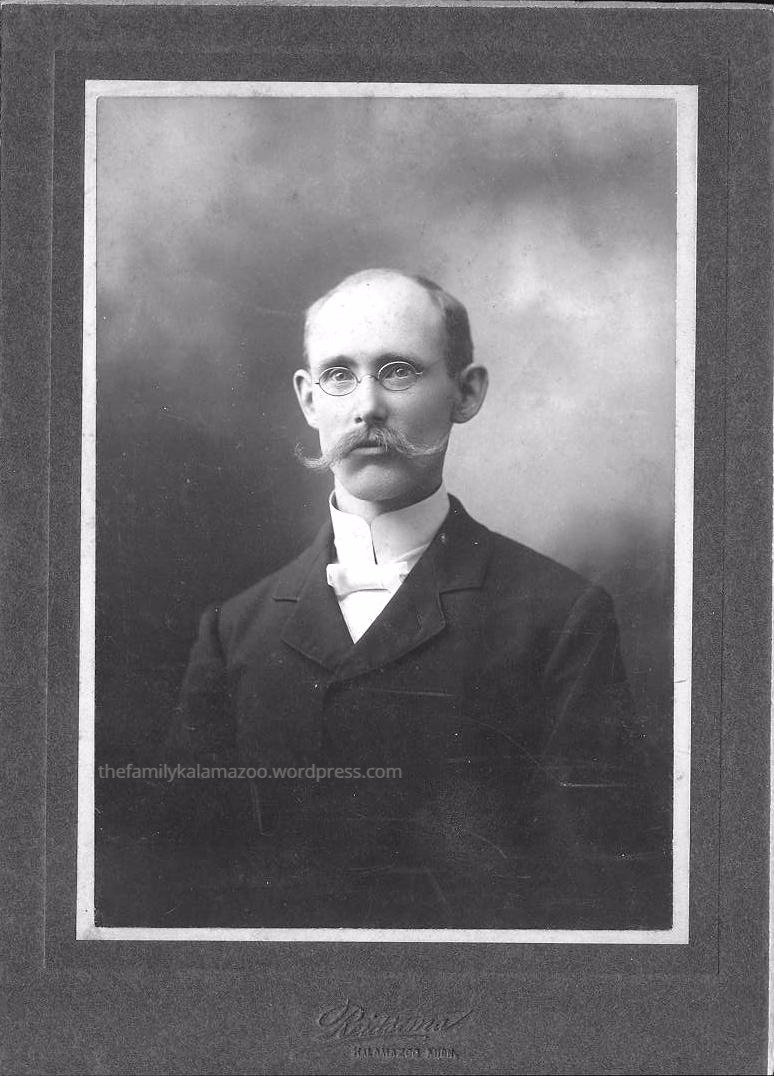
Here’s another unidentified photograph. The cardboard frame says it’s from Kalamazoo, but of course, it could be a copy. That said, I have noticed that most of my photographs of adults have been taken in Kalamazoo, not brought from the Netherlands or mailed from the Netherlands either. Nevertheless, maybe my unidentified pix fit into that latter category!


I have no notes from Grandpa on this one. He’s certainly Dutch, even the frame is from a Dutch photographer.  He’s balding, but tries to make up for it with his rather wild mustache.  Looks like he uses a curling iron for it.

His glasses are noted. But what I find particularly interesting is the color and tie. Surely that is a style from a certain period? Maybe even the cut of his coat lapels?

His posture is ramrod straight, so he at least wants to give the impression of a business man or upstanding citizen.

Any ideas about this one? Decade? His age?

Read Full Post »

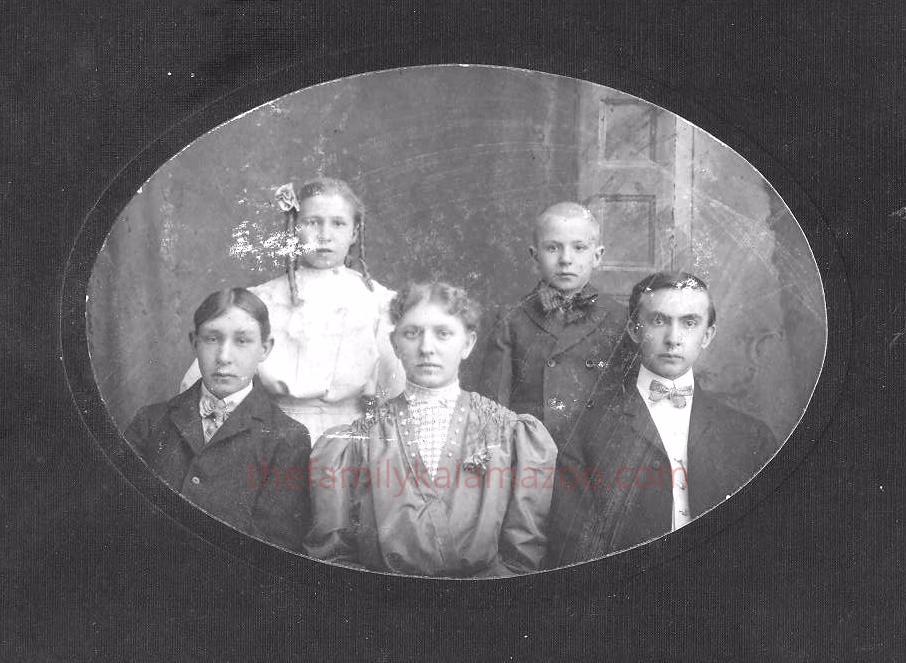
Here’s an old photo that remains unidentified. 35 years ago I asked my grandfather who the people were and he didn’t know.  “I dunno. Mebbe some VanLieres” is what he said.

I actually have no idea what branch of the family these people perch on.


In order to track it down I need to figure out approximately what year it is. Are there any clues if this picture was taken in the United States or the Netherlands? There are no clues on the actual photo.

Any guesses on the ages of the people–or their relationship?

Read Full Post »

How’s that for a weird title?! If you didn’t notice I’ve been on a break, please don’t tell me or I’ll feel bad ;). I am back, but only on a limited basis because of all these things like work and life that keep intruding on my genealogy research and blog reading! I wanted to stop in today to say:

HAPPY NEW YEAR!!!!

Let’s make 2015 the best yet!!

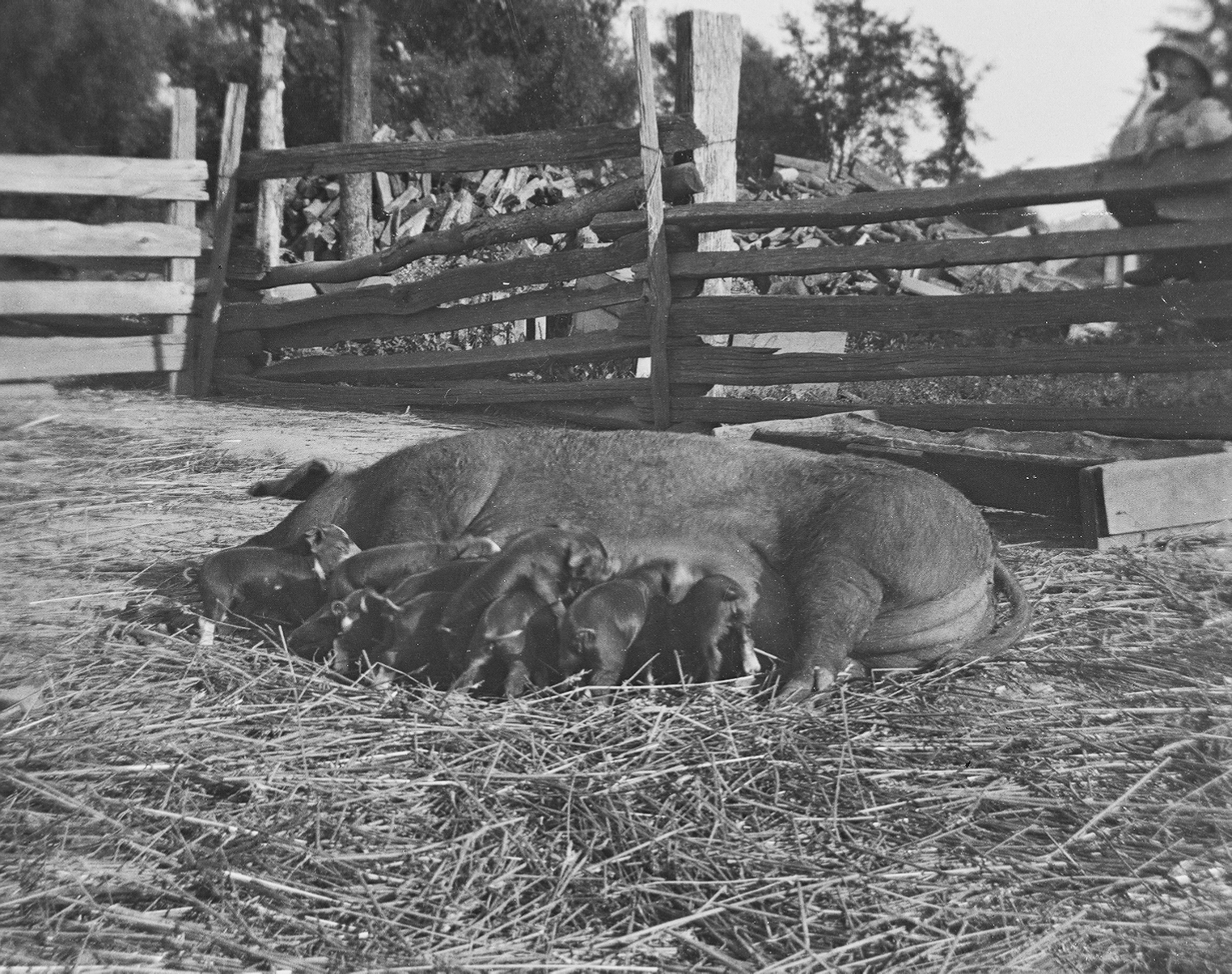
I have a set of old glass negatives that have been digitized. I’ve shared a few on this blog. Here is one I have not shared. At first I thought it was a photo of a pig (hog? what is the difference?) with her very cute babies. I am quite certain this was taken by Joseph DeKorn at Brook Lodge in southwestern Michigan (I’ve written about the place here).

But when I looked more carefully I saw Grandpa sitting in the upper right corner! I wonder what he was thinking and if he was tired. He seemed to be visiting the resort with his cousin and uncle.

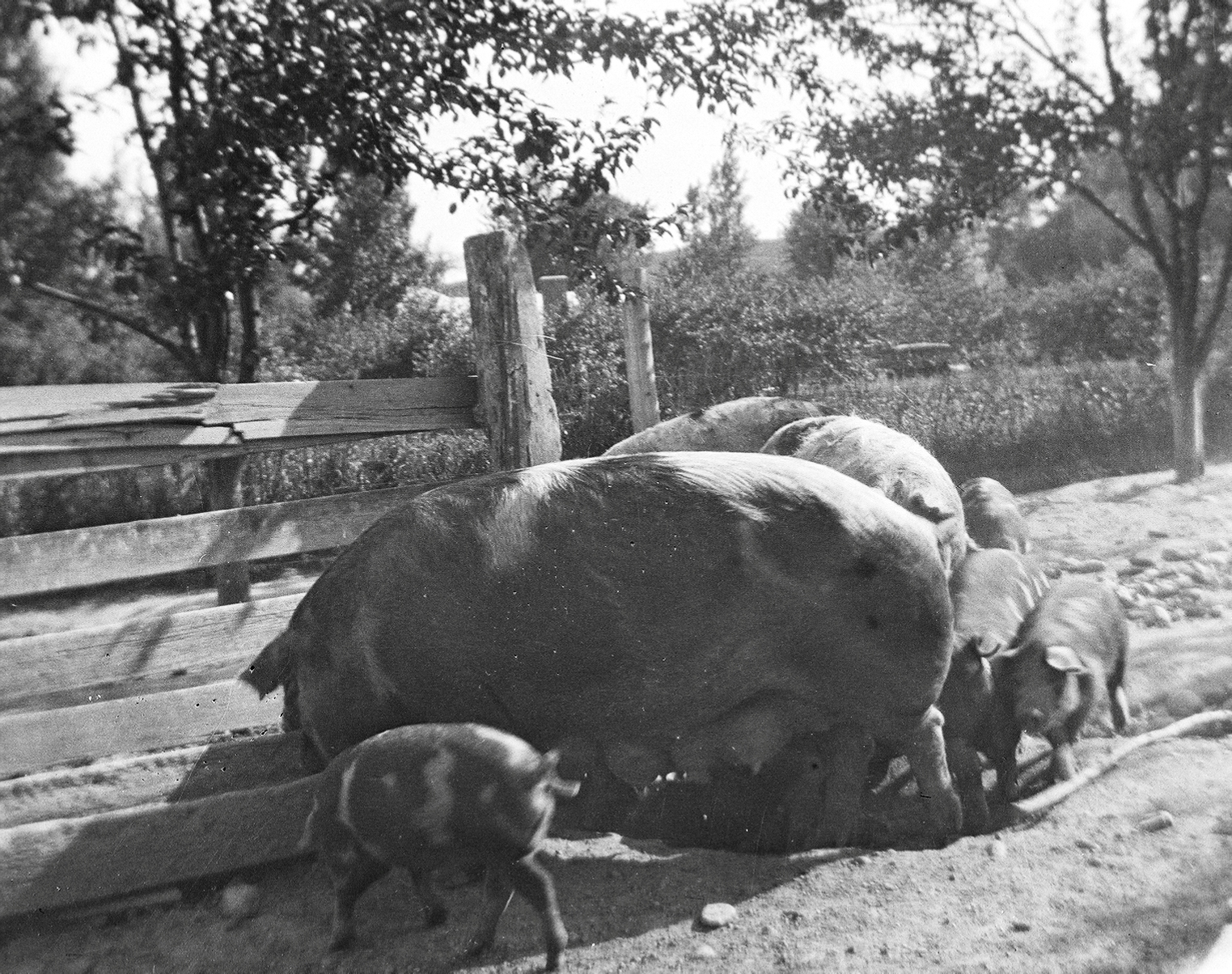
Here are some more pig photos from Uncle Joe.

These photos are 100 years old. What remnants of our lives will there be in 100 years? Maybe too many!


Read Full Post »

I’ve traveled to California, Sedona, and Michigan in the past few weeks.  Needless to say, I am behind in my work even more than usual. I want to continue Theresa Pake’s story and to explore the Jennie DeKorn Culver photos more, but these projects take a good deal of time.

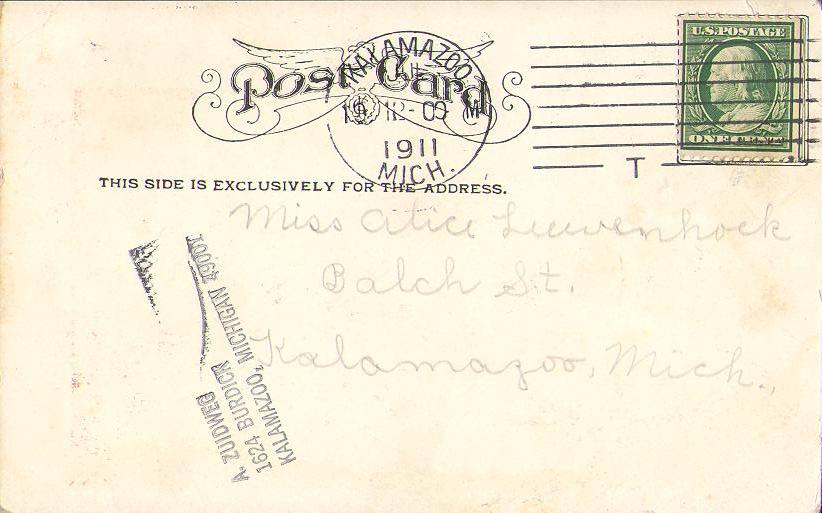
Instead, I decided to take a look at an old postcard postmarked 1911. The postcard is to Alice Leewenhoek, Richard DeKorn’s granddaughter through his daughter Jennie. Alice was an only child who lived with her mother Jennie and her father who Grandpa always called “Uncle Lou”–Lambertus Leewenhoek.

In the photo below, Alice is sitting with a friend, neighbor, or relative against the exterior wall of Richard DeKorn’s house. She holds a doll in her lap and is petting Tom or Carlo (if I had to guess, I would say it’s Tom).


Alice Leeuwenhoek with doll

On this postcard, Nellie Bradt is thanking Alice for her “postal.” Nellie’s address is marked as 1130 S. Burdick Street.  The photograph is Bronson Park, which is the beautiful “town square” of Kalamazoo.

Bronson park front postcard


After seeing that the mailing address is listed as Balch St. and doesn’t include Alice’s street number (not uncommon for that time period in Kalamazoo), I went to my family tree on Ancestry and discovered that I had never found the Leewenhoek family on the 1910 census.  So I tried something different and looked for the 1910 census on Family Search. Bingo.  Instead of Lambertus Leewenhoek, I found Lamburtos Leenwenhock, at 110 Balch Street, Kalamazoo, Michigan. Uncle Lou was living with his wife Jennie and his daughter Alice who was 13 years old in that year–and therefore around 14 at the time of the postcard in 1911. New info: According to Uncle Don, they lived in the wooden house just behind the Richard DeKorn brick house.

Can you read anything more on the postmark besides the city, state, and year?  Is it December 9? Or does it say something else?

Bronson park back postcard


Grandpa and Alice were first cousins, their mothers were sisters.

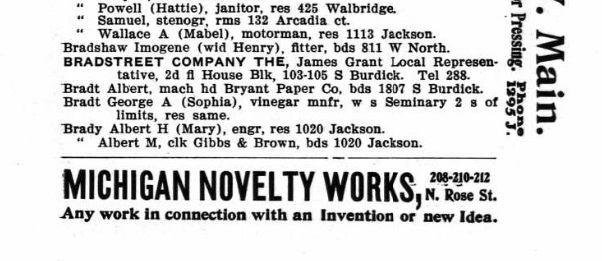
I haven’t been able to find Nellie Bradt in the 1910 census, but I did find her in an 1899 city directory. I then found her parents in a 1905 directory. I think I can find them more years, too. But I don’t understand how to read these entries. The 1899 entries are entirely different from the 1905, but neither one really gives me the address.

Here is the 1899 that lists Nellie with her parents, Mr. and Mrs. George A. Bradt. I understand they lived in the City of Kalamazoo. And I know “a” means acreage, but not how to interpret what any of this means or how it connects with an address.

Nellie Bradt 1899 city directory


Here is the 1905 directory entry. Nellie isn’t mentioned, but her parents are. What in the world does it mean?

Nellie Bradt's parents 1905 city directory

Is there a way to search for Nellie in the 1910 census using the 1130 S. Burdick Street address she gives? Can I search the census by address?

Note that many of my relatives lived in this Burdick/Balch neighborhood. When I look at the census records from late 19th and early 20th century, I see that almost everyone, if not everyone, who lived there was Dutch.

My grandfather’s gas station was at the corner of Burdick and Balch, across the street from the Richard DeKorn house. Grandpa lived in that house for part of his childhood, with his parents and grandfather, Richard. When he built his house down the block on Burdick, he was staying in the same general area his family had lived in for decades. He continued to work at his station and live in his house until he retired and moved to Portage.

I remember as a child meeting Mrs. Bradt Braat who lived next door to the gas station. The name is pronounced, by the way, like the sausages that go with beer. I wonder if she was related to the Nellie Bradt who wrote this postcard. Mom? Uncle Don? New info: no, she must not be as they were a Belgian family (see comments below).

Alice Leewenhoek was my grandfather’s cousin. Note that the postcard is stamped with the name and address of Grandpa’s father, A. Zuidweg. I wonder why?

One postcard. So many questions!

Read Full Post »

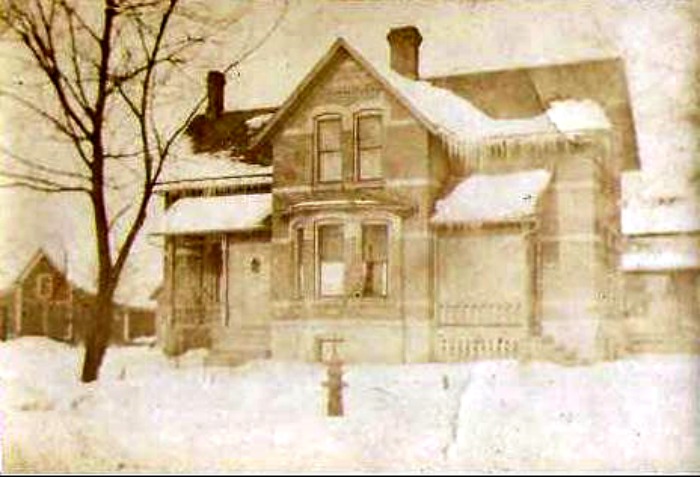
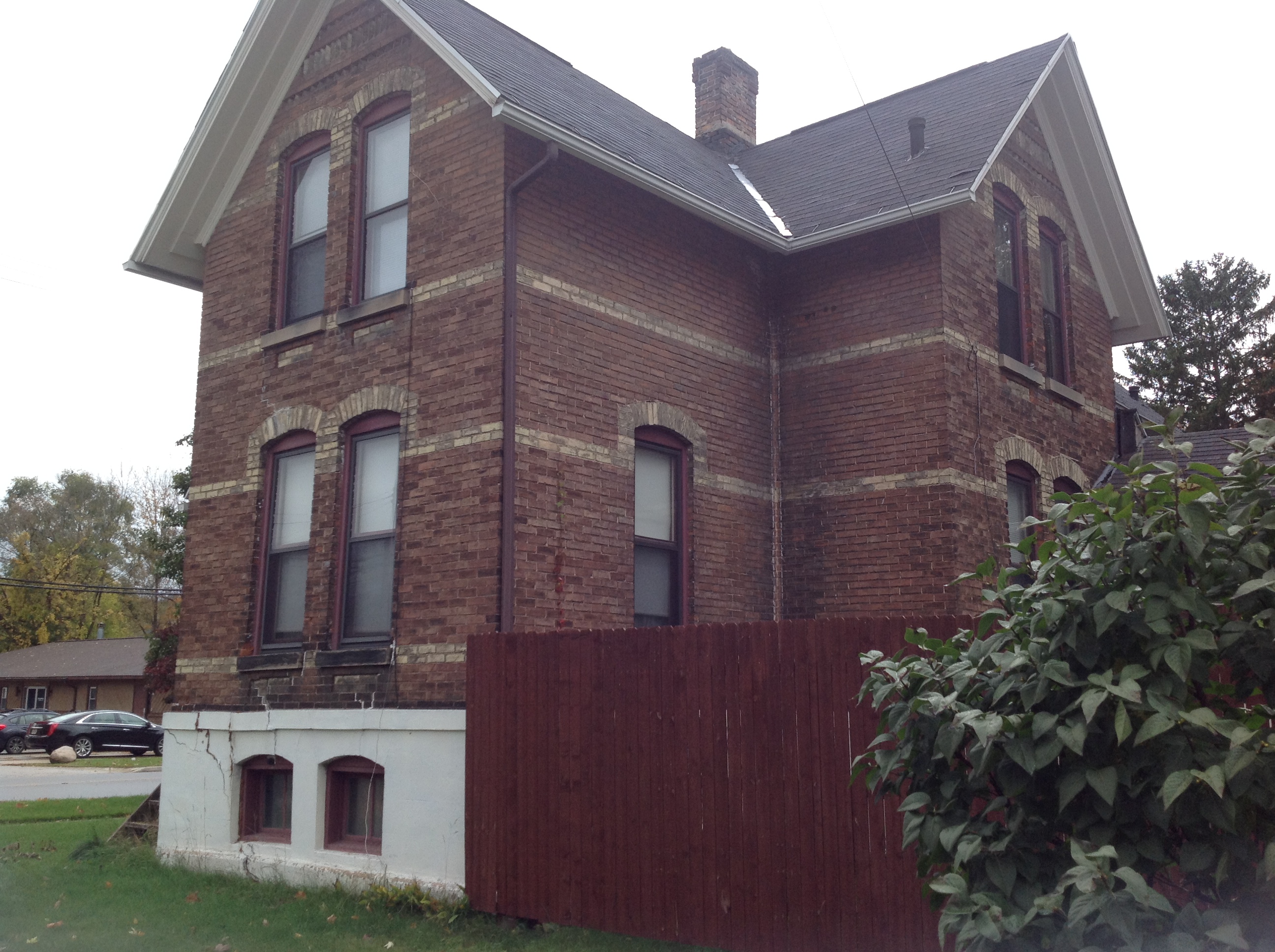
Richard DeKorn’s house is still standing, at the corner of Burdick and Balch Streets in Kalamazoo. Someone lives there, but the house needs some TLC, in my opinion. I wonder if the owner knows who built the house–or is interested. I love the distinctive light brick stripes on the dark brown brick. The house was most likely built in the 1880s. I would love to know the exact year.

Although the basic house hasn’t changed, the property has. In the old photographs, the house looks set back from the street. The house number is now different.

It looks like a barn to the left, doesn’t it? Notice that the above photo is the same view as the first photo. Is that a fire hydrant in the same spot? Did they have fire hydrants in those days? Or is it something else?

Here is a photo of the area where the barn was. I wonder if the garage has the same footprint as the barn. And you can see the house that is next door. How old do you think the gray house is?

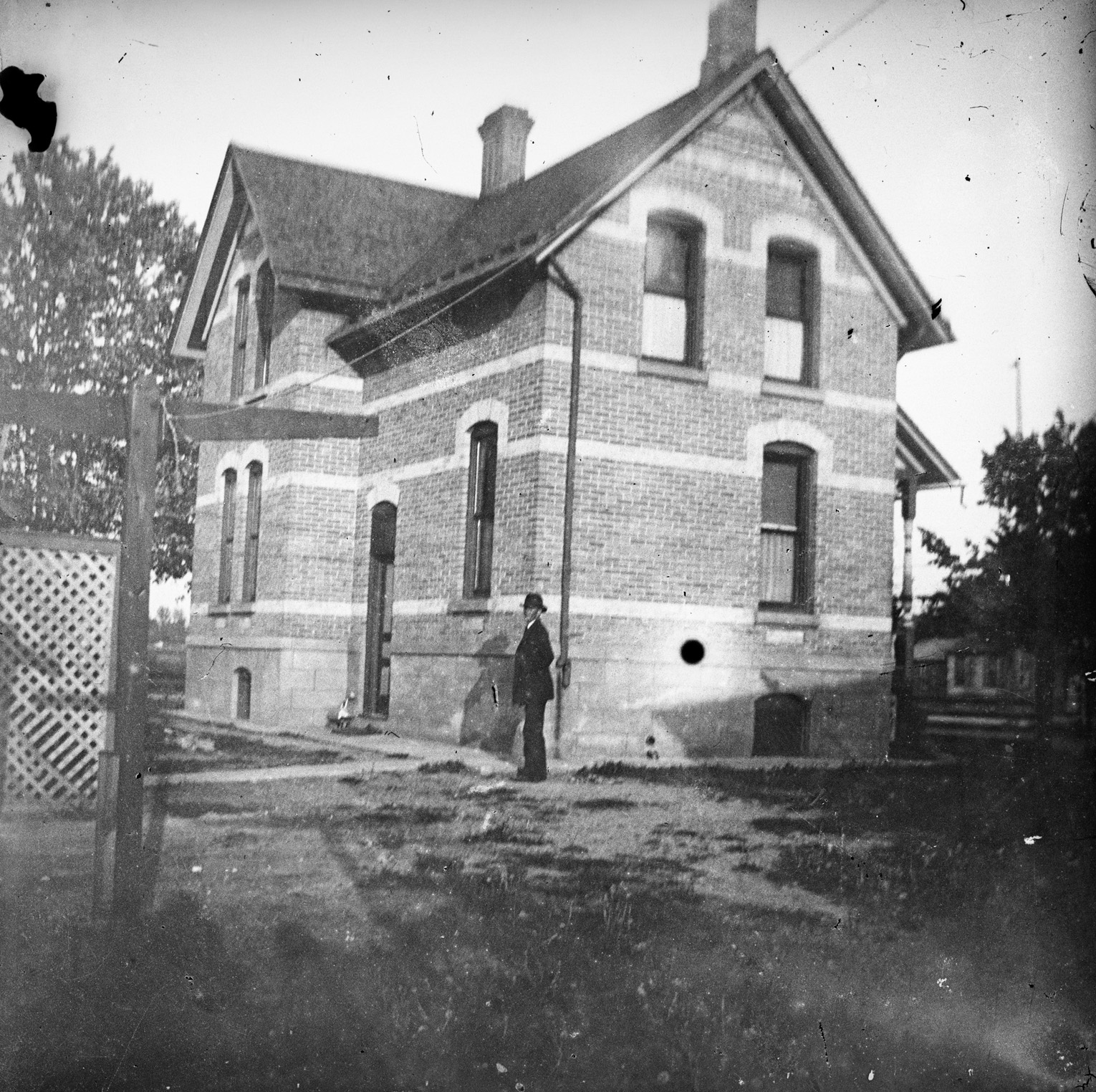
In the following photograph, Richard DeKorn stands by the house he built.

Richard DeKorn's home at the corner of Burdick and Balch, Kalamazoo, Michigan

Richard DeKorn’s home at the corner of Burdick and Balch, Kalamazoo, Michigan


Here is another angle of the house today:


In the above photo, the right side (two windows in 2nd story, 1st floor, and basement) faces Burdick Street. The left side (two windows 2nd story and three windows on the 1st floor and basement) faces Balch Street. In the old photo, where is Richard standing? Is he at the opposite corner from the Burdick-Balch corner–at the back of the house?

Here’s a view from the opposite side of Balch. I think it shows that Richard has his back to Balch Street in the old photo.

Read Full Post »

Try to keep this in mind as you read: I am having a lot of trouble dating this photograph. Maybe with the dates of the people in the photo, you can help me date it.

Great-Grandpa Charles Mulder was born Karel Pieter Philippus Mulder on 6 March 1885 in Goes, Zeeland, the Netherlands.  He was the son of Pieter Philippus (son of Karel, Karel, Carel, Johannes, in that order).

He emigrated in 1887 from Kloetinge, Zeeland, Netherlands and arrived in New York City on 29 August 1887 . Note that he was 2 years old.

Great-Grandpa was the oldest child of Pieter and Nellie (Neeltje) Gorsse.

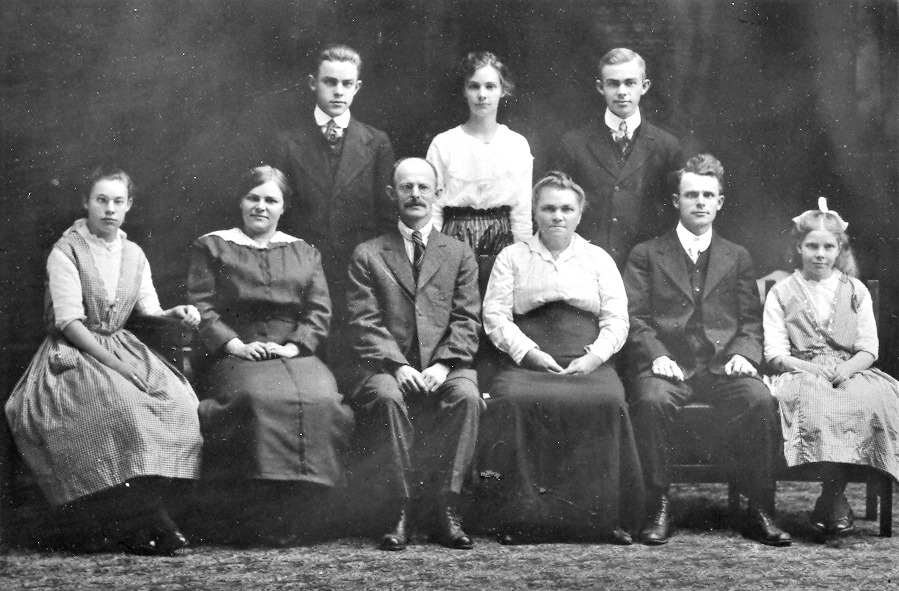
Pieter and Nellie Mulder and family

Pieter (1865-1953) and Nellie (1868-1932) are in the middle of the front row.  If you have ever heard about the wonderful furniture that used to be made in Grand Rapids, Michigan, you would be hearing about some of the furniture made by Pieter, a cabinet-maker.

Great-Grandpa, with the curly dark hair, is next to his mother. I will try to identify the others, but I cannot be absolutely certain.

Back row: Peter, Cora, Henry

Peter was the father of Rod Mulder, who I knew when I was younger. He married Alida, and they had at least four boys: Rod, Willis, Richard, and Robert.

Cora married John Gerow and was the mother of Eleanor, a lady I knew when I was a kid.

Henry engraved stone monuments and developed emphysema. His married Mae and raised his family in Hastings, Michigan. According to the 1930 census, they had 4 children: Eloise, James, Mary, and Judith.

In the front row, the girl with the glasses on our left is Nellie. I believe she might have had some sort of disability. Nellie was still living at home with her parents in the 1930 census, when she was 27 or 28 years old.

Then there is Jennie who married Edward Kooistra or Koistra. They had a son, Karl.

Rose (Rosa) is on the other side of Great-Grandpa. She contracted TB. But then so did Great-Grandpa; I remember visiting him in the sanitarium or hospital. Rose was living at home with her parents in the 1920 census; she was 14.

Sadly, I discovered that there were also two children who passed away. Jan was born after Charles–in 1886–and passed away the following year, four months after the family arrived in the United States!  Imagine: a young couple, ages 22 and 19, immigrate to the United States with a 2-year-old and a 1-year-old (two babies). Then in a few months, the younger baby is gone.

Then there was another Rose who was born in 1892, after Cora. She passed away in 1904, two years before her namesake was born.

What year do you think this photo was taken? It’s a little confusing to me. Great-Grandpa got married in 1910, when Rose would have been four years old. She’s clearly older than that here. I wonder if both Charles and Jennie were already married when this photo was taken. My grandmother was born in 1912, so if the photo was taken when Rose was about ten (1916), then Great-Grandpa would ALREADY HAVE FOUR CHILDREN.

Here’s an alternative view: that I was told wrong about which child is which. What if this photograph has the Rose in it that was born in 1892–and if it was that Rose who had TB and in fact died of it? Then the names were assigned wrong. But is there a way that the people here fit the dates if that is the case?

How about the clothes? Any ideas on the date of the photograph from the clothing?

In order the children were:

Charles (1885)

Jan (1886-1887)

Jennie (1887)

Cora (1890)

Rose (1892-1904)

Henry (1897)

Peter (1900)

Nellie (1902)

Rose (1906)

My grandparents told me that Great-Grandpa’s family (this is my grandmother’s father) lived in Goes very near the Zuidwegs (my grandfather’s father’s family). They were printers, engravers, and machinists. However, genealogical research shows that, in the old country, Pieter was a fisherman, a laborer, and a shoe maker. I would guess that when the family came to Grand Rapids, that Pieter learned the furniture trade. After all, he was only 22 when he got to this country.

I do know that the printer and engraver part was true at least for my grandfather’s father, Adriaan Zuijdweg. The Mulders and Zuidwegs were city people, not farmers, so it’s curious that my great-grandfather became a farmer.

Great-Grandpa died on 27 April 1967, when I was 11 years old. I used to imagine that the family line began with him at his farm in Caledonia, not realizing that he was brought up in Grand Rapids or that his father made furniture or what hardships his parents must have gone through.


http://www.gettyimages.com/detail/120016511


Read Full Post »

This post follows the posts I’ve written about Richard DeKorn’s step-daughter Marge and her son David Owens. See links below.

I thought I would share some photos of beautiful objects made by Marge and David, two very creative individuals. Thanks to Rochelle Owens for sharing these photographs.

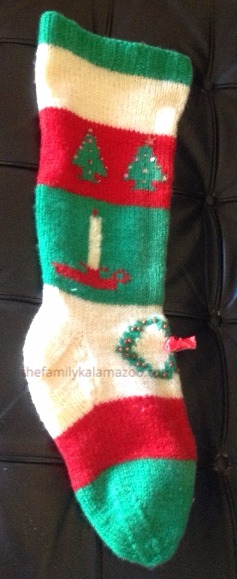
Marge knitted the Christmas stocking (look at those small stitches), and she also made the agate necklace.

Agate and silver pendant created by Marge Sootsman Owens

This mosaic was designed and made by David Owens.

Read Full Post »

« Newer Posts - Older Posts »