Feeds:
Posts
Comments

Posts Tagged ‘DeKorn family’

In Part I, I introduced George’s middle child, Theresa Pake, who was born in 1893.


Professor Lawrence has put much effort into piecing together his mother’s educational history.

At some point Theresa lived with foster parents, Una Orline and Oliver Oratio Pickard.  Prof. Lawrence thinks she maybe have gone to live with them as early as age six, which would mean she wasn’t under the care of her older sister. However, the newspaper article about the fire in 1902 would show that she was still living at home at the time of the fire (nearly 8 years old). Regardless, at some point, the Pickards became the caregivers of Theresa. None of the other children in the family seem to have gone to live with the Pickards.

The Pickards sent Theresa to Jennings Seminary, a private Methodist school in Aurora, Illinois, from 1911 – 1913.  Here  is a link to the history of Jennings Seminary, but to give you an idea, it was a school for young ladies and once considered one of the finest private high schools in the middle west.

Jennings Seminary

Jennings Seminary

From there, Theresa went to Chicago Evangelistic Institute. After studying at CEI from 1913-1915, she graduated from the missionary course.
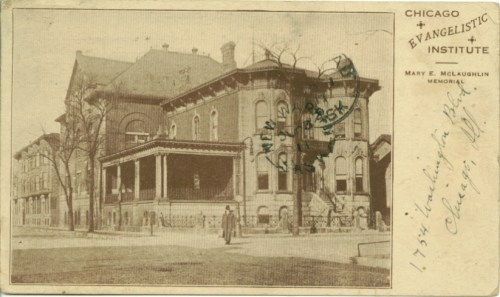
Theresa moved on to Western State Normal School’s High School Department.  She attended the program for at least the school year of 1916-17, participating in a play (where she played “mother-in-law”) and gave a speech advocating Republican Charles Evans Hughes (who was supported by Teddy Roosevelt) as the next President of the United States. She took classes such as anatomy, chemistry, French, and children’s literature.  Western was a teaching college, and the high school department was designed to not only give an excellent education to its students, but to provide a sort of student teaching experience for the college teaching students who planned to teach in high schools. Theresa graduated, at the age of 24, in June 1917 with 27 other graduates. At this time, it is possible that Theresa planned to become a teacher.

Here is a description in the yearbook about the high school program at the teaching college:

Here is Theresa’s yearbook photo. Note that in the above portrait, Theresa is not wearing glasses, but in the yearbook photograph she is wearing them. I think it’s likely she began to wear them in her early 20s.

In 1919, Theresa went to Wilmore, Kentucky, to attend Asbury College. At that time, Mrs. O. O. Pickard, at 1846 Oakland Drive, Kalamazoo, Michigan, was listed as her parent, so Theresa still was being educated under the guidance of the Pickards. Theresa had matriculated at age 25 with the intention of becoming a missionary. She attended Asbury for four semesters, from 1919-1921.

But Theresa’s education was far from over!

A Series of Disasters

The Children After the Fire, 1902

Paak-a-boo

Saved from the Fire

Who is George Paake, Sr.?

Curious about George

George Paake’s Legacy, Part I


Read Full Post »

In continuing the story of the Paake/Paak/Peek/Pake family, I will share with you what I’ve discovered about George’s family.

Today the subject is my first cousin 3x removed, daughter Theresa Pake, the mother of Professor Edgar Lawrence, the man who shared the photos and stories of this branch of my family.

Theresa was born Tracy Paak, on October 2, 1893, in Oshtemo, Michigan. Oshtemo is very close to Kalamazoo.


Although her birth certificate says her name was Tracy, and her siblings called her Tracy, Theresa always referred to herself as Theresa, so that is how I will refer to her.  Her parents were George and Lucy Paak (note that the birth certificate calls the mother Lizzie), who were both born in the Netherlands. Theresa’s mother died on May 28, 1900, when Theresa was only 6.5 years old. Theresa had two older sisters, one younger sister, and her brother George was the youngest of all the children.

According to the article about the fire that destroyed their residence in 1902, Cora, the oldest child, was taking care of the household and the children. That makes sense because she was fourteen, and the other children were far too young.  So at a very young age, Theresa had to go from living in a home nurtured by a mother to having a young teen sister “playing” mother to her and her siblings.

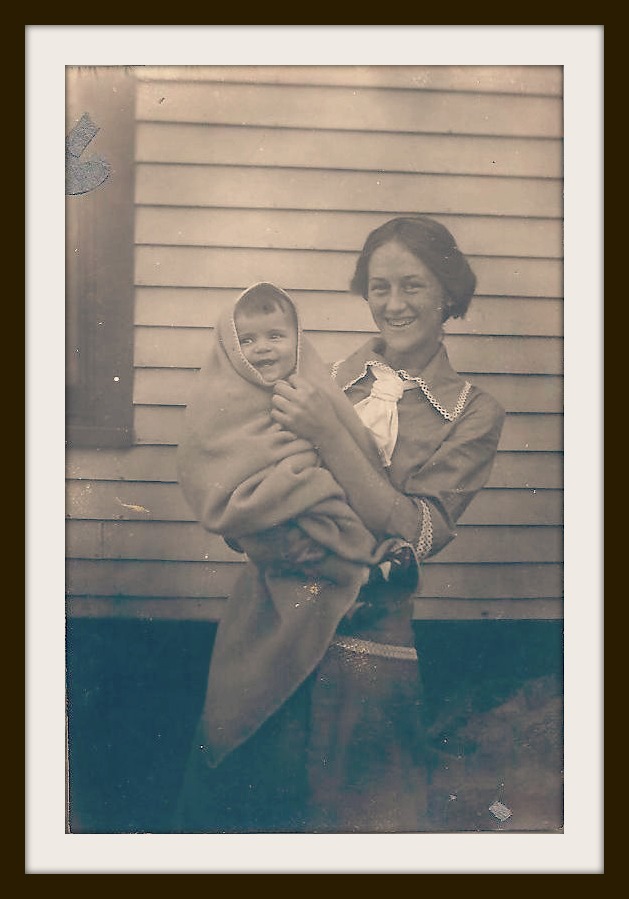
In this photo, Theresa is quite young. She is not yet wearing glasses. I took the liberty of altering the photo by using a sepia finish, as well as by adding a frame.

The following might be my favorite photograph of Theresa (also note that she is not wearing glasses). She looks so happy. She also looks like a girl who loves babies.  The photograph is from 1912.


For my next Paak post I plan to share photographs and information about Theresa’s education and career plans.

A Series of Disasters

The Children After the Fire, 1902
Paak-a-boo

Saved from the Fire

Who is George Paake, Sr.?

Curious about George


Read Full Post »

I started this blog in September 2012 with three private posts and then didn’t write again until November. The idea was that I would start to put the photos and stories I had accumulated “out there” for family members to access. Although the details aren’t that memorable to me, it seems that I switched to public but didn’t tag the posts at first, hoping that the posts wouldn’t get picked up by Google. That way, relatives could easily find the blog, but I was in hopes that nobody else would find it.

It didn’t take too long to see that some family members (Hi, Mom and Dad haha) and a few friends liked the blog and I thought it might be better just to tag the posts and connect with other WordPress bloggers. What I had seen of the bloggers working on family histories interested me a lot, so I wanted to feel more involved.

I had no idea what would happen. No, I don’t have an amazing number of blog followers, but those that do follow tend to be loyal and friendly. They are also kind and generous and have helped with looking at the details in photographs and giving me clues about where to search–as well as giving me some behind the scenes help.  You know who you are and you are fabulous.

Another aspect of blogging that I could not have predicted is how many wonderful non-bloggers have found the blog through internet searches and have shared information with me. I hesitate to name people because I don’t want to leave anybody out, so I will list just a few of the insights I’ve gained from these generous souls.

  • One of the biggest mysteries was the Paak family fire and that branch of the family–now I have info and photos to sort through and a new “cousin”
  • Information and photographs about my great-great grandfather Richard DeKorn’s second wife and her daughters.
  • Dates and names beyond count from a very kind and hardworking soul in the Netherlands
  • Through the previous individual, I found a first cousin once removed (I think that’s right) with a big heart–and photos and info–from my dad’s family
  • Photos and information of my ancestors in the Netherlands
  • Found the Noffke line
  • Found out more about the Jenny DeKorn Culver family–and received the gorgeous album of photographs and postcards
  • Information and photographs relating to Ramona Park, Long Lake, and the Waruf family
  • Learned more about the Bosman family
  • Learned more about the VanLiere family and corresponded with that branch and, yes, photos
  • Traced a branch from the Netherlands to the Holland area of Michigan
  • Identification of various photographs

I could continue as there are more goodies that have come my way since starting this blog. I am so grateful for the generosity of everyone involved. If I had kept this blog just to “us,” I wouldn’t have known how large my family truly is and how kind strangers can be.

That’s all I wanted to talk about today: how grateful I am and how thrilling it is to look back at all the information that has been shared here from such generous souls.

Enhanced by Zemanta

Read Full Post »

In January I published a post called A Sister and Her Family: How Can I Find Out More?. At the time I was wishing for more information on the family of my great-great-grandfather’s sister, Jennie DeKorn Culver, and her family. They had moved from Kalamazoo to Seattle, Washington, over a hundred years ago, but there the trail ran cold.

Readers were very generous with their suggestions, and as I delve more deeply into this branch I plan to act on more of them.

In the meantime, at the end of April the ideal person, a woman named Joyce, a complete stranger to me and to my family, read my blog post and commented. She had a photo album of family photos that belonged to one of the Culvers!

The story of how this album came into Joyce’s possession is a study in respect and appreciation for history and family. Joyce’s father worked at a retirement community with nursing facilities called Bayview Manor in Seattle. Joyce says, “When the residents left, what ever was left in their apartments was given or thrown away. The things thrown, my father liked to pick up, as a lot was still usable. This album was one of them.” Joyce has kept the album for thirty years.

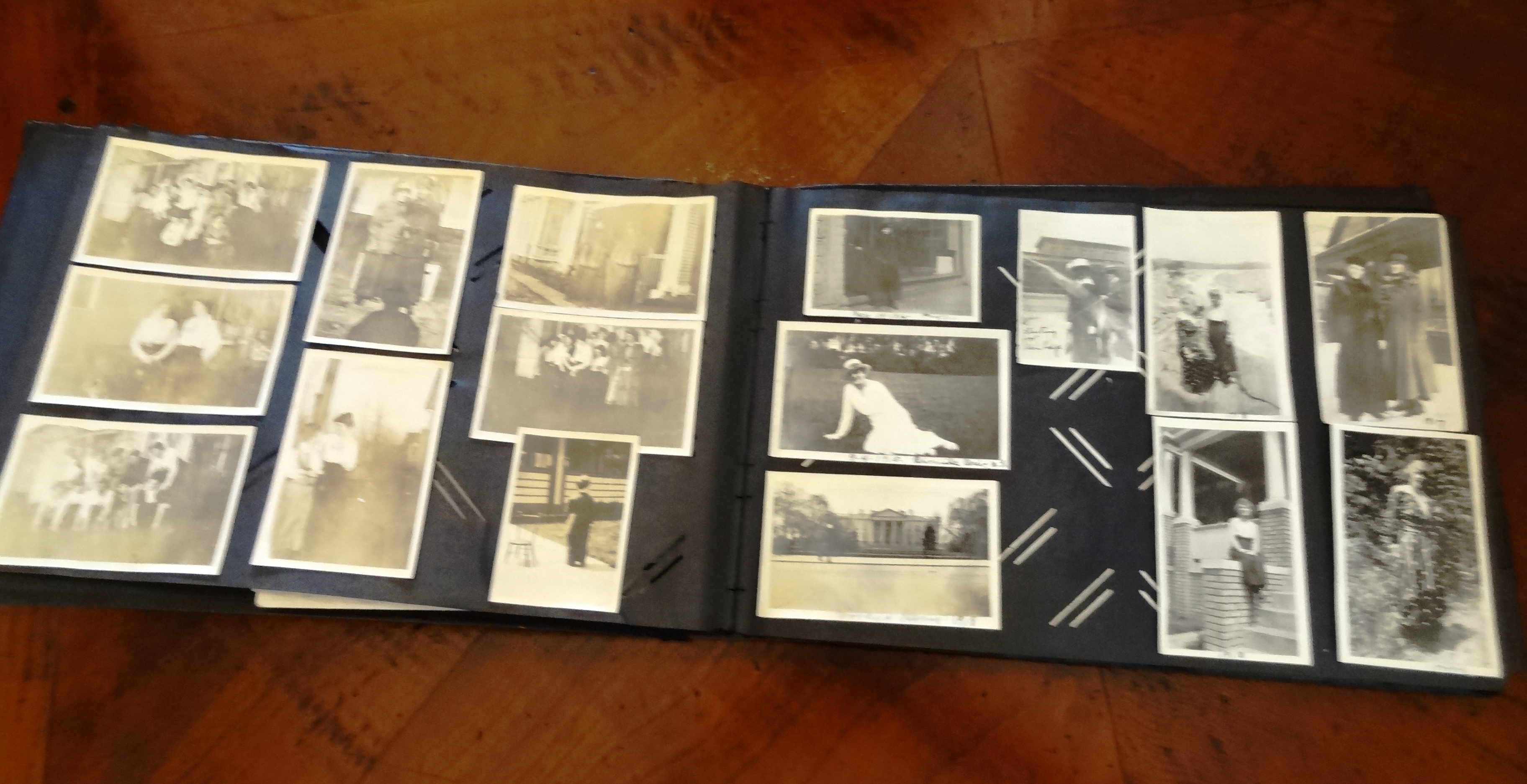
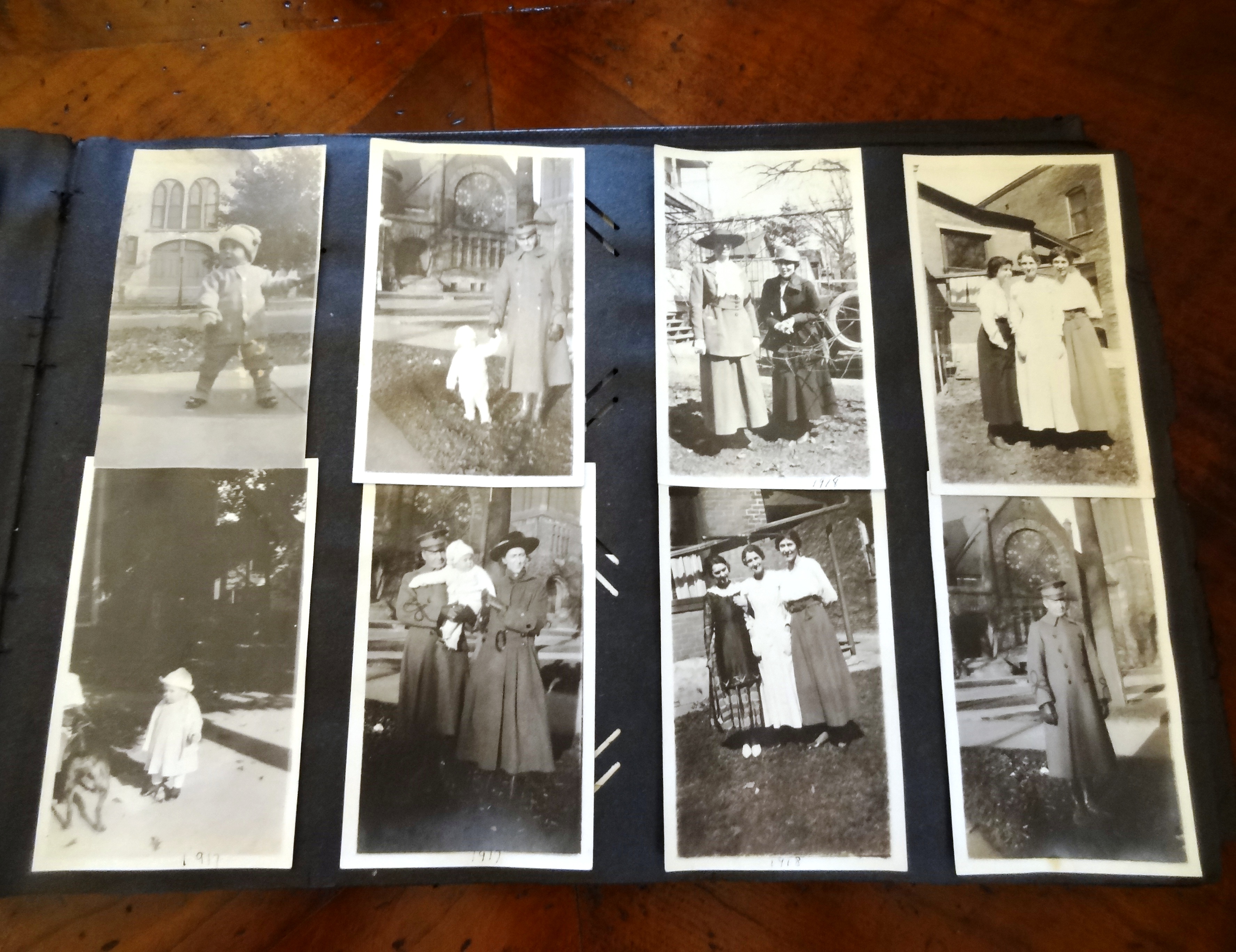
And now she has given it to me for our family. What a kindness. My daughter plans to scan the photos, and I will get Joyce a copy of them. And I plan to post some of the photos over a few posts after they are scanned. They are absolutely beautiful.

Here is a sample:


Imagine how I felt when I pulled this album out of the shipping carton!

Many of the photos are loose.

But some are affixed. These will be harder to scan.

Look at their lovely outfits!
I have not yet discovered which Culver left the album at Bayview Manor, but Jennie’s daughter Rhea died in 1976, which is 38 years ago. I have not yet found sister Lela’s obituary, but she was still alive in 1964.

Thank you so much, Joyce, for this wonderful treasure. My family and I thank you for your great kindness and compassion.

Read Full Post »

Let’s go back to George Paake/Paak/Peek/Pake today.

I mentioned that George was married at least three times–possibly as many as five times. It was pointed out to me that it would be very unlikely that George was married more than three times.

Take a look at the timeline:

George immigrated to the United States when he was ten or eighteen years old. I have conflicting sources on this. Either way, he married his first wife, Lucy Kliphouse, in Kalamazoo, on December 17, 1886, when he was 36 years old. The couple had five children, named after the grandparents. George was married to Lucy for fourteen years, when she passed away.

In 1902, at the time of the fire, George was a widower.

On April 15, 1906, George married Esther M. Cook. Adri van Gessel mentioned to me that by February 14, 1906,  the oldest daughter Cora (who, according to the newspaper article about the fire, was taking care of the household) was already married, so there was no one to take charge of the house. On Nov 21, 1907, Esther died of pneumonia.

On July 11, 1908 George was married to Addie Amelia Gifford (Wilder). Addie seems to have outlived George.

  • According to the 1910 Census, George (listed as Joseph G. Peake) was still married to Addie. He was listed with his wife Addie, his daughter Fanny, his son George, and Addie’s daughter Florence Wilder (from her previous marriage).
  • According to the 1920 Census, George (listed as George J. Pake) was still married to Addie. He was listed with his wife Addie, his son George, and Addie’s daughter Florance D. Wilder.

George died on December 9, 1925 after being married to Addie for seventeen years.

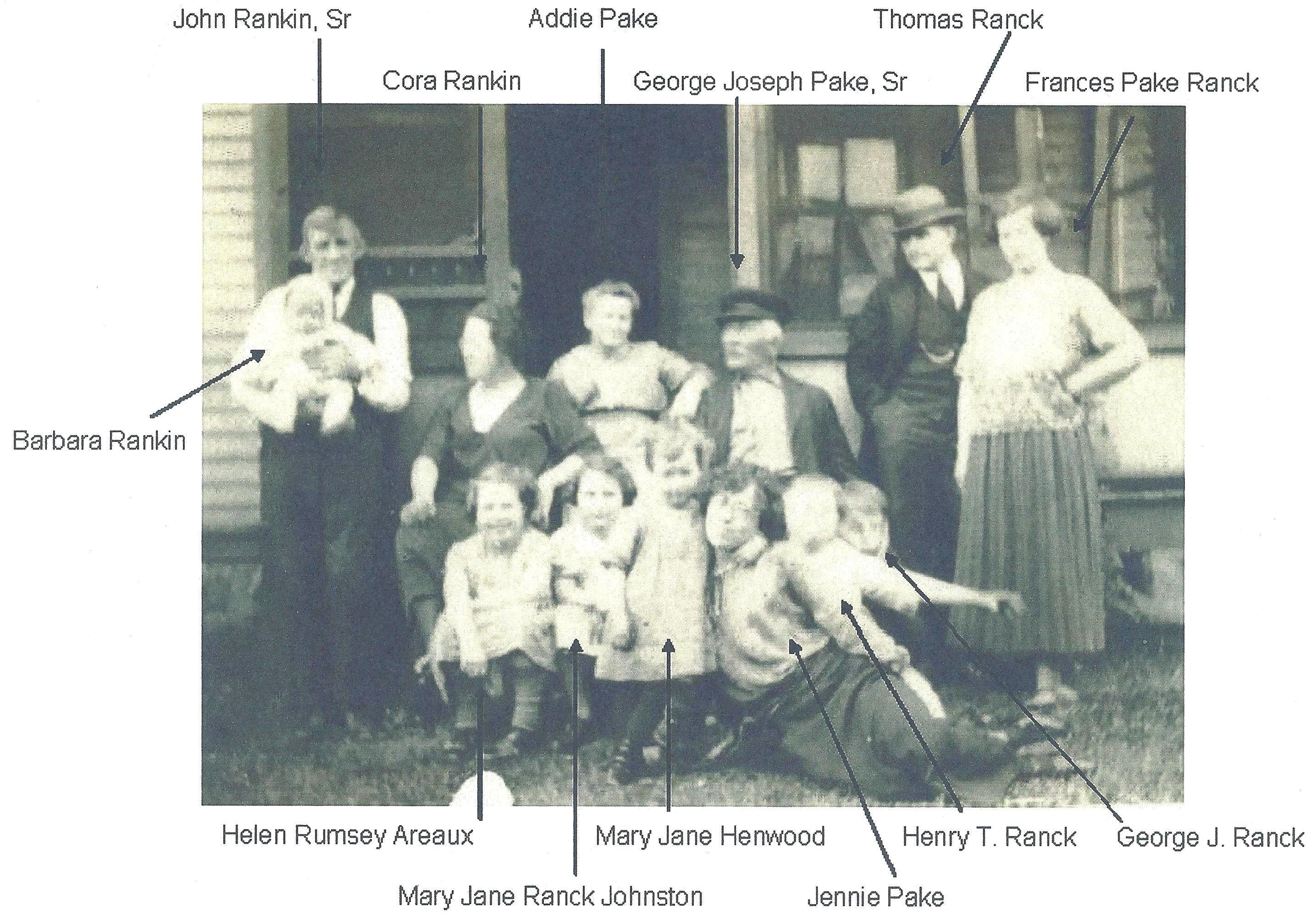
This photo of George (using the spelling Pake) and Addie and their family was taken not long before he passed away.


 ###

A Series of Disasters

The Children After the Fire, 1902
Paak-a-boo

Saved from the Fire


Read Full Post »

Although I’m in such a busy period that I can’t work on genealogy, I do have my daughter’s help right now to scan some old photos, so I will post some of them while I am too busy for research.

On the back of this photo it says Frank Tazelaar (near Whistle Stop).

Frank Tazelaar near Whistle Stop Kalamazoo

Frank Tazelaar
near Whistle Stop
Kalamazoo

So I looked up Frank Tazelaar on my family tree. Sure enough, he’s on there. He was born January 17, 1876 in the Netherlands, to Pieter Tazelaar and Adriana Bek. The family immigrated to the United States when he was 12, in 1888. On July 9, 1906, he married Genevieve Remine in Chicago. Genevieve was my first cousin 3x removed. Frank died in 1950.

So what is “Whistle Stop”? It’s the train station. But when I tried to figure out if it was the same Whistle Stop where my friends and I used to go to eat and drink (and a building that my father owned) or if it was the other train depot (where we owned a concession stand with my father), I discovered that there were actually seven train stations in Kalamazoo. Here is a fascinating article that says that Kalamazoo may have had more train depots than any other city. I am going to tentatively assume that this photo was taken near what I knew as the Whistle Stop.

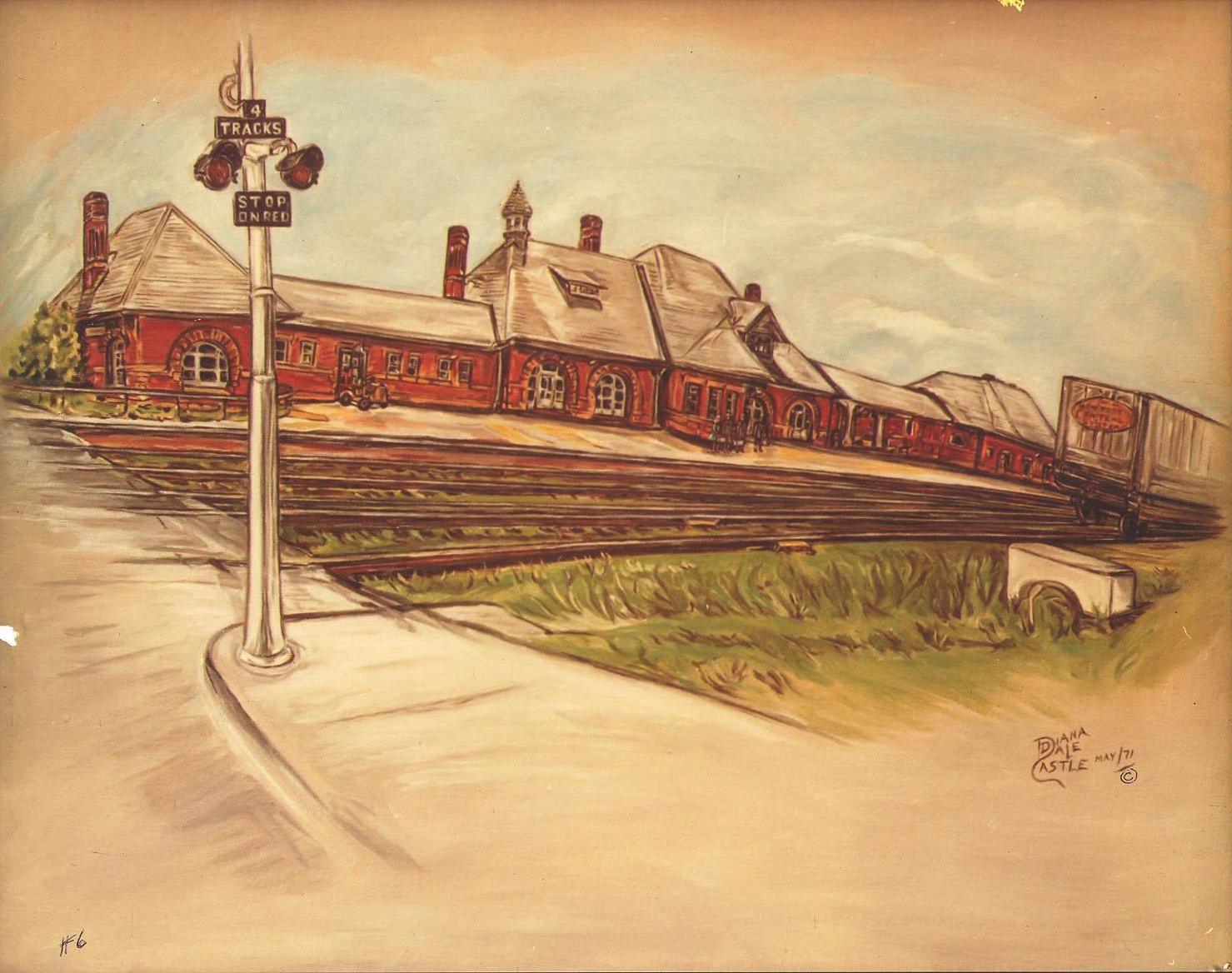
Here is a painting my mother-in-law did of the Whistle Stop. I apologize for the flaws in my copies on the computer for the next two photos.

The Whistle Stop  Kalamazoo

The Whistle Stop
Kalamazoo

And here is one she painted of the other train depot:

Train depot Kalamazoo

Train depot
Kalamazoo

OK, dad correct me if I made any mistakes!

What does the date on the photo of Frank Tazelaar say? Is it 1904 or 1914?

Be sure to note the type of rig he was driving, the dog, and his clothing compared with the men up on the roof. What is that pole thing coming down from up there? What do you think Gaslight means? The mark (pencil or crayon?) going through the photo wasn’t noticeable until my daughter scanned it. And thanks to Amberly at The Genealogy Girl she is scanning into .tif files.

Enhanced by Zemanta

Read Full Post »

Cora Wilhelmina DeKorn Zuidweg and her son Adrian Zuidweg Kalamazoo, Michigan circa 1910

Cora Wilhelmina DeKorn Zuidweg and her son Adrian Zuidweg
Kalamazoo, Michigan
circa 1910

Read Full Post »

Let’s continue the Paake/Paak/Peek/Pake family saga.

I grew up not knowing that great-great-grandmother Alice had had a brother named George. When I discovered him, it was, in part, because of a newspaper clipping I found among the family papers. I’ve already written about George’s family here:

A Series of Disasters

The Children After the Fire, 1902

Paak-a-boo

Saved from the Fire

In the Paak-a-Boo post, I contemplated whether an unidentified photo I owned could be George Paake, based on the resemblance to great-great-grandmother Alice.

It turns out we still don’t know who is in that photo, but I now know what George looked like!


Here is a photo of Lucy Kliphouse (her name was Anglicized from the original Dutch: Lukkien Kliphuis ), the mother of George’s five children.

This is his first wife. After she passed away in 1900 (two years before the fire), George went on to marry a few other women. It’s said he might have had five wives.

Stay tuned for more information about the leaves and blossoms of George’s branch of the family!

Read Full Post »

Just over a year ago, in A Series of Disasters, I posted a newspaper clipping that I found tucked in with the family photos. This is the copy of the article:

The residence of George Paake at 1016 Trimble Avenue was burned this morning about 10:30 o’clock and a worthy family which has had a series of disasters, left without a home.  The house which Mr. Paake was paying for in the Building and Loan Association was entirely ruined although most of the contents of the home were saved. Mr. Paake receives no insurance whatever and the little which had been accumulated by the family was lost.

The fire is only an incident in the history of the family. Mrs. Paake died a short time ago leaving five children, the oldest being fourteen years old. Since the mother’s death the little girl has had entire charge of the house and the four little children and has had all the responsibility of the family except the support which Mr. Paake gave as a laborer.  Recently he has been unable to work and was ill this morning when the fire occurred.

The neighbors have taken in the little ones and are doing all that is possible to alleviate the sufferings of the family. Mrs. Carrier has been responsible for raising a sum of money to which the neighbors have liberally contributed.

At the end of this post I will re-post the newspaper clipping for documentation. I want to apologize for spelling the surname every which way, but at every turn the name is spelled differently. Family members changed the spelling, and different documents recorded it differently. Paak-Peek-Paake-Pake: they are all the same.

Eventually, I discovered that this man was George Joseph Paak, Sr.,  the brother of my great-great-grandmother Alice Paak DeKorn and that the fire occurred on Wednesday, September 3, 1902.

George’s wife Lucy Kliphouse passed away in 1900, leaving 5 young children in their father’s care.  George (born Joost) was 50 at the time he was left a widower. At some point he had changed the surname to Pake.

The five children were Cora, the eldest mentioned in the article, Jennie, Theresa (also called Tracy), Fanny (also called Frances), and George Jr. Cora was born in 1888; Jennie (who later changed her name to Jane) in 1890; Theresa in 1893; Fannie in 1896, and George in 1898.  George was only four when the fire occurred. Imagine Cora, at 14, taking care of the others–ages 12, 9, 6, and 4. What a burden on such a young girl. And when her mother died, she was only twelve and young George was two!

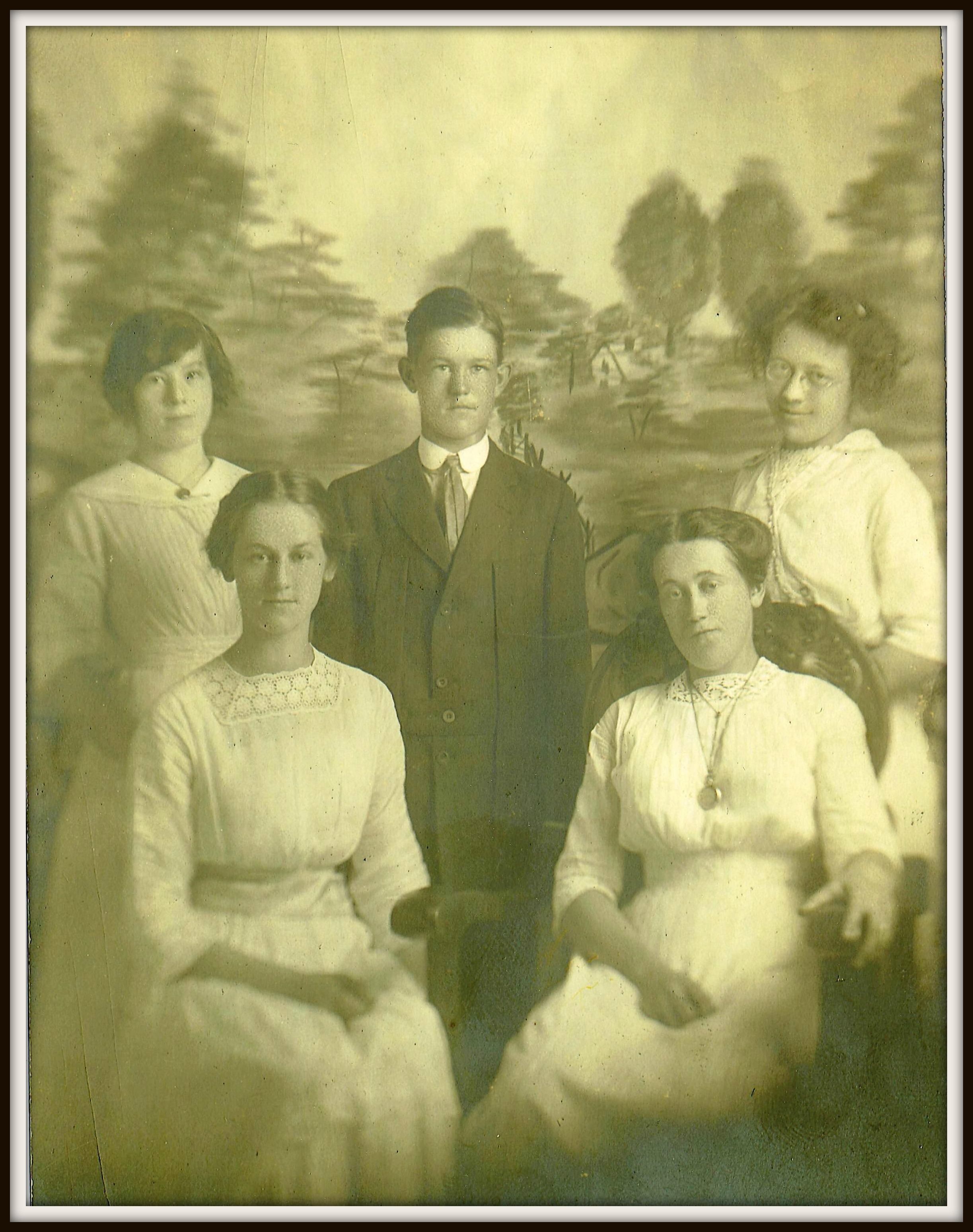
Since the time of that post, George’s grandson, Professor Edgar Lawrence, discovered this blog. He’s been able to fill in many of the missing pieces about this branch of my family. His mother was Theresa, the middle child.  Here is a photo, taken at least a decade after the fire, showing all five Pake children.

Front row: Theresa and Cora Back row: Frances, George Jr., Jennie (Jane)

Front row: Theresa and Cora
Back row: Frances, George Jr., Jennie (Jane)


###


Read Full Post »

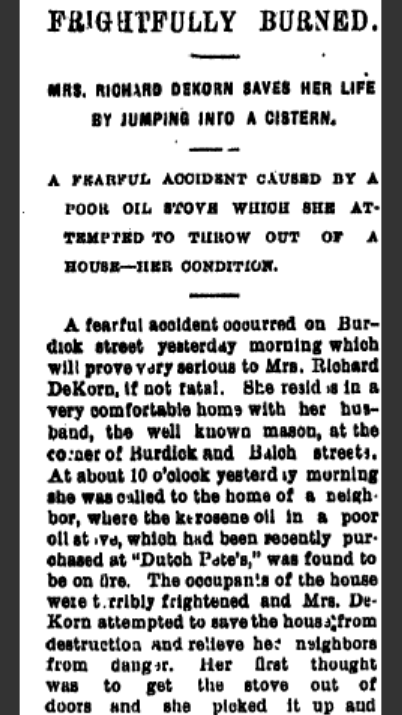
In the last two posts, I told you about the series of disasters that befell the Paak (Peek/Paake/Pake) family.  As I started researching for more information, I came across a worse and more horrific family disaster.  And this one happened to my very own great-great-grandmother, Alice Paak DeKorn, Mrs. Richard DeKorn (born Aaltje Peek in the Netherlands), on May 26 1891.

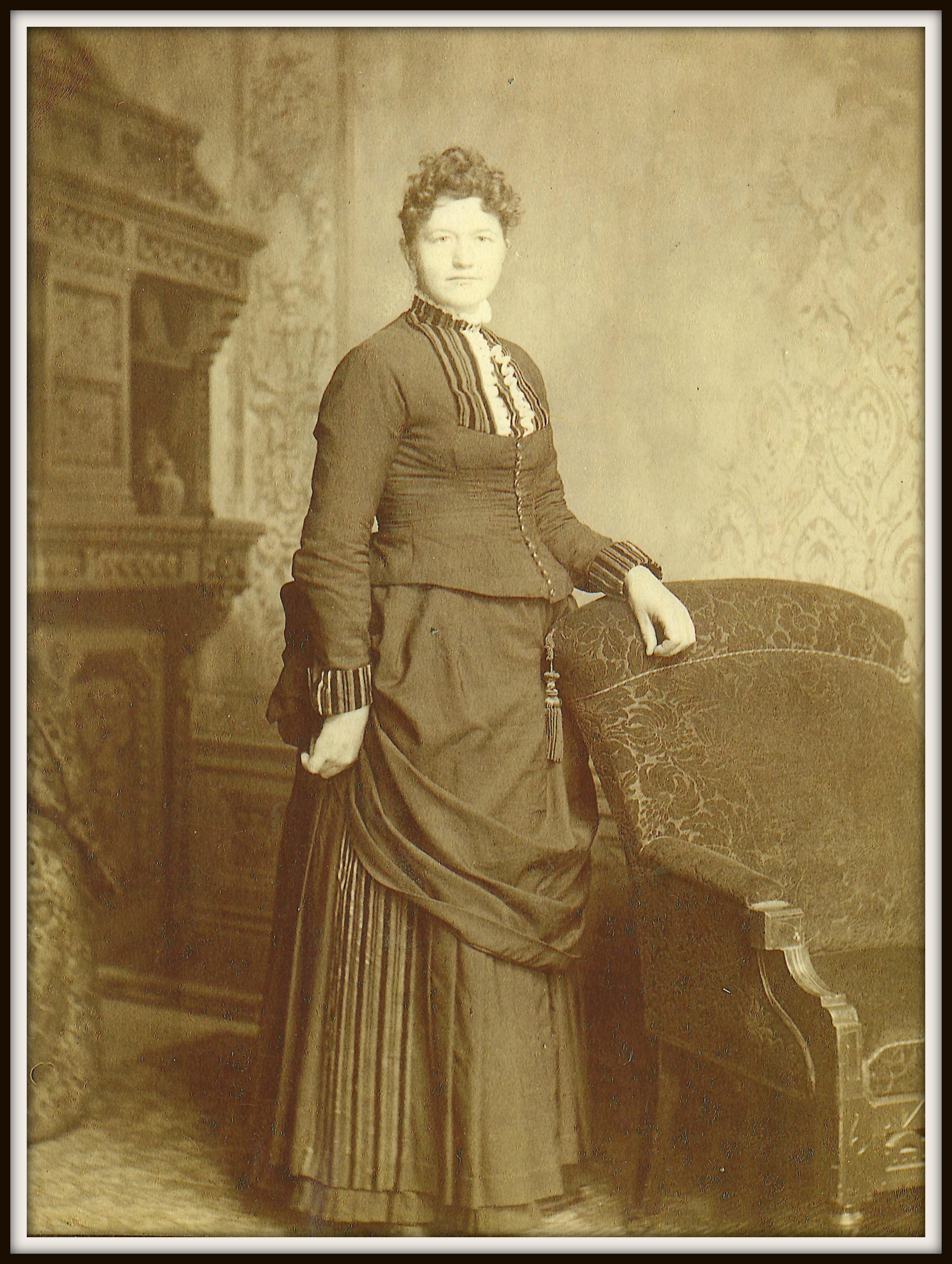
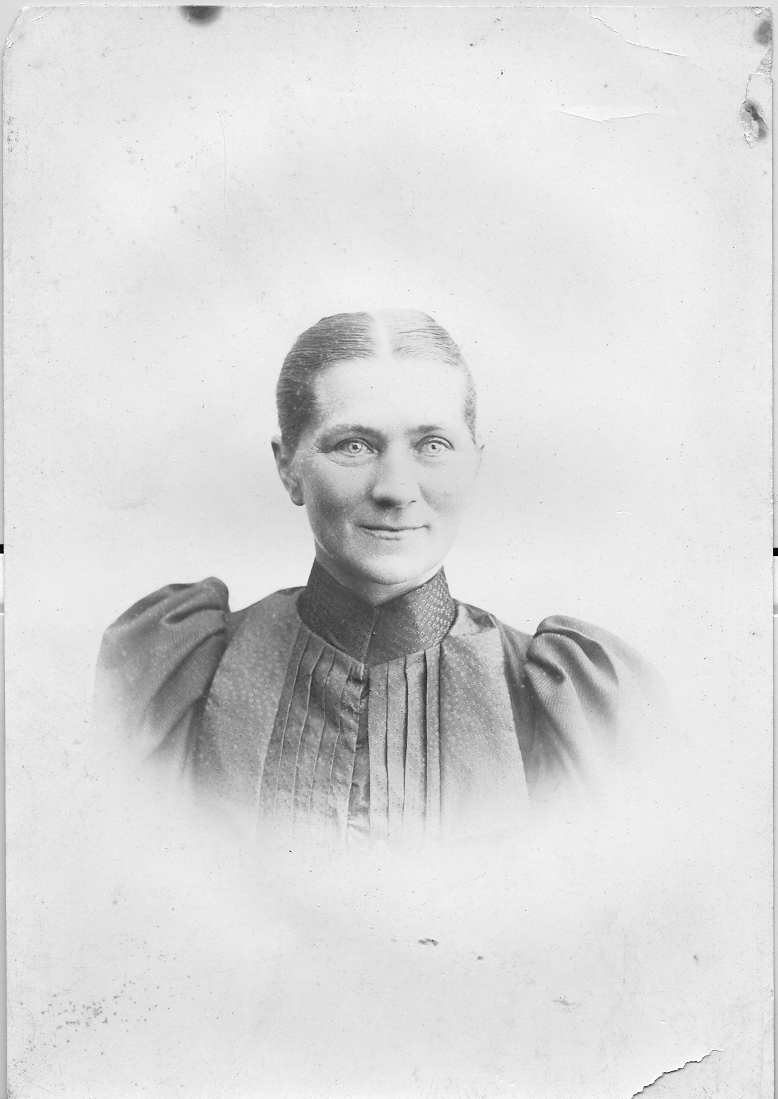
Alice Paak DeKorn

Alice Paak DeKorn

If you remember the post with the pretty shawl, that was her shawl.  She’s the one with the 3 Peek sisters; Alice was  the prettiest one.  Poor George was her brother. She was also the mother of my great-grandmother Cora DeKorn Zuidweg.

Read it and weep:

At the time this happened, Alice’s children were 18 (Jennie), 16 (Cora), and 10 (Joseph).  For the next week, the local newspaper provides updates about Alice’s condition, which seems to be improving.  Alice did live another 17 years after the accident.

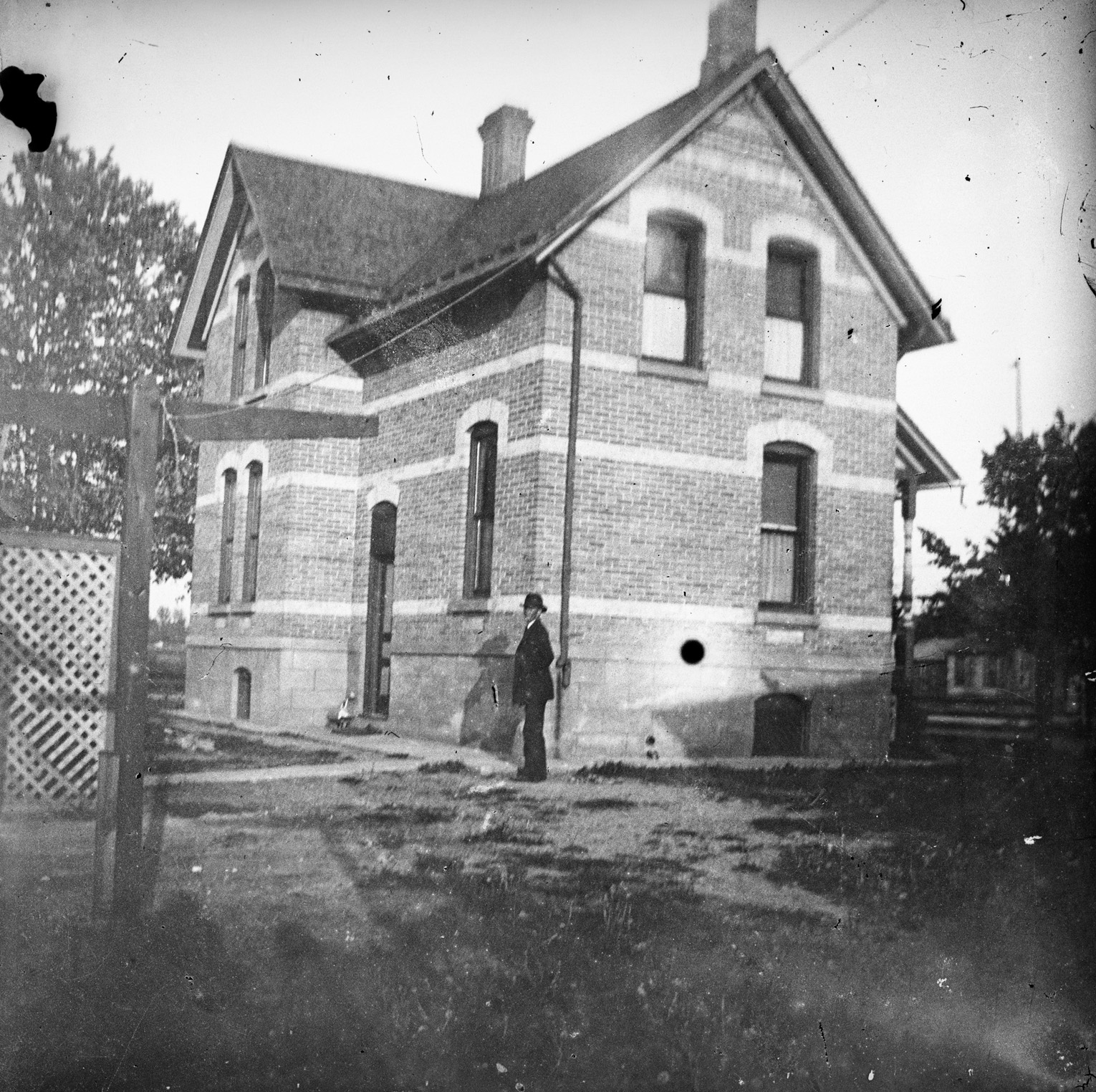
The “comfortable house” she lived in is said to be at Burdick and Balch.  That would be this house, built by her husband Richard DeKorn who stands in front:

Richard DeKorn's home at the corner of Burdick and Balch, Kalamazoo, Michigan

Richard DeKorn’s home at the corner of Burdick and Balch, Kalamazoo, Michigan

I would like to know more about “Dutch Pete’s,” where the oil stove was purchased.  What happened in those days with an accident like this?  Would there have been an investigation to see if there was a culprit responsible for the stove or if it was human error that caused the fire in the first place?

Notice how Alice was being a hero, trying to help out the neighbors so that they didn’t lose their house and belongings and so that they were safe.  I always had a good feeling about her.

Finding this accident in the newspaper archives did shake me up somewhat. After all, she looks like such a sweet lady, and I can only imagine how horrifically painful her injuries must have been–and what a frightening experience.

Strangely, my favorite contemporary children’s book (and one I taught several times) is Out of the Dust by Karen Hesse.  At the beginning of the book, the book’s protagonist Billie Jo loses her mother by an accident which is very similar. I remember that Hesse said in an interview that she found the accident in a newspaper article and put it in her book.  There are differences as in the book the cause seems to be an accident where the family confused kerosene with water, and in this newspaper account it seems to hint at a defective oil stove. I imagine there were far too many of these kinds of accidents in those days.

Alice’s terrible accident must have left her family very shaken up. I’m sure it made an impact on her children’s lives.

Read Full Post »

« Newer Posts - Older Posts »