Feeds:
Posts
Comments

Archive for the ‘Photography early 20th century’ Category

How’s that for a weird title?! If you didn’t notice I’ve been on a break, please don’t tell me or I’ll feel bad ;). I am back, but only on a limited basis because of all these things like work and life that keep intruding on my genealogy research and blog reading! I wanted to stop in today to say:

HAPPY NEW YEAR!!!!

Let’s make 2015 the best yet!!

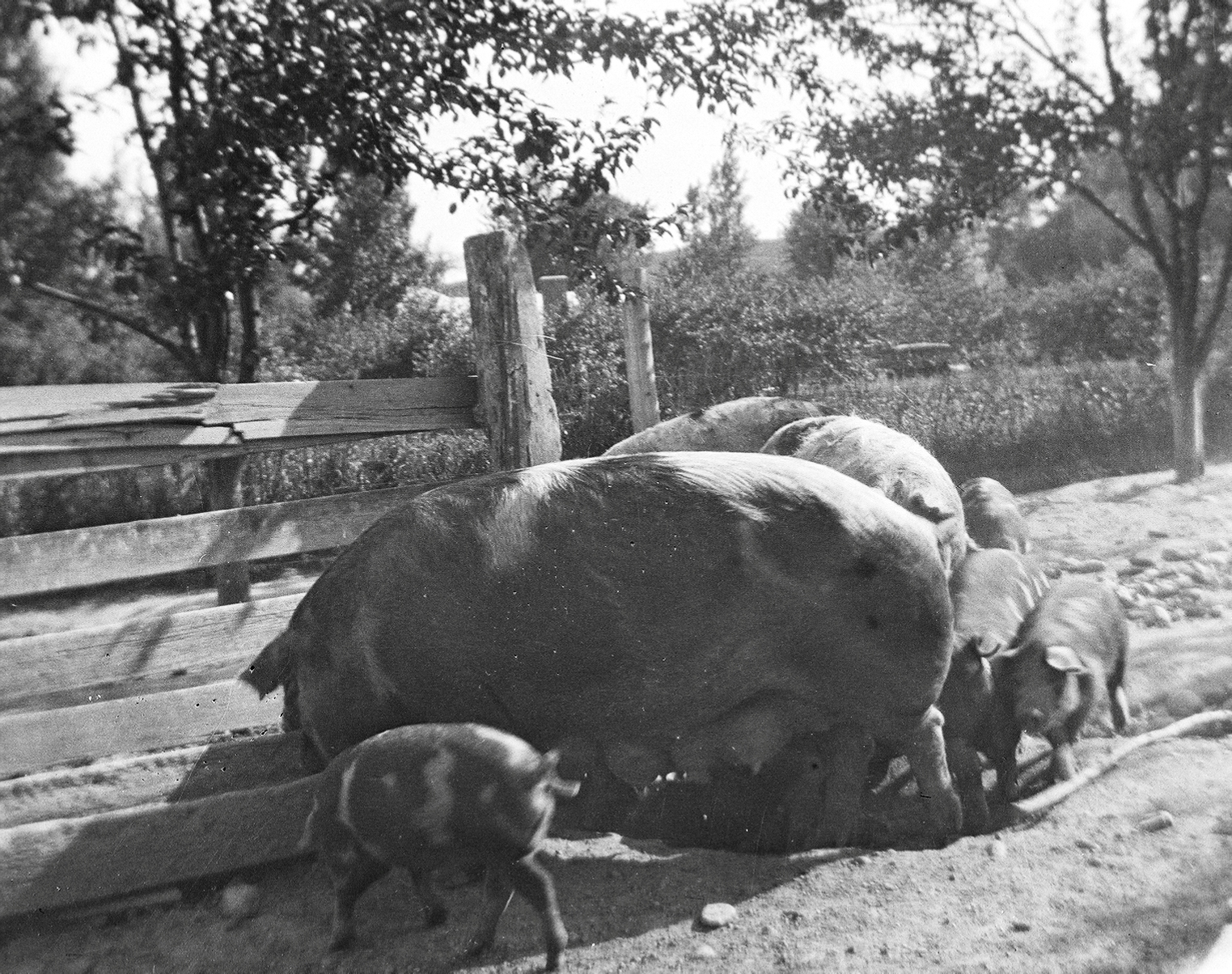
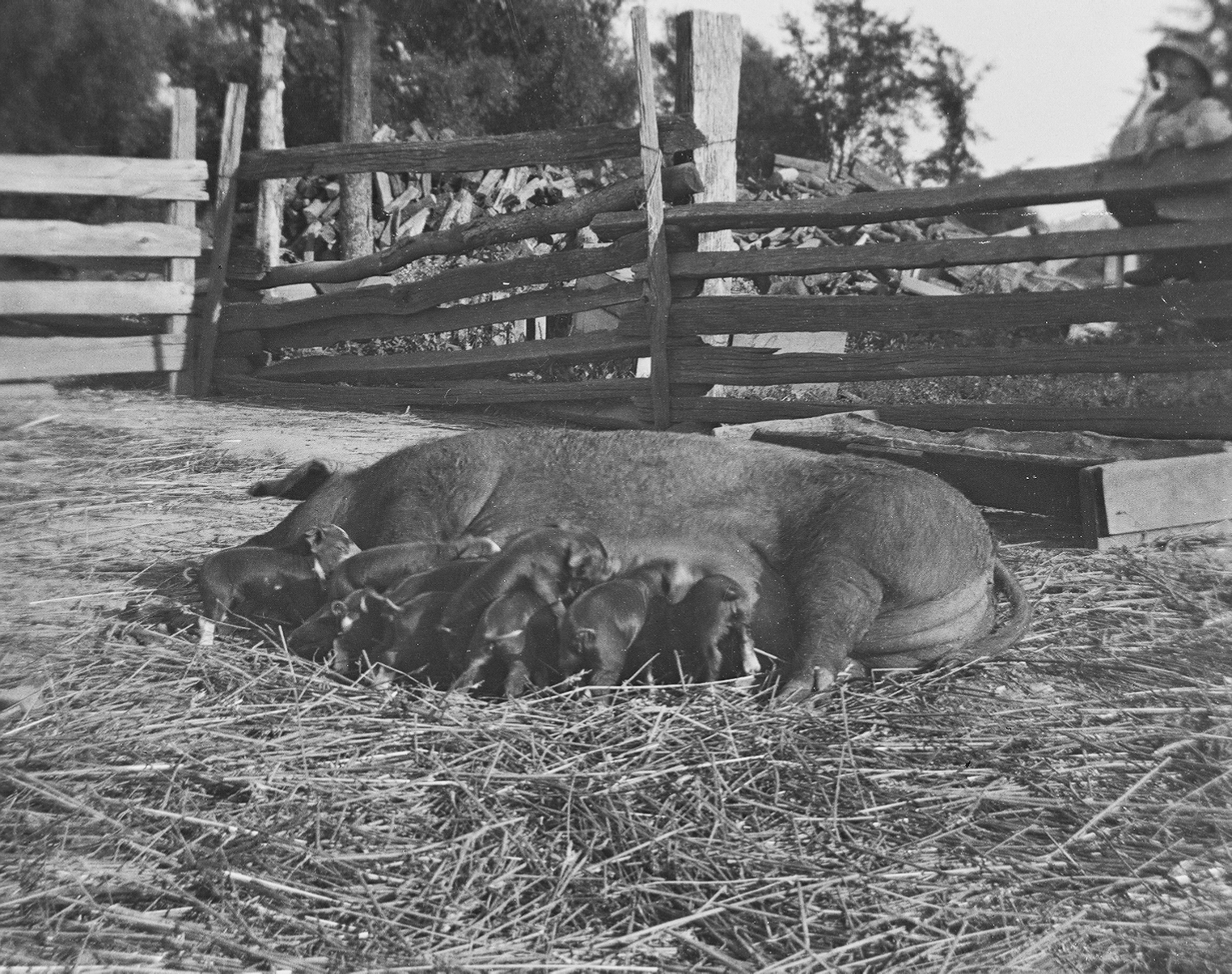
I have a set of old glass negatives that have been digitized. I’ve shared a few on this blog. Here is one I have not shared. At first I thought it was a photo of a pig (hog? what is the difference?) with her very cute babies. I am quite certain this was taken by Joseph DeKorn at Brook Lodge in southwestern Michigan (I’ve written about the place here).

But when I looked more carefully I saw Grandpa sitting in the upper right corner! I wonder what he was thinking and if he was tired. He seemed to be visiting the resort with his cousin and uncle.

Here are some more pig photos from Uncle Joe.

These photos are 100 years old. What remnants of our lives will there be in 100 years? Maybe too many!


Read Full Post »

I’ve traveled to California, Sedona, and Michigan in the past few weeks.  Needless to say, I am behind in my work even more than usual. I want to continue Theresa Pake’s story and to explore the Jennie DeKorn Culver photos more, but these projects take a good deal of time.

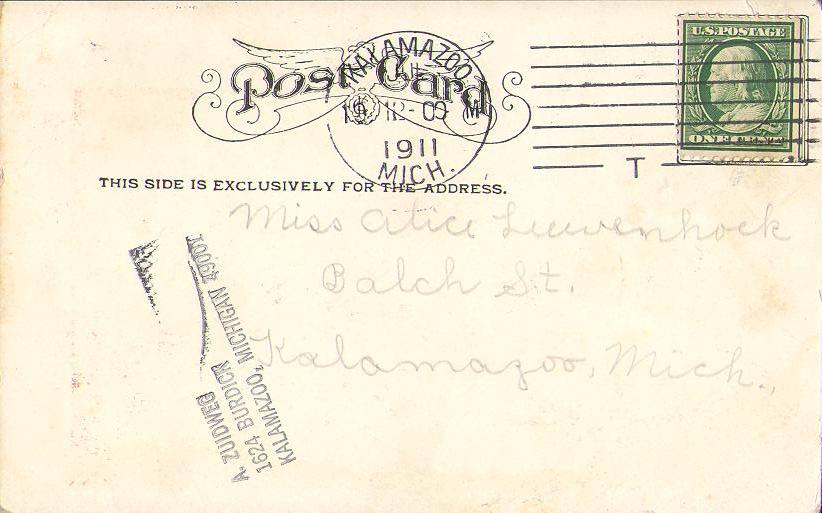
Instead, I decided to take a look at an old postcard postmarked 1911. The postcard is to Alice Leewenhoek, Richard DeKorn’s granddaughter through his daughter Jennie. Alice was an only child who lived with her mother Jennie and her father who Grandpa always called “Uncle Lou”–Lambertus Leewenhoek.

In the photo below, Alice is sitting with a friend, neighbor, or relative against the exterior wall of Richard DeKorn’s house. She holds a doll in her lap and is petting Tom or Carlo (if I had to guess, I would say it’s Tom).


Alice Leeuwenhoek with doll

On this postcard, Nellie Bradt is thanking Alice for her “postal.” Nellie’s address is marked as 1130 S. Burdick Street.  The photograph is Bronson Park, which is the beautiful “town square” of Kalamazoo.

Bronson park front postcard


After seeing that the mailing address is listed as Balch St. and doesn’t include Alice’s street number (not uncommon for that time period in Kalamazoo), I went to my family tree on Ancestry and discovered that I had never found the Leewenhoek family on the 1910 census.  So I tried something different and looked for the 1910 census on Family Search. Bingo.  Instead of Lambertus Leewenhoek, I found Lamburtos Leenwenhock, at 110 Balch Street, Kalamazoo, Michigan. Uncle Lou was living with his wife Jennie and his daughter Alice who was 13 years old in that year–and therefore around 14 at the time of the postcard in 1911. New info: According to Uncle Don, they lived in the wooden house just behind the Richard DeKorn brick house.

Can you read anything more on the postmark besides the city, state, and year?  Is it December 9? Or does it say something else?

Bronson park back postcard


Grandpa and Alice were first cousins, their mothers were sisters.

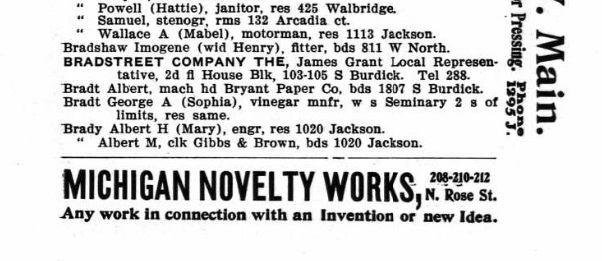
I haven’t been able to find Nellie Bradt in the 1910 census, but I did find her in an 1899 city directory. I then found her parents in a 1905 directory. I think I can find them more years, too. But I don’t understand how to read these entries. The 1899 entries are entirely different from the 1905, but neither one really gives me the address.

Here is the 1899 that lists Nellie with her parents, Mr. and Mrs. George A. Bradt. I understand they lived in the City of Kalamazoo. And I know “a” means acreage, but not how to interpret what any of this means or how it connects with an address.

Nellie Bradt 1899 city directory


Here is the 1905 directory entry. Nellie isn’t mentioned, but her parents are. What in the world does it mean?

Nellie Bradt's parents 1905 city directory

Is there a way to search for Nellie in the 1910 census using the 1130 S. Burdick Street address she gives? Can I search the census by address?

Note that many of my relatives lived in this Burdick/Balch neighborhood. When I look at the census records from late 19th and early 20th century, I see that almost everyone, if not everyone, who lived there was Dutch.

My grandfather’s gas station was at the corner of Burdick and Balch, across the street from the Richard DeKorn house. Grandpa lived in that house for part of his childhood, with his parents and grandfather, Richard. When he built his house down the block on Burdick, he was staying in the same general area his family had lived in for decades. He continued to work at his station and live in his house until he retired and moved to Portage.

I remember as a child meeting Mrs. Bradt Braat who lived next door to the gas station. The name is pronounced, by the way, like the sausages that go with beer. I wonder if she was related to the Nellie Bradt who wrote this postcard. Mom? Uncle Don? New info: no, she must not be as they were a Belgian family (see comments below).

Alice Leewenhoek was my grandfather’s cousin. Note that the postcard is stamped with the name and address of Grandpa’s father, A. Zuidweg. I wonder why?

One postcard. So many questions!

Read Full Post »

This post follows the posts I’ve written about Richard DeKorn’s step-daughter Marge and her son David Owens. See links below.

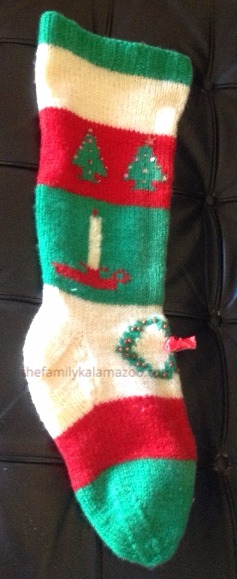
I thought I would share some photos of beautiful objects made by Marge and David, two very creative individuals. Thanks to Rochelle Owens for sharing these photographs.

Marge knitted the Christmas stocking (look at those small stitches), and she also made the agate necklace.

Agate and silver pendant created by Marge Sootsman Owens

This mosaic was designed and made by David Owens.

Read Full Post »

I haven’t written much about my grandfather’s paternal grandparents. I wrote about his aunt’s family, the Van Lieres, but we know very little about the parents of Grandpa’s father and his aunt.

His paternal grandmother was Jennegien (Jennie) Bomhoff. She was born 5 March, 1838 in Zwolle, Overjissel, the Netherlands. She passed away on 16 December 1924 in Kalamazoo.

She married Grandpa’s grandfather, Johannes (John)  Zuidweg, in Goes, the Netherlands on 4 November 1869, when she was 31 years old and working as a maid.

Grandpa told me that she wore many layers of skirts and they all had pockets in them.  Can you tell below that she was wearing layers of clothing? What do you think she carried in those pockets? He did tell me that he saw her pull an apple out from an under skirt.

The following photos were identified to me as Jennie.  How old do you think she is in each one?


What style bonnet is she wearing? And how many decades did she wear that same bonnet?!


In the next photograph, she is the woman on the side, in the dark dress.

Here is some research Yvette Hoitink provided about this family:

In 1869, Jennegien married Johannes Zuijdweg in Goes, Zeeland, about 150 miles away. That is an uncommonly large distance for somebody to travel in the 19th century, especially for an unmarried woman from the working class. Further investigation showed that her brother Albert Bomhoff was married in Goes in 1867. It must be through this connection that Jennegien moved to Goes, where she worked as a maid prior to her marriage. A rich and easy to retrieve source of information for ancestors in the 19th century are the marriage supplements: the documents a bride and groom had to submit when they got married. Unfortunately, the Goes marriage supplements for the period 1811-1877 got lost in 1877. Since several marriages on the Zuidweg side took place in Goes, these records could not be obtained. Digital images of the marriage supplements of Lucas Bomhof and Jeuntien Dansser, the parents of Jennegien Bomhof, were retrieved from Familysearch.org. Lucas Bomhof was born as Nijentap, but his family took the name Bomhof around 1812. In the province of Overijssel, it was common to be named after the farm you lived on. It was only with the French occupation that people were obliged to take a hereditary surname. Nijentap may be the name of the farm that the family lived at.


Read Full Post »

Reminder: Jennie DeKorn Culver, 1857-1947, moved to Seattle from Kalamazoo with her two adult daughters, Lela and Rhea, around 1915

Since I did not have any photographs of Lela and Rhea Culver as adults until I received the scrapbook, I have had to make guesses on the identity of people in the scrapbook photos. I did have a good photograph of Jennie’s face as a young woman, so that does help.

I’m hoping you can help me decide which photos do have Jennie, Lela, and/or Rhea in them. After the new photos, I’ll repost a couple I’ve posted before for comparison.

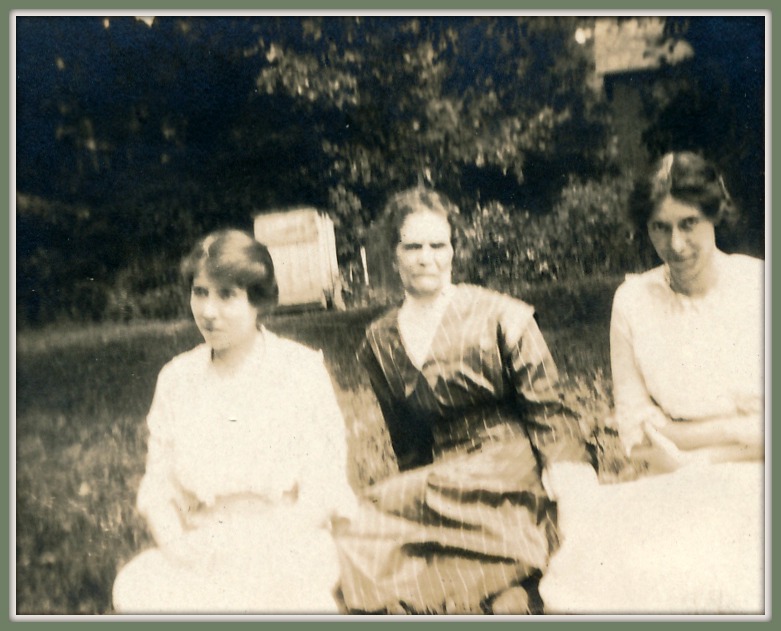
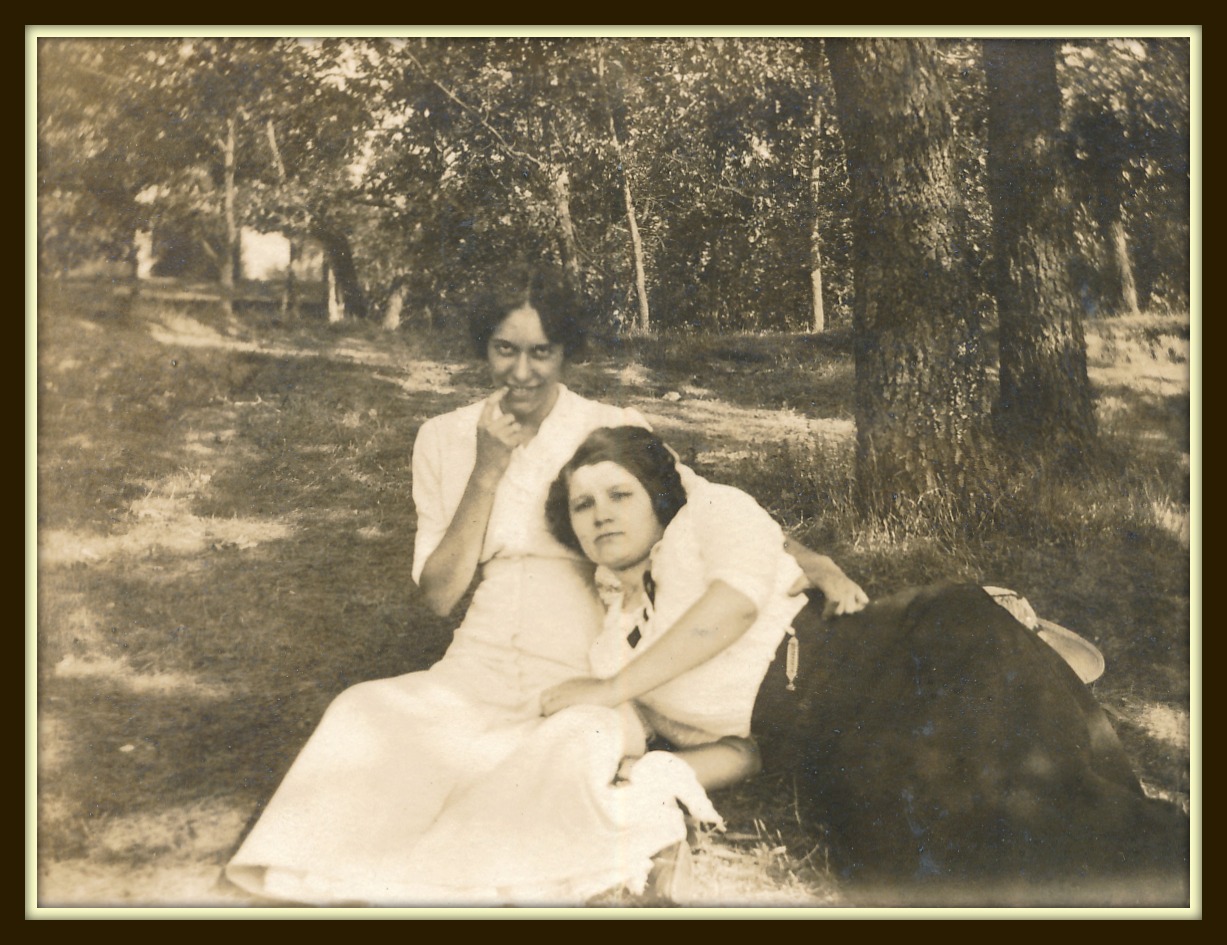
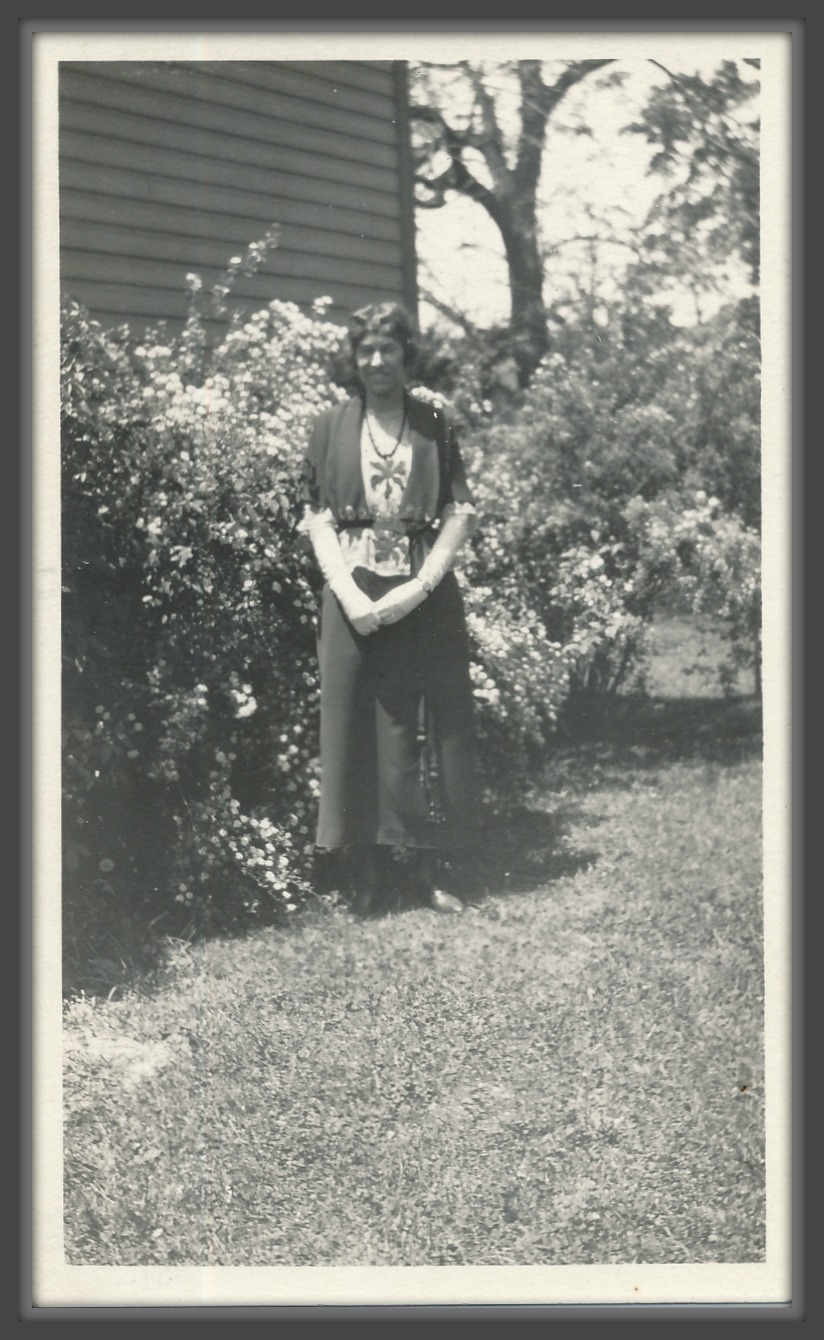
Because the photos were all in the scrapbook together–and some of them were loose–it would help to know what year fashion the clothing is in each photograph (since the years may be all mixed up). Clothes, hair, background, compare faces: whatever ideas you have, lemme have ’em, please! I’ve numbered the new photos. Also, you can click on each photo to enlarge.


From Scrapbook (haven’t posted before)

Photo 1


Photo 2 (I feel fairly certain this is Jennie and her daughters)


Photo 3

Photo 4

Photo 5

Photo 6

Photo 7


From scrapbook (posted in earlier posts)

Photo 8

Lela and Rhea Culver Seattle, WA

Lela and Rhea Culver
Seattle, WA

Rhea and Lela Culver Kalamazoo, Michigan

Rhea and Lela Culver
Kalamazoo, Michigan

Jenny DeKorn Culver 1857-1947

Jenny DeKorn Culver
1857-1947

Related articles

Read Full Post »

I wrote that the Jennie DeKorn Culver’s daughters Lela and Rhea were at the Children’s Home in Kalamazoo during the divorce proceedings of their parents.

According to articles in The Kalamazoo Gazette, they were there from at least December 1896 to May 1897.

Here is an article about a Christmas program Lela performed in:

I find it curious that the backup singers or performers (Lela was one of them) are called “Nineteenth Century Children.” There were still three full years of the 19th century left at this point.

I’d love to know what gifts the children received–and if they were from the community. Would children like Lela and Rhea with living parents have also received gifts from their parents? Or would that have been against the rules?

1896 Christmas Tree

1896 Christmas Tree

Since I had proof through the Kalamazoo Gazette articles that the girls were at the Children’s Home in 1896 and 1897, I contacted Lakeside Academy, the current name of what was the Children’s Home during the Culver girls’ time. I had heard through another blogger that they still had records from the late 1800s. Don Nitz, the CEO of Lakeside for Children, was so kind to search for me. Unfortunately, there are gaps in the records, and he could not find any documentation of Lela and Rhea’s stay with them.

Read Full Post »


I wrote about this coat here.

Here it is again.

Isn’t this the same coat? And isn’t it fur? NOT VELVET.

And, if so, what changed Jennie’s fortunes from having her children in an orphanage 20 years earlier to wearing a full length fur coat? Note that the earlier photo has no snow, whereas this photo is obviously winter.

The Mystery of Jennie D. Culver deepens.

P.S. Do you think the other woman in this photo is one of Jennie’s daughters or another woman?  Here is the photo I posted last week of the daughters:

Lela and Rhea Culver Seattle, WA

Lela and Rhea Culver
Seattle, WA

Read Full Post »

Last year I wrote here about my great-great-grandfather Richard DeKorn’s second family. After the death of my great-great-grandmother Alice Paak DeKorn in 1908, he married Jantje (Jennie) Jansen Sootsman in 1910. It was a second marriage for them both.

Jennie had two daughters, Marion and Marjorie (Marge), by Oscar Sootsman who had passed away in 1907. Richard became their stepfather.

Marge and Marion Sootsman

Marge and Marion Sootsman

The younger daughter, Marge, married George Bernard Owens on December 9, 1916, in Kalamazoo.

This slideshow requires JavaScript.

When I wrote the post, I wasn’t sure, but believed she had one son.

I now know that son was David Owens.

Eventually I was contacted by the ex-wife of David after she read the blog post.

Rochelle Owens wrote me that she had been married to David for about three years. The marriage was the 2nd of David’s three marriages. She said that he was born March 1, 1929 or 1930.

Apparently Marge divorced George at some point. Rochelle believes it was before or soon after David’s birth.

In 1948, at the time that her mother passed away, Marge and David both lived in Ann Arbor, Michigan. David attended the University of Michigan.

What I particularly love hearing from Rochelle is that Marge was a gifted woman, an occupational therapist.

Rochelle Owens is a poet and experimental playwright who has taught at Brown University, the University of California, San Diego, the University of Oklahoma, and the University of Southwestern Louisiana (now the University of Louisiana at Lafayette).

On her website, rochelleowens.org, Rochelle has posted some “recollections” in a section titled Autobiograpy. Here is a passage where she describes David Owens, as well as her reminiscences about some famous writers, including her friendship with poet Amiri Baraka. She creates the atmosphere of the disenfranchised artists of the time period–and David Owens considered himself an artist.

          I did not personally know of any young women who wrote poetry then. When I stepped out of the subway and headed towards Christopher Street, I imagined myself as a poet. I felt adventurous and idealistic. A few years ago it occurred to me that during that period of my life I hadn’t been aware of the value of money. I think it’s a little strange. I was after all simply a poor working girl who was not even a graduate of Brooklyn college or C.C.N.Y. I did not have the luxury of having prosperous parents give me an allowance while I played out the role of being a poet searching for “authentic experience” while receiving an education at an expensive institution of higher learning. I did clerical work for a living and was innocently blind to the added disadvantages of being poor and female. Naively, I committed myself to art as ideology. It was in Pandora’s Box that my glance first rested on the animated face of David Owens. He had noticed me while he was engaged in conversation with a young painter by the name of AI Held, who has since become very successful. David was good-looking in a romantic English way. His personality was mercurial and seductive. He feigned an English accent and loved punctuating his obsessive speech with a French expression, raison d’etre, while railing against “bourgeois values.” He considered himself an artist while working as a salesman and doing carpentry. At the Peacock Café, The Lime-light, and the Cedar Bar, we met our friends and acquaintances who were painters, sculptors, photographers, poets and musicians. I came to know some of the leading personalities whose creative contributions have shaped avant-garde theatre, literature, and art in America during the last twenty-five years: Alexander Calder, Jack Gelber, Judith Malina, Julian Beck, Lee Strasberg, Ronald Bladen, Rod Steiger, Leo Castelli, and Tambimuttu.


David’s charisma and style impressed all. He resembled Richard Burton and was society’s ideal version of an angry young man, whose baritone voice skittered through the air and banged against the walls like giant hornets. He reveled in certain names and periods of history like, “Malraux’s Man’s Fate, the Renaissance, the French Impressionists, Franz Kline, abstract expressionism.” Etc.


I was perceived as an attractive and a bit zany girl who sometimes laughed hysterically. My background and upbringing had left me anxious and nervous. At times I imagined myself to be in disguise. On other occasions I felt like an irrepressible poet-philosopher. One evening after reading some of my poems, Peter Ritner, a former editor at Macmillan, bombastically stated that a mere girl should not have it in her to write such rich and cerebral work. He screamed that I must be a freak. “What experience could you ever have had! You’re just a goldfish swimming around in a bowl.” He died a suicide years ago. He invited David and me to dinner a few times, and I recall that he always prepared delicious mashed potatoes with lots of butter and garlic.


In the winter of 1955 David and I discovered old New York together. We visited the financial district; the buildings were strange and wonderful. We were the observers of an environment. Although we had no hope in its very structure, we saw our appreciation of the line, form, and color of the area as an act of faith in our ability to draw beautiful observations in a disintegrating time and an unbearable society. It was America during the Eisenhower years. The Man in the Gray Flannel Suit hung suspended over the rapidly growing artistic and political consciousness of the young like a bloated advertising zeppelin ready to explode.
It was the beginning of radical artistic experimentation. The poets, playwrights, film-makers, painters, sculptors, and performing artists were inventing, finding, producing, gathering, analyzing, and selecting the groundwork for those who came later, including the pop culture heroes of the billion dollar rock music business. The place to be was in New York or San Francisco. Later I would meet playwrights Adrienne Kennedy, Megan Terry, Roslyn Drexler, Sam Shepard, Ken Bernard, and Leonard Melfi.
In March, two days before my twentieth birthday, I was married to David. We moved into a small apartment on the upper west side. I was working for the Poetry Society of America and became a member after submitting some poems to the committee of jurors.

I wanted to add this paragraph although it’s not about David as it is about the famous poet Amiri Baraka:

One of my earliest friends had been the young poet and playwright LeRoi Jones who later changed his name to Amiri Baraka. Jones published a poetry magazine called Yugen; I remember how happy I was to be included among the contributors: Charles Olson, Tristan Tzara, Daisy Aldan, Jack Kerouac, Frank O’Hara, and Paul Blackburn, who later became a good friend. In 1962 Jones published a group of my poems in an anthology titled Four Young Lady Poets. It was not surprising that when I edited an anthology of plays ten years later called Spontaneous Combustion, a play of LeRoi’s was included.

Finally, she writes this about the period of her life when she and David separated:

In 1959 David and I separated and the marriage was annulled. I had finally recognized that he was too unstable and self-absorbed to alleviate my own dissatisfaction. For further insights into my relationship with David I would suggest reading the introduction to my collection of plays, The Karl Marx Play and Others. I decided to retain the name Owens because I had already been published under it. I wrote about David in my play Chucky’s Hunch. It was produced by George Bartinieff and Crystal Field at the Theatre for the New City in 1981 and by Jack Garfein at the Harold Clurman Theatre in 1982. The play won a Village Voice Obie and The Villager Award. The critical response was excellent, the New York Times describing it as “Hilarious! Wonderful!” The Village Voice said, “A triumph of verbal fireworks! Not to be missed.” Clive Barnes of the New York Post stated, “Rochelle Owens’ comic flame has never burnt so bright, but like the eye of the tiger, it is savage.” The play is published in an anthology, Wordplays 2, and is included in the Samuel French catalogue. Years ago, George Bartinieff and Crystal Field had appeared in the premiere production of my plays Beclch and Istanboul. I knew them both in the early period of off-off-Broadway.

David sounds like a character–I hope to find these passages about David in Rochelle’s books. I’m thrilled that Rochelle discovered my blog and made her connection with my family.

Read Full Post »

The story of Jennie DeKorn Culver begins in Michigan. It turns out that, even with the beautiful scrapbook, she is one of the biggest mysteries of my family tree.

Jennie’s birth name was Adriana. She was named after her grandmother, Adriana Krijger (the mother of Johanna Remijnse, Jennie’s mother). According to Adri van Gessel, in the dialect of the Goes region at that time, she would be called Joâne–a name that doesn’t sound like Joanne. There is no English equivalent, so she was called Jennie.

Jennie was born in Ottawa County, Michigan, in 1857 or 1858, one or two years after her parents moved to the United States, so she never lived in The Netherlands herself. Her mother passed away in 1864, so Jennie would have only been 6 or 7.

On December 25 (Christmas Day!), 1882, Jennie married John P. Culver in Kalamazoo. John was born in 1854,1855, or 1856 in Climax, Michigan, to Oliver C. and Almira Carney Culver. John had six siblings. He was about 12 years older than Jennie who was 25 or so.

The couple had two daughters:

  • Lela Almira Culver, born in Kalamazoo, on September 27, 1888
  • Rhea A. Culver, born in Kalamazoo, on November 13, 1890

The Culver girls before their parents divorced

At some point before 1898, the couple divorced. I know this because John remarried on July 7, 1898, at Muskegon, Michigan. His new bride was Florence V. Potter (Flora), daughter of William H. Potter and Florence King. Florence was born in 1876 and died after 1940, possibly as late as 1964.

Florence was married about 1900  to Norman Brant. The couple had two daughters. Florence went on to marry again, too.

John Culver himself probably had a 3rd marriage, possibly to Gladys E. Simmons.

Back to Jennie. I couldn’t find a divorce record online for her divorce from John, so I resorted to Genealogy Bank to look up the local newspaper, The Kalamazoo Gazette. That’s when I found articles that show that the couple certainly did divorce, and while the girls were so young. Jennie didn’t come from people who divorced, so for her to divorce her husband (and with young daughters at home, too), they must have had a drastic problem.

The following newspaper articles tell part of the story. Several of them are attached in .pdf form because they were too long for me to take screen shots of them. If you click the links you will find the newspaper articles. Be sure not to pass by the last one without clicking and reading.

Before the storm you could get lunch at Culver’s: Jan 5, 1895 lunch at Culver

It begins in the fall?

Kalamazoo Gazette 4 October 1895

Kalamazoo Gazette
4 October 1895

The Gazette had a list of Circuit Court cases in the paper on Dec 6, 1895.  Jennie Culver v. John P. Culver was listed as a divorce case.

More about the divorce on May 8, 1896 .

As if to counteract the bad publicity the day before, the Gazette lists something innocuous about John on May 9, 1896. It merely states that he has been given the refreshment concession at the Recreation Park.

On May 14, 1897, there were two articles. One was in Jottings and shows that John Culver has changed something small or large about his livelihood.
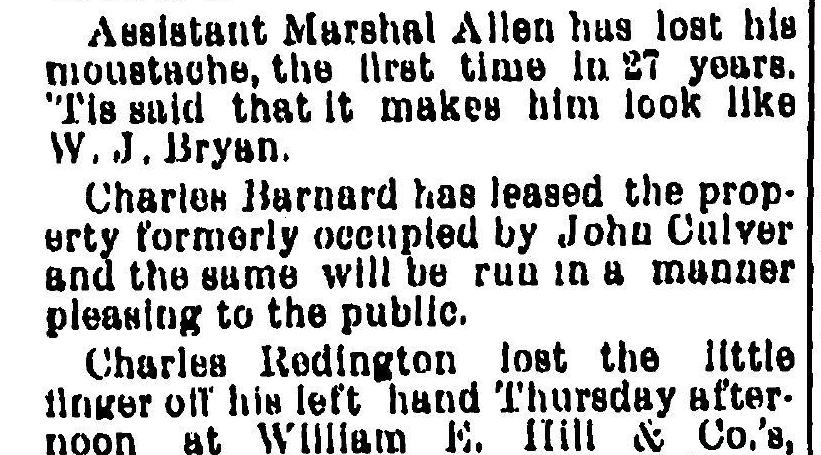
May 14, 1897 article about property in jottings

Apparently, one can no longer get lunch at John Culver’s on North Burdick.

There there is one that tells me that the divorce was finalized before May 14, 1897.  Heart-breaking. This one you need to click through to read.

The children were at the Children’s Home! Not with their mother! I tried to find something about the Children’s Home in Kalamazoo at that time. All I could find was a list of the children in the home in 1900.

CHILDREN’S HOME LIST 1900

Note that the girls are not on the list, so it’s likely that they were living with their mother by 1900.

Here are some articles about the Children’s Home:

1. General history

2. More general history

I’ve written to the blogger who wrote both these articles because it appears that her relatives lived at the home at the same time the Culver girls lived there.

When did Jennie move to Seattle with her daughters? And why?

Rhea and Lela Culver Seattle, WA

Rhea and Lela Culver
Seattle, WA

The 1910 census shows Jennie still in Kalamazoo, and the city directory shows her there in 1915.

Many of the Seattle photographs in the photo album seem to be from about 1915-1925.  Remember that Jennie would have been around 58 years old in 1915!

Jennie died in Seattle on July 4, 1947.

The answer to the title is: I don’t know! I guess I have to keep researching. Jennie doesn’t appear to have remarried, although it is possible.  The daughters remained single for a long time (not sure if one of them ever married), so it wasn’t to follow a daughter’s husband’s job or family.

Any guesses on why she would have moved to Seattle in or just after 1915?


Read Full Post »
We will get back to Theresa Pake, but I am working on so many branches of the family. I can’t let the other leads I have lie there untracked. I need to follow them, too ;).

Let’s start to explore the wonderful scrapbook of the DeKorn-Culver family again (while not forgetting about Theresa or Jennie DeKorn Culver’s sister Mary DeKorn DeSmit’s family either). For more information on this story, see the related posts below.

To remind you, I had wondered what happened to one of the sisters of Richard DeKorn (my great-great-grandfather). Her name was Jennie, or perhaps Jennie Adrianna, and at some point she moved with her two daughters, Lela and Rhea, from Kalamazoo, Michigan, to Seattle, Washington.  She may have been divorced in Kalamazoo. A lot needs must be explored at this juncture because why would a woman with two daughters move so far away from home–especially in those days?

A reader in the northwest United States who happened to have a scrapbook that belonged to Jennie’s family contacted me. What a surprise! She was so kind to send me the scrapbook. When I finish making both .tif and .jpg copies of the photos I will send her a CD of the photos. My daughter did the preliminary work on the copying, but I need to do more and to “cut apart” the copies that were taken of multi-photo scrapbook pages. In other words, my daughter copied pages so as not to damage the book, but I want to copy the copies and then crop the photos so that they appear separately on the screen.

I wrote to Bayview Manor in Seattle to try to find out if this scrapbook belonged to Lela or Rhea Culver. This is the facility where the scrapbook was found. Unfortunately, I have not heard back from them.

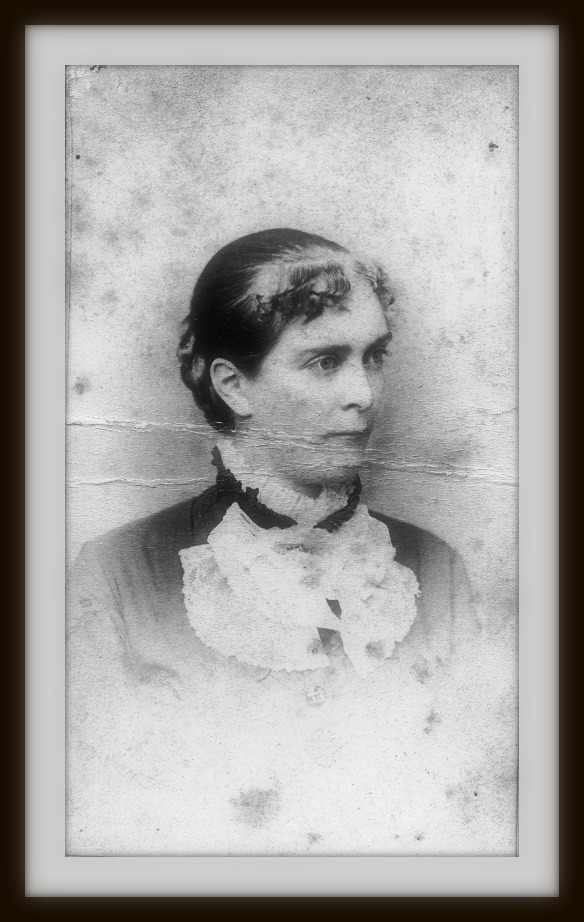
To begin to  identify these photos I need to start with what I know. I have a photo of Jenny when she was a young woman. And there is a photo in the scrapbook which I think looks strikingly like Jennie.  I want to see if you agree or if you think these are different women.

THIS IS JENNY DEKORN CULVER (1857-1947):

Jenny DeKorn Culver 1857-1947

Jenny DeKorn Culver
1857-1947


HERE IS THE WOMAN IN THE VELVET COAT. IS IT JENNY?


And is the coat velvet or fur? I am assuming it is velvet, although I did find a picture of a fur coat from around 1920 that had a similar look. However, the main reason I think it’s velvet is that it looks like velvet at the points where the fabric bends.

What do you make of the shadow at the bottom of the photo? Is the setting a garden or a lawn?

Read Full Post »

« Newer Posts - Older Posts »