Feeds:
Posts
Comments

Posts Tagged ‘history of Kalamazoo’

The story of Jennie DeKorn Culver begins in Michigan. It turns out that, even with the beautiful scrapbook, she is one of the biggest mysteries of my family tree.

Jennie’s birth name was Adriana. She was named after her grandmother, Adriana Krijger (the mother of Johanna Remijnse, Jennie’s mother). According to Adri van Gessel, in the dialect of the Goes region at that time, she would be called Joâne–a name that doesn’t sound like Joanne. There is no English equivalent, so she was called Jennie.

Jennie was born in Ottawa County, Michigan, in 1857 or 1858, one or two years after her parents moved to the United States, so she never lived in The Netherlands herself. Her mother passed away in 1864, so Jennie would have only been 6 or 7.

On December 25 (Christmas Day!), 1882, Jennie married John P. Culver in Kalamazoo. John was born in 1854,1855, or 1856 in Climax, Michigan, to Oliver C. and Almira Carney Culver. John had six siblings. He was about 12 years older than Jennie who was 25 or so.

The couple had two daughters:

  • Lela Almira Culver, born in Kalamazoo, on September 27, 1888
  • Rhea A. Culver, born in Kalamazoo, on November 13, 1890

The Culver girls before their parents divorced

At some point before 1898, the couple divorced. I know this because John remarried on July 7, 1898, at Muskegon, Michigan. His new bride was Florence V. Potter (Flora), daughter of William H. Potter and Florence King. Florence was born in 1876 and died after 1940, possibly as late as 1964.

Florence was married about 1900  to Norman Brant. The couple had two daughters. Florence went on to marry again, too.

John Culver himself probably had a 3rd marriage, possibly to Gladys E. Simmons.

Back to Jennie. I couldn’t find a divorce record online for her divorce from John, so I resorted to Genealogy Bank to look up the local newspaper, The Kalamazoo Gazette. That’s when I found articles that show that the couple certainly did divorce, and while the girls were so young. Jennie didn’t come from people who divorced, so for her to divorce her husband (and with young daughters at home, too), they must have had a drastic problem.

The following newspaper articles tell part of the story. Several of them are attached in .pdf form because they were too long for me to take screen shots of them. If you click the links you will find the newspaper articles. Be sure not to pass by the last one without clicking and reading.

Before the storm you could get lunch at Culver’s: Jan 5, 1895 lunch at Culver

It begins in the fall?

Kalamazoo Gazette 4 October 1895

Kalamazoo Gazette
4 October 1895

The Gazette had a list of Circuit Court cases in the paper on Dec 6, 1895.  Jennie Culver v. John P. Culver was listed as a divorce case.

More about the divorce on May 8, 1896 .

As if to counteract the bad publicity the day before, the Gazette lists something innocuous about John on May 9, 1896. It merely states that he has been given the refreshment concession at the Recreation Park.

On May 14, 1897, there were two articles. One was in Jottings and shows that John Culver has changed something small or large about his livelihood.
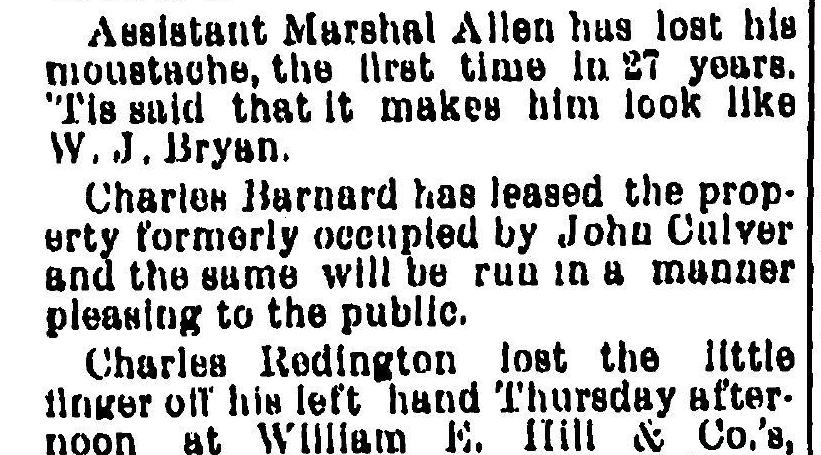
May 14, 1897 article about property in jottings

Apparently, one can no longer get lunch at John Culver’s on North Burdick.

There there is one that tells me that the divorce was finalized before May 14, 1897.  Heart-breaking. This one you need to click through to read.

The children were at the Children’s Home! Not with their mother! I tried to find something about the Children’s Home in Kalamazoo at that time. All I could find was a list of the children in the home in 1900.

CHILDREN’S HOME LIST 1900

Note that the girls are not on the list, so it’s likely that they were living with their mother by 1900.

Here are some articles about the Children’s Home:

1. General history

2. More general history

I’ve written to the blogger who wrote both these articles because it appears that her relatives lived at the home at the same time the Culver girls lived there.

When did Jennie move to Seattle with her daughters? And why?

Rhea and Lela Culver Seattle, WA

Rhea and Lela Culver
Seattle, WA

The 1910 census shows Jennie still in Kalamazoo, and the city directory shows her there in 1915.

Many of the Seattle photographs in the photo album seem to be from about 1915-1925.  Remember that Jennie would have been around 58 years old in 1915!

Jennie died in Seattle on July 4, 1947.

The answer to the title is: I don’t know! I guess I have to keep researching. Jennie doesn’t appear to have remarried, although it is possible.  The daughters remained single for a long time (not sure if one of them ever married), so it wasn’t to follow a daughter’s husband’s job or family.

Any guesses on why she would have moved to Seattle in or just after 1915?


Read Full Post »

I didn’t abandon Theresa or the Paake/Pake/Peek/Paak family. Here is George, Theresa’s father.

George Paake

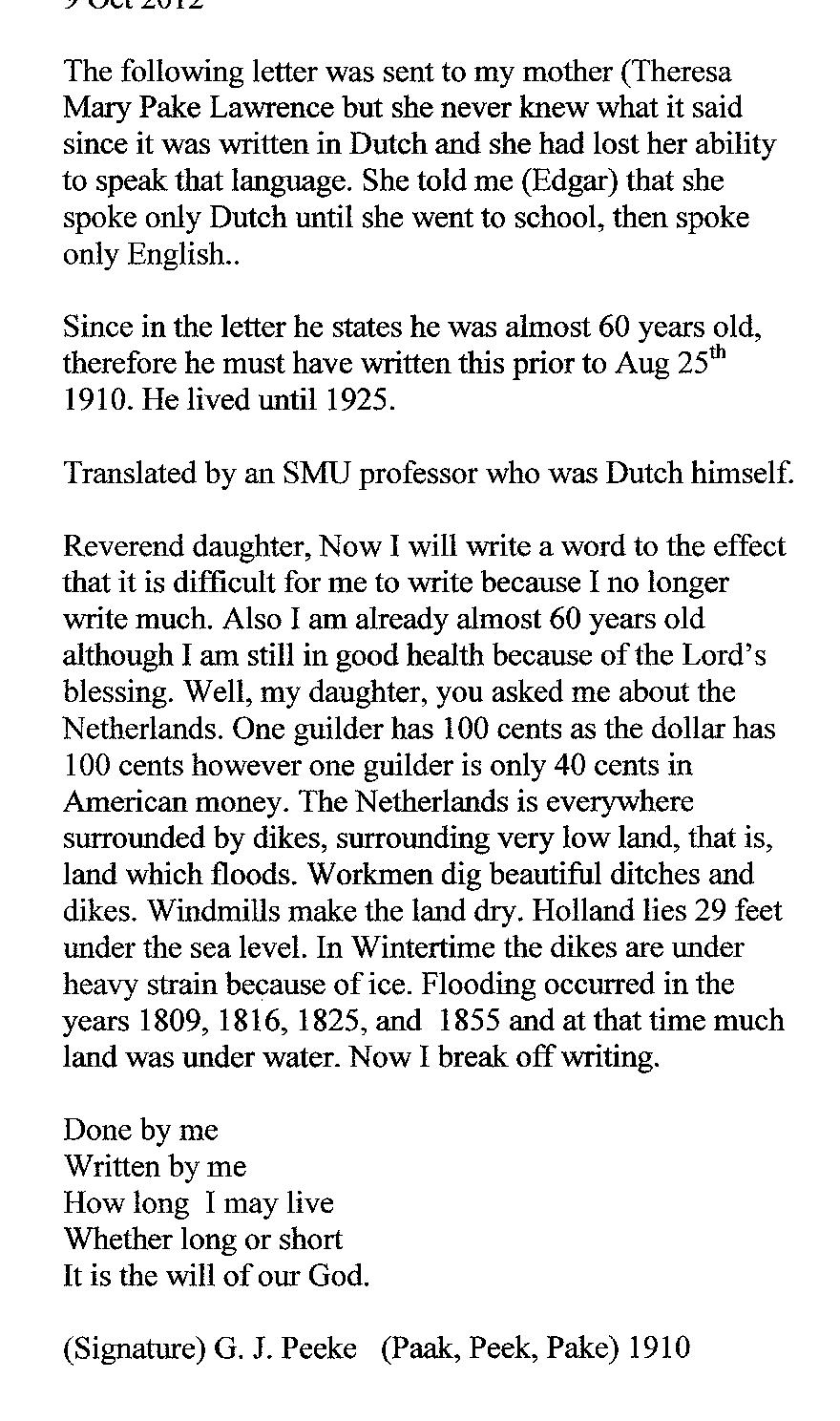
When Theresa was sixteen or seventeen, her father wrote her a letter. (Note that the spelling of the surname for George that I settled on is not one used further on in this post).

He wrote it in Dutch, but Theresa no longer could read or speak Dutch. Professor Lawrence introduces the translation he had prepared of the original letter:


The mention of the floods reminds me of a book I read when I was a child. The Little Ark, by Jan De Hartog, was the story of two children caught up in a horrific flood in Holland. I remember that the book seemed to be an adult book, although it was about children. It was very realistic, but like a good “adventure story,” it gave me confidence that if I were faced with a similar situation I could use my wits to survive.

Professor Van Zeitoff who translated for Professor Lawrence gave him the information to prepare this “glossary” for some of the first names, surnames, and geographical names associated with the family.


Most of my knowledge of The Netherlands comes from my early education and the books I read that romanticized Dutch culture. The book Hans Brinker, or The Silver Skates, by Mary Mapes Dodge, is one of those books. She was an American writer and at the time she wrote the book she had never even visited Holland. Part of the romance of the culture was the threat of flooding and the significance of the dikes.

What I want to know is why we never hear on the news about these Dutch floods? Is there technology today that prevents these floods from occurring?

A Series of Disasters

The Children After the Fire, 1902

Paak-a-boo

Saved from the Fire

Who is George Paake, Sr.?

Curious about George

George Paake’s Legacy, Part I

George Paake’s Legacy, Part II: Theresa’s Pre-Professional Education

George Paake’s Legacy, Part III: Theresa’s Professional Education


Read Full Post »

We will get back to Theresa Pake, but I am working on so many branches of the family. I can’t let the other leads I have lie there untracked. I need to follow them, too ;).

Let’s start to explore the wonderful scrapbook of the DeKorn-Culver family again (while not forgetting about Theresa or Jennie DeKorn Culver’s sister Mary DeKorn DeSmit’s family either). For more information on this story, see the related posts below.

To remind you, I had wondered what happened to one of the sisters of Richard DeKorn (my great-great-grandfather). Her name was Jennie, or perhaps Jennie Adrianna, and at some point she moved with her two daughters, Lela and Rhea, from Kalamazoo, Michigan, to Seattle, Washington.  She may have been divorced in Kalamazoo. A lot needs must be explored at this juncture because why would a woman with two daughters move so far away from home–especially in those days?

A reader in the northwest United States who happened to have a scrapbook that belonged to Jennie’s family contacted me. What a surprise! She was so kind to send me the scrapbook. When I finish making both .tif and .jpg copies of the photos I will send her a CD of the photos. My daughter did the preliminary work on the copying, but I need to do more and to “cut apart” the copies that were taken of multi-photo scrapbook pages. In other words, my daughter copied pages so as not to damage the book, but I want to copy the copies and then crop the photos so that they appear separately on the screen.

I wrote to Bayview Manor in Seattle to try to find out if this scrapbook belonged to Lela or Rhea Culver. This is the facility where the scrapbook was found. Unfortunately, I have not heard back from them.

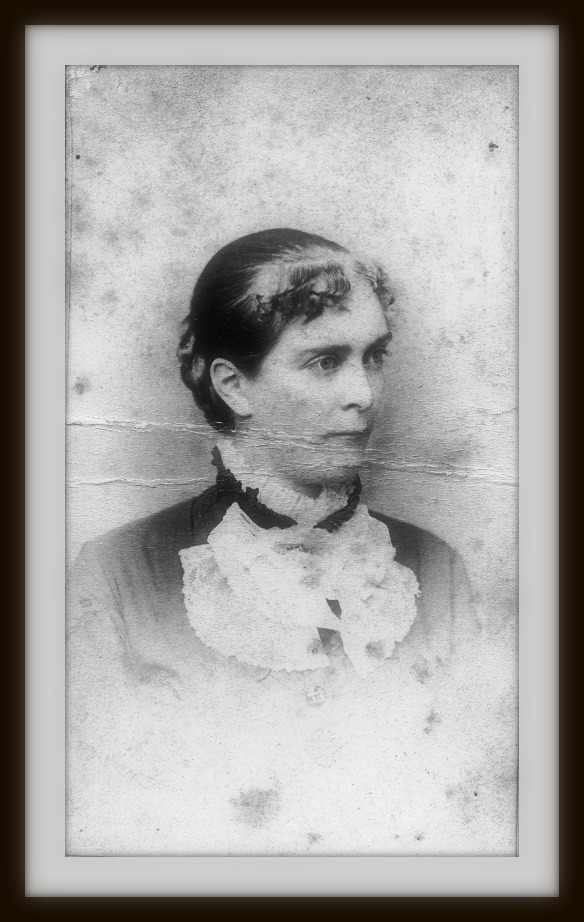
To begin to  identify these photos I need to start with what I know. I have a photo of Jenny when she was a young woman. And there is a photo in the scrapbook which I think looks strikingly like Jennie.  I want to see if you agree or if you think these are different women.

THIS IS JENNY DEKORN CULVER (1857-1947):

Jenny DeKorn Culver 1857-1947

Jenny DeKorn Culver
1857-1947


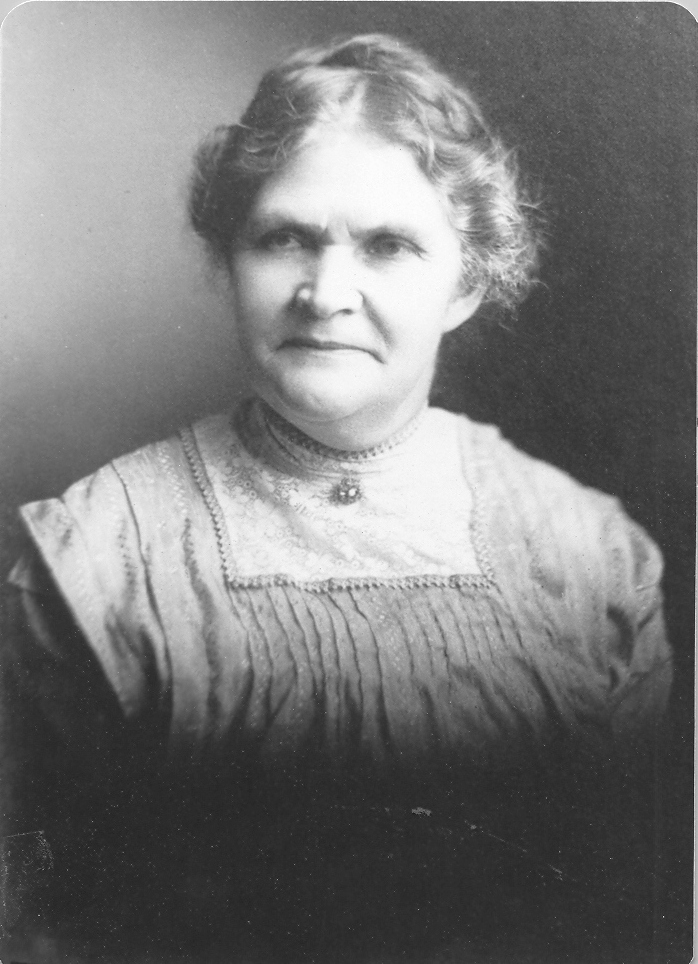
HERE IS THE WOMAN IN THE VELVET COAT. IS IT JENNY?


And is the coat velvet or fur? I am assuming it is velvet, although I did find a picture of a fur coat from around 1920 that had a similar look. However, the main reason I think it’s velvet is that it looks like velvet at the points where the fabric bends.

What do you make of the shadow at the bottom of the photo? Is the setting a garden or a lawn?

Read Full Post »

After I posted the wedding invitation for John DeSmit and Nellie Squares, the mystery of Nellie was solved by Adri van Gessel.

Nellie was born Pieternella Paulina Schrier on Sunday, October 5, 1879, at Kortgene, the Netherlands. She immigrated to the United States in 1891 with her mother, the widow of Paulus Schrier, and 5 siblings.

On Thursday, July 20, 1899, Nellie married John DeSmit in Kalamazoo.

Wedding dress circa 1900

On May 9, 1900, Nellie died in Kalamazoo. She was a 20-year-old housewife, according to her death record.

But the story does not end here.

Adri found the birth of a girl, Nellie D. DeSmit, born April 30, 1900, in Kalamazoo. The daughter of Nellie and John. Sadly, Nellie must have passed away from giving birth.

Baby Nellie was not listed on the 1900 census with her father, John, who was living at home with his family. Instead, the baby was listed as an adopted daughter in the family of Christopher (Christiaan) Schrier, Nellie’s brother and baby Nellie’s uncle.

Baby Nellie, no longer a baby, was married on June 13, 1918, in Kalamazoo, to Garret Johnson, son of J.G. Johnson and Nellie Groenhuizen. Garret was born on May 11, 1895 at Hilversum, the Netherlands. He died August 18, 1961, in Kalamazoo.

It appears, though, that baby Nellie still considered herself the daughter of John DeSmit because in the 1940 census she, her husband, and son Robert (born 1935) lived in the household of John DeSmit and was listed as daughter.

One of the biggest mysteries has been why Nellie’s parents are listed as Mr. and Mrs. A. Ver Sluis.  At first I thought, well, Nellie’s brother Christiaan  married Nellie Ver Sluis in 1898, only a year before our wedding invitation for Nellie Schrier and John DeSmit. Does this have something to do with the fact that there was not a living father to give Nellie Schrier away?

No, it does not!

Nellie’s mother Pieternella de Looff Schrier was married on Wednesday March 2, 1892, in Kalamazoo, to Abraham Jacob Versluis, son of Willem Versluis and Pieternella de Lange.  Abraham had been previously married to Cornelia Verburg and had two children by her. He immigrated to the United States in 1891. Abraham was born on Sunday October 13, 1850 at Kortgene and died on Tuesday November 1, 1938 in Kalamazoo.

Look at the timeline:

1891, Pieternella and her children, including Nellie, arrived in the United States AND Abraham Ver Sluis and his two children, including his Nellie, arrived in the United States

1892, Pieternella married Abraham Ver Sluis (they got married in March, which is quite early in the year–is it possible that the two families traveled together, intending to marry in this country?)

1898, Christiaan married the daughter of Abraham Ver Sluis and his deceased wife Cornelia Verburg

1899, John DeSmit married Nellie Schrier, daughter of Pieternella and the deceased Paulus and stepdaughter of Abraham Ver Sluis

Was it customary to marry step-siblings, as Christiaan did?

Ring any bells?

In case the name Schrier rings any bells for those from Kalamazoo, there have been many residents with that surname.  The name comes from the Zeeland province of the Netherlands. Paul J. Schrier was the mayor of Kalamazoo from 1967-1969. He was the son of Peter Schrier, who was a brother of Nellie Schrier DeSmit. Therefore the mayor was our Nellie’s nephew, although he never knew her since she died at the age of 20 from giving birth to her daughter.

Paul J. Schrier Mayor of Kalamazoo 1967-1969

Paul J. Schrier
Mayor of Kalamazoo
1967-1969

What I don’t know:


If baby Nellie ever had any half siblings. Her father apparently married Margaret when he was between 42 and 52.

When baby Nellie passed away.

If baby Nellie perhaps lived with her uncle so that she would be raised with his two children. Did Christiaan and his wife already have their babies when Nellie was born or did they come after?

This still doesn’t explain the Corliss home for the wedding.

And we think families are confusing today . . . .


Read Full Post »

Let’s take a little break from Theresa’s story this week. We can return to it next week.

Another branch of the family that I have not yet spent any time investigating begins with Richard DeKorn’s other sister Mary. His sister Jennie is the one who married John Culver, had two little girls, and took off for Seattle. It wasn’t until Joyce sent me the photo album that I began to learn more about that branch. But Richard’s other sister, the one who stayed put in Kalamazoo, I still haven’t spent any time with.

Mary DeKorn DeSmit

Mary DeKorn DeSmit


Mary died at age 98, two years before I was born. Maria Catharina de Korne was born on 4 Jan 1855 in Kapelle, Zeeland, the Netherlands.  Mary married John DeSmit in Kalamazoo in 1873 and they had seven children–3 boys and 4 girls. That means that there are a lot of children to investigate. I wonder how many of their descendents are living in the Kalamazoo area.

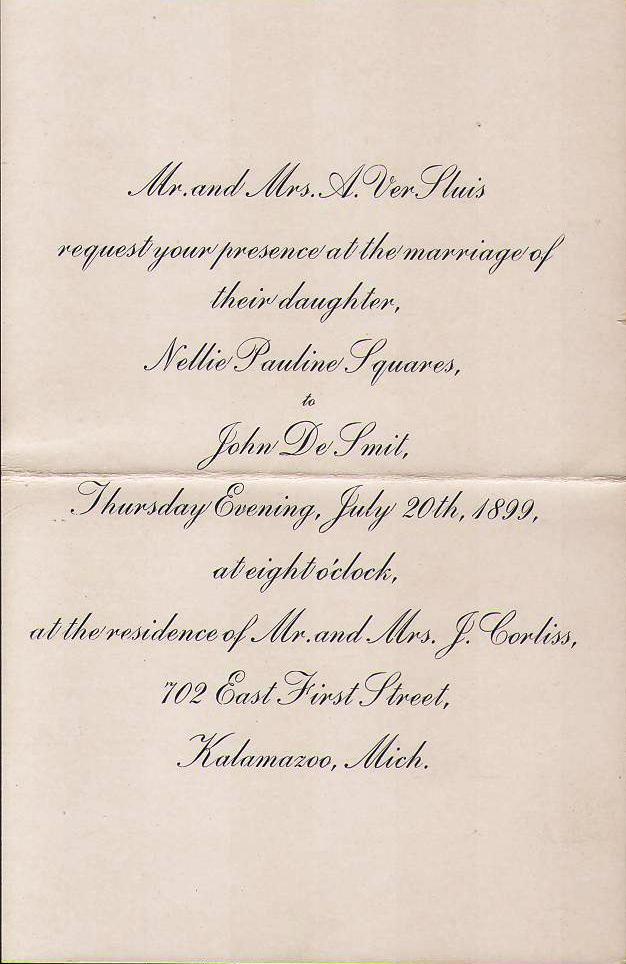
In order to begin researching the DeSmits, I looked through my documents to see if I already had anything, and I discovered a wedding invitation from 1899. It amazes me how much it resembles a contemporary wedding invitation. It lists the names of the bride (Nellie) and groom (John) and her parents, although not his parents. The place is a residence with an address. I don’t know the connection of the location to the bride and groom.

The wedding was on Thursday evening, which seems like an odd time to me. Also, I wonder if it wasn’t the residence of the bride’s parents because perhaps they weren’t from Kalamazoo? Or perhaps their home wasn’t large enough? I wonder why the bride has a different last name, Squares, from her parents, Ver Sluis.

I found a newspaper announcement which lists Nellie’s surname as Squires, which makes more sense, but wouldn’t the printed wedding announcement be correct? Also, the newspaper lists John’s home as Battle Creek and Nellie’s as Kalamazoo.

But what is the bigger mystery is this. I show that a John DeSmit, the son of Mary and her husband John, and born approximately June 1877, was married to a woman named Margaret. The age would be right for John to be marrying in 1899, as he was 21 or 22. But who was Margaret?

On closer examination of the 1900 census, I see that John was listed as 22, living at home with his parents and siblings, and already a widower! Poor Nellie?! It seems that Margaret was a second wife, later in John’s life.


You can see that this invitation brings up more questions than I had to begin with, but it does give me some information to pursue.  The next thing I went to check out was the address listed: 702 East First Street, Kalamazoo, Michigan. According to Google Maps, it doesn’t exist.

BIG SIGH.


Read Full Post »

In Part II, I described Theresa Pake’s high school and college education, but although she was 25 years old and had had a great deal of education for a young woman of her time, she wasn’t satisfied.

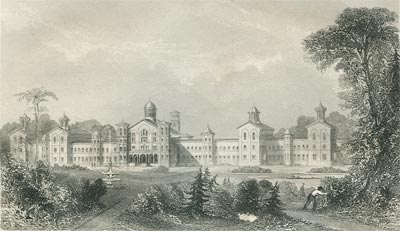
Her next step was to attend nursing school at the Kalamazoo State Hospital. I’ve written here about how my great-great-grandfather Richard DeKorn built the historic landmark water tower at the state hospital.


Here is an engraving of the hospital circa 1863:

Kalamazoo State Hospital

Kalamazoo State Hospital

The Michigan Asylum for the Insane was built in 1859, the water tower in 1895, and, in 1911, was renamed the Kalamazoo State Hospital. According to internet sources, nurse’s training was a pioneering program (perhaps started in 1906? I’m not certain), and Theresa would have been there during a vibrant period for the program. After Theresa left Asbury College, she began training as a nurse and graduated in 1925. On May 15, 1925, Theresa was registered by the state.

Notice the pin she wears in this graduation portrait. She actually received two pins. One says “Kalamazoo State Hospital” and the other has the initials KSTS for Kalamazoo State Nursing School.

Theresa Pake Graduate nursing school

Theresa Pake
Graduate nursing school

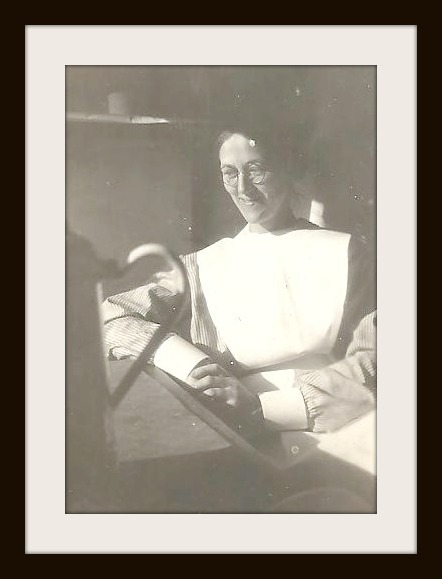
Here is Theresa with a classmate or coworker sitting outside the hospital. The caps they wear do not yet have the black stripe that is on Theresa’s graduation cap. Also, I wonder if the pinafore style uniform is an example of a student nurse costume.

And here Theresa sits alone:

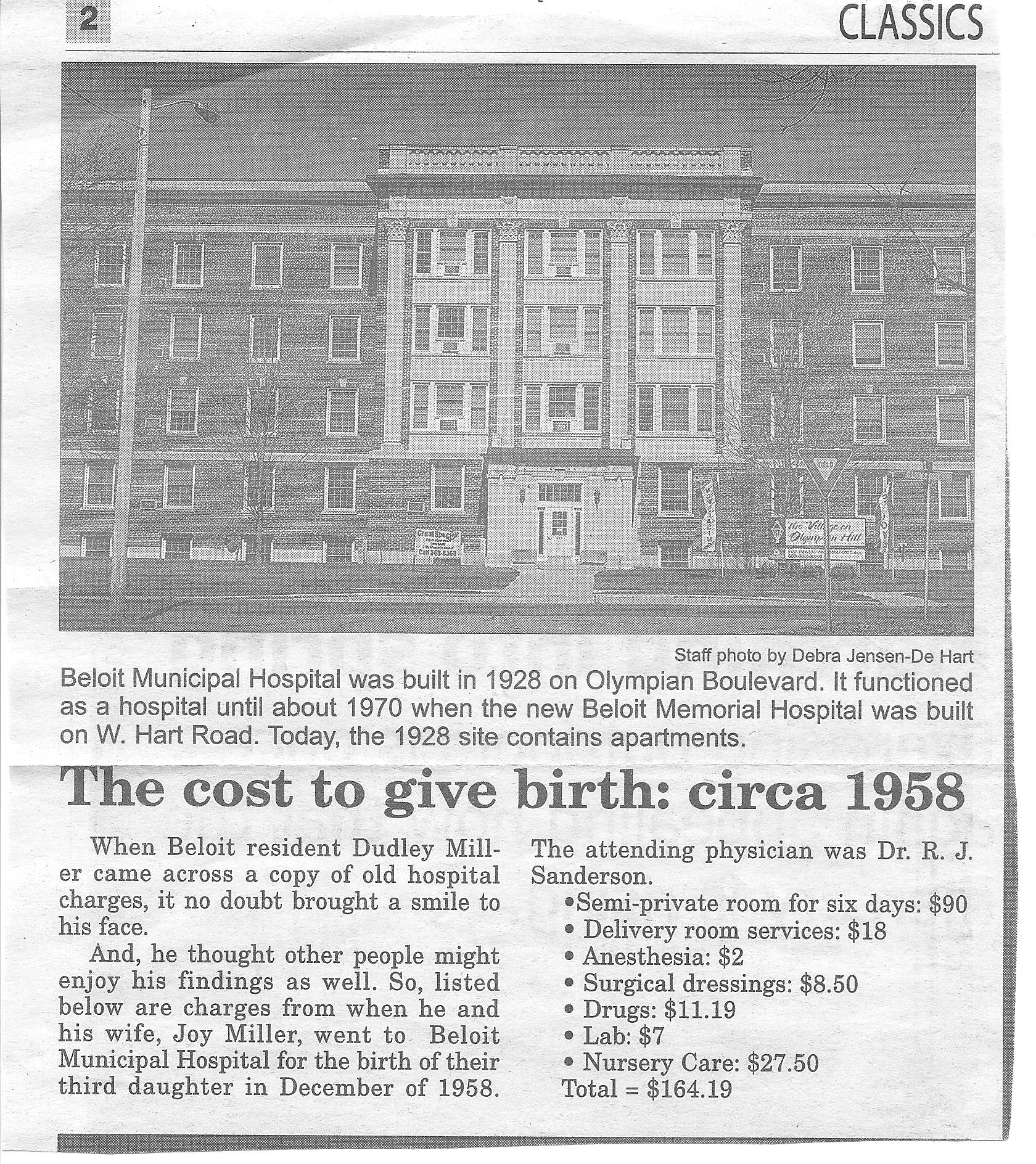
Theresa’s career as a nurse meant that she worked hard her whole life. She was employed as a private duty nurse for many years. She also worked at Beloit Memorial Hospital in Wisconsin:


After graduating with a nursing degree, Theresa was free to begin her life with a career, quite a feat for a young woman in 1925.

A Series of Disasters

The Children After the Fire, 1902

Paak-a-boo

Saved from the Fire

Who is George Paake, Sr.?

Curious about George

George Paake’s Legacy, Part I

George Paake’s Legacy, Part II: Theresa’s Pre-Professional Education


Read Full Post »

In Part I, I introduced George’s middle child, Theresa Pake, who was born in 1893.


Professor Lawrence has put much effort into piecing together his mother’s educational history.

At some point Theresa lived with foster parents, Una Orline and Oliver Oratio Pickard.  Prof. Lawrence thinks she maybe have gone to live with them as early as age six, which would mean she wasn’t under the care of her older sister. However, the newspaper article about the fire in 1902 would show that she was still living at home at the time of the fire (nearly 8 years old). Regardless, at some point, the Pickards became the caregivers of Theresa. None of the other children in the family seem to have gone to live with the Pickards.

The Pickards sent Theresa to Jennings Seminary, a private Methodist school in Aurora, Illinois, from 1911 – 1913.  Here  is a link to the history of Jennings Seminary, but to give you an idea, it was a school for young ladies and once considered one of the finest private high schools in the middle west.

Jennings Seminary

Jennings Seminary

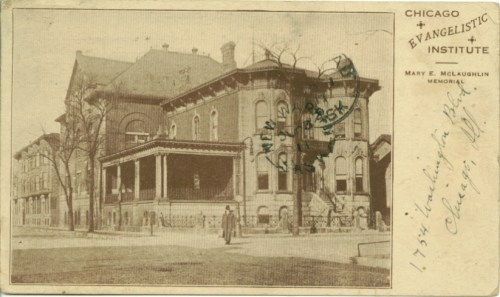
From there, Theresa went to Chicago Evangelistic Institute. After studying at CEI from 1913-1915, she graduated from the missionary course.

Theresa moved on to Western State Normal School’s High School Department.  She attended the program for at least the school year of 1916-17, participating in a play (where she played “mother-in-law”) and gave a speech advocating Republican Charles Evans Hughes (who was supported by Teddy Roosevelt) as the next President of the United States. She took classes such as anatomy, chemistry, French, and children’s literature.  Western was a teaching college, and the high school department was designed to not only give an excellent education to its students, but to provide a sort of student teaching experience for the college teaching students who planned to teach in high schools. Theresa graduated, at the age of 24, in June 1917 with 27 other graduates. At this time, it is possible that Theresa planned to become a teacher.

Here is a description in the yearbook about the high school program at the teaching college:

Here is Theresa’s yearbook photo. Note that in the above portrait, Theresa is not wearing glasses, but in the yearbook photograph she is wearing them. I think it’s likely she began to wear them in her early 20s.

In 1919, Theresa went to Wilmore, Kentucky, to attend Asbury College. At that time, Mrs. O. O. Pickard, at 1846 Oakland Drive, Kalamazoo, Michigan, was listed as her parent, so Theresa still was being educated under the guidance of the Pickards. Theresa had matriculated at age 25 with the intention of becoming a missionary. She attended Asbury for four semesters, from 1919-1921.

But Theresa’s education was far from over!

A Series of Disasters

The Children After the Fire, 1902

Paak-a-boo

Saved from the Fire

Who is George Paake, Sr.?

Curious about George

George Paake’s Legacy, Part I


Read Full Post »

In continuing the story of the Paake/Paak/Peek/Pake family, I will share with you what I’ve discovered about George’s family.

Today the subject is my first cousin 3x removed, daughter Theresa Pake, the mother of Professor Edgar Lawrence, the man who shared the photos and stories of this branch of my family.

Theresa was born Tracy Paak, on October 2, 1893, in Oshtemo, Michigan. Oshtemo is very close to Kalamazoo.


Although her birth certificate says her name was Tracy, and her siblings called her Tracy, Theresa always referred to herself as Theresa, so that is how I will refer to her.  Her parents were George and Lucy Paak (note that the birth certificate calls the mother Lizzie), who were both born in the Netherlands. Theresa’s mother died on May 28, 1900, when Theresa was only 6.5 years old. Theresa had two older sisters, one younger sister, and her brother George was the youngest of all the children.

According to the article about the fire that destroyed their residence in 1902, Cora, the oldest child, was taking care of the household and the children. That makes sense because she was fourteen, and the other children were far too young.  So at a very young age, Theresa had to go from living in a home nurtured by a mother to having a young teen sister “playing” mother to her and her siblings.

In this photo, Theresa is quite young. She is not yet wearing glasses. I took the liberty of altering the photo by using a sepia finish, as well as by adding a frame.

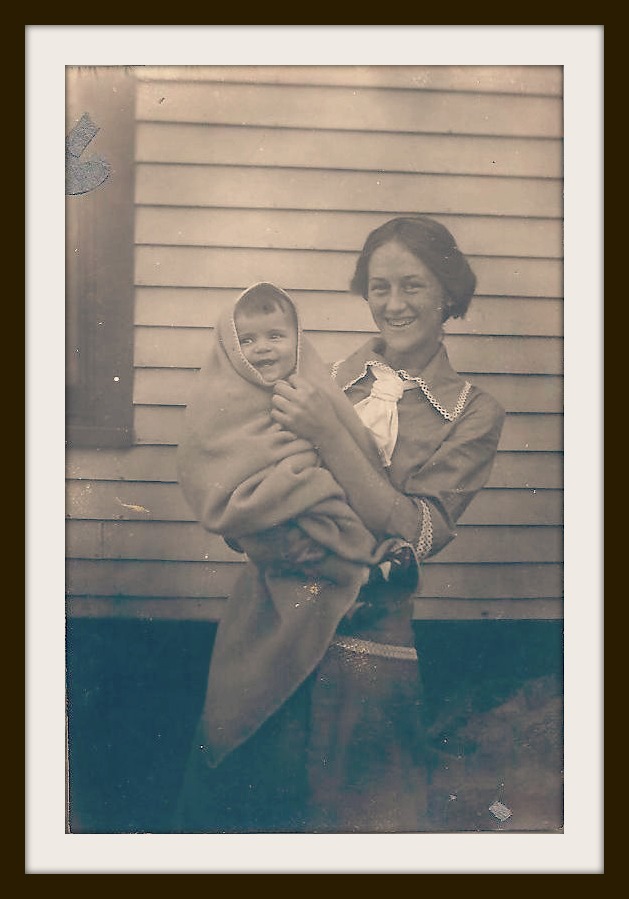
The following might be my favorite photograph of Theresa (also note that she is not wearing glasses). She looks so happy. She also looks like a girl who loves babies.  The photograph is from 1912.


For my next Paak post I plan to share photographs and information about Theresa’s education and career plans.

A Series of Disasters

The Children After the Fire, 1902

Paak-a-boo

Saved from the Fire

Who is George Paake, Sr.?

Curious about George


Read Full Post »

I started this blog in September 2012 with three private posts and then didn’t write again until November. The idea was that I would start to put the photos and stories I had accumulated “out there” for family members to access. Although the details aren’t that memorable to me, it seems that I switched to public but didn’t tag the posts at first, hoping that the posts wouldn’t get picked up by Google. That way, relatives could easily find the blog, but I was in hopes that nobody else would find it.

It didn’t take too long to see that some family members (Hi, Mom and Dad haha) and a few friends liked the blog and I thought it might be better just to tag the posts and connect with other WordPress bloggers. What I had seen of the bloggers working on family histories interested me a lot, so I wanted to feel more involved.

I had no idea what would happen. No, I don’t have an amazing number of blog followers, but those that do follow tend to be loyal and friendly. They are also kind and generous and have helped with looking at the details in photographs and giving me clues about where to search–as well as giving me some behind the scenes help.  You know who you are and you are fabulous.

Another aspect of blogging that I could not have predicted is how many wonderful non-bloggers have found the blog through internet searches and have shared information with me. I hesitate to name people because I don’t want to leave anybody out, so I will list just a few of the insights I’ve gained from these generous souls.

  • One of the biggest mysteries was the Paak family fire and that branch of the family–now I have info and photos to sort through and a new “cousin”
  • Information and photographs about my great-great grandfather Richard DeKorn’s second wife and her daughters.
  • Dates and names beyond count from a very kind and hardworking soul in the Netherlands
  • Through the previous individual, I found a first cousin once removed (I think that’s right) with a big heart–and photos and info–from my dad’s family
  • Photos and information of my ancestors in the Netherlands
  • Found the Noffke line
  • Found out more about the Jenny DeKorn Culver family–and received the gorgeous album of photographs and postcards
  • Information and photographs relating to Ramona Park, Long Lake, and the Waruf family
  • Learned more about the Bosman family
  • Learned more about the VanLiere family and corresponded with that branch and, yes, photos
  • Traced a branch from the Netherlands to the Holland area of Michigan
  • Identification of various photographs

I could continue as there are more goodies that have come my way since starting this blog. I am so grateful for the generosity of everyone involved. If I had kept this blog just to “us,” I wouldn’t have known how large my family truly is and how kind strangers can be.

That’s all I wanted to talk about today: how grateful I am and how thrilling it is to look back at all the information that has been shared here from such generous souls.

Enhanced by Zemanta

Read Full Post »

In January I published a post called A Sister and Her Family: How Can I Find Out More?. At the time I was wishing for more information on the family of my great-great-grandfather’s sister, Jennie DeKorn Culver, and her family. They had moved from Kalamazoo to Seattle, Washington, over a hundred years ago, but there the trail ran cold.

Readers were very generous with their suggestions, and as I delve more deeply into this branch I plan to act on more of them.

In the meantime, at the end of April the ideal person, a woman named Joyce, a complete stranger to me and to my family, read my blog post and commented. She had a photo album of family photos that belonged to one of the Culvers!

The story of how this album came into Joyce’s possession is a study in respect and appreciation for history and family. Joyce’s father worked at a retirement community with nursing facilities called Bayview Manor in Seattle. Joyce says, “When the residents left, what ever was left in their apartments was given or thrown away. The things thrown, my father liked to pick up, as a lot was still usable. This album was one of them.” Joyce has kept the album for thirty years.

And now she has given it to me for our family. What a kindness. My daughter plans to scan the photos, and I will get Joyce a copy of them. And I plan to post some of the photos over a few posts after they are scanned. They are absolutely beautiful.

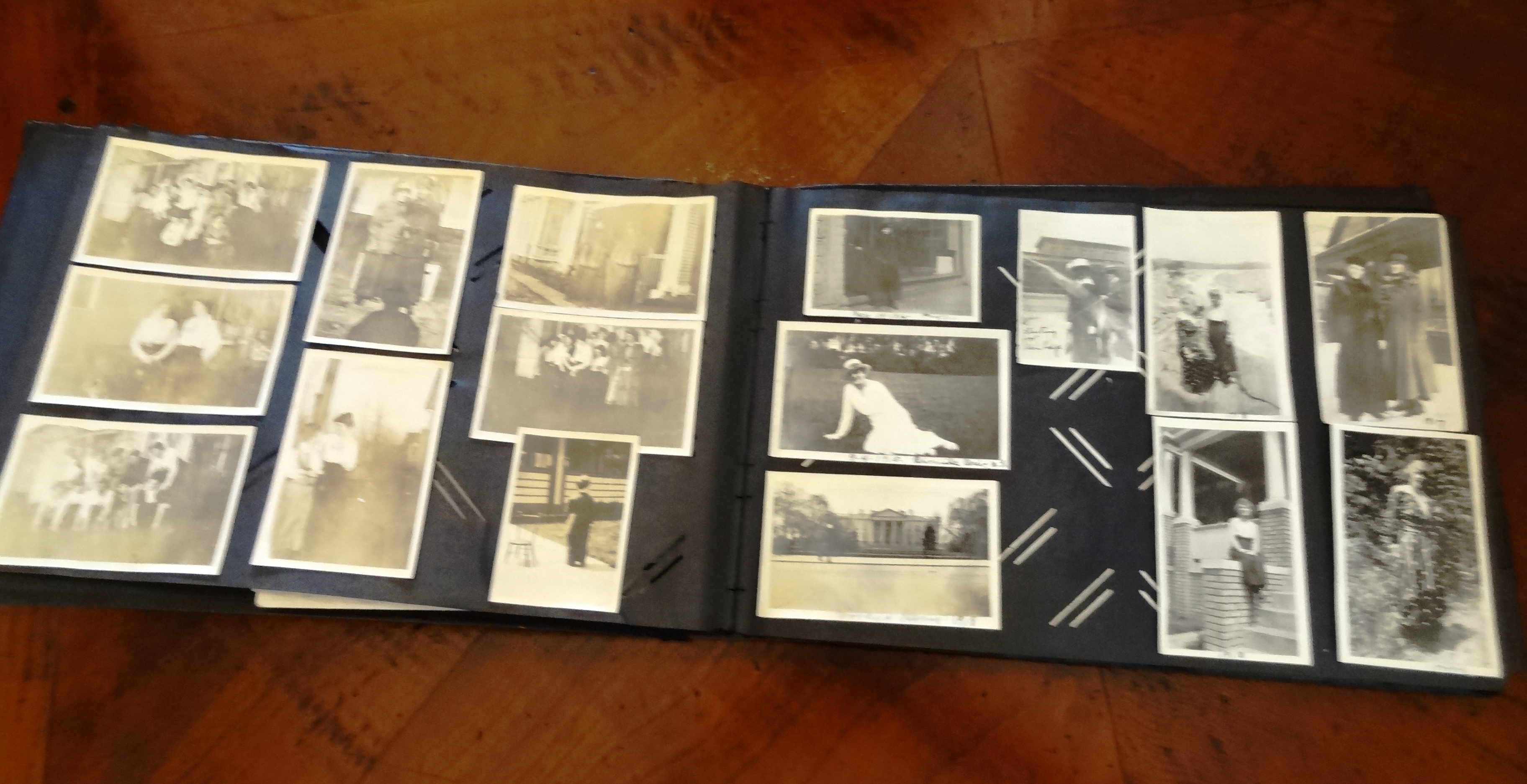
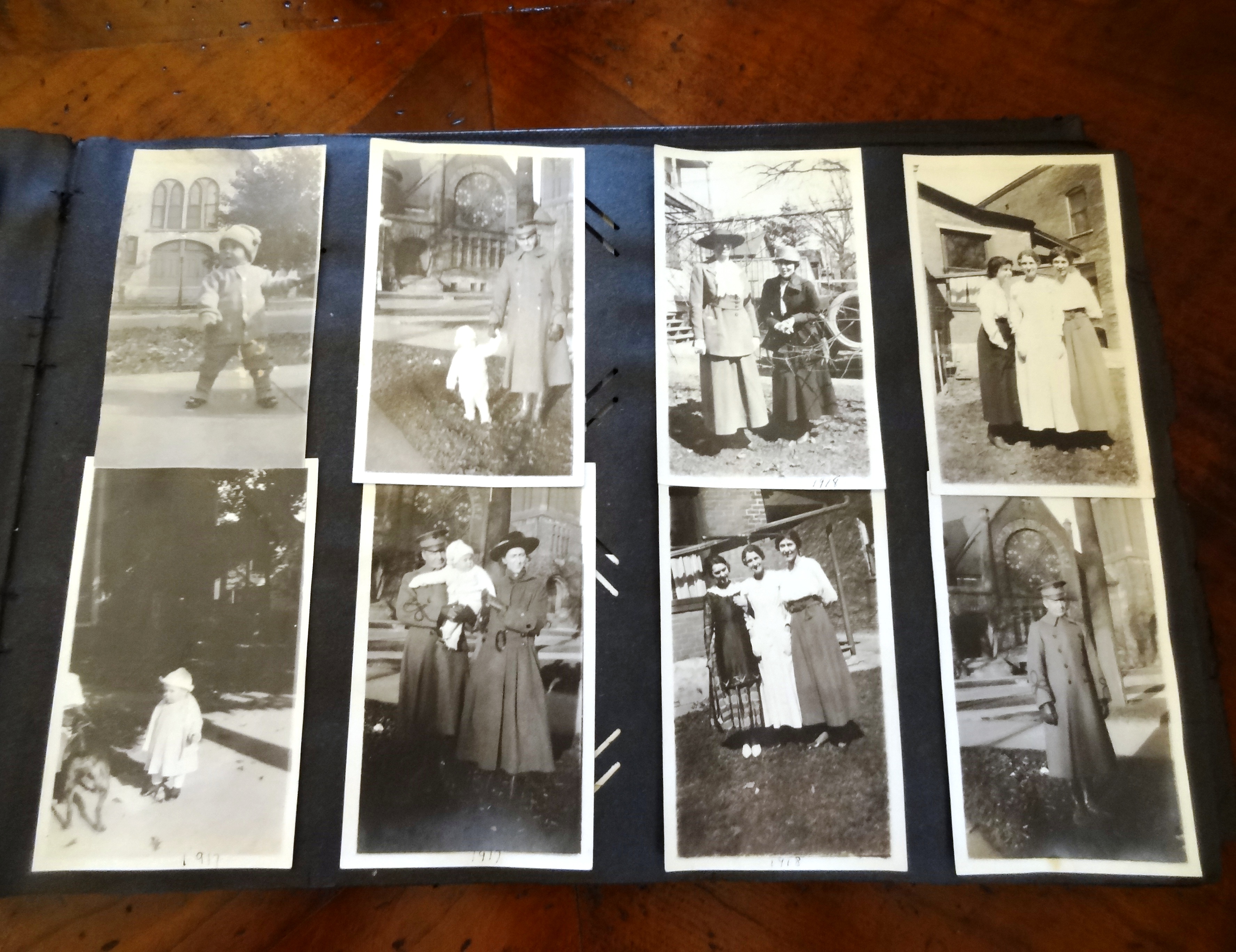
Here is a sample:


Imagine how I felt when I pulled this album out of the shipping carton!

Many of the photos are loose.

But some are affixed. These will be harder to scan.

Look at their lovely outfits!
I have not yet discovered which Culver left the album at Bayview Manor, but Jennie’s daughter Rhea died in 1976, which is 38 years ago. I have not yet found sister Lela’s obituary, but she was still alive in 1964.

Thank you so much, Joyce, for this wonderful treasure. My family and I thank you for your great kindness and compassion.

Read Full Post »

« Newer Posts - Older Posts »