Feeds:
Posts
Comments

Posts Tagged ‘history of Kalamazoo’

It’s been a month and a day since I’ve written on this blog.

One month ago today my father passed away. It seems both ages ago and as if it’s happening right now.

I am going to get back to work over here at The Family Kalamazoo, but I wanted you to know why I haven’t been writing any posts or reading your blogs.

My father has shown up several times on this blog, both as a subject and as one of my family detectives. You can imagine how much he will be missed.

He was buried at the Fort Custer National Cemetery after a ceremony with military honors. I wrote about his military experiences here:

Dad Writes about His Wartime Experiences

Korean War: Why Did It Take Dad So Long to Get to Korea?

Next Sunday will be Father’s Day here in the United States. It’s hard to believe he won’t be here for that day. I wrote blog posts for Dad for the past two Father’s Days here:

Happy Father’s Day to An American Veteran

Keeping Busy

The last post featured some of Dad’s yard art. For his funeral, we covered a large poster board with photos of some of the items he made through woodworking and metal scrap art.


Dad was always doing something, always involved, and always present in every moment.

Read Full Post »

Remember the Culver family: my great-great grandfather’s sister, Jenny DeKorn Culver, and her daughters, Lela and Rhea, who moved from Kalamazoo to Seattle 100 years ago.

In the scrapbook which I received from a blog reader I found this photograph. Any ideas on the type of uniform? Since this would have been around the time of the end of WWI, does the uniform have to do with the war?

I don’t know who the man is. Most of the Culver photos are of women.

But the clues would leave me to believe the photo was taken in Seattle in or around 1918. But did Seattle have old elegant buildings like this at that time?


What about the building? My first inclination was a church, but I don’t see any crosses. Are those rosettes for ornamentation?


Related articles

Read Full Post »

Henry (Hank) Waruf and his wife Carrie (Paak) Waruf owned the resort Ramona Palace and Ramona Park, as well as many cottages and their own home, at Long Lake in Portage, Michigan.

Since Carrie is one of the Paak sisters, and her sister Alice Paak DeKorn was my great-great-grandmother, I’ve focused more on the Paaks. But Henry Waruf is a very interesting character in Kalamazoo’s early history.

Adri van Gessel was so kind to do some research on the Waruf family. Henry himself appeared to be a bit of a dead end because the name Waruf seemed to come out of nowhere. But Adri broke through that brick wall and discovered Henry’s origins.

Who Was Hank?

Henry was born Hendrik Walraven on September 7, 1863 at Kloetinge, the Netherlands. Apparently Koetinge is part of Goes. Big shock there since the majority of my mom’s ancestors seem to have come from Goes.

He was married on June 2, 1882 at Kalamazoo (MI) to Cornelia Peek (Carrie Paak), daughter of Teunis Peek and Jacoba Bassa.  Cornelia was born on May 8, 1862 at Lexmond and died in January 1957 at Kalamazoo (MI).  Henry died on November 29, 1945 at Orlando (FL).

I don’t know if Henry was on vacation in Florida, living there part of the year, or if the couple (who had no children) had moved there and Carrie went back to Kalamazoo after his death. I could try to research this through city directories, phone books, etc. The research I have done was mainly through newspapers, and I discovered that, although Henry (or Hank) usually spelled his last name “Waruf,” sometimes it shows up as “Warruf.” Still, it looks to me as if Joseph is the one who changed the family surname to Warruf/Waruf in the United States from the original Walraven.

Henry had one sister,  Maria Walraven, born March 3, 1866 at Goes, but she died before 1870 in the Netherlands.

Henry and Maria were born to Joseph Walraven (Joseph Warruf), son of Hendrikus Walraven and Elisabetha Resch, who was born on October 13, 1837 at Goes, died on December 11, 1910 at Kalamazoo (MI).

Joseph was married on May 21, 1863 at Goes to Melanie de Munck (Mary), daughter of Jan de Munck and Maria Joseph Bataille.  Melanie was born on October 16, 1840 at Goes and died on March 18, 1914 at Kalamazoo (MI). Joseph, Melanie, and Henry immigrated to the U.S. in 1868, when Henry was 5 years old.

A Bataille Connection

Notice the name Bataille. I’ve previously written about a Bataille ancestor in these posts:

An Update on the Bataille Family

A Familial Occupation

How Did Etaples, France, Show Up in My Family Tree?

Hank Went into Business

As I mentioned, “Hank” (Henry) and Carrie (Cornelia) were married in 1882, when he was 19 and she was 20. By 1885, he was advertising a business selling guns in the Kalamazoo Gazette, where it’s noted that he took over the gun shop of W. Blanchard.

Sept 17, 1885 Click the link and scroll to the bottom for the ad. By September 1886, Hank added “gunsmith” to his name on the ads.

I was astonished to discover, in an 1897 Polk Directory, that Henry Waruf owned the gun shop in partnership with Richard “Ro-mine” who I take to be Richard Remine. Richard “Dick” Remine was Hank’s brother-in-law. He was married to Carrie’s sister, Mary, another sister of my great-great-grandmother. Richard was born in 1857 and so was six years older than Hank. I’ve written before that the person who inherited the Long Lake resort was Therese Remine, Richard’s daughter. So there might have been another reason that she was the sole inheritor of that property–because her father had been in business with Waruf. How long were they partners? I am going to guess that Waruf was the true businessman of the two–and an ambitious man.
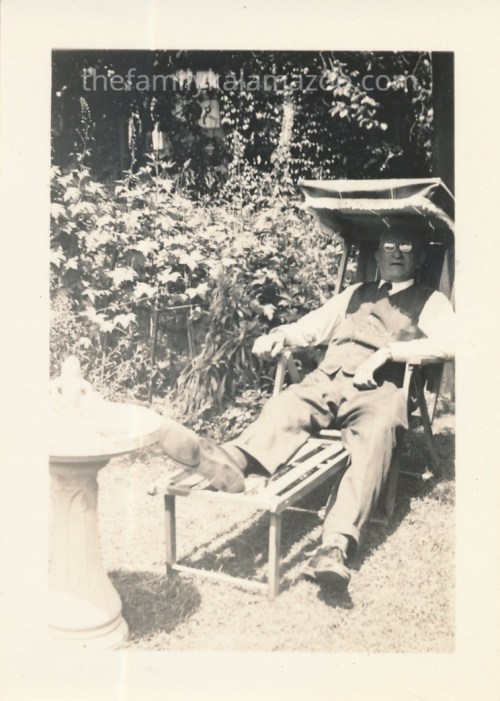
 

Richard Remine

Hank Was a Man of Many Talents

Hank shows up often in the Gazette, and I was able to see that he became a talented shooter, a prize-winning breeder of English Spaniels (no wonder my grandfather’s family always had this breed of dogs), and a collector of real estate. He reported regularly to the State Board of Fish Commissioners on the fish in Long Lake.

Here is an article where he literally won all the prizes at a shoot. Sept 7, 1899. There are many articles about the shoots he attended and referreed. He also represented Kalamazoo at a state shoot in Bay City.

The award-winning dogs owned by Henry show up in publications by the American Kennel Club, The Field Dog Stud Book, and The Fanciers’ Journal. I traced the beginnings of this sideline to a Gazette article that mentions that Hank was going into the business of raising hunting dogs and had brought in a fine pointer from Lowell with a pedigree going “way back.”  Click the link for the article–right side about 1/3 down.Feb 28, 1899.

In 1919, there is a newspaper article about the houses that Waruf was selling. These houses were all on the north side of Kalamazoo. I know that he also owned all the cottages near the resort at Long Lake, so he was used to being a landlord. I wonder if he had been renting out all these houses or if he was flipping them. I suspect he had been renting the houses. Here is the article. April 2, 1919

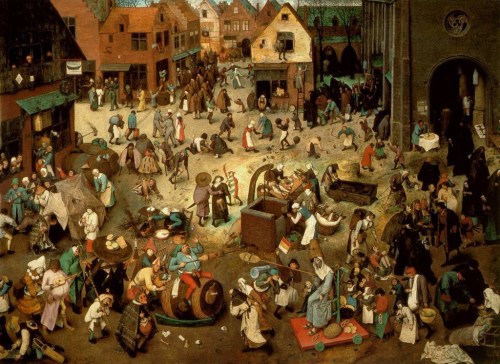
Finally, on August 30, 1904, Kalamazoo Gazette published a cute story. A Gazette reporter climbed the water tower at the asylum. This is the tower that my great-great-grandfather Richard DeKorn built (click here). From that vantage point he was able to see all the way to Gull Lake in one direction and Long Lake in another. He mentions a great many notable people and what he claims he saw them doing at the time. About Waruf, he wrote, “‘Hank’ Waruf shining up his guns at Long Lake for the duck season.” The details in the article conjure up a Breughel painting, so I find it a little impossible, but definitely amusing. Here is the article: Aug 30, 1904
 

***

Here are some images I have previously published on The Family Kalamazoo:
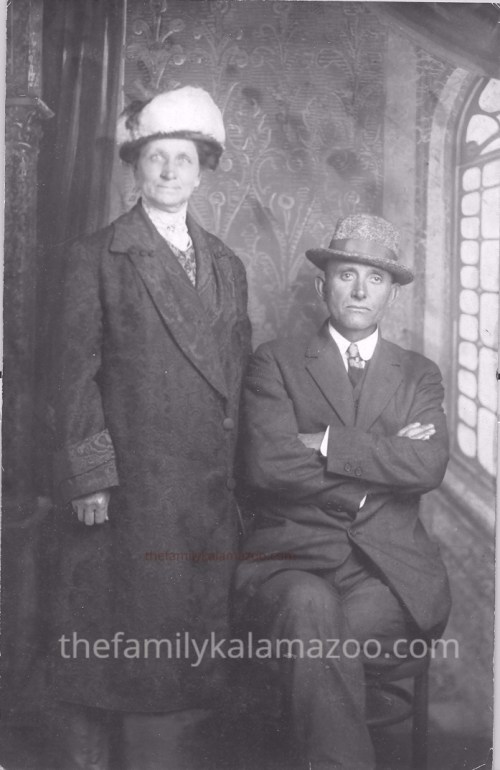
Carrie (Paak) and Henry Waruf
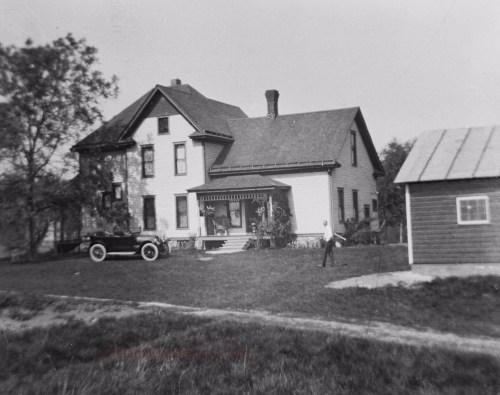
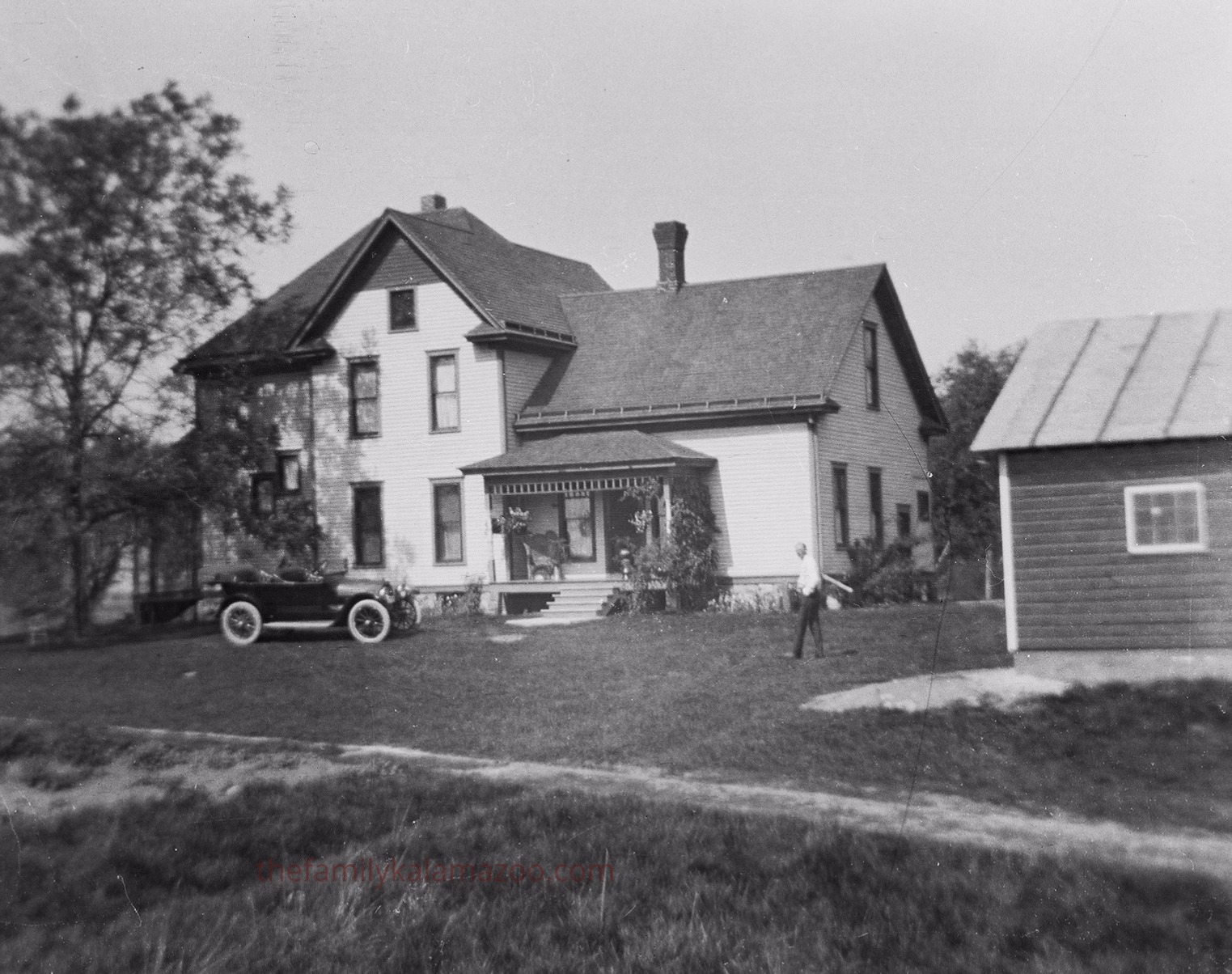
Home of Hank and Carrie Waruf, Sprinkle Road

Home of Hank and Carrie Waruf, Sprinkle Road

I’ve written about the place and the people here:

Read Full Post »

Here is another photo from the box of my family photos. Now this photo begs the question: was she actually a member of my family? I have found photographs in our collection that are not of relatives. I wrote earlier about Tom Richmond and his family, neighbors of my relatives. Tom was the butcher. Also, we have a photograph of Dutch Arnold, the saloon keeper.


There are no clues on the photo. Grandpa didn’t know who she was, but it’s likely that she was from Kalamazoo. I would love to have someone claim this photograph of their relative!!

Any clues you can see in the photograph?

Read Full Post »

If you tuned in last week (here), you saw a photograph of a woman in a Pilgrim-style bonnet and black dress. The photographer was based in the Dutch towns of Utrecht and Den Haag (The Hague).  Thanks to a Dutch reader, Hubert Theuns, I learned these facts associated with the photo:

The photographer, Cornelis Johannes Lodewicus Vermeulen, was born in Utrecht 18.11.1861 and died in Hilversum 05.01.1936. Photographs from the period 1886-1915 can be found athttps://rkd.nl/nl/explore/portraits#query=cjl+vermeulen&start=0&filters%5Bcollectienaam%5D%5B%5D=RKD%20%28Collectie%20Iconografisch%20Bureau%29

In the Dutch province of Zeeland there is a society for the preservation of traditional costumes. The secretary of that society identified the traditional costume as the traditional costume of Cadzand, a small town in the Dutch province of Zeeland. In 2007 Cadzand had about 800 inhabitants. I believe this information may be useful to you.

I was thrilled with this information. The thought of a costume native to a small town–and owning a family photograph of that costume–was beyond anything I ever expected.

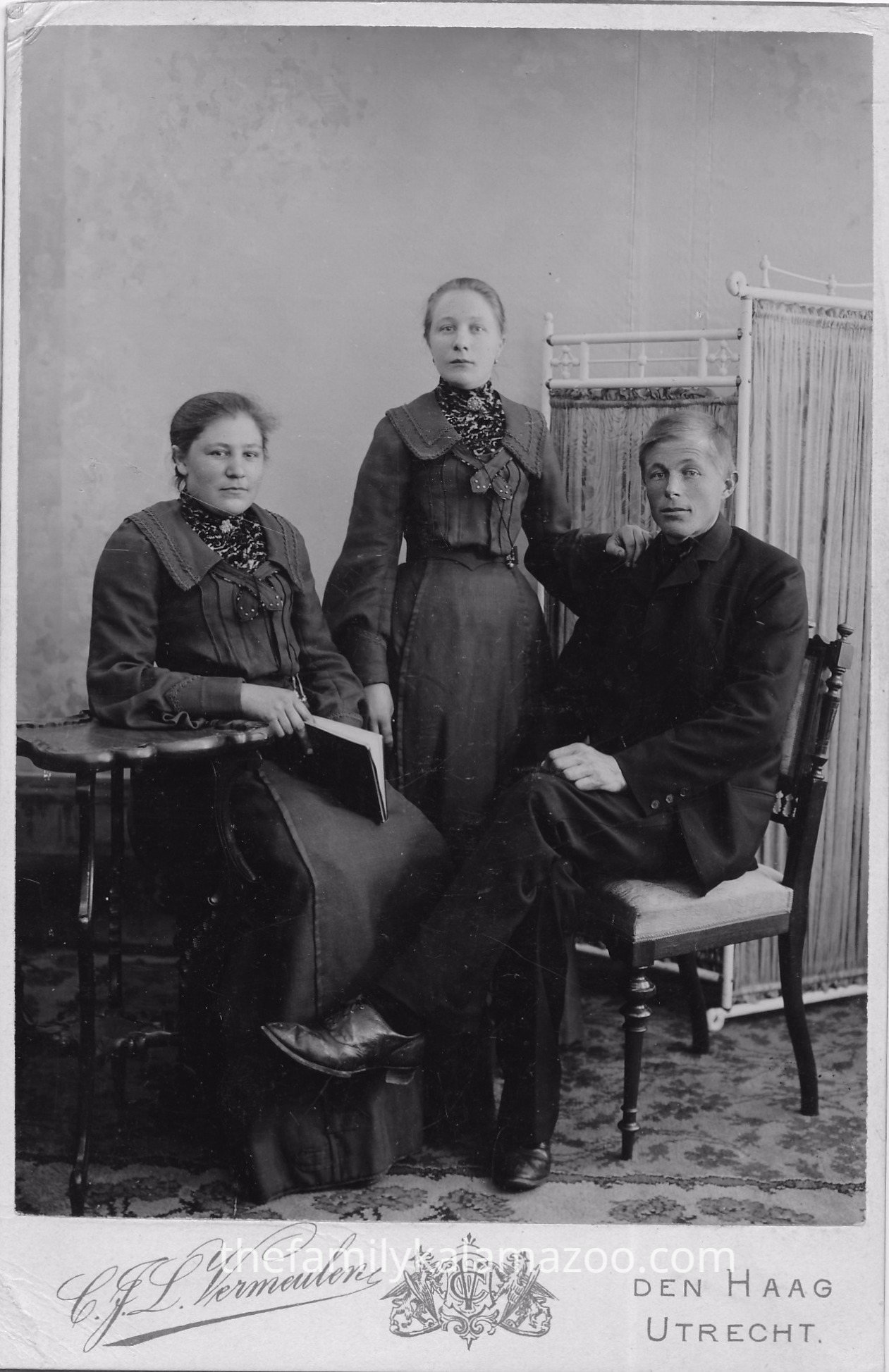
A couple of days later, I had a thought. What if I was wrong and this photo wasn’t the only one by this photographer in my archival boxes? So I searched and searched. And then I found. This photo:

Compare it with the photograph of the woman. Different table, but the screen and the carpet are the same. The chair might be the same. Now we have clothing that looks more fashionable for the period.

Craziest connection between the two photos: the book held by a woman above and by the woman below! The same book? What is the meaning of holding the book? Is this a stylistic tic of the photographer or does it have Victorian meaning, something like the language of flowers?

Do you think these photos were taken at the same time? Part of a family group? Could the woman below be the mother of the three above?


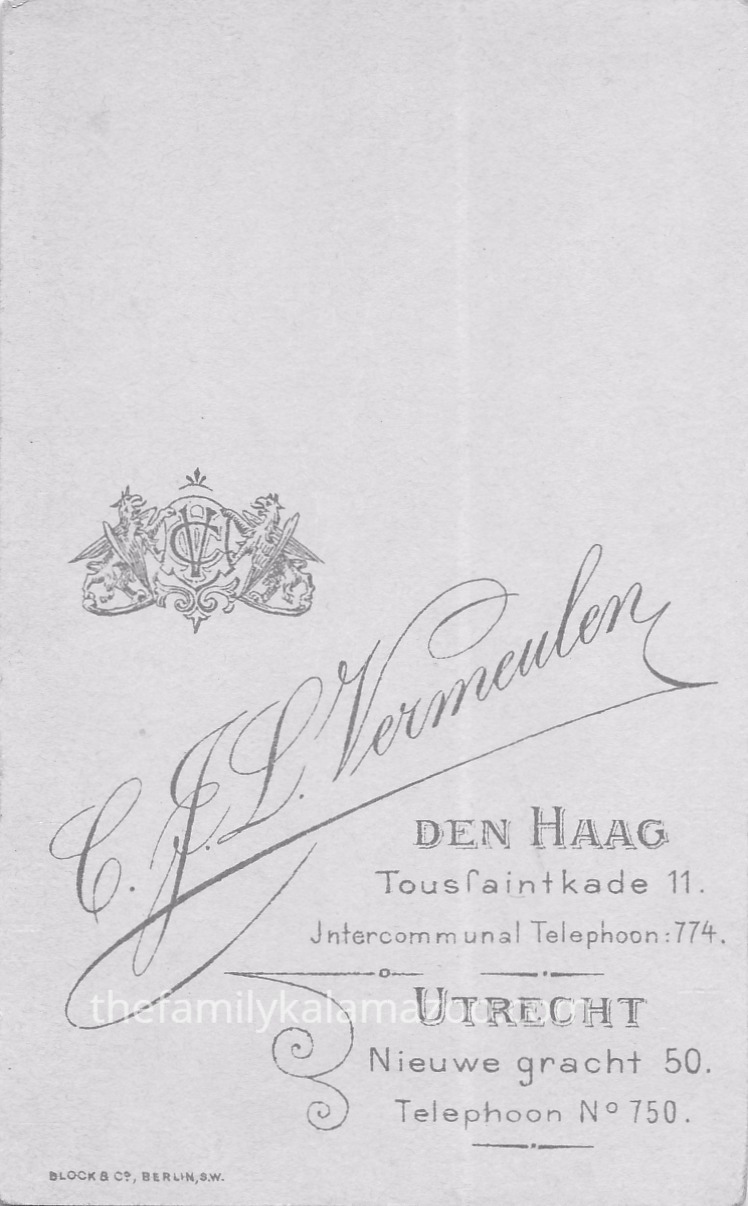
Here are the backs of the photos in case they offer any clues:


Note that they both have the 3 digit telephone numbers. According to the research of Hubert Theuns:

The telephone was introduced at The Hague on July 1, 1883, and at Utrecht in February 1883. There used to be local telephone directories, but I have not (yet) found any on the internet. National telephone directories were published as from 1901. The collection of national telephone directories from 1901 till 1950 are being digitalised by the dutch national library, but unfortunately this process has found delays. Only the national directory of 1915 is available on the internet, and shows that the photographer in 1915 in Utrecht had the same three digit number as mentioned on the photograph, but that his number in The Hague already had four digits.

That leaves quite a range of time that the photo could have been taken. It definitely is pre-WWI; that is one thing I know. But are the styles 1890s or after 1900? It seems to me that the skirts are becoming “slim,” so maybe closer to 1910?

Well, Hubert has been busy at work and has been able to narrow down the time period even more. This is what he wrote yesterday:

New developments. I contacted a local history circle in Zeeland (without being a member) to have the photo put up at their website for identification. I got the reply that they contacted a museum in Nieuwvliet, devoted to the regional costume of Cadzand. The museum replied that the scan of the photo is not detailed enough and requested the original photo. . . .
I also contacted the museum on communication (devoted to the telephone) in The Hague about telephone directories. The librarian informed me that the archive of the municipality of The Hague has a collection of old telephone directories of The Hague. This morning I visited the archive and consulted their collection of “Adresboeken” for The Hague and Scheveningen.
C.J.L. Vermeulen was listed for the first time in the Adresboek, 47th edition, year 1898-1899, but without telephone number.
In the books 1899-1900, 1900-1901, 1901-1902, en 1902-1903 he is mentioned with telephone number 774 (as on the photo).
In the book 52the edition 1903-1904 the telephone number is 1873.
On the basis of the information the photo must originate from 1899-1902, with a possible extension to 1898-1903).

Isn’t that something?! Now we know that the photograph had to have been taken between 1898 and 1903, most likely between 1899 and 1902. Hubert’s sleuthing is beyond compare!

For me, there is no comparison between the two photographs in interest. The woman in the bonnet has a compelling expression and handles the book as if she cares about books. The young woman holding the book doesn’t seem to care at all about it. She does look uncomfortable–as if she would rather change into her everyday clothes! I’d guess it was her sister, standing, who wanted them to wear matching fashionable dresses.

My gratitude to Hubert Theuns is boundless. I could not have imagined such a detailed answer to the questions of the lady in the unusual outfit.

Read Full Post »

UPDATE:  This photograph has been identified as to the clothing and location it is from.  See the update at the bottom of the post!!

This one is no doubt my favorite of the unidentifed photos in the archival storage box.

Look at her outfit. She looks like a pilgrim, doesn’t she? Or maybe Emily Dickinson with a pilgrim bonnet on?


Look at the book in her hand. What is it? A Bible? A hymnal? A prayer book? Surely there is significance to the text.

This is one of my few photos from Utrecht. Did I have family there?

Well, Alice Paak, my great-grandmother, was from Lexmond, which is south of Utrecht, so you could say that that branch of the family comes from the vicinity of Utrecht.

I can’t figure out the relationship. Also, Alice and her siblings were blue-eyed blondes.

Here is the back of the photo in case it offers any clues:

UPDATE: Reader Hubert Theuns has commented below with the following information which adds a lot of information to this photograph.

The photographer, Cornelis Johannes Lodewicus Vermeulen, was born in Utrecht 18.11.1861 and died in Hilversum 05.01.1936. Photographs from the period 1886-1915 can be found athttps://rkd.nl/nl/explore/portraits#query=cjl+vermeulen&start=0&filters%5Bcollectienaam%5D%5B%5D=RKD%20%28Collectie%20Iconografisch%20Bureau%29

In the Dutch province of Zeeland there is a society for the preservation of traditional costumes. The secretary of that society identified the traditional costume as the traditional costume of Cadzand, a small town in the Dutch province of Zeeland. In 2007 Cadzand had about 800 inhabitants. I believe this information may be useful to you.

FASINATING information. I had never heard of Cadzand, but now I will do my research. It doesn’t look too terribly far from Goes–and both towns are in Zeeland.


Read Full Post »

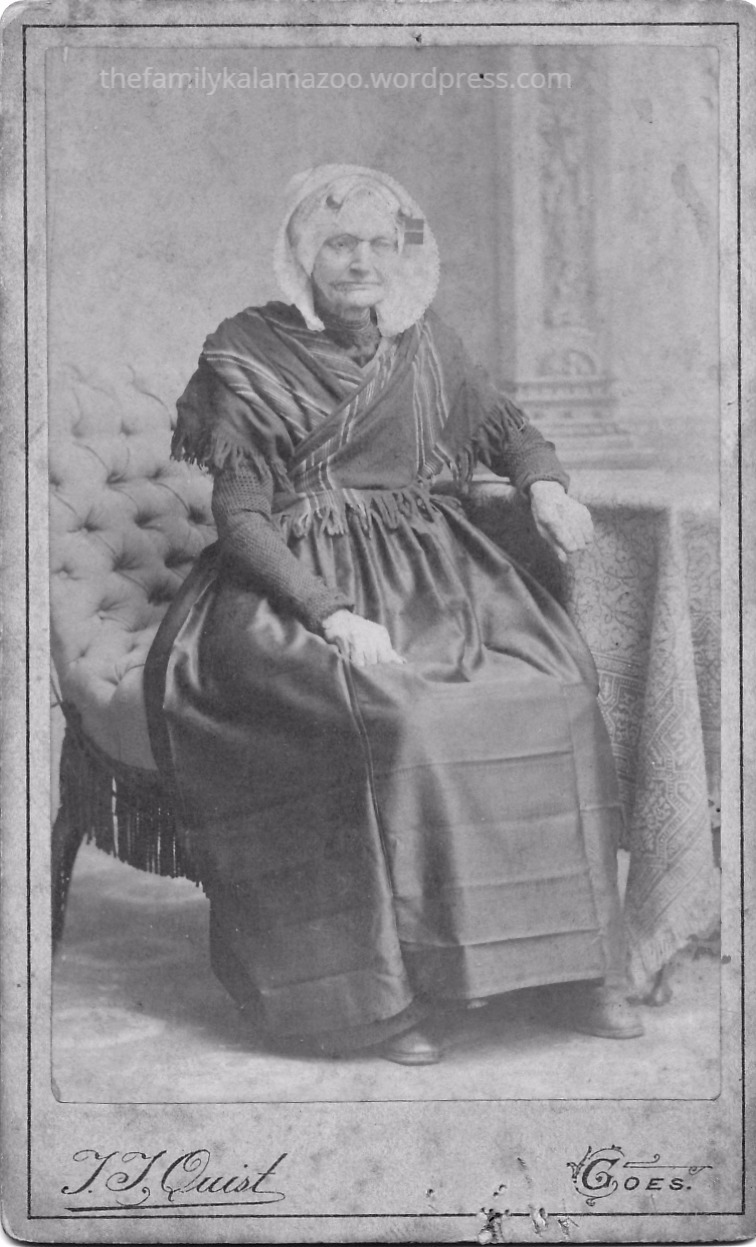
Here’s another old photo that remains unidentified. Clearly, this elderly lady is from Goes, the Netherlands, and, no doubt, died in Goes.  Because of her age in this photograph, imagine how early she must have been born!

She must be from one of these branches: Paaks, Zuidwegs, or Mulders. It’s unlikely that she is a direct ancestor of Alice Paak, though, because Alice’s mother (born Bassa) died in her early 40s, in 1865. And her mother, a van Nek, died in 1848.

It’s less likely to be a Mulder because most of these photos come from my grandfather’s’ family, not my grandmother’s. She’s not a DeKorn because they came from Kapelle (very close to Goes, but not Goes). That leaves the Zuidwegs–or perhaps an aunt or other relatives of the Paaks.

How do you like her bonnet? Why does it look like her dress has creases around the skirt?

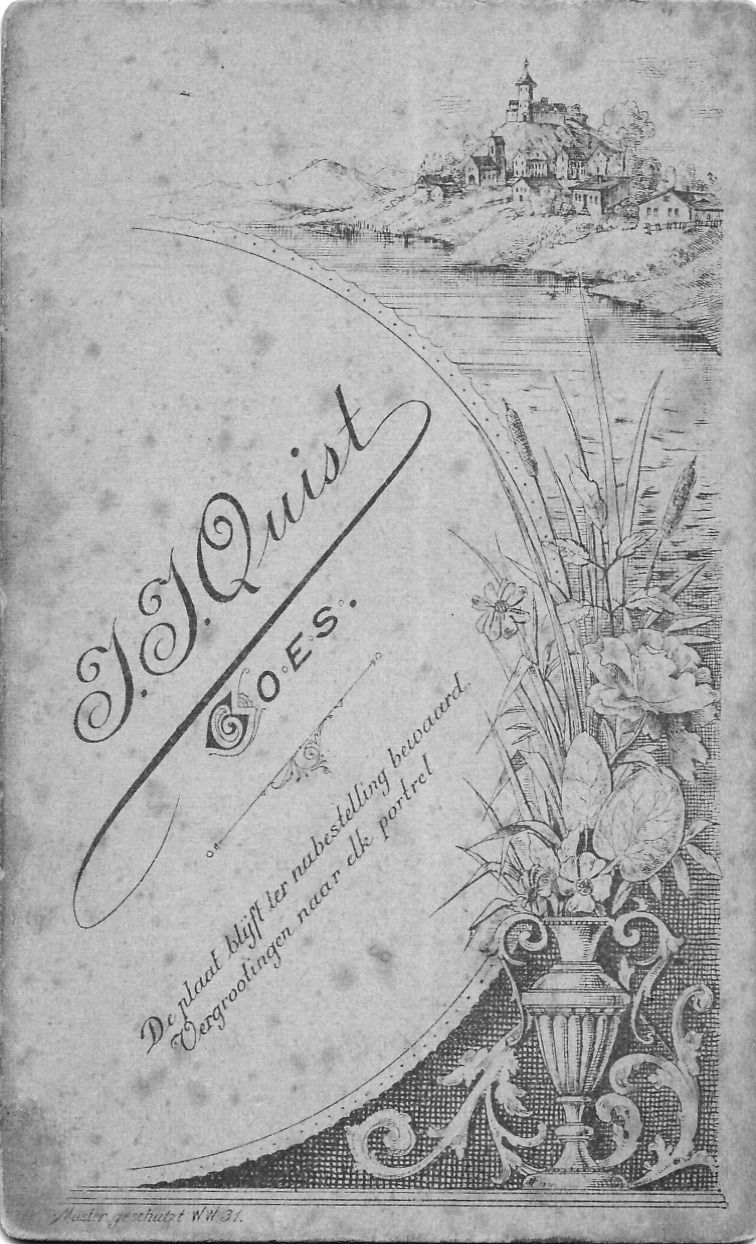
Here is the back of the photo in case it offers any clues:


Read Full Post »

I often wonder why more documents and photographs aren’t passed down in families. After I received that beautiful scrapbook that belonged to the Culver sisters (you can read about it here), I realized that sometimes it is because branches of families die out. There is nobody left who cares about the history of the family.

But what happens in so many other families? Sometimes someone moves and loses a box of photographs. Or they pass away and leave documents in the care of a descendant who hates “stuff” and throws it away.

Sometimes, though, it is in the hands of nature. A tornado, hurricane, fire, or flood carries away these valuable family treasures. I’ve tried to protect as much as possible against these possibilities. A fire safe and a supply of acid-free envelopes and boxes helps with that.

Nevertheless, I had a little taste of the damage that can occur from nature the other day. Well, maybe not nature–more like repairman error.

Last spring I walked around the corner of the house and heard a raging fountain. Water poured into the hall, on my beautiful alder wood floor.  Our hot water heater had burst. We discovered that the repairman had set it down, covering the drain, so the water had nowhere to go but out into my house. Ultimately the entire large-sized heater contents poured into my house, flooding the hall and downstairs bedrooms. The only reason it didn’t get into the living room is that the hallway and bedrooms are three steps lower than the living room.

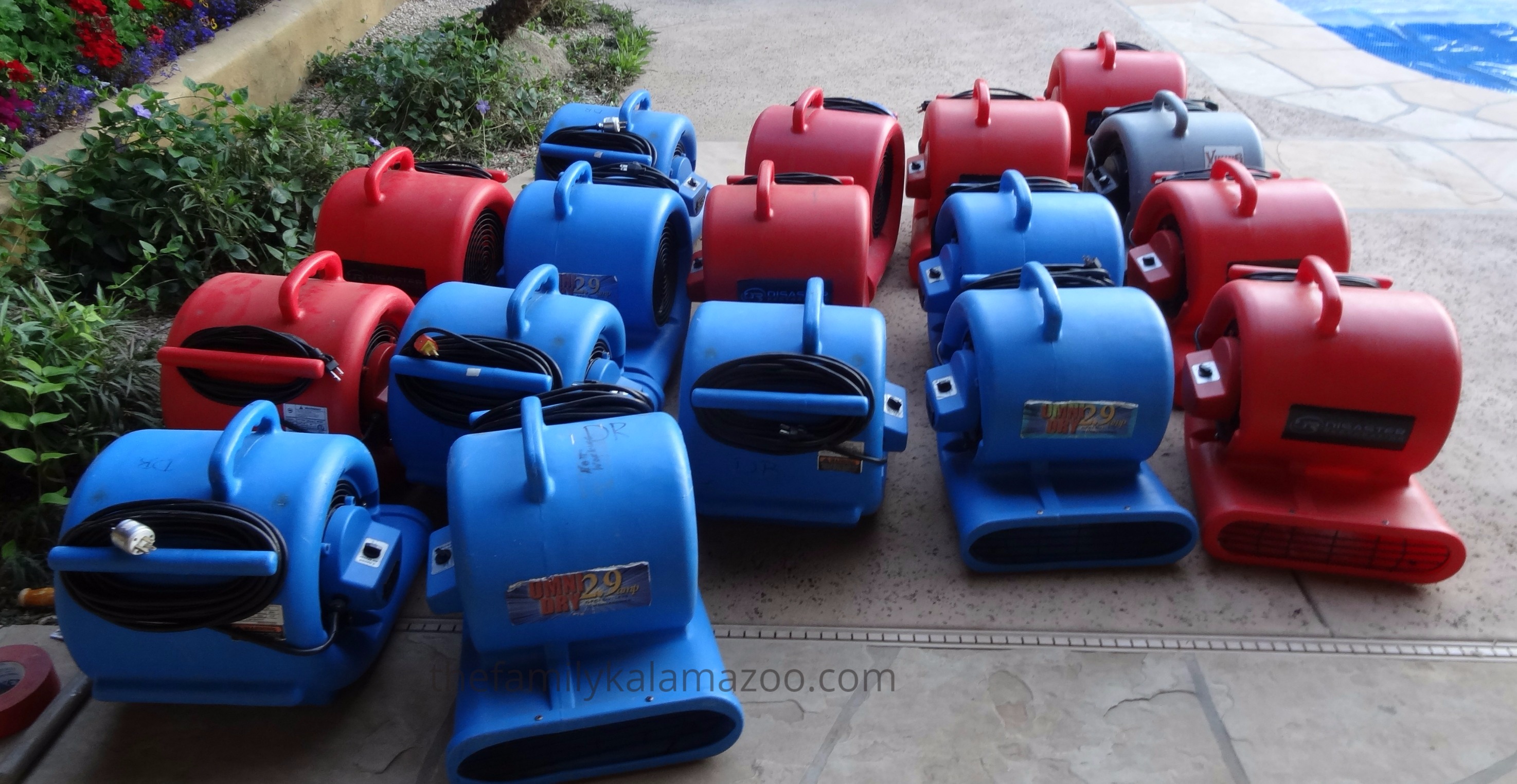
Professional dryers lined up by my pool

We got help cleaning up the mess, and because we live in Arizona, where it is dry, everything seemed fine.

Until Tuesday that is.

I keep a plastic mat in the walk-in closet where I store my scrapbooks, books, and old writing. That’s because, to make more room, I have a library cart full of books and need to be able to move it from in front of the file cabinet. Because it’s so weighted down with books, it sinks into the carpet and needs a mat to roll on. I keep another plastic mat under my desk for my chair. Well, what I didn’t know was that although the carpet was dry, the slab (no basement in Arizona) had absorbed moisture from the flood. So when I put the plastic mats down, over these ten months, moisture collected underneath. The carpet developed rust spots. And at the edge of the closet mat, on the wall hidden behind the file cabinet, black mold developed. It didn’t grow on my wall or in the carpet, but on the baseboard and on the scrapbook I had leaning between the cabinet and the wall. You see, that scrapbook was not a treasured heirloom, but something that belonged to me.

It was from 1989 and 1990, when I graduated from grad school (Western Michigan University). Because I have an iPhone and a camera, I was able to take photographs of the “treasures” in the scrapbook and throw them away. But years ago, that would have been very unlikely. Film was expensive and everyone didn’t have a camera.


I added the “My Graduation” ribbon to this photograph to cover up something I had written in my bad handwriting on that page ;). But I still have the photograph of the original page.


In the following photo you can see the black mold a bit better. It is a flyer advertising subscriptions to a literary magazine. The flyer featured a poem by yours truly, as well as one by another poet.  Look at the mold! I was wearing latex gloves to handle it.


Years ago, my mother-in-law’s basement flooded. She had a wonderful collection of antiques and childhood keepsakes that belonged to her and some to my husband. All gone in a flash. Every once in a while my husband remembers something else that was in the basement and is lost forever.

Have you lost photographs, documents, or heirlooms?

Read Full Post »

I wondered when I could ever get back to Theresa Pake. Since I couldn’t make time, I thought I would share something about her anyway!

On January 20, 1928, Theresa married Roy Lawrence. I’m posting this late on January 20, 2015, so that it’s the date of their anniversary.  Roy was born 5 November 1884, about 9 years before his bride.


Roy was a cigar smoker, but he quit when he married Theresa.

Is Theresa’s hair marcelled here? And what is the corsage she is wearing?


A Series of Disasters

The Children After the Fire, 1902

Paak-a-boo

Saved from the Fire

Who is George Paake, Sr.?

Curious about George

George Paake’s Legacy, Part I

George Paake’s Legacy, Part II: Theresa’s Pre-Professional Education

George Paake’s Legacy, Part III: Theresa’s Professional Education

George Paake‘s Legay, Part IV: A Letter to His Daughter


Read Full Post »
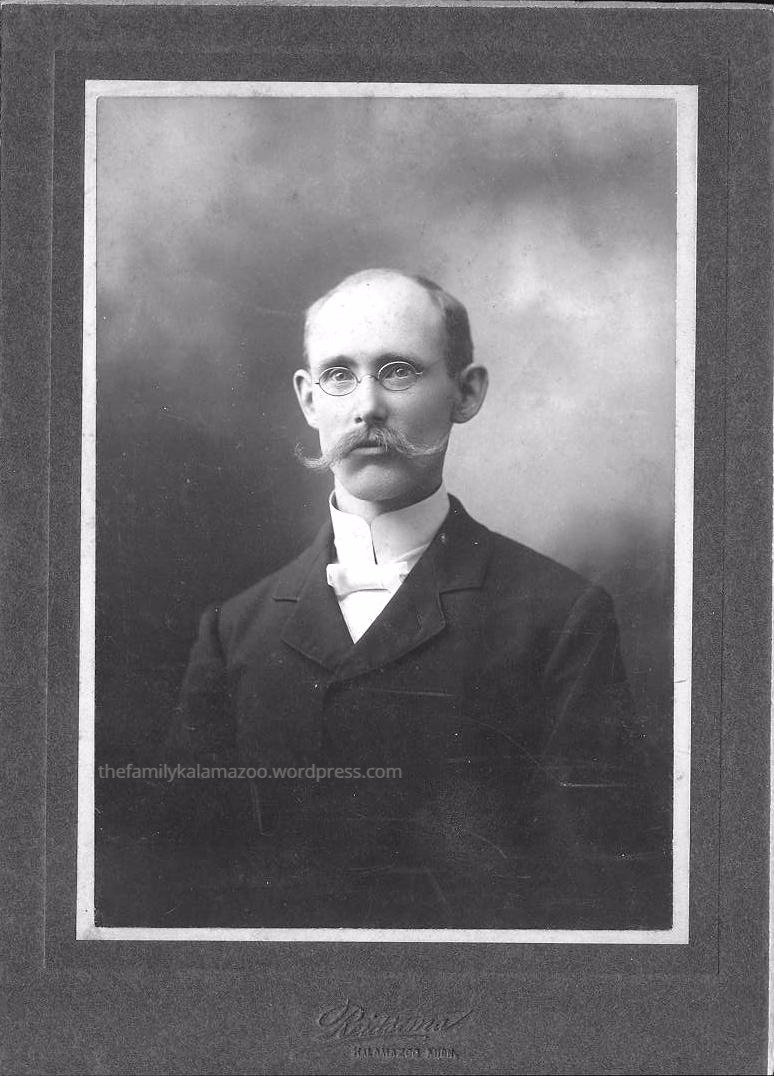
Here’s another unidentified photograph. The cardboard frame says it’s from Kalamazoo, but of course, it could be a copy. That said, I have noticed that most of my photographs of adults have been taken in Kalamazoo, not brought from the Netherlands or mailed from the Netherlands either. Nevertheless, maybe my unidentified pix fit into that latter category!


I have no notes from Grandpa on this one. He’s certainly Dutch, even the frame is from a Dutch photographer.  He’s balding, but tries to make up for it with his rather wild mustache.  Looks like he uses a curling iron for it.

His glasses are noted. But what I find particularly interesting is the color and tie. Surely that is a style from a certain period? Maybe even the cut of his coat lapels?

His posture is ramrod straight, so he at least wants to give the impression of a business man or upstanding citizen.

Any ideas about this one? Decade? His age?

Read Full Post »

« Newer Posts - Older Posts »