Feeds:
Posts
Comments

Archive for the ‘Photography early 20th century’ Category

In January I published a post called A Sister and Her Family: How Can I Find Out More?. At the time I was wishing for more information on the family of my great-great-grandfather’s sister, Jennie DeKorn Culver, and her family. They had moved from Kalamazoo to Seattle, Washington, over a hundred years ago, but there the trail ran cold.

Readers were very generous with their suggestions, and as I delve more deeply into this branch I plan to act on more of them.

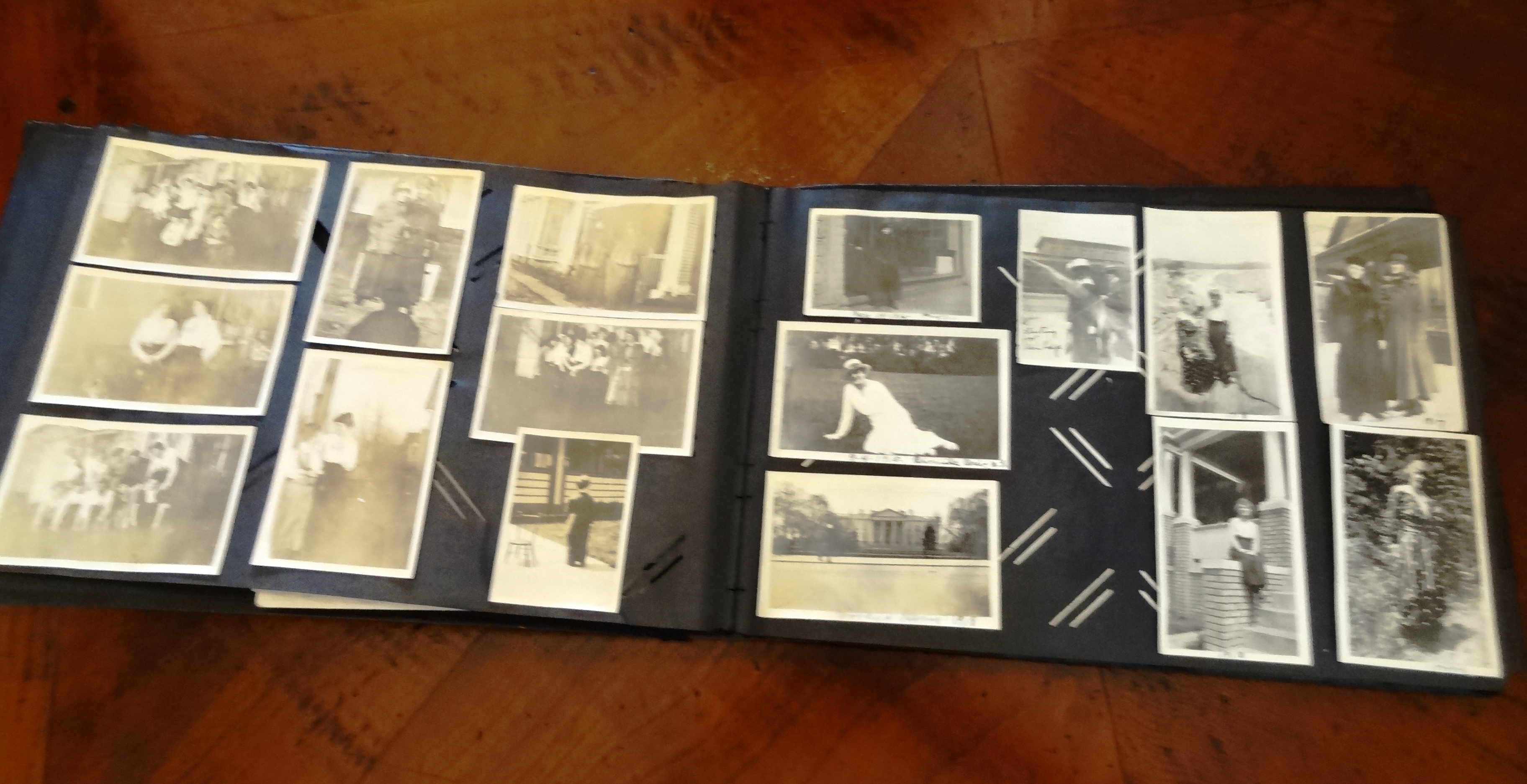
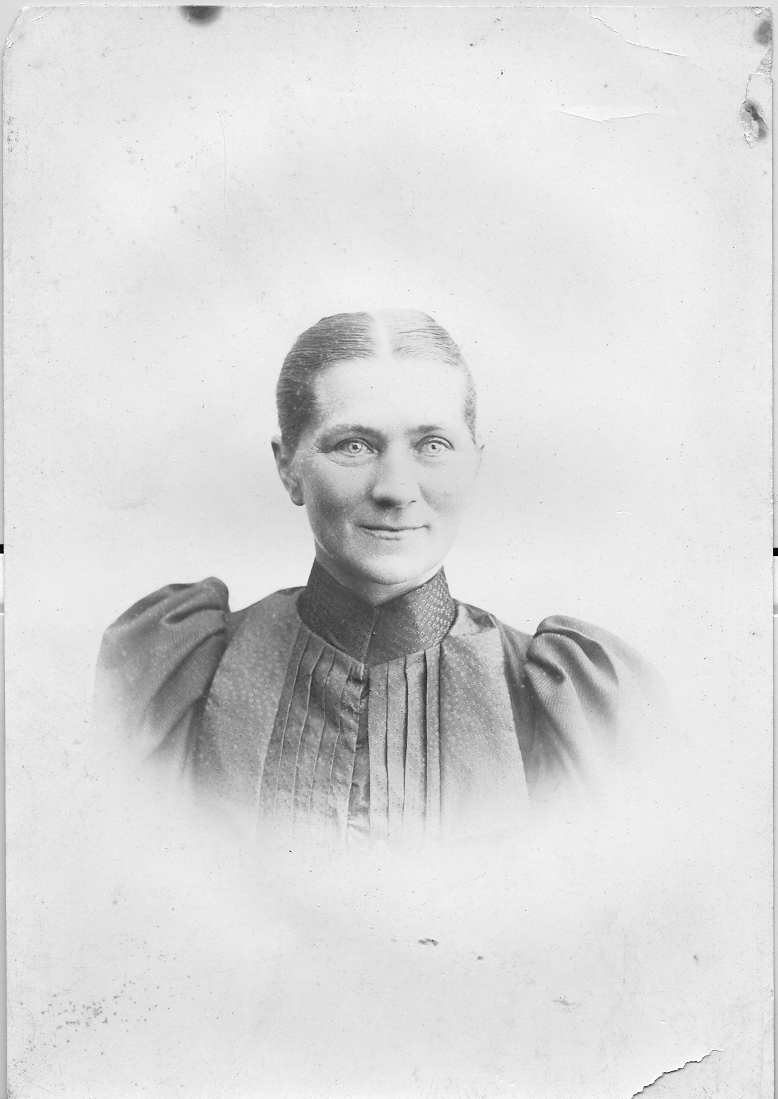
In the meantime, at the end of April the ideal person, a woman named Joyce, a complete stranger to me and to my family, read my blog post and commented. She had a photo album of family photos that belonged to one of the Culvers!

The story of how this album came into Joyce’s possession is a study in respect and appreciation for history and family. Joyce’s father worked at a retirement community with nursing facilities called Bayview Manor in Seattle. Joyce says, “When the residents left, what ever was left in their apartments was given or thrown away. The things thrown, my father liked to pick up, as a lot was still usable. This album was one of them.” Joyce has kept the album for thirty years.

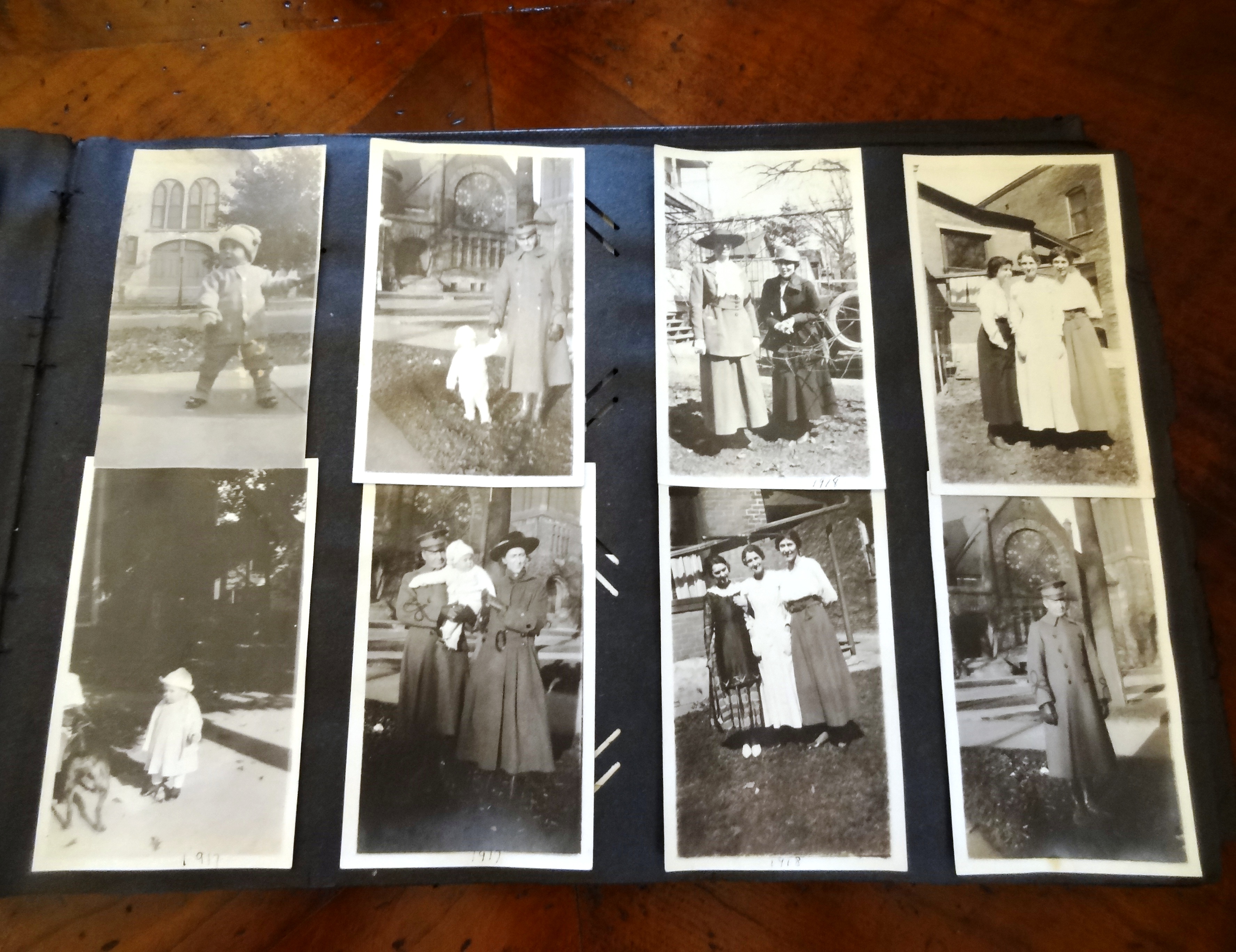
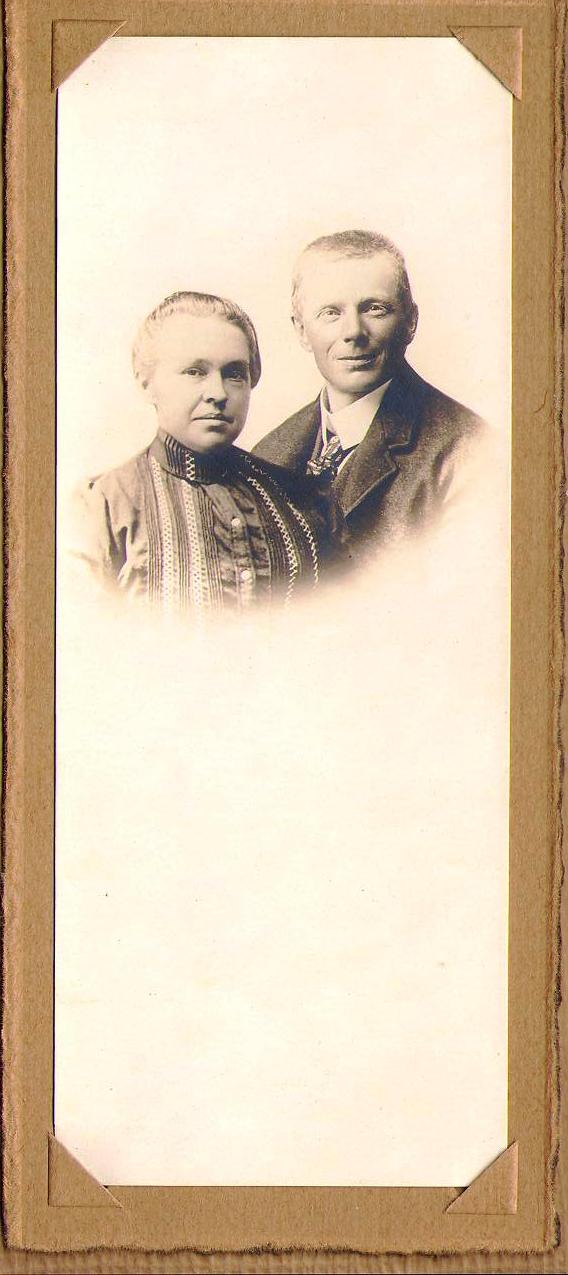
And now she has given it to me for our family. What a kindness. My daughter plans to scan the photos, and I will get Joyce a copy of them. And I plan to post some of the photos over a few posts after they are scanned. They are absolutely beautiful.

Here is a sample:


Imagine how I felt when I pulled this album out of the shipping carton!

Many of the photos are loose.

But some are affixed. These will be harder to scan.

Look at their lovely outfits!
I have not yet discovered which Culver left the album at Bayview Manor, but Jennie’s daughter Rhea died in 1976, which is 38 years ago. I have not yet found sister Lela’s obituary, but she was still alive in 1964.

Thank you so much, Joyce, for this wonderful treasure. My family and I thank you for your great kindness and compassion.

Read Full Post »

Although I’m in such a busy period that I can’t work on genealogy, I do have my daughter’s help right now to scan some old photos, so I will post some of them while I am too busy for research.

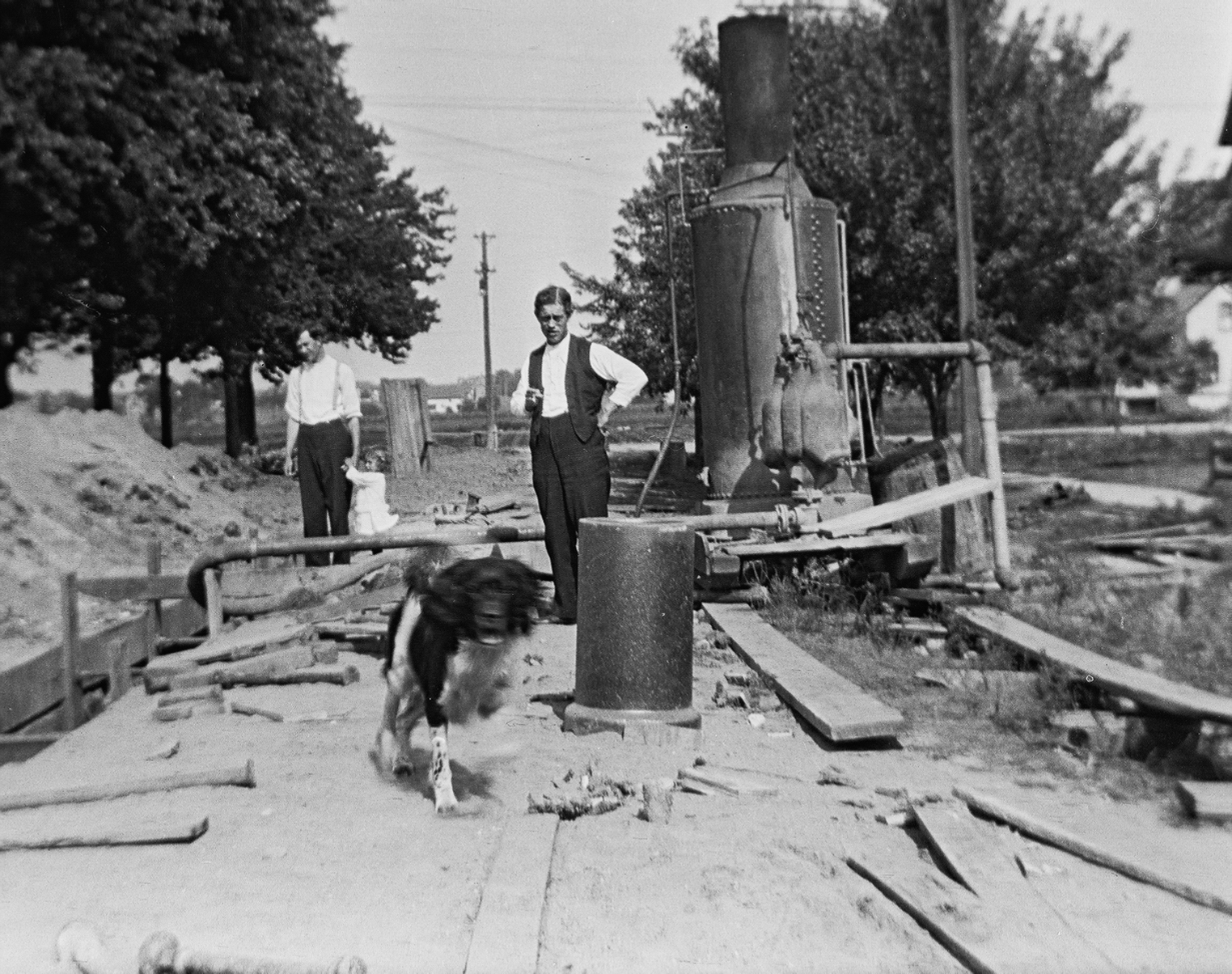
On the back of this photo it says Frank Tazelaar (near Whistle Stop).

Frank Tazelaar near Whistle Stop Kalamazoo

Frank Tazelaar
near Whistle Stop
Kalamazoo

So I looked up Frank Tazelaar on my family tree. Sure enough, he’s on there. He was born January 17, 1876 in the Netherlands, to Pieter Tazelaar and Adriana Bek. The family immigrated to the United States when he was 12, in 1888. On July 9, 1906, he married Genevieve Remine in Chicago. Genevieve was my first cousin 3x removed. Frank died in 1950.

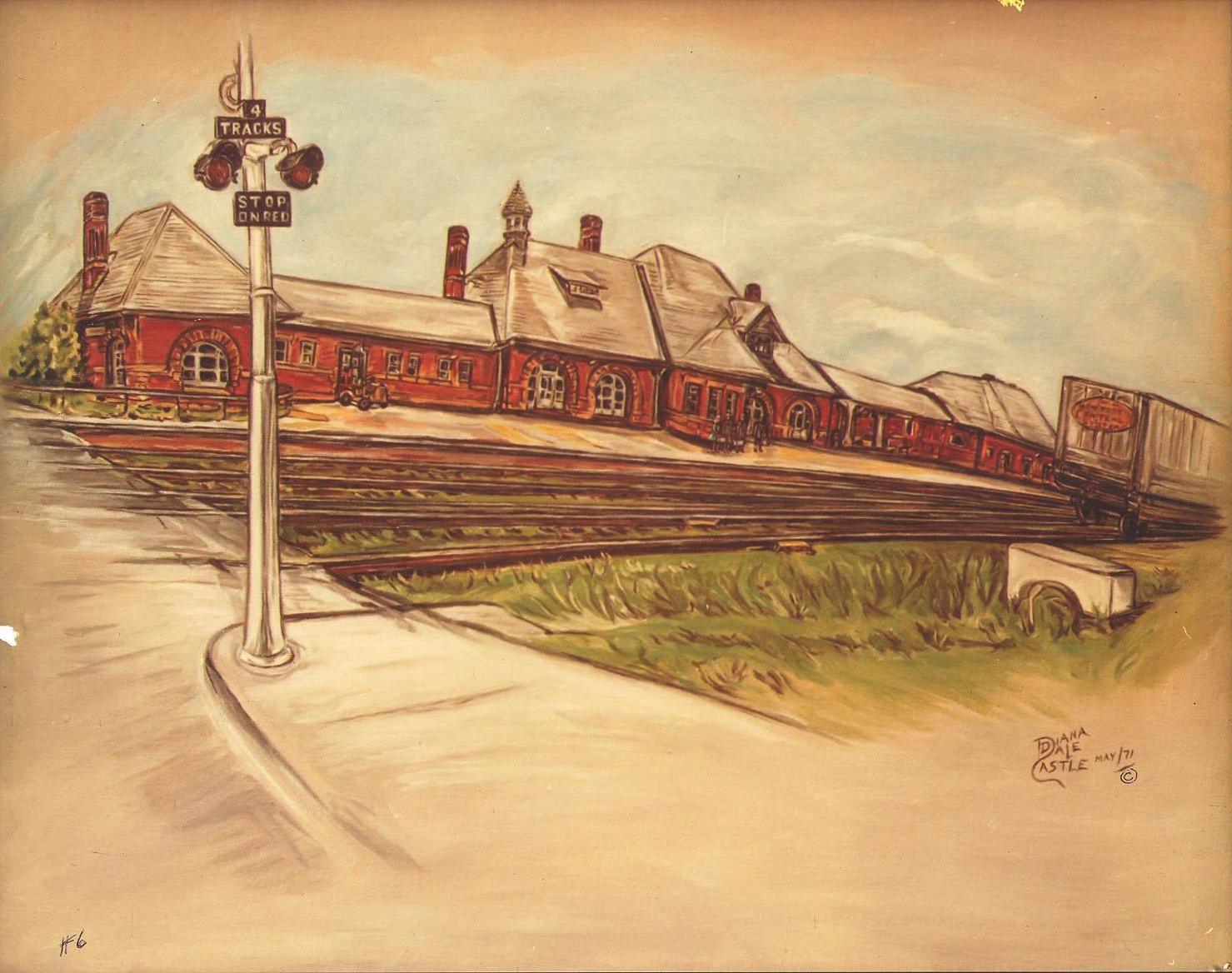
So what is “Whistle Stop”? It’s the train station. But when I tried to figure out if it was the same Whistle Stop where my friends and I used to go to eat and drink (and a building that my father owned) or if it was the other train depot (where we owned a concession stand with my father), I discovered that there were actually seven train stations in Kalamazoo. Here is a fascinating article that says that Kalamazoo may have had more train depots than any other city. I am going to tentatively assume that this photo was taken near what I knew as the Whistle Stop.

Here is a painting my mother-in-law did of the Whistle Stop. I apologize for the flaws in my copies on the computer for the next two photos.

The Whistle Stop  Kalamazoo

The Whistle Stop
Kalamazoo

And here is one she painted of the other train depot:

Train depot Kalamazoo

Train depot
Kalamazoo

OK, dad correct me if I made any mistakes!

What does the date on the photo of Frank Tazelaar say? Is it 1904 or 1914?

Be sure to note the type of rig he was driving, the dog, and his clothing compared with the men up on the roof. What is that pole thing coming down from up there? What do you think Gaslight means? The mark (pencil or crayon?) going through the photo wasn’t noticeable until my daughter scanned it. And thanks to Amberly at The Genealogy Girl she is scanning into .tif files.

Enhanced by Zemanta

Read Full Post »

Cora Wilhelmina DeKorn Zuidweg and her son Adrian Zuidweg Kalamazoo, Michigan circa 1910

Cora Wilhelmina DeKorn Zuidweg and her son Adrian Zuidweg
Kalamazoo, Michigan
circa 1910

Read Full Post »

My grandmother, Lucille Edna Mulder (Zuidweg), was born April 17, 1912. If she hadn’t passed away in 2000, she would be 102 today. I miss her every day.

Grandma holding me

Grandma holding me 1955

Last year I posted about Grandma’s high school graduation scrapbook. Here is the link. There are a lot of photos in that book; in most of them Grandma is hanging out with her friends and classmates.

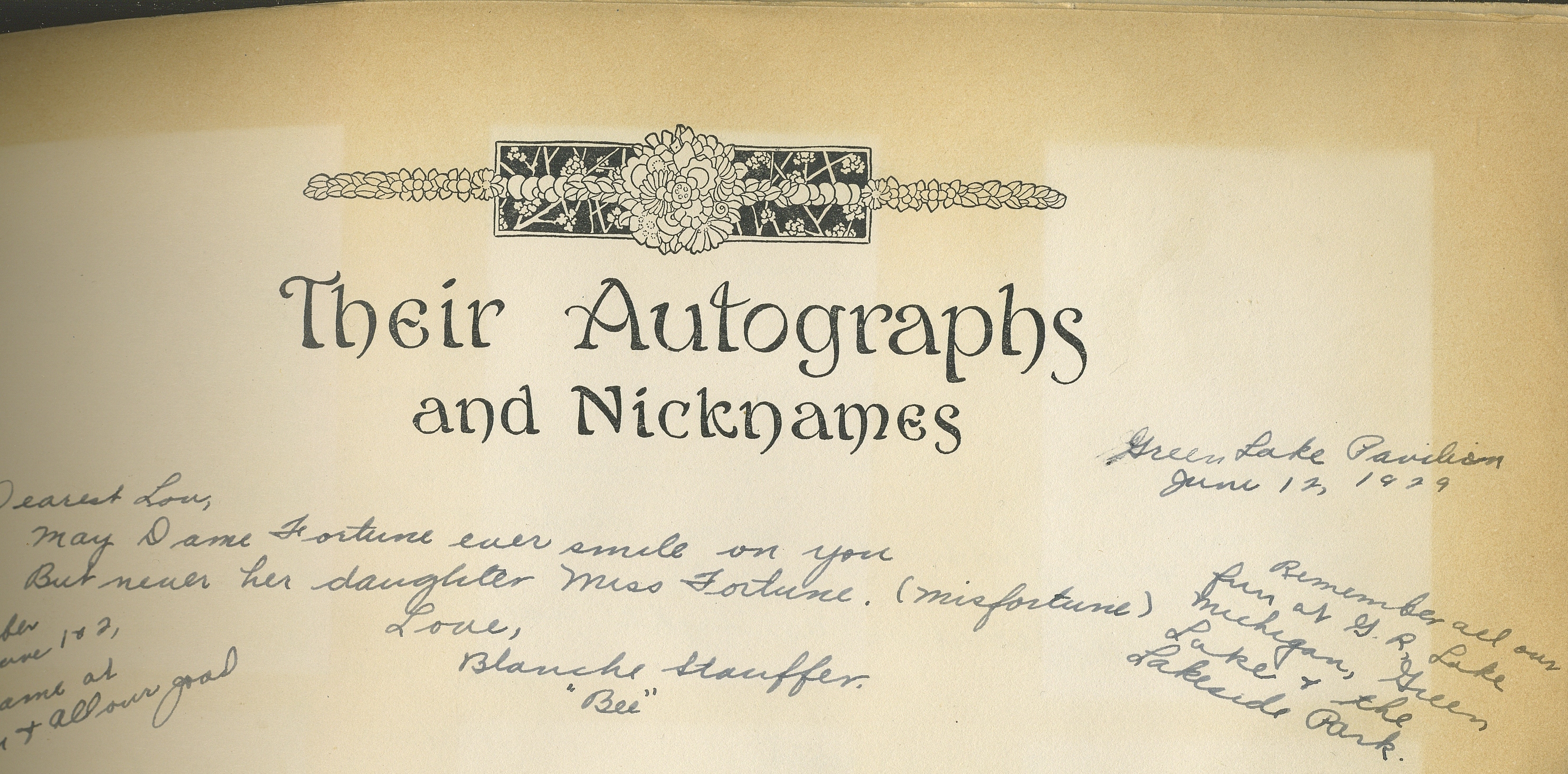
Below, Grandma is in all but the lower right photo. One of the girls is her best friend, Blanche Stauffer. Grandma and Blanche are in the upper right photo together–that’s Grandma in front. Blanche has the straight dark bangs. In the lower left Grandma is with another friend.


The scrapbook has an autograph page, and the words from Blanche are front and center:

Grandma and I have a lot in common. One thing is that a best friend was very important to us growing up. I looked up Blanche on Ancestry, and I was amazed to learn that she, like my grandmother, was the second child in the family. Blanche’s older sister was one year older. That was the same with Grandma: her older sister Dorothy was one year older.

Blanche was class valedictorian, Dorothy was salutatorian, and Grandma–with the 3rd highest GPA–was class historian. I read a list of Grandma’s classmates, and Blanche’s older sister was not in their class. At least Blanche didn’t have the sisterly competition that Grandma had to put up with ;).

Writing is another commonality between Grandma and me. When she was elderly and had just gotten sprung from a very negative experience with a rehabilitation nursing center, she made me promise I would never give up writing. I promised her, and I have kept my word. I remember Grandma submitting funny stories and occasionally getting them published when I was very young.

Recently, my mother told me an anecdote that made me realize that Grandma and I share another interest. When I was little and my mother worked full-time, Grandma babysat me. We sang Ethel Merman songs like “Anything You Can Do.”  I could always manage to sing louder and higher than Grandma.

Any note you can reach
I can go higher.
I can sing anything
Higher than you.
No, you can’t. (High)
Yes, I can. (Higher) No, you can’t. (Higher)
Yes, I CAN! (Highest)

What I didn’t realize is that when my mother and her siblings were little, my grandmother (who was always with my grandfather, to my memory) went to New York City with her sister Dorothy. They saw Ethel Merman in Annie Get Your Gun.  She actually saw this song performed live by Merman. My mother says it was one of the highlights of her life, and I believe it because I remember this music around Grandma often when it was “just us.”  I still love musicals and so does my daughter, who performs in professional productions.

Grandma and I shared other songs, too. She used to hold me on her lap while we sang “She’ll Be Coming Around the Mountain” and “This Old Man (Knick Knack Paddy Whack).” My memories of my grandmother are treasured heirlooms.

Happy birthday, Grandma.

Read Full Post »

The other day I posted a photo of a couple I had not yet been able to identify. Once I got it posted and readers started pointing things out to me, I began to wonder if it could be George Paak.

On the advice of some readers, I pulled the original photograph out of storage and looked at the back and at the sleeve. The back is blank, but the sleeve itself says this:

PATENTED MCH 271917

I still have a lot of work to do on the research, but I thought I’d post the photo with a concentration on the man’s face along with photos of the women I suspect could be his sisters. See what you think.

What I want to eventually find out is if this is George Paak.

Alice Paak DeKorn

Alice Paak DeKorn

Alice is my great-great-grandmother. Look at their mouths. The hairline, forehead, and sparkling eyes. Don’t they look alike?

Carrie Paak Waruf

Carrie Paak Waruf

Mary Paak Remine

Mary Paak Remine

The ones above are sisters Carrie and Mary. They don’t look quite like Alice or the man. Or do they?

Annie Paak

Annie Paak


There’s another look alike. I think Alice and Annie look a lot like each other–and they look equally as much like the man.  What do you think?

PAAK / PEEK FAMILY


Teunis Peek immigrated to the United States from the Netherlands with his children.

He was the son of Joost Peek and Annigjen den Besten, born on June 5, 1822 at Zijderveld. (He died on April 24, 1893, in Kalamazoo, Michigan).

Teunis was married on December 21, 1848 at Lexmond to Jacoba Bassa, daughter of Dirk Bassa and Aaltje van Nek.  Jacoba was born on June 18, 1824. She died on November 23, 1865 at Lexmond, before Teunis took the kids and left the country.

From the marriage of Teunis and Jacoba:

1  Joost Peek (George Joseph Paak) was born on August 25, 1850 at Lexmond. He died December 9, 1925, in Kalamazoo, Michigan.*

2  Aaltje Peek (Alice Paak) was born on September 9, 1852 at Lexmond. She died in Kalamazoo, Michigan, May 5, 1908, a few months before her grandson, my grandfather, was born.

3  Anna Catharina Peek (Anna or Annie Paak) was born on January 6, 1855 at Lexmond and died on October 6, 1933 at Kalamazoo (MI). She married Jacob Salomon Verhuist.

Anna was married on March 20, 1890 at Kalamazoo (MI) to Jacob Salomon Verhulst, son of Jacob Verhulst and Cornelia Strijd.  Jacob was born on May 1, 1848 at Kortgene, died on June 20, 1923 at Kalamazoo (MI).

4  Willempje Peek was born on September 17, 1856 at Lexmond (alive in 1870, as William ??).

5  Maaike Peek (Mary Paak) was born on July 28, 1859 at Lexmond. Mary married Richard Remine. She died in 1954 in Kalamazoo, Michigan.

6  Cornelia Peek (Carrie Paak) was born on May 8, 1862 at Lexmond, died in 1957 at Kalamazoo (MI).  Cornelia was 95 years old. Cornelia was married on June 2, 1882 at Kalamazoo (MI) to Hendrik Waruf (Henry).  Hendrik was born in 1863, died in 1945 at Kalamazoo (MI).

Later, Teunis was married on January 8, 1869 at Kalamazoo (MI) (2) to Prina Adriana Schoonaard (Perena), daughter of Jan Schoonaard and Tannetje Servaas.  Prina was born on August 1, 1814 at Borssele.

The other day another Paak descendent found this blog. I am looking forward to comparing notes with him about the family.  He is the grandson of George Joseph Paak (Pake).

 * Joost Peek, or George Joseph Paak (Pake): could he be the man in the photo?

Read Full Post »

One of the most frustrating aspects of this whole family photo/genealogy project is not being able to identify some of the photos. It’s bad enough to see the names and not know what the people looked like, but to actually have a photo in hand and not know which person or persons it represents is just maddening.

Take this one, for example.

This photo is from my the photographs my grandfather gave me, so these people were part of the Zuidweg/DeKorn/Paak family. But who were they? Is there a way to collect clues from the photo?

What do you notice about the photo?

And what could I investigate to learn more about it?

Read Full Post »
When I was a little girl, my aunt was in college and still lived at home. Her dog, the family dog, was an English Springer Spaniel named Sandy. That dog had bitten me near the eye when I was a baby so everybody was always warning me not to go near the dog and to be careful of the dog. In kindergarten, my grandmother babysat me and I had to negotiate my way through the house with Sandy. I tried to make peace with him by making him a meat pie (with Grandma’s help) for his birthday.

What I didn’t realize was that dogs had been part of the family for generations.

Grandpa shared these photos and told me which dog was which. They belonged to Richard DeKorn, and Grandpa and his parents lived for some time with Richard (Grandpa’s grandfather). It means that they lived well over 100 years ago. I’m sorry the quality of the following photos isn’t better.

TOM AND CARLO DEKORN

TOM AND CARLO DEKORN

BOBBY DEKORN

BOBBY DEKORN

Is the dog running toward Richard DeKorn?

Is the dog running toward Richard DeKorn? Adriaan Zuijdweg in the background.

The dogs with Cora, Adrian, and Alice

The dogs with Cora, Adrian, and Alice

That’s Grandpa as a baby in his mother’s lap, so he grew up with the dogs.

Bobby in the yard

Bobby in the yard

For those of you who know about dog breeding or shows, can you tell me anything about the following?

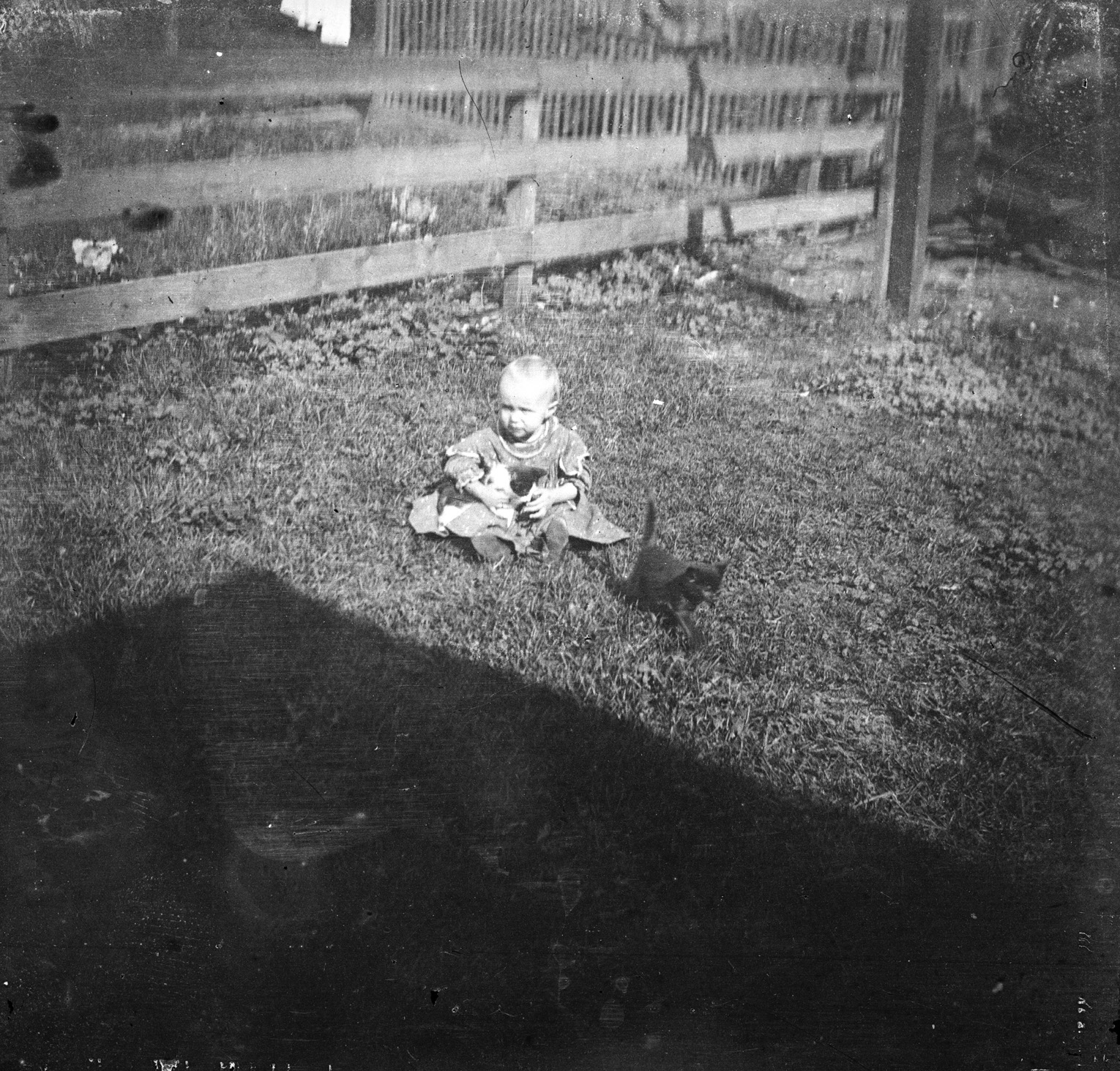
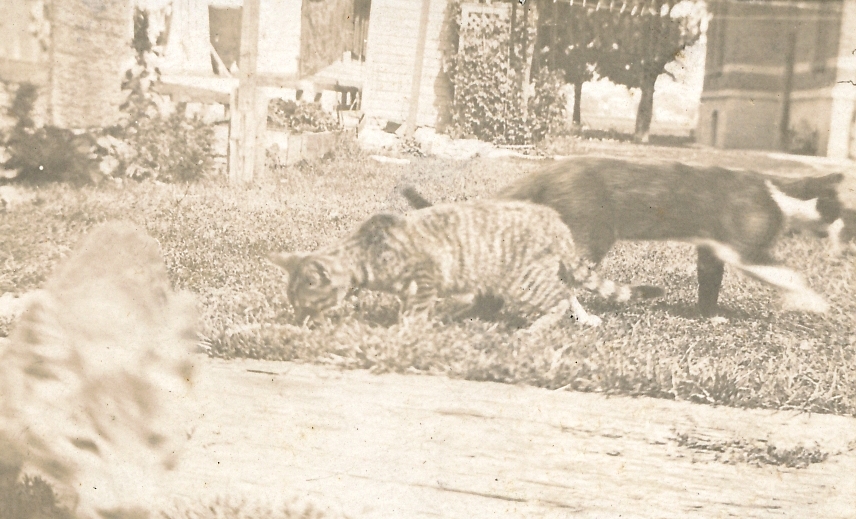
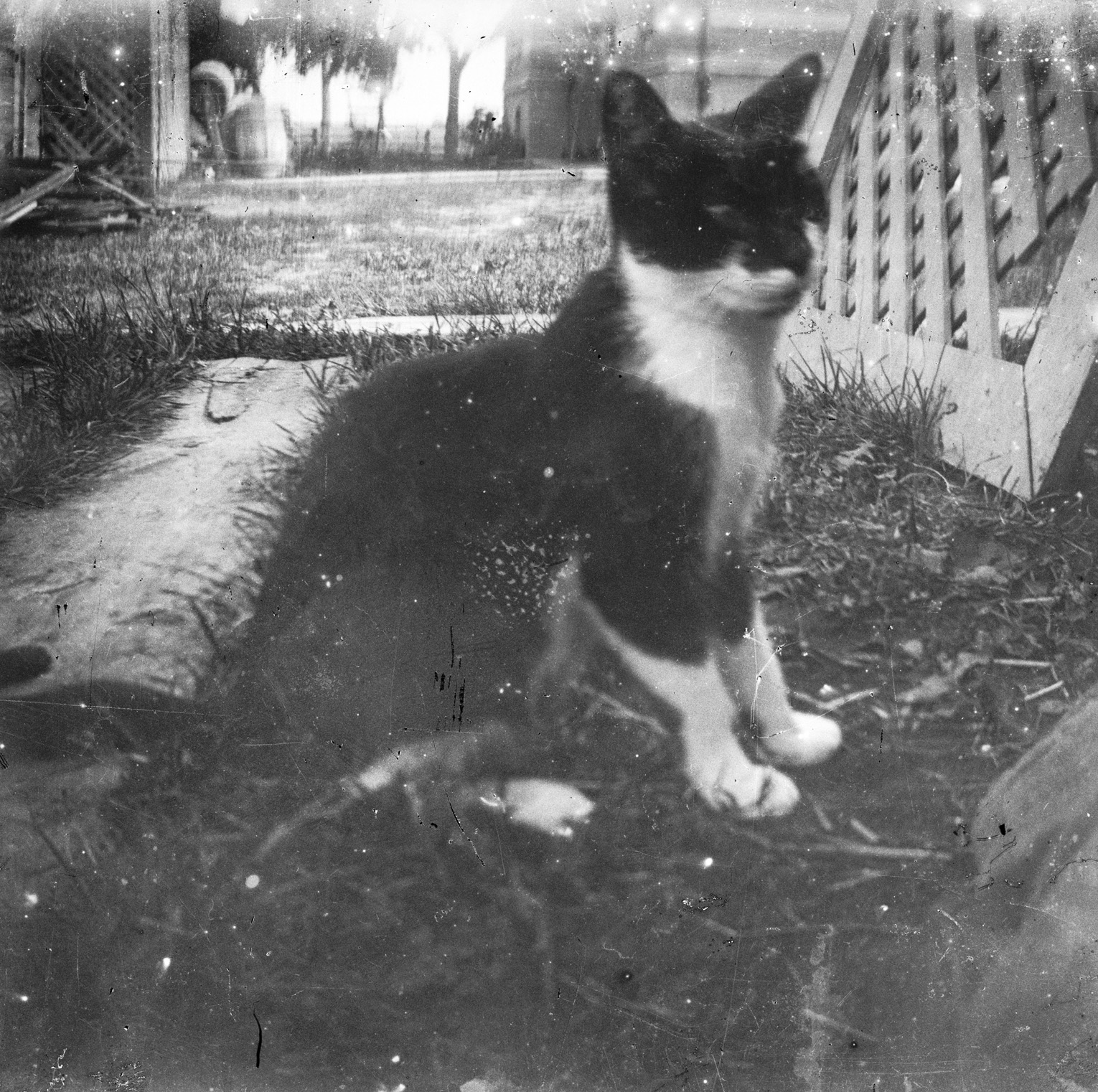
I’ve owned dogs, too, but now I have four cats. Did my family have cats 100 years ago?  Here’s the answer:

Baby Alice playing with the kittens

Is that baby Alice playing with the kittens?

I sense that you want to know about my cats ;), so here is a slide show of my beautiful cats, as well as my grand-cats.

This slideshow requires JavaScript.

Read Full Post »

I started to prepare a post about the Bosman branch of the Remine (Remijnse) family, but then one character in the drama led to another, and I realized I need to do more work on it before I can post.

So instead I offer you a photo from a collection I have not yet shared. It’s from a photo album owned by Alice Leeuwenhoek Moerdyk. She has a lot of photos of the good time the family used to have at Brook Lodge, outside of Kalamazoo.

In this photo, taken at Brook Lodge, the boy is most likely my grandfather. The date is 1915, and my grandfather was born in 1908. This photo was taken in the summer, and Grandpa’s birthday was October 31. The boy looks to be about six, and the facial resemblance is there.

Brook Lodge, Michigan 1915

Brook Lodge, Michigan
1915

Brook Lodge  was a 40 acre farm that was purchased in 1895 by Dr. W.E. Upjohn, founder of the Upjohn Company. He converted the old creamery to a summer cottage for his family. Grandpa told me that the family was invited often to relax at Brook Lodge. This photo was taken two years after Dr. Upjohn married the widow of James F. Gilmore, a founder of the Gilmore Brothers Department Store. People from the area will recognize both the names Upjohn and Gilmore.

Update: My uncle believes that the woman in the photo is Alice who would have been about 18 at the time of this photo.

Enhanced by Zemanta

Read Full Post »

Here’s another photo I need a little (OK, a lot of) help understanding.  Here is what I know:

  • The photo was in my aunt’s photo collection, and it presumably comes from photographs belonging to my father’s grandmother who lived in Elmhurst, Illinois
  • The family came from Budesheim, a village outside of Bingen. This is in the district of Bitburg-Prüm, in Rhineland-Palatinate, an area along the Rhine river in western Germany.
  • The family was Catholic.

What are the ways I can discover more about the photograph?  Any ideas on how to find information on the photographer? What do you think is the occasion of the photo? The girls’ dresses are what kind of lace? What is the pole behind the girls? Why does the window appear to be barred? Does the umlaut over the “a” in the photographer’s name indicate that the photograph was taken in Germany, rather than the United States?

I will say that from the time I first saw this photograph, because its appearance is so different from the rest of the family photographs, I assumed it was either brought with the family from Germany or was sent from a family member in Germany to my great-grandparents in the U.S.

Read Full Post »

Since I haven’t had time to work on any of my larger genealogical projects, I thought I’d share a smaller one today.  This photo is from the Joseph DeKorn collection. He was my great-grandmother’s brother, and he took a great number of our family photos during the very early 1900s.

Because someone took the time to write on the back, I felt that this photo was important to someone in the family. In fact, I believe the handwriting belongs to Uncle Joe.

Timber trestle bridge over the Huron River at Ann Arbor was designed and built by Professor Charles Ezra Greene.

Timber trestle bridge over the Huron River at Ann Arbor was designed and built by Professor Charles Ezra Greene.

Here is what is written on the back:

This is the bridge across the Huron R. It was designed by the late Prof. Greene. The place where the posts are close together is where the [?] fell through. The track in the foreground is the Michigan Central. The Ann Arbor crosses the bridge.

Where the WHAT fell through?

Does that say “where the car fell through”? Did someone’s car fall between the posts into the river?

I looked on the internet and all I found was that in the Detroit River, during Prohibition, this happened, according to Wikipedia:

There was no limit on the methods used by rum-runners to import alcohol across the river. Government officials were unable or unwilling to deter the flow of alcohol coming across the Detroit River. In some cases, overloaded cars fell through the ice, and today, car parts from this illegal era can still be seen on the bottom of the river.

But that’s not the Huron River. And what time period are we talking about for this photo?

On the back, it says “the late Prof. Greene.” Here is biographical and obituary information about Professor Charles Ezra Greene. He died in 1903. So the photo was taken at some point after that.  A steel bridge eventually replaced this bridge, and it might have happened in 1924.

In this bio, we learn this about Professor Greene’s credentials:

[Professor Greene] entered the Massachusetts Institute of Technology. Here he was graduated Bachelor of Science in Civil Engineering in 1868. From this time until 1870 he was Assistant Engineer on location and construction of the   and   Railroad in Maine. The next year he was United States Assistant Engineer on River and Harbor Improvements in Maine and New Hampshire, and was then appointed City Engineer of, where he also carried on a general practice until the summer of 1872. In that year he was appointed Professor of Civil Engineering at the University of Michigan, a position which he held to the time of his death, October 16, 1903. When the Department of Engineering was established as a separate organization in 1895, he was made its first dean. In 1884 he received the honorary degree of Civil Engineer from the University of Michigan. In addition to his duties as professor he carried on an extensive consulting practice. He was Chief Engineer of the Toledo, Ann Arbor, and Northern Railroad from 1879 to 1881; Superintending and Consulting Engineer of the Wheeling and Lake Erie Railroad bridge at Toledo in 1881-1882; designer and Superintendent of the construction of the Ann Arbor water-works in 1885; and designer of the Ann Arbor sewerage system in 1890. He paid special attention to the invention and development of graphical methods of analysis of frames, bridges, and arches. He published several works which were well received by the profession and which have been used in designing important structures: “Graphical Analysis of Bridge Trusses” (1874); “Trusses and Arches, Part I, Roof Trusses (1876), Part  , Bridge Trusses (1878), Part  , Arches (1879) “; “Structural Mechanics” (1897). He was a member of the American Society of Civil Engineers; also of the Michigan Engineering Society, of which he was president for three terms. In 1872 he was married to Florence Emerson, of  , Maine, who with their two children survives him, – Albert Emerson (Ph.B. 1895, B.S. [ ] 1896) and Florence   (A.B. 1903).

Joseph DeKorn attended the University of Michigan at Ann Arbor. I’ll make a guess he took the photo when he was a student at Michigan. This helps narrow down the date of the photo because Uncle Joe was born in 1881, so he would have been studying at the university in the first few years of the 20th century.

Joseph Peter DeKorn (photography by Marion Studio)

Joseph Peter DeKorn (photography by Marion Studio)

What is perhaps very telling is that Uncle Joe studied Civil Engineering, so perhaps he was a student of Professor Greene before the man died.  It does sound as thought Professor Greene taught up to the last. It also sounds as if he was an amazing teacher. At the least, Joe would have learned of Greene’s influence in the classroom.

Joseph DeKorn stayed true to his studies and went on to become Chief or Supervisor of City Light and Water for the City of Grand Rapids, Michigan.

Additional information provided by my uncle in a comment to this post: Charles E. Greene was indeed Joe DeKorn’s prof. He learned both what to do and what not to do from him! Joe DeKorn was in charge of building the Grand Rapids water system which to this day draws it’s primary water from Lake Michigan.  As Uncle Don says, it was a big project!

What do you think that he writes on the back of the photo? Does it say car or cars? Or something else?

FABULOUS CLUE BY MY FRIEND WANDA WHO POINTED OUT THAT THE CAR OR CARS IN QUESTION WOULD BE TRAIN CARS LED TO THE SOLUTION TO THE MYSTERY

This article is from the January 29, 1904 Kalamazoo Gazette.

There is a long article in the Ann Arbor Argus-Democrat on the same day. It indicates a dispute over the cause of the accident and says that actually 13 cars were destroyed.  But the bottom line is that it was NOT a defect in the bridge that caused the accident, but a broken flange on a coal car.

Read Full Post »
« Newer Posts - Older Posts »