Feeds:
Posts
Comments

Archive for the ‘Jennie DeKorn Culver’ Category


I wrote about this coat here.

Here it is again.

Isn’t this the same coat? And isn’t it fur? NOT VELVET.

And, if so, what changed Jennie’s fortunes from having her children in an orphanage 20 years earlier to wearing a full length fur coat? Note that the earlier photo has no snow, whereas this photo is obviously winter.

The Mystery of Jennie D. Culver deepens.

P.S. Do you think the other woman in this photo is one of Jennie’s daughters or another woman?  Here is the photo I posted last week of the daughters:

Lela and Rhea Culver Seattle, WA

Lela and Rhea Culver
Seattle, WA

Read Full Post »

Last year I wrote here about my great-great-grandfather Richard DeKorn’s second family. After the death of my great-great-grandmother Alice Paak DeKorn in 1908, he married Jantje (Jennie) Jansen Sootsman in 1910. It was a second marriage for them both.

Jennie had two daughters, Marion and Marjorie (Marge), by Oscar Sootsman who had passed away in 1907. Richard became their stepfather.

Marge and Marion Sootsman

Marge and Marion Sootsman

The younger daughter, Marge, married George Bernard Owens on December 9, 1916, in Kalamazoo.

This slideshow requires JavaScript.

When I wrote the post, I wasn’t sure, but believed she had one son.

I now know that son was David Owens.

Eventually I was contacted by the ex-wife of David after she read the blog post.

Rochelle Owens wrote me that she had been married to David for about three years. The marriage was the 2nd of David’s three marriages. She said that he was born March 1, 1929 or 1930.

Apparently Marge divorced George at some point. Rochelle believes it was before or soon after David’s birth.

In 1948, at the time that her mother passed away, Marge and David both lived in Ann Arbor, Michigan. David attended the University of Michigan.

What I particularly love hearing from Rochelle is that Marge was a gifted woman, an occupational therapist.

Rochelle Owens is a poet and experimental playwright who has taught at Brown University, the University of California, San Diego, the University of Oklahoma, and the University of Southwestern Louisiana (now the University of Louisiana at Lafayette).

On her website, rochelleowens.org, Rochelle has posted some “recollections” in a section titled Autobiograpy. Here is a passage where she describes David Owens, as well as her reminiscences about some famous writers, including her friendship with poet Amiri Baraka. She creates the atmosphere of the disenfranchised artists of the time period–and David Owens considered himself an artist.

          I did not personally know of any young women who wrote poetry then. When I stepped out of the subway and headed towards Christopher Street, I imagined myself as a poet. I felt adventurous and idealistic. A few years ago it occurred to me that during that period of my life I hadn’t been aware of the value of money. I think it’s a little strange. I was after all simply a poor working girl who was not even a graduate of Brooklyn college or C.C.N.Y. I did not have the luxury of having prosperous parents give me an allowance while I played out the role of being a poet searching for “authentic experience” while receiving an education at an expensive institution of higher learning. I did clerical work for a living and was innocently blind to the added disadvantages of being poor and female. Naively, I committed myself to art as ideology. It was in Pandora’s Box that my glance first rested on the animated face of David Owens. He had noticed me while he was engaged in conversation with a young painter by the name of AI Held, who has since become very successful. David was good-looking in a romantic English way. His personality was mercurial and seductive. He feigned an English accent and loved punctuating his obsessive speech with a French expression, raison d’etre, while railing against “bourgeois values.” He considered himself an artist while working as a salesman and doing carpentry. At the Peacock Café, The Lime-light, and the Cedar Bar, we met our friends and acquaintances who were painters, sculptors, photographers, poets and musicians. I came to know some of the leading personalities whose creative contributions have shaped avant-garde theatre, literature, and art in America during the last twenty-five years: Alexander Calder, Jack Gelber, Judith Malina, Julian Beck, Lee Strasberg, Ronald Bladen, Rod Steiger, Leo Castelli, and Tambimuttu.


David’s charisma and style impressed all. He resembled Richard Burton and was society’s ideal version of an angry young man, whose baritone voice skittered through the air and banged against the walls like giant hornets. He reveled in certain names and periods of history like, “Malraux’s Man’s Fate, the Renaissance, the French Impressionists, Franz Kline, abstract expressionism.” Etc.


I was perceived as an attractive and a bit zany girl who sometimes laughed hysterically. My background and upbringing had left me anxious and nervous. At times I imagined myself to be in disguise. On other occasions I felt like an irrepressible poet-philosopher. One evening after reading some of my poems, Peter Ritner, a former editor at Macmillan, bombastically stated that a mere girl should not have it in her to write such rich and cerebral work. He screamed that I must be a freak. “What experience could you ever have had! You’re just a goldfish swimming around in a bowl.” He died a suicide years ago. He invited David and me to dinner a few times, and I recall that he always prepared delicious mashed potatoes with lots of butter and garlic.


In the winter of 1955 David and I discovered old New York together. We visited the financial district; the buildings were strange and wonderful. We were the observers of an environment. Although we had no hope in its very structure, we saw our appreciation of the line, form, and color of the area as an act of faith in our ability to draw beautiful observations in a disintegrating time and an unbearable society. It was America during the Eisenhower years. The Man in the Gray Flannel Suit hung suspended over the rapidly growing artistic and political consciousness of the young like a bloated advertising zeppelin ready to explode.
It was the beginning of radical artistic experimentation. The poets, playwrights, film-makers, painters, sculptors, and performing artists were inventing, finding, producing, gathering, analyzing, and selecting the groundwork for those who came later, including the pop culture heroes of the billion dollar rock music business. The place to be was in New York or San Francisco. Later I would meet playwrights Adrienne Kennedy, Megan Terry, Roslyn Drexler, Sam Shepard, Ken Bernard, and Leonard Melfi.
In March, two days before my twentieth birthday, I was married to David. We moved into a small apartment on the upper west side. I was working for the Poetry Society of America and became a member after submitting some poems to the committee of jurors.

I wanted to add this paragraph although it’s not about David as it is about the famous poet Amiri Baraka:

One of my earliest friends had been the young poet and playwright LeRoi Jones who later changed his name to Amiri Baraka. Jones published a poetry magazine called Yugen; I remember how happy I was to be included among the contributors: Charles Olson, Tristan Tzara, Daisy Aldan, Jack Kerouac, Frank O’Hara, and Paul Blackburn, who later became a good friend. In 1962 Jones published a group of my poems in an anthology titled Four Young Lady Poets. It was not surprising that when I edited an anthology of plays ten years later called Spontaneous Combustion, a play of LeRoi’s was included.

Finally, she writes this about the period of her life when she and David separated:

In 1959 David and I separated and the marriage was annulled. I had finally recognized that he was too unstable and self-absorbed to alleviate my own dissatisfaction. For further insights into my relationship with David I would suggest reading the introduction to my collection of plays, The Karl Marx Play and Others. I decided to retain the name Owens because I had already been published under it. I wrote about David in my play Chucky’s Hunch. It was produced by George Bartinieff and Crystal Field at the Theatre for the New City in 1981 and by Jack Garfein at the Harold Clurman Theatre in 1982. The play won a Village Voice Obie and The Villager Award. The critical response was excellent, the New York Times describing it as “Hilarious! Wonderful!” The Village Voice said, “A triumph of verbal fireworks! Not to be missed.” Clive Barnes of the New York Post stated, “Rochelle Owens’ comic flame has never burnt so bright, but like the eye of the tiger, it is savage.” The play is published in an anthology, Wordplays 2, and is included in the Samuel French catalogue. Years ago, George Bartinieff and Crystal Field had appeared in the premiere production of my plays Beclch and Istanboul. I knew them both in the early period of off-off-Broadway.

David sounds like a character–I hope to find these passages about David in Rochelle’s books. I’m thrilled that Rochelle discovered my blog and made her connection with my family.

Read Full Post »

The story of Jennie DeKorn Culver begins in Michigan. It turns out that, even with the beautiful scrapbook, she is one of the biggest mysteries of my family tree.

Jennie’s birth name was Adriana. She was named after her grandmother, Adriana Krijger (the mother of Johanna Remijnse, Jennie’s mother). According to Adri van Gessel, in the dialect of the Goes region at that time, she would be called Joâne–a name that doesn’t sound like Joanne. There is no English equivalent, so she was called Jennie.

Jennie was born in Ottawa County, Michigan, in 1857 or 1858, one or two years after her parents moved to the United States, so she never lived in The Netherlands herself. Her mother passed away in 1864, so Jennie would have only been 6 or 7.

On December 25 (Christmas Day!), 1882, Jennie married John P. Culver in Kalamazoo. John was born in 1854,1855, or 1856 in Climax, Michigan, to Oliver C. and Almira Carney Culver. John had six siblings. He was about 12 years older than Jennie who was 25 or so.

The couple had two daughters:

  • Lela Almira Culver, born in Kalamazoo, on September 27, 1888
  • Rhea A. Culver, born in Kalamazoo, on November 13, 1890

The Culver girls before their parents divorced

At some point before 1898, the couple divorced. I know this because John remarried on July 7, 1898, at Muskegon, Michigan. His new bride was Florence V. Potter (Flora), daughter of William H. Potter and Florence King. Florence was born in 1876 and died after 1940, possibly as late as 1964.

Florence was married about 1900  to Norman Brant. The couple had two daughters. Florence went on to marry again, too.

John Culver himself probably had a 3rd marriage, possibly to Gladys E. Simmons.

Back to Jennie. I couldn’t find a divorce record online for her divorce from John, so I resorted to Genealogy Bank to look up the local newspaper, The Kalamazoo Gazette. That’s when I found articles that show that the couple certainly did divorce, and while the girls were so young. Jennie didn’t come from people who divorced, so for her to divorce her husband (and with young daughters at home, too), they must have had a drastic problem.

The following newspaper articles tell part of the story. Several of them are attached in .pdf form because they were too long for me to take screen shots of them. If you click the links you will find the newspaper articles. Be sure not to pass by the last one without clicking and reading.

Before the storm you could get lunch at Culver’s: Jan 5, 1895 lunch at Culver

It begins in the fall?

Kalamazoo Gazette 4 October 1895

Kalamazoo Gazette
4 October 1895

The Gazette had a list of Circuit Court cases in the paper on Dec 6, 1895.  Jennie Culver v. John P. Culver was listed as a divorce case.

More about the divorce on May 8, 1896 .

As if to counteract the bad publicity the day before, the Gazette lists something innocuous about John on May 9, 1896. It merely states that he has been given the refreshment concession at the Recreation Park.

On May 14, 1897, there were two articles. One was in Jottings and shows that John Culver has changed something small or large about his livelihood.
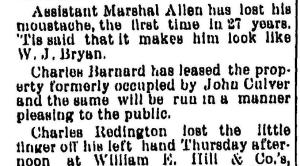
May 14, 1897 article about property in jottings

Apparently, one can no longer get lunch at John Culver’s on North Burdick.

There there is one that tells me that the divorce was finalized before May 14, 1897.  Heart-breaking. This one you need to click through to read.

The children were at the Children’s Home! Not with their mother! I tried to find something about the Children’s Home in Kalamazoo at that time. All I could find was a list of the children in the home in 1900.

CHILDREN’S HOME LIST 1900

Note that the girls are not on the list, so it’s likely that they were living with their mother by 1900.

Here are some articles about the Children’s Home:

1. General history

2. More general history

I’ve written to the blogger who wrote both these articles because it appears that her relatives lived at the home at the same time the Culver girls lived there.

When did Jennie move to Seattle with her daughters? And why?

Rhea and Lela Culver Seattle, WA

Rhea and Lela Culver
Seattle, WA

The 1910 census shows Jennie still in Kalamazoo, and the city directory shows her there in 1915.

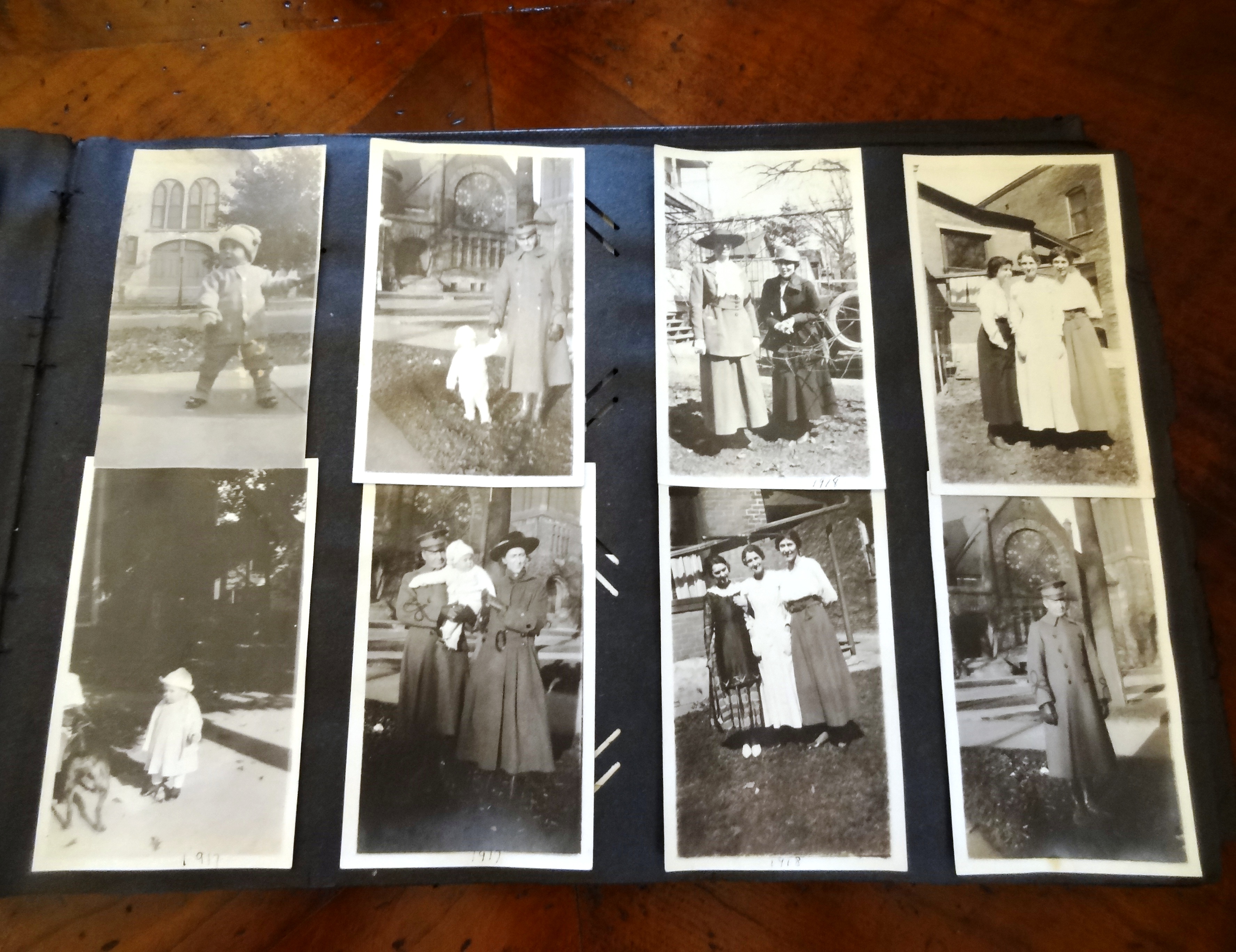
Many of the Seattle photographs in the photo album seem to be from about 1915-1925.  Remember that Jennie would have been around 58 years old in 1915!

Jennie died in Seattle on July 4, 1947.

The answer to the title is: I don’t know! I guess I have to keep researching. Jennie doesn’t appear to have remarried, although it is possible.  The daughters remained single for a long time (not sure if one of them ever married), so it wasn’t to follow a daughter’s husband’s job or family.

Any guesses on why she would have moved to Seattle in or just after 1915?


Read Full Post »

We will get back to Theresa Pake, but I am working on so many branches of the family. I can’t let the other leads I have lie there untracked. I need to follow them, too ;).

Let’s start to explore the wonderful scrapbook of the DeKorn-Culver family again (while not forgetting about Theresa or Jennie DeKorn Culver’s sister Mary DeKorn DeSmit’s family either). For more information on this story, see the related posts below.

To remind you, I had wondered what happened to one of the sisters of Richard DeKorn (my great-great-grandfather). Her name was Jennie, or perhaps Jennie Adrianna, and at some point she moved with her two daughters, Lela and Rhea, from Kalamazoo, Michigan, to Seattle, Washington.  She may have been divorced in Kalamazoo. A lot needs must be explored at this juncture because why would a woman with two daughters move so far away from home–especially in those days?

A reader in the northwest United States who happened to have a scrapbook that belonged to Jennie’s family contacted me. What a surprise! She was so kind to send me the scrapbook. When I finish making both .tif and .jpg copies of the photos I will send her a CD of the photos. My daughter did the preliminary work on the copying, but I need to do more and to “cut apart” the copies that were taken of multi-photo scrapbook pages. In other words, my daughter copied pages so as not to damage the book, but I want to copy the copies and then crop the photos so that they appear separately on the screen.

I wrote to Bayview Manor in Seattle to try to find out if this scrapbook belonged to Lela or Rhea Culver. This is the facility where the scrapbook was found. Unfortunately, I have not heard back from them.

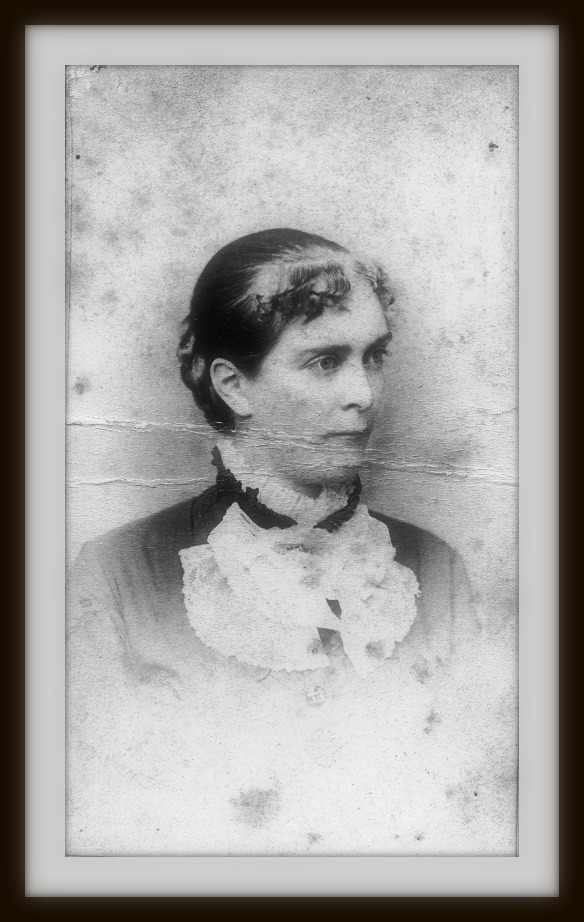
To begin to  identify these photos I need to start with what I know. I have a photo of Jenny when she was a young woman. And there is a photo in the scrapbook which I think looks strikingly like Jennie.  I want to see if you agree or if you think these are different women.

THIS IS JENNY DEKORN CULVER (1857-1947):

Jenny DeKorn Culver 1857-1947

Jenny DeKorn Culver
1857-1947


HERE IS THE WOMAN IN THE VELVET COAT. IS IT JENNY?


And is the coat velvet or fur? I am assuming it is velvet, although I did find a picture of a fur coat from around 1920 that had a similar look. However, the main reason I think it’s velvet is that it looks like velvet at the points where the fabric bends.

What do you make of the shadow at the bottom of the photo? Is the setting a garden or a lawn?

Read Full Post »
In January I published a post called A Sister and Her Family: How Can I Find Out More?. At the time I was wishing for more information on the family of my great-great-grandfather’s sister, Jennie DeKorn Culver, and her family. They had moved from Kalamazoo to Seattle, Washington, over a hundred years ago, but there the trail ran cold.

Readers were very generous with their suggestions, and as I delve more deeply into this branch I plan to act on more of them.

In the meantime, at the end of April the ideal person, a woman named Joyce, a complete stranger to me and to my family, read my blog post and commented. She had a photo album of family photos that belonged to one of the Culvers!

The story of how this album came into Joyce’s possession is a study in respect and appreciation for history and family. Joyce’s father worked at a retirement community with nursing facilities called Bayview Manor in Seattle. Joyce says, “When the residents left, what ever was left in their apartments was given or thrown away. The things thrown, my father liked to pick up, as a lot was still usable. This album was one of them.” Joyce has kept the album for thirty years.

And now she has given it to me for our family. What a kindness. My daughter plans to scan the photos, and I will get Joyce a copy of them. And I plan to post some of the photos over a few posts after they are scanned. They are absolutely beautiful.

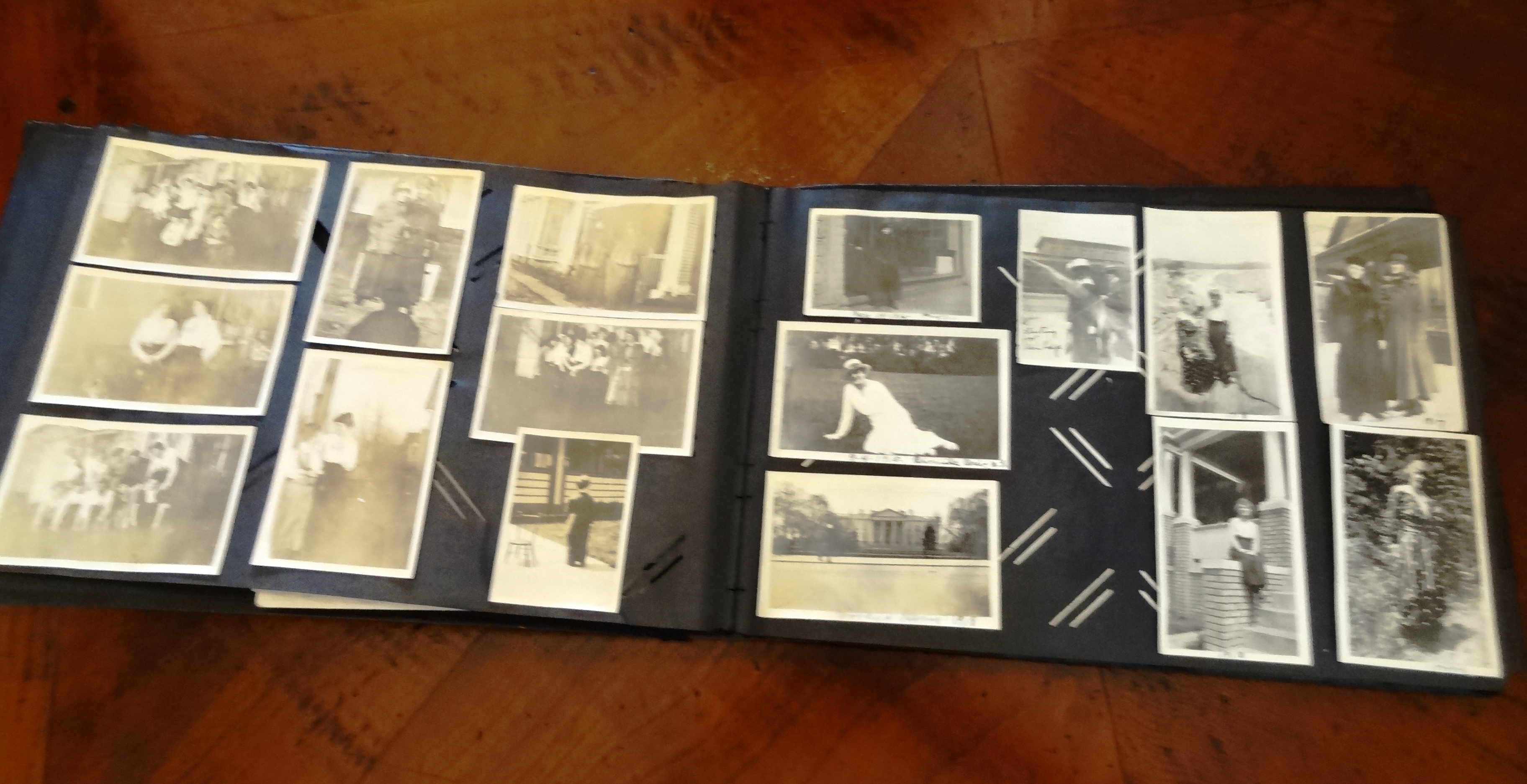
Here is a sample:


Imagine how I felt when I pulled this album out of the shipping carton!

Many of the photos are loose.

But some are affixed. These will be harder to scan.

Look at their lovely outfits!
I have not yet discovered which Culver left the album at Bayview Manor, but Jennie’s daughter Rhea died in 1976, which is 38 years ago. I have not yet found sister Lela’s obituary, but she was still alive in 1964.

Thank you so much, Joyce, for this wonderful treasure. My family and I thank you for your great kindness and compassion.

Read Full Post »

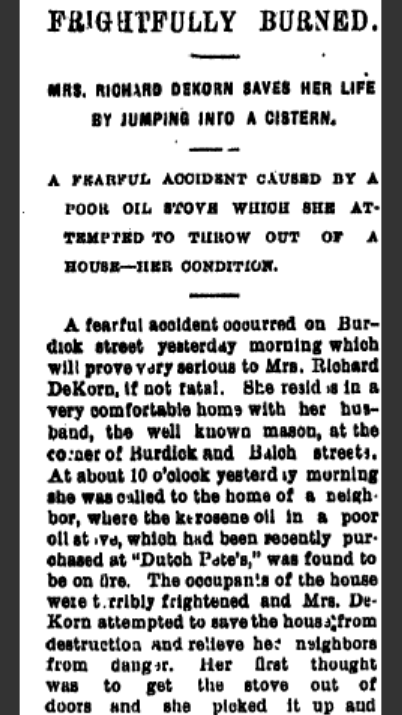
In the last two posts, I told you about the series of disasters that befell the Paak (Peek/Paake/Pake) family.  As I started researching for more information, I came across a worse and more horrific family disaster.  And this one happened to my very own great-great-grandmother, Alice Paak DeKorn, Mrs. Richard DeKorn (born Aaltje Peek in the Netherlands), on May 26 1891.

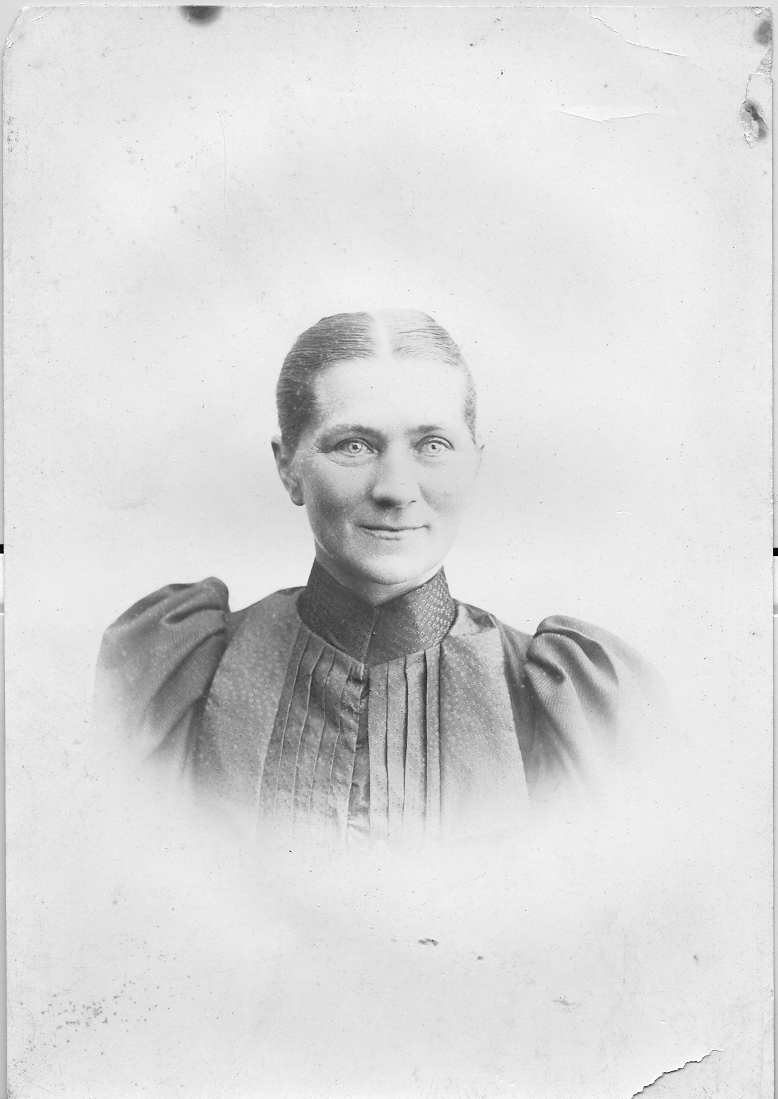
Alice Paak DeKorn

Alice Paak DeKorn

If you remember the post with the pretty shawl, that was her shawl.  She’s the one with the 3 Peek sisters; Alice was  the prettiest one.  Poor George was her brother. She was also the mother of my great-grandmother Cora DeKorn Zuidweg.

Read it and weep:

At the time this happened, Alice’s children were 18 (Jennie), 16 (Cora), and 10 (Joseph).  For the next week, the local newspaper provides updates about Alice’s condition, which seems to be improving.  Alice did live another 17 years after the accident.

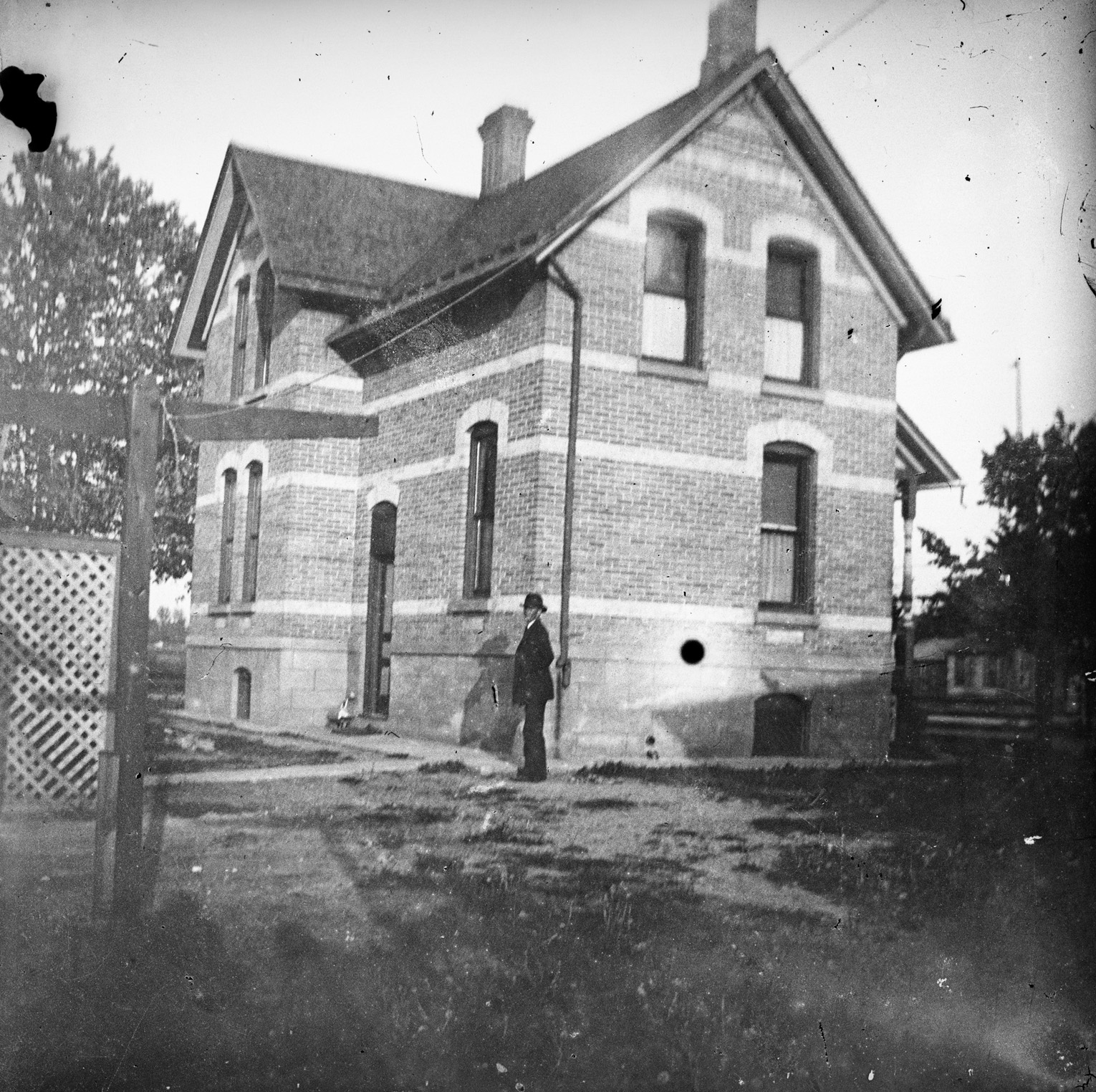
The “comfortable house” she lived in is said to be at Burdick and Balch.  That would be this house, built by her husband Richard DeKorn who stands in front:

Richard DeKorn's home at the corner of Burdick and Balch, Kalamazoo, Michigan

Richard DeKorn’s home at the corner of Burdick and Balch, Kalamazoo, Michigan

I would like to know more about “Dutch Pete’s,” where the oil stove was purchased.  What happened in those days with an accident like this?  Would there have been an investigation to see if there was a culprit responsible for the stove or if it was human error that caused the fire in the first place?

Notice how Alice was being a hero, trying to help out the neighbors so that they didn’t lose their house and belongings and so that they were safe.  I always had a good feeling about her.

Finding this accident in the newspaper archives did shake me up somewhat. After all, she looks like such a sweet lady, and I can only imagine how horrifically painful her injuries must have been–and what a frightening experience.

Strangely, my favorite contemporary children’s book (and one I taught several times) is Out of the Dust by Karen Hesse.  At the beginning of the book, the book’s protagonist Billie Jo loses her mother by an accident which is very similar. I remember that Hesse said in an interview that she found the accident in a newspaper article and put it in her book.  There are differences as in the book the cause seems to be an accident where the family confused kerosene with water, and in this newspaper account it seems to hint at a defective oil stove. I imagine there were far too many of these kinds of accidents in those days.

Alice’s terrible accident must have left her family very shaken up. I’m sure it made an impact on her children’s lives.

Read Full Post »

Enhanced by Zemanta

Read Full Post »

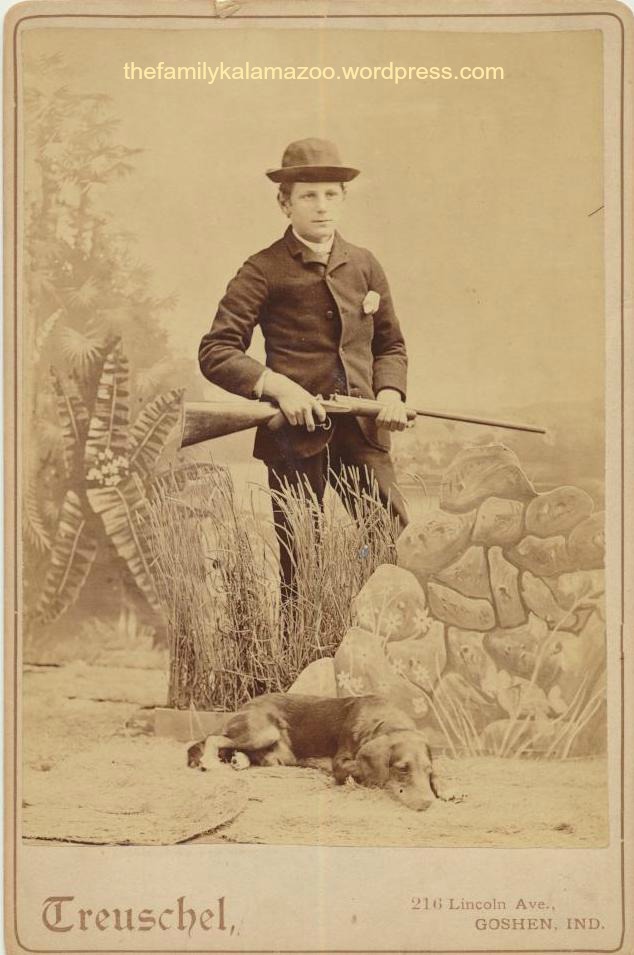
I only knew that the Bosmans existed because Grandpa told me that this photo was John Bosman.

This is what I wrote on the back of this photo, at Grandpa’s instruction:

John Bussman

2nd Reformed Church

on Park Street

Aunt Jen went there

Hmm. I have no idea what that means. I spelled the name “Bosman” incorrectly because Grandpa pronounced it “Bussman,” and I either didn’t ask how to spell it or he didn’t know.

Aunt Jen is Jennie DeKorn Leeuwenhoek, Richard DeKorn’s daughter, the sister of my great-grandmother.

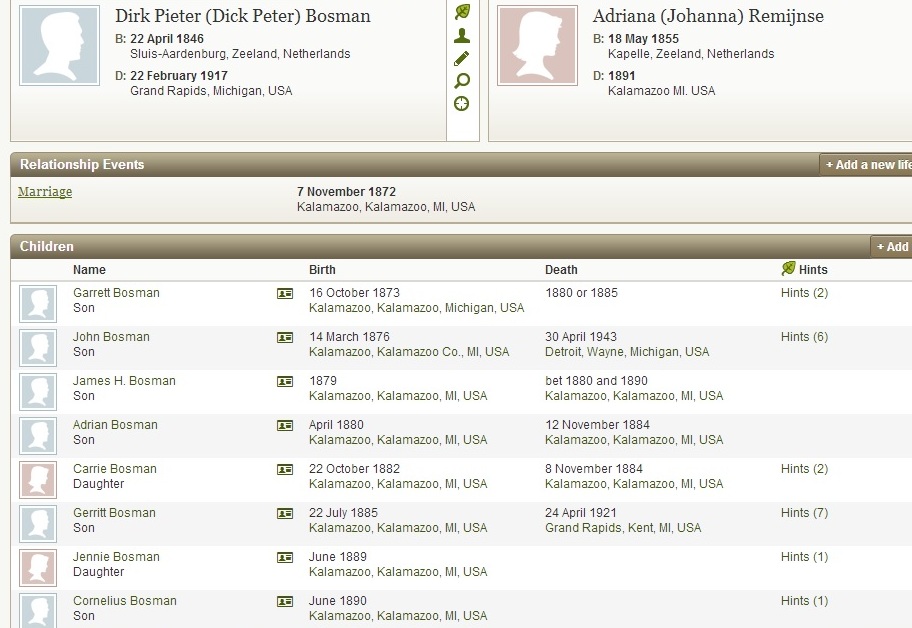
The matriarch of the Bosman family was Adriana (also called Johanna and Jennie–very confusing) Remijnse or Remynse.  She was my first cousin 4x removed. She married Dirk Pieter Bosman, and John was one of their children. Grandpa told me that John was the oldest child, but according to the following information, there was another son, Garrett, who died between the ages of 7 and 12.

Dirk and Johanna/Adriana gave birth to eight children. At least four of them died as children.

In this photo, John looks like a boy who likes hunting. He was born 14 March 1876 in Kalamazoo. He grew up to marry Nellie Robb on 14 May 1903 in Windsor, Canada. On 30 April 1943, he passed away in Detroit. Please note that Windsor and Detroit are right next to each other, although they are in different countries.

Back to what I wrote on the back of the photo. Grandpa said Aunt Jen went to Second Reformed Church on Park Street, not that his mother did. The story he told me was that his mother donated a quilt to the church (Second Reformed or a different Reformed Church?) and saw a woman hanging it on her own clothesline, signifying that the woman had appropriated the quilt. Great-Grandmother Cora quit going to her church after that incident.

I’ve looked online for a photograph of Second Reformed Church on Park Street, but cannot find anything. It is probably gone, but I hope to find a photo eventually.

Enhanced by Zemanta

Read Full Post »

I posted a copy of a graduation announcement last week. I didn’t know who it belonged to, but it turns out it belonged to Uncle Joe DeKorn. A reader posted a link to the answer. It turns out that Uncle Joe graduated from Kalamazoo High School in a class of 26. One of his classmates was an Upjohn son, William Harold Upjohn, and one was a Todd daughter, Ethel May Todd.

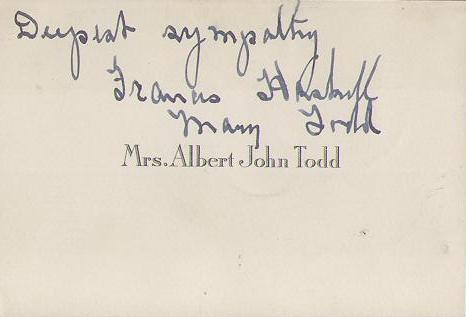
When Uncle Lou (Lambertus) Leeuwenhoek passed away on April 20, 1949, another Todd–Mary Todd–sent flowers and a sympathy notecard. You can read about Uncle Lou and his wife, my Aunt Jen, if you click on the following links: a post about Uncle Lou’s hero brother who died at war, a post about Uncle Lou’s Bible collection, and one which focuses on my Aunt Jen, Uncle Lou’s wife. When I was growing up, she was the oldest person I knew. A post I still need to write is about the store Uncle Lou and Aunt Jen owned.

I don’t know how Aunt Jen knew Mary Todd, but maybe it was at church or maybe it was through the store.

Sent with a vase of mixed flowers

Sent with a vase of mixed flowers

Mary Todd was Ethel’s sister-in-law, the wife of Albert John Todd, the President of the A.M. Todd Company. Mary’s husband was a son of the company founder. In 1950, Albert and Mary lived at 2344 Midvale Terrace in Kalamazoo. The house was in the middle of a section known as Westnedge Hill, where the houses are all large and custom and the lots large for city lots.

The 1920 census indicates that Albert and Mary lived with their four children and two servants, an “Englishman” and a local girl. According to the 1930 census, they had one servant, a different girl from ten years earlier. It’s hard to tell about the 1940 census because Albert and Mary are at the bottom of the page, and I am not sure how to find the next page. Any ideas?

When people think of the A.M. Todd Company, they think of mint. According to the company website, the history is summed up this way:

Quality. Purity. Integrity. An unwavering belief in these principles inspired Albert May Todd, then a teenager, to found A. M. Todd Company in 1869. It was an era when mint essential oil from Michigan had a poor reputation thanks to widespread adulteration by unscrupulous vendors. Albert May’s initiatives brought credibility to Michigan essential oils and early success to the A. M. Todd Company, now the world’s oldest and largest supplier of American peppermint and spearmint oil.

Maybe Uncle Lou and Aunt Jen were customers, through their store, of the A.M. Todd Company.  This company was sold a little over two years ago. You can find an article here which describes the company, the sale, and the influence of the company on the Kalamazoo area.

This is a passage from a book entitled Vanilla: Travels in Search of the Ice Cream Orchid by Tim Ecott:

Notice that the notecard also has the name Frances Haskell. Maybe that indicates that the flowers were, in fact, from women who knew Aunt Jen through a women’s group? Frances Haskell seems to be a middle-aged single daughter of Gertrude Haskell. The Haskells lived in the beautiful area near Kalamazoo College and the Henderson Castle.

Once again, this item and the information I’ve found leads to more questions than I had originally!

Enhanced by Zemanta

Read Full Post »
My great-great-grandmother Alice Paak (the brave woman who survived a horrific near-tragedy that I wrote about last spring) gave her middle child Cora a gift for Christmas 1907. Perhaps she gave one to each of her three children.

You can see from the photo that it’s a hand-painted genealogy shell.

My grandfather and grandmother inherited it, and my grandmother gave it to me.

Let’s take a look at what she wrote over one hundred years ago, and how it relates to the information I have received more recently.

Alice Paak

If you remember my story about Alice’s near tragedy, you might also remember the post I wrote about her beautiful handmade shawl. Or the post I wrote about Alice and all her sisters.

On the shell, she names herself “Alice Paak ,” which is the name Grandpa had told me.  But genealogical research in the Netherlands shows that she was born Aaltje Peek. The source used for that name was this:

Lexmond, Zuid-Holland, the Netherlands, birth record, 1852, 36, Aaltje Peek, 9 September 1852; digital images,
Familysearch (https://familysearch.org/pal:/MM9.3.1/TH-1-159370-202016-19?cc=1576401&wc=6426532 : accessed 23
December 2012)

Apparently, she accepted the American name “Alice.” Her granddaughter, Alice Leeuwenhoek, the daughter of Jennie and Lou Leeuwenhoek, was named after her. Later, my own aunt, the granddaughter of Alice’s daughter Cora, was given the name Alice.

Alice Paak’s birth date is given on the shell as 17 September 1852.  But my genealogical information (the source I listed above) shows that she was born on that same month and year, but on the 9th, not the 17th. Wouldn’t she know her own birth day? That confuses me.

On the shell, she lists her birth place as Leksmond, Nederland. That sounds right, and I think it’s the same place as Lexmond, Zuid-Holland, Netherlands.

Richard DeKorn

My great-great-grandfather Richard DeKorn was born Dirk de Korne.  But he clearly changed both his first name (Americanized it) and the spelling of his last name (maybe to make it easier for others).

He was born on 21 Aug 1851.  The shell corroborates the date.

However, his birth place is listed on the shell as Goes, Zeeland, Nederland. But wait!  In another post I mentioned that I had always thought he was born in Goes, but the genealogical documentation shows that was born in Kapelle, Zeeland, the Netherlands! This is the documentation:

Kapelle, Zeeland, the Netherlands, birth record, Dirk de Korne, 21 August 1851

Jennie DeKorn

Born March 18, 1873. That’s according to the shell. But my information is March 8, 1873. I have to check on this!

Cora DeKorn

Born January 2, 1875. That’s according to the shell and to my records.

Joseph Peter DeKorn

Born June 30, 1881. That’s according to the shell and to my records.

The treasure itself

The design is beautiful with holly branches. The berries are raised to look like real berries. Originally there was a gold leaf paint trim around the shell, but it has worn off in many places.

Her use of “Xmas” because it fit better on the small surface seems astonishingly modern, as does the use of metallic gold and red and green for Christmas.

What I find particularly poignant, though, about this family heirloom is the date. She gave this gift to her daughter on Christmas 1907, and on May 5, 1908, a little over four months later, she passed away.

Read Full Post »
« Newer Posts - Older Posts »