Feeds:
Posts
Comments

Posts Tagged ‘Kalamazoo history’

Ok, so maybe it’s not a full collection.  Uncle Lou (Lambertus Leeuwenhoek) left behind two Bibles, both printed in Dutch.  One is a full size Bible to read at home.  The other is smaller, perhaps the size he could tuck into his pocket and carry around.

Uncle Lou's Bijbels

Uncle Lou’s Bijbels

When my grandfather and grandmother gave me the family photographs and glass negatives, they showed me a family Bible or Bijbel, as it is called in Dutch. It wasn’t one of these, but one that had my direct family tree written inside the cover.  That was what my grandparents used to help guide their memories about the people associated with the photographs.  I don’t know what has happened to the Bible.  I hope someone in the family has it and is taking good care of it.  If you are reading this, Bible-keeper, please let me know it’s safe and, if you can, send me some pix!

The insides of Uncle Lou’s Bijbels

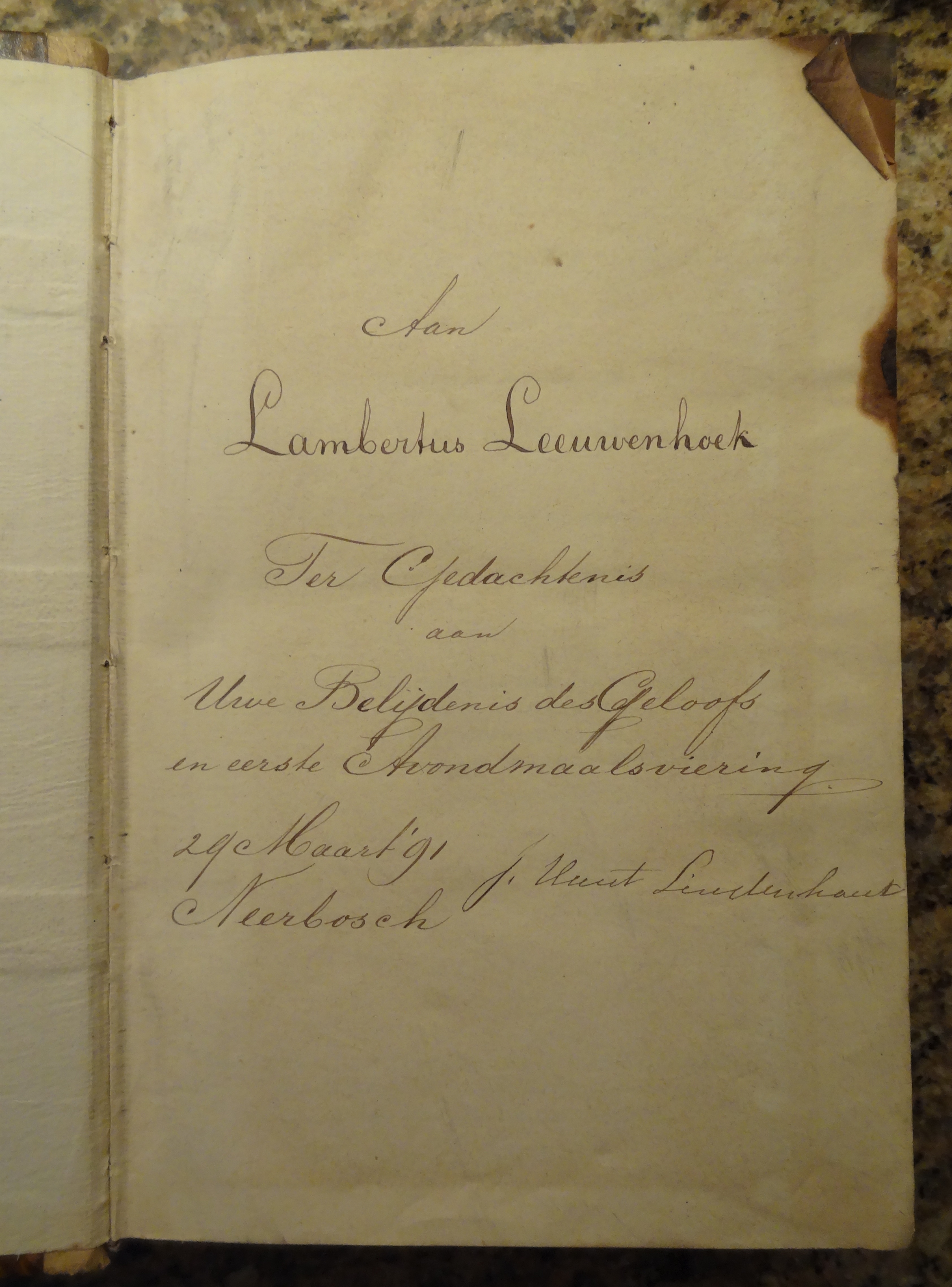
The writing inside the front of the larger Bible

The writing inside the front of the larger Bible

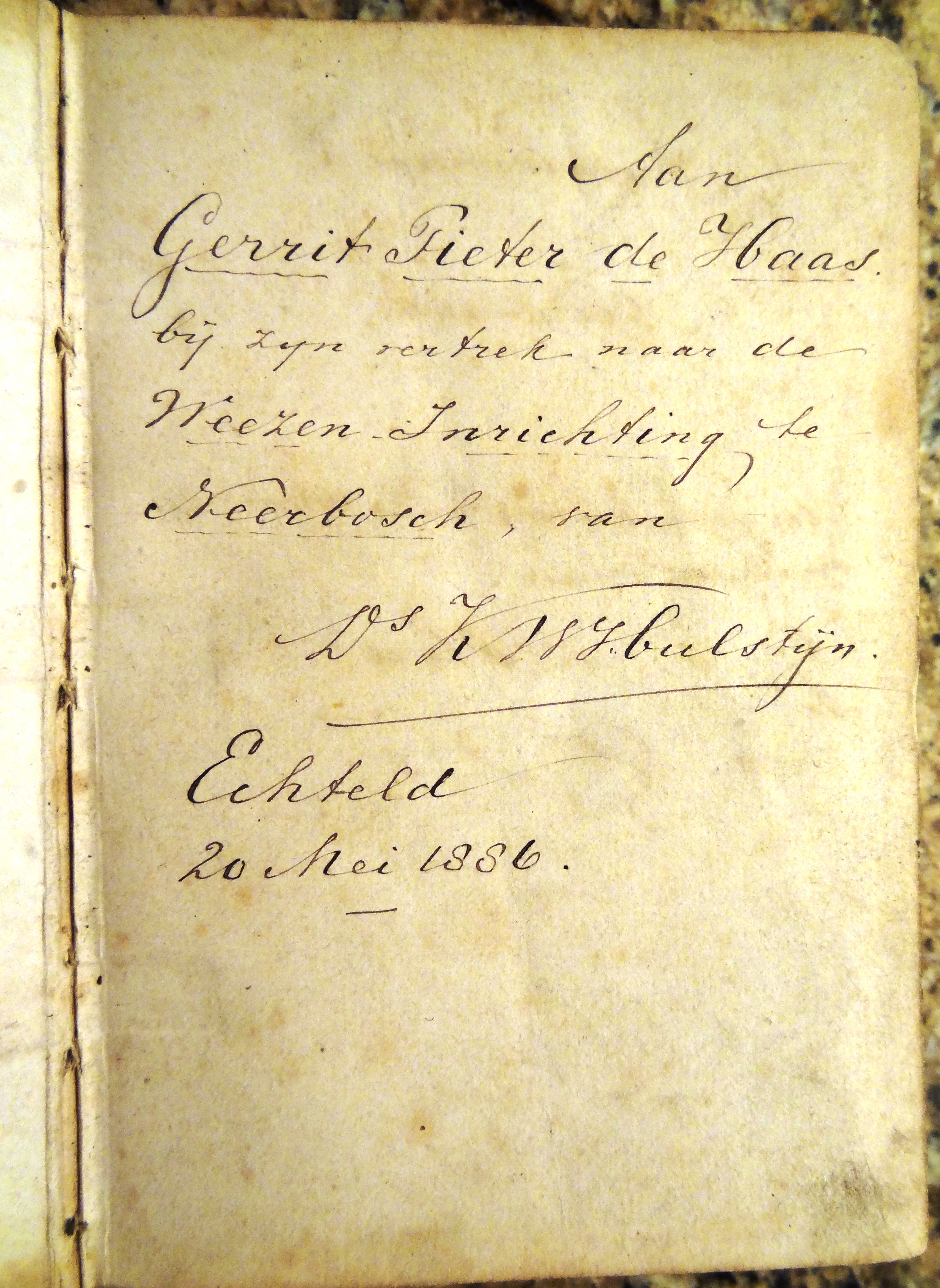
These words are printed inside the front of the smaller Bijbel

These words are printed inside the front of the smaller Bijbel

Inside the front of the smaller Bijbel, next page

Inside the front of the smaller Bijbel, next page

Lou wrote his name at the back of this Bijbel

Lou wrote his name at the back of this Bijbel

Read Full Post »

Dutch Arnold

Dutch Arnold

Dutch Arnold was the saloon keeper on S. Burdick Street, Kalamazoo, Michigan.

My grandfather had this photograph and explained to me that he was “Dutch Arnold, the saloon keeper,” but I don’t believe Dutch was a relative.

So I looked him up and found out that the man has a history.

From the Kalamazoo Gazette files

From the Kalamazoo Gazette files

Read more articlesabout Dutch.

Read Full Post »

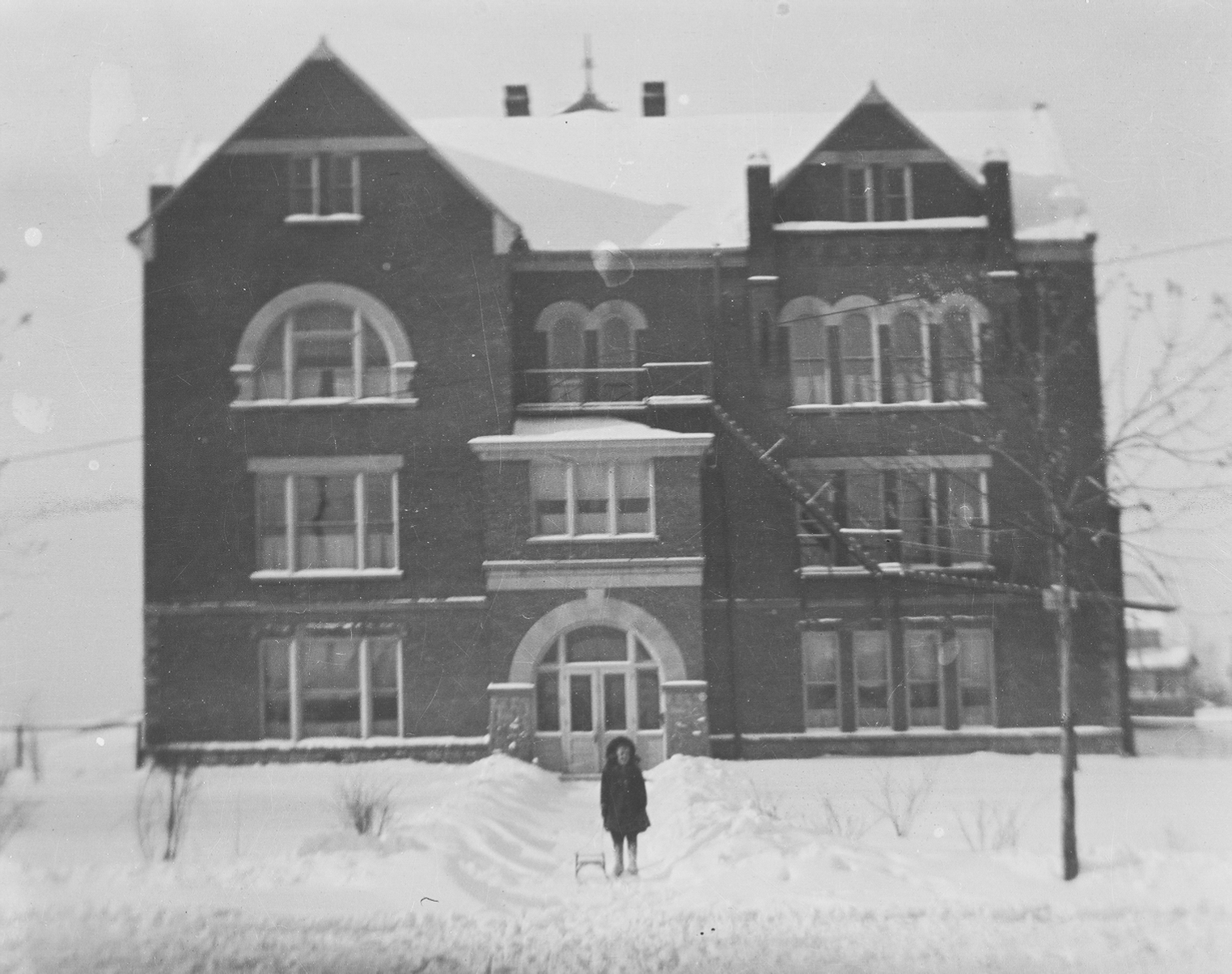
This photo was captured digitally from glass negatives taken by Joseph DeKorn about one hundred years ago.  Does anyone recognize this building from Kalamazoo?  I would like to know what it is.  Is it a school?

The mystery has been solved, thanks to Laura C. Lorenzana @ArchivalBiz.  Her fabulous blog is The Last Leaf on This Branch.

This is South Burdick Street School, which was located at the northwest corner of Burdick and Cork streets, and was torn down in 1957.  Grades were K-8.  I am doing more research.  Thanks, Laura!

Read Full Post »

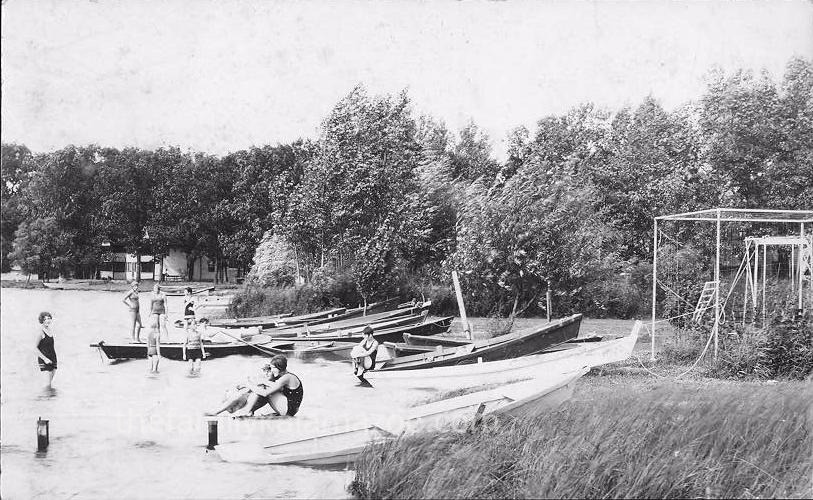
The property at Long Lake in Portage, Michigan, known as Ramona Park and featuring a pavilion called Ramona Palace was in my family for many years.  Ramona was named after the “Indian Princess” in Helen Hunt Jackson’s popular novel Ramona, which was published in 1884.

When I was a little girl, my father Rudy Hanson tried to re-create the heyday of Ramona Park and its pavilion.  He was  young and ambitious and wanted to restore the place.  Although Ramona Palace had a magnificent ballroom, the owner had sold the liquor license in 1956 or 1957 to Airway Lanes (according to my father).

So my parents held teen dances and concerts; The Association performed there. I remember my parents taking tickets out front, seated at a table.  One time a kid broke in when a dance was going on.  Dad took off running after this high school “track star,” caught him, and turned him over to the police.  It was mentioned in the paper.

My father preferred booking picnics because he could obtain a one day liquor license.  Continental Can held their company picnics at Ramona.  Sometimes I helped out or hung out during events.  The German-American Club held a dance, and I remember a couple dressed in lederhosen, the girl’s thick blonde braid swinging to her dancing.

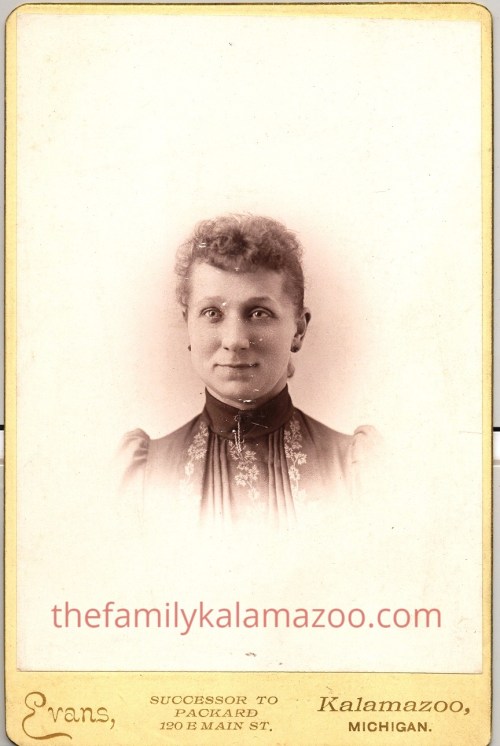
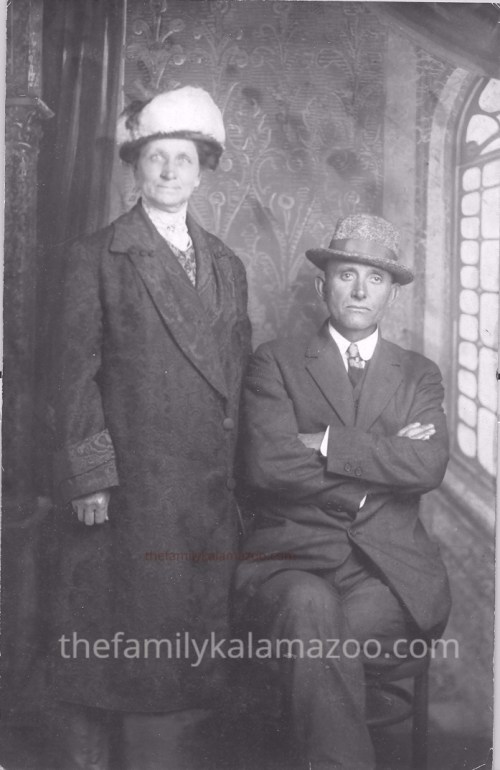
My father had invested in this property and lost money on the deal.  It was actually owned by a relative named Therese Remine.  Therese’s mother was Mary Paak (Peek), the sister of my great great grandmother, Alice Paak DeKorn.

Therese had inherited the property from Henry and Carrie Waruf, who had owned it for years.  Carrie was born a Paak, and I believe she was one of the Paak sisters: Mary, Alice, Annie, and Carrie.  This is an area for future research.  I don’t know why only Therese inherited and not her brother, Harold.  Or why the cousins, such as my grandfather Adrian Zuidweg, did not inherit it.
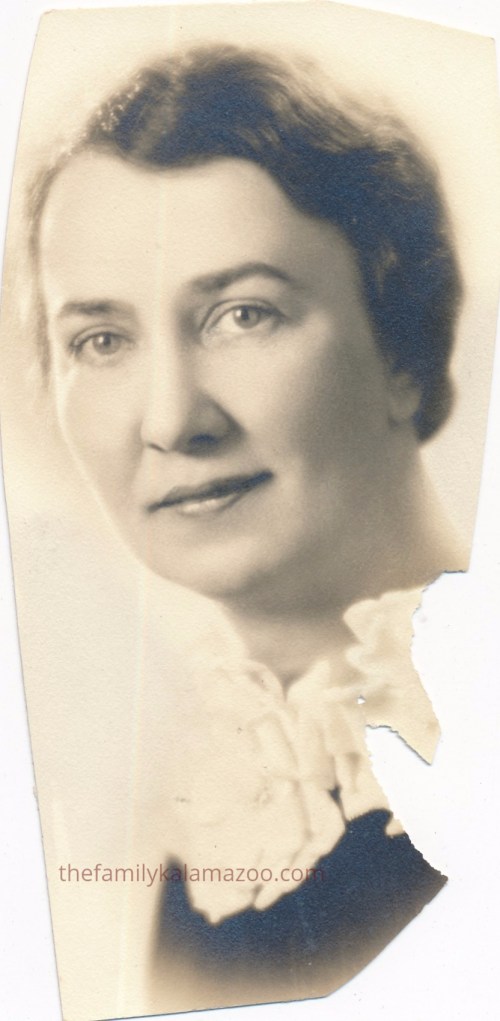
Therese Remine

Therese Remine

At some point after my father no longer was affiliated with the property, Therese sold and donated it to the City of Portage.

My father has many other memories of the park.  He says Ramona was used as storage for years for ice, which was cut from the lake and packed with straw.  It lasted throughout the summer and was hauled to town by a train.  The tracks ran halfway between the pavilion and Sprinkle Road.

In that front lot off Sprinkle, in the 10s and 20s, was a building and home field for various ball teams.  Later on, Airstream trailers held their annual meetings.  The circus was set up on the Ramona property; I remember the circus billboard which was up for weeks ahead of time.

When I was young, a row of cottages on the property were leased out to renters by Therese.  Sixty years before that, Richard DeKorn, my great great grandfather, had leased his own summer cottage from the Warufs.

Therese’s summer house was on Sprinkle, and a gravel road led back to the park, pavilion, and the lakefront.  My friends and I found arrowheads in the cornfield behind her house.

Ramona Park is a thriving park in Portage, Michigan, still today.

Possibly Long Lake, according to Adrian Zuidweg

Cora DeKorn at her father Richard DeKorn's cottage on Long Lake

Cora DeKorn at her father Richard DeKorn’s cottage on Long Lake
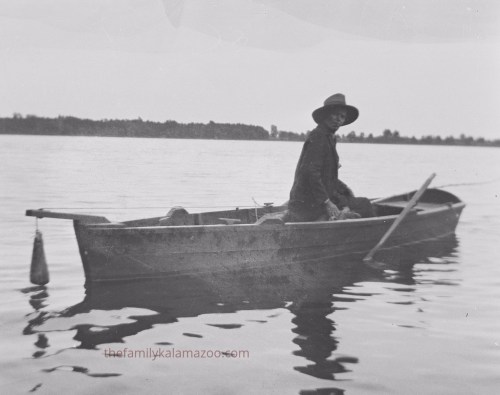
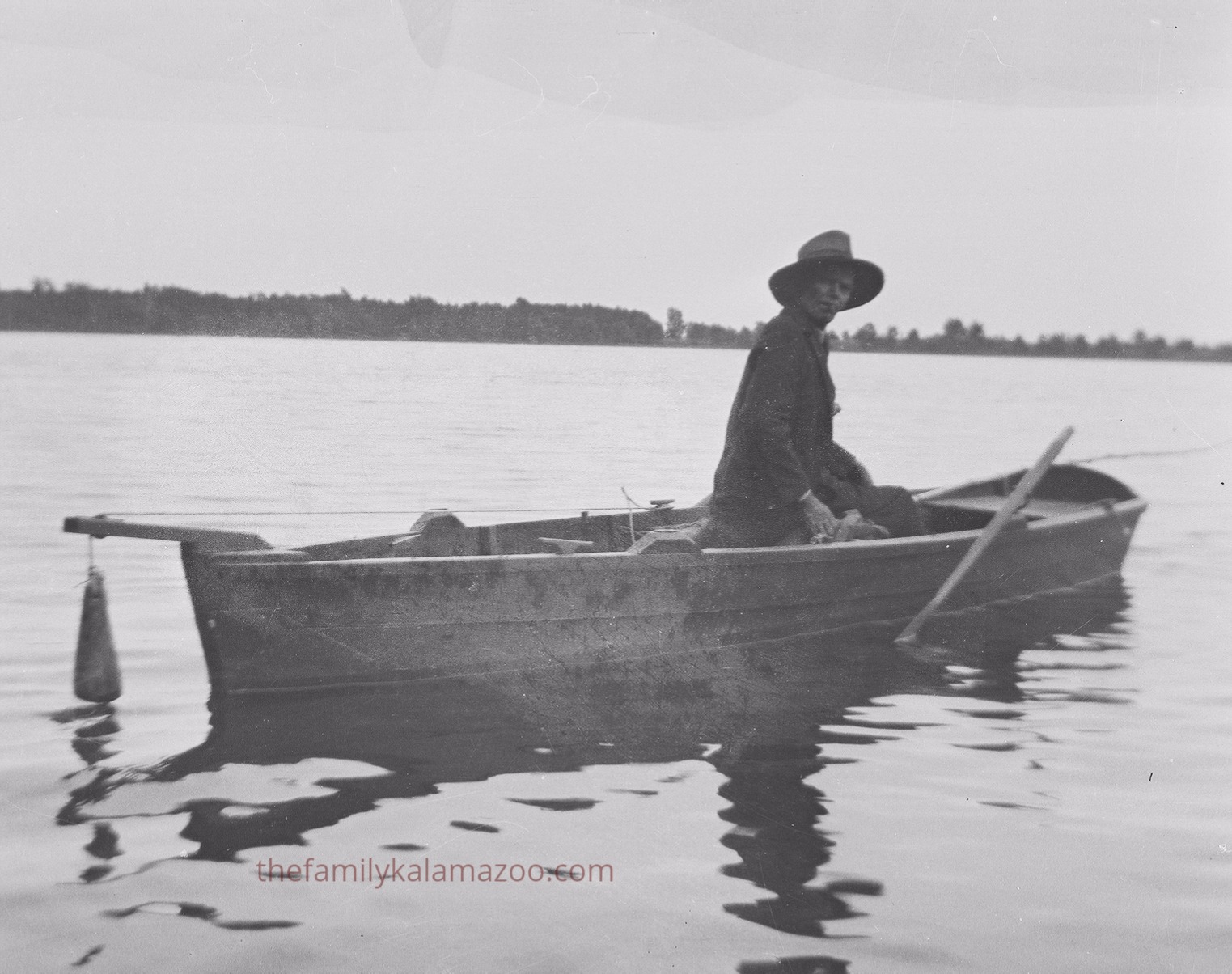
Richard DeKorn enjoying the lake

Richard DeKorn enjoying the lake


Read Full Post »

00000001This is the scrapbook which my parents gave to me.  In it my grandmother (Lucille) Edna Mulder (later Edna Zuidweg) recorded the events of her high school graduation from Caledonia High School (Michigan), as well as a few clippings from her first year at Western Normal School in Kalamazoo.

In 1929, my grandmother graduated a year early, at age seventeen, along with her older sister Dorothy Mulder (later Dorothy Plott).  Grandma earned the 3rd highest GPA at 93.85% and thus was honored with the title “class historian.” Her sister was salutatorian. Grandma’s best friend Blanche Stauffer was valedictorian. Clearly, grades were not inflated in those days at Caledonia High School.

Grandma was the 2nd oldest girl in her family of three girls and two boys. When I was young and reading my mother’s copy of Little Women, Grandma told me she always thought that she was just like Jo, the 2nd oldest and the writer of the family.  Her sister Dorothy was Meg, and her younger sister Alvena (called Vena, later Vena Stimson) was Amy.  It makes sense to me that “Jo” would have been placed a year ahead so she could go to school with “Meg,” and that she would earn class historian to her sister’s salutatorian.

Salutatory

Dorothy Mulder’s Salutatory (beginning portion)

Edna Mulder’s high school transcript

Edna Mulder’s class history (beginning portion)

The scrapbook contains wonderful photos of Grandma, her friends, classmates, and teachers, but it doesn’t solve the mystery of who put that drinking glass ring on the cover.

Read Full Post »

As I shared in my last post Intriguing Coincidence or An “Of Course” Moment?, Yvette Hoitink, a Dutch genealogist, quickly and easily found a wealth of information about the Zuidweg family–my grandfather’s Dutch ancestors.  Dutch Genealogy is a site which describes Yvette’s amazing services.

I knew that the father of my grandfather, Adrian Zuidweg, born 1908 in Kalamazoo, was Adrian Zuidweg, born in The Netherlands.  Adrian Sr. owned a fish market when Grandpa was young.  In this photo he stands with an unidentified young employee.

Fish Market on Eleanor Street

Fish Market on Eleanor Street

My grandfather, Adrian Jr. told me he used to clean fish at the fish market when he was 8 or 9.

Adrian Zuidweg, Jr.

Adrian Zuidweg, Jr.

Eventually, the man who was my great-grandfather opened an ice cream parlor and candy store, and according to a story Grandpa told me, during the height of the Great Depression, he was able to buy a $1,000 marble countertop for his business.

Ice cream parlor and candy store

Ice cream parlor and candy store

All I knew of this man was of his life in Kalamazoo, Michigan.  I knew that he died at approximately age 50 of what might have been Bright’s (kidney) disease.  My grandmother told me that he didn’t eat all day long at work and would come home and eat a steak the size of a plate.

What I discovered from Yvette is an idea of who he was before he emigrated from Holland.  He was born Adriaan Zuijdweg on 3 January 1871 in Goes, Zeeland, the Netherlands.  He was a “letterzetter,” compositor or typesetter–possibly for a newspaper.  This fits with a photo I published on an earlier post of Adrian Sr. and another relative working on a newspaper in Kalamazoo.

Printshop at Holland American newspaper, 1899Adrian Zuidweg 3rd from left; Lou Leeuwenhoek 5th from left

Printshop at Holland American newspaper, 1899
Adrian Zuidweg 3rd from left; Lou Leeuwenhoek 5th from left

So it seems that Adrian took his typesetter skills to the United States, but decided to become an American “entrepreneur” by opening the fish market.

According to Yvette, it was in the United States that he lost the other “a” in his first name and the j in Zuijdweg–becoming Adrian Zuidweg.  The son he eventually had in 1980 was also named Adrian Zuidweg (no middle name, which is according to Yvette the Dutch tradition) and it was young Adrian who eventually changed the ice cream parlor into a Sunoco gas station.

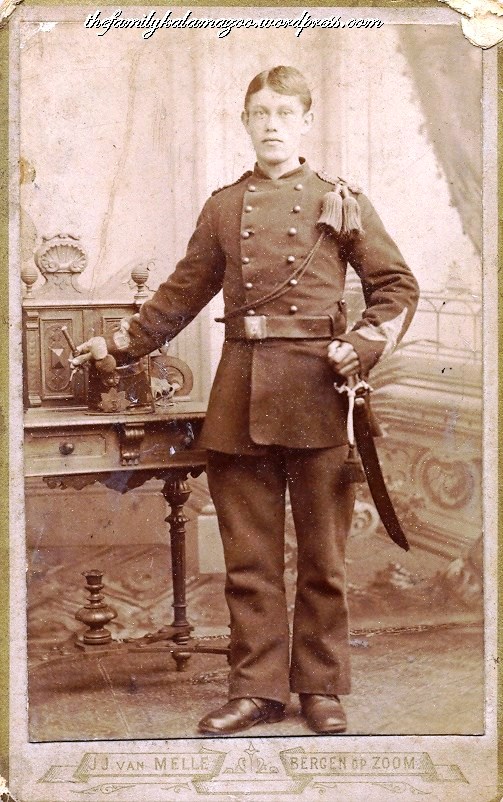
One of the photos I have yet to know more about is one of him in what Grandpa said was his Dutch army uniform.

Adriaan Zuijdweg

Adriaan Zuijdweg

Four years after emigrating from the Netherlands for “amelioration of existence,” Adriaan/Adrian married my great-grandmother Cora Wilhelmina DeKorn.  The date was 18 May 1897 and the place was Kalamazoo (of course).

Adrian Zuidweg (Adriaan Zuijdweg) 1897

Adrian Zuidweg (Adriaan Zuijdweg) 1897

Read Full Post »
« Newer Posts