Feeds:
Posts
Comments

Archive for the ‘Cora DeKorn Zuidweg’ Category

In the last post I told you how Grandpa owned the Sunoco gas station. He actually ran it for fifty years. In the middle of the passage about the business, Connie mentioned the following:

They [Adrian and Edna] built a new house (Adrian can still recite all the specs and dimensions  for that house) and their son was born in 1936. They had two daughters, one 2 and one 7 years later.

I’d like to clarify what Connie wrote there.  Grandma and Grandpa got married in 1932, then built their new house in 1934, the same year their first child, my mother was born. Two years later, her brother was born, and in 1940, her sister was born.

Mom and Uncle Don

Mom and Uncle Don

According to Google maps, the house Grandpa built is still there.  Here is a photo of it from 1947:

Grandma and Grandpa's house on Burdick Street

Grandma and Grandpa’s house on Burdick Street

Eventually ivy grew up the chimney side of the house.

This is the house where my mom and her siblings grew up. It’s where we went for Christmas and Thanksgiving. It’s where I stayed every weekday in kindergarten while Grandma babysat me.

When you walked in that front door, their living room was to the left and the kitchen to the right. Straight ahead took you to the two back bedrooms. Upstairs there were three bedrooms. The window over the front porch was the tiny room in front. In there they kept an iron crib and I found my uncle’s books. The bedroom on the side by the chimney was the big bedroom. In there I found the chest with my mother’s treasures and the little corner shelf. The mirrored shadowbox hung on the wall with the miniatures displayed on the shelves.  I slept in the bedroom which was really a hallway, tucked under the eaves, but right by the stairway and therefore closest to the only bathroom, which was around the corner from the bottom of the stairs.

This house is also where I read the books of my mother and uncle and aunt (Zane Gray, the Bobbsey Twins, Black Beauty, all the Louisa May Alcott books) and played with their toys, such as my mom’s miniature collection. I pored over all the scrapbooks my mother had made out of newspaper and popular magazine clippings.  Scrapbooks about grooming and beauty, Frank Sinatra, Shirley Temple. I studied the photo albums, especially the pictures of my mom with her light brown braids pinned up on top of her head.

Eventually my grandparents sold the house and bought one in Portage, the suburb their kids lived in. Though the house left the family, I doubt the house ever really left any of us.

I hope you’ll stay tuned for Part IX of Grandpa’s story . . . .

Here are the first parts of the story:

Click this link for Part I

Click this link for Part II

Click this link for Part III

Click this link for Part IV

Click this link for Part V

Click this link for Part VI

Click this link for Part VII
Read Full Post »

When we left off, Grandpa had lost his parents and grandfather.

According to Connie:

Adrian and Edna were married just before Adrian’s mother passed away in 1932. That same year he bought back the family market. The following year he tore down the market and built a gas station on the corner of Burdick and Balch. He ran that station for the next 50 years.

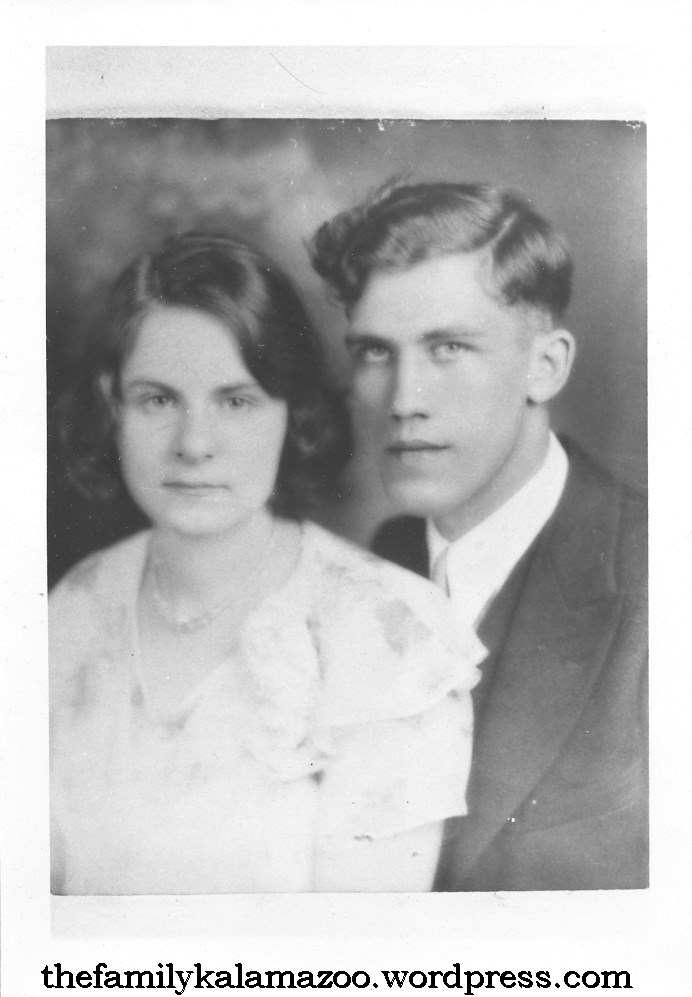
As the story goes, Adrian and his sweetheart, Edna, married a few months before his mother passed away.  They got married in May of 1932 in South Bend, Indiana, without a big wedding. This is their wedding portrait:

Adrian Jr. and Edna (Mulder) Zuidweg, 1932

Adrian Jr. and Edna (Mulder) Zuidweg, 1932

What I hadn’t realized was that Grandpa bought back the “family market.” I hadn’t even known the store was sold! After his father got ill, Adriaan (sr.) sold the soda shop along with, I presume, the beautiful marble countertop. I don’t know who purchased it, but Grandpa bought it back–and instead of running the same sort of shop as his father, he turned it into a gas station.

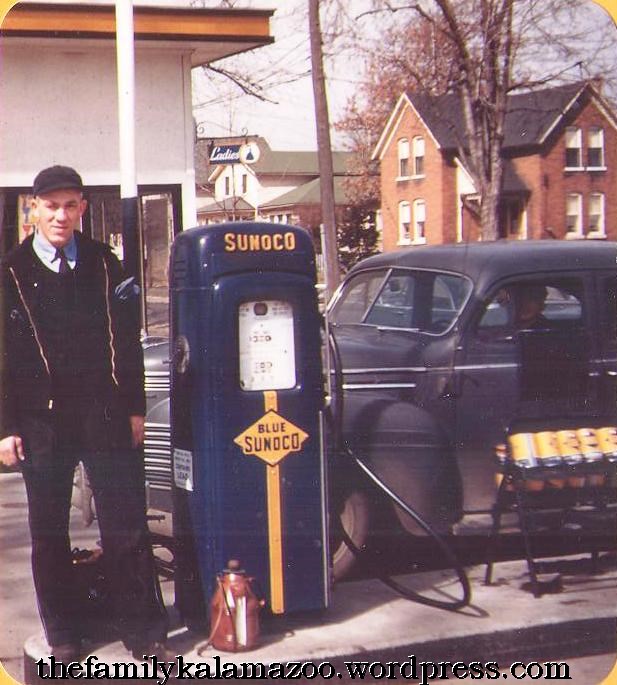
Grandpa by the pump at his Sunoco station

Grandpa by the pump at his Sunoco station

In this photo of Grandpa by the pump, we are facing the station, which was at the SW corner of Burdick and Balch in Kalamazoo. On the NW corner, just across the street stood, and still stands, the Richard DeKorn house, built in 1885 by my great-great-grandfather. The brick house in the background of the photo is not the Dekorn house, but a different house, a bit farther down Balch Street.

Connie writes that Grandpa said that although he worked 12-14 hours a day at the station, he spent plenty of time with his kids.

When I was five Grandma babysat me every school day, and I saw that Grandpa had his own routine down. Early in the morning he would leave the house and pick up a newspaper at Michigan News Agency. It was still dark outside. Then he would leave for work while it was still early. However, the station was only three lots down from the house so he didn’t go far. And we could go down and see him whenever we liked–and always to bring him a home-cooked lunch.

When Grandpa came home from work at suppertime, his work uniform was covered with grease from working on cars down in the “pit.” He’d go straight downstairs to the basement and take a shower under the shower head he had rigged up over the drain in the floor. That way when he came upstairs to greet us, he would be squeaky clean and ready for his dinner.

Grandpa’s shock here at the loss of “personal contact” is emblematic of his practical and logical thinking, as well as his  homespun philosophies. I can’t help but feel that he was so right in what he said. If he knew that today people sit with each other and interact only with their cell phones, he would be appalled.

It’s true that Grandpa loved to take his family on vacations. My mother has good memories of the family road trips.  When I stayed at Grandma and Grandpa’s house, I discovered a cedar chest filled with my mother’s treasures, and one of them was a very pretty silver and turquoise bracelet she had gotten on a family trip.  I still have that bracelet.

Grandma and Grandpa playing shuffleboard in Florida

Grandma and Grandpa playing shuffleboard in Florida

I hope you’ll stay tuned for Part VIII of Grandpa’s story . . . .

Here are the first parts of the story:

Click this link for Part I

Click this link for Part II

Click this link for Part III

Click this link for Part IV

Click this link for Part V

Click this link for Part VI

Read Full Post »

Part VI

Today’s passage is about a sad and difficult time in Grandpa’s life.  Connie wrote, Adrian was

Grandpa, an only child, grew up living with his parents and his widowed grandfather. Yet, by the time he was 23 years old, he was alone in the world, except for his new wife, my grandmother.

He had lost both parents and his grandfather. Yet, at the interview, he told Connie that it “didn’t bother” him that much. He said his father prepared him ahead of time for his death and for taking care of the household affairs.

Grandpa’s mother Cora DeKorn Zuidweg’s obituary

Since Grandpa’s father died in 1929, of kidney failure, and his mother died three years later in 1932, of leukemia, I suspect that his father prepared him to take over the family affairs so that his ailing mother didn’t have to do so. It was probably taken to be a man’s work, and since Grandpa was an adult, he would be expected to take care of his mother. He did take care of her, and towards the end had the help of Grandma. Grandpa and Grandma were married in May of 1932, and Grandpa’s mother died in December of that year. So for seven months, newlywed Grandma helped Grandpa to take care for her ailing mother-in-law.

Grandma and Grandpa formed a strong bond, which lasted their entire lives. It’s no surprise that Grandma interrupted the interview to explain why Grandpa would say he wasn’t “bothered” by losing his family at such a young age. She knew that he was raised not to show emotion and that he was very good at showing a “stiff upper lip.” But being married to him all those years, she knew that it was very difficult for him to experience such loss.

Grandpa saying “I guess that’s why there’s Valium” sounds just like his sense of humor, another way of deflecting from deep emotion.

Grandma and Grandpa in later years

Grandma and Grandpa in later years

I hope you’ll stay tuned for Part VII of Grandpa’s story . . . .
Here are the first parts of the story:

Click this link for Part I

Click this link for Part II

Click this link for Part III
Click this link for Part IV

Click this link for Part V

Read Full Post »

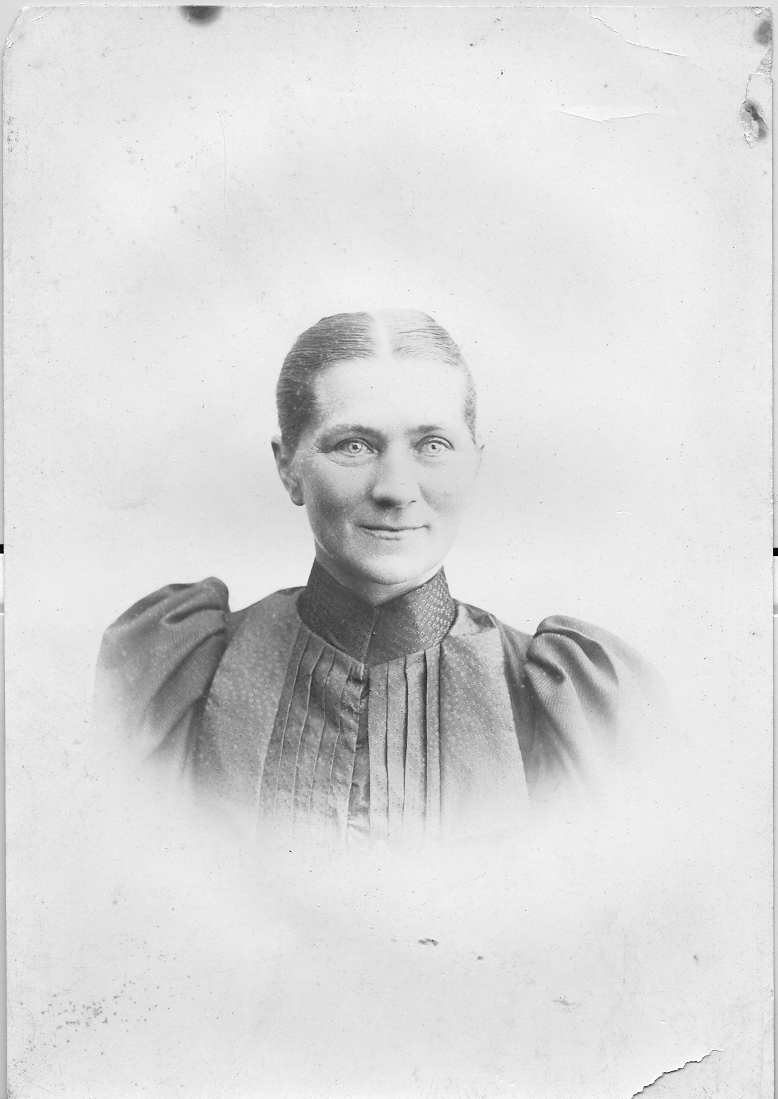
Alice Paak DeKorn

Alice Paak DeKorn (Aaltje Peek)

This lady was my great great grandmother, Alice Paak DeKorn.

She died May 5, 1908.  My grandfather, her grandson, was born October 31, 1908, so she never even saw him.  I think she has a kind face, but I don’t know any stories about her.

Yvette Hoitink observed that Alice’s marriage certificate states that she was born in Leymond.

Yvette says that this is “presumably Lexmond in Zuid-Holland. The Lexmond birth records are indexed on Genlias.nl. A search for Peek children born between 1850 and 1855 showed one candidate for Aleye Peek: Aaltje Peek b. 9 September 1852, daughter of Teunis Peek and Jacoba Bassa. The birth month and year match perfectly with Alice’s listing in the 1900 census.”

I noticed that Alice lived for 55 years.  Her daughter Cora, my great grandmother, died at the age of 57, so I can’t help but wonder if they both died of the same cause.  Cora died of leukemia or “cancer of the brain.”  Alice’s other daughter, Jennie, who was in last week’s post died at the age of 95.  Alice’s own mother died at the age of 41.

If you are working on your own family history, you might have noticed that you are interested in the age at death of your ancestors–for reasons of self-interest.

Although she was known as Alice for most of her life in the U.S., her American marriage certificate shows Alice as Aleye, which would have been Aaltje in the Netherlands.  I’m going to guess that some of the people filling out the documents in Kalamazoo were not Dutch.

Growing up in Kalamazoo, I had no idea that one of the family lines of my ancestry was Paak/Peek.  I went to school with kids with names like Peek and Peake, and I wonder if there is a connection.

Yvette discovered that Alice’s father, Teunis Peek, was found in the lists of emigrants at the National Archives website and that he left Lexmond for the U.S. in 1868.  She shows Alice emigrating in 1869, but it’s possible that they came together.

Jacoba had passed away in 1865, before her family emigrated.  Alice was one of six children, and I am guessing that Teunis brought all his children to the U.S.–or at least most of them.  The eldest was Joost, and he was 19 when the family moved.  It’s possible he stayed behind.

I’ll pick up the story of the Peeks in a future post.

Read Full Post »

When I was a kid, the oldest person in our family was “Aunt Jen.”  After the death of her only child, Aunt Jen went to live in a group home for elderly ladies run by the mother of one of the 4th grade teachers at Haverhill Elementary School (Portage, Michigan), Mr. Sweringer.  My fourth grade class was directly opposite that of Mr. S who made kids put a penny in a jar if they cussed.

My daughter’s middle name is Jennifer, and I gave her this name in honor of Aunt Jen.

Aunt Jen was born Jennie DeKorn in Kalamazoo, on March 8, 1873, to Richard and Alice (Paak) DeKorn.  She was the oldest of the three siblings, which included Cora (my great grandmother) and Joseph (the photographer).

At age 23, on May 20, 1896, Jennie married Lambertus Leeuwenhoek.

Lambertus, known to everyone in the family as Uncle Lou, was born in the Netherlands  on May 3, 1972.  He passed away April 20, 1949 in Kalamazoo.  Uncle Lou’s parents were Arie Leeuwenhoek and Mary Hoogedoom.  The story I was told by Grandpa is that Uncle Lou and his brother Gerard were orphans.   He told me that Uncle Lou was a very intelligent man.

Additional info added later:  I discovered a letter from Phil DeKorn, son of Joseph, to my parents, which says that Uncle Lou was a wizard at chess and checkers.

Gerard or Garret Leeuwenhoek

He also said that Uncle Lou was a direct descendent of Antony van Leeuwenhoek, the inventor of the microscope.

Uncle Lou and his brother-in-law, my great grandfather Adrian Zuidweg, spent a lot of time together.

Aunt Jen and Uncle Lou had one child, Alice Leeuwenhoek Moerdyke.  She was born in Kalamazoo on April 16, 1897.  I suspect she was quite spoiled because:

a.  I have so many photos of her!

b.  She had a lot of pretty clothes–much nicer than the rest of the family.

c.  My grandfather once told me so ;).

And look how cute she was:

Aunt Jen and Uncle Lou lived the rest of their lives in Kalamazoo.  They celebrated their 50th anniversary in 1946 and the Kalamazoo Gazette ran their photo.

When I was little, she attended our family get-togethers, and she wasn’t a mother or aunt of anyone from my generation or my mother’s.  I couldn’t grasp that she was my grandfather’s aunt, as that seemed to me impossible.   My parents took me to visit her regularly, and I always respected them for their attention to her.

On March 15, 1968, at the age of 95, Aunt Jen passed away.

Read Full Post »

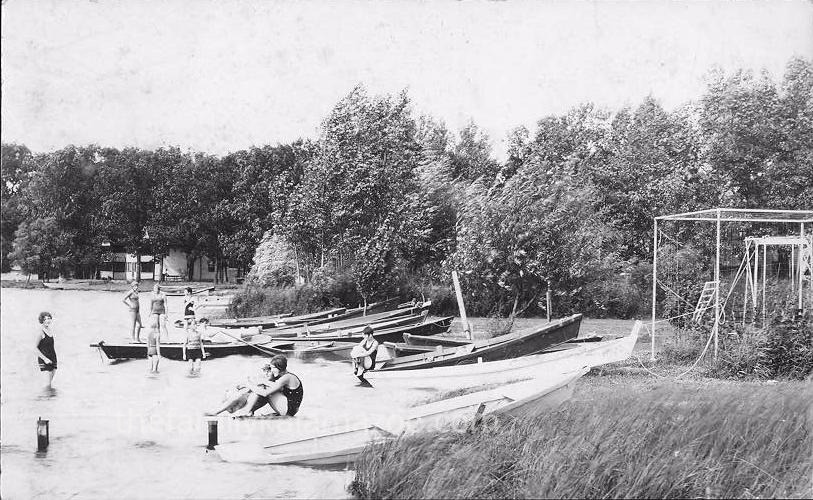
The property at Long Lake in Portage, Michigan, known as Ramona Park and featuring a pavilion called Ramona Palace was in my family for many years.  Ramona was named after the “Indian Princess” in Helen Hunt Jackson’s popular novel Ramona, which was published in 1884.

When I was a little girl, my father Rudy Hanson tried to re-create the heyday of Ramona Park and its pavilion.  He was  young and ambitious and wanted to restore the place.  Although Ramona Palace had a magnificent ballroom, the owner had sold the liquor license in 1956 or 1957 to Airway Lanes (according to my father).

So my parents held teen dances and concerts; The Association performed there. I remember my parents taking tickets out front, seated at a table.  One time a kid broke in when a dance was going on.  Dad took off running after this high school “track star,” caught him, and turned him over to the police.  It was mentioned in the paper.

My father preferred booking picnics because he could obtain a one day liquor license.  Continental Can held their company picnics at Ramona.  Sometimes I helped out or hung out during events.  The German-American Club held a dance, and I remember a couple dressed in lederhosen, the girl’s thick blonde braid swinging to her dancing.

My father had invested in this property and lost money on the deal.  It was actually owned by a relative named Therese Remine.  Therese’s mother was Mary Paak (Peek), the sister of my great great grandmother, Alice Paak DeKorn.

Therese had inherited the property from Henry and Carrie Waruf, who had owned it for years.  Carrie was born a Paak, and I believe she was one of the Paak sisters: Mary, Alice, Annie, and Carrie.  This is an area for future research.  I don’t know why only Therese inherited and not her brother, Harold.  Or why the cousins, such as my grandfather Adrian Zuidweg, did not inherit it.

Therese Remine

Therese Remine

At some point after my father no longer was affiliated with the property, Therese sold and donated it to the City of Portage.

My father has many other memories of the park.  He says Ramona was used as storage for years for ice, which was cut from the lake and packed with straw.  It lasted throughout the summer and was hauled to town by a train.  The tracks ran halfway between the pavilion and Sprinkle Road.

In that front lot off Sprinkle, in the 10s and 20s, was a building and home field for various ball teams.  Later on, Airstream trailers held their annual meetings.  The circus was set up on the Ramona property; I remember the circus billboard which was up for weeks ahead of time.

When I was young, a row of cottages on the property were leased out to renters by Therese.  Sixty years before that, Richard DeKorn, my great great grandfather, had leased his own summer cottage from the Warufs.

Therese’s summer house was on Sprinkle, and a gravel road led back to the park, pavilion, and the lakefront.  My friends and I found arrowheads in the cornfield behind her house.

Ramona Park is a thriving park in Portage, Michigan, still today.

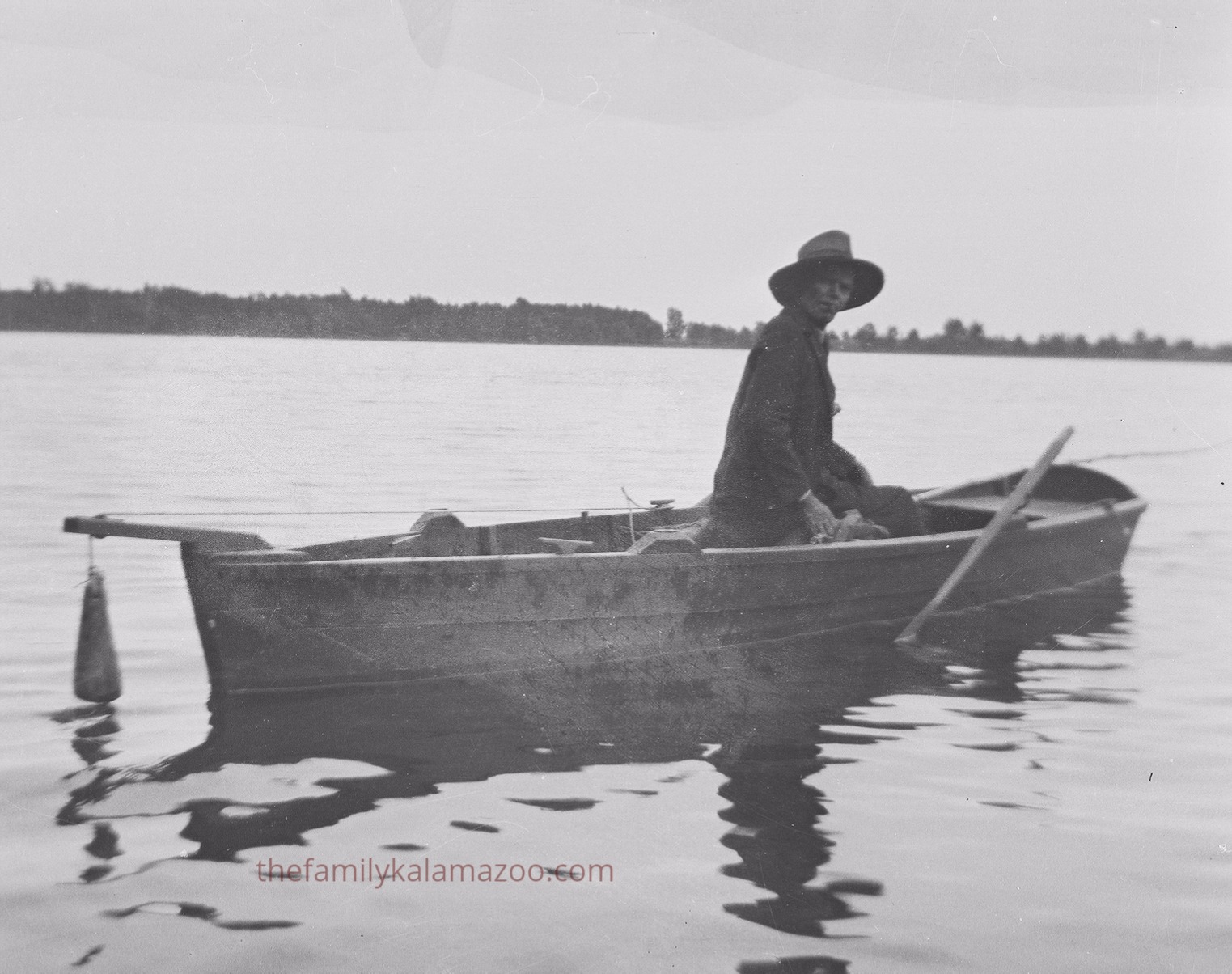
Possibly Long Lake, according to Adrian Zuidweg

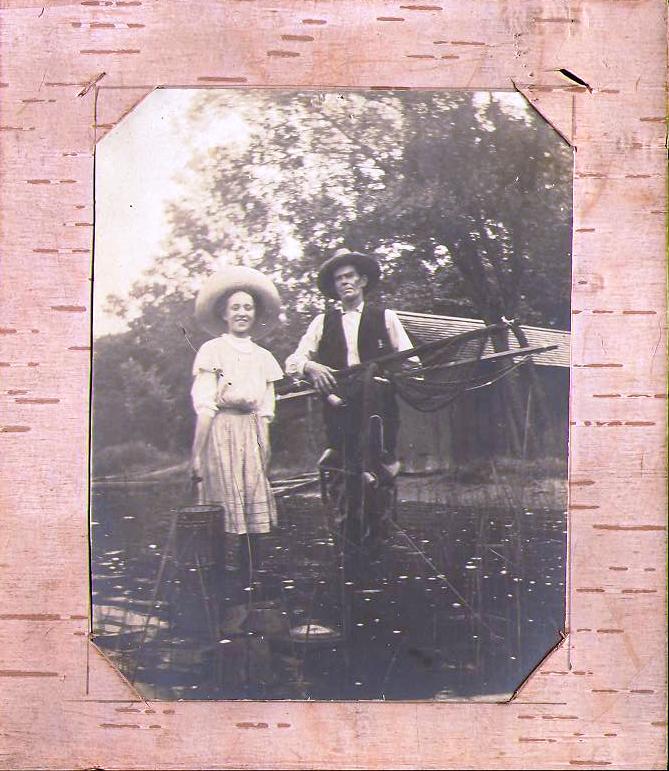
Cora DeKorn at her father Richard DeKorn's cottage on Long Lake

Cora DeKorn at her father Richard DeKorn’s cottage on Long Lake

Richard DeKorn enjoying the lake

Richard DeKorn enjoying the lake


Read Full Post »

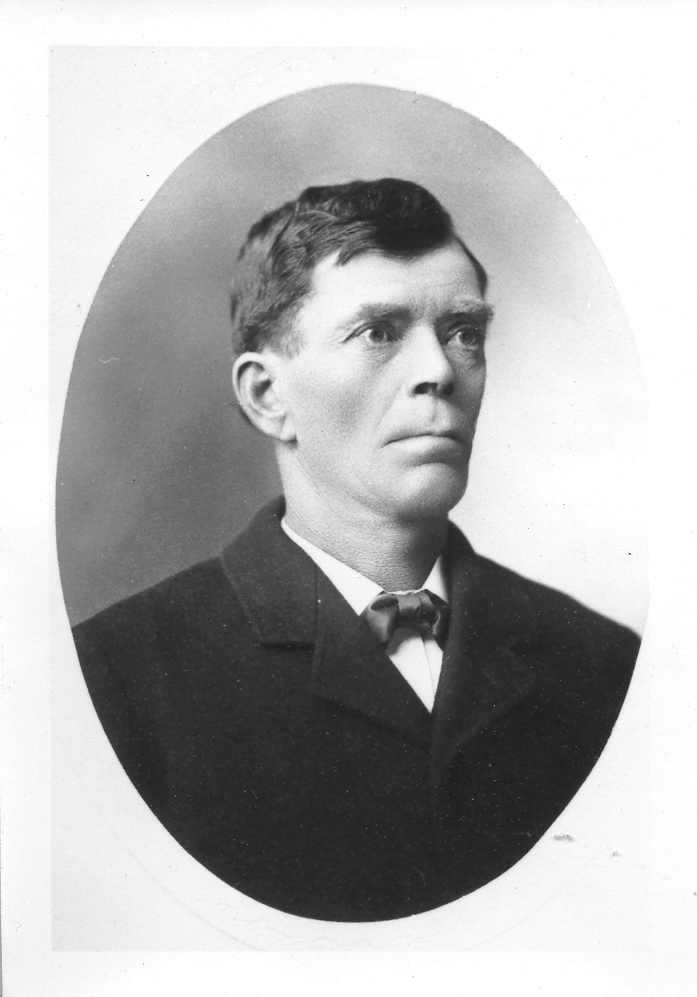
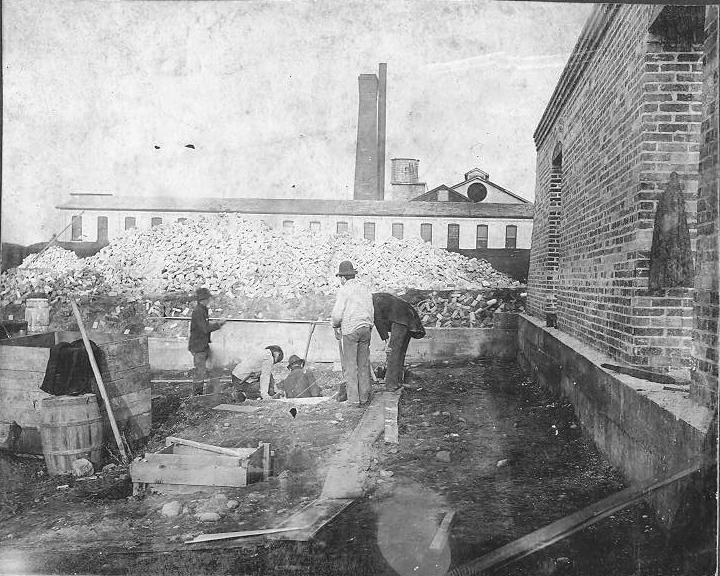
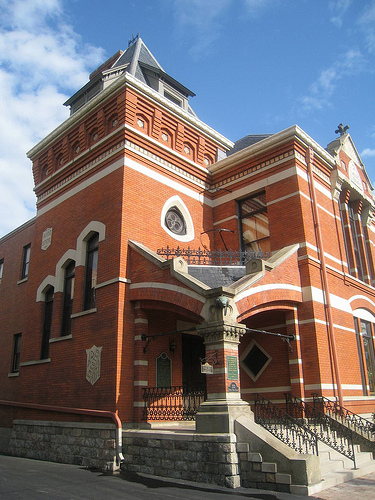
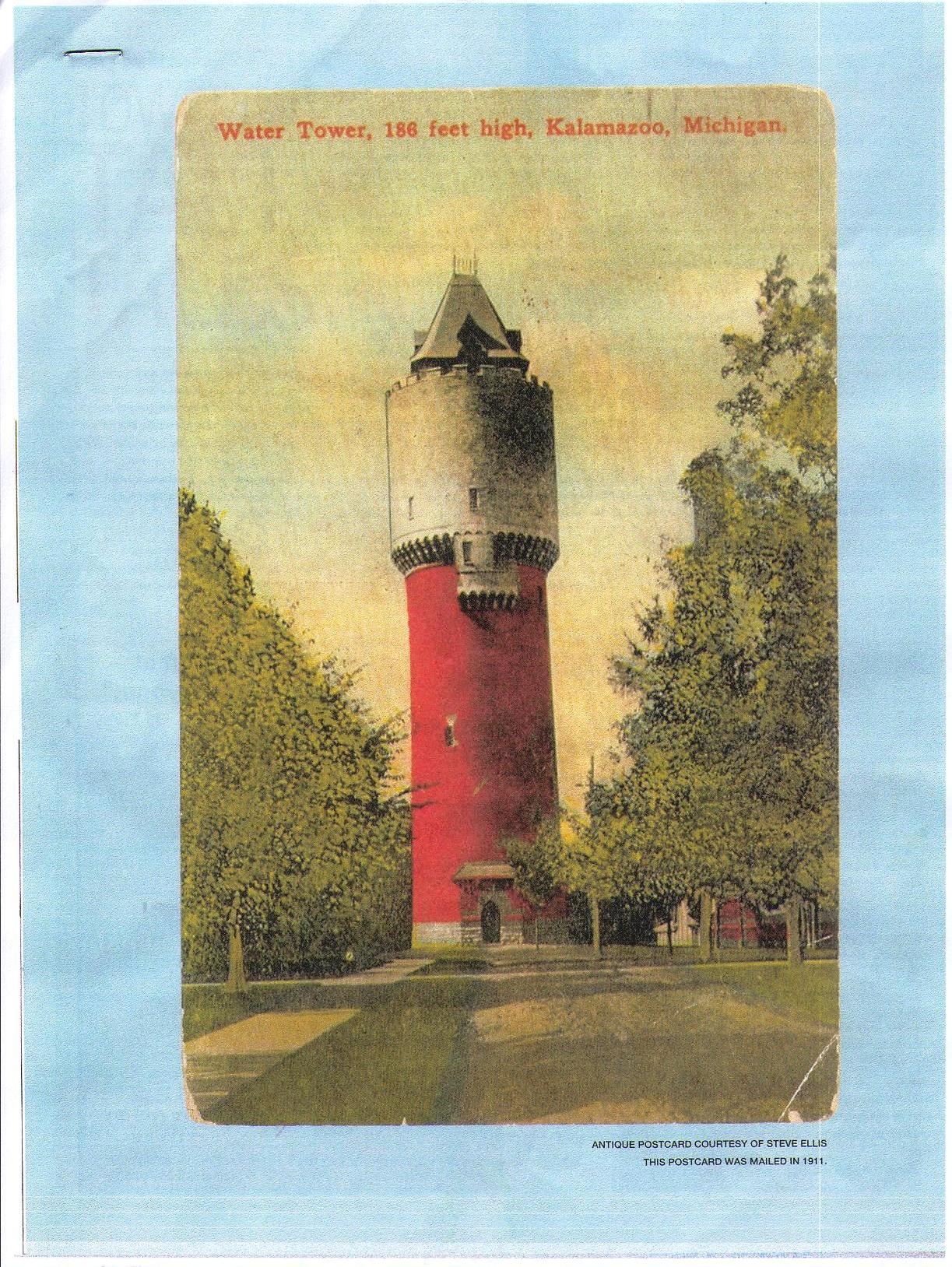
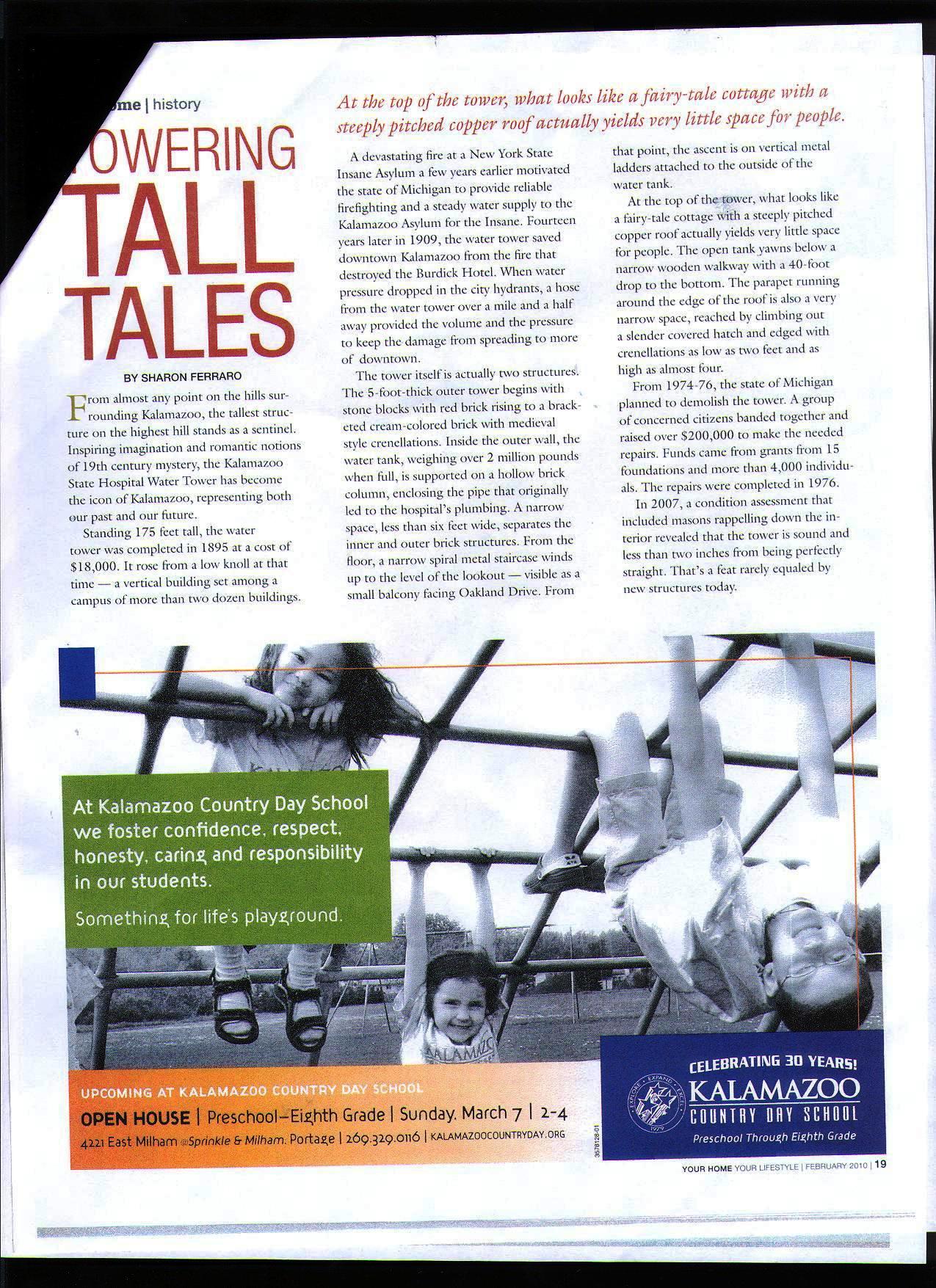
My great-great-grandfather, Richard DeKorn, was a brick mason who worked on many public buildings in the Kalamazoo area.  He was a brick mason on the beautiful Ladies’ Library Association in 1878-79 and lead brick mason on theKalamazoo Psychiatric Hospital Water Tower  in 1895. According to his obituary he was the contractor for the Pythian building and the Merchants Publishing Company building.

Richard was born on August 21, 1851* in Goes, Zeeland, the Netherlands to Boudewijn and Johanna (Remijinse) DeKorn.  When he was four or five years old, the family immigrated to Zeeland, Michigan.  I have not yet discovered when or why Richard moved to Kalamazoo.

Richard was sometimes called Dick or Dirk, but more importantly, his birth name was Derrick and it’s likely that Richard was actually his middle name.

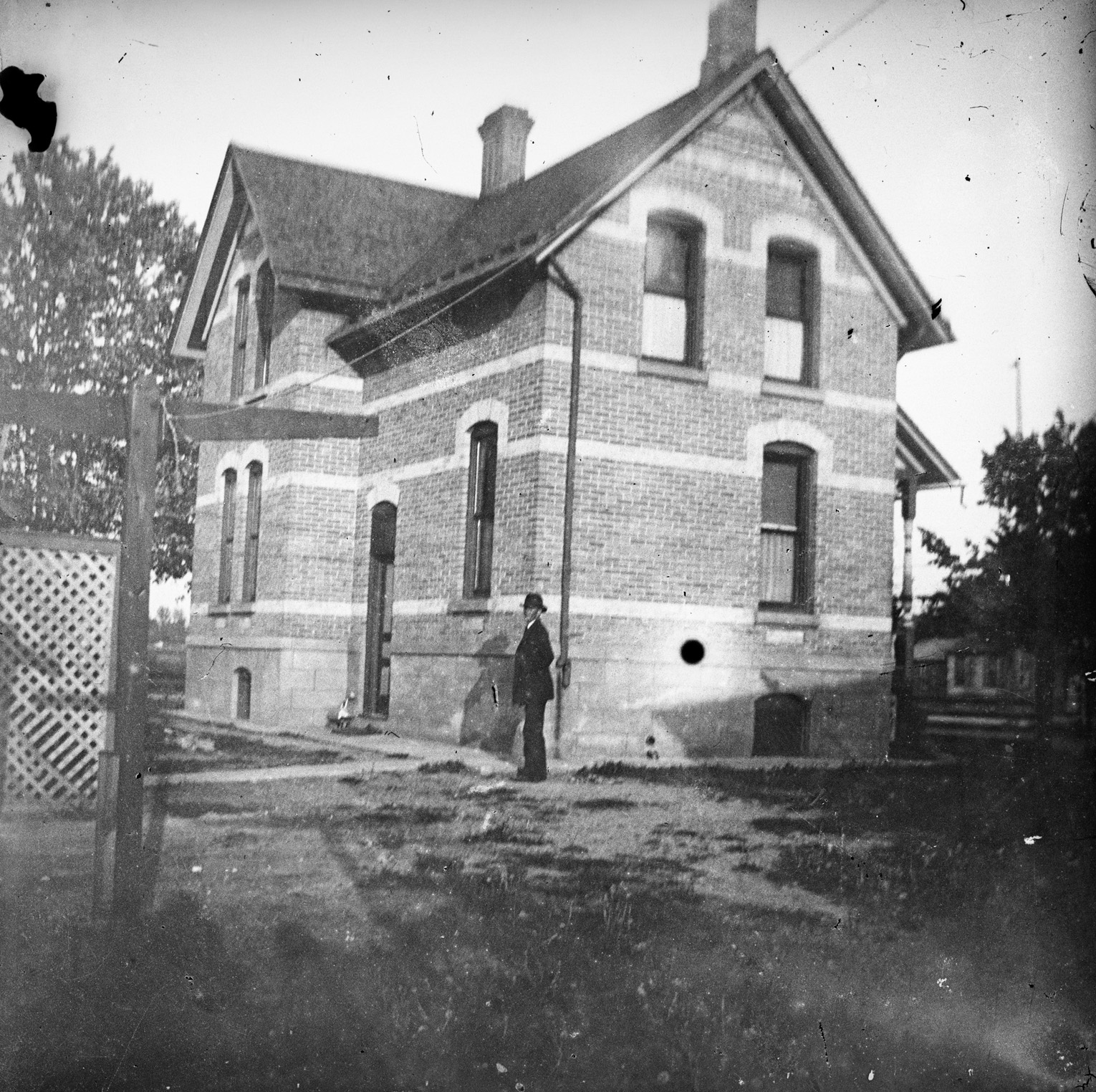
On May 10, 1872, at the age of 20, Richard married Alice Paak in Kalamazoo.  They lived in Kalamazoo, in the Burdick and Balch Street area, for the rest of their lives.  For much of the time, they lived in a house which Richard built with his characteristic style:  dark brown brick with stripes of light brick or stone.

Richard and Alice had three children: Joseph, Cora, and Jennie.  After Alice’s death in 1908, he married Jennie Sootsman who had two daughters, Marian and Marge.

The family refers to him as “Richard DeKorn” with great respect for the reputation he achieved as a wonderful craftsman and contractor.  Richard did a little gardening on the property, but he really enjoyed relaxing with a pipe and spending time with his family.  His door was open to any friend or family member and he was a good stepfather to his 2nd wife’s daughters.

*

*On his marriage document, Richard’s birth date is given as 1852, not 1851, and it states that he was born in Kapelle, not Goes.

Richard DeKorn’s home at the corner of Burdick and Balch, Kalamazoo, Michigan

Richard surrounded by family, including son-in-law Lou Leeuwenhoek (L), daughter Jennie (to Richard’s right), wife Alice in front.

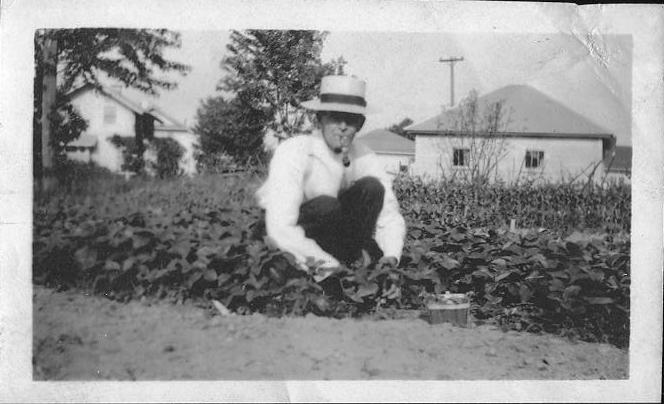
Richard picking strawberries

Richard with his beloved pipe

Richard holding unidentified baby

Richard with his granddaughter Alice Leeuwenhoek (Moerdyke)

Richard DeKorn crew at work in an area which would become The Kalamazoo Mall

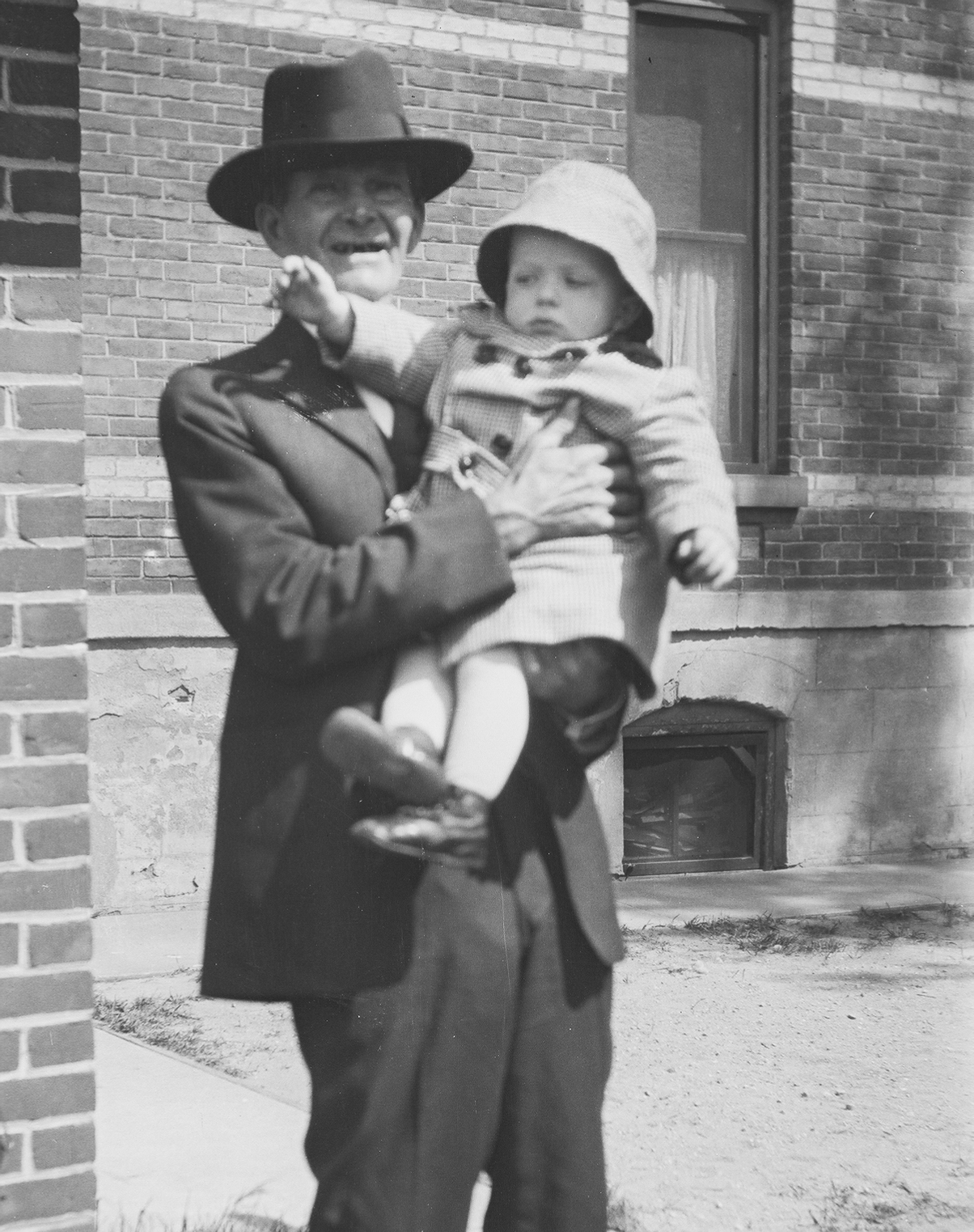
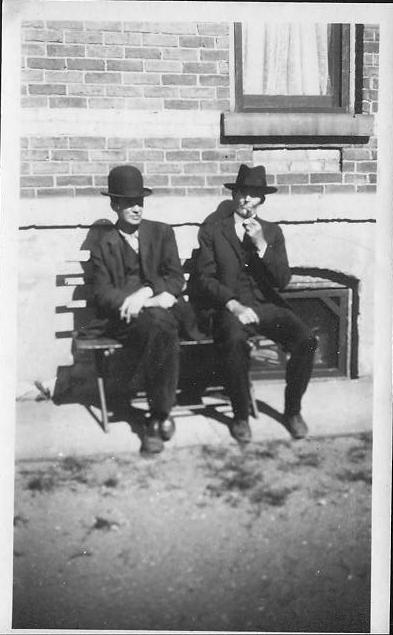
Lou Leeuwenhoek and Richard DeKorn

Ladies’ Library Association, Kalamazoo, MI
Photo from LLA website

KPH Water Tower, Oakland Drive, Kalamazoo, MI

KPH Water Tower article, February 2010

Here’s a video which shows a climb up the inside of the tower!
http://www.youtube.com/watch?v=0JweuIAU-Gg

Read Full Post »

Cora DeKorn Zuidweg

Cora DeKorn Zuidweg

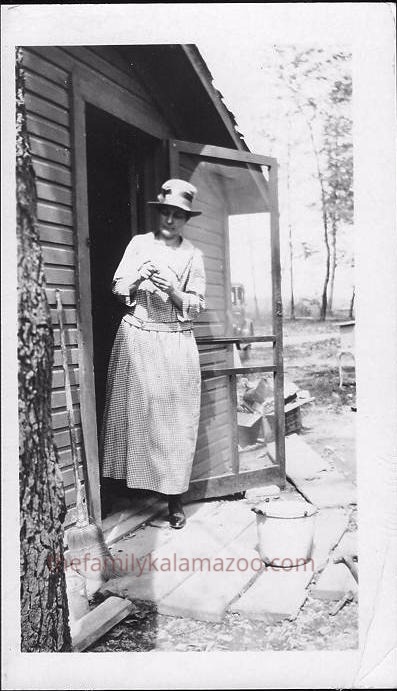
One day, when I was a student at Western Michigan University, I was working at the counter in Stanwood’s Luggage and my grandparents came in to look at wallets.  We called them billfolds because that was the proper name.  My hair was pulled back and clipped at the back of my head.  Grandpa startled a bit when he looked at me and said, “You look just like my mother.”  My grandmother corroborated that I did, in fact, look like her mother-in-law with my hair pulled back.

Cora DeKorn Zuidweg: in this photo I can see the resemblance.

Cora DeKorn Zuidweg: in this photo I can see the resemblance.

Of course, my great-grandmother, Cora Wilhelmina DeKorn Zuidweg always wore her hair pulled back into a bun.  She was born in Kalamazoo on January 2, 1875, the middle child of Richard DeKorn and Alice Paak DeKorn.  Her older sister, Jennie, was two, and when Cora was six, her brother Joseph Peter, the family photographer, was born.


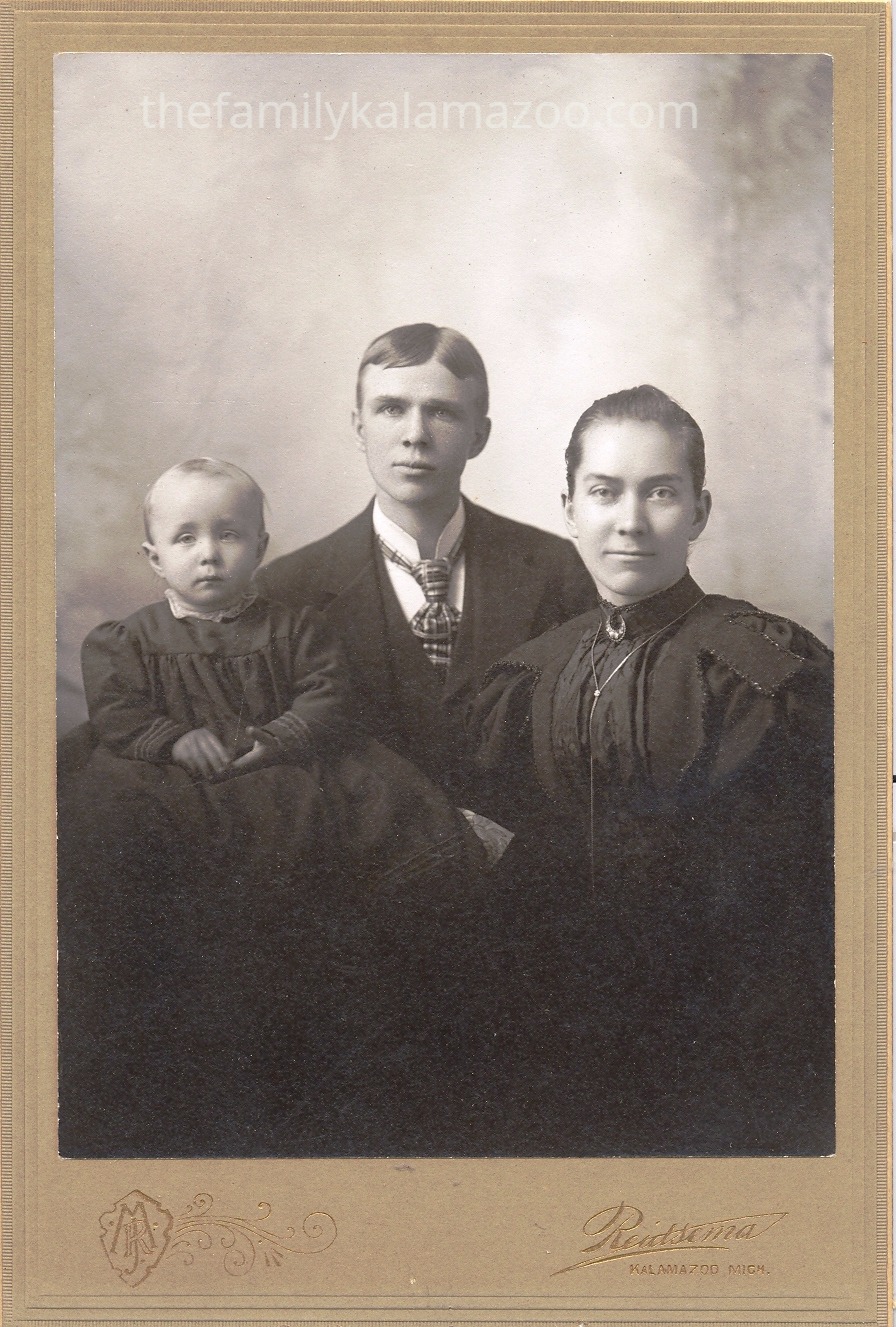
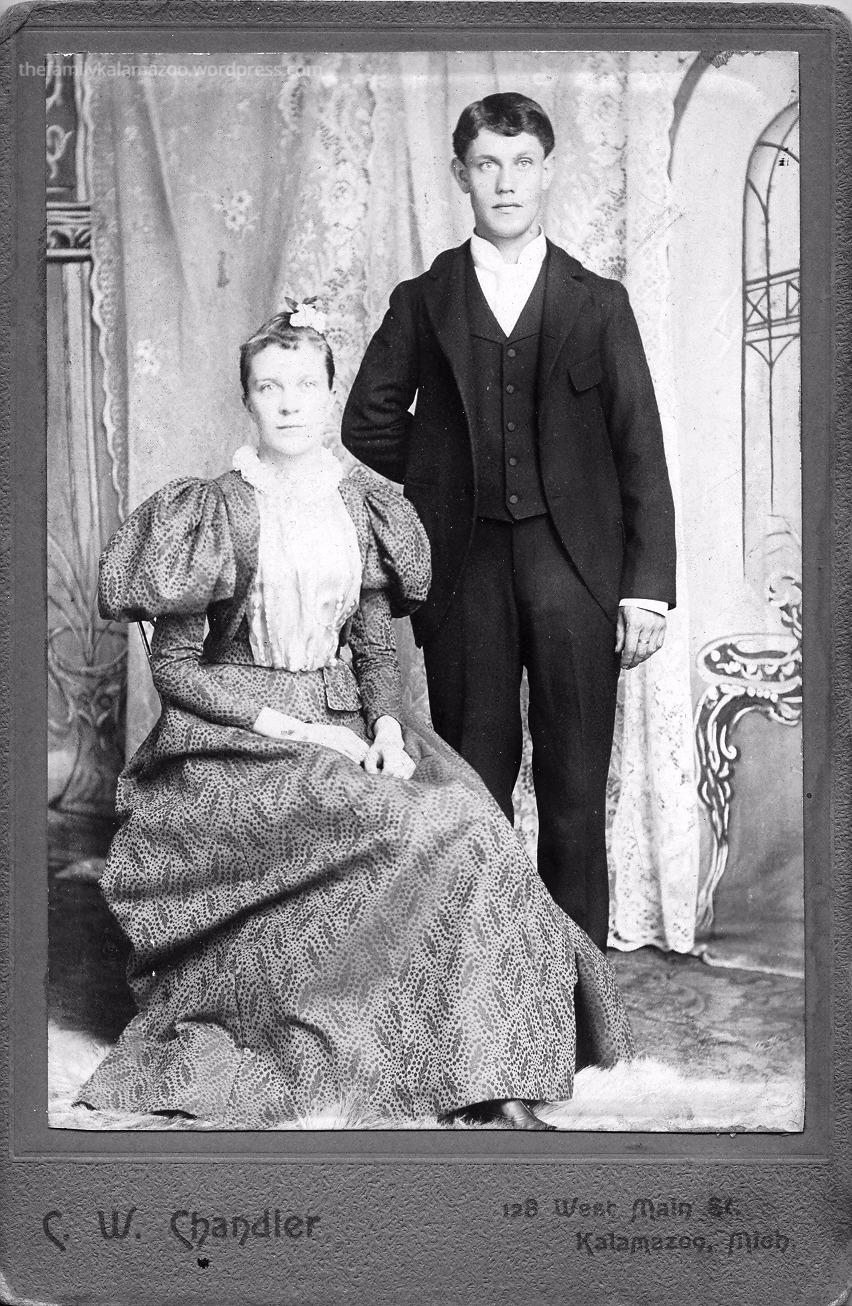
The City Directories show that Cora was a lifelong resident of Kalamazoo.  She married my great-grandfather Adrian Zuidweg (who was born in the Netherlands) on May 19, 1897, in Kalamazoo.  She was 22 and he was 26. Cora DeKorn and Adrian Zuidweg wedding picture close up

Cora and Adrian Zuidweg formal pose

Eleven years later, she gave birth to my grandfather Adrian Zuidweg (II), her only child, on October 31, 1908, in Kalamazoo.

Cora and little Adrian circa 1910

Cora and little Adrian circa 1910

Cora at her father's cottage on Long Lake

Cora at her father’s cottage on Long Lake

My grandfather shared with me some stories about her.  My favorite one is about the day she heard a man out in front of her house beating his horse with a whip.  She ran outside in a fury, grabbed the whip out of the man’s hand before he had a chance to understand what was happening, and smacked him with the handle.

She must have had a temper.  Another story goes that she donated a quilt to her church and then saw it on the clothesline of someone who shouldn’t have had the quilt.  She ended up withdrawing from the Reformed denomination to which she belonged and switching to the Methodist Church.

A few years after her husband died, when she was 57, Cora became sick with cancer.  Grandpa told me that the illness “went to her brain.”  One day she gathered together all the books in the house, except the Bible, and threw them out of the windows.  Then she collected them and burned them in a bonfire.

She died less than four months after her son was married to Lucille Edna Mulder, my grandmother.  Grandma reminisced to me that it was very difficult to be newly married and taking care of a terminally ill mother-in-law.  Cora passed away on September 12, 1932, at her home in Kalamazoo at the age of 57.

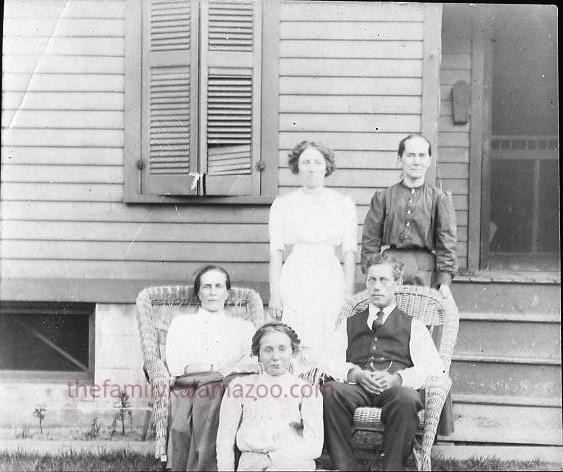
Cora and Adrian in chairs. Standing are Cora's stepsister Marian Sootsman and sister Jennie DeKorn Leeuwenhoek. Seated in front is Jennie's daughter Alice.

Cora and Adrian in chairs. Standing are Cora’s stepsister Marian Sootsman and sister Jennie DeKorn Leeuwenhoek. Seated in front is Jennie’s daughter Alice.

Read Full Post »

« Newer Posts