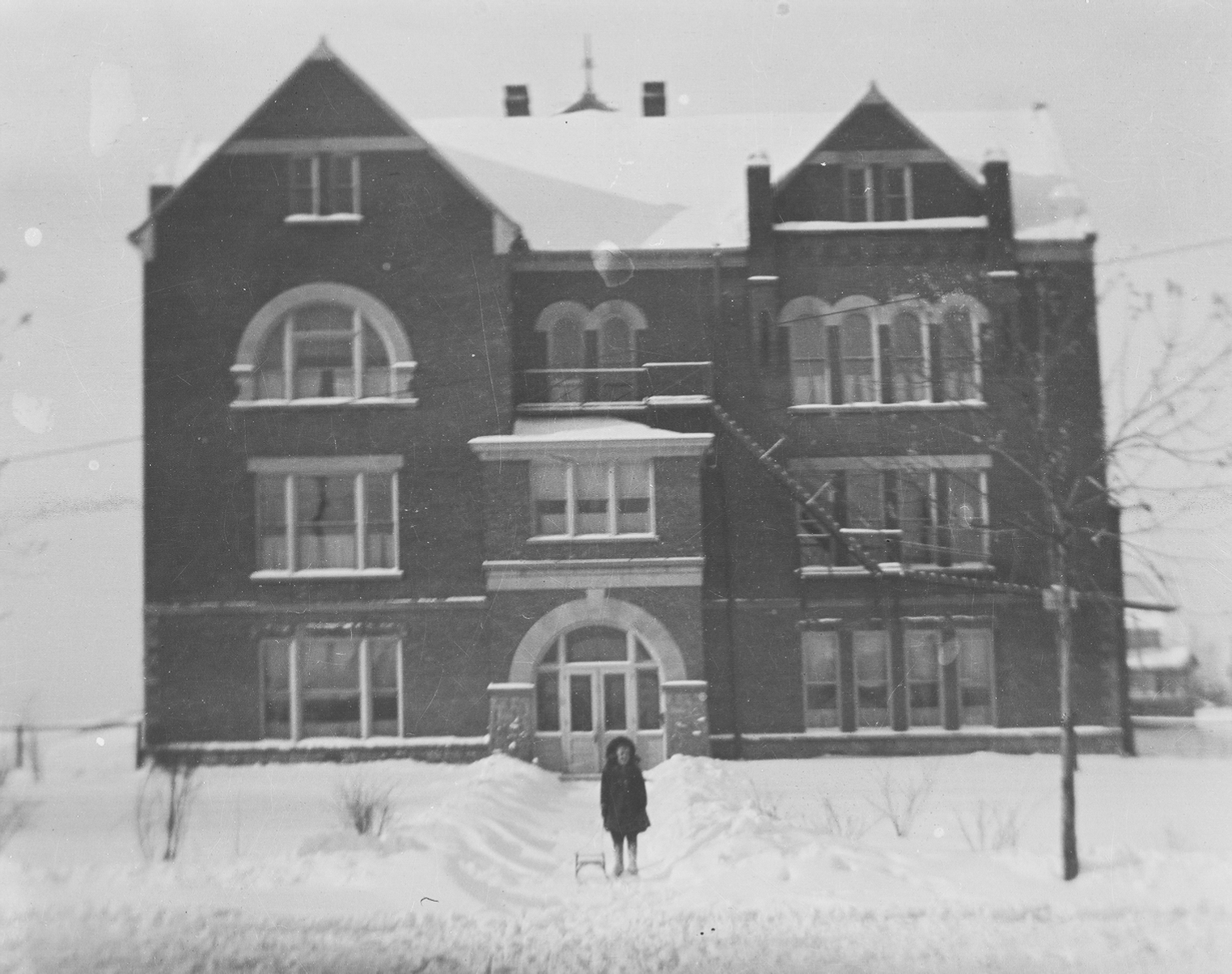
This photo was captured digitally from glass negatives taken by Joseph DeKorn about one hundred years ago. Does anyone recognize this building from Kalamazoo? I would like to know what it is. Is it a school?
Posted in Family History, Genealogy, Kalamazoo history, Kalamazoo late 1800s - early 1900s, Photography early 20th century, tagged family history, genealogy, Kalamazoo history, Kalamazoo school, old photos on January 31, 2013| 16 Comments »
This photo was captured digitally from glass negatives taken by Joseph DeKorn about one hundred years ago. Does anyone recognize this building from Kalamazoo? I would like to know what it is. Is it a school?
Posted in Adriaan Zuijdweg/Adrian Zuidweg Sr., Cora DeKorn Zuidweg, DeKorn, Family History, Genealogy, Jennie DeKorn Culver, Joseph Peter DeKorn, Kalamazoo history, Leeuwenhoek, Paak, Peek, Photography early 20th century, tagged Adrian Zuidweg, DeKorn family, DeKorn genealogy, Dutch Genealogy, early 1900s, family history, genealogy, history of Kalamazoo, Kalamazoo, Kalamazoo Michigan, Michigan history, Zuidweg surname on January 28, 2013| 19 Comments »
When I was a kid, the oldest person in our family was “Aunt Jen.” After the death of her only child, Aunt Jen went to live in a group home for elderly ladies run by the mother of one of the 4th grade teachers at Haverhill Elementary School (Portage, Michigan), Mr. Sweringer. My fourth grade class was directly opposite that of Mr. S who made kids put a penny in a jar if they cussed.
My daughter’s middle name is Jennifer, and I gave her this name in honor of Aunt Jen.
Aunt Jen was born Jennie DeKorn in Kalamazoo, on March 8, 1873, to Richard and Alice (Paak) DeKorn. She was the oldest of the three siblings, which included Cora (my great grandmother) and Joseph (the photographer).
At age 23, on May 20, 1896, Jennie married Lambertus Leeuwenhoek.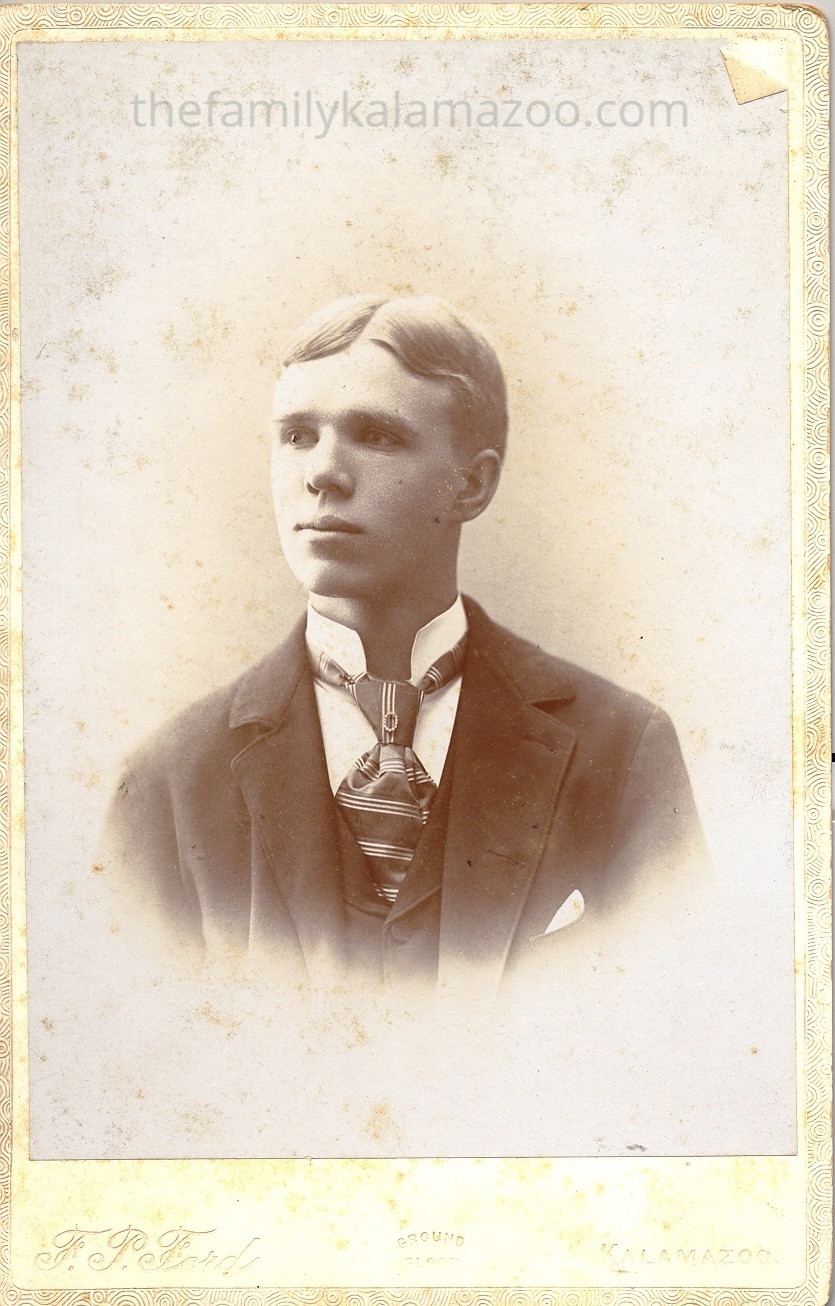
Lambertus, known to everyone in the family as Uncle Lou, was born in the Netherlands on May 3, 1972. He passed away April 20, 1949 in Kalamazoo. Uncle Lou’s parents were Arie Leeuwenhoek and Mary Hoogedoom. The story I was told by Grandpa is that Uncle Lou and his brother Gerard were orphans. He told me that Uncle Lou was a very intelligent man.

Gerard or Garret Leeuwenhoek
He also said that Uncle Lou was a direct descendent of Antony van Leeuwenhoek, the inventor of the microscope.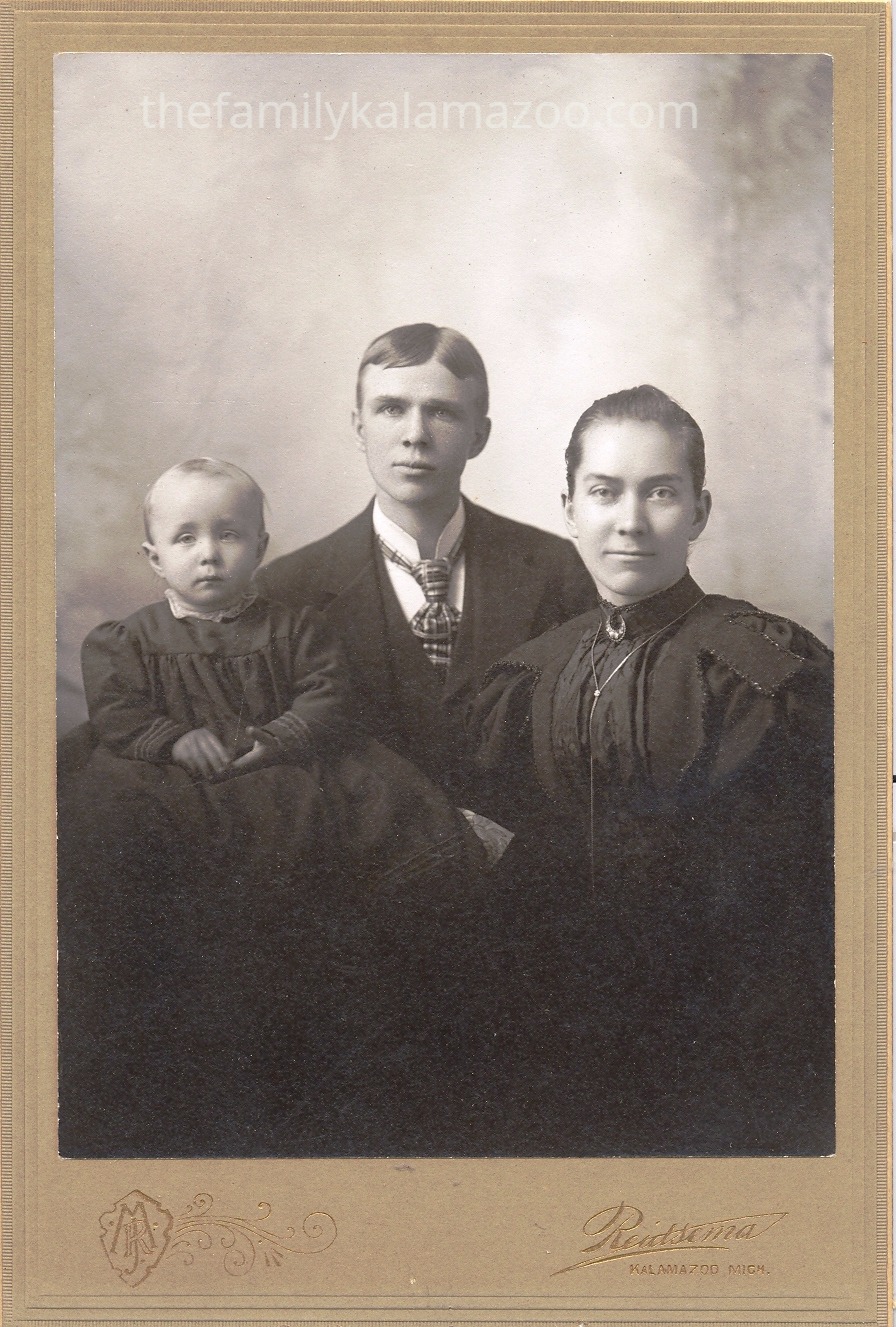
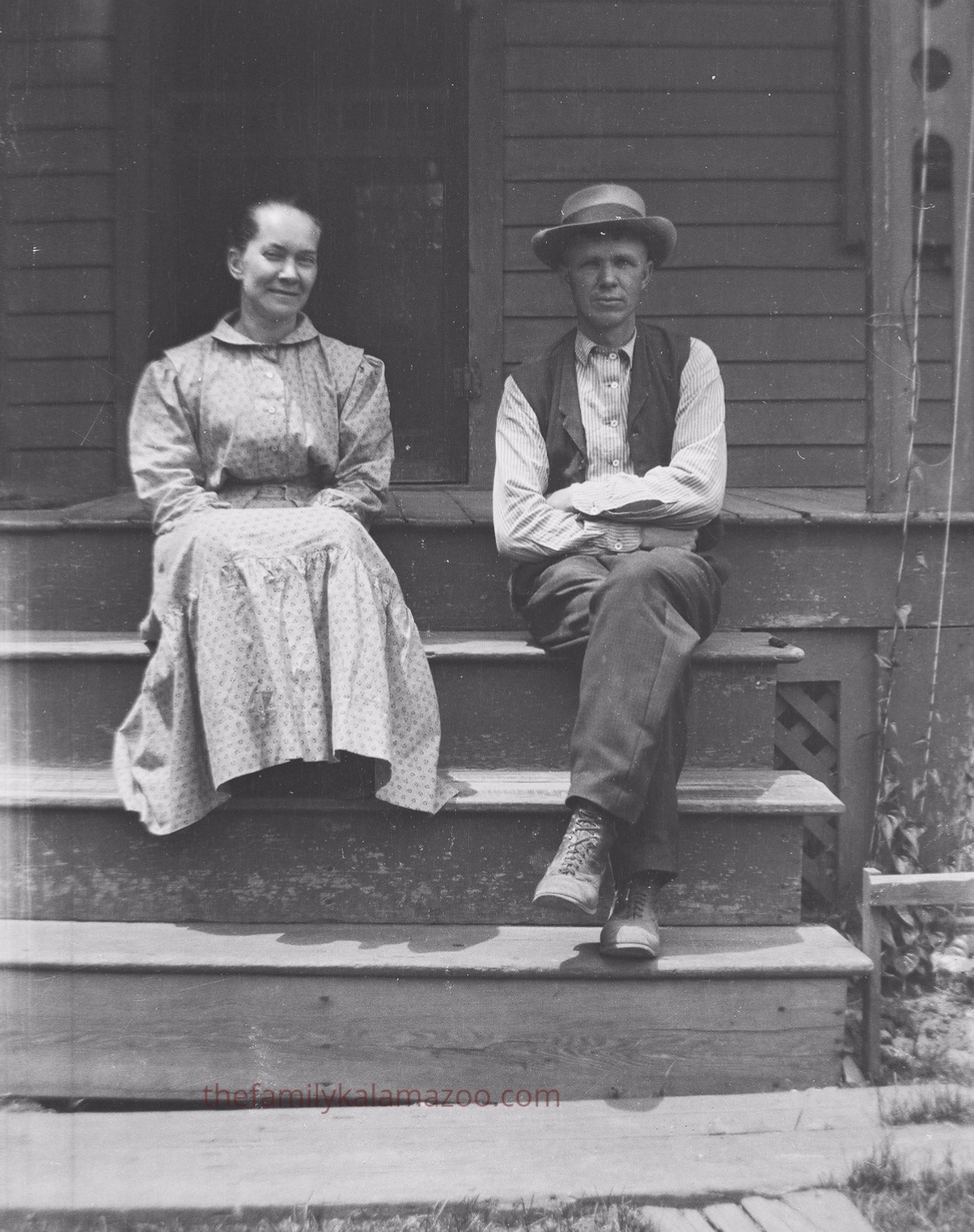
Uncle Lou and his brother-in-law, my great grandfather Adrian Zuidweg, spent a lot of time together.
Aunt Jen and Uncle Lou had one child, Alice Leeuwenhoek Moerdyke. She was born in Kalamazoo on April 16, 1897. I suspect she was quite spoiled because:
a. I have so many photos of her!
b. She had a lot of pretty clothes–much nicer than the rest of the family.
c. My grandfather once told me so ;).
And look how cute she was: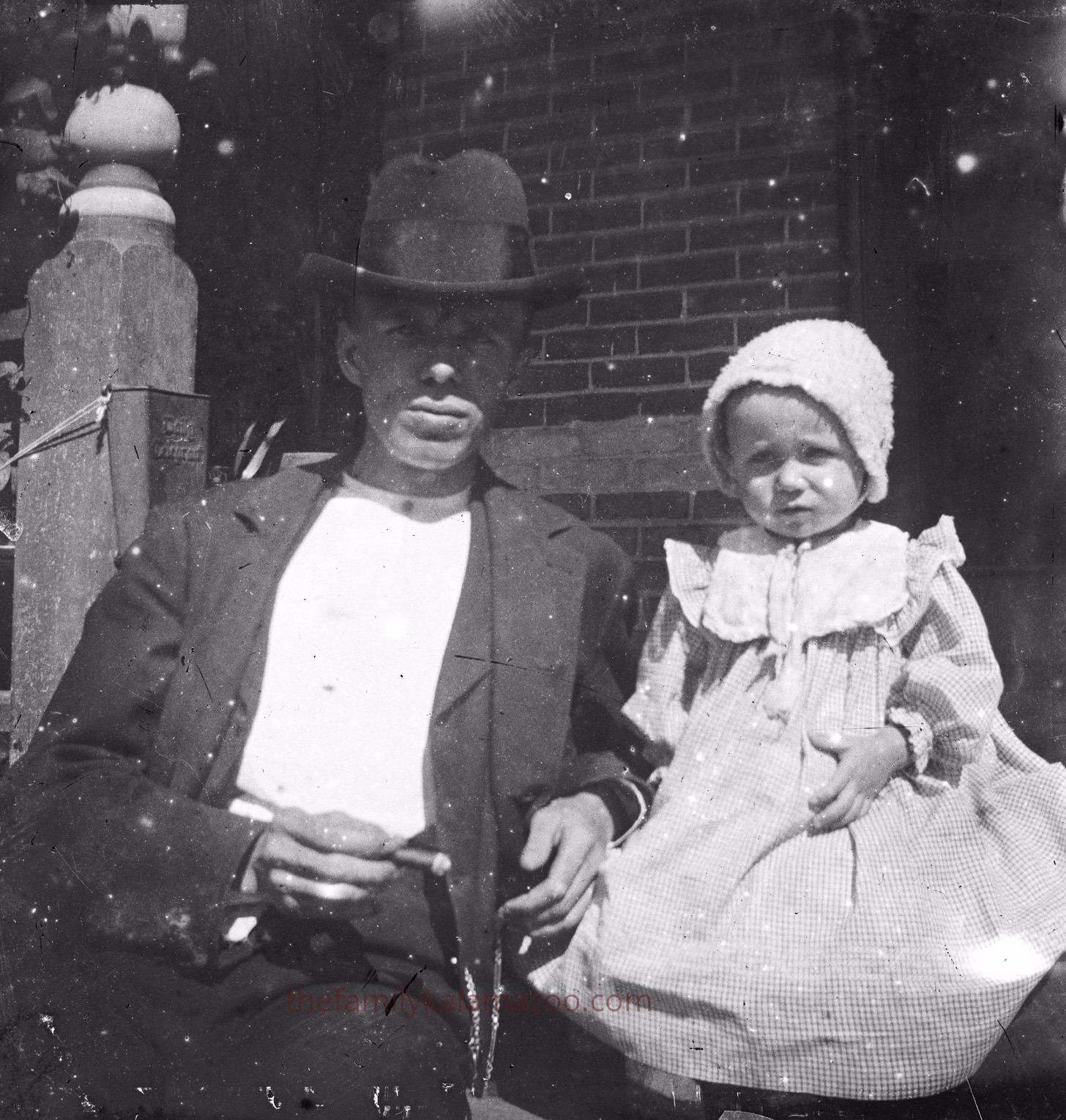
Aunt Jen and Uncle Lou lived the rest of their lives in Kalamazoo. They celebrated their 50th anniversary in 1946 and the Kalamazoo Gazette ran their photo.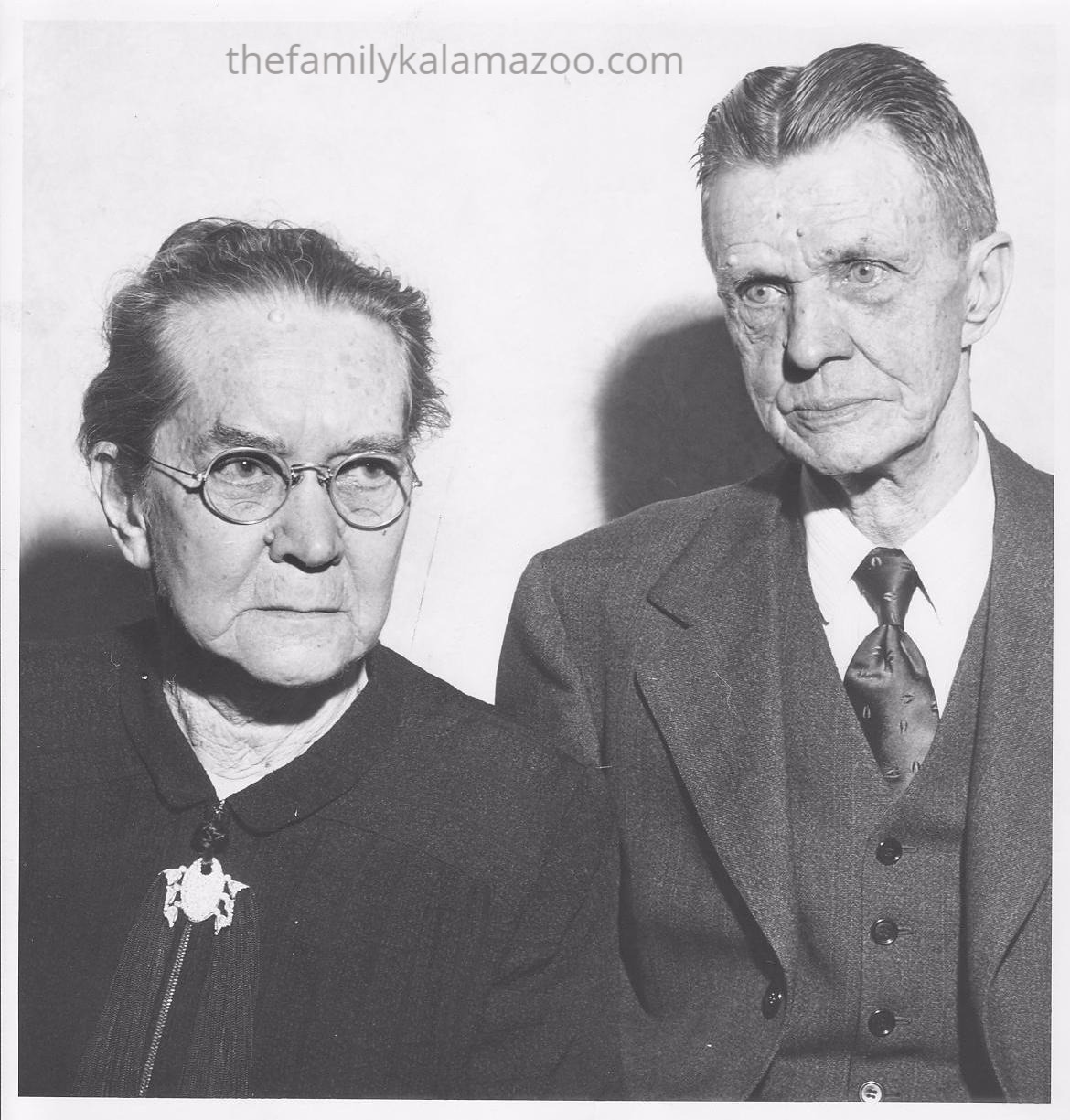
When I was little, she attended our family get-togethers, and she wasn’t a mother or aunt of anyone from my generation or my mother’s. I couldn’t grasp that she was my grandfather’s aunt, as that seemed to me impossible. My parents took me to visit her regularly, and I always respected them for their attention to her.
On March 15, 1968, at the age of 95, Aunt Jen passed away.
Posted in DeKorn, Family History, Genealogy, Kalamazoo late 1800s - early 1900s, Michigan history, Paak, Peek, Richard DeKorn, tagged Aleye Peek, Alice Paak, DeKorn family, DeKorn genealogy, Dirk De Korn, Dirk DeKorn, Dutch Genealogy, family history, genealogy, history of Kalamazoo, Kalamazoo Michigan, Kapelle, Marriage certificate, Michigan history, Netherlands, Paak genealogy, Peek family on January 21, 2013| 10 Comments »
As I continue to sort through the boxes of photos and other memorabilia I have collected from my mother’s family, I see that I have the original Certificate of Marriage belonging to my great great grandparents.
According to his marriage certificate, my great great grandfather, Richard DeKorn, was really named Dirk de Korn. On May 10, 1872, at the age of 20, Richard married Alice Paak, 19, in Kalamazoo. Her name was actually Aleye Peek, if I believe this document.

Alice Paak/Aleye Peek
I thought Richard was born in Goes, but on his marriage document, where Richard’s birth date is given as 1852, not 1851, it states that he was born in Kapelle, not Goes.

Yvette Hoitink at Dutch Genealogy wrote in her report:
The 1872 marriage record of Dirk DeKorn and Aleye Peek was retrieved to check their places of birth and parents names. Dirk De Korn was listed as born in “Kasselle Netherlands” and Aleye Peek as born in “Leymond, Netherlands”. No such places exist but Kasselle suggests Kapelle (in Zeeland) and Leymond suggests Lexmond in Zuid-Holland. The parents of bride and groom were not listed.
After reading this, I am not certain where I got the idea that Richard (Dirk) was born in Goes. Now I see that both his parents were born in Kapelle, as was he. So I looked up both towns on a map and found that they are very close to each other.

Kapelle is located at the A flag and Goes is just to the left
Posted in Adrian Zuidweg, Family History, Genealogy, Kalamazoo history, tagged Adrian Zuidweg, Dutch Genealogy, family history, genealogy, history of Kalamazoo, history of The Netherlands, Kalamazoo, Michigan history, Netherlands history, Yvette Hoitink, Zuid-Holland, Zuidweg surname on January 19, 2013| 12 Comments »
I described in other posts that Yvette Hoitink, a Dutch genealogist, quickly and easily found a wealth of information about the Zuidweg family–my grandfather’s Dutch ancestors.
I grew up hearing that expression (or a more direct variation of it which reminds with “bell”). When Kalamazooans travel outside Michigan, they tend to hear people ask some version of the phrase. Even today, living out west, I find myself being asked the same thing. I do what I have always done: open my right palm and point to the fleshy lower outside section. “Right there. That’s where Kalamazoo is.”
With the help of Yvette’s genealogical research, I can now say that approximately 3/8 of my more recent ancestors come from Zeeland, a Dutch province–and most significantly from the town of Goes. When I was young my grandmother taught me how to say it. With an H sound, instead of a G, and a double O (rhymes with “goose”), as if you’re blowing out air from the diaphragm. I have no idea if that is the correct Dutch pronunciation, but that has been our pronunciation. I never knew where it was located. I didn’t even bother to look or to ask “where in the heck is Goes?”
I’m not sure I trust pronunciations which are passed on through the family. My grandparents were “Grandma and Grandpa Zuidweg,” pronounced like Zould (as in “should”) and weg (as in . . . “weg”). At some point my uncle and his family started pronouncing their own name to rhyme with the name “Ludweg.” That sounds wrong to me, but then it’s their name and not mine.
Once you start looking back into the generations, my ancestors are a little more spread out. This is what Yvette wrote in her report:
All the Dutch immigrant ancestors of Adrian Zuidweg were found in Dutch records. Using birth, marriage and death records from the civil registration, four generations of his ancestors were traced. For three ancestors, the family was traced one generation further. In total, all 16 great-great-grandparents and 6 g-g-g-grandparents of Adrian Zuidweg were traced. His ancestors came from different provinces in the Netherlands: Zeeland, Zuid-Holland and Overijssel.
Don’t forget: Adrian Zuidweg, my grandfather, is two generations before me, so this is actually going back pretty far.

You can see from the map that Zeeland and Zuid-Holland are the two southernmost provinces along the North Sea. According to Lonely Planet, these provinces are the areas that give rise to our stereotypical ideas of “Holland.”
These two provinces are home to some of the strongest imagery – and biggest clichés –
associated with the Netherlands. You want dykes? Uh-huh. Windmills? Yeah. Tulips? OK.
Well, alright fellas, let’s gooooo…
The Keukenhof gardens are a place of pilgrimage for lovers of the lancelike leaves and
bell-shaped, varicoloured flower of the tulip, and the Zuid (South) Holland area is great for
biking and hiking, with trails and paths everywhere. Meanwhile, the built-up beaches of
Noordwijk aan Zee and south to Scheveningen are popular with locals.
Further south, Zeeland (Sea Land) is the dyke-protected province that people often associate
with the Netherlands when they’re not thinking of tulips, cheese and windmills.
Middelburg is the centre, with a serenity belying its proximity to the tragedies that spawned
the Delta Project.
Zuid Holland’s major cities are the biggest attractions: there’s Leiden, with its university
culture and old town (and proximity to the bulb fields); Den Haag, with its museums, stately
air and kitsch beach; charming, beautiful Delft, the home of Jan Vermeer; and mighty Rotterdam,
blessed with an edgy urban vibe, gritty cultural scene, and innovative architecture.
Several smaller places are also worth your time: Gouda is a perfect old canal town, while
Dordrecht has its own surprises – for humans and sheep alike. Just east and south of Dordrecht
is Biesbosch National Park, a sprawling natural area along the border with Noord Brabant.
What I want to know is if Spiced Leyden cheese comes from Leiden. It’s my favorite cheese. My husband’s is Gouda. And what do you know, but I have family photos taken in Gouda, including this one of a beautiful baby:

Posted in Adrian Zuidweg, Cora DeKorn Zuidweg, Family History, Genealogy, Kalamazoo late 1800s - early 1900s, Paak, Remine, Richard DeKorn, tagged Carrie Paak Waruf, early 20th century entertainment, family history, genealogy, Helen Hunt Jackson, Henry Waruf, Kalamazoo area lakes, Kalamazoo history, Long Lake, Michigan history, Portage, Ramona Palace, Ramona Park, Therese Remine on January 14, 2013| 23 Comments »
The property at Long Lake in Portage, Michigan, known as Ramona Park and featuring a pavilion called Ramona Palace was in my family for many years. Ramona was named after the “Indian Princess” in Helen Hunt Jackson’s popular novel Ramona, which was published in 1884.
When I was a little girl, my father Rudy Hanson tried to re-create the heyday of Ramona Park and its pavilion. He was young and ambitious and wanted to restore the place. Although Ramona Palace had a magnificent ballroom, the owner had sold the liquor license in 1956 or 1957 to Airway Lanes (according to my father).
So my parents held teen dances and concerts; The Association performed there. I remember my parents taking tickets out front, seated at a table. One time a kid broke in when a dance was going on. Dad took off running after this high school “track star,” caught him, and turned him over to the police. It was mentioned in the paper.
My father preferred booking picnics because he could obtain a one day liquor license. Continental Can held their company picnics at Ramona. Sometimes I helped out or hung out during events. The German-American Club held a dance, and I remember a couple dressed in lederhosen, the girl’s thick blonde braid swinging to her dancing.
My father had invested in this property and lost money on the deal. It was actually owned by a relative named Therese Remine. Therese’s mother was Mary Paak (Peek), the sister of my great great grandmother, Alice Paak DeKorn.
Therese had inherited the property from Henry and Carrie Waruf, who had owned it for years. Carrie was born a Paak, and I believe she was one of the Paak sisters: Mary, Alice, Annie, and Carrie. This is an area for future research. I don’t know why only Therese inherited and not her brother, Harold. Or why the cousins, such as my grandfather Adrian Zuidweg, did not inherit it.

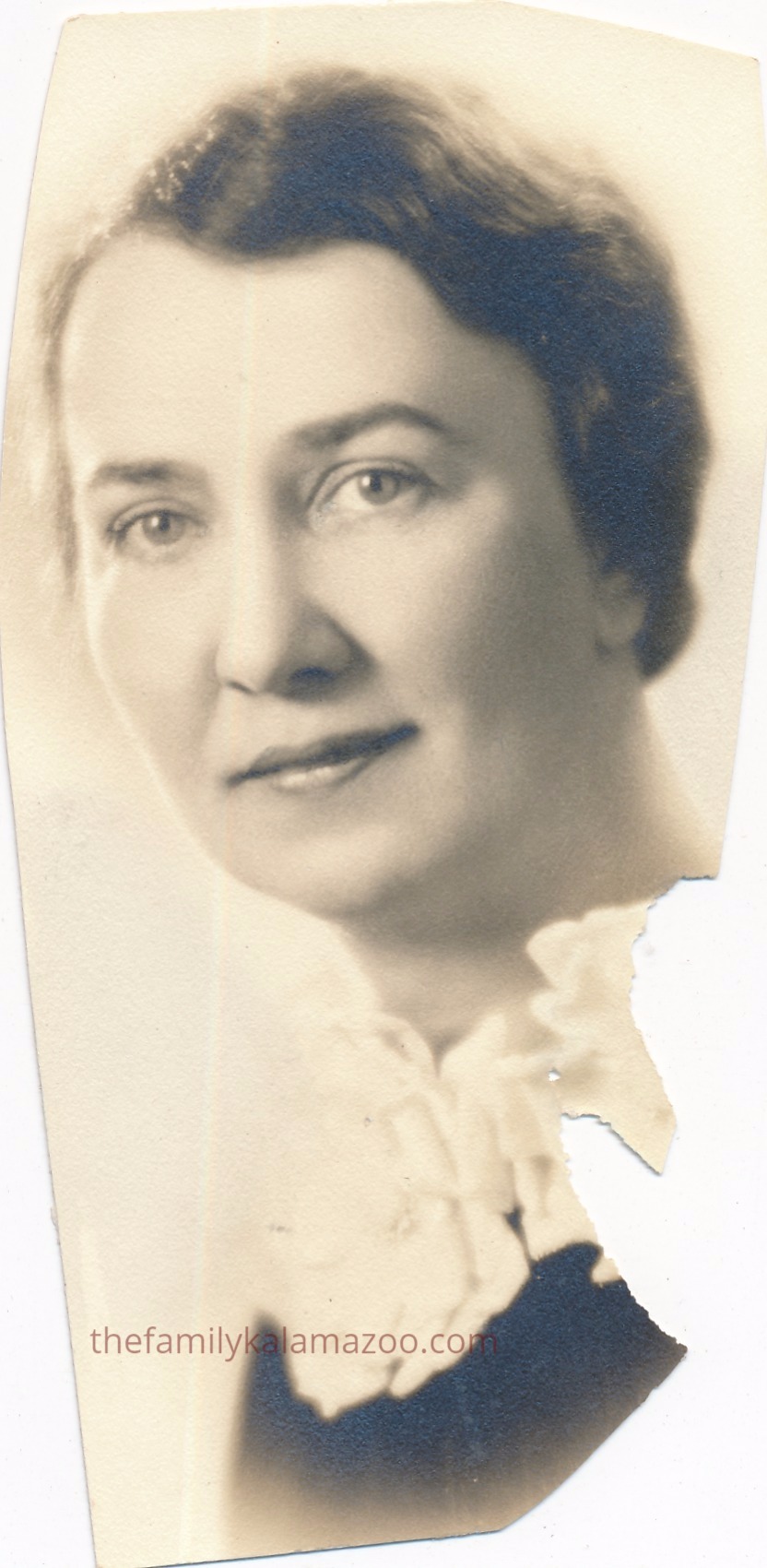
Therese Remine
At some point after my father no longer was affiliated with the property, Therese sold and donated it to the City of Portage.
My father has many other memories of the park. He says Ramona was used as storage for years for ice, which was cut from the lake and packed with straw. It lasted throughout the summer and was hauled to town by a train. The tracks ran halfway between the pavilion and Sprinkle Road.
In that front lot off Sprinkle, in the 10s and 20s, was a building and home field for various ball teams. Later on, Airstream trailers held their annual meetings. The circus was set up on the Ramona property; I remember the circus billboard which was up for weeks ahead of time.
When I was young, a row of cottages on the property were leased out to renters by Therese. Sixty years before that, Richard DeKorn, my great great grandfather, had leased his own summer cottage from the Warufs.
Therese’s summer house was on Sprinkle, and a gravel road led back to the park, pavilion, and the lakefront. My friends and I found arrowheads in the cornfield behind her house.
Ramona Park is a thriving park in Portage, Michigan, still today.
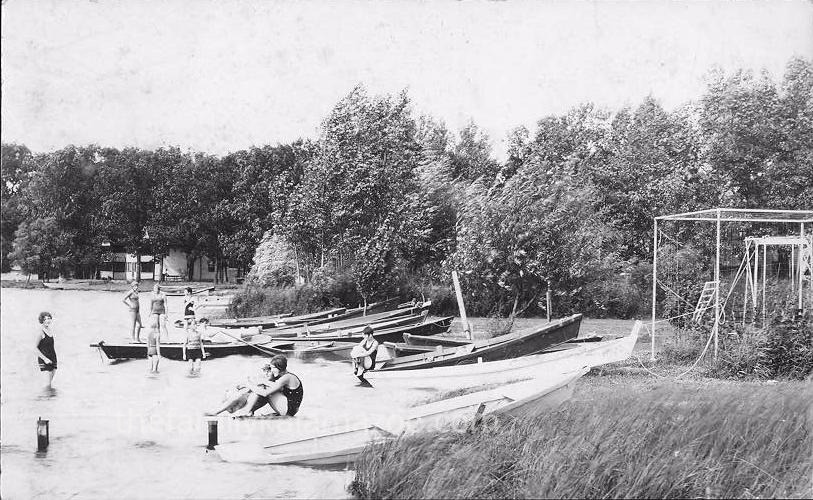
Possibly Long Lake, according to Adrian Zuidweg

Cora DeKorn at her father Richard DeKorn’s cottage on Long Lake
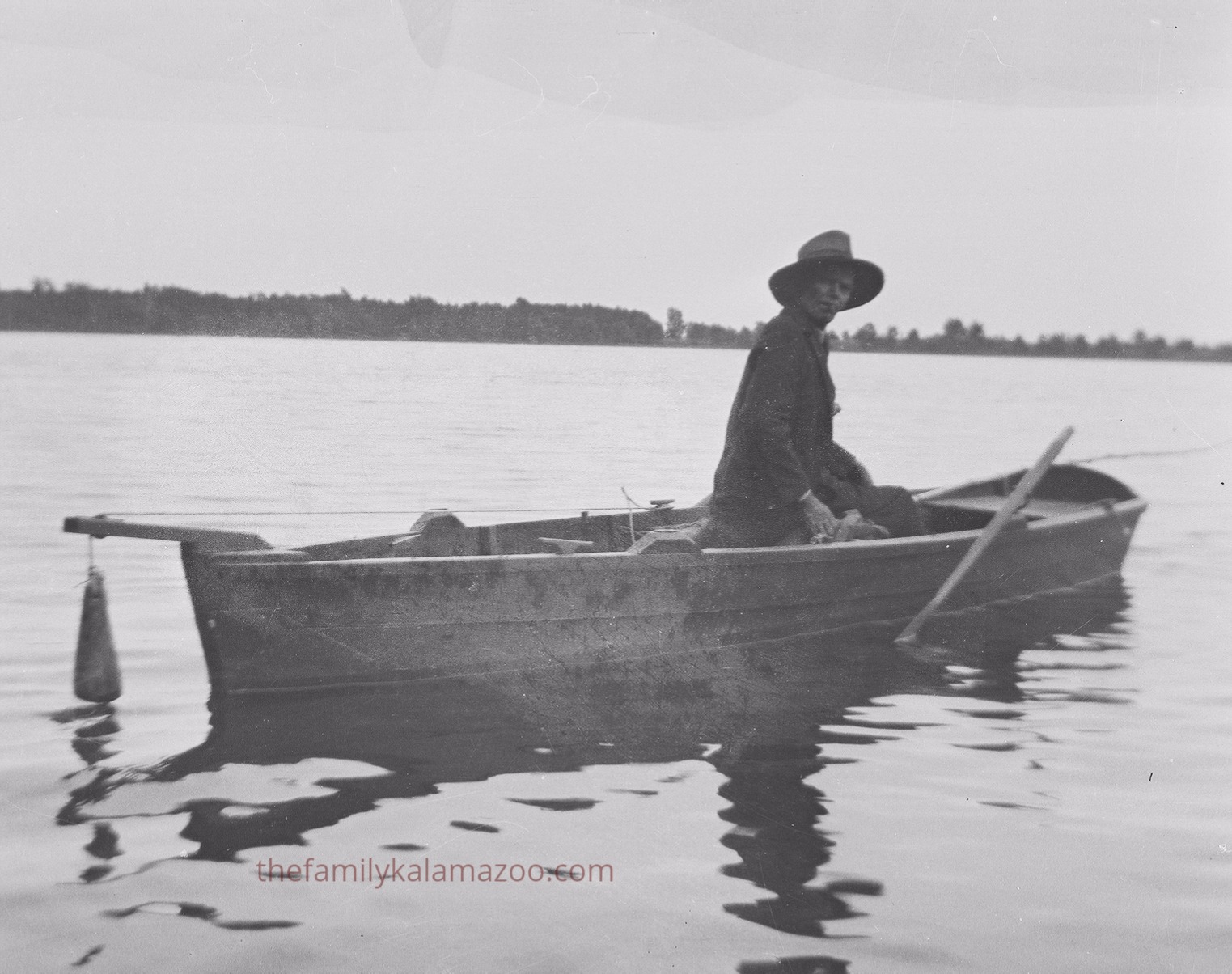
Richard DeKorn enjoying the lake
Posted in Family History, Genealogy, Kalamazoo history, tagged genealogy, Harold Henderson, Kalamazoo Michigan, Michigan history on January 10, 2013| 2 Comments »
It’s hard to believe, but there is another genealogy blog focused on Kalamazoo, Michigan, and the surrounding area. The blog is written by Sonja Hunter, who grew up in Kalamazoo, but lives now in Tennessee. She posts a variety of interesting stories about people who are very different from my Kalamazoo ancestors.

This is Sonja’s most recent post in its entirety:
Do you find yourself scurrying from one bit of information to the next without taking the time to sit down and really analyze what you’ve found? Yep, I’m guilty of this myself. When I’m busy discovering new information I feel like I am truly making progress. And I am, but at some point I need to stop gathering data and analyze my findings. But I often have a difficult time transitioning from one mode to the other.
This is not a newly recognized problem for me. No, this goes back at least twenty years. When working in research labs over the years I had to force myself at the end of each week to transcribe my working notes for my experiments (successful or not) into my permanent notebook. In the process of writing everything in my notebook I thought more deeply about the significance of my results and often came up with better troubleshooting methods than moments after completing the experiment. So, if penning my results and conclusions into my notebook was so useful, why did I loathe it? Well, one reason I hated the task was because I felt (wrongly) that I wasn’t “accomplishing” anything.
My other stumbling block is that I enjoy the thrill of the chase. One of the things I love about scientific research is that I can be the first person to see a new result and think “wow, so that’s how it works!” The same is true in genealogy. Finding a new clue to my family’s past is thrilling. Even if the “discovery” is something trivial to others, that excitement is what drives me to search for the next piece of the puzzle. However, in genealogy, as in science, at some point I need to put on the brakes and think about how that jigsaw piece fits into the larger picture. Beyond the big picture, there are other benefits to writing about my genealogy findings. First, it allows me to really see what holes I have. This can be dangerous because I then have to fight the urge to run off to fill the gap. But as I live several states away from Michigan and have a child to care for, I can’t just hop in the car and satisfy my curiosity. Second, writing permits me to see how much I have learned since I last wrote up my findings (this can be fun). While this is valuable, it simply isn’t as exciting as that momentary thrill of finding a new clue to the past.
Once I finally overcome the activation energy to writing I actually do enjoy it. This is, in part, why I began blogging. Although I didn’t intend to work through some of my findings in my blog, it has sometimes worked out that way. This has been good for me, but when I contemplate writing another life story for one of my people (not book length by any means) I kind of get a sinking sensation. Part of this is the old “not accomplishing anything” feeling I get when I’m not crossing something off a list. The other part is that it is time-consuming to re-examine every scrap of information I have to come up with a satisfying whole (time I could be spending hunting down more information). While writing, I do get a little thrill when I realize “maybe THAT’S why Emma did (fill in blank).” In the end, however, the best part for me is receiving feedback from family who read what I write. When they tell me “I feel like I know Emma” I know I really have accomplished something. Maybe this year I can do better at bridging the gap between gathering and recording..
If you need more reasons to spur you to write I recommend you read an article that started me thinking about the subject. Harold Henderson’s piece “How Not To Be Buffalo Hunters” is at Archives.com.
Posted in Caledonia Michigan history, Family History, Genealogy, Lucille Edna Mulder Zuidweg, Mulder, tagged Caledonia High School, Dutch Genealogy, education 1920s, family history, genealogy, history of Kalamazoo, Kalamazoo history, Michigan history, Mulder, Western Michigan University, Western Normal School, Zuidweg surname on January 8, 2013| 25 Comments »
 This is the scrapbook which my parents gave to me. In it my grandmother (Lucille) Edna Mulder (later Edna Zuidweg) recorded the events of her high school graduation from Caledonia High School (Michigan), as well as a few clippings from her first year at Western Normal School in Kalamazoo.
In 1929, my grandmother graduated a year early, at age seventeen, along with her older sister Dorothy Mulder (later Dorothy Plott). Grandma earned the 3rd highest GPA at 93.85% and thus was honored with the title “class historian.” Her sister was salutatorian. Grandma’s best friend Blanche Stauffer was valedictorian. Clearly, grades were not inflated in those days at Caledonia High School.
Grandma was the 2nd oldest girl in her family of three girls and two boys. When I was young and reading my mother’s copy of Little Women, Grandma told me she always thought that she was just like Jo, the 2nd oldest and the writer of the family. Her sister Dorothy was Meg, and her younger sister Alvena (called Vena, later Vena Stimson) was Amy. It makes sense to me that “Jo” would have been placed a year ahead so she could go to school with “Meg,” and that she would earn class historian to her sister’s salutatorian.


Dorothy Mulder’s Salutatory (beginning portion)

Edna Mulder’s high school transcript

Edna Mulder’s class history (beginning portion)
The scrapbook contains wonderful photos of Grandma, her friends, classmates, and teachers, but it doesn’t solve the mystery of who put that drinking glass ring on the cover.
Posted in Adriaan Zuijdweg/Adrian Zuidweg Sr., Adrian Zuidweg, DeKorn, Family History, Genealogy, Zuidweg, tagged DeKorn family, Dutch Genealogy, family history, genealogy, history of Kalamazoo, Kalamazoo, Kalamazoo history, Michigan history, Yvette Hoitink, Zuidweg surname on January 1, 2013| 18 Comments »
As I shared in my last post Intriguing Coincidence or An “Of Course” Moment?, Yvette Hoitink, a Dutch genealogist, quickly and easily found a wealth of information about the Zuidweg family–my grandfather’s Dutch ancestors. Dutch Genealogy is a site which describes Yvette’s amazing services.
I knew that the father of my grandfather, Adrian Zuidweg, born 1908 in Kalamazoo, was Adrian Zuidweg, born in The Netherlands. Adrian Sr. owned a fish market when Grandpa was young. In this photo he stands with an unidentified young employee.

Fish Market on Eleanor Street
My grandfather, Adrian Jr. told me he used to clean fish at the fish market when he was 8 or 9.

Adrian Zuidweg, Jr.
Eventually, the man who was my great-grandfather opened an ice cream parlor and candy store, and according to a story Grandpa told me, during the height of the Great Depression, he was able to buy a $1,000 marble countertop for his business.

Ice cream parlor and candy store
All I knew of this man was of his life in Kalamazoo, Michigan. I knew that he died at approximately age 50 of what might have been Bright’s (kidney) disease. My grandmother told me that he didn’t eat all day long at work and would come home and eat a steak the size of a plate.
What I discovered from Yvette is an idea of who he was before he emigrated from Holland. He was born Adriaan Zuijdweg on 3 January 1871 in Goes, Zeeland, the Netherlands. He was a “letterzetter,” compositor or typesetter–possibly for a newspaper. This fits with a photo I published on an earlier post of Adrian Sr. and another relative working on a newspaper in Kalamazoo.

Printshop at Holland American newspaper, 1899
Adrian Zuidweg 3rd from left; Lou Leeuwenhoek 5th from left
So it seems that Adrian took his typesetter skills to the United States, but decided to become an American “entrepreneur” by opening the fish market.
According to Yvette, it was in the United States that he lost the other “a” in his first name and the j in Zuijdweg–becoming Adrian Zuidweg. The son he eventually had in 1980 was also named Adrian Zuidweg (no middle name, which is according to Yvette the Dutch tradition) and it was young Adrian who eventually changed the ice cream parlor into a Sunoco gas station.
One of the photos I have yet to know more about is one of him in what Grandpa said was his Dutch army uniform.
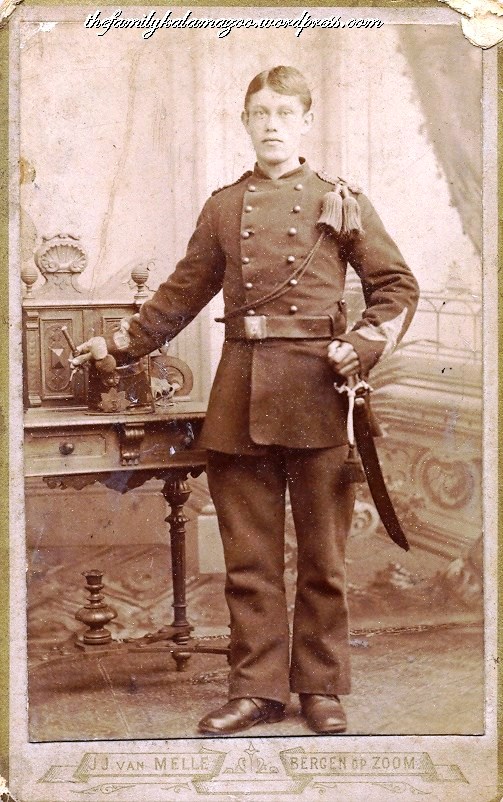
Adriaan Zuijdweg
Four years after emigrating from the Netherlands for “amelioration of existence,” Adriaan/Adrian married my great-grandmother Cora Wilhelmina DeKorn. The date was 18 May 1897 and the place was Kalamazoo (of course).
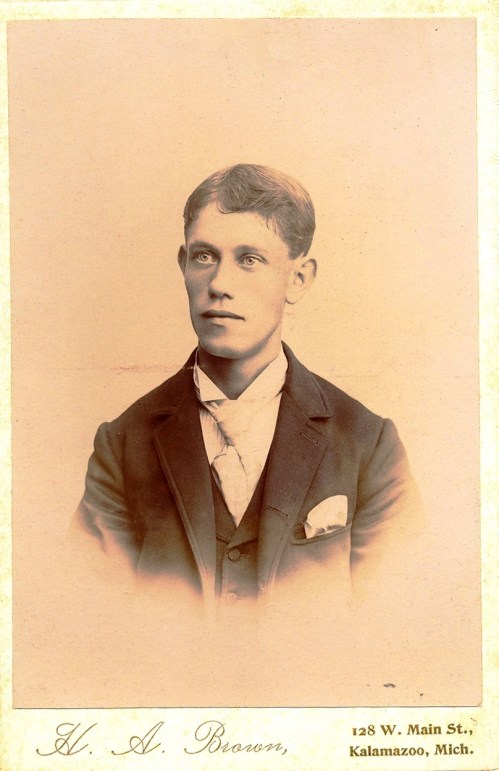
Adrian Zuidweg (Adriaan Zuijdweg) 1897


 The Family Kalamazoo